
Wastewater Treatment Comprehensive Guide
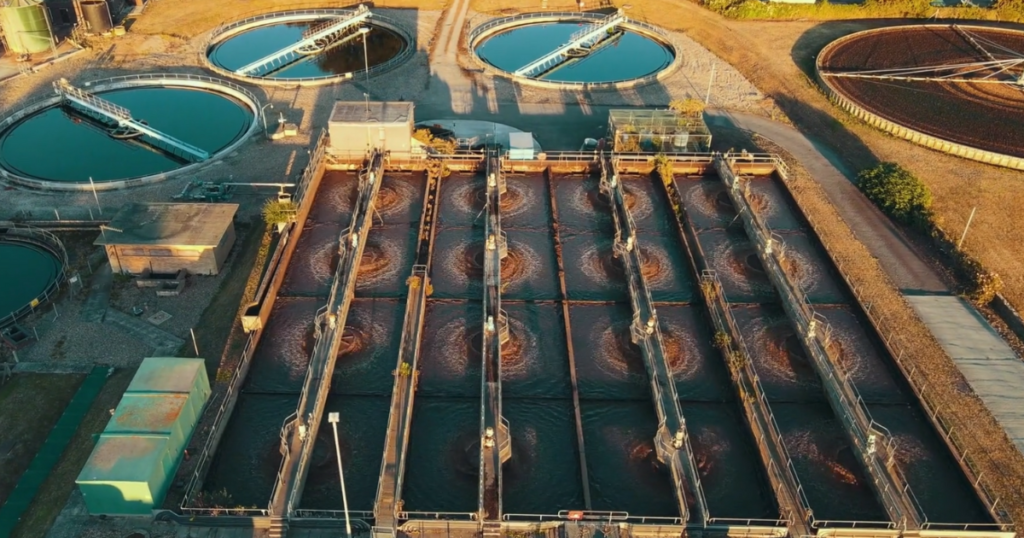
Wastewater treatment is an essential process for maintaining environmental health and public hygiene. It involves removing contaminants from industrial and municipal wastewater, ensuring that the water is clean enough to be released back into the environment or reused. The treatment of wastewater is a complex process that begins with preliminary steps to remove large waste fragments, followed by primary treatment where solids settle out, and secondary treatment which focuses on breaking down organic material using biological processes.
Advanced treatment technologies have been developed to address more stringent regulations and diverse industrial effluents, leading to tertiary and even quaternary treatments. These processes aim to remove specific pollutants such as nitrogen, phosphorus, metals, and synthetic chemicals that secondary treatment does not fully eradicate. The final stage often includes disinfection before discharge or recycling of water. As a result, sludge treatment and management become critical aspects of the treatment process, requiring careful handling, processing, and disposal or reuse.
Key Takeaways
- Wastewater treatment removes contaminants to protect the environment and public health.
- The treatment process includes multiple stages: preliminary, primary, secondary, tertiary, and sometimes advanced technologies.
- Effective sludge management and adherence to regulations are vital for sustainable wastewater treatment practices.
Types of Wastewater
Wastewater varies based on its origin, with the primary types being industrial and municipal. Each has distinct characteristics and contaminants that necessitate tailored treatment processes.
Industrial Wastewater
Industrial wastewater originates from manufacturing processes, mining, and other industrial activities. This wastewater often contains a diverse array of pollutants, including:
- Heavy metals such as lead, arsenic, and mercury
- Chemicals like solvents, toxic compounds, and volatile organics
- Particulates resulting from industrial processes
The composition of industrial wastewater can be complex and variable, necessitating specialized treatment methods to address specific contaminants.
Municipal Wastewater
Municipal wastewater, on the other hand, is primarily derived from households, businesses, and public facilities. It typically contains:
- Organic matter: originating from food waste, human waste, and soaps.
- Nutrients: such as nitrogen and phosphorus from detergents and human waste.
- Pathogens: including bacteria and viruses that can cause diseases.
Municipal treatment plants are designed to remove these contaminants to produce effluent safe for discharge into the environment or for potential reuse.
Wastewater is collected through a network of underground pipes known as sewers. These sewers are designed to transport wastewater from homes, businesses, and industrial facilities to municipal wastewater treatment facilities. Gravity and pump stations are used to move the wastewater through the sewer system to the treatment plants. Once the wastewater reaches the municipal treatment facilities, it undergoes a series of processes to remove contaminants and pollutants before being safely discharged back into the environment. The collection and treatment of wastewater are essential for maintaining public health and environmental sustainability.
Wastewater Treatment Plants
Wastewater treatment plants are crucial in maintaining public health and environmental sustainability in the United States. These facilities are responsible for treating and purifying wastewater before it is released back into the environment, ensuring that water bodies remain clean and safe for human and ecological use. This article will explore the significance of wastewater treatment plants in the US, their operational processes, and the challenges they face in the modern era.
Purpose of Wastewater Treatment Plants
Wastewater treatment plants are essential for safeguarding public health and the environment. In the US, these facilities are instrumental in removing pollutants and contaminants from domestic, industrial, and agricultural wastewater, preventing the spread of waterborne diseases and protecting aquatic ecosystems. By treating wastewater, these plants mitigate the risk of water pollution and contribute to the conservation of natural resources.
Treatment Processes
The operational processes of wastewater treatment plants involve several stages to remove impurities and harmful substances from the wastewater. The primary treatment phase involves physically separating solid waste and large particles from the water through screening and sedimentation. Subsequently, the secondary treatment phase focuses on biological processes, where microorganisms are used to break down organic matter and remove pathogens from the water. Finally, the tertiary treatment stage employs advanced filtration and disinfection methods further to purify the water before its release into the environment.
Challenges Faced by Wastewater Treatment Plants
Despite their critical role, wastewater treatment plants in the US encounter various challenges in treating wastewater with the best treatment process. Aging infrastructure is a significant concern, as many facilities require upgrades and repairs to ensure optimal performance. Additionally, emerging contaminants, such as pharmaceuticals and microplastics, pose new challenges for treatment processes. Moreover, extreme weather events and climate change can strain the capacity of wastewater treatment plants, leading to potential overflows and environmental risks.
The Future of Wastewater Treatment Plants
As the US continues to address environmental and public health concerns, the future of wastewater treatment plants is poised for innovation and advancement. Integrating advanced technologies, such as membrane filtration and ultraviolet disinfection, holds promise for enhancing treatment efficiency and addressing emerging contaminants. Furthermore, adopting sustainable practices, such as energy recovery from wastewater, can contribute to these facilities’ overall resilience and environmental sustainability.
In conclusion, wastewater treatment plants are vital in maintaining water quality and environmental health in the US. Through their operational processes, these facilities contribute to protecting public health and preserving natural ecosystems. As the nation confronts evolving environmental challenges, wastewater treatment plants are poised to adapt and innovate, ensuring their continued effectiveness in safeguarding water resources for future generations.
Overview of Wastewater Treatment Process
Wastewater treatment is essential to ensure water cleanliness before it is discharged into the environment. The treatment involves several stages designed to remove different types of impurities.
Preliminary Treatment: The initial stage removes large debris that could damage equipment or hinder further treatment. This includes a bar screening process, where large items such as sticks, rags, and other sizable objects are filtered out.
Primary Treatment: During this stage, the focus is on allowing solids to settle out by gravity. Sedimentation tanks enable the heavier solids to sink to the bottom, forming sludge, while lighter materials like fats and oils rise to the top and are skimmed off.
Secondary Treatment: Here, microorganisms play a critical role. This biological phase involves breaking down organic matter in the wastewater. Aeration tanks increase oxygen levels, stimulating the growth of bacteria that consume the organic pollutants. Subsequent settling tanks allow treated water and microorganisms to separate.
Tertiary Treatment: If additional purification is required, tertiary treatment includes processes such as filtration, lagooning, or the addition of disinfectants like chlorine to remove more complex impurities, nutrients like nitrogen and phosphorus, and pathogens.
Advanced Treatment: Some systems may implement an advanced phase to achieve higher purity levels. Methods can involve activated carbon filtration, membrane technologies, or nutrient recovery processes.
Each stage is critical, progressively transforming wastewater from a polluted state to one that is safe and suitable for release back into the environment or for reuse.
Preliminary Treatment
Preliminary treatment is the first stage of the wastewater treatment process. Its primary role is to prepare the influent wastewater for downstream processes by removing large solids and debris. This step is critical to protect equipment from damage and to facilitate efficient subsequent treatment stages.
Key Components of Preliminary Treatment:
- Bar Screens:
- Function: Capture large solids and rags.
- Maintenance: Regular cleaning is essential to prevent blockages.
- Grit Chambers:
- Purpose: Remove sand, silt, and small stones.
- Mechanism: Utilizes the settling principle, as these particles have a higher specific gravity than organic solids.
- Comminutors and Grinders (if present):
- Operation: Reduce the size of the solids.
- Result: Easier handling and prevention of clogging in downstream equipment.
- Flow Equalization:
- Goal: Stabilize the influent flow rate for more uniform treatment.
- Benefit: Prevents shock loads to biological treatment systems and ensures consistent treatment quality.
Typical Removal Efficiencies in Preliminary Treatment:
- Solids: Significant removal of visible items (e.g., sticks, rags).
- Grit: Efficient removal of inert material (e.g., sand, gravel).
It is imperative for wastewater treatment facilities to tailor preliminary treatment to the specific characteristics of the incoming wastewater. Optimal design and proactive maintenance of preliminary treatment units are key factors contributing to the wastewater treatment process’s overall effectiveness and efficiency.
Primary Treatment
Primary treatment is the first phase of wastewater treatment. Its primary objective is to remove solids that can be quickly settled by gravity and floatable materials. This phase does not involve the removal of dissolved pollutants. The process typically includes four key components:
- Screening: Utilizes screens to restrain floating debris such as wood, rags, and bulky items that could obstruct pipes or pumps.
- Comminution: A process of breaking down the large particles that manage to pass through the screens.
- Grit Removal: In this step, the heavy particles such as sand, gravel, and pebbles, which could cause wear and tear on equipment, are removed.
- Sedimentation: Here, tanks called sedimentation basins allow the fine particles to settle to the bottom, forming a mass known as primary sludge, while the lighter materials float to the top.
After primary treatment, the effluent still contains dissolved and small suspended pollutants. Subsequent treatment stages deal with these finer substances. The removed primary sludge and floatable scum are then processed further or disposed of. It is worth noting that primary treatment effectively reduces biochemical oxygen demand (BOD) and total suspended solids (TSS), thereby preparing the wastewater for secondary treatment.
Secondary Treatment with Biological Processes
Secondary wastewater treatment is a critical phase that follows primary treatment, focusing on removing biodegradable organic matter from sewage. This stage relies heavily on biological processes leveraging microorganisms to break down substances still present after the initial treatment.
Treatment Technologies commonly employed in secondary treatment include:
- Aerobic Treatment: Utilizes oxygen and aerobic bacteria to decompose organic matter. The activated sludge process is a prime example, where air is pumped into large aeration basins to stimulate bacterial growth that consumes organic pollutants.
- Anaerobic Treatment: Functions without oxygen, using anaerobic bacteria to digest organic material. This method is typically used for high-strength waste and is favored for its biogas production.
- Anoxic Treatment: Occurs in the absence of oxygen, but unlike anaerobic processes, it requires a small amount of dissolved oxygen or nitrate to facilitate the breakdown of pollutants.
| Method | Process Environment | Microorganisms | By-products |
|---|---|---|---|
| Aerobic | Oxygen-rich | Aerobic bacteria | Carbon dioxide, Water |
| Anaerobic | Oxygen-free | Anaerobic bacteria | Methane, Carbon dioxide |
| Anoxic | Low oxygen | Facultative bacteria | Nitrogen gas |
Secondary treatment employs either fixed-film or suspended-growth systems. Fixed-film systems, like trickling filters or rotating biological contactors, have microbes attached to media. In contrast, suspended-growth systems, such as activated sludge, keep microorganisms in suspension.
Effluent quality after secondary treatment generally meets regulatory standards for discharge into water bodies or for reuse in various applications, underlining the importance of this treatment stage in protecting water quality and public health.
Tertiary Treatment

Tertiary treatment is a critical phase in wastewater management where the goal is to purify water after primary and secondary treatments further. This stage targets the residual contaminants that the earlier treatments could not entirely remove.
Processes Involved:
- Filtration: A physical method to eliminate suspended solids that might have passed through previous treatments.
- Disinfection: Often involves the use of chlorination, ultraviolet (UV) irradiation, or ozonation to eradicate harmful microbial pathogens.
Advanced Techniques:
- Membrane Filtration: Utilizes barriers to separate particles from the water. This can include microfiltration, ultrafiltration, nanofiltration, and reverse osmosis.
- Activated Carbon (AC): Removes organic compounds and can also mitigate odor and taste issues.
- Ion Exchange: Exchanges ions in the water with ions fixed to a medium, often used to soften water.
Importance: Tertiary treatment is essential to reduce environmental pollution and reclaim water for reuse. It ensures that the final effluent meets the strict regulatory standards for discharge into water bodies or for its intended reuse, including irrigation or industrial processes.
Challenges: Despite its effectiveness, one must consider tertiary treatment systems’ high operational costs and maintenance requirements. They often involve sophisticated equipment and technologies requiring specialized expertise to manage and operate.
By implementing tertiary treatment processes, municipalities and industries can significantly lower the concentrations of various pollutants in wastewater, thereby contributing to water conservation and public health protection.
Tertiary Treatment
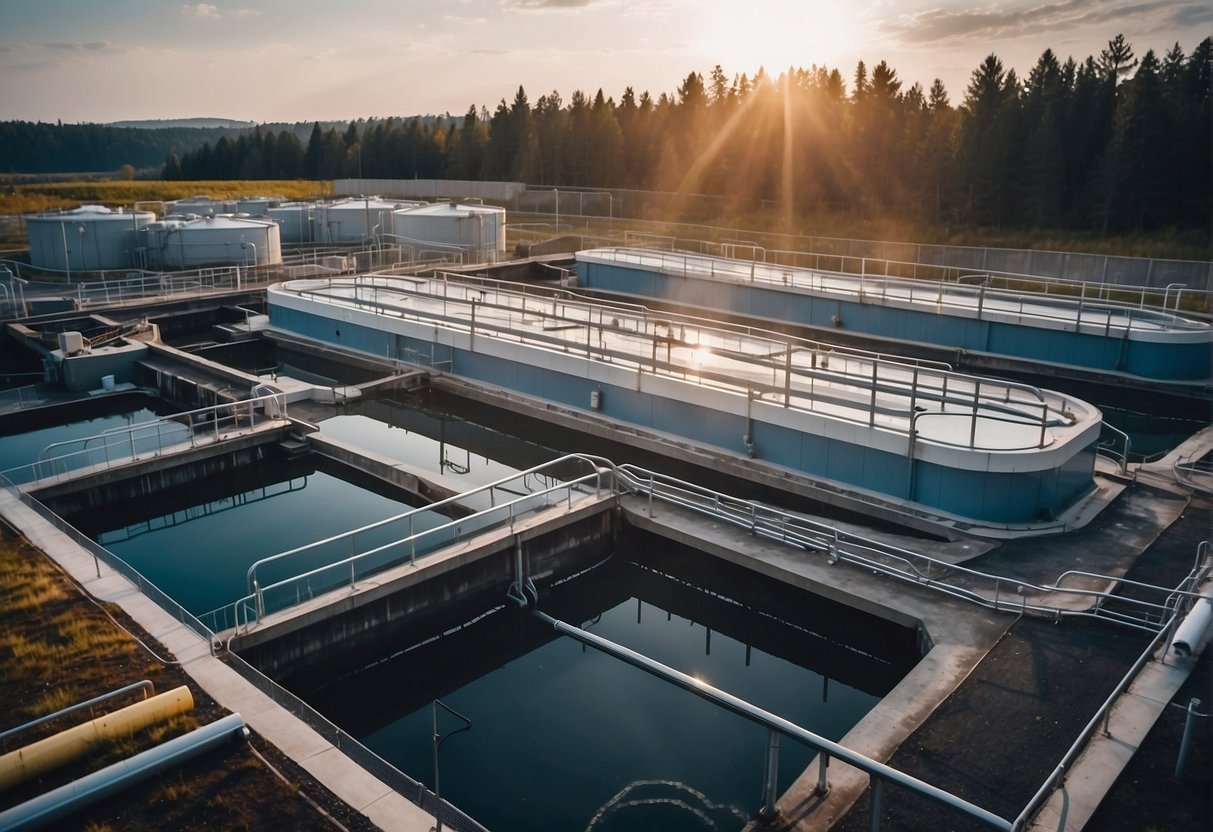
Advanced treatment technologies in wastewater management enhance the removal of pollutants beyond the capabilities of conventional treatment methods. They are designed to address specific challenges such as microplastic removal and complex chemical contaminants.
Membrane Bioreactors
Membrane bioreactors (MBRs) combine conventional biological treatment with membrane filtration. These systems offer several benefits:
- High-quality effluent: They consistently produce effluent of higher quality than conventional treatment methods.
- Compact design: MBRs typically require a smaller footprint due to their efficient process.
In particular, they are adept at eliminating particulate matter, including microplastics, which can range in size from 20 to 190 μm.
Advanced Oxidation Processes
Advanced Oxidation Processes (AOPs) involve generating highly reactive species, especially hydroxyl radicals, to mineralize organic contaminants. Key advantages include:
- Effectiveness: AOPs can degrade complex and otherwise persistent contaminants.
- Versatility: They can be tailored to treat a wide range of wastewater streams.
These processes are at the forefront for dealing with contaminants that resist conventional treatments, ensuring the safety and sustainability of water resources.
Sludge Management
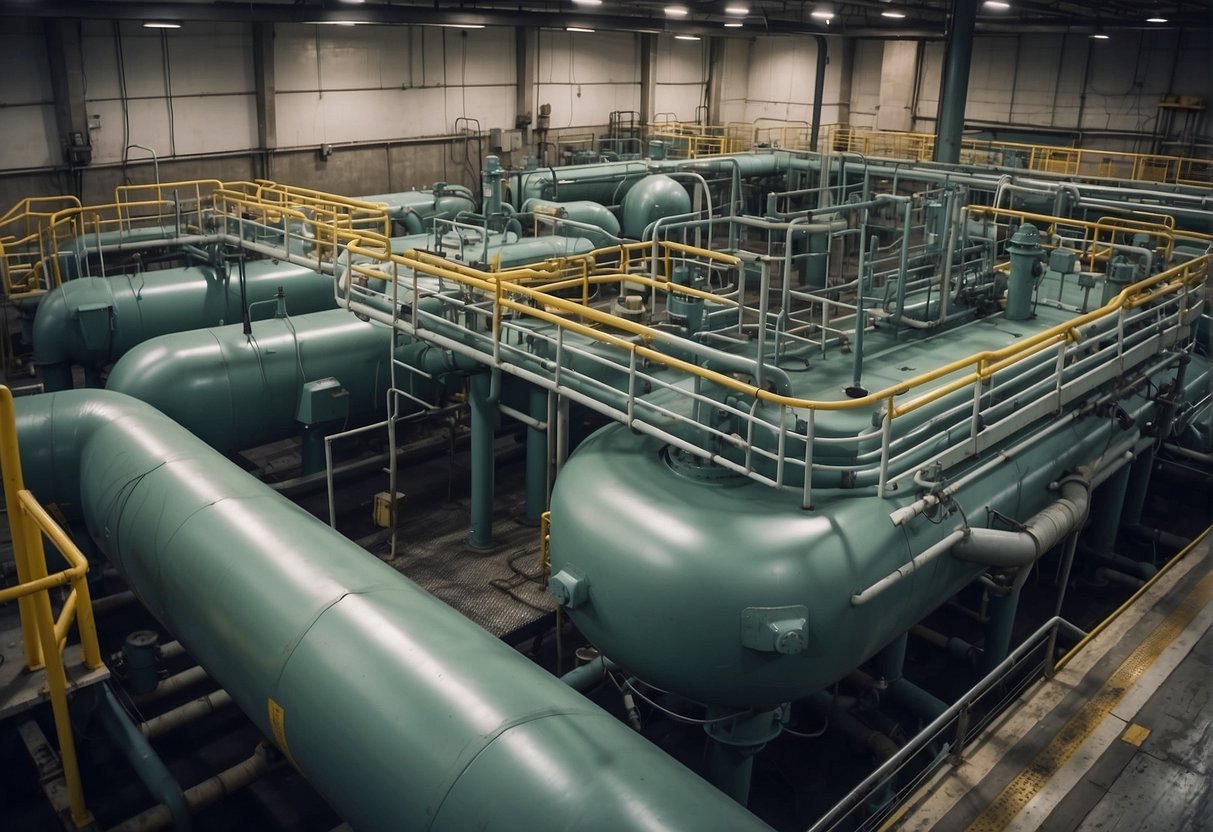
In wastewater treatment, sludge management is a critical process involving conditioning and handling byproduct solids to prepare them for disposal or reuse. Its primary goals are to minimize sludge volume and ensure safe environmental practices.
Sludge Thickening
Sludge thickening reduces the water content of sewage sludge, making it easier to handle and less voluminous. Commonly, this is achieved through gravity thickeners that allow the solids to settle, concentrating the sludge. Thickening decreases the overall costs for transporting and processing the sludge in subsequent stages.
Sludge Digestion
Sludge digestion is a biological process in which organic matter in sludge is broken down by microorganisms in a controlled environment. Digestion can occur under aerobic or anaerobic conditions. This process reduces the amount of organic material in the sludge and produces biogas, which can be used as a source of energy.
Sludge Dewatering
Sludge dewatering further reduces sludge’s moisture content. Effective dewatering methods include the use of filter presses, centrifuges, and drying beds. The end product, called cake, has a significantly reduced volume, which lowers the costs associated with transport and disposal and may be utilized in agriculture and other industries dependent on regulatory compliance.
Wastewater Reuse Strategies

Wastewater reuse is an essential component of sustainable water management. It involves treating wastewater to a suitable quality before reusing it for various purposes, ranging from agricultural irrigation to industrial processes.
Water Reclamation and Reuse:
- Agriculture: Treated wastewater can provide an alternative water source for irrigation, supplying both water and nutrients.
- Industrial: Industries can use reclaimed water for cooling systems, boiler feeds, and process water.
- Environmental: Recharged groundwater reserves and restored wetlands benefit from the clean effluent.
Advanced Treatment Processes: Treatment typically involves several stages:
- Primary Treatment: Removes solids and organic matter.
- Secondary Treatment: Biological processes break down dissolved organic matter.
- Tertiary Treatment: Ultrafiltration (UF), reverse osmosis (RO), and advanced oxidation process (AOP) clean water to almost drinking standards.
Concentrate Management:
- Reverse osmosis, while efficient, produces a byproduct called concentrate.
- The concentrate contains elevated levels of total dissolved solids, metals, and nutrients.
- It must be appropriately managed through further treatment, careful disposal, or beneficial reuse.
Health and Environmental Concerns:
- Safeguards are in place to ensure that wastewater reuse does not compromise public health or the environment.
- Regular monitoring and adherence to stringent guidelines guarantee the safety of reused water.
By implementing these strategies, municipalities and industries can significantly reduce the demand for freshwater, relieve stress on natural water bodies, and contribute to a circular economy where waste is transformed into a valuable resource.
Regulations and Compliance
Wastewater treatment is governed by a stringent regulatory framework to safeguard public health and environmental integrity. These regulations require adherence to specific treatment standards before releasing the treated water back into natural systems or repurposing it for consumption.
Local Guidelines
Local authorities often set their own wastewater treatment regulations and guidelines tailored to address the region’s unique environmental and public health challenges. For example, in California, the State Water Resources Control Board approved new rules facilitating the direct transformation of wastewater into drinking water, indicating stringent local measures to ensure safety and sustainability for its specific context.
National Standards
At the national level, standards and regulations are established by various agencies such as the Environmental Protection Agency (EPA). These national standards include:
- Contaminant Regulations: The EPA enforces regulations on contaminants in drinking water, which encompass a wide range of chemical, biological, and radiological elements.
Contaminants Example Regulations Chemical Regulation of lead and arsenic levels Microbial Limits on pathogens like legionella Radiological Standards for radioactive substances - Public Water System Operations: The EPA also regulates public water systems to ensure proper treatment and safety, including maintaining infrastructure and protecting against waterborne outbreaks.
By maintaining rigorous local and national standards, entities involved in wastewater treatment strive to achieve compliance, thus fostering health and environmental welfare.
Future Trends and Innovations

The wastewater management industry is witnessing a wave of emerging technologies and a pivot toward sustainable practices aimed at efficient and effective treatment solutions.
Emerging Wastewater Treatment Technologies
Thermal Hydrolysis: This technology involves heating wastewater sludge to high temperatures, which breaks down the material more effectively than conventional methods. Thermal hydrolysis not only accelerates the digestion process but also enhances the generation of biogas, which can be used as a renewable energy source.
Biohydrometallurgy: Particularly in industrial wastewater treatment, the application of biohydrometallurgy enables the recovery of metals with high efficiency, often between 93-97%. This process employs biological systems for the leaching of metals, representing an innovative step towards resource recovery.
Sustainable Practices
Selection of Context-Appropriate Technologies: The industry focuses on sustainable water infrastructure by tailoring solutions to local circumstances. This approach involves carefully assessing and implementing the most suitable, context-specific treatment technologies.
Advancements in Treatment Processes: Improvements in process technology are continual and incremental; they are key to enhancing the sustainability of wastewater treatment. Process innovations aim to reduce energy consumption, minimize waste generation, and improve overall treatment efficiency to meet stringent environmental standards.
Frequently Asked Questions
What is raw sewage?
Raw sewage refers to untreated wastewater that is discharged from residential, commercial, and industrial sources. It contains a mixture of organic and inorganic substances, including water, human waste, food scraps, grease, and other debris. Raw sewage also contains harmful bacteria, viruses, parasites, chemicals, and other pollutants. Due to its high level of contaminants, raw sewage poses significant health and environmental risks and must be adequately treated before being released back into the environment.
What are the primary methods used in sewage treatment?
The primary methods in sewage treatment typically include physical, chemical, and biological processes designed to remove contaminants. These range from sedimentation for solid settlement to the use of chlorine for disinfection.
How do wastewater treatment systems differ in dealing with various types of waste?
Systems for treating wastewater vary significantly; domestic sewage often involves treatment processes, whereas industrial waste may require advanced treatments, like the neutralization of hazardous chemicals and the removal of heavy metals.
What is nutrient removal in wastewater?
Nutrient removal in wastewater refers to reducing the levels of nutrients, such as nitrogen and phosphorus, from the wastewater before it is discharged into the environment. Excessive levels of nutrients in wastewater can lead to water pollution and harmful algal blooms in natural water bodies. The nutrient removal process typically involves biological and chemical treatment methods to reduce the nutrient concentrations to environmentally safe levels effectively. This is important for protecting water quality and the overall health of aquatic ecosystems.
Why is the treatment of wastewater crucial for environmental and public health?
Wastewater treatment is vital to prevent waterborne diseases and environmental degradation. It removes harmful organisms and pollutants, ensuring water is safe for reuse or return to natural water bodies.
What are the major stages and processes involved in industrial wastewater treatment?
Industrial wastewater treatment often entails pretreatment, primary, secondary, and sometimes tertiary treatment. Each stage progressively removes contaminants through sedimentation, filtration, biological digestion, and advanced purification.
Can you outline the typical career opportunities and job roles within the wastewater treatment sector?
Career opportunities within the wastewater treatment sector include roles like engineers, technicians, plant operators, microbiologists, and environmental scientists, all contributing to implementing and optimizing waste treatment systems.
What is domestic wastewater?
Domestic wastewater is the liquid and solid waste generated from households and commercial buildings. It includes water from sinks, showers, toilets, washing machines, and other domestic activities. This wastewater contains a variety of contaminants, including organic matter, nutrients, pathogens, and chemicals. Properly treating domestic wastewater is essential to prevent pollution and protect public health and the environment.