
Infrastructure: Building a Robust Future
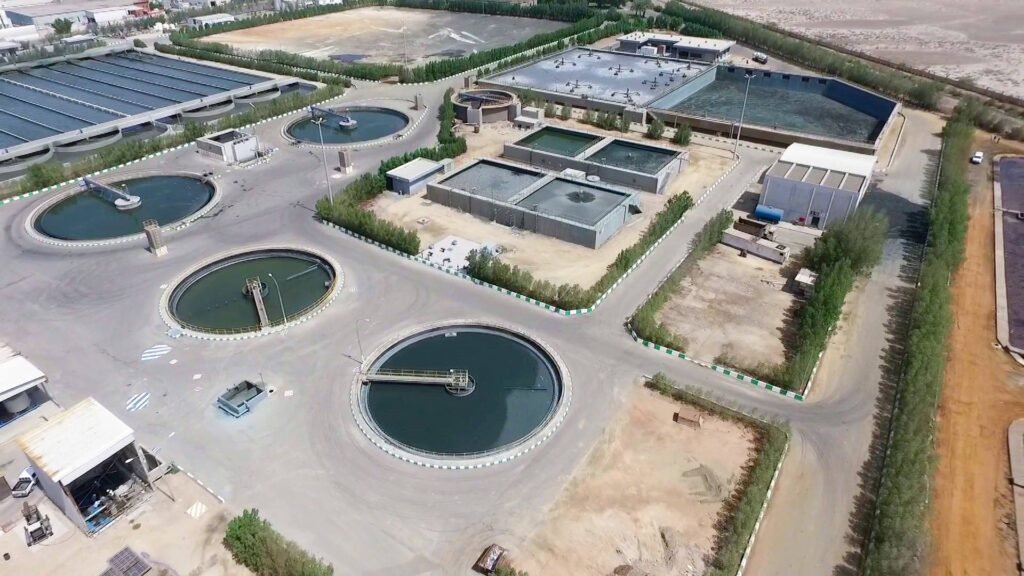
Infrastructure is the backbone of any society, supporting everything from transportation to communication. Without a strong infrastructure, businesses struggle, economies falter, and communities are left vulnerable. Building resilient infrastructure is crucial for economic growth and public safety.
In recent years, significant investments have been made to improve infrastructure across the United States, exemplified by the Bipartisan Infrastructure Law. This law aims to upgrade roads, bridges, water systems, and more, ensuring that both urban and rural areas enjoy improved connectivity and resilience.
Investing in infrastructure not only creates jobs but also fosters innovation and competitiveness. As seen in the Fact Sheet from the White House, these developments can transform the nation’s landscape, making it safer and more efficient for everyone. Within the broader water supply picture, infrastructure is the physical layer on which everything else depends: source protection, treatment, and conservation policy all rely on pipes, pumps, and tanks that were mostly installed decades ago and are now reaching the end of their design lives.
Key Takeaways
- Building resilient infrastructure is crucial for economic growth and public safety.
- The Bipartisan Infrastructure Law aims to enhance various components of infrastructure.
- Investments in infrastructure foster job creation, innovation, and competitiveness.
Defining Water Infrastructure
Water infrastructure refers to the systems and structures that supply, treat, store, and distribute water. It includes both natural and constructed elements. These systems ensure that clean water is available for drinking, sanitation, agriculture, and other uses.
Types of Water Infrastructure:
- Distribution Systems: Pipes, pumps, and reservoirs that deliver water from treatment plants to homes and businesses.
- Treatment Facilities: Plants that purify water by removing contaminants.
- Storage Facilities: Tanks and reservoirs that hold water until it is needed.
- Collection Systems: Networks that collect and direct wastewater to treatment plants.
The fourth category is a substantial discipline in its own right: collection and conveyance networks carry the return side of the water cycle, and because they typically operate by gravity in aging buried pipe, they present a different condition assessment and renewal problem than pressurized distribution mains.
Public water systems must meet EPA regulations to ensure water quality. Community water systems follow standards set by the Safe Drinking Water Act (SDWA).
Key Components:
- Pipelines: Transport water over long distances.
- Reservoirs: Store large amounts of water for use during dry periods.
- Pumps: Move water through the distribution network.
- Sensors and Meters: Monitor water quality and usage.
Maintaining and upgrading water infrastructure is vital for public health. Investments in water systems support clean water access and economic growth. Effective water infrastructure management helps prevent issues like contamination and shortages.
Water infrastructure also includes systems that protect and restore natural water bodies. These efforts preserve ecosystems and improve water sustainability.
The Importance of Water Infrastructure
Water infrastructure is crucial for providing clean and safe drinking water. It includes pipelines, treatment plants, and reservoirs. These systems help to remove impurities and ensure that water is safe to drink.
Key Benefits of Water Infrastructure:
- Public Health: Proper water treatment prevents diseases. Contaminated water can lead to illnesses like cholera and dysentery.
- Economic Stability: Industries need water for manufacturing and processing. Reliable water supplies support agriculture and industry, boosting the economy.
Challenges:
- Aging Systems: Many water infrastructures are old and need updates. This requires significant investment.
- Pollution Prevention: Protecting water sources from pollutants is essential. For example, source water protection helps in maintaining the quality of drinking water.
Water infrastructure also plays a vital role in sustainable water and energy practices. Improving these systems can lead to more efficient energy use and reduced environmental impact.
Water infrastructure sectors are considered critical. Their failure can have serious national security and public safety implications, and federal critical infrastructure designations formally recognize the water and wastewater sector alongside energy, transportation, and communications.
Maintaining a reliable water infrastructure is essential for the well-being of communities, the economy, and the environment.
Challenges of Water Infrastructures
Water infrastructure in the United States faces several significant challenges. These include aging infrastructure, lack of adequate funding and investments, stringent policy and regulation issues, and mounting environmental concerns.
Aging Infrastructure
Aging water infrastructure in the U.S. is a critical issue. Many water systems are over 50 years old and are reaching the end of their useful life. Problems like pipe bursts, contamination risks, and service interruptions are common. These aging systems need significant upgrades to meet modern standards and ensure reliability. If not addressed, these issues could lead to more severe public health risks and inefficiencies in water delivery.
Funding and Investments
Funding and investments are a major hurdle for improving water infrastructure. While federal grants for water infrastructure exist, they are often insufficient. Local governments and utilities struggle to secure the necessary funds to maintain and upgrade systems. The Bipartisan Infrastructure Law provides substantial funding through the State Revolving Fund programs, but the needs often outweigh the financial resources available. This gap results in delayed projects and inadequate maintenance.
Policy and Regulation
Policy and regulation also pose challenges. Water infrastructure projects must comply with numerous federal, state, and local regulations. These regulations are crucial for ensuring safety and environmental standards but can slow down project timelines and increase costs. Coordinating across different regulatory bodies can be cumbersome. Consistent updates in policies often require expensive adjustments in infrastructure plans, which can strain already limited budgets.
Environmental Concerns
Environmental concerns are increasingly influencing water infrastructure needs. Climate change impacts, such as increased flooding, droughts, and severe weather events, put additional strain on aging systems. Water quality issues due to pollution and contamination also require constant attention and resources. Addressing these environmental challenges involves significant investments in sustainable and resilient infrastructure to protect public health and the environment.
Infrastructure Subcategory Overview
Water infrastructure is not a single asset class but a portfolio of them, each with its own service life, failure mode, condition assessment method, and renewal cost. The clusters below organize that portfolio into the areas a utility plans, budgets, and renews separately.
Pipes and Conveyance Assets
Buried pipe represents the largest share of asset value in almost every water and wastewater utility, and it is also the hardest to inspect. The case for reinvestment laid out in the analysis of aging pipelines and treatment plants rests on a simple arithmetic problem: much of the American network was installed in three waves — the late 1800s, the 1920s, and the postwar decades — and each wave is now reaching the end of a 75 to 100 year design life more or less simultaneously. Material matters enormously to that timeline. Cast iron installed before 1930 has often outlasted its nominal life, while asbestos cement from the 1950s and 60s and early-generation PVC frequently fail earlier than expected. Looking forward, research into self-healing water pipes — materials that seal small cracks autonomously through embedded healing agents or bacterial mineralization — targets the leak volume that never reaches the reportable break statistics but accounts for a substantial share of non-revenue water. The technology is early-stage, but the economic case is straightforward: a pipe that reduces its own background leakage extends the interval between capital renewals.
Storage Assets
Storage is where water quality and hydraulic reliability meet, and neglected tanks compromise both. The practices covered under storage tank maintenance — interior and exterior inspection, coating condition assessment, sediment removal, cathodic protection checks, and hatch and vent security — determine whether a steel tank reaches its 50 to 75 year potential or requires structural rehabilitation at 30. Coatings typically drive the maintenance cycle, with interior linings requiring assessment every three to five years and recoating every 15 to 25 depending on water chemistry and original surface preparation. On the industrial and larger-capacity side, industrial storage solutions cover shop-fabricated and field-erected steel tank construction, secondary containment requirements, and the standards governing fabrication and testing. The specification decisions that matter most — welded versus bolted construction, coating system, and foundation design — are made once and constrain maintenance cost for the entire service life.
System Components
Between the major asset classes sits a long tail of valves, fittings, meters, actuators, hydrants, and control hardware whose individual cost is trivial and whose aggregate failure rate governs day-to-day operations. The survey of infrastructure components covers this layer, which is routinely underrepresented in capital plans because no single item is large enough to attract attention. In practice, an unexercised valve that will not close turns a routine main repair into a multi-block outage, and utilities with mature valve exercising programs consistently report shorter outage durations than those without.
Resilience and Protection Systems
Infrastructure that performs well under normal conditions can still fail catastrophically under stress, and resilience planning addresses the difference. Fire water protection imposes design requirements that often govern the sizing of distribution mains and storage volume — fire flow demand and duration frequently exceed peak domestic demand by a wide margin, and the required residual pressure at the hydrant sets minimum pipe diameters that pure domestic demand would never justify. Broader continuity planning is covered under water systems natural disasters preparedness, spanning backup power, seismic restraint, flood elevation of critical electrical equipment, emergency interconnections with neighboring systems, and chemical supply contingency. The lesson most utilities learn the expensive way is that a treatment plant with no backup power is a treatment plant with the same availability as the local grid.
Integrated and Regional Projects
Some infrastructure problems are only solvable at a scale larger than a single treatment plant. The Aurora Prairie Waters Project is a well-documented example of a municipality engineering an entirely new supply through riverbank filtration and advanced treatment rather than competing for scarce conventional water rights. Facility-scale integration follows similar logic at a smaller scale, and the approaches covered under integrated water and waste treatment solutions address how municipalities combine potable treatment, wastewater treatment, and reuse into a single planning and operating framework rather than three siloed programs. The parallel work on integrated water and waste treatment systems takes the same idea into industrial, campus, and modern commercial facilities, where on-site treatment and reuse are increasingly specified from the outset rather than retrofitted.
Energy and Auxiliary Systems
Energy is typically the largest controllable operating cost in a water utility, and auxiliary energy systems occasionally offset part of it. The parabolic trough solar water heater is one such technology, using concentrating reflectors to deliver process heat where a facility has a thermal demand and adequate solar resource. Its relevance to water infrastructure is narrow and site-specific, but it illustrates a broader point: the energy side of infrastructure planning deserves the same lifecycle scrutiny as the hydraulic side, because a decision that saves capital and raises pumping energy rarely pays back over a fifty-year asset life.
Comparison of Water Infrastructure Asset Classes
The table below compares the major asset classes on the criteria that drive renewal planning. Values are typical or approximate and vary substantially with material, water chemistry, climate, and maintenance history.
| Asset Class | Typical Service Life | Dominant Failure Mode | Condition Assessment Method | Renewal Cost Profile | Consequence of Failure |
|---|---|---|---|---|---|
| Distribution and transmission mains | 50–100 years, material dependent | Corrosion, joint failure, circumferential break | Break history, soil corrosivity, acoustic and in-line inspection | Highest total spend; per-meter cost driven by surface restoration | Service outage, contamination pathway, property damage |
| Storage tanks and reservoirs | 50–75 years structural; coatings 15–25 | Coating failure, corrosion, roof and hatch deterioration | Diver or drained inspection, coating thickness, cathodic survey | Moderate; recoating far cheaper than replacement | Water quality degradation, loss of fire flow and pressure |
| Pumping stations | Pumps 15–25 years; structures 50+ | Bearing and seal wear, motor failure, control obsolescence | Vibration analysis, efficiency testing, run-hour tracking | Recurring mechanical and electrical replacement | Pressure loss, overflow, energy cost escalation |
| Treatment facilities | Structures 50–75 years; process equipment 15–25 | Process equipment wear, regulatory obsolescence | Condition audit, process performance trending | Large periodic upgrades tied to regulation changes | Compliance violation, public health risk |
| Valves, hydrants, and components | 25–50 years | Seizure from lack of exercise, packing and seat wear | Exercising program records, operability testing | Low unit cost, high unit count | Extended outage area during isolation |
| Meters, sensors, and SCADA | 10–15 years | Drift, technology obsolescence, communication failure | Meter testing, calibration records | Short replacement cycle; revenue-linked payback | Revenue loss, undetected leaks, blind operation |
Components of Water Infrastructure
Water infrastructure includes essential components like treatment plants, pumping stations, pipelines, and storage tanks. Each part plays a critical role in ensuring a reliable supply of clean water to communities.
Water Treatment Plants
Water treatment plants are at the heart of water infrastructure. They remove contaminants and ensure the water is safe for consumption. These plants use various processes such as coagulation, sedimentation, filtration, and disinfection.
Coagulation involves adding chemicals to the water to form clumps of dirt and other particles. Sedimentation allows these clumps to settle at the bottom of a tank. Filtration removes remaining particles, and disinfection kills harmful microorganisms. These four steps ensure that the water meets health standards before it reaches consumers.
Pumping Stations
Pumping stations play a crucial role in moving water from one place to another, especially in areas where gravity alone cannot transport water. These stations use large pumps to pressurize the water and push it through pipelines to homes, businesses, and other facilities.
Pumping stations are often strategically placed at intervals along pipelines, especially in large cities or regions with varying elevations. They ensure consistent water pressure across the network. Maintenance of these pumps is essential to prevent breakdowns and interruptions in water supply. Without pumping stations, it would be challenging to manage water distribution efficiently.
On the wastewater side the same equipment appears as lift and pump stations, which carry a harsher duty — solids-bearing flow, corrosive headspace gases, and wet well conditions that shorten equipment life relative to clean water service.
Water Pipelines
Water pipelines form an extensive network that transports treated water from treatment plants to consumers. These pipelines are made from materials like ductile iron, PVC, and copper, chosen for their durability and resistance to corrosion.
The network includes main lines, which carry large volumes of water, and service lines, which deliver water directly to buildings. Proper maintenance and regular inspections are vital to detect leaks or damage, which can lead to water loss and contamination. Recent innovations also involve using smart sensors to monitor pipeline health and ensure early detection of any issues.
Storage Tanks
Storage tanks are essential for ensuring a steady water supply. They store treated water until it is needed by consumers. These tanks come in various sizes and types, including ground-level reservoirs and elevated towers.
Ground-level reservoirs typically store large volumes of water and are often used to manage supply during peak demand times. Elevated tanks provide the necessary pressure to distribute water throughout the system due to their height. Regular cleaning and maintenance are vital to prevent any contamination in the stored water.
Effective water infrastructure relies on the seamless integration and proper functioning of these components. Each part plays a pivotal role in ensuring the delivery of clean, safe water to the population.
Asset Management and Capital Planning Framework
Deciding what to renew, and when, is the central discipline of infrastructure management. The framework below is the sequence most utilities converge on, and it works at any system size.
Condition and Criticality
Two independent questions drive every renewal decision: how likely is this asset to fail, and how bad is it if it does. Condition assessment answers the first through break history, age, material, soil corrosivity, inspection data, and performance trending. Criticality answers the second through service population, presence of critical customers such as hospitals, redundancy in the network, and the cost of the failure consequence. Plotting assets against both axes produces the practical result: high-likelihood, high-consequence assets get renewed first, and high-likelihood, low-consequence assets can often be run to failure at lower total cost than proactive replacement.
Worked Example: What Sustainable Renewal Actually Costs
Consider a utility with 800 kilometers of distribution main and an average asset life of 100 years. Steady-state renewal requires replacing 8 kilometers per year — one percent of the network annually. At a typical urban replacement cost of $1,500 to $3,000 per meter including surface restoration, that is $12 million to $24 million per year for mains alone, before treatment, storage, or pumping renewal enters the budget.
Now compare against actual practice. Many utilities replace at 0.3 to 0.5 percent per year, which corresponds to a 200 to 330 year replacement cycle on assets designed for 100. The deficit does not appear as an immediate failure; it accumulates as rising break rates, growing non-revenue water, and a renewal backlog that compounds. This gap is precisely why national assessments of drinking water main replacement needs run into the hundreds of billions of dollars over a 25-year horizon. Running this calculation for a specific system takes an afternoon and produces the single most useful number in a capital plan: the difference between the renewal rate being funded and the renewal rate the asset base requires.
Funding the Gap
Federal and state programs — principally the Drinking Water and Clean Water State Revolving Funds, supplemented by Bipartisan Infrastructure Law appropriations — provide subsidized loans and, for disadvantaged communities, principal forgiveness. These programs materially lower the cost of capital but do not close the gap on their own, because the revolving funds are sized well below aggregate national need. Rate adequacy remains the primary funding mechanism, and utilities that defer rate increases to avoid political friction are, in effect, borrowing from the asset base at an interest rate set by future emergency repair costs.
Maintaining Water Infrastructure
Efficient water infrastructure is crucial for delivering clean drinking water and managing wastewater. It involves monitoring, maintenance strategies, and the integration of new technologies.
Infrastructure Monitoring
Monitoring is essential for ensuring that water infrastructure remains in good condition. It involves regular inspections of pipes, treatment plants, and other components. Advanced technologies, like smart water infrastructure and advanced metering infrastructure (AMI), help in detecting leaks and assessing water quality.
Water infrastructure monitoring can prevent costly repairs and service interruptions. Using sensors and data analytics, utilities can track the performance and health of the system. This proactive approach helps in identifying issues before they become significant problems, ensuring a reliable water supply.
Maintenance Strategies
Effective maintenance strategies are key to prolonging the lifespan of water infrastructure. These strategies include both routine and preventative maintenance. Routine maintenance involves activities like cleaning, inspections, and minor repairs.
Preventative maintenance aims to address potential issues before they escalate. It includes activities like coating pipes to prevent corrosion and upgrading old infrastructure. Planning and scheduling regular maintenance can save money by avoiding emergency repairs. Additionally, investing in workforce training ensures that personnel are equipped to handle maintenance tasks efficiently.
Innovation and Technology
Innovation and technology play a significant role in enhancing water infrastructure. Smart water infrastructure utilizes IoT devices and advanced analytics to optimize water management. These technologies help in reducing water loss and improving system efficiency.
One innovation is the use of drones for inspecting hard-to-reach areas like elevated storage tanks. Advanced metering infrastructure (AMI) in water systems allows for real-time monitoring of water usage. This helps in early leak detection and better resource management. Integrating such technologies ensures a resilient and efficient water infrastructure system.
Field Notes
Infrastructure programs fail in predictable ways, and most of the failures are organizational rather than technical. The notes below reflect issues that recur across systems of every size.
Common Specification and Planning Mistakes
The most frequent planning error is building a capital program from break history alone. Break history identifies pipes that have already failed; it says nothing about the assets that will fail next in a different material or soil condition, and it systematically over-weights the segments that are easiest to repair. The second recurring error is replacing like with like without revisiting the sizing basis — many mains oversized decades ago for anticipated growth that never arrived now carry water at velocities low enough to cause quality problems, and replacement is the one opportunity to correct that. The third is treating condition assessment as a one-time study rather than a rolling program, which leaves the asset register accurate for about three years and stale thereafter.
Pro Tip: Coordinate water main renewal with the paving cycle. Surface restoration is frequently 40 to 60 percent of urban main replacement cost, and a street scheduled for reconstruction absorbs that cost regardless. Utilities that map their renewal candidates against the municipal paving schedule and negotiate joint scheduling routinely stretch the same capital budget across noticeably more pipe. The corollary is equally valuable: a street repaved last year should almost never be opened this year, and a moratorium policy that forces that conversation early saves more money than any procurement strategy.
Common Mistake: Funding capital projects while deferring the maintenance programs that protect the assets already in the ground. Valve exercising, tank inspection and recoating, and pump efficiency testing are inexpensive relative to replacement and directly extend service life — a tank recoated on schedule reaches 75 years, while one whose lining is allowed to fail may need structural rehabilitation at 30. Because these programs are operating expense rather than capital, they are the first line cut in a tight budget year, and the consequence appears a decade later as an unplanned capital demand that no one budgeted for.
Water Infrastructure in Urban Settings
Urban water infrastructure involves critical systems for supplying water, treating wastewater, and managing stormwater. Effective management requires smart planning, sustainability practices, and careful resource management to meet the needs of urban populations.
Urban Planning
Urban planning for water infrastructure includes designing systems for water supply, sewerage, and stormwater management. Cities often install centralized networks to deliver clean water and handle waste through a mix of sewers and septic tanks. The goal is to ensure access to sufficient and safe water while minimizing risks like flooding.
Planners must also consider the impact of urbanization on water resources. As development accelerates, natural landscapes are replaced by impervious surfaces, increasing runoff and reducing natural water infiltration. Managing this requires installing systems to capture and treat stormwater, which helps prevent erosion and sedimentation in nearby streams.
Sustainability Practices
Sustainable water infrastructure focuses on reducing environmental impacts and increasing resilience. Implementing green infrastructure can help cities manage water efficiently. This includes rain gardens, green roofs, and permeable pavements that allow water to infiltrate the ground rather than running off.
Cities are also investing in technologies to recycle wastewater and use it for non-potable needs like irrigation and industrial processes. This reduces the demand for fresh water and can help conserve existing supplies. Another practice involves optimizing water distribution systems to detect and fix leaks promptly, which saves water and reduces energy costs.
Resource Management
Managing water resources in urban settings entails balancing supply and demand while protecting water quality. Cities use a combination of surface water and groundwater sources. Over-extraction of groundwater can lead to depletion, necessitating careful monitoring and management.
Effective resource management also includes educating the public on water conservation practices. This can involve measures such as installing low-flow fixtures, using water-efficient appliances, and adopting water-saving landscaping techniques. Additionally, investing in advanced treatment facilities ensures that both drinking water and treated wastewater meet safety and environmental standards.
Improvement and Development
Modern infrastructure is vital for a thriving society. The focus is on modernization, sustainability, and collaboration between public and private sectors to achieve significant improvements.
Modernization Programs
Upgrading infrastructure is critical for efficiency and reliability. Modernization programs focus on improving water infrastructure to ensure safe and clean water for all. These programs often involve replacing old pipelines, updating sewage systems, and enhancing treatment facilities.
For example, the Infrastructure Investment and Jobs Act includes extensive plans to revitalize public water infrastructure. Advanced technologies like smart water meters and automated control systems are also being integrated to monitor and manage resources better.
Sustainable Solutions
Implementing sustainable solutions in infrastructure projects is essential. Sustainable practices not only protect the environment but also ensure long-term benefits. One key area is developing clean water infrastructure, which focuses on rainwater harvesting, water recycling, and minimizing waste.
Green building materials and energy-efficient designs are increasingly used in construction. Projects may include solar panels, green roofing, and energy-saving lighting. These methods reduce carbon footprints and ensure sustainable development for future generations.
Public-Private Partnerships
Collaboration between the public and private sectors drives innovation and efficiency. Public-Private Partnerships (PPPs) leverage the strengths of both entities to finance, build, and operate infrastructure projects. These partnerships often speed up the completion of projects and can provide better financial management.
In water infrastructure specifically, PPP structures range from design-build-operate contracts through full concession arrangements, and they can bring advanced technologies and expertise from private companies to public systems. The trade-off that deserves scrutiny in every case is the transfer of long-term rate-setting and asset condition risk, which is easy to underweight during procurement and difficult to reverse afterward.
Case Studies and Examples
Municipal Water Infrastructure: Many cities are working hard to improve their water systems. For example, New York City has launched several projects to replace old pipes and reduce water loss. These efforts help ensure clean and reliable water for millions of residents.
Texas Water Infrastructure: Texas has faced challenges with its water supply, especially during droughts. The state has invested in projects like the Texas Water Development Board’s plan, which includes new reservoirs and expanded water reuse. These changes aim to provide a more stable water source for both urban and rural areas.
Water Infrastructure Examples:
- Desalination Plants: In California, desalination plants have become crucial for providing water. These plants remove salt from seawater, making it suitable for drinking and irrigation.
- Stormwater Management: Chicago has implemented green infrastructure, such as permeable pavements and green roofs, to manage stormwater. This helps prevent flooding and improves water quality.
Modernizing Roads and Bridges: The Bipartisan Infrastructure Law includes efforts to upgrade roads and bridges. For example, the law supports rebuilding aging bridges and highways to improve safety and efficiency.
Emergency Preparedness: Water utilities maintain emergency response plans covering communication, mutual aid, and continuity of operations. Coordinated response frameworks are essential during disasters, when restoring water service is among the highest public health priorities.
Cybersecurity Measures: Securing the digital layer of water infrastructure has become a distinct discipline. SCADA and control systems that were once physically isolated are now networked, and protecting them from intrusion is now a routine part of infrastructure planning rather than an IT afterthought.
Design Details and Standards
Water infrastructure design is governed by an unusually mature body of consensus standards, most of them developed through AWWA and adopted by reference in state design criteria.
Applicable Standards and References
Infrastructure design practice in North America draws on the AWWA C-series standards for pipe and appurtenances — including C151 for ductile iron pipe, C900 for PVC pressure pipe, and C500-series standards for valves and hydrants; the AWWA D-series for storage, including D100 for welded carbon steel tanks, D103 for factory-coated bolted steel tanks, D110 for prestressed concrete tanks, and D102 for coating systems; Recommended Standards for Water Works (the Ten States Standards) for prescriptive design criteria; AWWA G200 and the G-series for operational and management practice; and state design standards administered by the applicable primacy agency, which frequently impose criteria more restrictive than national guidance. Fire flow requirements derive from local fire code and Insurance Services Office criteria, and product materials in contact with drinking water must comply with NSF/ANSI 61.
Infrastructure Program Specification Checklist
- Complete asset register with material, install year, diameter, and location for every buried and above-ground asset
- Condition assessment methodology defined per asset class, with a rolling update cycle rather than a one-time study
- Criticality scoring covering service population, critical customers, redundancy, and consequence cost
- Sustainable renewal rate calculated against asset base and average service life, with the funded rate stated alongside it
- Hydraulic model calibrated against field pressure and flow data, used to verify fire flow at design residual pressure
- Storage volume basis documented — operational, equalization, fire, and emergency components stated separately
- Pump station capacity and redundancy criteria, including firm capacity with the largest unit out of service
- Backup power provision for all critical facilities, with fuel supply duration and transfer testing schedule
- Materials specification referencing the applicable AWWA standard and NSF/ANSI 61 certification
- Maintenance programs budgeted as recurring operating expense — valve exercising, tank inspection, coating assessment, pump efficiency testing
- Renewal candidates cross-referenced against the municipal paving and utility coordination schedule
- Emergency response plan with mutual aid agreements, interconnections, and chemical supply contingency
Future of Water Infrastructure
Advancements in technology and evolving policy are shaping the next generation of water infrastructure. These changes aim to address issues such as water quality, conservation, and resilience against climate change.
Technological Innovations
Smart water infrastructure is leading the way in transforming traditional water systems. This technology includes sensors and IoT devices that monitor water quality and detect leaks in real time.
Automated systems can greatly reduce water wastage and enhance efficiency. One example is smart metering, which allows for precise water usage tracking and early leak detection. The integration of advanced purification systems, like reverse osmosis and UV treatment, ensures safe drinking water.
Robotic and drone technologies are also being employed for the inspection and maintenance of public water infrastructure. By using these devices, authorities can quickly identify and repair faults in pipelines and reservoirs, improving system longevity and reliability.
Policy Trends
Policies are increasingly prioritizing sustainability and resilience in water infrastructure projects. Investments from initiatives such as the Bipartisan Infrastructure Law aim to modernize the water sector.
Governments are setting stricter regulations on water quality and conservation practices. This includes promoting water reuse and recycling programs. Policy shifts also encourage public-private partnerships to fund and manage water infrastructure projects, boosting innovation and efficiency.
New legislation is emphasizing the importance of equitable access to clean water. Efforts are being made to ensure that communities, especially in rural areas, have reliable and safe water supplies. These policy trends reflect a proactive approach to building and maintaining sustainable water infrastructure for the future.
Frequently Asked Questions
Critical infrastructure supports the functioning of modern societies and includes essential services and facilities.
What are some examples of critical infrastructure in modern societies?
Critical infrastructure involves various sectors that are vital for societal stability and safety. Examples include:
Energy: This sector includes power plants, electrical grids, and fuel supply systems that provide electricity, gas, and oil.
Water: Water treatment facilities and distribution networks ensure safe drinking water and sanitation.
Transportation: Includes highways, railways, airports, and ports that facilitate the movement of people and goods.
Communication: Telecommunications networks, including the Internet, support daily communications and emergency services.
Healthcare: Hospitals, clinics, and emergency medical services provide care and respond to health crises.
Financial Services: Banks, stock exchanges, and payment systems support economic activities and transactions.
Food Supply: Agricultural systems, food processing facilities, and distribution networks ensure food security.
Key Takeaways
- Calculate your sustainable renewal rate before anything else — asset base divided by average service life gives the annual replacement requirement, and the gap between that figure and what is funded is the real state of the system.
- Condition and criticality are separate questions — likelihood of failure and consequence of failure must be scored independently, because some high-failure assets are cheaper to run to failure than to replace proactively.
- Buried pipe dominates asset value and resists inspection — material and installation era predict failure better than age alone, and break history alone builds a biased capital program.
- Protect the assets already in the ground — valve exercising, tank inspection, and coating maintenance are operating expenses that directly extend capital asset life, and cutting them defers cost rather than avoiding it.
- Coordinate renewal with the paving cycle — surface restoration is often 40 to 60 percent of urban main replacement cost, and joint scheduling stretches the same budget across more pipe.
- Fire flow frequently governs sizing — required flow and residual pressure at the hydrant often set main diameters and storage volume that domestic demand alone would never justify.
- Backup power is a resilience prerequisite — a treatment or pumping facility without it has exactly the availability of the local electrical grid.
Conclusion
Water infrastructure is a portfolio problem, not a project problem. Buried mains, storage tanks, pumping stations, treatment facilities, valves, and metering each carry a different service life, failure mode, and renewal cost, and a capital plan that treats them as a single category will misallocate money in predictable ways. The most useful discipline available to any utility, regardless of size, is the pairing of condition assessment with criticality scoring, applied to a complete and maintained asset register.
The funding picture will remain tight. State Revolving Fund programs and Bipartisan Infrastructure Law appropriations lower the cost of capital meaningfully but are sized well below aggregate national need, which leaves rate adequacy as the primary mechanism. That makes efficiency in how renewal dollars are spent — coordinating with paving cycles, right-sizing rather than replacing like for like, and protecting existing assets through maintenance programs that cost a fraction of replacement — the practical lever most utilities actually control. Systems that build that discipline early spend the same money and get considerably more infrastructure for it.