
Trickling Filters in Wastewater Treatment: An Efficient Biofiltration Solution
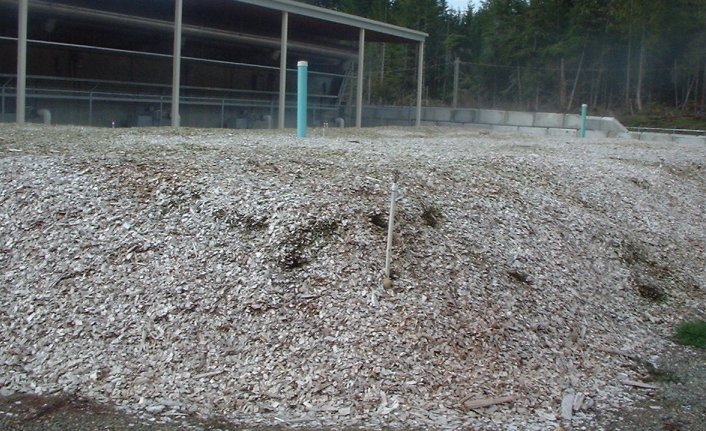
Trickling filters are a well-established method for treating wastewater, offering a reliable way to reduce the amount of organic material before it is returned to the environment or reused. These systems involve a biological process where microorganisms attached to a medium break down pollutants in the water. Their simple yet effective design makes them suitable for a variety of applications ranging from municipal sewage treatment to industrial waste management.
The basic principle behind trickling filters is to expose wastewater to a large surface area where bacteria and other microorganisms reside. As the water trickles over the media, typically rocks or specially designed plastic materials, the microorganisms consume the organic matter, thereby cleaning the water. These filters are not only an essential component of many wastewater treatment plants but also represent a sustainable option that can be adapted to different scales and conditions. Their operation is relatively straightforward, requiring minimal energy input compared to other treatment processes like activated sludge systems.
The distinction that defines this technology within secondary treatment is attached growth versus suspended growth. In activated sludge, the biomass floats in the mixed liquor and must be settled out and returned, which makes settleability a permanent operational concern. In a trickling filter, the biomass lives fixed on media and the water passes over it, so there is no mixed liquor to keep in suspension, no return sludge to manage, and no bulking to worry about. The biomass simply stays where it is until it grows too thick and sloughs off.
That single difference produces the technology’s characteristic profile. It is mechanically simple, tolerant of intermittent operation and shock loads, and needs a fraction of the energy an aerated basin requires because air moves through the media by natural draft rather than being blown into water. It also offers less process control — an operator has few levers beyond recirculation rate — and generally produces a somewhat weaker effluent than a well-run activated sludge plant. Where reliability and low operating cost matter more than the last increment of effluent quality, that trade is a good one, which is why trickling filters remain widespread despite being over a century old.
Key Takeaways
- Trickling filters utilize microorganisms to degrade organic material in wastewater naturally.
- They provide a cost-effective and energy-efficient treatment option for various applications.
- Ongoing maintenance and proper design are critical for optimal performance and longevity.
Principles of Trickling Filters
Trickling filters stand as a robust solution in wastewater treatment, harnessing biological processes to efficiently remove organic matter. They leverage microbial action on a fixed medium to break down waste, ensuring an effective purification process.
Biological Film Growth
The essence of trickling filter efficacy lies in the biological film that develops on the medium’s surface. This film, consisting of a diverse consortium of microorganisms, clings to the medium and forms a living layer. As wastewater passes over this biofilm, microbes consume organic material, thus purifying the water. The thickness and type of biofilm are influenced by factors such as nutrient load and the nature of the wastewater being treated.
Biofilm thickness is self-limiting in a way that governs how the process behaves. As the film grows, oxygen and substrate can no longer diffuse through to its base, and the deepest layer turns anaerobic and loses its grip on the media. The film then detaches in sheets, a process called sloughing, and regrows from what remains. This is normal and necessary rather than a fault, but it means the filter continuously discharges biological solids and must always be followed by a clarifier. It also means effluent quality varies with the sloughing cycle rather than holding perfectly steady.
Wastewater Distribution
Wastewater distribution across the trickling filter is a critical aspect of its design. A system known as the rotating arm distributor typically applies the wastewater evenly over the filter media. The even distribution is necessary to ensure all parts of the biofilm are adequately exposed to the wastewater nutrients, maximizing the treatment process efficiency.
Two aspects of distribution deserve attention beyond simple evenness. The first is wetting rate: the media must receive enough liquid to keep the entire biofilm hydrated, and a filter operating below the minimum wetting rate at night flows will develop dry patches where the biomass dies. Recirculation exists partly to solve exactly this problem. The second is dosing intensity, the depth of liquid applied per pass of the distributor arm. A slow-moving arm applying a heavy dose per pass flushes the media and controls excess growth; a fast arm applying a light dose does not. Modern practice deliberately slows distributors to use this flushing effect as a biofilm control tool.
Aeration and Ventilation
Trickling filters inherently ensure aeration, a vital component for aerobic microbial activity. Their open structure permits air to circulate freely, supplying oxygen to the biofilm. Ventilation maintains aerobic conditions and helps disperse gases produced during treatment, such as carbon dioxide and any potential odors. Aerobic conditions are crucial for high treatment efficiency and for maintaining an active microbial population within the filter.
The mechanism is natural draft driven by the temperature difference between the air in the media and the ambient air outside, which is why ventilation is best in cold weather and can stall almost entirely when air and wastewater temperatures converge. That stall is a real operating problem: as draft fails, the filter goes anaerobic, treatment falls, and odour appears. Adequate underdrain ventilation area and clear vent paths are therefore not incidental construction details but the provisions that keep the process aerobic, and deep plastic-media towers frequently need forced ventilation rather than relying on draft at all.
Subcategory Overview: Topics Within Trickling Filters
This category covers the technology’s fundamentals, its practical treatment application, the maintenance and repair that keeps an installation running, and the equipment supply landscape.
Trickling Filter Fundamentals
Introductory material answering what is a trickling filter establishes the concept before the design detail. A trickling filter is a bed of media over which settled wastewater is distributed, colonized by a biofilm that consumes the organic matter as the water passes. It is not a filter in the physical straining sense, despite the name — nothing is removed by size exclusion, and the media exists solely to provide surface area for biological growth. That misnomer causes real confusion, and clearing it up is the first thing any introduction to the technology should do.
Trickling Filter Systems in Practice
Coverage of trickling filter systems addresses the complete installation rather than the media bed alone: the primary clarifier that must precede it, the pumping and recirculation arrangement, the distributor and its drive, the underdrain and ventilation, and the secondary clarifier that captures sloughed solids. Each of these can limit performance independently of the biology. A filter with an excellent media bed and an inadequate recirculation pump will underperform, as will one whose secondary clarifier cannot handle the solids arriving after a heavy sloughing event.
Maintenance and Repair
The trickling filter maintenance and repair area covers the servicing these installations require and the failures they experience. The rotary distributor is the principal mechanical item, with its bearings, seals, and drive requiring periodic attention, and a distributor that stops turning will kill the biofilm beneath it within days. Media itself degrades: rock spalls and settles, plastic media becomes brittle with age and ultraviolet exposure at the surface. Underdrains silt up. Because most of these are slow failures rather than sudden ones, they are frequently discovered only when performance has already declined.
Equipment Manufacturers
The top trickling filter manufacturers area compares suppliers across media type and configuration, distributor design, underdrain systems, and cover and odour control options. Media selection is the decision with the longest consequences, since a media bed will typically outlast several distributors, and the specific surface area and configuration chosen determine the filter’s loading capacity for its whole life. Suppliers differ meaningfully in media geometry and in whether they can provide the deep structural media that biotower configurations require.
Filter Classification and Loading
Trickling filters are classified by how hard they are worked, and the classification determines almost everything about how a given filter behaves.
Loading Rates and Filter Classes
Two loading rates define a trickling filter. Hydraulic loading is the volume of wastewater applied per unit of media surface area per day, and it governs wetting, flushing, and contact time. Organic loading is the mass of BOD applied per unit of media volume per day, and it governs how much biomass will grow and therefore how much oxygen is needed and how readily the filter will clog. Low-rate filters run at modest values of both, achieve high BOD removal, and nitrify reliably, but need large area. High-rate filters accept several times the loading with recirculation, giving good BOD removal in a smaller footprint but generally without dependable nitrification. Roughing filters run at very high loading and are not expected to complete treatment at all — they exist to knock down a high-strength load before another process takes over.
Media Selection
Media choice sets the ceiling on what a filter can do. Rock media provides modest specific surface area and, because of its weight and its tendency to restrict airflow, limits bed depth to a few metres. Its virtues are durability, low cost where locally available, and thermal mass. Modular plastic media provides substantially more surface area per unit volume and far more open space for airflow, at a fraction of the weight, which is what makes deep biotower configurations possible. Cross-flow plastic media promotes redistribution of liquid across the bed and suits lower-rate applications; vertical-flow media resists clogging better and suits high-strength or roughing duty. Random plastic media sits between the two.
Recirculation
Recirculation is the principal operating control available on a trickling filter, and it does several jobs at once. It maintains the minimum wetting rate at low flows so the biofilm does not dry out. It dilutes strong influent, reducing the peak organic load the biofilm at the top of the bed experiences. It increases hydraulic loading, which improves flushing and helps prevent ponding. And in a hydraulically driven distributor, it keeps the arm turning when influent flow alone would not. The cost is pumping energy and additional hydraulic load on the clarifiers, which is why recirculation ratio is a design decision rather than something to maximize.
Biotowers and Modern Configurations
Deep towers filled with structural plastic media represent the modern form of the technology, achieving in a small footprint what a shallow rock filter would need many times the area to do. Because the media is light and open, these can be built several times the depth of a rock bed, and forced ventilation replaces natural draft to guarantee oxygen supply throughout. Trickling filter and solids contact processes add a short aerated contact tank between the filter and the clarifier, which flocculates the sloughed solids and produces an effluent competitive with activated sludge. Combined systems that place a roughing filter ahead of an activated sludge basin let each process do what it does best.
Design and Construction
In the realm of wastewater treatment, trickling filters stand out for their efficiency and straightforward design. They facilitate the breakdown of organic matter through a biological process, which is contingent on the characteristics of the media used and the structural integrity of the system.
Media Types and Characteristics
The media in a trickling filter is crucial; it provides a surface for microorganisms to attach and form a biofilm. Media types vary from conventional rocks to specially designed plastic media. Characteristics such as surface area, porosity, and durability are essential.
- Rocks: Generally inexpensive but with a lower surface area-to-volume ratio.
- Plastic media: Higher in cost, yet provide a greater surface area and promote efficient biofilm formation.
Both media types must ensure adequate air circulation for optimal microbial activity, and their selection directly impacts the hydraulic loading rates and treatment efficiency.
Structural Components
The structural components of a trickling filter include the base or underdrain system, the media bed, and a distribution system to apply wastewater evenly over the media.
- Base/Underdrain System: Supports the media, collects treated water, and allows for airflow. It often includes a layer of gravel and a network of perforated pipes.
- Media Bed: Stacked above the underdrain, this is where the treatment takes place. Height and diameter are designed based on the desired treatment capacity.
- Distribution System: Typically a rotating arm that distributes wastewater atop the media bed. This system can be designed to allow for both full and partial distribution.
Robust construction ensures the longevity and reliability of the trickling filter system, which often operates continuously for extended periods.
Operation and Maintenance
Effective operation and maintenance of Trickling Filters are fundamental to their performance in wastewater treatment. This encompasses ensuring appropriate flow regulation, diligent monitoring, and control, alongside consistent cleaning and upkeep.
Flow Regulation
Trickling Filters rely on the controlled distribution of wastewater over the microbial media. The flow must be consistent and even, as this prevents channeling and ensures optimal contact between the wastewater and the biofilm. Flow rate adjustment might be necessary to accommodate daily fluctuations or varying wastewater characteristics.
Monitoring and Control
Routine monitoring of system parameters such as pH, temperature, and biochemical oxygen demand (BOD) is crucial. Control mechanisms must be frequently checked and calibrated to ensure that the microorganisms in the Trickling Filter remain within their effective operating range. Online sensors and remote monitoring can facilitate real-time adjustments and predictive maintenance.
Cleaning and Upkeep
The integrity of the media in Trickling Filters must be preserved through regular cleaning to prevent clogging and to maintain surface area for biofilm growth. Raking or air flushing can remove excess biomass and inorganic solids accumulating over time. Periodic inspections can help identify wear and tear on mechanical components, such as rotary distributors, to preemptively address maintenance needs.
The failure this is guarding against has a name: ponding, in which excessive biofilm and accumulated solids block the void spaces so that water stands on the surface instead of percolating through. Ponding blocks airflow as well as flow, so the affected region goes anaerobic and stops treating. The established responses escalate in severity — increase recirculation to raise the flushing rate, slow the distributor to increase dosing intensity per pass, flood the filter and hold it, rake the surface, and as a last resort dose chlorine to strip excess growth. Prevention through adequate flushing intensity is considerably cheaper than any of them.
Selection and Specification Framework
Step One: Decide What the Filter Is Expected to Achieve
Trickling filters can be designed to complete secondary treatment, to nitrify, or simply to reduce load ahead of another process, and those are three different filters. Complete secondary treatment with reliable nitrification requires low loading and therefore substantial media volume. High-rate BOD removal without nitrification is far more compact. Roughing duty ahead of activated sludge is more compact still and makes no pretence of finishing the job. Establish which of these applies before sizing anything, because the loading rates differ by an order of magnitude across the range.
Step Two: Design Nitrification Around Winter
Nitrifying organisms grow slowly and slow further as temperature falls, and a trickling filter is an open structure that loses heat readily to ambient air. A filter that nitrifies comfortably in summer can lose nitrification entirely in winter, and the effect is more pronounced than in an activated sludge basin because the water film is thin and constantly exposed to air. Where a year-round ammonia limit applies, design the loading for the coldest expected condition and consider covering the filter, which conserves heat and reduces ambient odour at the same time.
Step Three: Select Media Against Depth, Strength, and Airflow
Rock media is durable and cheap where available but limits depth and restricts airflow, which caps what a given footprint can achieve. Plastic media allows deep towers, much higher surface area, and far better airflow, at higher capital cost. Within plastic media, cross-flow configurations suit lower-strength applications where liquid redistribution improves contact, while vertical-flow configurations resist clogging and suit high-strength or roughing duty. Media is the longest-lived component in the system and the hardest to change, so it warrants more scrutiny than its share of the capital cost suggests.
Step Four: Set the Recirculation Ratio Deliberately
Recirculation maintains wetting rate, dilutes influent strength, improves flushing, and drives hydraulic distributors. It also consumes pumping energy and adds hydraulic load to both clarifiers. Design the ratio to guarantee the minimum wetting rate at the lowest expected flow and to provide adequate flushing intensity, then check the resulting load on the primary and secondary clarifiers. A recirculation scheme designed on a rule of thumb without that clarifier check is a common source of solids carryover.
Step Five: Provide Ventilation Explicitly
Natural draft is the default and it is unreliable at exactly the conditions where the filter is most stressed, because draft stalls when ambient and wastewater temperatures converge. Specify adequate underdrain ventilation area, keep vent paths clear of the underdrain effluent, and evaluate forced ventilation for deep plastic-media towers rather than assuming draft will suffice. Where the filter is covered for heat or odour control, forced ventilation becomes mandatory rather than optional.
Step Six: Compare Against the Alternatives
The closest technology is the rotating biological contactor, which uses the same attached-growth principle with the media rotating through the wastewater rather than the wastewater passing over fixed media; the comparison is covered under RBCs. Where the objective is higher effluent quality with process control, activated sludge remains superior at the cost of energy and operator attention. Where an existing basin needs more capacity without new tanks, MBBR and IFAS apply the fixed-film principle on suspended carriers, effectively putting a trickling filter’s biology inside an aeration basin. Trickling filters earn their place where low energy, mechanical simplicity, and tolerance of intermittent operation matter most.
Comparison Tables
| Filter Class | Relative Loading | Typical Media | Recirculation | Expected Performance | Best-Fit Situation |
|---|---|---|---|---|---|
| Low-rate (standard) | Lowest hydraulic and organic | Rock | Little or none | High BOD removal; reliable nitrification | Small plants with land available and an ammonia limit |
| Intermediate-rate | Moderate | Rock or plastic | Moderate | Good BOD removal; partial nitrification | Plants balancing footprint against performance |
| High-rate | Several times low-rate | Plastic | Substantial | Good BOD removal; nitrification unreliable | Constrained sites without a firm ammonia limit |
| Roughing filter | Highest | Vertical-flow plastic | Variable | Partial BOD reduction only | Pretreatment ahead of activated sludge or high-strength industrial waste |
| Biotower | High, in a deep bed | Structural plastic, deep | Substantial | Depends on loading; can nitrify at low rates | Small footprint with capacity requirements |
| Trickling filter / solids contact | Filter plus aerated contact | Plastic | Substantial | Effluent competitive with activated sludge | Upgrading an existing filter to meet tighter limits |
| Criterion | Trickling Filter | Activated Sludge |
|---|---|---|
| Energy consumption | Low; natural draft supplies air, pumping is the main load | High; aeration is typically the plant’s largest load |
| Operator attention | Low; few control levers beyond recirculation | High; wasting, return, and aeration all require judgement |
| Process control available | Limited | Extensive |
| Effluent quality | Good; generally below a well-run activated sludge plant | Higher achievable quality |
| Shock and intermittent load tolerance | High; the biofilm persists | Lower; biomass inventory must be maintained |
| Cold weather performance | Poorer; open structure loses heat and nitrification suffers | Better; the basin retains heat |
| Characteristic failure | Ponding, distributor stoppage, ventilation stall | Filamentous bulking and solids carryover |
| Footprint | Larger at low rates, comparable as a deep biotower | Compact at high rates |
Performance and Efficiency
Trickling filters offer a reliable means of wastewater treatment, efficiently reducing organic content through biological means. Their performance hinges on the intricate interactions between microorganisms and wastewater constituents.
Removal of Contaminants
Trickling filters excel in the removal of organic matter, thanks to a robust population of microorganisms that reside on the filter media. These microorganisms degrade organic pollutants, transforming them into more stable compounds. As detailed in an EPA fact sheet, trickling filters are adept at breaking down complex organic material into simpler, less harmful byproducts.
- Nitrogen removal: These systems can also facilitate the partial nitrification of ammonia to nitrate.
- Reduction in biochemical oxygen demand (BOD): Typically, a well-operated trickling filter achieves a significant reduction in BOD, which is a critical measure of the contaminant load in wastewater.
Measurement of Treatment Efficacy
To determine the performance of a trickling filter system, specific parameters are evaluated. The primary metrics include:
- Biological oxygen demand (BOD) reduction: A key indicator of the effectiveness of organic pollutant removal.
- Total suspended solids (TSS): Assessments of TSS levels post-treatment offer insights into the clarity and quality of the effluent.
Both metrics must be measured on the secondary clarifier effluent rather than on the filter underdrain, because sloughed biomass leaves the filter continuously and would make the filter itself appear to perform far worse than the system does. That distinction matters when comparing published performance figures, since the two are sometimes reported interchangeably.
Applications and Case Studies
Trickling filters represent an established method of treating wastewater. This section explores specific instances of their use in municipal and industrial settings.
Municipal Wastewater Treatment
Municipal wastewater treatment facilities often employ trickling filters for their cost-effectiveness and efficiency in biological waste treatment. For example, the Lake George WWTP implements a system that includes equalization, clarification, and trickling filters to handle varying demand, ranging from 1.3 MGD in the summer to 0.5-0.6 MGD during winter. This system showcases how trickling filters can adapt to different seasonal flows, providing consistent treatment quality throughout the year.
That seasonal range illustrates one of the technology’s genuine strengths. A three-to-one swing between summer and winter flow would require careful management in an activated sludge plant, where biomass inventory must be matched to load. A trickling filter absorbs it with a recirculation adjustment, because the biofilm neither washes out at high flow nor starves at low flow provided the wetting rate is maintained. Resort communities, seasonal industrial loads, and any facility with a large tourist swing are natural applications for exactly this reason.
Industrial Wastewater Solutions
In the industrial sector, trickling filters facilitate the removal of organic pollutants while coping with high-strength wastewater streams. The approach is used when industries require solutions for waste treatment without the large spatial requirements of traditional methods. It has been noted that membrane bioreactor systems, which can include trickling filters, allow for improved treatment performance in smaller spaces, representing a major advantage for industrial applications.
That characterization warrants a clarification. A membrane bioreactor is a suspended growth process in which a membrane replaces the secondary clarifier; it does not incorporate a trickling filter, and the two are distinct technologies. What is true is that both address the same constraint — achieving treatment in a small footprint — and that hybrid arrangements do exist in which a fixed-film stage precedes a suspended growth process. Where an industrial site needs footprint reduction, the two options should be compared rather than conflated.
Roughing filters are the usual trickling filter configuration in industrial service, placed ahead of another process to knock down a high-strength load at very low energy cost. Food and beverage processing, brewing, dairy, and pulp and paper effluents all suit this arrangement, because they are strong, warm, and readily biodegradable. The filter removes a large share of the load cheaply, and the downstream process handles the remainder under conditions it can manage.
Design Details and Standards
Sizing Methodology
Establish the design flows and BOD loads, and decide which filter class the treatment objective requires. Select the media type, which sets the available specific surface area and the maximum practical bed depth. Size the media volume from the organic loading rate appropriate to the class and the required removal, then check hydraulic loading rate against the same class limits and against the minimum wetting rate at the lowest expected flow. Set the recirculation ratio to satisfy the wetting rate and flushing intensity requirements, then verify the resulting hydraulic load on both the primary and secondary clarifiers. Confirm underdrain ventilation area is adequate for natural draft, or specify forced ventilation. Where nitrification is required, verify the loading at the coldest expected temperature rather than at the annual average.
Key Parameters
- Hydraulic loading rate: volume applied per unit media surface area per day; governs wetting, flushing, and contact.
- Organic loading rate: BOD mass per unit media volume per day; governs biomass growth, oxygen demand, and clogging risk.
- Minimum wetting rate: the rate below which biofilm dries out, and a principal reason for recirculation.
- Dosing intensity: depth applied per distributor pass, deliberately increased by slowing the arm to flush excess growth.
- Recirculation ratio: the main operating control, traded against pumping energy and clarifier hydraulic load.
- Media specific surface area: substantially higher for plastic than rock, and the parameter that sets loading capacity.
- Bed depth: limited by weight and airflow with rock media, and far greater with structural plastic.
- Ventilation area: underdrain open area sufficient for natural draft, or forced ventilation where draft cannot be relied on.
All values and relationships above are typical guidance and should be confirmed against the governing state standard and the media manufacturer’s published loading data.
Applicable Standards and References
Recommended Standards for Wastewater Facilities, the Ten States Standards, prescribes trickling filter loading rates, media provisions, distributor requirements, underdrain ventilation, and recirculation criteria in many states, and its prescriptive values encode much of the design practice described here. WEF Manual of Practice No. 8 and ASCE Manual of Practice No. 76, Design of Municipal Wastewater Treatment Plants, provide the design methodology, and WEF Manual of Practice No. 11 is the standard operating reference. EPA wastewater technology fact sheets on trickling filtration give a concise treatment of the configurations and their applications. 40 CFR Part 133 defines the secondary treatment requirements the process must meet, and 40 CFR Part 122 governs the NPDES permit under which performance is judged. Standard Methods for the Examination of Water and Wastewater defines the BOD and suspended solids procedures on which performance measurement depends. OSHA 29 CFR 1910.147 governs lockout and tagout of the distributor drive, and confined space requirements apply to underdrain access.
Specification Checklist
- Design flows and BOD loads, including seasonal variation and minimum night flow
- Treatment objective: complete secondary, nitrification, or roughing duty
- Filter class selected, with the loading rates that follow from it
- Media type, configuration, specific surface area, and structural rating for the bed depth
- Bed depth and diameter, with the airflow implications of the media considered
- Hydraulic and organic loading at design and at minimum flow
- Minimum wetting rate, and the recirculation required to maintain it at low flow
- Dosing intensity and the distributor speed control provided to adjust it
- Recirculation pumping capacity, turndown, and the resulting clarifier hydraulic load
- Underdrain ventilation area, or forced ventilation with its design basis
- Distributor type, drive, and the provision for servicing it without draining the filter
- Cold weather provisions, including covering where nitrification must be maintained
- Secondary clarifier sized for the solids load a heavy sloughing event delivers
- Odour control and filter fly management provisions
Field Notes
Commissioning Considerations
Allow real time for the biofilm to establish, since a new media bed has no biomass and treatment builds over weeks rather than days. Verify distributor rotation speed across the full flow range and confirm the arm continues turning at minimum night flow, using recirculation if it does not. Check wetting coverage visually across the entire media surface at low flow, since dry patches at commissioning become dead zones later. Measure ventilation by confirming airflow through the underdrain at several ambient conditions rather than assuming draft. Record the baseline pressure or level in the underdrain as the reference against which future silting will be judged.
Common Specification Mistakes
- Designing loading for the annual average. Winter governs where nitrification is required, and open filters lose heat readily.
- Ignoring minimum wetting rate. Night flows can fall below the rate that keeps the biofilm hydrated, and recirculation must cover the gap.
- Treating ventilation as automatic. Natural draft stalls when air and wastewater temperatures converge, precisely when the filter is loaded.
- Setting recirculation without checking the clarifiers. The recycle stream loads both clarifiers hydraulically, and solids carryover follows.
- Sizing the secondary clarifier on average solids. Sloughing is episodic, and the clarifier must absorb the peak rather than the mean.
- Choosing rock media without accounting for depth and airflow limits. Weight and restricted voids cap what the footprint can achieve.
- Running the distributor fast. A light dose per pass provides no flushing, and ponding follows.
- Omitting odour and filter fly provisions. Both are predictable and both generate complaints that are expensive to answer after construction.
Operations and Maintenance Comparison
Rock media filters demand little of the media itself but need periodic attention to surface raking, to spalling and settlement over decades, and to underdrains that silt up slowly. Plastic media towers need the media inspected for embrittlement and structural settlement, particularly in the upper layers exposed to sunlight, and their forced ventilation equipment becomes a maintenance item in its own right. Across both, the rotary distributor is the component that fails and the one whose failure is most immediately damaging: bearings, seals, and the drive all require scheduled service, and a distributor that stops will kill the biofilm under it within days. Recirculation pumping is the other continuous mechanical duty. None of this approaches the maintenance burden of an aerated basin’s blowers and diffusers, which is a large part of the technology’s appeal.
Troubleshooting by Symptom
Standing water on the media surface is ponding, caused by excessive growth or accumulated solids blocking the voids; escalate through increased recirculation, slower distributor speed, flooding, raking, and chlorine dosing in that order. Odour and degraded performance together usually indicate the filter has gone anaerobic, most often from a ventilation stall or from organic loading beyond the design. A distributor that slows or stops points to bearing or seal failure, or to nozzle blockage unbalancing the arm. Sudden high solids at the secondary clarifier is a sloughing event, which is normal in itself but indicates the clarifier is undersized if it causes an excursion. Loss of nitrification with unchanged loading almost always tracks falling temperature rather than anything mechanical.
Pro Tip: Slow the Distributor Down
The most useful and least used control on a trickling filter is distributor speed. A slowly rotating arm applies a deeper dose of liquid per pass, and that flushing action strips excess biofilm and accumulated solids before they can consolidate into ponding. Many filters run their distributors far faster than necessary, treating rotation speed as fixed when it is actually adjustable through flow control, brakes, or reversing nozzles. Deliberately slowing the arm to increase dosing intensity, either continuously or as a periodic flush, is the standard modern approach to biofilm control, and it prevents the ponding problem that raking and chlorine dosing exist to correct after the fact. It costs nothing and it is available on most existing installations.
Environmental Impact and Sustainability
Trickling filters, as a biological treatment method for wastewater, offer several environmental benefits and lend themselves to sustainable practices. They function by allowing microorganisms to break down organic material in wastewater, which impacts both energy usage and resource recovery.
Energy Consumption
Trickling filters are energy-efficient in operation compared to other wastewater treatment methods. They require less energy because they rely on the passive flow of wastewater over microbial films that degrade organic pollutants. Unlike activated sludge systems, trickling filters do not require continuous aeration, which results in lower electricity demands.
The remaining energy use is pumping — lifting influent to the top of the filter and driving recirculation — which means the practical way to reduce a trickling filter plant’s energy consumption is to minimize unnecessary lift and to run recirculation no harder than the wetting and flushing requirements demand. Where site topography allows gravity flow onto the filter, the process approaches genuinely passive operation.
Resource Recovery
A key sustainable advantage of trickling filters is their ability to facilitate resource recovery. As microorganisms break down waste, they can produce byproducts like methane, which can be captured and utilized for energy generation. Additionally, the treated effluent can be repurposed for non-potable applications, and excess biomass can be used as a soil conditioner, promoting a circular economy.
Regulations and Standards
In the domain of wastewater treatment, Trickling Filters are subject to stringent regulatory standards to ensure they effectively remove organic matter from wastewater. These regulations are aimed at protecting water quality and public health.
International Guidelines
Internationally, guidelines for Trickling Filters are established to maintain the quality of discharged water. They often specify the permissible levels of biochemical oxygen demand (BOD5), total suspended solids (TSS), and pH levels in the effluent. For example, the World Health Organization (WHO) provides recommendations on wastewater safety, which may encompass guidelines for trickling filter technology depending on the region.
Compliance and Reporting
Wastewater facilities utilizing Trickling Filters must adhere to local and national regulations that govern reporting and compliance. In the United States, the Environmental Protection Agency (EPA) sets secondary treatment standards for publicly owned treatment works (POTWs), including those using Trickling Filters. Facilities are required to regularly monitor treatment effectiveness and report their findings to maintain compliance with the Clean Water Act. Failure to meet these standards can result in legal and financial repercussions.
Advancements and Innovations
Recent advancements in trickling filter technology have focused on enhancing efficiency and treatment outcomes. Innovations in materials and biofiltration methods have led to improved removal rates of pollutants and more resilient systems in wastewater management.
Technological Developments
Trickling filters have undergone several technological developments aimed at optimizing the wastewater treatment process. Modern trickling filters now incorporate:
- Structured Media: Advances in media design allow for increased surface area, promoting more effective microbial growth and pollutant removal. The transition from traditional stones to engineered plastic media has also reduced the system’s weight and improved airflow.
- Flow Distribution: More precise flow distribution mechanisms ensure even wastewater distribution over the filter media, which is critical for maximizing treatment efficiency and avoiding channeling.
- Monitoring Systems: Incorporation of real-time monitoring systems utilizing sensors and control units that enable adjustments to be made in response to varying wastewater characteristics and flow rates, ensuring optimal performance.
Emerging Research
Emerging research in the field of trickling filters is unveiling promising methods to further increase their efficacy. Notable research findings include:
- Nitrous Oxide Removal: Studies show that modifying operational conditions can enhance the removal of nitrous oxide, a potent greenhouse gas, from wastewater.
- Hybrid Systems: Research is also pointing towards hybrid systems that combine trickling filters with other treatment methods, such as activated sludge processes, to handle different types of contaminants more effectively.
By embracing these advancements and exploring new research, trickling filters continue to be a key component in the evolution of wastewater treatment technology.
Challenges and Considerations
Trickling filters are a pivotal component in wastewater treatment; however, when deploying them, one must carefully consider their operational limitations and the economic factors involved to ensure efficiency and sustainability.
Operational Limitations
Trickling filters, though effective for treating wastewater, possess certain operational limitations. They may face challenges with hydraulic loading rates and air ventilation, both of which are crucial for maintaining the biofilm that degrades pollutants. These systems have a threshold for organic loading, and an influx beyond their capacity can lead to clogging and channeling—where water bypasses the filter media and reduces treatment efficiency. Additionally, temperature variations can influence the microbial activity within the filter, necessitating climate considerations in the design phase.
Economic Factors
From an economic standpoint, the initial capital outlay for constructing a trickling filter system can be substantial. It’s imperative to consider not only the construction costs but also the long-term operation and maintenance expenses. Regular backwashing and media replacement add to operational costs. Economic considerations also extend to scalability and adaptability, with smaller systems facing higher per-unit costs. However, the economic viability can improve over time as advances in materials and design lead to cost-effective solutions for wastewater treatment.
Frequently Asked Questions
How do trickling filters function in the treatment of wastewater?
Trickling filters treat wastewater by allowing it to flow over a bed of media, where a biofilm of microorganisms degrades organic matter. Oxygen, essential for this process, is supplied through the air circulating through the media.
What distinguishes trickling filters from activated sludge processes in wastewater treatment?
Trickling filters rely on a fixed-bed system where microorganisms grow on media, while activated sludge processes use a suspended-growth system where microorganisms are mixed with wastewater. This leads to differences in operational requirements and sludge production.
What are the primary components of a trickling filter system?
A trickling filter system primarily consists of a bed of media to support microorganism growth, distribution arms or nozzles to spread wastewater, and under-drains to collect treated water. These components work together to ensure efficient wastewater treatment.
Can trickling filters be used for both primary and secondary wastewater treatment?
Trickling filters are typically used for secondary wastewater treatment, where they remove organic matter after primary treatment. However, depending on the design and operational strategy, they can also be part of the primary treatment process.
What are the main benefits and possible drawbacks of using trickling filters for wastewater management?
The benefits of trickling filters include their low energy requirements, simplicity, and durability. Possible drawbacks may involve clogging, the requirement of periodic media replacement, and less control over the treatment process compared to more advanced methods.
How do different types of trickling filters compare in terms of effectiveness and application?
Different types of trickling filters, like standard rate filters and high-rate filters, vary in loading rates, hydraulic characteristics, and type of media used. These differences dictate their effectiveness and suitability for specific wastewater treatment applications.
Conclusion
Key Takeaways
- Attached growth changes everything — the biomass stays on the media, so there is no mixed liquor to keep suspended, no return sludge to manage, and no bulking to control.
- The name is misleading — nothing is filtered by size exclusion; the media exists only to provide surface area for biofilm.
- Loading class defines the filter — low-rate, high-rate, and roughing filters differ by an order of magnitude in loading and are three different designs, not one design run harder.
- Recirculation is the main control lever — it maintains wetting rate, dilutes strength, improves flushing, and drives hydraulic distributors, at the cost of pumping and clarifier load.
- Ventilation is not automatic — natural draft stalls when air and wastewater temperatures converge, and a stalled filter goes anaerobic.
- Distributor speed is the underused control — slowing the arm increases dosing intensity and flushes excess biofilm, preventing the ponding that raking and chlorine exist to correct.
The trickling filter is over a century old and still installed because it does something no more modern process does as cheaply: it treats wastewater biologically with almost no energy input and almost no operator attention. Air moves through the media on its own, the biomass stays where it is put, and the process tolerates the intermittent and seasonal loading that would require careful management in a suspended growth plant. Where those characteristics matter more than the last increment of effluent quality, it remains the sensible answer.
Designing one well means treating it as a system rather than a bed of media. Choose the loading class from the treatment objective, select media against depth and airflow as much as surface area, set recirculation to guarantee wetting and flushing rather than by rule of thumb, provide ventilation explicitly instead of assuming draft, and size the secondary clarifier for the solids a sloughing event actually delivers. Then slow the distributor down, which is the cheapest performance improvement available on any trickling filter already in the ground.