
Water Pipelines: Essential Infrastructure for Modern Communities
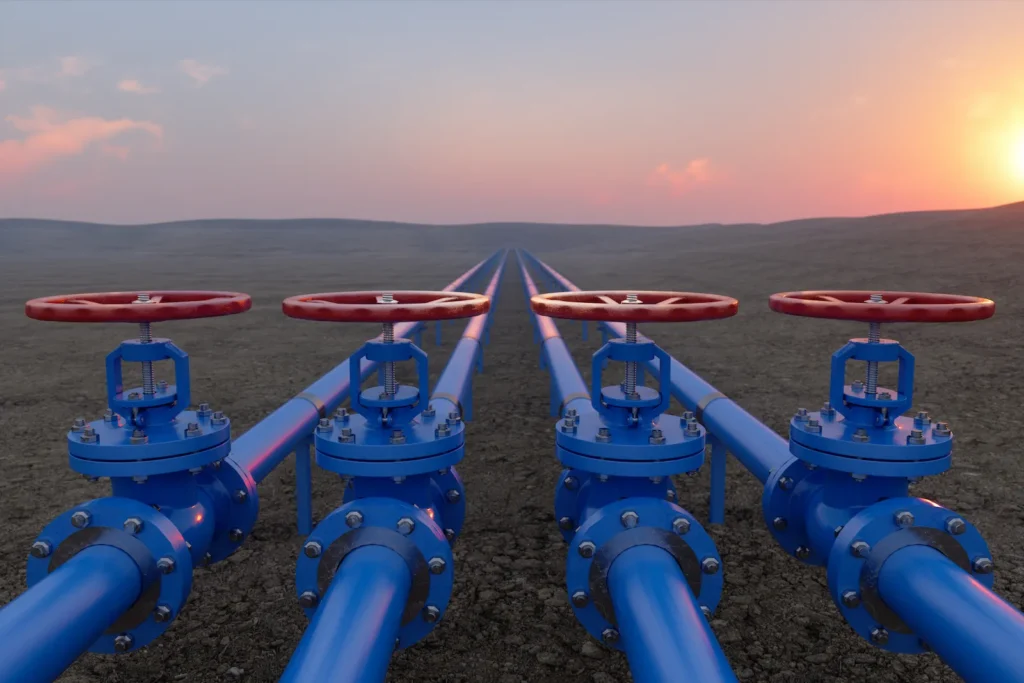
Water pipelines are essential for delivering clean drinking water to households and businesses. These intricate systems play a crucial role in our daily lives by ensuring a constant and safe supply of water. Without efficient water pipelines, access to clean water would be severely limited, affecting health and sanitation.
Modern water pipelines are designed to withstand various pressures and environmental factors. They must be durable, resistant to corrosion, and capable of handling large volumes of water. Engineers must also consider the types of materials used and the construction techniques to ensure the pipelines’ longevity and reliability.
Maintaining water pipelines involves regular inspections and cleaning to prevent issues like blockages or contamination. Techniques such as flushing and mechanical cleaning are commonly used to keep pipelines in optimal condition. Proper maintenance not only extends the life of the pipelines but also ensures that water quality remains high. Within the broader water supply system, buried pipe represents the largest share of asset value and the hardest asset to inspect — which is why pipeline decisions made once at installation govern cost and reliability for the following seventy-five years.
Key Takeaways
- Water pipelines deliver clean drinking water to homes.
- Modern pipelines must be durable and resist corrosion.
- Regular maintenance is crucial for optimal performance.
Concept and Design of Water Pipelines
Water pipelines are essential for transporting water from its source to various consumer locations. The design focuses on durability, efficiency, and maintaining water quality.
Understanding Water Pipelines
A water pipeline is a system of tubes that transports water from its source to end-users like households and businesses. Common materials used include steel, PVC, and concrete. The pipelines are often buried underground to protect them from external damage.
Water pipelines work by using pumps and gravity. Pumps boost the water through the pipeline, while gravity moves it downhill when possible. This combination ensures a steady flow, even over long distances. On the distribution side that pumping duty is handled by booster stations, and on the collection side by lift and pump stations, which face a harsher duty in solids-bearing flow.
Durable materials are crucial to prevent leaks and ensure longevity. Design considerations include the pressure the pipe can handle, the type of soil, and the risk of corrosion. Regular maintenance is also key to ensure the system continues to operate efficiently without interruptions.
Subcategory Overview
Pipeline work divides into three distinct areas of practice: designing and operating the network as a system, renewing pipe that has reached the end of its life, and sourcing the components that make up both.
Pipeline Networks
Individual pipes matter less than how they connect. Coverage of pipeline networks addresses the system-level view — hydraulic modelling, looping versus dead-end configurations, pressure zone design, storage integration, and the optimization of fluid transport across a distribution area rather than through a single run of pipe. Network topology drives outcomes that pipe specification cannot fix: a looped network maintains service during a repair and keeps water moving, while dead-end branches accumulate water age, lose disinfectant residual, and leave every customer beyond a break without service. Hydraulic modelling calibrated against field pressure and flow data is what turns this from intuition into a design basis, and it is the tool that answers whether a proposed main is genuinely needed or whether a valve change achieves the same result.
Trenchless Rehabilitation
Where pipe has deteriorated but excavation is impractical or unaffordable, rehabilitation replaces replacement. Coverage of trenchless pipeline rehabilitation addresses cured-in-place pipe lining, sliplining, pipe bursting, spray-applied linings, and the newer structural liner systems that renew a main from inside with only entry and exit pits. The economic case is driven by surface restoration, which commonly represents 40 to 60 percent of open-cut replacement cost in urban settings — a trenchless method that avoids reinstating a street can be substantially cheaper even when the material cost is higher. The trade-offs are real: liners reduce internal diameter, some methods are non-structural and only address leakage rather than strength, and pipe bursting requires enough clearance from adjacent utilities to accommodate the displaced ground.
Piping Accessories and Sourcing
Pipe is a fraction of what a pipeline is made of. Valves, fittings, joints, restraints, couplings, hydrants, and service saddles all have to be specified and sourced, and their failure rates govern day-to-day operations more than pipe failures do. The survey of top OEMs for piping accessories covers the manufacturers supplying this component layer to the water and wastewater market, while the parallel review of top 10 piping accessories manufacturers ranks suppliers against the criteria buyers actually apply. Those criteria are worth naming: certification to the applicable AWWA standard and to NSF/ANSI 61, parts availability and lead time, compatibility with the pipe materials already in the ground, and local distributor support — a valve that cannot be repaired because parts are six months out is a valve that gets abandoned in place.
Pipe Materials and Service Life
Material selection is the decision with the longest reach in pipeline engineering, because it is effectively permanent and it determines both the failure mode and the timing of renewal.
The Common Materials
Ductile iron remains the workhorse for distribution mains, offering high strength and impact resistance with a service life of 75 to 100 years — but only when protected from aggressive soil, which is why polyethylene encasement is standard practice in corrosive ground. PVC pressure pipe has captured a large share of new installation on the strength of corrosion immunity and a hydraulic roughness that does not degrade with age. High-density polyethylene is fusion-jointed, which produces a fully restrained, leak-free system and makes it the material of choice for trenchless installation and pipe bursting. Steel dominates large-diameter transmission where its strength-to-weight ratio pays, at the cost of requiring both protective lining and cathodic protection. Prestressed concrete cylinder pipe carries very large transmission duty and has a distinctive risk profile: it fails suddenly rather than gradually when prestressing wires break, which is why large PCCP mains are increasingly monitored with acoustic fibre optic systems rather than inspected on a schedule.
The Legacy Materials
Much of what is in the ground was installed under different assumptions. Cast iron laid before 1930 has often outlasted its nominal life and continues to perform, though graphitic corrosion progressively weakens it in a way that is invisible from outside. Asbestos cement, installed heavily from the 1940s through the 1970s, degrades in soft or aggressive water as the cement matrix leaches, and its handling during repair and replacement is regulated. Lead service lines are their own category, now subject to mandatory inventory and replacement requirements rather than material selection. The practical consequence for asset management is that installation era predicts failure better than nominal service life does, and a material-and-era map of the network is a more useful planning document than an age map alone.
Corrosion and Soil
For metallic pipe, the soil is as much a design input as the water. Soil resistivity, pH, redox potential, sulphides, and moisture together determine corrosivity, and standard scoring procedures convert those measurements into a decision on whether polyethylene encasement, cathodic protection, or a non-metallic material is required. Skipping the soil evaluation is a common and expensive omission — a ductile iron main installed unprotected in aggressive clay can fail in twenty years rather than eighty, and the failure appears as a cluster of breaks along one street that has no obvious explanation until someone tests the ground.
Comparison of Water Pipeline Materials
The table below compares the pipe materials in common use. Values are typical or approximate and vary with diameter, pressure class, soil, and water chemistry.
| Material | Typical Service Life | Joint Type | Dominant Failure Mode | Best-Fit Applications | Main Limitation |
|---|---|---|---|---|---|
| Ductile iron | 75–100 years with protection | Push-on or mechanical; restraint required at bends | External corrosion; circumferential break | Distribution mains, high-load and high-impact locations | Requires soil evaluation and encasement in corrosive ground |
| PVC (C900/C905) | 70–100 years | Gasketed bell; restraint required | Impact damage, longitudinal split, joint pull-out | Distribution mains, corrosive soils | Permeation risk in hydrocarbon-contaminated soil; UV sensitivity before burial |
| HDPE | 50–100 years | Butt-fused — fully restrained, no leak path | Third-party damage; fusion joint defects | Trenchless installation, pipe bursting, difficult crossings | Lower pressure rating per wall thickness; fusion quality is critical |
| Steel | 50–100 years with protection | Welded or gasketed | Corrosion where coating or cathodic protection fails | Large-diameter transmission, high pressure, seismic areas | Requires lining, coating, and cathodic protection maintenance |
| Prestressed concrete cylinder (PCCP) | 50–75 years | Gasketed bell and spigot | Sudden failure from prestressing wire breaks | Very large diameter transmission | Catastrophic failure mode; warrants continuous acoustic monitoring |
| Asbestos cement (legacy) | 50–70 years | Coupling | Matrix leaching in soft or aggressive water | No longer installed; large installed base remains | Regulated handling during repair and replacement |
Hydraulic Design and Sizing
Pipeline sizing is governed by a short list of criteria, and one of them usually dominates all the others in a way that surprises people new to the field.
Velocity, Head Loss, and Pressure
Design velocity in distribution mains typically falls between 0.6 and 1.5 metres per second — roughly 2 to 5 feet per second — with about 3 metres per second as a practical ceiling before head loss and surge risk become problematic. Head loss is normally computed with the Hazen-Williams equation, in which the roughness coefficient C carries the material and age of the pipe: new ductile iron with cement mortar lining and PVC both start around 130 to 150, while old unlined cast iron with heavy tuberculation can fall to 60 or 80, which is why an aging main can lose a large fraction of its original capacity without any reduction in diameter. Most state standards require a minimum residual pressure of about 20 psi at every point in the system under fire flow conditions, with normal operating pressure typically 40 to 80 psi.
Worked Example: Why Fire Flow Sets the Diameter
Consider a main serving 500 homes. At 300 gallons per day per home, average demand is 150,000 gallons per day, or about 104 gpm. Applying a maximum day factor of 2 gives 208 gpm, and a peak hour factor of 3.5 gives 364 gpm. Sized on peak hour alone at a 5 ft/s velocity limit, the required diameter works out to about 5.5 inches — a 6-inch main.
Now add fire flow. A modest residential fire flow requirement of 1,500 gpm, applied on top of maximum day demand, gives 1,708 gpm. At the same velocity limit that requires roughly 11.8 inches — a 12-inch main. Fire protection has doubled the diameter and roughly quadrupled the cross-sectional area for a demand condition that may occur for a few hours in a decade.
That outcome carries a water quality consequence worth naming. At average demand of 104 gpm in a 12-inch main, velocity is around 0.3 ft/s, and water takes roughly five hours to travel a mile. Long detention times allow disinfectant residual to decay, encourage nitrification in chloraminated systems, and contribute to taste and odour complaints. Oversizing for fire flow is often unavoidable, but it should be a conscious decision with a flushing programme attached rather than an unexamined default.
Construction and Costs
Building water pipelines involves meticulous planning, resource allocation, and adherence to safety standards. The expenses encompass materials, labor, and various logistical challenges during the construction phase.
Building a Water Pipeline
The construction of a water pipeline starts with detailed planning and design. Engineers conduct surveys to choose the most feasible route, considering environmental impact and accessibility.
Next, heavy machinery clears the path, and trenches are dug to lay the pipeline. Materials commonly used include steel, ductile iron, and plastic, each chosen based on durability and specific project needs.
Installation involves welding or joining pipe sections, ensuring they are sealed and leak-proof. Quality control is vital, with pressure tests conducted before commissioning. Finally, backfilling the trenches and restoring the landscape ensures minimal environmental impact.
Two commissioning steps are non-negotiable on potable mains and are sometimes compressed under schedule pressure. Pressure and leakage testing verifies both the joints and the thrust restraint before the trench is closed. Disinfection follows a defined procedure — chlorination to a specified residual, a prescribed contact period, flushing, and bacteriological sampling that must pass before the main is placed in service. Bedding and haunching quality matters as much as either: pipe supported unevenly on rock or poorly compacted material carries bending stress it was never designed for, and the resulting break appears years later with no apparent cause.
Economic Aspects
The cost of building a water pipeline varies widely based on length, material, and location. On average, constructing a water pipeline can range from $1 million to $2 million per mile. Urban areas may incur higher costs due to complex underground infrastructure and labor expenses.
Funding often comes from both the public and private sectors, with government grants and loans playing significant roles. Programs such as the Drinking Water State Revolving Fund assist in financing.
Operational costs also include maintenance and replacements, influenced by material lifespan and usage rates. Long-term investment in pipelines is crucial for ensuring safe and reliable water supply systems.
Operation and Maintenance
Proper operation and maintenance are crucial for ensuring the longevity and efficiency of water pipelines. This includes regular cleaning procedures and effective methods for detecting and repairing leaks.
Regular Cleaning Procedures
Regular cleaning helps maintain the quality and flow of water in pipelines. Domestic water pipelines often accumulate mineral deposits and other debris which can clog the system.
One effective method is flushing, where water is forced through the pipeline at high speeds to remove build-up. Adding chemicals like chlorine can also help in disinfecting the pipes. Pigging is another technique, using a device known as a pig to scrape the interior walls of the pipe.
Municipal practice has largely moved from conventional flushing to unidirectional flushing, in which valves are operated to force flow along a single defined path at a velocity high enough — typically above 1.5 metres per second — to actually scour the pipe wall rather than simply exchange water. Conventional flushing that opens a hydrant without closing valves to direct the flow uses a great deal of water and removes very little material, which is why systems that convert to unidirectional programmes usually report better results with lower water use.
Keeping pipelines clean prevents blockages and contamination, ensuring a continuous water supply. Engaging professional services for thorough cleaning is also advisable for more complex pipeline systems.
Leakage Detection and Repair
Detecting and repairing leaks promptly is essential to prevent water loss and damage. There are several ways to detect leaks in a water pipeline.
Visual inspection is the simplest method, involving checking for wet spots, mold, or unusually green patches in the surroundings. For underground pipes, acoustic listening devices help detect the sound of water escaping from a pipe. Pressure testing can also identify leaks by measuring the pressure loss in the system.
Repairing leaks may involve replacing damaged sections or using techniques like trenchless pipe repair. This method involves minimal excavation and uses liners to seal the pipe from the inside, reducing downtime and costs.
At system scale, leak detection works best inside a structured water loss programme rather than as a response to visible failures. District metered areas — permanently or temporarily isolated zones with metered inflow — allow night flow analysis, where minimum flow during the small hours reveals background leakage that never surfaces. Acoustic correlation locates leaks between two sensors by timing the sound arrival at each. Pressure management complements both: reducing excess pressure during low-demand periods lowers leakage rate directly and reduces new break frequency, and it is frequently the cheapest intervention available. Non-revenue water in the 15 to 30 percent range is common in aging systems, which makes the programme easy to justify once the losses are quantified.
Proper maintenance routines ensure the integrity and efficiency of water pipelines, safeguarding the water supply for all users.
Water Hammer Phenomenon
Water hammer, also known as hydraulic shock, is a common issue in pipelines. It occurs when there is a sudden change in water flow, causing a shockwave to travel through the pipe. This can lead to significant damage if not properly managed.
Causes of Water Hammer
Water hammer in pipelines is usually caused by the rapid acceleration or deceleration of water. This often happens when a valve is opened or closed too quickly. Another cause can be the sudden stopping of a pump, which creates a vacuum that leads to a shockwave.
When water flow is suddenly interrupted, the kinetic energy of the moving water converts into pressure energy. This results in high-pressure shockwaves that can damage the pipeline system. These pressure spikes can cause the pipes to burst or joints to come loose, leading to leaks or more severe damage.
Preventive Measures
To prevent water hammering in pipeline systems, one should install slow-closing valves. These valves help regulate the flow of water, reducing the sudden changes in pressure that cause water hammer. Air chambers or surge tanks can also absorb the shockwaves and mitigate the effects.
Another preventive measure is to properly size the pipes and valves according to the system’s needs. Using pipes that are too small for the water flow can exacerbate water hammer. Regular maintenance, such as checking for leaks and ensuring valves are functioning correctly, also helps prevent this issue.
Incidence and Mitigation
Water hammer tends to occur in situations where the water flow is subject to sudden stops or changes. This is common in both residential and industrial water systems. Common incidents include the shutdown of pumps or the abrupt closing of faucets and valves.
Mitigation efforts include the installation of pressure relief valves. These devices can release excess pressure in the system, preventing damage. Additionally, maintaining appropriate pump control and ensuring that the system is free from air pockets can significantly reduce the likelihood of water hammer.
Constant monitoring of the pipeline system is essential for early detection and repair of any problems that may lead to water hammering. This proactive approach helps in maintaining the integrity of the pipeline and prolonging its lifespan.
On transmission mains and any system with significant pumping, surge is not a maintenance issue but a design calculation. Transient analysis models the pressure wave produced by a pump trip or rapid valve closure and sizes the mitigation accordingly — surge tanks, air vessels, surge anticipator valves, or simply extending valve closure time beyond the critical period. The negative pressure phase deserves as much attention as the positive one, because a main that goes sub-atmospheric can draw contaminated groundwater in through joints and can collapse thin-walled pipe outright. Any project involving a new pump station or a significant change in operating regime warrants a surge study before commissioning rather than after the first failure.
Pipeline Cleaning Practices
Proper cleaning of water pipelines is essential for maintaining quality and ensuring safe drinking water. Different methods are used for domestic and commercial pipeline cleaning, addressing distinct challenges in each setting.
Domestic Pipeline Cleaning
Cleaning drinking water pipelines at home is vital for preventing clogs, scale buildup, and bacterial growth. Homeowners can use a few methods to clean their pipelines. One common approach is the use of vinegar and baking soda. To do this, mix equal parts vinegar and baking soda and pour the solution into the pipes. Let it sit for a few hours, then flush with hot water.
Another method involves using chlorine bleach. Mix a small amount of bleach with water, pour it into the pipeline, and let it sit for approximately 30 minutes. Afterward, flush the lines thoroughly with water to remove any residual bleach.
For more stubborn clogs, homeowners may use pipe cleaning tools like drain snakes or pressure washers designed for home use. Regular maintenance, like using water softeners, helps reduce the buildup of scale in pipes, prolonging the pipelines’ lifespan.
Commercial Pipeline Cleaning
Commercial pipeline cleaning requires more advanced techniques due to the larger scale and complexity of the systems. One widely used method is hydrojetting, which involves blasting water at high pressures through the pipes to remove debris, sediment, and buildup. This method is effective for large-scale operations and ensures thorough cleaning.
Pigging is another technique. It involves sending a pipeline pig—a device used for cleaning or inspection—through the pipes. The pig scrapes off buildup and pushes out debris as it moves through the pipeline. This method is often used in industrial settings where regular maintenance is crucial.
Chemical cleaning may be necessary for pipelines with severe contamination. Special chemicals are introduced into the pipes to dissolve and carry away contaminants. These chemicals are then flushed out, followed by flushing the lines with water to ensure no residues remain.
Regular inspection and maintenance using these techniques help ensure the longevity and efficiency of commercial water pipelines, ensuring that water quality remains high for all users.
Troubleshooting Pipeline Issues
Troubleshooting water pipeline issues often involves removing air locks and clearing blockages. These problems can affect the flow and pressure of water, leading to inefficiencies and disruptions.
Removing Air Locks
Airlocks occur when air trapped in the pipeline prevents water from flowing properly. To remove air from a water pipeline, start by turning off the water supply. Next, open all faucets and valves connected to the pipeline to allow trapped air to escape.
Consider using an automatic air-release valve. These valves can be installed at high points in the pipeline system, where air tends to accumulate. They automatically release air, preventing air locks from forming.
Another method is the manual procedure. Open the highest faucet in the system and let it run until a steady stream of water flows. This indicates that the air has been pushed out.
Regular maintenance, like checking and bleeding air from the system periodically, helps prevent air locks. Ensuring that the pipeline is properly sloped can also minimize airlock issues.
Clearing Blockages
Blockages in pipelines disrupt water flow and can cause pressure to drop. To clear blocked water pipelines, identify the blockage’s location first. This can often be done by observing which faucets have reduced flow.
Mechanical methods include using a plumber’s snake or auger. Insert the tool into the blocked section and rotate it to break up the blockage. Be cautious to avoid damaging the pipeline.
For mineral deposits or grease-related clogs, a chemical solution might be effective. Use an appropriate pipe-safe chemical cleaner and follow the manufacturer’s instructions.
If these methods don’t work, more advanced techniques, like hydrojetting, may be needed. This involves using high-pressure water to clear the blockage and should be performed by professionals.
Regular inspection and maintenance of the pipeline can help prevent blockages. This includes flushing the system periodically and installing filters to capture debris before it causes significant issues.
Field Notes
Pipeline failures cluster in recognizable patterns, and the patterns say more about installation conditions and material era than about age.
Condition Assessment and Renewal Decisions
Break history is the starting point for any renewal programme but a poor basis for it on its own — it identifies pipe that has already failed and systematically over-weights the segments that are easiest to dig up. A defensible assessment combines break history with material, installation era, diameter, soil corrosivity, and criticality, then plots likelihood of failure against consequence of failure. That produces the practical result: high-likelihood, high-consequence pipe gets renewed first, while high-likelihood, low-consequence pipe in a looped network with no critical customers can often be run to failure at lower total cost than proactive replacement. Direct inspection methods — in-line acoustic and electromagnetic tools, and pit-level examination during repairs — turn assumptions into data, and every repair excavation is a free inspection opportunity if someone records what the pipe actually looked like.
Pro Tip: Photograph and log every repair excavation — pipe material, wall condition, corrosion pits, bedding, soil type, and the failure mode. It costs an operator five minutes at a dig that is already open and builds, over a few years, the only direct evidence a utility will ever have about what is actually in the ground. That record is what turns a renewal programme from a spreadsheet exercise into a defensible capital plan, and it routinely reveals that the problem is one material in one soil type rather than age across the network.
Common Specification and Planning Mistakes
The most frequent design error is omitting the soil corrosivity evaluation for metallic pipe, which turns an eighty-year asset into a twenty-year one in aggressive ground. The second is replacing like with like without revisiting the sizing basis — mains oversized decades ago for growth that never arrived now carry water at velocities low enough to cause quality problems, and replacement is the one chance to correct that. The third is neglecting thrust restraint at bends, tees, and dead ends on gasketed pipe, where the joint has no tensile capacity and the restraint is the only thing holding the fitting in place. The fourth is scheduling renewal without checking the municipal paving programme, which forfeits the single largest available saving.
Common Mistake: Returning a repaired or newly laid main to service without completing disinfection and bacteriological clearance. The pressure test proves the pipe holds; it says nothing about what went into the trench with it. Soil, groundwater, and handling all introduce contamination, and the chlorination, contact time, flushing, and sampling sequence exists precisely because a main that looks clean routinely is not. Schedule pressure is the usual reason this gets compressed, and a boil-water notice costs far more than the two days saved.
Policy and Infrastructure
Water pipeline infrastructure faces numerous challenges, especially regarding regional transfers and regulatory policies. These issues are crucial in ensuring safe and efficient water distribution.
Regional Water Transfer Issues
Building water pipelines in California has been frequently discussed, but various problems have arisen. One major concern is the immense cost involved. Constructing long pipelines spanning multiple states requires a significant investment, often running into billions of dollars.
Political challenges also play a role. States may oppose transferring their water to other regions, fearing shortages and negative impacts on local resources. These disputes can delay or halt projects.
There are also environmental concerns. Long-distance water transfers can disrupt ecosystems and deplete natural water sources. Earth’s waterways are interconnected, and altering one area can have unforeseen consequences elsewhere.
Legislation and regulations further complicate matters. Each state has its laws regarding water rights and usage. Harmonizing these regulations to permit interstate water transfers is a complex and lengthy process, often involving negotiations and legal battles. They restrict rapid developments and demand detailed planning and cooperation.
Addressing these factors together is critical for advancing any significant water pipeline projects aimed at regions like California.
The same coordination challenges appear at municipal scale wherever potable distribution and wastewater networks share a corridor. Separation requirements between potable mains and collection and conveyance piping — both horizontal and vertical, with additional protection where crossings are unavoidable — are prescribed by state design standards specifically to prevent cross-contamination, and they constrain routing in dense corridors more often than any other factor.
Design Details and Standards
Water pipeline design is governed by an unusually mature body of consensus standards, most developed through AWWA and adopted by reference into state design criteria.
Applicable Standards and References
Design and construction practice draws on the AWWA C-series standards — including C151 for ductile iron pipe, C105 for polyethylene encasement, C900 and C905 for PVC pressure pipe, C906 for polyethylene pipe, the C200 series for steel water pipe, C301 for prestressed concrete cylinder pipe, C600 and C605 for installation of ductile iron and PVC mains respectively, and C651 for disinfecting water mains; the AWWA manuals of practice, notably M11 for steel pipe, M23 for PVC, M41 for ductile iron, and M55 for polyethylene; the Recommended Standards for Water Works (Ten States Standards) for separation, pressure, and sizing criteria; NSF/ANSI 61 for all materials in contact with potable water; and state primacy agency design criteria, which frequently impose requirements beyond national guidance. Fire flow requirements derive from local fire code and insurance rating criteria, and lead service line inventory and replacement obligations follow the applicable federal drinking water regulation.
Specification Checklist
- Design flows stated at average day, maximum day, peak hour, and maximum day plus fire flow, with the governing condition identified
- Fire flow requirement and duration confirmed with the local fire authority, and residual pressure verified at the most remote hydrant
- Hydraulic model calibrated against field pressure and flow data, with the head loss basis and roughness coefficients stated
- Soil corrosivity evaluation for any metallic pipe, with encasement or cathodic protection specified accordingly
- Pipe material, pressure class, and joint type, with the applicable AWWA standard referenced and NSF/ANSI 61 certification confirmed
- Thrust restraint design at all bends, tees, valves, and dead ends on non-restrained joint systems
- Separation from sewers and other utilities meeting state criteria, with crossing protection detailed where unavoidable
- Air release valves at high points and blow-offs at low points, sized and located on the profile
- Surge analysis where pumping is involved or operating regime changes, with mitigation specified
- Bedding, haunching, and backfill specification with compaction requirements and inspection hold points
- Pressure and leakage testing procedure with acceptance criteria
- Disinfection procedure per AWWA C651 with bacteriological clearance required before service
- Valve spacing and hydrant placement sufficient to isolate segments without excessive outage areas
- Renewal scheduling cross-referenced against the municipal paving and utility coordination programme
Frequently Asked Questions
This section addresses common questions about water pipeline construction, costs, and major projects in the USA and California.
How are water pipelines constructed for residential areas?
Water pipelines for residential areas typically involve trenching, laying pipes, and connecting them to the water main. These projects use materials like PVC or copper for durability and reliability. Proper planning ensures minimal disruption to the community.
What factors influence the cost of water pipeline installation per kilometer?
Several factors affect the cost, including terrain difficulty, material prices, labor costs, and permitting fees. Urban areas might see higher expenses due to complex infrastructure and increased labor rates.
What are the most significant water pipeline projects currently underway in the USA?
The Water Infrastructure Improvements for the Nation (WIIN) Act has spurred several significant projects, including upgrades and expansions of existing pipelines. Efforts also focus on enhancing water delivery and quality systems nationwide.
What are the main advantages and disadvantages of implementing water pipelines?
Water pipelines provide reliable water delivery to communities. They reduce water loss and contamination risks. However, they can be expensive to install and maintain. Construction can also disrupt local environments and communities temporarily.
Which is the largest water pipeline project in the United States, and what are its specifications?
The Central Arizona Project (CAP) is the largest. It spans over 336 miles and supplies water to central and southern Arizona. The project includes pumping stations, pipelines, and a canal system to transfer water from the Colorado River.
How do water pipeline infrastructures vary across different regions in California?
California’s water pipeline infrastructure varies due to diverse climates and water sources. Coastal areas often rely on desalinated water and short pipelines, while inland regions use long pipelines to transport water from reservoirs and rivers. The state also implements different materials and technologies to suit each area's specific needs.
Key Takeaways
- Fire flow usually sets the diameter — a main sized on peak hour demand alone might be 6 inches; adding a 1,500 gpm fire flow takes it to 12, and the resulting low velocity brings a water age problem that needs a flushing programme attached.
- Soil corrosivity is a design input, not a detail — unprotected ductile iron in aggressive ground can fail in twenty years instead of eighty, and the evaluation costs a fraction of one repair.
- Installation era predicts failure better than age — material and the assumptions of its period tell you more than a simple age map, which is why a material-and-era map is the more useful planning document.
- Never skip disinfection and bacteriological clearance — the pressure test proves the pipe holds and says nothing about what went into the trench with it.
- Break history alone builds a biased renewal programme — pair it with material, era, soil, and criticality, and score likelihood against consequence.
- Trenchless economics are driven by surface restoration — at 40 to 60 percent of urban open-cut cost, avoiding street reinstatement can outweigh a higher material cost.
- Unidirectional flushing beats conventional flushing — directing flow along a defined path above about 1.5 m/s actually scours the pipe wall instead of merely exchanging water.
Conclusion
Water pipelines are the least visible and most valuable asset a utility owns, and nearly every decision about them is effectively permanent. Material selection, diameter, joint type, and corrosion protection are chosen once and then govern break rates, water quality, and renewal cost for the better part of a century. That permanence is what makes the front-end work — soil evaluation, hydraulic modelling, surge analysis, and honest sizing against the condition that actually governs — worth far more than its share of project cost.
For utilities managing what is already in the ground, the practical sequence is consistent: build a material-and-era map rather than an age map, record what every repair excavation reveals, pair break history with soil and criticality data before ranking renewal candidates, evaluate trenchless rehabilitation against open-cut on total cost including surface restoration, and coordinate the programme with the paving cycle. Systems that work that way replace the right pipe at the right time. Systems that replace whatever broke most recently spend the same money and stay in the same condition.