
Ion Exchange: Essential Mechanism for Water Purification
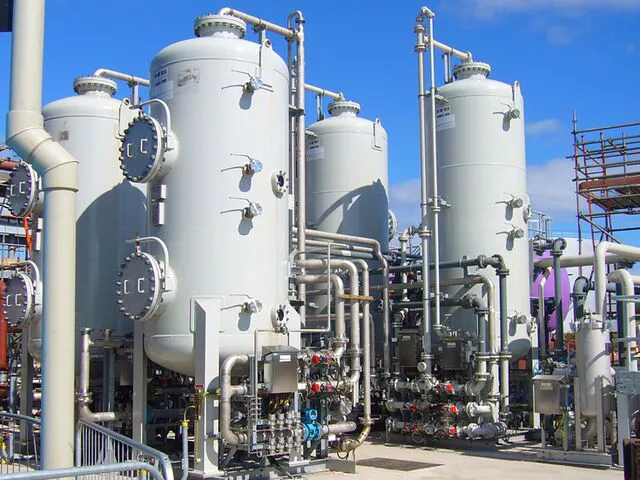
Ion exchange is a process used to purify, separate, and decontaminate materials by swapping ions between a solid resin and a liquid solution. This technique is particularly valuable in water treatment, where it is used for water softening and filtration to remove unwanted ions like calcium and magnesium. The process relies on ion exchange resins, which are specially designed to attract and bind specific ions from the solution. As the foundational technology within the broader field of Ion Exchange for water and wastewater treatment, the ion exchange process encompasses the chemical equilibria, resin engineering, system hydraulics, and regeneration chemistry that determine whether an IX system delivers consistent, cost-effective contaminant removal across its operating life.
In many applications, ion exchange systems enhance the efficiency of treatment processes, making them essential for industries that require high-purity materials. Ion exchange not only softens water but also significantly improves its quality by removing contaminants including nitrate, arsenic, perchlorate, PFAS, and heavy metals. The impact on the environment is minimal because these systems are designed to be sustainable and efficient.
Principles of Ion Exchange
Ion exchange is a powerful and widely used process in water treatment, chemistry, and various industrial applications. It is based on the ability of certain materials to swap ions with those in a surrounding solution.
Chemical Foundations
Ion exchange relies on materials known as ion exchangers — typically resins, which are solid, porous materials containing acidic or basic functional groups that can attract and hold ions. Strong acid cation (SAC) resins carry sulfonate functional groups (-SO₃H) and exchange cations across the full pH range; weak acid cation (WAC) resins carry carboxylate groups (-COOH) and operate effectively only above pH 7. Strong base anion (SBA) resins carry quaternary ammonium groups and exchange anions across the full pH range; weak base anion (WBA) resins carry tertiary amine groups and operate effectively only below pH 6.
An ion exchanger can be a cation exchanger, which swaps positively charged ions (cations) like sodium (Na+), or an anion exchanger, which swaps negatively charged ions (anions) like chloride (Cl-). These resins are typically made from crosslinked polystyrene or polyacrylic synthetic polymers with functional groups that maintain charge balance while exchanging ions.
Ion Exchange Mechanisms
The ion exchange process works on the principle of selectivity. Resins have a stronger affinity for certain ions, causing them to exchange more readily — a preference governed by the ion’s charge (higher-valence ions generally preferred), ionic radius, and hydration energy. The selectivity sequence for common cation exchange resins in water treatment is approximately: Ba2+ > Pb2+ > Sr2+ > Ca2+ > Mg2+ > Na+ > H+.
How ion exchange occurs:
- Contact: The solution with ions passes through the resin bed.
- Exchange: Ions from the solution swap places with counter-ions on the resin functional groups.
- Breakthrough: As the resin becomes loaded, the effluent ion concentration rises — the breakthrough curve shape determines when regeneration is required.
- Regeneration: A concentrated regenerant solution (brine for cation resins, caustic or acid for anion resins) restores the resin’s exchange capacity by displacing the captured ions.
This process is essential in water softening (calcium and magnesium replaced with sodium), deionization (complete removal of all dissolved ions for ultrapure water production), and selective ion removal for regulatory compliance (nitrate, arsenic, perchlorate, PFAS).
Ion Exchange Resins
Ion exchange resins are crucial in water filtration systems, exchanging unwanted ions in water with less harmful ones to improve water quality.
Resin Types
The two primary classifications are cationic and anionic resins, each further subdivided by functional group strength. Cationic resins exchange positive ions and are commonly used to remove calcium and magnesium (water softening) and heavy metals (lead, cadmium, mercury). Anionic resins target negative ions, removing contaminants like nitrates, sulfates, arsenate, perchlorate, and PFAS. Both types are made of highly porous polymeric materials providing large surface area — typical total exchange capacities range from 1.7–2.0 meq/mL for SAC resins to 1.0–1.4 meq/mL for SBA resins.
Resin Selection Criteria
Selecting the right ion exchange resin involves:
- Water Quality Needs: Cationic resins for hardness and heavy metals; anionic resins for nitrate, arsenate, perchlorate, PFAS; mixed bed for ultrapure water.
- Capacity: Exchange capacity determines run length before regeneration — higher capacity reduces regeneration frequency and operating cost.
- Durability: Resins must withstand the pH, temperature, and oxidant conditions without osmotic shock cracking or functional group degradation.
- Regeneration efficiency: The ratio of regenerant equivalents applied to exchange capacity restored — efficient regeneration (70–80%) reduces chemical use and waste volume.
For detailed information on PFAS removal by ion exchange, see Reducing PFAS in Drinking Water with Treatment Technologies.
Subtopic Overview: Ion Exchange Process Variants
The ion exchange process encompasses a family of technology variants that extend beyond conventional fixed-bed column systems to address specific contaminant removal challenges, water quality targets, and operational constraints. The subtopics below address the six primary ion exchange process variants covered in depth on this site.
Anion Exchange in Wastewater Treatment
Anion exchange wastewater treatment applies strong base anion resins to selectively remove negatively charged contaminants — including nitrate, sulfate, arsenate, perchlorate, chromate, and PFAS — from water and wastewater streams where cation exchange alone cannot achieve required effluent quality. Nitrate removal by anion exchange is among the most established applications, with Type II SBA resins achieving influent nitrate concentrations of 50–200 mg/L NO3- reduced to below the MCL of 10 mg/L NO3-N in a single-pass column, with brine regeneration restoring capacity for 100–400 bed volumes per cycle. PFAS removal by anion exchange has emerged as a critical application as EPA PFAS MCLs of 4 ng/L for PFOA and PFOS take effect — PFAS-selective anion exchange resins are achieving greater than 99% removal from drinking water at bed volumes exceeding 100,000 before breakthrough, substantially outperforming GAC on a throughput-per-unit-media basis for long-chain PFAS. Perchlorate removal achieves effluent concentrations below 1 µg/L from influents of 10–100 µg/L using either regenerable or single-use anion exchange resins.
Mixed Bed Ion Exchange
Mixed bed ion exchange combines cation and anion exchange resins in a single vessel in an intimate mixture, creating thermodynamically favorable conditions for near-complete removal of all dissolved ionic species and producing ultrapure water with conductivity below 0.1 µS/cm and resistivity above 10 MOhm·cm — the purity requirements for semiconductor manufacturing, pharmaceutical water for injection, power station boiler feed, and analytical laboratory applications. The key advantage over sequential two-bed systems is that the immediate proximity of cation and anion resin beads prevents the buildup of intermediate ionic concentrations that limit the thermodynamic driving force for exchange — effectively forcing the equilibrium toward complete ion removal by continuously neutralizing the exchanged ions at the point of exchange. Regeneration requires hydraulic separation of the cation and anion resins by backwashing (cation resin is denser and settles below anion resin), followed by separate acid and caustic regeneration of the stratified beds, then remixing with compressed air before the next service run.
Electrochemical Ion Exchange
Electrochemical ion exchange — also known as electrodeionization (EDI) in the continuous desalting configuration — applies an electrical potential across ion exchange membranes and resins to continuously regenerate the ion exchange capacity without chemical regenerants, enabling sustained ultrapure water production without the batch regeneration cycles that interrupt service in conventional mixed bed systems. EDI systems produce water with resistivity of 10–18 MOhm·cm continuously at operating costs substantially lower than chemical-regenerated mixed bed systems when evaluated over a 5–10 year lifecycle — the elimination of acid and caustic purchasing, storage, handling, and neutralization costs is the primary driver of EDI’s total cost of ownership advantage. The electrochemical ion exchange principle also underpins electrodialysis reversal (EDR) systems, which use electrical potential across ion exchange membranes to desalt brackish water without resins — achieving 50–90% dissolved solids removal from brackish feeds at energy consumption of 0.5–2.5 kWh/m3.
Demineralization of Water by Ion Exchange
Demineralization water ion exchange — the sequential removal of all dissolved cations and anions using a cation exchange column followed by an anion exchange column (two-bed deionization) or a mixed bed system — produces deionized water suitable for boiler feed, cooling tower makeup, process water, and laboratory use. In two-bed deionization, the hydrogen-form SAC column removes all dissolved cations and replaces them with H+, producing an acidic water that then passes through the hydroxide-form SBA column where all dissolved anions are removed and replaced with OH-, with H+ and OH- combining to form water. Two-bed deionization typically achieves conductivity of 0.1–1.0 µS/cm; mixed bed polishing following two-bed deionization achieves 0.055–0.1 µS/cm. Silica removal is a key differentiator — strong base anion resins achieve silica below 0.1 mg/L from typical groundwater silica of 10–30 mg/L, while weak base anion resins do not remove silica, making SBA resin mandatory for high-purity applications.
Magnetic Ion Exchange for Wastewater
Magnetic ion exchange wastewater treatment (MIEX) applies paramagnetic ion exchange resin beads — incorporating iron oxide magnetic particles within a macroporous acrylic anion exchange matrix — that can be rapidly concentrated and separated from treated water using a magnetic field, enabling continuous-flow dissolved organic carbon (DOC) and natural organic matter (NOM) removal without the packed-bed column infrastructure required by conventional fixed-bed ion exchange. The MIEX process contacts magnetic resin beads with raw water in a continuous stirred reactor, where the resin adsorbs humic substances and fulvic acids that are the primary precursors to disinfection by-products (DBPs) formed during subsequent chlorination — removing 40–80% of TOC from typical surface water before coagulation, reducing coagulant demand and DBP formation potential downstream. Full-scale MIEX installations at drinking water treatment plants in Australia, the United States, and Europe have demonstrated 20–40% reductions in chlorine demand and haloacetic acid and trihalomethane formation potential compared to coagulation alone.
Anion Exchange vs. GAC
Anion exchange vs gac is one of the most consequential technology selection decisions in drinking water treatment for emerging contaminant removal — particularly for PFAS, nitrate, and perchlorate — where both technologies achieve regulatory compliance targets but differ substantially in media exhaustion rate, regenerability, operating cost, and secondary waste management requirements. For PFAS removal, PFAS-selective single-use anion exchange resins achieve 10–50x higher bed volumes to breakthrough than equivalent-volume GAC contactors for PFOS and PFOA in typical drinking water matrices, because the ion exchange mechanism achieves higher affinity for the anionic PFAS head group than the purely hydrophobic GAC surface. However, GAC maintains advantages in capital cost, operational simplicity, ability to be thermally reactivated on-site at large installations, and broader-spectrum effectiveness against non-ionic organic contaminants. The selection depends on the specific PFAS congener profile, competing anion concentrations, and whether on-site GAC thermal reactivation infrastructure is available.
Ion Exchange Systems
Ion exchange systems treat water by exchanging ions in the water with ions in a resin across a wide range of industrial and municipal applications.
System Configurations
The most common setup involves columns filled with resin beads arranged in parallel or series — series for sequential cation-anion removal in two-bed deionization; parallel for redundancy and continuous service during regeneration. Pressure vessels typically operate at line pressure, with bed depths of 0.9–1.8 m and service flow rates of 5–40 bed volumes per hour depending on resin type and application. Automated systems monitor water quality and adjust flow rates and regeneration cycles accordingly, reducing manual intervention and ensuring consistent performance.
Operation and Maintenance
The primary maintenance task involves regeneration of resin beads using sodium chloride for softening resins, sulfuric or hydrochloric acid for hydrogen-form cation resins, and sodium hydroxide for anion resins. Regular monitoring of conductivity, specific ion breakthrough, and pressure drop tracks system performance. Periodic acid or caustic soaks address iron fouling and organic fouling respectively.
Water Softening
Water softening reduces hardness caused by high levels of calcium and magnesium, enhancing water quality for household use and prolonging appliance lifespan.
Process of Hard Water Softening
Hard water passes through a tank filled with sodium-form cation resin beads. Calcium and magnesium ions have higher selectivity for the resin than sodium, so they displace sodium from the resin functional groups, releasing sodium ions into the softened water. Over time, the resin becomes loaded and requires regeneration with concentrated sodium chloride brine (8–12% NaCl). For a complete treatment of water softener design, operation, and selection, see the guide on Ion Exchange Water Softeners.
Benefits of Water Softening
Water softening significantly reduces scale build-up in pipes, fixtures, and appliances, leading to fewer repairs and replacements. Softened water improves appliance efficiency and enhances soap and detergent performance. Soft water also leaves hair and skin feeling smoother without mineral residue.
Water Filtration and Ion Exchange
Removal of Contaminants
Ion exchange filters are highly effective in removing chemical pollutants and heavy metals by swapping harmful ions like lead or mercury with less harmful ones such as sodium or potassium. Anionic resins remove nitrate, arsenate, perchlorate, and PFAS. For detailed comparison of Cation Exchange Resins and their performance characteristics across applications, the dedicated resin resource covers strong acid vs. weak acid resin selection, capacity data, and regeneration protocols in depth.
Filter Media Variants
Granular activated carbon removes organic compounds and chlorine through adsorption. Ion exchange resins remove dissolved ionic contaminants through the exchange mechanism. Reverse osmosis membranes filter a wide range of contaminants including bacteria and dissolved salts. These technologies are frequently combined in treatment trains — IX for ionic contaminant removal, GAC for organics, RO for dissolved solids — with the sequencing determined by the contaminants and concentrations in the source water.
End-User Applications
Households use ion exchange water filters or GAC filters to improve drinking water quality, installed under sinks or on countertops. Public water systems implement larger-scale filtration including reverse osmosis and advanced ion exchange processes to meet regulatory standards. Industrial settings use IX for process water purity requirements specific to their manufacturing processes.
Comparison of Ion Exchange Process Configurations
| Configuration | Resin Type | Primary Contaminants Removed | Product Water Quality | Regenerant | Best-Fit Applications | Key Limitation |
|---|---|---|---|---|---|---|
| Single-Bed Cation (Softening) | Strong acid cation (Na+ form) | Ca2+, Mg2+, Ba2+, Sr2+ | Softened water (<1 gpg hardness) | NaCl brine (8–12%) | Municipal and residential softening; boiler feed pre-treatment; scale prevention | Adds Na+; no anion removal; brine discharge |
| Single-Bed Anion (Selective) | Strong base anion (OH- or Cl- form) | NO3-, ClO4-, AsO43-, PFAS, SO42- | Target ion below MCL | NaCl or NaOH | Nitrate, perchlorate, arsenic, PFAS removal in drinking water | Brine disposal; competing anion suppression; NOM fouling |
| Two-Bed Deionization (SAC + SBA) | SAC (H+ form) + SBA (OH- form) | All dissolved cations and anions | 0.1–1.0 µS/cm conductivity | H2SO4 or HCl; NaOH | Industrial process water; boiler feed; semiconductor pre-treatment | Acid/caustic chemical handling; batch regeneration interruptions |
| Mixed Bed Deionization | SAC + SBA mixed in single vessel | All dissolved ions to ultrapure level | 0.055–0.1 µS/cm; 10–18 MOhm·cm | H2SO4; NaOH (after hydraulic separation) | Ultrapure water for semiconductor, pharma, power generation | Complex regeneration requiring resin separation; service interruption |
| Electrodeionization (EDI) | Mixed SAC + SBA in membrane stack | All dissolved ions (polishing after RO) | 10–18 MOhm·cm continuously | Electrical regeneration (no chemicals) | Continuous ultrapure water; pharmaceutical WFI; semiconductor fab | Requires RO pre-treatment; CO2 removal upstream; higher capital than mixed bed |
| Magnetic Ion Exchange (MIEX) | Magnetic macroporous anion resin | DOC, NOM, humic substances, color | 40–80% TOC reduction | NaCl brine (continuous) | High-DOC surface water pre-treatment; DBP precursor removal | Resin attrition; NOM fouling requiring periodic caustic cleaning |
Treatment Process Efficiency
Performance Evaluation
The performance of ion exchange water treatment depends on resin type and contaminant characteristics. Cationic resins are effective for calcium and magnesium; anionic resins target nitrate, sulfate, arsenate, and PFAS. Continuous monitoring of ion concentration in treated water evaluates resin exhaustion. Breakthrough curves indicate when the resin can no longer remove contaminants efficiently — consistent performance ensures compliance with health standards.
Process Optimization
Flow rate adjustment balances throughput against ion removal efficiency. Regeneration frequency and chemical concentration — sodium chloride for softening resins, sodium hydroxide for anion resins — determine resin life and operating cost. Monitoring resin fouling guides regeneration schedule optimization. Ion exchange pre-treatment to remove organic matter prevents resin fouling and extends service life.
Environmental Impact
Waste Management
Ion exchange systems generate waste that must be managed responsibly. Regeneration brine from softening systems contains high calcium, magnesium, and sodium concentrations and requires discharge to sewer systems with adequate capacity or evaporation for zero-liquid-discharge applications. PFAS-loaded single-use resins present a hazardous waste classification challenge in many jurisdictions, requiring thermal destruction rather than landfill disposal.
Sustainable Practices
Sustainable ion exchange operations include optimizing regeneration cycles to minimize chemical consumption, selecting resins with long service life and regenerability, and investing in electrochemical alternatives (EDI) that eliminate liquid chemical regenerants entirely. Advanced monitoring enables demand-based regeneration rather than time-based schedules, reducing chemical use by 15–30% in well-optimized systems.
Field Notes: Practical Guidance for Ion Exchange Systems
Commissioning and Baseline Establishment
Commissioning an ion exchange system requires establishing baseline performance data — clean-resin breakthrough curve shape, initial service run length in bed volumes, and regeneration efficiency — before the system is placed in production service. For municipal drinking water IX systems treating regulated contaminants (nitrate, arsenic, PFAS), regulatory compliance monitoring protocols must be in place before service begins. Resin conditioning — rinsing new resin with salt solution and rinse water cycles to remove manufacturing residues and pre-swell the resin to its operating volume — is a prerequisite before placing new resin in service.
Common Design and Specification Mistakes
The most frequent ion exchange system design error is sizing the resin bed volume based on average influent ion concentration without characterizing source water quality variability. Seasonal peaks in nitrate (following agricultural application), hardness spikes from groundwater blending, or PFAS concentration fluctuations can reduce service run lengths to a fraction of the design value, causing unexpectedly frequent regeneration cycles and operating costs substantially above design basis. A second common mistake is underestimating competing ion effects on selective anion exchange systems — a PFAS removal system designed on low-sulfate source water will experience dramatically shortened run lengths if sulfate concentration increases seasonally, because sulfate competes directly with PFAS for anion exchange sites.
Frequently Asked Questions
What is the principle behind ion exchange water treatment?
Ion exchange water treatment works by swapping ions between the water and a resin. The resin contains charged particles, which attract and hold ions. When water flows through the resin, unwanted ions in the water are replaced with more desirable ions from the resin.
What contaminants can be removed through ion exchange methods?
Ion exchange can remove a variety of contaminants. These include heavy metals like lead and mercury, as well as calcium and magnesium, which cause water hardness. Some systems can also remove nitrates and other harmful substances, making water safer to consume.
How do cation and anion exchange resins differ in their functionality?
Cation exchange resins attract and exchange positively charged ions, such as calcium and magnesium, often found in hard water. Anion exchange resins, on the other hand, target negatively charged ions like nitrates and sulfates. Each resin type is designed to handle specific types of ions.
What maintenance is required for an ion exchange water treatment system?
Maintaining an ion exchange system involves regular checks and cleaning of the resin. Resins may need to be regenerated using either salt (for cation systems) or mild acid (for anion systems). It’s essential to replace the resin periodically to ensure the system continues to function effectively.
Conclusion
Key Takeaways
- Ion exchange selectivity governs system performance more than any other parameter — the resin’s affinity sequence for target vs. competing ions determines run length, regeneration frequency, and operating cost; competitive isotherm testing with actual site water at realistic competing ion concentrations is the only reliable basis for resin selection in complex water matrices.
- Mixed bed and EDI represent fundamentally different operating philosophies for ultrapure water — mixed bed delivers the highest purity (18 MOhm·cm) with batch regeneration interruptions and significant chemical handling, while EDI achieves equivalent purity continuously without chemical regenerants at lower lifecycle cost when positioned after adequate RO pre-treatment.
- PFAS-selective anion exchange resins outperform GAC on a bed-volume basis for PFOA and PFOS — but the advantage narrows for shorter-chain PFAS, diminishes at high competing sulfate, and must be weighed against GAC’s lower capital cost, operational simplicity, and broader-spectrum organic contaminant removal capability.
- Brine disposal is the dominant environmental and regulatory constraint on ion exchange system siting — the volume and composition of regenerant waste determines whether IX is viable at a specific location; zero-liquid-discharge requirements or restricted sewer capacity may make EDI or single-use resins with thermal destruction more attractive than conventional regenerable IX.
- Source water quality variability is the most undercharacterized design parameter — seasonal and event-driven fluctuations in target ion concentration, competing ion load, NOM content, and pH can reduce service run lengths to a fraction of the design value; a minimum 12-month water quality characterization at the 10th and 90th percentile should govern the design basis.