
Water Supply & Distribution: Infrastructure, Source Water & Delivery
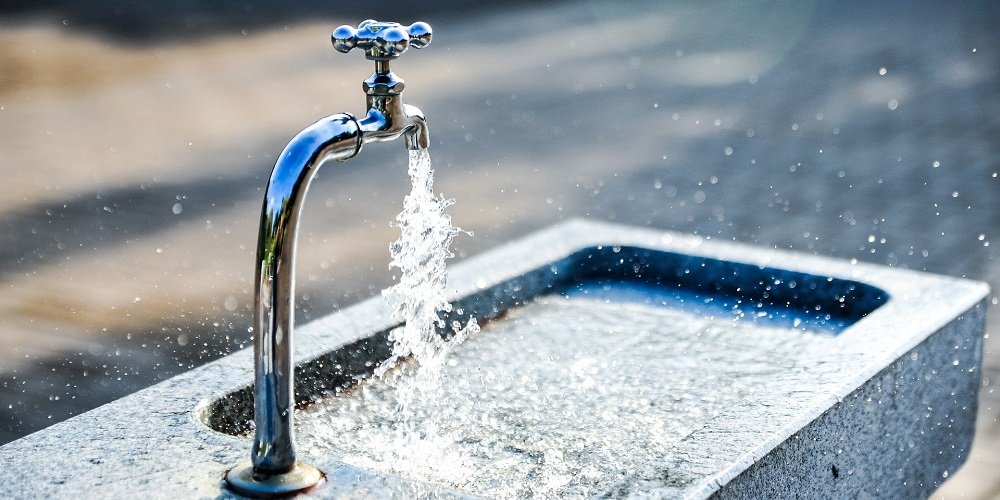
Water is essential for life, yet not everyone understands where it comes from or how it gets to their taps. The topic of water supply delves into the complex journey of water, starting from natural sources like rivers and lakes to treatment plants, and then to our homes. A reliable water supply is crucial for both everyday activities and overall public health.
Understanding the processes involved in water treatment is key to appreciating the clean water that many take for granted. Methods like filtration and chlorination ensure that water meets safety standards before it’s deemed safe for consumption. These standards are critical to prevent water-borne illnesses and maintain a high quality of life.
Questions around water supply often touch on its reliability and safety. How is water quality monitored? What happens if there’s a contamination issue? These common concerns highlight the importance of robust water management systems to tackle such problems promptly and efficiently.
The infrastructure that makes this possible runs in two directions. Supply networks move treated water outward from a plant to every service connection, sized for peak demand and fire protection and maintained under pressure. Collection systems move used water back in the opposite direction, sized for peak wet weather flow and running mostly by gravity. The two share materials, hydraulics, and asset management practice, which is why this guide treats them together, and the Subcategory Overview below maps each discipline to its dedicated resource.
Key Takeaways
- Water supply processes are vital for ensuring safe and clean water.
- Treatment methods like filtration and chlorination maintain water quality.
- Good management systems address common concerns and prevent contamination.
Subcategory Overview: Water Supply and Conveyance Infrastructure
The disciplines below divide into three groups: the sources and networks that deliver water, the systems that collect and convey it away, and the decentralized and planning approaches that apply where a centralized network is impractical or where system-level strategy is the question.
Sources, Supply, and Distribution
Groundwater
Groundwater supplies a substantial share of American drinking water, drawn from aquifers through wells that range from a single domestic bore to municipal well fields producing millions of gallons a day. Groundwater generally arrives with lower turbidity and microbial loading than surface water, which simplifies treatment, but it commonly carries dissolved constituents from the geology it moved through — iron and manganese, hardness, arsenic, radionuclides, and in coastal areas salinity from intrusion. Well construction, sanitary sealing, and wellhead protection determine whether the aquifer’s natural protection is preserved or short-circuited. Sustainable yield rather than pump capacity sets the real limit on withdrawal, since drawing faster than recharge lowers water levels, increases pumping cost, and in some aquifers causes irreversible compaction.
Infrastructure
Infrastructure in the water sector spans intakes, wells, treatment facilities, transmission mains, distribution networks, storage reservoirs and tanks, pump stations, and the instrumentation and control systems tying them together. Much of it was built or substantially expanded decades ago and is now reaching or past its design life simultaneously, which makes asset management — knowing what you own, its condition, its criticality, and its remaining life — the central discipline rather than a documentation exercise. Renewal is funded overwhelmingly by ratepayers through borrowing rather than by the grants that built the original systems, so prioritization matters: replacing the pipes most likely to fail with the greatest consequence, rather than the oldest pipes, is what a mature program delivers.
Pipelines and Piping
Pipelines and piping carry water between every point in the system, and material selection drives most of what follows. Ductile iron, PVC, HDPE, steel, and concrete pressure pipe each carry different pressure ratings, joint systems, corrosion behaviour, and installation requirements, and the right choice depends on soil corrosivity, pressure class, diameter, and whether trenchless installation is contemplated. Hydraulic design balances velocity, headloss, and cost, with velocities generally kept in the 2 to 7 ft/s range and pipe sized on peak demand rather than average. Corrosion protection through polyethylene encasement, cathodic protection, or material choice determines whether a main lasts thirty years or a hundred.
Collection and Conveyance
Collection and Conveyance
Collection and conveyance systems move used water from every connection to the treatment facility, and they are the largest and least visible asset most utilities own. Gravity sewers dominate where topography allows, sized on peak wet weather flow with minimum slopes set to maintain self-cleansing velocity; force mains carry pumped flow where gravity cannot; and pressure and vacuum systems serve flat or rocky terrain where conventional gravity sewer would be prohibitively expensive to install. Infiltration and inflow — groundwater entering through defects and stormwater entering through improper connections — is the defining operational problem, since it consumes hydraulic capacity and treatment cost without contributing revenue.
Lift and Pump Stations
Lift and pump stations raise flow where gravity cannot carry it further, and they are the most maintenance-intensive element of most collection systems. Wet well volume must balance two competing requirements: enough storage to avoid excessive motor starts, and little enough detention to avoid septicity and the odour and corrosion that follow. Non-clog or chopper pumps handle the rags and debris that defeat conventional impellers, and modern wipe-laden sewage has made pump selection considerably harder than sphere passage ratings suggest. Because a lift station failure backs up a whole catchment, standby power, high-level alarms, and telemetry are standard rather than optional, and access for pump removal determines how long every future repair takes.
Stormwater Management
Stormwater management handles precipitation runoff, which is a flooding problem, a water quality problem, and in combined systems a treatment capacity problem simultaneously. Conventional grey infrastructure conveys runoff away quickly through inlets, pipes, and detention basins; green infrastructure — bioretention, permeable pavement, green roofs, and constructed wetlands — infiltrates and treats it closer to where it falls, reducing both peak flow and pollutant loading. Municipal separate storm sewer systems carry their own permit obligations covering illicit discharge detection, construction and post-construction runoff control, and public education. Where sanitary and storm flow share a pipe, wet weather overflow control becomes the dominant capital program.
Decentralized Systems and Planning
Decentralized Treatment
Decentralized treatment serves properties and communities where connection to a central system is impractical, covering conventional septic systems with soil absorption fields, advanced onsite units achieving higher treatment levels, and cluster systems serving a group of properties from a shared facility. Roughly one in five American households relies on onsite treatment, which makes this a much larger share of national practice than its visibility suggests. Site evaluation governs feasibility, since soil permeability, depth to groundwater and bedrock, and available area determine whether conventional absorption will work or an alternative is required. Management is the persistent weakness: systems installed correctly still fail without pumping and inspection, and responsible management entities exist precisely because individual owners rarely maintain them on schedule.
Wastewater Management Systems
Wastewater management systems considered at the planning level ask a different question than any individual technology does: given a community’s size, density, growth trajectory, topography, and financial capacity, what combination of centralized, cluster, and onsite service actually fits. The answer is frequently a hybrid rather than a single approach, with a centralized core serving the dense area and decentralized service in outlying zones where collection system cost per connection becomes prohibitive. Planning at this level also addresses governance — who owns, operates, and is accountable for each element — which is often the harder problem than the engineering.
Water Management
Water management at the resource level sits above all of the above, covering source water assessment and protection, surface water and reservoir operation, water resource planning, distribution strategy, smart water systems and instrumentation, and solids and residuals management. It is the discipline that decides what the infrastructure is for: which sources a community will rely on, how much water can sustainably be drawn from each, how demand is projected over a planning horizon, and what redundancy the system needs against drought, contamination, or failure of a single source. This area is currently the largest body of material under this pillar and is being reorganized; the sections below and the resources at the end develop several of its themes.
Water Cycle and Sources
Understanding the water cycle and different water sources is vital for managing resources. Water in nature travels between oceans, air, and land, while different sources like rivers and underground reservoirs play crucial roles.
Surface Water
Surface water consists mainly of rivers, lakes, and reservoirs. These bodies of water are fed by precipitation, runoff, and the continuous exchange in the water cycle. For example, the United States uses around 322 billion gallons of water per day, with a significant portion from surface sources.
The management of surface water is important for drinking water, agriculture, and industry. Water agencies often monitor these sources to ensure quality and availability, using tools such as snow survey and water supply forecasting programs. Reservoirs help control flooding and provide a steady supply during dry periods.
Surface water presents a treatment challenge that groundwater generally does not. Because it is exposed to the atmosphere, runoff, and biological activity, it varies seasonally and responds within hours to a storm event, arriving with turbidity, organic matter, and microbial loading that can change faster than a treatment plant can be adjusted manually. It is also directly vulnerable to upstream spills and discharges. The regulatory consequence is that surface water sources are subject to filtration and disinfection requirements that groundwater sources may avoid, and the operational consequence is that a surface water plant needs more instrumentation, more chemical flexibility, and more operator attention than a groundwater plant of equal capacity.
Groundwater
Groundwater is found under the earth’s surface in aquifers, which store large amounts of water. This source is critical for areas far from rivers and lakes. Groundwater is accessed by wells, which supply water for a wide range of uses, particularly in agriculture and rural areas.
Protection of groundwater is essential, as contamination can affect drinking water and ecosystems. Federal funding supports activities that protect these source water areas. Efficient management includes monitoring for pollutants and managing withdrawals to prevent overuse. Proper management ensures that this vital resource remains sustainable for future generations.
Groundwater’s chief advantages are natural filtration through soil and rock, stable temperature and chemistry, and protection from surface contamination — but each of those advantages has a corresponding vulnerability. The same slow movement that filters the water means contamination, once present, persists for decades and is extremely difficult to remediate. Aquifers that receive direct recharge through fractured rock or karst behave more like surface water than groundwater and are regulated accordingly. And the geology that stabilizes chemistry also contributes what is in it, which is why arsenic, radionuclides, iron, manganese, and hardness are groundwater problems far more often than surface water ones.
Source Selection and Redundancy
The choice between surface water, groundwater, purchased water from a neighbouring utility, and increasingly reclaimed water is among the most consequential decisions a community makes, because it determines treatment requirements, capital cost, operating cost, and vulnerability for generations. Yield reliability under drought matters more than average yield, since a source adequate in a normal year and inadequate in a dry one is not a reliable supply.
Single-source dependence is the risk that most often goes unexamined until it materializes. A community drawing entirely from one well field, one intake, or one wholesale connection has no answer to contamination, mechanical failure, or drought affecting that source. Redundancy through a second source, interconnection with a neighbouring system, or sufficient storage to ride through an outage is the standard response, and it is considerably cheaper to arrange in advance than during an emergency.
Water Treatment Processes
Water treatment processes are crucial for providing safe and clean drinking water. They involve a series of steps designed to remove contaminants and improve water quality.
Coagulation and Flocculation
Coagulation and flocculation are the first steps in water treatment. Chemicals, called coagulants, are added to water. These chemicals cause small particles to clump together into larger particles, or flocs, which makes them easier to remove.
Sedimentation
During sedimentation, the heavy flocs formed in the previous step settle to the bottom of the water supply. This separates most of the solid particles from the water.
Filtration
In filtration, the water passes through filters made of sand, gravel, and charcoal. These filters remove smaller particles that did not settle during sedimentation. This step helps in eliminating impurities and pathogens.
Disinfection
Disinfection is essential to kill harmful microorganisms. Chlorine or other disinfectants are added to the water. This step ensures that the water is safe for human consumption.
Corrosion Control
Some water systems use chemicals to prevent corrosion in pipes. This helps to keep metals like lead and copper from dissolving into the water. Corrosion control ensures the water remains safe as it travels through the distribution system.
Algal Control
In areas prone to algal blooms, specific treatments are used to handle toxins. Harmful algal blooms can produce toxins that pose challenges to drinking water supplies. Proper management reduces these risks.
Boil Water Advisories
In emergencies, authorities may issue a boil water advisory. This means water should be boiled for at least one minute to eliminate harmful pathogens.
Treatment processes vary depending on the water source and quality, but these steps are key to delivering safe drinking water.
Two points about that sequence are worth adding. First, corrosion control is not an optional polish step but a treatment process with a specific target: adjusting pH, alkalinity, and often orthophosphate dose so the water forms a protective scale rather than dissolving lead and copper from service lines and household plumbing. Because most lead in drinking water originates in the distribution system rather than at the source, corrosion control is the principal engineering defence against it, and a change in source water or treatment chemistry can disturb an established protective film with serious consequences.
Second, the conventional sequence above is designed for surface water. A groundwater system with good quality may need only disinfection and corrosion control, while one with iron and manganese needs oxidation and filtration, and one with arsenic or radionuclides needs a specific removal process such as adsorption, ion exchange, or coagulation-assisted filtration. Treatment follows from source characterization rather than from a standard train.
Water Quality and Standards
Ensuring safe and clean water is vital for health. This involves setting criteria for drinking water, monitoring water quality, and controlling contaminants.
Drinking Water Criteria
Drinking water must meet specific criteria set by authorities to ensure it’s safe. The EPA sets standards that water systems must follow. These standards limit harmful substances such as lead, copper, and PFAS (per and poly-fluoroalkyl substances). Compliance ensures that water remains drinkable and safe. Criteria often include microbiological, chemical, and radiological standards. Regular updates and scientific studies guide these regulations to address new contaminants and health impacts.
Because standards for several contaminants, PFAS and lead most prominently, have been revised in recent years and continue to develop, current limits and compliance deadlines should be confirmed with the state primacy agency rather than taken from any published summary. Most states administer the drinking water program themselves under federal authorization, and state requirements frequently exceed the federal baseline.
Monitoring and Reporting
Monitoring water quality involves regular testing to detect any contaminants. The USGS collects data from a very large network of monitoring sites, providing extensive water use and water quality information. Water systems are required to conduct both initial and ongoing compliance monitoring. This data collection is crucial for identifying violations and ensuring corrective actions are taken promptly. Reports are generated to inform the public and authorities about water quality, helping to maintain transparency and trust.
Monitoring in a supply system happens at three distinct points, and each answers a different question. Source monitoring characterizes raw water and detects changes that require a treatment adjustment. Plant monitoring verifies that each treatment barrier is performing, using continuous surrogates such as turbidity and disinfectant residual alongside laboratory confirmation. Distribution monitoring confirms that water quality holds between the plant and the tap, covering residual, bacteriological sampling at points representative of the system, and lead and copper sampling at high-risk service locations. A system that monitors thoroughly at the plant and sparsely in the distribution network is measuring the easier half of the problem.
Contaminants and Control
Contaminants in drinking water can come from various sources like industrial waste, agricultural runoff, and natural deposits. The EPA lists common contaminants, including bacteria, viruses, heavy metals like lead and copper, and chemicals like nitrates and pesticides. Treatment techniques are crucial to control these contaminants. Methods such as filtration, chlorination, and UV treatment are commonly used. Regulations require water systems to implement these controls to reduce health risks associated with contaminated water.
The multiple-barrier principle underlies how a supply system is expected to protect against these contaminants. Source protection reduces what arrives; treatment removes or inactivates what does; distribution system integrity, including maintained pressure, disinfectant residual, and cross-connection control, prevents recontamination afterward; and monitoring verifies that each barrier is functioning. No single barrier is relied upon alone, because each has a failure mode. That principle explains why a utility with excellent treatment still invests in watershed protection and pressure management, and why a boil water advisory follows a pressure loss event even when the treated water leaving the plant met every standard.
Distribution System Design and Operation
Treatment determines whether water is safe when it leaves the plant. The distribution system determines whether it is still safe, and available at adequate pressure, when it reaches a tap several miles later.
Network Configuration
Distribution networks are laid out as branched or looped systems, and the difference matters operationally more than it appears on a drawing. A branched or dendritic network is cheaper to build and simpler to model, but every customer beyond a break loses service, and dead ends accumulate stagnant water with declining disinfectant residual. A looped network feeds each area from more than one direction, so an isolated break affects fewer customers and water circulates rather than sitting. Most systems are hybrids, looped in the core and branched at the edges where extension has outpaced planning.
Pressure zones divide a system by elevation, since a single pressure gradient cannot serve both a valley and a hilltop without either starving the high point or over-pressurizing the low one. Zone boundaries are managed by pressure reducing valves, booster stations, and dedicated storage, and each boundary is a point where a control failure has system-wide consequences.
Storage and Its Three Purposes
Storage in a distribution system serves three distinct functions that are sized separately and then added. Equalization storage absorbs the difference between a treatment plant running at a steady rate and demand that varies hour by hour, allowing the plant and its supply mains to be sized for maximum day rather than peak hour. Fire storage holds the volume required to deliver the fire flow the community’s insurance rating demands, for the required duration. Emergency storage covers a source or plant outage.
Water age is the operational cost of storage, and it is the reason oversized tanks cause water quality problems. Water sitting in a reservoir loses disinfectant residual, warms, and can support nitrification in chloraminated systems. Managing turnover — through tank cycling, mixing systems, or in extreme cases reducing storage volume — is a routine water quality activity that has nothing to do with treatment.
Pressure Management
Systems are generally operated to maintain a minimum pressure at every service under peak demand, with a further minimum required during fire flow, and a maximum above which leakage and pipe stress become excessive. Excess pressure is not free: leakage rate rises with pressure, main break frequency rises with pressure, and both fall when pressure is reduced during low-demand overnight hours. Pressure management is therefore both a water loss measure and an asset life measure, and it requires no customer participation at all.
Loss of positive pressure is treated as a contamination event rather than an inconvenience, because a depressurized main can draw in whatever surrounds it through joints, cracks, and cross-connections. That is why a significant pressure loss triggers a precautionary boil water advisory even when nothing has been detected.
Planning and Sizing Framework
Supply infrastructure is sized from demand projections, and the sequence below runs from population to pipe.
Step 1: Project Demand Across the Planning Horizon
Begin with population or connection count and per capita demand, then apply the peaking factors that convert average demand into the conditions the infrastructure must actually handle. Average day demand sizes the source and the annual water budget. Maximum day demand sizes the treatment plant and supply mains. Peak hour demand sizes the distribution network and determines how much equalization storage is needed. Growth projection over the planning horizon then determines what capacity must be provided now versus staged later, and getting that wrong in either direction is costly: undersized infrastructure constrains growth, oversized infrastructure imposes debt service and water age problems on today’s ratepayers.
Step 2: Work the Calculation
A worked example carries a community from population to pipe diameter.
Average day demand: 25,000 × 120 = 3.0 MGD. This sizes the source and the water rights or withdrawal permit.
Maximum day demand: 3.0 × 1.8 = 5.4 MGD. This sizes the treatment plant and the transmission main from plant to system.
Peak hour demand: 5.4 × 1.5 = 8.1 MGD, or about 5,625 gpm. This sizes the distribution network.
Transmission main sizing: At 5,625 gpm, or 12.53 cfs, and a target velocity of 5 ft/s, required area is 12.53 ÷ 5 ≈ 2.51 ft², giving a diameter of about 21.4 inches — so a 24-inch main. At 24 inches the actual velocity is about 4.0 ft/s, comfortably within range.
Headloss check: Using Hazen-Williams with C = 130 over 5,000 ft of 24-inch pipe at peak hour, headloss is roughly 10.8 ft, which is acceptable against typical available head.
Storage sizing: Equalization at 25 percent of maximum day is 0.25 × 5.4 ≈ 1.35 MG. Fire storage is 3,500 gpm × 180 minutes ≈ 0.63 MG. Emergency storage of roughly one third of average day adds about 1.0 MG. Total required storage ≈ 3.0 MG.
The governing condition: maximum day plus fire flow is 3,750 gpm + 3,500 gpm ≈ 7,250 gpm, which is less than peak hour at 5,625 gpm only because this community is comparatively large. In a system serving a few thousand people, fire flow alone routinely exceeds every other demand combined, and the entire network ends up sized for a condition that may occur once a decade.
That last point is the one most often missed. For small systems, fire protection rather than domestic demand determines pipe diameters, storage volume, and therefore a large share of capital cost, and the resulting oversized mains create water age and residual problems during the 99.9 percent of the time no fire is burning.
Step 3: Model Before Committing
Hydraulic modelling of the network under average day, maximum day, peak hour, and maximum day plus fire flow conditions identifies where pressure falls short and where velocity is too low or too high, and it does so before anything is built. Calibrating the model against field pressure and flow measurements is what makes it trustworthy, and an uncalibrated model is a drawing rather than an analysis. Water quality modelling extends the same tool to predict water age and residual decay, which is how storage and looping decisions are evaluated against quality rather than only against hydraulics.
Step 4: Plan Renewal by Consequence, Not by Age
For an existing system, the question is which assets to replace first with limited funds. Age alone is a poor predictor, since a cast iron main in non-corrosive soil may outlast a newer main in aggressive ground. Break history, soil corrosivity, material and vintage, pressure, and the consequence of failure — whether the main serves a hospital, crosses a highway, or feeds a single cul-de-sac — together give a far better prioritization. The output of that analysis is a renewal programme that can be defended to a board and sustained across budget cycles.
Supply and Conveyance Comparison
| Source | Typical Treatment Requirement | Reliability Profile | Principal Constraint |
|---|---|---|---|
| Surface water, river | Full conventional train plus disinfection | Varies with flow; drought sensitive | Rapid quality change, upstream discharges |
| Surface water, reservoir | Full conventional train; algae management | Buffered by storage volume | Seasonal stratification, algal blooms |
| Groundwater, protected aquifer | Disinfection and corrosion control | Very stable year to year | Sustainable yield, dissolved minerals |
| Groundwater under surface influence | Treated as surface water | Variable with recharge events | Karst or fractured rock pathways |
| Purchased wholesale water | Usually none beyond re-chlorination | Depends on the seller’s system | Contract terms, no control over quality |
| Reclaimed water, non-potable | Tertiary treatment and disinfection | Very steady, tracks wastewater flow | Separate distribution, cross-connection control |
| System Type | Direction | Motive Force | Sized For | Governing Problem |
|---|---|---|---|---|
| Transmission main | Supply | Pumped or gravity from storage | Maximum day demand | Headloss and surge on closure |
| Distribution network | Supply | System pressure | Peak hour or max day plus fire | Pressure, water age, leakage |
| Gravity sewer | Collection | Gravity | Peak wet weather flow | Infiltration and inflow, slope for scour |
| Force main | Collection | Pumped | Pump station firm capacity | Septicity, odour, surge |
| Pressure or vacuum sewer | Collection | Grinder pumps or vacuum | Connection count and diversity | Onsite equipment maintenance burden |
| Storm sewer | Runoff | Gravity | Design storm return period | Peak flow, water quality treatment |
| Combined sewer | Both | Gravity | Dry weather flow plus storm allowance | Overflow control during wet weather |
Field Notes
The observations below recur across water supply and conveyance systems regardless of size.
Commissioning Considerations
New water mains require disinfection, flushing, and bacteriological clearance before being placed in service, and the clearance sampling must pass before any connection is made to the live system. Pressure and leakage testing should be performed at the specified test pressure and held for the full duration rather than abbreviated, since a joint that holds for ten minutes may not hold for two hours. Valve locations should be surveyed and recorded as installed rather than as designed, because field changes are routine and an unrecorded valve is a valve nobody can find during a break. For lift stations, the pump control sequence, alarm callout, and standby power transfer should each be tested by simulating the actual failure rather than by reviewing the programming.
Common Specification Mistakes
Several errors appear repeatedly. Distribution mains are oversized for fire flow without evaluating the water age consequence, producing a system that meets its insurance rating and struggles to hold a disinfectant residual. Storage is sized on total volume without separating equalization, fire, and emergency components, so a tank meets the number and turns over poorly. Pipe material is selected on unit price without a soil corrosivity assessment, which determines whether the main lasts thirty years or a hundred. Lift station wet wells are minimized to save excavation, producing excessive pump starts. Force main velocity is set too low, allowing solids to settle between pumping cycles and generating the sulfide that corrodes the receiving structure. And valve spacing is left to a standard interval rather than derived from how many customers an isolation would affect.
Pro Tip
Build and maintain a valve and hydrant inventory with GPS locations, and exercise the valves on a fixed cycle with recorded results. The failure that costs most is not a main break; it is a main break where the isolation valve will not close, turning a two-block shutdown into a neighbourhood one and a four-hour repair into a full day. Utilities almost invariably find that a valve which failed in an emergency had not been operated in years, and that its location was recorded on a drawing nobody could find at two in the morning. The inventory and the exercise programme together cost a fraction of one emergency repair, and they surface access problems, buried boxes, and seized operators while they are still inconvenient rather than urgent.
Operations and Maintenance Across the System
Maintenance demand differs sharply by asset class. Buried mains require almost nothing until they fail, which is precisely what makes condition assessment and renewal prioritization difficult and important. Valves and hydrants need exercise, lubrication, and recorded inspection. Storage tanks require periodic inspection and cleaning, coating maintenance, and attention to turnover and mixing. Pump and lift stations concentrate the mechanical maintenance burden, with wet well cleaning, pump inspection, seal and bearing service, and control system attention. Gravity sewers need cleaning on a schedule set by grease and root problems in each basin, and inspection by camera to build the condition data that renewal planning depends on.
Troubleshooting by Symptom
Most distribution and collection problems resolve to a short list. Low pressure in one area usually indicates a partially closed valve, a break, or a pressure zone boundary problem rather than inadequate supply, and comparing hydrant flow tests against the hydraulic model localizes it quickly. Loss of disinfectant residual in an area points to water age from a dead end, poor tank turnover, or nitrification in a chloraminated system. Discoloured water after a hydrant operation indicates accumulated sediment and iron scale disturbed by velocity change, which is a flushing programme problem rather than a treatment one. Recurring sanitary sewer surcharge in wet weather is infiltration and inflow, and smoke testing and flow monitoring by basin identify where before any pipe is replaced.
Common Mistake
Sizing the distribution system for fire flow without accounting for what that does to water quality the rest of the time. Fire protection frequently governs pipe diameter and storage volume in small and mid-size systems, and the resulting oversized mains carry water so slowly that disinfectant residual decays, sediment accumulates, and nitrification becomes possible. The utility then meets its insurance rating and spends the next thirty years flushing to compensate. Where fire flow governs, the design should anticipate the consequence — looping to maintain circulation, tank mixing to manage turnover, and a flushing programme budgeted from the outset — rather than discovering it as a recurring water quality complaint.
Design Details and Standards
Sizing Methodology Overview
Supply system sizing proceeds from demand rather than from capacity. Establish average day demand from population and per capita use, apply peaking factors to derive maximum day and peak hour, and size each element against the condition that governs it: source and permit against average day, treatment and transmission against maximum day, distribution against peak hour or maximum day plus fire flow whichever is greater. Storage is derived by summing equalization, fire, and emergency components separately. Collection systems reverse the logic, sizing on peak wet weather flow with minimum slopes set to maintain self-cleansing velocity at low flow, and force mains sized so velocity keeps solids in suspension without excessive headloss.
Key Parameters by System Element
The governing parameters differ across the system. Transmission and distribution mains are characterized by design flow, velocity, headloss coefficient, pressure class, and surge behaviour on valve closure. Storage is characterized by equalization, fire, and emergency volume components, plus turnover time and mixing. Pump and lift stations are characterized by design flow, total dynamic head, firm capacity with the largest unit out of service, wet well volume against permitted start frequency, and solids passage. Gravity sewers are characterized by peak wet weather flow, slope, self-cleansing velocity, and depth of cover. Applying a supply parameter framework to a collection system, or vice versa, is a persistent source of error.
Applicable Standards and References
Design practice for water supply in the United States draws on the Recommended Standards for Water Works, commonly the Ten States Standards, alongside the companion Recommended Standards for Wastewater Facilities for collection systems, both widely adopted by state agencies. The AWWA standards series governs materials and construction, including C150 and C151 for ductile iron pipe, C900 and C905 for PVC pressure pipe, C906 for polyethylene pipe, C651 for disinfecting water mains, and the C500 series for valves and hydrants. AWWA manuals of practice cover distribution system design, water audits, and asset management. Materials in contact with drinking water require NSF/ANSI 61 certification and treatment chemicals NSF/ANSI 60. Fire flow requirements derive from NFPA 1 and the Insurance Services Office rating schedule. Drinking water quality obligations flow from the Safe Drinking Water Act as administered by the state primacy agency, and discharge and stormwater obligations from the Clean Water Act through NPDES and MS4 permitting. Because requirements vary by state and continue to develop, current obligations should be confirmed with the primary regulatory agency.
Specification Checklist
- Establish average day, maximum day, and peak hour demand, with the peaking factors and their basis stated.
- Define the planning horizon and the growth projection driving staged capacity.
- Confirm required fire flow and duration from the local fire authority and insurance rating schedule.
- Size each element against the condition that governs it rather than against a single design flow.
- Derive storage as separate equalization, fire, and emergency components, then check turnover time.
- Verify pressure at every service under peak hour and under maximum day plus fire flow.
- Check velocity at both ends of the range, high enough to avoid stagnation and low enough to limit headloss and surge.
- Assess soil corrosivity before selecting pipe material and specify corrosion protection accordingly.
- Evaluate surge on valve closure and pump trip, and specify closure times accordingly.
- Confirm source redundancy or interconnection against a single-source failure scenario.
- For lift stations, define firm capacity with the largest pump out of service, wet well volume against start frequency, and standby power.
- For gravity sewers, verify self-cleansing velocity at minimum flow as well as capacity at peak wet weather flow.
- Require NSF/ANSI 61 certification for all wetted materials and AWWA C651 disinfection for new mains.
- Record valve and hydrant locations as installed, and establish an exercise programme with recorded results.
Frequently Asked Questions
This section deals with maintaining sustainable water supplies despite climate change, creating efficient water systems, understanding water supply rates, and strategies to handle water shortages.
How can we ensure a sustainable water supply in the face of climate change?
Adapting water management practices to changing weather patterns is essential. This can include investing in advanced irrigation systems and promoting water conservation techniques. Collaboration between governmental and local agencies to implement efficient water use policies is also key.
What constitutes an effective water supply system?
An effective system must have reliable infrastructure, proper maintenance, and advanced technology. It should include efficient water treatment processes and robust distribution networks to ensure clean water availability. Regular monitoring and management of resources help in maintaining system efficiency.
How are water supply rates determined and what factors influence them?
Water supply rates are determined based on various factors including the cost of water extraction and treatment, infrastructure maintenance, and local economic conditions. Government policies and regulations also play a significant role in setting these rates.
What strategies are cities implementing to address potential water shortages?
Many cities are investing in projects like rainwater harvesting, desalination plants, and recycling wastewater. Public aware ness campaigns about water conservation, along with stricter regulations on water usage, are also being used to manage potential shortages effectively. Some cities are offering rebates for installing water-efficient appliances.
Key Takeaways
- Each element is sized by a different condition — source by average day, treatment and transmission by maximum day, distribution by peak hour or maximum day plus fire flow, and using one figure throughout produces the wrong answer somewhere.
- Fire flow often governs, and that has a quality cost — in smaller systems it sets pipe diameter and storage volume, and the resulting oversized mains struggle to hold a disinfectant residual the rest of the time.
- Storage has three separate purposes — equalization, fire, and emergency are sized independently and added, and a tank sized on a single total number will turn over badly.
- Source characterization drives treatment, not a standard train — a protected groundwater may need only disinfection and corrosion control, while surface water needs the full conventional sequence and far more operator attention.
- Corrosion control is a treatment process, not a polish step — most lead in drinking water comes from service lines and household plumbing, which makes water chemistry the principal engineering defence.
- Pressure is both a service and a loss variable — leakage and break frequency rise with pressure, so managing it overnight saves water and extends asset life with no customer participation.
- Single-source dependence is the unexamined risk — redundancy through a second source, an interconnection, or sufficient storage is far cheaper arranged in advance than during an emergency.
Conclusion
The infrastructure that delivers water and takes it away is the largest asset most communities own and the one they think about least, precisely because it works. Almost all of it is buried, its condition is unknown without deliberate assessment, and its failures announce themselves as emergencies rather than as trends. That combination is why asset management, condition assessment, and renewal prioritization have become the central disciplines of water supply practice rather than adjuncts to it.
The design logic itself is consistent and worth carrying forward. Demand drives everything, and each element of the system is sized by the specific demand condition that governs it rather than by a single design flow. Source characterization drives treatment. Distribution design has to satisfy hydraulics, fire protection, and water quality simultaneously, and those three pull in different directions often enough that the trade-off should be made deliberately rather than discovered. And redundancy, both in source and in the ability to isolate a failure, is what separates a system that degrades gracefully from one that fails abruptly.
Each subcategory linked above develops the specifics behind those choices, whether the question is how a groundwater source is developed and protected, how mains and pipelines are selected and installed, how collection systems and lift stations are configured, how stormwater is managed at the surface, or where a decentralized approach fits better than extending a central network.