
Jet Aerators in Wastewater Treatment: Enhancing Efficiency and Aeration Performance
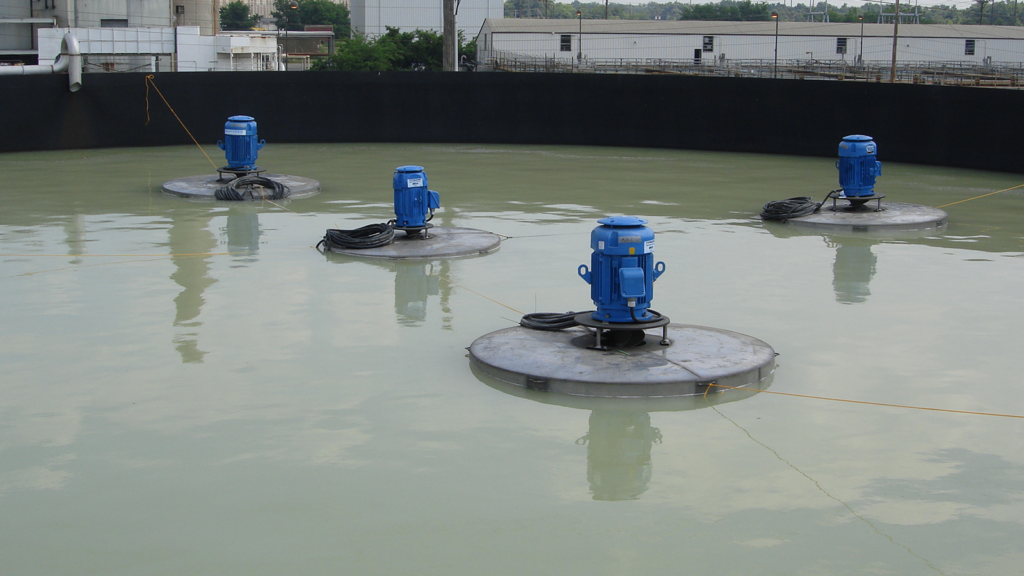
Jet aerators are an essential component in the field of wastewater treatment, leveraging the power of high-velocity jets to integrate oxygen into sewage or industrial effluent. The technology efficiently meets the oxygen needs of microorganisms in activated sludge processes, which play a pivotal role in the decomposition of organic matter. As a byproduct of this aeration technique, the water is also mixed thoroughly, ensuring that the microorganisms come into contact with the dissolved and suspended organic material.
Within the broader secondary treatment process train, jet aeration occupies a specific niche: it is the technology of choice where deep tanks, high oxygen demand, and independent mixing control all apply at once. Because the motive pump and the air supply are separate systems, operators can maintain full basin mixing with the air turned off — a capability that makes jet aeration particularly well suited to anoxic cycling and nutrient removal.
Installation and operation are straightforward, with jet aerators being adaptable to various plant sizes and configurations. These systems are designed to minimize maintenance needs while providing reliable service. Furthermore, with advancements in material engineering and design innovation, the latest models of jet aerators are more efficient, durable, and able to meet stringent regulatory standards for wastewater treatment.
Key Takeaways
- Jet aerators are crucial for adding oxygen to wastewater and enhancing the treatment process.
- They are designed for easy installation, operation, and low maintenance.
- Recent advancements have improved jet aerator efficiency and compliance with regulatory standards.
Overview of Jet Aerators
Jet aerators are integral components in modern wastewater treatment facilities, offering efficient aeration and mixing capabilities. They are specifically engineered to address the aeration needs within the treatment process through their unique design and operational principles.
Definition and Principles
Jet Aerators operate on the principle of ejector systems where pressurized fluid is used to entrain air, mixing it with the wastewater. The resultant high-velocity jet ensures thorough aeration and helps in the biological treatment of wastewater. They are especially valuable in situations where both oxygen transfer and mixing are required, with the jet stream effectively distributing oxygen within the tank.
Mechanically, the system recirculates mixed liquor from the basin through a pump and discharges it through an inner nozzle at high velocity. Air, supplied either by a blower or drawn in by the pressure differential at the nozzle throat, enters through a concentric outer annulus. The shear between the fast-moving liquid jet and the slower air stream breaks the air into small bubbles and drives them horizontally across the tank floor, producing a long bubble travel path and extended contact time before the bubbles reach the surface.
Components and Design
The design of a Jet Aerator typically includes three primary components:
- Pump: An essential component that pressurizes the liquid, enabling the entrainment of air.
- Air intake: Allows ambient air to be drawn into the system, which is then mixed with the pressurized liquid.
- Nozzle and venturi: A combination that is key to creating the jet of aerated wastewater. The nozzle converts the pressurized liquid into a high-velocity jet, while the venturi facilitates the entrainment of air into the liquid stream.
The design of jet aerators needs to be tailored to specific application requirements, addressing parameters such as tank geometry, oxygen demand, and process dynamics to ensure optimal performance.
Two configurations dominate practice. Directional jet aerators use individual nozzle assemblies mounted on a header and aimed to establish a defined circulation pattern, and are the common choice for rectangular and square basins. Slot injector systems distribute the motive flow along a manifold with multiple discharge points, giving more uniform coverage in long or irregularly shaped tanks. Wetted components are typically specified in 316 stainless steel, duplex stainless, or FRP depending on chloride content and abrasive load.
Jet Aeration Subtopic Overview
The subject spans both the underlying transfer mechanism and the packaged systems built around it. The two subtopics below cover the areas most frequently examined during evaluation and design.
Jet Aeration Principles and Performance
The mechanism behind jet aeration is momentum-driven mass transfer rather than buoyancy-driven bubble rise. The pumped liquid stream supplies the energy that both shears the air into bubbles and carries them laterally, which means bubble residence time is governed by jet trajectory and tank length rather than by depth alone.
This distinction produces the technology’s defining performance characteristic: transfer efficiency improves markedly in deep basins, with jet systems commonly applied in tanks from 15 to more than 30 feet of side water depth where surface and mechanical aerators become impractical. Standard oxygen transfer efficiency typically falls in the approximate range of 1.5 to 2.5 percent per foot of submergence, and because the discharge sits near the floor, the achievable total transfer in a deep tank is substantial. The trade-off is that two energy inputs are required — pump and blower — so total specific energy consumption is generally higher than a well-maintained fine bubble diffused system in a shallow basin.
Jet Aeration Systems in Modern Treatment Plants
Packaged jet aeration system wastewater treatment installations bundle the recirculation pumps, blowers, header piping, nozzle assemblies, and control package into a coordinated design matched to a specific basin. Contemporary systems increasingly pair variable frequency drives on both the pump and the blower, allowing air rate and mixing energy to be trimmed independently as load changes through the day.
The decoupling of mixing from aeration is the practical reason these systems appear so often in modern nutrient removal designs. An operator can shut off the air supply entirely while continuing to run the recirculation pump, holding solids in suspension through an anoxic period without any mechanical mixer in the basin. Sequencing batch reactors, cyclic activated sludge plants, and industrial reactors with alternating aerobic and anoxic phases all exploit this behavior directly.
Applications in Wastewater Treatment
Jet aerators play a vital role in modern wastewater treatment, providing essential oxygen that supports the biological degradation of pollutants.
Types of Wastewater Treatments
Jet aerators are used within certain types of wastewater treatment facilities, functioning as an integral component to maintain adequate dissolved oxygen levels. They are commonly found in:
- Extended Aeration Systems: These systems treat wastewater over extended periods, leveraging jet aerators for their efficiency and ability to mix and oxygenate the water simultaneously.
- Sequencing Batch Reactors (SBRs): Within SBRs, jet aerators provide oxygenation during specific times in the batch cycle where active aeration is required.
- Partially Mixed Lagoons: In these applications, jet aerators offer a cost-effective method of providing both mechanical and diffused aeration to large volumes of wastewater.
Each technology is chosen based on plant size, waste characteristics, and regulatory requirements to achieve the desired treatment level.
Role in Aeration Processes
The function of jet aerators in wastewater treatment is twofold:
- Aeration: They inject oxygen into the wastewater, which is essential for aerobic microorganisms to break down organic pollutants effectively.
- Mixing: They ensure that the wastewater, microorganisms, and oxygen are thoroughly mixed, preventing dead zones where treatment may be less effective.
Their role in aeration processes is pivotal for treatment plant performance, enhancing not only the efficiency of biological degradation but also ensuring that the final effluent meets the required quality standards.
Selection and Specification Framework
Deciding whether jet aeration is the right technology for a given basin resolves through a short sequence of constraint checks. The order below reflects how the decision usually settles in practice.
Step One: Check Basin Depth
Depth is the first screen and often the decisive one. Jet systems become increasingly attractive as side water depth increases, because the floor-level discharge and long horizontal bubble path convert depth directly into contact time. In shallow aeration tanks below roughly 12 feet, the advantage largely disappears and simpler alternatives usually win on energy. Above about 20 feet, jet aeration is frequently the only practical option alongside deep-submergence diffused systems.
Step Two: Determine Whether Mixing Must Be Independent
If the process requires solids suspension without aeration — anoxic zones, SBR anoxic phases, sludge holding tanks, equalization basins with intermittent load — jet aeration delivers that capability without a separate mixer. Where aeration and mixing are always required together, this advantage carries no value and should not influence the selection.
Step Three: Evaluate Access and Maintenance Constraints
Jet systems place no rotating equipment in the basin. Pumps and blowers sit at grade where they can be serviced without dewatering, which matters most at plants with limited basin redundancy or where draining a tank means taking treatment capacity offline. The in-basin components — headers and nozzles — are passive but do require basin access for inspection, so this advantage is real but not absolute.
Step Four: Assess Solids and Rag Load
Nozzle throats are the vulnerability. Facilities with poor upstream screening, heavy rag content, or high grit load will experience clogging and wear that erodes performance gradually. Screening capability upstream should be verified before specifying jet aeration, and nozzle size should be selected with the actual solids profile in mind rather than the design assumption.
Step Five: Compare Lifecycle Energy
Model the combined pump and blower energy at realistic load, not just the blower. The recirculation pump runs continuously in most configurations and represents a parasitic load that fine bubble systems do not carry. Over a twenty-year horizon this typically places jet aeration above fine bubble diffused on energy cost and below mechanical surface aeration in deep tanks, with the crossover depending heavily on basin depth and load factor.
Aeration Technology Comparison
| Technology | Key Features | Best-Fit Applications | Limitations | Relative Energy | Maintenance Profile |
|---|---|---|---|---|---|
| Jet Aeration | Pumped motive liquid shears entrained air; mixing independent of air supply; floor-level discharge | Deep tanks, SBRs, anoxic cycling, high-strength industrial, sludge holding | Two energy inputs; nozzle clogging risk; parasitic pump load | Moderate to high | Pump and blower at grade; periodic nozzle inspection |
| Fine Bubble Diffused | Membrane or ceramic diffusers on floor grid; highest transfer efficiency per unit air | Conventional activated sludge with steady load | Membrane fouling and replacement; requires separate mixers for anoxic zones | Lowest | Diffuser cleaning and replacement; basin dewatering required |
| Surface Aeration | Mechanical agitation at liquid surface; combined oxygen transfer and mixing | Lagoons, oxidation ditches, shallow basins | Lower efficiency; icing and spray drift; depth-limited | Moderate to high | Gearbox or motor focused; mooring on floating units |
| Coarse Bubble Diffused | Large-orifice diffusers; robust and clog-resistant | Grit chambers, sludge holding, high-fouling service | Low transfer efficiency | High | Minimal; very tolerant of solids |
The comparison most often reduced to a single decision is jet aeration versus surface aerators. Where basins are deep, aerosols are constrained, or icing is a concern, jet systems generally prevail; where basins are shallow and capital cost dominates, surface units usually do. Values above are planning-level generalizations and should be confirmed against documented clean water test data for the specific equipment under consideration.
Installation and Operation
Jet aerators are crucial in wastewater treatment processes, ensuring efficient aeration and mixing. Proper installation and operation are vital for their optimal performance and longevity.
Installation Guidelines
- Pre-Installation Checks:
- Site Evaluation: Before installing a jet aerator, one must ensure the suitability of the site, evaluating factors such as tank dimensions and environmental conditions.
- Component Inspection: Upon delivery, inspect all components for damage.
- Setting Up:
- Mounting: Secure the jet aerator to a flat, stable surface to prevent vibrations and possible damage during operation.
- Connections: Attach the air and liquid lines correctly to the aerator, ensuring all fittings are tight and secure.
- Safety Precautions:
- Electrical Safety: Connect to a power source by local regulations, using proper grounding techniques to prevent electrical hazards.
- Work Safety: Follow all recommended safety guidelines to protect personnel during the installation process.
Operation Procedure
- Startup Procedure:
- Inspections: Perform routine inspections on the jet aerator and associated systems before initiating startup.
- Initiation: Gradually introduce air and liquid flows, monitoring system responsiveness to avoid shocks.
- Continuous Operation:
- Monitoring: Regularly monitor performance indicators such as dissolved oxygen levels, ensuring they meet the required treatment standards.
- Adjustments: Make necessary adjustments to air and liquid flows to optimize aeration and mixing capabilities.
- Maintenance:
- Routine Checks: Conduct scheduled maintenance checks for wear and potential issues.
- Troubleshooting: Quickly address any operational anomalies to prevent downtime or system failure.
By following these guidelines and procedures, one can expect jet aerators to perform effectively, playing a critical role in maintaining the wastewater treatment process.
Maintenance and Troubleshooting
Proper maintenance and systematic troubleshooting are crucial to ensure the efficient operation of jet aerators in wastewater treatment. These practices mitigate downtime and extend the lifespan of the equipment.
Routine Maintenance
Jet aerators require regular inspection and maintenance to prevent issues that could disrupt wastewater treatment processes. Routine maintenance should include:
- Inspection of nozzles and diffusers: Check for clogs or wear that could impair oxygen transfer efficiency.
- Air filter examination: Replace or clean air filters regularly to maintain optimal airflow.
- Verification of liquid flow rates: Ensure they align with the manufacturer’s specifications for effective aeration.
- Lubrication of moving parts: Apply appropriate lubricants to reduce friction and prevent equipment degradation.
Common Issues and Solutions
Despite diligent maintenance, jet aerators in wastewater systems may encounter issues. Common problems and their respective solutions include:
- Reduced aeration efficiency: Often caused by nozzle blockages. Regular cleaning or replacement of nozzles can rectify this issue.
- Excessive noise or vibration: This could signal a problem with the motor or impeller. Checking alignment and balance is recommended.
- Wear and tear: Components like seals and gaskets should be monitored and replaced as needed to prevent leaks and ensure proper functionality.
By adhering to these maintenance and troubleshooting guidelines, operators can maintain the effectiveness of jet aerators in wastewater treatment facilities.
Field Notes for Jet Aeration Systems
Diagnosing Nozzle Fouling Without Draining the Basin
Nozzle restriction is the most common performance complaint and the hardest to see, because the equipment is submerged and the degradation is gradual rather than abrupt. The reliable indicator is pump discharge pressure trended over time: a rising pressure at constant flow means the nozzles are restricting, while a falling pressure at constant flow usually points to wear that has enlarged the throat. Either condition changes the air-to-liquid ratio and moves the system off its design transfer point.
Common Mistake: Increasing blower output to recover dissolved oxygen when nozzles are partially fouled. The additional air passes through a restricted throat at the wrong velocity ratio, producing larger bubbles and worse transfer. Energy consumption rises while oxygen delivery barely moves. Diagnose the pressure trend first.
Air-to-Liquid Ratio and Turndown
Jet aerator performance depends on the volumetric ratio of entrained air to motive liquid, commonly designed in the approximate range of one-to-one to four-to-one. Pushing air rate beyond the design ratio does not scale transfer linearly — the jet loses its ability to shear the air stream effectively, bubbles coalesce, and efficiency falls. Real turndown comes from varying both pump and blower together, which is why variable frequency drives on both are the standard modern specification rather than an option.
Common Specification Mistakes
- Sizing the blower without accounting for the recirculation pump’s continuous parasitic load in the energy model
- Specifying jet aeration in shallow basins where the depth advantage does not exist
- Omitting variable frequency drives on the pump, leaving the system with no genuine turndown
- Selecting nozzle sizing from design assumptions rather than the plant’s actual screening performance and rag load
- Failing to provide isolation and drain provisions on headers, making inspection dependent on full basin dewatering
- Overlooking jet penetration distance and spacing, leaving dead zones in long or irregular basins
Operations and Maintenance Priorities
Maintenance attention concentrates on the at-grade equipment: pump seals and bearings, blower filters and check valves, and instrumentation on the air and liquid headers. The in-basin components are passive but should be inspected whenever a basin is dewatered for any reason — opportunistic inspection is often the only realistic access at plants without redundancy. Header supports and anchors deserve particular attention, since the discharge reaction force is continuous and fastener loosening is a recognized failure mode over long service periods.
Pro Tip: Log pump discharge pressure, motive flow, and airflow together on the same trend as dissolved oxygen. That four-variable picture distinguishes nozzle fouling, blower degradation, and genuine load increase from one another — three conditions that look identical if you are only watching DO.
Performance and Efficiency
Jet aerators offer a high-efficiency solution for wastewater oxygenation, significantly impacting the treatment process’s overall performance. They use a combination of air and liquid flow to provide effective aeration and mixing.
Aeration Efficiency
Jet aerators in wastewater treatment are known for their high oxygen transfer efficiency. This efficiency is measured in terms of Oxygen Transfer Rate (OTR) and Oxygen Transfer Efficiency (OTE). The OTR indicates how many pounds of oxygen are transferred to the water per horsepower-hour of energy consumed. Typically, jet aerators have an OTR that can be adjusted through flow modifications, thus giving them versatility in varying load conditions.
Reported efficiency figures require careful reading. A value quoted for the blower alone will look considerably better than the same system evaluated on total wire-to-water energy including the recirculation pump. When comparing vendor submittals, confirm which basis each figure uses and normalize before drawing conclusions; this single check accounts for most apparent discrepancies between competing proposals.
Factors Affecting Performance
Several factors can influence the performance of jet aerators. These include:
- Wastewater Characteristics: The presence of solids, temperature, and pH value.
- Design Parameters: The size and depth of the aeration tank and the proper placement of jet aerators.
- Operational Conditions: Flow rates and patterns, which must be optimized for the specific wastewater treatment objectives.
Each factor should be carefully considered to maintain the efficiency of the jet aeration system. Alpha factor deserves specific mention: jet systems generally hold up comparatively well in surfactant-heavy industrial wastewaters, where fine bubble diffused systems suffer more pronounced transfer penalties, and this behavior is often the reason jet aeration is selected for industrial service.
Energy Consumption Metrics
Energy consumption is a critical metric for evaluating the performance of jet aerators. The key metrics include:
- Specific Energy Consumption (SEC): The amount of energy consumed per unit of oxygen transferred, typically expressed in kWh/kg O2.
- Energy Efficiency Ratio (EER): The ratio of oxygen transfer to energy consumed, highlighting the aeration process’s cost-effectiveness.
Analyzing these metrics helps in understanding the energy dynamics and supports the optimization of jet aeration systems for both performance and cost.
Design Details and Standards
Sizing Methodology
Sizing begins with the actual oxygen requirement derived from BOD load, nitrogenous demand, and endogenous respiration, corrected to standard conditions using site-specific alpha, beta, and temperature factors. From the standard oxygen requirement and the transfer efficiency achievable at the design submergence, required airflow follows. Motive liquid flow is then set from the design air-to-liquid ratio, and nozzle count and spacing are established from jet penetration distance against basin dimensions. The result is checked against the minimum mixing energy for the basin volume, and where mixing governs, the pump is sized on that basis rather than on aeration alone.
Parameters That Differ by Configuration
Directional and slot injector arrangements are not interchangeable in a specification. Nozzle count, throat diameter, discharge velocity, jet trajectory, header layout, and required pump head all differ between them, and basin aspect ratio frequently determines which is viable before efficiency enters the discussion. Bid documents should state basin geometry, design submergence, and the required air-to-liquid ratio explicitly so that proposals remain comparable.
Applicable Standards
Clean water oxygen transfer testing follows ASCE/EWRI 2-06, Measurement of Oxygen Transfer in Clean Water, which is the basis for the transfer efficiency values quoted by manufacturers; in-process testing follows ASCE 18-96. Design practice references include WEF Manual of Practice No. 8 and the Ten States Standards. Pumps are specified to applicable ANSI/HI standards, motors to NEMA requirements for wet and corrosive service, and materials to the chloride and abrasion profile of the specific wastewater.
Specification Checklist
- Standard oxygen requirement with stated alpha, beta, and theta values and design residual dissolved oxygen
- Basin dimensions, side water depth, and design submergence at the nozzle
- Design air-to-liquid ratio and permissible operating range
- Motive pump flow, head, and continuous duty rating
- Nozzle configuration, count, spacing, and jet penetration distance
- Minimum mixing energy requirement for anoxic or air-off operation
- Variable frequency drives on both pump and blower with the intended control strategy
- Materials of construction for nozzles, headers, and fasteners
- Header isolation, drain, and inspection provisions
- Documented clean water test data for the proposed configuration
Innovations and Developments
In the field of wastewater treatment, jet aerators have seen significant enhancements in response to the demand for more efficient and eco-friendly systems.
Technological Advances
Recent technological advances in jet aerators focus heavily on optimizing oxygen transfer efficiency. Manufacturers have developed advanced impeller designs that maximize contact between air and water, leading to a significant reduction in energy consumption. Moreover, modern control systems now utilize real-time sensors to adjust aeration rates dynamically, matching the biological oxygen demand of the wastewater and thereby improving the overall process control.
Sustainable Practices
In the realm of sustainable practices, innovations in jet aeration technology align with energy recovery strategies in wastewater treatment facilities. The integration of high-efficiency motors has reduced the carbon footprint of aeration systems. Additionally, some facilities have applied waste-to-energy approaches, where biogas from the treatment process is harnessed to power the jet aerators, closing the loop and creating a more sustainable operation.
Regulatory Standards and Guidelines
Jet aerators in wastewater treatment facilities are subject to stringent regulatory standards and guidelines to ensure environmental protection and public health. These regulations dictate the design, operation, and maintenance of jet aerator systems.
Industry Standards
Jet aerator technology must adhere to industry standards that ensure the equipment’s efficiency and reliability. Manufacturers and designers of jet aerators follow standards like ISO (International Organization for Standardization) and ANSI (American National Standards Institute) to meet international and national expectations. For example, the ANSI/NSF Standard 46 is particularly relevant as it evaluates the material, design, construction, and performance of components used in wastewater treatment systems, including jet aerators.
Safety and Compliance
In the realm of safety and compliance, jet aerators are governed by regulations that ensure worker safety and environmental compliance. OSHA (Occupational Safety and Health Administration) provides guidelines on the safe operation of wastewater treatment equipment. Furthermore, the EPA (Environmental Protection Agency) enforces regulations to safeguard water quality, such as the Clean Water Act, which affects all wastewater treatment processes. Regular inspections and maintenance of jet aerators are mandated to minimize risks of non-compliance with these regulations.
Case Studies and Real-world Applications
Jet aerators are essential in a variety of wastewater treatment scenarios. Municipal Sewers frequently employ these systems to significantly enhance the aeration process. They have been vital in reducing Biological Oxygen Demand (BOD) and total suspended solids (TSS). For instance, a study on the application of jet aerators showed improved efficiency while also curtailing noise and maintenance requirements compared to traditional methods.
In industrial wastewater treatment, jet aerators facilitate the breakdown of complex industrial wastes. A notable case is one in the chemical manufacturing industry, where jet aerators have been instrumental in handling volatile organic compounds (VOCs) and hazardous materials.
Small communities have also benefited from jet aeration, especially those with aging infrastructure. The introduction of jet aerators has often been a cost-effective upgrade that markedly ameliorates the wastewater quality, and in turn, community health.
| Sector | Application | Benefits |
|---|---|---|
| Municipal | Sewer aeration | Lower maintenance, reduced odors |
| Industrial | VOC breakdown | Effective waste treatment, environmental compliance |
| Rural | Infrastructure upgrade | Improved public health, resilient systems |
Each application underscores the relevance of jet aerators in diverse settings, underscoring their flexibility and efficiency. With ongoing advances in wastewater-based surveillance, jet aerators play a critical role in ensuring accurate and reliable analysis due to their ability to maintain consistent water quality. As wastewater management challenges continue to evolve, jet aerators remain a steadfast solution in mitigating pollution and protecting public health.
Key Takeaways
- Depth is the primary selection criterion — jet aeration converts side water depth into contact time, becoming increasingly advantageous above roughly 15 feet and rarely justified below 12
- Mixing is independent of aeration — running the recirculation pump with the air off holds solids in suspension through anoxic periods without a separate basin mixer
- Two energy inputs must both be modeled — the continuous recirculation pump is a parasitic load that fine bubble comparisons frequently omit
- Nozzle fouling is diagnosed by pressure trend, not dissolved oxygen — rising pump discharge pressure at constant flow is the early indicator
- Air-to-liquid ratio governs transfer — pushing air beyond the design ratio coalesces bubbles and wastes energy; real turndown requires VFDs on both pump and blower
- No rotating equipment sits in the basin — pumps and blowers are serviceable at grade, which matters most where basin redundancy is limited
Conclusion
Jet aeration earns its place in deep basins, in processes that alternate between aerobic and anoxic conditions, and in industrial service where surfactant loading degrades the performance of competing technologies. Its distinguishing capability is not raw transfer efficiency but the separation of mixing from aeration, which gives operators a control dimension that neither diffused nor mechanical surface systems provide without additional equipment.
Specification quality determines whether that potential is realized. Model both energy inputs rather than the blower alone, size nozzles against the plant’s real screening performance, provide genuine turndown on both pump and blower, and confirm that basin depth actually justifies the technology. Where those conditions hold, jet aeration delivers dependable performance with the mechanical equipment kept safely out of the water.
Frequently Asked Questions
What is the role of jet aerators in enhancing the efficiency of wastewater treatment plants?
Jet aerators are integral for mixing and oxygenating the wastewater in treatment plants. They utilize a high-velocity jet of air and water to optimize the biological degradation of waste materials, consequently increasing the treatment efficiency.
How does a jet aeration system contribute to the treatment process in septic systems?
In septic systems, a jet aeration system supplies oxygen to the wastewater, encouraging the growth of aerobic bacteria which break down sewage more effectively than anaerobic processes. This type of aeration is vital for proper function and treatment within the system.
What are the key differences between jet aerators and other aeration technologies used in wastewater management?
Jet aerators differ primarily in their mechanism of oxygen delivery and mixing. Unlike surface aerators that introduce oxygen by agitating the water's surface, jet aerators inject air below the surface, creating thorough mixing and aeration, which can be more energy-efficient and effective.
Can you explain the maintenance requirements for jet aerators in wastewater treatment facilities?
Maintenance for jet aerators typically involves routine checks of the air filters, nozzles, and pumps to ensure they are clear of clogs or buildup. Regular servicing helps maintain their efficient operation and extends the equipment's lifespan.
How do jet aeration systems affect the overall operational costs of treating wastewater?
The operational costs of treating wastewater using jet aeration systems can vary. These systems are often more energy-efficient, but the initial investment and periodic maintenance can impact the overall costs. Accurate cost assessments should consider long-term savings associated with improved efficiency.
What should be considered when selecting a jet aerator for a wastewater treatment application?
When selecting a jet aerator, it's important to consider factors such as the size of the treatment plant, the type of wastewater being treated, and the required oxygen transfer rate. The design should also be compatible with existing infrastructure to optimize performance and cost-effectiveness.