
Constructed Wetlands in Wastewater Treatment: Nature’s Solution for Water Purification
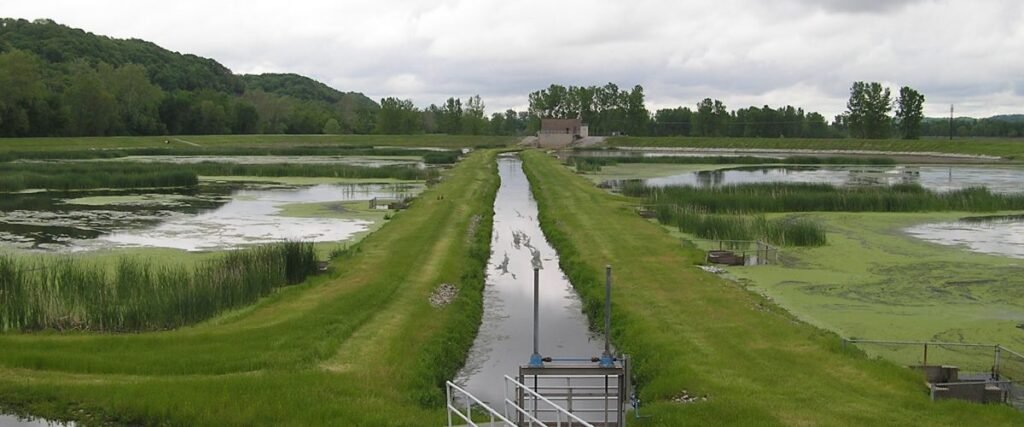
Constructed wetlands for wastewater treatment are engineered systems that replicate the natural processes found in wetland environments to treat contaminated water. These systems are designed to leverage the natural interactions among water, plants, microorganisms, and the surrounding soil to remove pollutants such as nutrients, metals, or organic compounds from domestic or industrial wastewater. As green infrastructure for water treatment, constructed wetlands offer a sustainable alternative to traditional mechanical or chemical treatment processes, often requiring less energy and lower operational costs.
The design and implementation of constructed wetlands are tailored to meet specific water quality goals and are influenced by factors such as climate, land availability, and the type of wastewater being treated. By mimicking a range of biological processes found in natural wetlands, engineered systems can achieve high levels of water purification while also providing habitats for wildlife. Their application spans various scales, from small, rural communities to larger, industrial operations. Moreover, the operation and maintenance of constructed wetlands are essential for maintaining their efficiency and effectiveness over time.
Within secondary treatment, constructed wetlands occupy a distinctive position: they trade land for energy and mechanical complexity. A conventional plant achieves treatment in hours using blowers, pumps, and continuous operator attention in a compact footprint. A constructed wetland achieves comparable treatment over days, using gravity and biology in a footprint many times larger, with almost no energy and very little intervention. Where land is available and inexpensive, that is a favourable trade; where it is not, the technology is simply unavailable regardless of its other merits.
Two things about wetlands are widely misunderstood and worth stating plainly. The plants do far less of the treatment than their visual prominence suggests — direct nutrient uptake by vegetation accounts for a small fraction of the load removed, and the real work is done by microorganisms on the root and media surfaces. And a wetland’s capacity is not indefinitely renewable: phosphorus removal in particular depends on sorption onto the media, which saturates over years and then largely stops. Both facts matter when setting expectations for what a wetland will deliver over a twenty-year permit horizon.
Key Takeaways
- Constructed wetlands serve as eco-friendly solutions for wastewater treatment.
- These systems are adaptable to different types of wastewater and scales of operation.
- Proper maintenance is crucial for the long-term performance of constructed wetlands.
Fundamentals of Constructed Wetlands
Constructed wetlands serve as an effective solution for wastewater treatment, harnessing natural processes to remove contaminants from domestic and industrial effluents.
What Are Constructed Wetlands?
Constructed wetlands are engineered systems designed to simulate the functions of natural wetlands to treat wastewater. They provide a controlled environment where plants, microorganisms, and the natural media such as soil or gravel interact to degrade, transform, and remove pollutants from wastewater. This technique is favored for its eco-friendly approach and cost-effectiveness, especially in handling various types of wastewater across different industries and communities.
Types of Constructed Wetlands
There are primarily two types of constructed wetlands utilized for wastewater treatment:
- Surface Flow Constructed Wetlands (SFCWs):
- Mimic natural marshes or swamps
- Water flows above ground amidst emergent vegetation
- Subsurface Flow Constructed Wetlands (SSFCWs):
- Can be further classified as horizontal or vertical flow systems
- Water flows through a medium (gravel, sand) beneath the surface, which is planted with vegetation
Both types exploit the natural filtration and absorption capabilities of the wetland environment, although their application and efficiency may vary based on the specific characteristics of the wastewater they treat and the goals of the treatment process.
Free Water Surface Wetlands
Free water surface systems are shallow basins with exposed open water among emergent vegetation, closely resembling a natural marsh. Water depth is typically shallow, on the order of tens of centimetres, and treatment occurs through sedimentation, filtration by the plant stems, and microbial activity on submerged surfaces. They handle large flows and variable loading well, tolerate solids that would clog a gravel bed, and provide genuine wildlife habitat and public amenity value. The corresponding limitations are exposure — mosquitoes, odour, and public access to partially treated water are all real concerns — and poor cold-weather performance, since an open water surface loses heat and can freeze.
Horizontal Subsurface Flow Wetlands
Horizontal subsurface flow beds keep the water level below the surface of a gravel medium, so nothing is exposed. That eliminates the mosquito, odour, and public contact problems in one stroke, and the gravel provides insulation that makes cold-climate operation feasible. Treatment of organic matter and suspended solids is good. What these beds do poorly is nitrify, because the saturated bed is largely anoxic and oxygen transfer is limited to what the plant roots release. Their dominant failure mode is clogging, as accumulated solids, biofilm, and chemical precipitates progressively fill the void spaces until water surfaces and short-circuits.
Vertical Flow Wetlands
Vertical flow beds are dosed intermittently onto the surface of an unsaturated sand or gravel bed and drain downward, drawing air into the media between doses. That intermittent, unsaturated operation transfers far more oxygen than a saturated horizontal bed can, which is what makes vertical flow the configuration that nitrifies reliably. It also achieves treatment in a substantially smaller area per person served. The costs are a dosing mechanism — a pump or a self-priming siphon — where horizontal systems can run entirely on gravity, and an absence of denitrification, since the aerobic bed converts ammonia to nitrate and then leaves it there.
Hybrid Systems
The limitations of the two subsurface types are complementary, which is the basis for combining them. Hybrid constructed wetlands place a vertical flow stage and a horizontal flow stage in series, using the aerobic vertical bed to nitrify and the anoxic horizontal bed to denitrify the nitrate it produces. That sequence achieves total nitrogen removal that neither configuration reaches alone, and it is the standard answer where a wetland must meet a nitrogen limit rather than simply remove organics. Configurations vary in which stage comes first and whether recirculation is used between them, and the choice depends on whether nitrification or denitrification is the binding constraint.
Subcategory Overview: Topics Within Constructed Wetlands
Hybrid Configurations and Their Trade-offs
The hybrid systems described above are covered in their own right as a distinct design approach, addressing stage sequencing, recirculation strategy, the relative sizing of the aerobic and anoxic stages, and the carbon availability that denitrification in the second stage depends on. That last point is the usual constraint: by the time water leaves a vertical flow bed, most of the readily biodegradable carbon has been consumed, and the horizontal stage may need a supplemental carbon source or a recirculation loop bringing raw wastewater forward to drive denitrification effectively.
Wetland Systems in Context
Coverage of central wetlands addresses wetland systems in their broader landscape and community setting, where the treatment function sits alongside habitat, flood attenuation, and public amenity objectives. Large wetland systems are rarely justified on treatment performance alone; the case for them typically rests on the combination of water quality improvement with ecological restoration and recreational value, and the design reflects all three purposes rather than optimizing narrowly for effluent quality.
Design and Engineering of Constructed Wetlands
The design and engineering of constructed wetlands for wastewater treatment are critical for their effectiveness and efficiency. Meticulous planning and execution are required to ensure that these systems effectively treat wastewater and provide ancillary environmental benefits.
Site Selection
Site selection is paramount in the construction of wetlands for wastewater treatment. Important site criteria include:
- Availability of land: Sufficient space for the planned wetland size, including buffer zones.
- Hydrology: Access to a reliable water source and consideration of natural groundwater levels.
- Soil characteristics: Permeability and composition must be conducive to wetland construction and functionality.
- Topography: A gentle slope is ideal to facilitate natural water flow and minimize energy use.
Soil permeability deserves particular attention because it cuts both ways. A site permeable enough to allow untreated seepage to groundwater requires a liner, which is a significant cost item and one that is frequently underestimated at the concept stage. A site too impermeable to construct in without extensive excavation carries a different cost. The groundwater table matters as much as the soil itself, since a high water table complicates construction and can float a lined basin.
Wetland Design Parameters
The wetland design parameters are crucial for the successful operation of the constructed wetland. These parameters include:
- Wetland type: Free water surface (FWS) or subsurface flow (SSF) systems, each with distinct characteristics.
- Size and depth: Determined by the expected wastewater load and required retention time.
- Vegetation: Plant species selection plays a role in nutrient uptake and provides habitat for wildlife.
- Influent and effluent structures: Design to ensure even distribution of wastewater and controlled outflow.
On vegetation, the species most commonly used are common reed, cattail, and bulrush, chosen for vigour, tolerance of saturated conditions, and root systems that penetrate the media. Their contribution is less about nutrient uptake than about providing surface area for biofilm, releasing small quantities of oxygen at the root zone, maintaining hydraulic conductivity as roots grow and die back, and insulating the bed in winter. Harvesting the vegetation removes only a modest fraction of the nutrient load and is generally not worth doing for treatment reasons alone.
Hydraulic Considerations
Hydraulic considerations are essential to handle the wastewater flow through the wetland efficiently. Key hydraulic aspects are:
- Hydraulic loading rate: Influences removal rates of contaminants and should match the wetland’s capacity.
- Hydraulic retention time (HRT): Must be sufficient to allow for adequate treatment before discharge.
- Hydraulic conductivity: Soil and root matrix must permit appropriate water movement to prevent stagnation or overflow.
Hydraulic conductivity is the parameter that degrades over the life of a subsurface bed and the one that determines when it fails. A gravel bed begins with ample conductivity and loses it progressively as solids accumulate, biofilm develops, and precipitates form in the void spaces. When conductivity falls below what the flow requires, water surfaces at the inlet end and travels across the top of the bed rather than through it, which is short-circuiting and effectively ends treatment. Adequate pretreatment to keep solids out of the bed is the single most effective way to delay that outcome.
Proper design and engineering are the cornerstones for the success of constructed wetlands in wastewater treatment, ensuring these systems perform optimally while supporting local ecosystems.
Biological Processes in Wetlands
Constructed wetlands play a pivotal role in wastewater treatment by harnessing natural biological processes to remove contaminants.
Microbial Activity
Within constructed wetlands, a diverse population of microorganisms is instrumental in the degradation of organic pollutants. These microorganisms include bacteria, fungi, and protozoa. They work by breaking down organic matter in wastewater, a process that is pivotal for the removal of pollutants. Bacterial action, for instance, is crucial in the process of denitrification, where nitrate is transformed into nitrogen gas, thereby reducing the nitrogen content of the treated water.
Plant Interactions
Vegetation in wetlands facilitates wastewater treatment by fostering habitat for microbial communities and directly uptake pollutants. The plants’ roots also oxygenate the water, promoting aerobic microbial activity. A specific example is the Constructed Wetland System, where plants like reeds and rushes create a hospitable environment that enhances treatment efficiency.
Biochemical Pathways
The primary biochemical pathways at work in constructed wetlands include nitrification, denitrification, and phosphorus removal. These processes are driven by the microbial assimilation of nutrients and their subsequent transformation into gases or stable compounds. A thorough understanding of these processes helps optimize the design of constructed wetlands for improved water quality.
Nitrogen and phosphorus behave very differently in a wetland, and conflating them causes most of the disappointment in this area. Nitrogen has a genuine exit route: nitrification followed by denitrification converts ammonia to nitrogen gas, which leaves the system permanently, and a properly configured wetland can remove nitrogen indefinitely. Phosphorus has no gaseous form and no equivalent exit. It is removed by sorption onto the media and by burial in accumulating sediment, both of which are finite. Media sorption capacity saturates over a period of years, after which phosphorus removal falls sharply and the only remedies are reactive media, media replacement, or chemical addition. A wetland designed against a long-term phosphorus limit needs that accounted for at the outset. Where nitrogen and phosphorus polishing is the primary objective, the wider options are covered under nutrient removal.
Selection and Specification Framework
Step One: Confirm the Land Is Actually Available
This is the constraint that eliminates the technology more often than any other. Constructed wetlands require an order of magnitude more area than a mechanical plant of equivalent capacity, plus buffer zones, plus access for maintenance. The area requirement varies substantially by configuration — vertical flow beds are considerably more compact than horizontal flow, which are more compact than free water surface — but all of them are land-hungry. Establish the available area and its cost before comparing anything else, because a wetland that does not fit is not a design problem to be solved.
Step Two: Choose the Configuration From the Treatment Objective
Organic matter and suspended solids removal alone can be achieved by a horizontal subsurface flow bed, which is the simplest option and can run on gravity. An ammonia limit requires the aerobic conditions that only vertical flow reliably provides. A total nitrogen limit requires both, in a hybrid arrangement. Polishing of an already-treated effluent, stormwater management, or a project where habitat value is a co-objective points toward free water surface. Each of these is a different wetland, and the objective must be settled before the type is selected.
Step Three: Specify the Pretreatment Properly
Every subsurface flow wetland depends on pretreatment to keep solids out of the media, because solids that enter the bed do not leave and they consume the void space that hydraulic conductivity depends on. A septic tank, an Imhoff tank, or primary settling is standard practice ahead of horizontal flow beds. Underspecifying this stage is the most common cause of premature bed clogging, and the resulting media replacement costs far more than adequate pretreatment would have.
Step Four: Design for the Cold Season
Biological rates fall with temperature, and nitrification falls fastest. Where a year-round ammonia limit applies in a cold climate, the design must be based on winter conditions rather than annual averages, which typically means a larger bed, a longer retention time, or both. Subsurface beds have an inherent advantage here because the media and an insulating mulch layer keep the water above freezing, while free water surface systems lose heat directly and can ice over. In genuinely cold climates, subsurface flow is often the only viable configuration.
Step Five: Plan for the Phosphorus Limit Over the Full Asset Life
If a phosphorus limit applies, decide at the design stage how it will be met in year fifteen rather than year one. Options include selecting media with high and durable phosphorus sorption capacity, sizing the media volume for the total mass to be sorbed over the design life, providing for media replacement, or planning chemical addition upstream. Assuming that early performance will persist is the mistake, because it will not.
Step Six: Compare Against the Other Passive Options
The closest alternative is a lagoon system, which shares the low-energy, land-intensive profile and is often simpler to build, though it generally produces a poorer effluent and can suffer algal carryover that a wetland does not. The two are frequently combined, with a wetland polishing lagoon effluent, which addresses the algae problem and improves the final quality. Where the wetland is intended as a polishing stage after conventional treatment rather than as the treatment itself, it sits within the wider set of options covered under tertiary treatment.
Comparison Tables
| Configuration | Flow Regime | Strengths | Limitations | Relative Land Need | Best-Fit Objective |
|---|---|---|---|---|---|
| Free water surface | Open water above the substrate | Handles large and variable flows; genuine habitat and amenity value; tolerates solids | Mosquitoes, odour, public exposure; poor cold-weather performance | Largest | Polishing, stormwater, habitat co-benefit |
| Horizontal subsurface flow | Saturated, below the media surface | No exposure risk; insulated for cold climates; can run on gravity | Largely anoxic so nitrifies poorly; clogging is the dominant failure | Moderate | Organic and solids removal for small communities |
| Vertical flow | Intermittently dosed, unsaturated | High oxygen transfer; reliable nitrification; most compact | Requires dosing pump or siphon; no denitrification | Smallest | Ammonia removal |
| Hybrid (VF + HSSF) | Aerobic then anoxic in series | Total nitrogen removal neither stage achieves alone | Two systems to build and operate; carbon may limit denitrification | Moderate | Total nitrogen limits |
| Objective | Wetland Performance | Notes |
|---|---|---|
| Organic matter and suspended solids | Reliable across all configurations | The core competence of the technology |
| Ammonia removal | Good in vertical flow; poor in horizontal flow | Oxygen transfer is the limiting factor |
| Total nitrogen removal | Good in hybrid configurations | Requires both aerobic and anoxic stages, and available carbon |
| Phosphorus removal | Good initially, declining over years | Sorption capacity is finite and saturates; plan for the whole asset life |
| Pathogen reduction | Substantial but not absolute | Disinfection is still required where a bacterial limit applies |
| Metals removal | Effective by sorption and precipitation | Accumulates in sediment, which becomes a disposal consideration |
| Energy consumption | Very low to none | Gravity systems use no energy at all; vertical flow needs dosing |
| Land requirement | An order of magnitude above mechanical plants | The constraint that most often rules the technology out |
Performance and Efficiency
Constructed wetlands are engineered systems designed to optimize the removal of contaminants from wastewater. They mimic the processes of natural wetlands, resulting in efficient treatment performance with potential cost-saving advantages compared to traditional wastewater treatment methods.
Removal of Contaminants
Constructed wetlands effectively reduce a variety of wastewater contaminants including suspended solids, organic matter, nutrients, and pathogens. Specific methods, such as the incorporation of vegetated swales and sand filters, enhance the treatment efficiency by fostering the right conditions for microbial degradation and physical filtration. For example, in the US EPA’s Region 7 Office in Lenexa, Kansas, the system successfully treats and infiltrates stormwater through a constructed wetland, highlighting the system’s capability in contaminant removal.
Treatment Efficiency
The treatment efficiency of these wetlands is influenced by design, environmental conditions, and the nature of the wastewater. Design Manual: Constructed Wetlands Treatment of Municipal Wastewater states that these systems can be scaled to accommodate varied volumes of wastewater, and can adapt to both rural and urban settings. Moreover, the treatment efficiency in terms of denitrification—the reduction of nitrates to nitrogen gas—is documented as effective under anoxic conditions, with bacteria utilizing nitrates for energy and releasing nitrogen gas into the atmosphere. Further details are outlined in EPA’s Primer for Municipal Wastewater Treatment Systems, supporting the efficiency of constructed wetlands in mitigating nitrogen load from wastewater.
Applications of Constructed Wetlands
Constructed wetlands serve as sophisticated systems designed to harness natural processes involving vegetation, soil, and microbes to treat various types of wastewater.
Municipal Wastewater Treatment
Constructed wetlands effectively handle municipal wastewater, providing a cost-efficient alternative to traditional treatment methods. They operate by mimicking natural wetlands, processing the effluent from septic tanks through engineered platforms that support plant growth and microbial activity. This method is known for both its efficacy in reducing pollutants and its added benefit of creating wildlife habitats.
Industrial Wastewater Treatment
For industrial wastewater treatment, constructed wetlands play a significant role in purifying waste from manufacturing and chemical processes. Contaminants such as heavy metals and complex organic compounds are reduced through the natural filtration processes within the wetland system. These sustainable treatment areas can be tailored to address specific industrial needs and comply with environmental regulations.
Agricultural Wastewater Management
In the context of agricultural wastewater management, constructed wetlands are utilized to manage run-off and improve water quality. They assist in the reduction of nitrogen, phosphorus, and pesticides that commonly exist in agricultural effluent, preventing contamination of natural water bodies and groundwater.
Stormwater Treatment
Finally, regarding stormwater treatment, constructed wetlands can diminish the impact of urban run-off, which often carries sediments, nutrients, and toxins. By holding and slowly releasing stormwater, these structures not only filter harmful components but also mitigate flooding and erosion, contributing to better stormwater management practices.
Design Details and Standards
Sizing Methodology
Establish the design flow and load, and the effluent requirements, then select the configuration those requirements imply. Size the bed area from the areal loading rate appropriate to that configuration and the removal required, and check hydraulic retention time as a second criterion, taking whichever demands more area. Verify the design against the coldest expected condition rather than the annual average, since biological rates and particularly nitrification fall steeply with temperature. Confirm that the media hydraulic conductivity, at its expected end-of-life condition rather than as-built, is sufficient to pass the design flow without surfacing. Size the pretreatment stage to keep solids out of the bed, size any dosing system for vertical flow, and provide for the phosphorus sorption capacity the design life requires. Finally, confirm liner requirements against site permeability and groundwater protection obligations.
Key Parameters
- Areal loading rate: the primary sizing basis, expressed as organic load per unit of bed surface area per day, and differing substantially by configuration.
- Hydraulic loading rate: volume per unit area per day, checked alongside areal organic loading.
- Hydraulic retention time: days rather than hours, and the reason wetlands need so much area.
- Hydraulic conductivity: the property that degrades over the bed’s life and determines when it clogs.
- Media specification: grading and uniformity for subsurface beds, and sorption capacity where phosphorus removal is required.
- Water depth: shallow for free water surface, set by the media depth in subsurface systems.
- Dosing frequency and volume: for vertical flow beds, the parameters that determine oxygen transfer.
- Design temperature: the coldest sustained condition, since nitrification is the first process to fail as temperature drops.
All values and relationships above are typical guidance and should be confirmed against the governing state or national design manual and against site-specific wastewater characterization and climate data.
Applicable Standards and References
EPA design manuals on constructed wetlands treatment of municipal wastewater and on subsurface flow constructed wetlands remain the principal United States design references, alongside EPA’s constructed wetlands programme guidance. Recommended Standards for Wastewater Facilities, the Ten States Standards, addresses natural treatment systems in the states that have adopted them, and many states issue their own constructed wetland design guidance with prescriptive loading rates and setback requirements. 40 CFR Part 133 defines the secondary treatment requirements the system must meet, and 40 CFR Part 122 governs the NPDES permit under which performance is judged. Where the wetland receives or discharges to waters of the United States, Clean Water Act Section 404 permitting may apply to construction. Local land use, mosquito control, and public access requirements frequently impose conditions that are as binding as the water quality standards, particularly for free water surface systems.
Specification Checklist
- Design flow, organic load, and nutrient load, with seasonal variation stated
- Effluent requirements, distinguishing organics, ammonia, total nitrogen, phosphorus, and bacteria
- Available land area including buffer zones and maintenance access, confirmed rather than assumed
- Configuration selected, with the treatment objective that drives it
- Coldest sustained design temperature, and the sizing that follows from it
- Pretreatment stage specified and sized to protect the media from solids
- Media grading, uniformity, and initial hydraulic conductivity
- Phosphorus sorption capacity over the design life, with the strategy for year fifteen
- Liner requirement, based on site permeability and groundwater protection obligations
- Inlet and outlet distribution structures, with provision to adjust water level
- Dosing system for vertical flow beds, including redundancy
- Planting plan: species, density, and establishment period
- Disinfection provision where a bacterial limit applies
- Mosquito control and public access provisions for free water surface systems
- Monitoring points and the sampling programme required by the permit
Operation and Maintenance
Constructed wetlands play a crucial role in wastewater treatment, hence their operation and maintenance are vital for ensuring their effectiveness and longevity. Proper care safeguards the wetland’s functionality and supports consistent performance in treating wastewater.
Routine Maintenance
Routine maintenance tasks are essential for the continued performance of constructed wetlands in treating wastewater. Inspection and management of vegetation is critical, which includes the removal of invasive species and replanting as necessary to ensure plant diversity and health. It’s also important to monitor water flow, checking for any blockages in the inlet or outlet structures and ensuring that the wetland is receiving the correct volume of wastewater for optimal treatment.
Key tasks include:
- Inspecting and replacing components of the wetland as needed, such as liner materials or pumps.
- Controlling algae growth to prevent clogging and oxygen depletion.
- Removing accumulated solids from the pretreatment units to avoid system overload.
That last item deserves more emphasis than its position in the list suggests. Regular desludging of the septic tank or primary settling unit is the single most important maintenance task on a subsurface flow wetland, because every kilogram of solids that escapes pretreatment enters the bed permanently and consumes void space that cannot be recovered without excavating and replacing the media. A neglected septic tank will shorten a gravel bed’s life from decades to years.
Long-term Sustainability
The long-term sustainability of constructed wetlands hinges on strategic planning and regular evaluations. This includes assessing the overall system integrity, making provisions for future wetland expansion if necessary, and planning for sediment removal which occurs at extended intervals. Ensuring the structural integrity of berms, banks, and liners over the years is also a critical aspect to address.
Major considerations for long-term maintenance are:
- Annual performance reviews, comparing incoming and outgoing water quality to ensure the system meets regulatory standards.
- Sediment management, which may involve periodic dredging to maintain depth and flow characteristics.
- Habitat conservation within the wetland, to support biodiversity and resilience against diseases and pests.
Field Notes
Commissioning Considerations
Allow a full growing season for plant establishment before expecting design performance, and protect young plantings from water level fluctuations that would drown or strand them. Set the water level using the adjustable outlet structure rather than accepting the as-built level, since fine adjustment during establishment is what determines whether the planting takes. Verify inlet distribution across the full width of the bed, because a distribution manifold that discharges unevenly creates a preferential flow path that persists for the life of the system. Record the initial hydraulic conductivity or, more practically, the water level profile along the bed at design flow, as the baseline against which clogging will later be measured.
Common Specification Mistakes
- Underspecifying pretreatment. Solids entering a subsurface bed never leave, and clogging is the dominant failure mode.
- Expecting a horizontal flow bed to nitrify. Saturated media is largely anoxic; ammonia removal needs vertical flow.
- Assuming phosphorus removal persists. Sorption capacity saturates, and performance falls sharply once it does.
- Sizing on annual average temperature. Nitrification fails first and fastest as water cools.
- Overstating the plants’ treatment role. Direct uptake is a small fraction of the load; the microorganisms do the work.
- Choosing free water surface next to housing. Mosquitoes, odour, and public access to partially treated water are predictable complaints.
- Omitting a liner where groundwater is vulnerable. Retrofitting one means excavating the entire bed.
- Providing no water level adjustment. The outlet structure is the only real operating control a wetland has.
Troubleshooting by Symptom
Water surfacing at the inlet end of a subsurface bed and flowing across the top is clogging, and it is progressive rather than sudden — the remedies range from resting the bed, through resting alternating cells, to excavating and replacing the inlet zone media. Ammonia passing through unchanged in a horizontal flow bed is not a fault but a characteristic; the fix is a vertical flow stage rather than an adjustment. Declining phosphorus removal after several years of good performance indicates media saturation rather than a process problem. Odour from a subsurface bed generally means water is surfacing somewhere, since a properly submerged bed does not smell. Poor plant establishment usually traces to water level rather than to species selection, either drowning young plants or leaving roots dry.
Pro Tip: Desludge the Pretreatment Tank on a Schedule
The most consequential maintenance task on a constructed wetland has nothing to do with the wetland itself. Every kilogram of suspended solids that escapes the septic tank or primary settler enters the gravel bed and stays there, permanently occupying void space that hydraulic conductivity depends on. Clogging is not reversible by any routine measure — it is fixed by excavating and replacing media, which costs a substantial fraction of the original construction. Desludging on a fixed schedule rather than when someone notices a problem is therefore the cheapest possible insurance, and it is the difference between a bed that lasts decades and one that fails within a few years. Where a wetland has underperformed, the pretreatment tank is the first place to look.
Environmental Benefits and Challenges
Constructed wetlands serve as an effective solution for wastewater treatment by leveraging natural processes. They pose a balance of ecological enhancements and potential challenges that necessitate careful management.
Ecological Benefits
Constructed wetlands in wastewater treatment offer significant ecological benefits. They are engineered systems that simulate the functions of natural wetlands to treat contaminated water. One of the primary advantages is their ability to improve water quality. These systems use plants, soil, and microbial communities to filter and break down pollutants from wastewater, effectively reducing the concentration of nutrients such as nitrogen and phosphorus that can cause eutrophication in natural water bodies.
- Habitat Creation: Constructed wetlands create valuable habitats for a wide range of wildlife, supporting biodiversity. Many species of birds, amphibians, and beneficial insects thrive in these areas.
- Carbon Sequestration: These wetlands also contribute to carbon sequestration, helping to mitigate the effects of climate change by capturing carbon dioxide from the atmosphere.
According to the U.S. Environmental Protection Agency, constructed wetlands play a crucial role in storing floodwaters and maintaining surface water flow during dry periods, proving their multifaceted utility in environmental management.
Potential Drawbacks
However, there are potential drawbacks to consider with constructed wetlands. Over time, they can face challenges related to maintenance and effectiveness:
- Maintenance Requirements: Constructed wetlands require ongoing maintenance to function properly. This includes managing vegetation, sediment removal, and ensuring the integrity of the wetland structure.
- Pollutant Accumulation: Without proper maintenance, pollutants can accumulate in the sediment of constructed wetlands, potentially leading to contamination of the groundwater or the need for sediment disposal, as indicated in a Stormwater Wet Pond and Wetland guide by the EPA.
Furthermore, the design and scale of constructed wetlands must be carefully executed to handle the volume and type of wastewater being treated, and they might not be suitable for all types of waste or climatic conditions. Despite these challenges, with proper planning and management, constructed wetlands can be a sustainable and efficient approach to wastewater treatment.
Case Studies
Constructed wetlands serve as valuable systems for wastewater treatment, showcasing effective methods in both domestic and international contexts. Through natural processes, they remove contaminants and provide additional ecological benefits.
Domestic Examples
United States:
- Published Study: Constructed Wetlands for Wastewater Treatment and Wildlife Habitat: 17 Case Studies. These projects highlight the versatility of constructed wetlands in treating municipal, industrial, and agricultural wastewaters while also creating vital wildlife habitats. One notable example is in Arcata, California, where a series of marshes treat domestic wastewater and support a diverse range of flora and fauna US EPA.
Technical Assistance:
- Guidebook: A Handbook of Constructed Wetlands provides comprehensive guidance on the design, construction, operation, and maintenance specific to different wetland types suited for a variety of wastewater sources US EPA.
International Examples
Sweden:
- Växjö Municipality: They have implemented constructed wetlands for managing sewage from small communities, demonstrating how wetlands contribute to nutrient reduction and water conservation, setting a benchmark for sustainable wastewater management.
Australia:
- Western Treatment Plant: Located in Werribee, Victoria, this facility uses a series of lagoon and marshland systems to treat wastewater, combining sewage treatment with the provision of habitats for wildlife, including migratory birds.
Policy and Regulations
Constructed wetlands are governed by a framework of policies and regulations that ensure their design, construction, and operation protect public health and the environment. This regulatory environment is a critical aspect as it ensures that constructed wetlands in wastewater treatment are engineered to meet or exceed water quality objectives.
Local Guidelines
Local governments may implement specific guidelines that dictate the size, location, and design of constructed wetlands. These guidelines ensure that such systems are compatible with local ecological conditions and land-use policies. For example, a county might require a certain number of plants per square foot of wetland area to enhance treatment effectiveness and habitat quality.
National Standards
On a national level, regulations such as those outlined by the US EPA ensure that constructed wetlands for wastewater treatment abide by comprehensive standards. These standards are essential in maintaining consistent water quality outcomes across different regions. The Design Manual provided by the EPA, for instance, is a critical document that assists in the proper planning and implementation of constructed wetland projects, guiding aspects like wastewater treatment efficiency and the wetland’s long-term viability.
Future Perspectives
The trajectory of constructed wetlands in wastewater management is poised to be significantly shaped by emerging technologies and synergistic integrations.
Advancements in Technology
Constructed wetlands have been recognized as a green technology with considerable potential for innovation in treating various wastewater. Future developments are expected to focus on enhancing their efficiency and broadening the range of pollutants they can effectively remove. Smart control systems utilizing sensors and real-time data analysis might be employed to optimize wetland performance, addressing specific wastewater treatment challenges. Indeed, more precise control mechanisms could allow for the tailored adjustment of conditions to maximize contaminant degradation and minimize maintenance.
Integration with Other Green Technologies
Looking forward, constructed wetlands are likely to be more frequently integrated with other green technologies. This multidisciplinary approach can create more sustainable and resilient wastewater treatment infrastructures. For instance, the combination of constructed wetlands with solar-powered solutions could reduce the reliance on non-renewable energy sources. Additional benefits, such as habitat creation and improved water quality, can also be achieved through such integration, as demonstrated by projects included in EPA’s case studies on wetland treatment systems. A comprehensive design approach could see wetlands not only contributing to wastewater management but also playing a vital role in urban design, biodiversity conservation, and community education.
Frequently Asked Questions
How do constructed wetlands treat wastewater efficiently?
Constructed wetlands treat wastewater by leveraging natural processes where plants, microorganisms, and the soil work together to remove contaminants. For instance, the technology is mature and tested, serving as a viable treatment method across various contaminants and applications.
What types of plants are typically used in constructed wetlands for wastewater treatment?
Commonly used plants in constructed wetlands include reeds, rushes, and other robust, wetland-native species. These plants are chosen for their tolerance to high water levels and their effectiveness in providing the necessary conditions for microbial communities that degrade pollutants.
What are the primary benefits of using constructed wetlands for wastewater management?
The primary benefits of using constructed wetlands for wastewater management include improved water quality, habitat creation, and biodiversity support. They also offer subsurface flow to minimize the risks of exposure and infection to humans and animals.
Can constructed wetlands be considered a cost-effective alternative to traditional wastewater treatment methods?
Constructed wetlands are generally cost-effective, especially for rural and suburban areas, because they require less infrastructure and energy. Cost comparison reports indicate a price range for dry detention ponds varying greatly depending on the size of the area treated, suggesting a potential economic advantage for larger constructed wetlands.
What are the primary limitations or disadvantages of implementing constructed wetlands in wastewater treatment?
Limitations of constructed wetlands include land requirements, potential odor, seasonal performance variations, and longer start-up times compared to conventional treatment systems. Efficiency can also be impacted by climate, influent water quality, and volume fluctuations.
What are the different design types of constructed wetlands, and how are they applied in wastewater treatment?
The design of constructed wetlands includes surface flow, subsurface flow, and vertical flow systems. Each design type suits different treatment needs and scale requirements—surface flow wetlands closely mimic natural wetland habitats, whereas subsurface flow systems filter contaminants through a permeable medium, and vertical flow systems pass wastewater through plant roots and supporting media from top to bottom.
Conclusion
Key Takeaways
- Wetlands trade land for energy — they achieve comparable treatment to a mechanical plant using gravity and biology, in a footprint an order of magnitude larger.
- The configuration follows the objective — horizontal flow for organics, vertical flow for ammonia, hybrid for total nitrogen, free water surface for polishing and habitat.
- Pretreatment determines the bed’s lifespan — solids that enter subsurface media never leave, and clogging is the dominant failure mode.
- Phosphorus removal is finite — it depends on media sorption that saturates over years, and the design must account for year fifteen rather than year one.
- The plants do less than they appear to — direct nutrient uptake is a small fraction of the load; microorganisms on root and media surfaces do the treatment.
- Design against winter — biological rates and especially nitrification fall steeply with temperature, and subsurface configurations hold heat where open water does not.
Constructed wetlands are the closest thing in wastewater engineering to a process that runs itself. Given adequate land, correct configuration, and a functioning pretreatment stage, a wetland will treat wastewater for decades on gravity alone, with maintenance measured in occasional visits rather than daily attention, while providing habitat and amenity that no mechanical plant offers. For small communities, seasonal loads, and polishing duties, that combination is genuinely hard to beat.
The discipline the technology asks for is honesty about its limits. It needs a great deal of land. It nitrifies only in the right configuration. Its phosphorus removal declines as the media saturates. It performs worse in cold weather. And it depends absolutely on pretreatment that keeps solids out of the bed, because the failure that follows from neglecting that is neither gradual nor cheaply reversed. Designed against those realities rather than around them, a constructed wetland is among the most durable and lowest-cost treatment assets a utility can own.