
Thickening in Wastewater Treatment: Optimizing Sludge Management
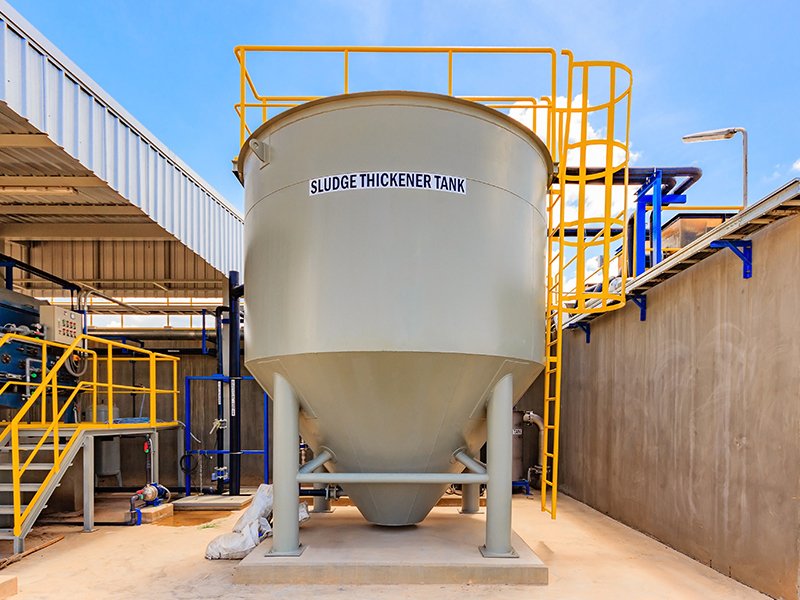
In the realm of water treatment, thickening plays a crucial role in the management of wastewater sludge. The process involves increasing the solids concentration, thereby reducing the volume of the sludge to be handled. Efficient thickening is advantageous as it can significantly cut down transportation and disposal costs, and improve the overall operational efficiency of a wastewater treatment facility. Moreover, the selection of an appropriate thickening technology can be instrumental in minimizing the environmental footprint of the treatment process.
Thickening techniques can vary from simple gravity-based separations to more complex mechanical methods. The centrifuge technology, for instance, employs a high-speed rotational force to separate solids from liquids, producing a dense material known as ‘cake. Advanced thickening methods are continually being developed to enhance the treatment process, allowing for improved solid-liquid separation, lower maintenance requirements, and better adaptation to a range of sludge characteristics and volumes.
Thickening is the first volume-reduction step in the sludge treatment train, and the leverage it provides is easy to underestimate. Waste activated sludge typically leaves a secondary clarifier at well under one percent solids, meaning more than ninety-nine percent of what is being pumped, stored, heated, and processed is water. Raising that to five percent cuts the volume by a factor of five or more before it reaches anything else. Every downstream process inherits that reduction: digesters can be smaller or accept more load in the same tank, dewatering equipment produces better cake from a more concentrated feed, and pumping and storage requirements fall proportionally.
The reason thickening is often the weakest link in the solids train is that it is genuinely difficult for the sludge that needs it most. Primary sludge thickens readily by gravity alone. Waste activated sludge does not — it is light, flocculent, and prone to going septic and floating rather than settling, which is why nearly every mechanical thickening technology in use exists specifically to handle it. Any thickening decision therefore starts with which sludge stream is being thickened, and whether the streams should be combined at all.
Key Takeaways
- Thickening optimizes sludge management by increasing solid content and reducing volume.
- Advanced technologies offer efficient solutions for solid-liquid separation.
- Careful selection of thickening methods supports environmental compliance and operational efficiency.
Subcategory Overview: Topics Within Thickening
This category spans the two gravity approaches, the mechanical technologies developed for sludges that gravity cannot handle, the equipment supply landscape, and the operational and safety planning that determines whether an installation runs well. The subsections below cover each.
The Gravity Thickening Process
Gravity thickening is the oldest and cheapest approach, relying on nothing but detention time and the density difference between solids and water. Sludge enters a tank, settles, and is withdrawn from a hopper at a higher concentration while clarified supernatant overflows a weir. The process consumes almost no energy and needs no chemical conditioning for primary sludge, which is why it remains standard where primary sludge is the feed. Its governing limitation is that performance depends entirely on how well the sludge settles, and it is sized on solids loading rate rather than on hydraulic loading — a distinction that catches out anyone applying clarifier design logic to a thickener.
Gravity Thickener Equipment
Coverage of gravity thickeners in wastewater addresses the tank and mechanism rather than the process: the deep sidewall that provides the sludge blanket volume, the picket-fence rake that gently stirs the blanket to release trapped water and gas, the feedwell that dissipates inlet energy, and the underflow withdrawal arrangement. The picket rake is the feature that distinguishes a thickener from a clarifier, and it does real work — the vertical pickets open channels through the compressing blanket so water and gas can escape upward instead of being trapped and floating the solids. Depth matters here more than surface area for the same reason.
Gravity Belt Thickeners
Gravity belt thickeners have become the most widely installed mechanical option for waste activated sludge. Polymer-conditioned sludge is distributed across a moving porous belt, free water drains through by gravity alone, and plough blades turn the sludge to open fresh drainage paths as it travels. There is no pressure zone, which is what distinguishes a gravity belt thickener from a belt filter press. The result is a substantial concentration increase for modest energy input, with the main operating burdens being polymer consumption, belt wash water, and the open, humid environment the machine creates.
Centrifugal Thickening
Centrifugal thickening applies the same decanter centrifuge used for dewatering, operated at settings tuned for thickening rather than maximum cake dryness. It handles difficult sludges that other technologies struggle with, achieves high solids capture, occupies a small footprint, and runs fully enclosed with no wash water and no odour release. The costs are the highest power draw of any thickening option, higher polymer demand, noise and vibration requiring structural attention, and scroll wear that makes periodic rebuild a scheduled expense. It suits larger plants and those with severe space or odour constraints.
Thickening Equipment Manufacturers
The top sludge thickening equipment manufacturers area compares suppliers across technology range, achievable performance on specific sludge types, polymer consumption, service network, and parts availability. Thickening procurement rewards asking suppliers to guarantee performance against a tested sample of the plant’s actual sludge rather than against a nominal specification, because achievable concentration varies enormously with sludge age, the primary-to-secondary ratio, and settleability. Several suppliers offer pilot units for exactly this purpose, and a week of piloting resolves more questions than any amount of comparative literature.
Operations and Staffing Planning
Thickening O&M planning addresses the resourcing question that quietly determines whether a technology choice succeeds. Gravity belt thickeners need an operator present while running and generate a wet, humid workspace. Centrifuges run largely unattended but need skilled maintenance and a rebuild programme. Rotary drum thickeners sit between the two. Gravity thickeners need very little attention until the blanket goes septic, at which point they need a great deal. Matching the machine to the hours a utility can actually staff, and budgeting the polymer and wear parts as recurring costs rather than as repairs, is what separates a thickening installation that performs from one that gets bypassed.
Thickening Safety
Thickening safety covers the hazards specific to this equipment and environment. Gravity thickeners are confined spaces with septic atmospheres, hydrogen sulfide risk, and drowning hazard, and entry requires full permit-required procedures. Mechanical thickeners present rotating equipment and pinch points where belts, ploughs, and screws are accessible, making lockout and tagout discipline essential. The working environment around belt equipment is persistently wet, creating slip hazards, and polymer solution spilled on a floor is extraordinarily slippery. Chemical handling for polymer and any cleaning agents carries its own requirements.
Principles of Wastewater Thickening
Wastewater thickening is a crucial step in the treatment process, aiming to increase the solids content of the sludge. This process reduces the volume of sludge, minimizing handling and disposal costs.
Gravity-Based Methods
Gravity Thickeners operate on the principle of sedimentation, where the solids settle to the bottom under the force of gravity. These components typically consist of a circular tank with a slowly revolving rake mechanism to consolidate the settled sludge. Key to their operation is allowing sufficient retention time for the particles to settle, guided by differences in the density between the solids and the water.
The critical distinction from a clarifier is the design basis. A clarifier is sized on surface overflow rate because its job is to produce clear effluent. A gravity thickener is sized on solids loading rate, expressed as mass of solids per unit of surface area per day, because its job is to produce concentrated underflow. Primary sludge tolerates a solids loading several times higher than waste activated sludge, which is precisely why gravity thickening works well for one and poorly for the other.
Gravity Belt Thickeners employ a continuous belt filter, applying gravity drainage through a porous belt to thicken the sludge. The free water drains through the belt while the solids are conveyed by the moving belt to the discharge end. These thickeners are favored for their ability to handle large volumes of sludge and are appreciated for their low energy and maintenance requirements.
Both methods emphasize the importance of flocculation, where chemicals, such as polymers, are added to aid the aggregation of fine particles, thus expediting their settling. The choice of thickening technology depends on the specific characteristics of the sludge, such as particle size and concentration, as well as the desired throughput and the facility’s layout.
Polymer conditioning deserves emphasis because it is where mechanical thickening performance is largely determined. Cationic polymer neutralizes the negative surface charge on sludge particles and bridges them into larger floc that releases water and resists being pushed through the belt or screen. Polymer selection, makedown quality, aging time, and the mixing energy at the injection point routinely matter more than the choice of machine, and polymer is usually the largest single operating cost in a mechanical thickening installation.
Mechanical Thickening Technologies
Mechanical thickening technologies are essential in wastewater treatment for volume reduction and improved process efficiency. These technologies utilize physical forces to separate solids from liquids, resulting in concentrated biosolids and a clarified supernatant.
Centrifugal Thickening
Centrifugal thickening employs the rapid rotation of a cylindrical bowl, known as a centrifuge, to exert centrifugal forces on wastewater solids. This process separates denser solids from the liquid, producing a thickened sludge, commonly referred to as “cake”. The efficiency of centrifuges can significantly impact the volume of residuals, leading to better management and disposal of wastewater by-products.
Rotational Thickening
Rotary Drum Thickeners offer another method of mechanical thickening, where a slowly rotating drum screen filters out solids from the wastewater.
- Process: Wastewater is introduced to the interior of the rotating screen, and solids are retained on the screen surface as the water passes through.
- Result: The collected solids gradually thicken as they are moved along the drum before being discharged for further processing.
Rotational thickening provides a reliable and consistent thickening phase, essential for the smooth operation of subsequent wastewater treatment stages.
Rotary drum thickeners have gained considerable ground at small and mid-size plants, and the reasons are practical rather than technical. The drum is fully enclosed, which contains odour and aerosols in a way an open gravity belt cannot. Wash water demand is modest. The machine occupies very little floor area, runs at low speed with correspondingly low wear, and needs little operator attention once polymer dosing is dialled in. Its limitation is throughput per unit, so larger flows require multiple drums or a different technology.
Advanced Thickening Techniques
In the realm of wastewater treatment, advanced thickening techniques have been developed to enhance the efficiency and effectiveness of separating solids from liquids. These processes not only improve the downstream treatment but also contribute to the overall environmental sustainability by reducing the waste volume.
Dissolved Air Flotation (DAF)
Dissolved Air Flotation is a process where micro bubbles are introduced into the wastewater. These bubbles attach to solid particles, making them buoyant and allowing them to rise to the surface. The floated solids, referred to as the sludge blanket, are then removed by skimmers. DAF is characterized by its high loading rates and the quality of the sludge produced. This technique is particularly effective for sludges that are difficult to thicken by gravity alone.
DAF thickening deserves its place here precisely because it inverts the problem that makes waste activated sludge so difficult. Light biological floc that resists settling floats readily once microbubbles attach to it, so the property that defeats a gravity thickener is the one DAF exploits. For decades it was the standard answer for WAS thickening at large plants. Gravity belt and rotary drum thickeners have displaced it in much new construction because they achieve comparable concentration at lower energy and in a smaller footprint, but a large installed base remains and DAF is still specified where the sludge is particularly difficult.
Cloth Media Filtration
Cloth Media Filters represent an innovative technology where wastewater passes through a porous fabric, which effectively retains solids while allowing the filtered water to pass through. These filters provide a high capture rate of solids and can operate continuously or in a batch mode. The effectiveness of Cloth Media Filters lies in their ability to produce a high-quality effluent and their adaptability to varying influent conditions. Maintenance involves periodic backwashing to remove the accumulated solids from the cloth.
Solid-Liquid Separation
Solid-liquid separation is a critical process in wastewater treatment that focuses on the partition of solids from the liquid component. Technologies employed in this phase are crucial for reducing the volume of biosolids and enhancing subsequent treatment steps.
The two technologies described below apply pressure rather than gravity or centrifugal force alone, which places them in the dewatering stage that follows thickening rather than in thickening itself. They are included here because the equipment families overlap — a gravity belt thickener and a belt filter press share most of their components, and a screw press and a screw thickener differ mainly in how much compression they apply.
Belt Filter Presses
Belt filter presses employ pressure filtration to separate solids from liquids. Wastewater sludge is sandwiched and compressed between two tensioned belts running through a series of rollers. This method efficiently dewaters sludge, optimizing its disposal or further treatment. Operators can adjust variables such as belt speed, tension, and pressure to optimize the dewatering process. The resulting product typically has a high solids concentration, which lessens handling costs and can be beneficial for both land application and landfilling.
Screw Presses
Screw presses operate by conveying sludge through a constricted space using a rotating screw within a cylindrical screen. As sludge progresses through the screen, the volume is reduced, and liquid is expelled through the screen openings. This method is characterized by its low energy consumption and is therefore considered an economical choice for liquid-solid separation. Screw presses demand minimal operator attention and maintenance, delivering a consistent solid cake with variable degrees of dryness suitable for diverse disposal and usage strategies.
Selection and Specification Framework
Step One: Identify Which Sludge Stream Is Being Thickened
This determines nearly everything else. Primary sludge is dense, settles readily, and thickens well by gravity at high solids loading with no polymer at all. Waste activated sludge is light, flocculent, and resists gravity thickening, and it will go septic and float if held too long. Combined or co-thickened streams behave like the worse of the two rather than the average. Many plants that struggle with a gravity thickener are co-thickening when they should be thickening the two streams separately by different means, and separating them is often cheaper than replacing equipment.
Step Two: Set the Target Concentration From the Downstream Process
Thickening exists to serve what follows, so the target should come from there. Anaerobic digestion benefits from feed as concentrated as the mixing system can handle, since every point of solids buys digester capacity. Dewatering equipment performs better on more concentrated feed and the improvement is measurable in cake solids. Hauling liquid sludge offsite rewards the highest concentration achievable. Setting an arbitrary target without reference to the downstream constraint produces either an underperforming solids train or money spent on concentration nobody needs.
Step Three: Size on Solids Loading, Not Hydraulic Loading
For gravity thickeners, solids loading rate governs and hydraulic overflow rate is a secondary check. Applying clarifier logic and sizing on surface overflow rate produces a tank that clarifies well and thickens poorly. For mechanical thickeners, both hydraulic throughput and dry solids throughput must be checked and the more restrictive governs, which in practice usually means hydraulic capacity for dilute WAS and solids capacity for thicker feeds. In all cases, size on the peak sustained solids production rather than the annual average.
Step Four: Design the Polymer System With the Machine
Every mechanical thickening technology depends on polymer, and polymer is the largest operating cost in most installations. Specify polymer type and charge density against a tested sample of the plant’s actual sludge, provide makedown equipment with adequate aging time, and give attention to injection point and mixing energy — polymer added without sufficient mixing produces stringy, under-conditioned floc, and polymer subjected to excessive shear is destroyed before it reaches the machine. Bench testing and supplier trials on real sludge are the only reliable basis for dose estimates.
Step Five: Account for the Subnatant and Filtrate Return
Everything removed from the sludge returns to the head of the plant. Thickener overflow, belt filtrate, and centrate carry solids that escaped capture plus dissolved constituents, and on a septic gravity thickener that return can include released phosphorus and a significant oxygen demand. Capture rate is therefore not a secondary metric: solids that escape must be treated and thickened again, creating a recirculating load that inflates apparent solids production. Quantify the return flow and load, and consider equalizing it if thickening runs intermittently.
Step Six: Fit the Choice Into the Wider Solids Train
Thickening decisions propagate. Better thickening reduces the volume fed to digestion, which either frees digester capacity or allows higher loading in the existing tanks, and it improves dewatering performance downstream at no cost to the dewatering equipment. Odour and staffing implications differ sharply between open and enclosed technologies. The broader equipment context across the solids train is covered under sludge handling and management. Evaluating thickening in isolation from digestion and dewatering produces locally sensible, globally expensive outcomes.
Comparison Tables
| Technology | Best-Fit Sludge | Key Advantages | Limitations | Polymer & Energy | Enclosed? |
|---|---|---|---|---|---|
| Gravity thickener | Primary sludge; poorly suited to WAS | Very low energy; no polymer needed for primary; simple | Large footprint; septicity and floating blanket with WAS | None to minimal | No |
| Gravity belt thickener | Waste activated sludge | High throughput per footprint; low energy; well proven | Open and humid; continuous belt wash water; needs attention | Moderate polymer, low energy | No |
| Rotary drum thickener | Waste activated sludge; small to mid-size plants | Fully enclosed; very small footprint; low wash water; unattended | Limited throughput per unit | Moderate polymer, very low energy | Yes |
| Centrifugal thickener | Difficult sludges; large plants | High capture; small footprint; enclosed; no wash water | Highest energy; noise and vibration; scroll wear | Highest polymer, highest energy | Yes |
| Dissolved air flotation | Waste activated sludge, particularly difficult-settling | Exploits buoyancy rather than fighting it; high loading rates | Higher energy than belt or drum; larger footprint | Moderate polymer, higher energy | Partially |
| Governing Constraint | Usual Answer | Reason | Watch For |
|---|---|---|---|
| Primary sludge only, land available | Gravity thickener | No polymer, negligible energy, minimal mechanical complexity | Blanket depth control to prevent septicity |
| Waste activated sludge, moderate flow | Gravity belt or rotary drum thickener | Both handle light flocculent sludge that gravity cannot | Polymer cost; belt wash water on GBT |
| Odour complaints or enclosed building | Rotary drum or centrifugal thickener | Fully enclosed operation contains odour and aerosols | Higher capital and, for centrifuges, energy |
| Severely constrained footprint | Centrifugal or rotary drum thickener | Smallest area per unit of throughput | Centrifuge structural and noise provisions |
| Minimal operator hours available | Rotary drum thickener | Runs unattended once polymer dosing is set | Throughput may require multiple units |
| Digester capacity is the plant bottleneck | Whichever reaches the highest feed concentration | Every point of solids buys digester capacity | Digester mixing capability limits how far this can go |
| Gravity thickener underperforming on combined sludge | Separate the streams and thicken WAS mechanically | Co-thickening behaves like the worse stream, not the average | Often cheaper than replacing the thickener |
Operation and Maintenance
Effective operation and maintenance of thickening equipment in wastewater treatment are crucial for achieving desired solid-liquid separation and ensuring the longevity of the system. Operators must adhere to routine procedures and be adept at troubleshooting to maintain efficiency and minimize downtime.
Routine Procedures
Daily Inspections
Operators should conduct daily observations of the thickener and its components to ensure everything is operating as intended. These inspections include visual checks of the feedwell, rake arms, and underflow to detect any abnormalities early on.
- Lubrication: Regular lubrication is essential to prevent wear and tear of moving parts.
- Feed Rate Monitoring: Maintaining the optimal feed rate maximizes thickening efficiency.
- Cleaning: Components such as weirs and sensors should be kept clean to avoid inaccurate readings and impaired function.
Record Keeping
Accurate record-keeping helps track performance over time, allowing for informed decision-making when it comes to equipment maintenance and adjustments.
- Log Sheets: Key parameters, such as underflow density and overflow clarity, should be logged systematically.
- Maintenance Logs: A detailed log of maintenance activities helps plan future upkeep and troubleshoot recurring issues.
Troubleshooting
Foam Formation
If foam is observed on the surface of the thickener, it may suggest a need to adjust the feed composition or introduce antifoaming agents.
Underflow Issues
Operators must be vigilant about the underflow consistency. A too-thick underflow can lead to blockages, while a too-dilute underflow indicates poor solid-liquid separation.
- Rake Arms Stalling: Immediately address any stalling of rake arms to prevent motor overload and damage.
- Varying Feed Quality: The thickening process is sensitive to variations in feed quality, and it may require adjustments to flocculant dosage or feed rate.
By following these meticulous operation and maintenance procedures, operators can ensure the reliability and efficiency of the wastewater thickening process.
Thickening Efficiency and Parameters
The efficacy of thickening processes in wastewater treatment is quantified through specific performance metrics and operational parameters.
Performance Assessment
Performance assessment in thickening processes involves monitoring key parameters such as the quality of effluent and the characteristics of the produced sludge. Factors like solids capture rate and the concentration of thickened sludge directly impact the efficiency of a thickening operation. Frequent assessment ensures that the thickening process maintains optimal function within the parameters of design specifications.
- Solids Capture Rate (SCR): The percentage of total solids that the thickening process successfully isolates from the liquid phase.
- Ideal Range: Considered efficient at rates greater than 95%.
- Thickened Sludge Concentration (TSC): The density of solids within the produced sludge, typically measured in grams per liter.
- Target Values: Efficient dewatering achieves TSC values that reduce volume and thus disposal costs.
Neither metric means much alone, which is the recurring theme in solids handling. Concentration can be raised by pushing the machine harder, but capture falls and the escaping solids return to the head of the plant. Capture can be raised with more polymer, but the cost climbs. The meaningful measure is all three together — concentration achieved, capture rate, and polymer dose per dry ton — recorded at the same time so the trade-offs are visible rather than hidden.
Operators must continuously gauge these metrics against performance benchmarks to ensure efficient system performance. Accurate and consistent monitoring leads to better control of the thickening process, reducing costs and improving operational reliability.
Design Details and Standards
Sizing Methodology
Establish the dry solids production rate for each stream separately from a documented solids balance, along with the concentration at which each arrives. Decide whether the streams will be thickened together or separately, since that choice governs the technology selection. For gravity thickeners, size on solids loading rate appropriate to the sludge type and check hydraulic overflow rate as a secondary criterion, then set sidewall depth to provide adequate blanket volume. For mechanical thickeners, check hydraulic throughput and dry solids throughput and take the more restrictive. Decide the operating schedule, because a machine running one shift must be sized several times larger than one running continuously, and that choice also determines how concentrated the return flow will be. Provide redundancy sufficient to keep pace with solids production with one unit out of service, and size the polymer system, thickened sludge pumping, and return handling for the same peak condition.
Key Parameters
- Solids loading rate: the governing criterion for gravity thickeners, with primary sludge tolerating several times the loading that waste activated sludge does.
- Hydraulic overflow rate: a secondary check on gravity thickeners, and frequently the governing criterion on mechanical units fed dilute WAS.
- Feed concentration: typically well under one percent for WAS from a secondary clarifier, and substantially higher for primary sludge.
- Thickened concentration target: set by the downstream process rather than chosen in isolation.
- Solids capture rate: a target above roughly 95 percent, since escaping solids recirculate and inflate apparent production.
- Polymer dose: expressed as pounds of active polymer per dry ton, and the largest operating cost in mechanical thickening.
- Blanket depth: on gravity thickeners, deep enough to compress and shallow enough to avoid septicity and floating.
- Wash water demand: significant for gravity belt thickeners, modest for rotary drums, none for centrifuges.
All values and relationships above are typical guidance and should be confirmed by bench and pilot testing on the actual sludge, against the governing state standard, and against manufacturer data for the specific equipment.
Applicable Standards and References
Recommended Standards for Wastewater Facilities, the Ten States Standards, addresses sludge thickening provisions, redundancy, and gravity thickener design requirements in many states. WEF Manual of Practice No. 8 and ASCE Manual of Practice No. 76, Design of Municipal Wastewater Treatment Plants, provide the design methodology, with WEF’s dedicated solids and biosolids manuals covering thickening equipment in depth. 40 CFR Part 503 establishes the standards for the use or disposal of sewage sludge that govern the material once it leaves the solids train, and its requirements shape the stabilization and dewatering steps thickening feeds. Standard Methods for the Examination of Water and Wastewater defines the total and volatile solids procedures on which every thickening performance measurement depends. NFPA 820 addresses area classification for sludge handling structures, and OSHA 29 CFR 1910.146 governs permit-required confined space entry for thickener tanks with 29 CFR 1910.147 covering lockout and tagout of rake, belt, drum, and centrifuge mechanisms.
Specification Checklist
- Dry solids production rate and arrival concentration for each stream, from a documented solids balance
- Decision on separate versus combined thickening, with the rationale
- Sludge characterization: type, blend ratio, sludge age, settleability, volatile fraction
- Target thickened concentration, tied to the specific downstream process requirement
- Solids loading rate and hydraulic loading rate, with the governing criterion identified
- Guaranteed concentration and capture rate, referenced to tested sludge rather than a nominal specification
- Operating schedule, and redundancy sufficient to keep pace with one unit out of service
- Polymer type, expected dose, makedown equipment, aging time, and injection arrangement
- Mixing energy at the polymer injection point, with shear explicitly addressed
- Wash water supply, quality, and quantity where applicable
- Projected return flow and load, and the management strategy where thickening is intermittent
- Thickened sludge pumping and piping sized for the target concentration
- Odour control and ventilation, with area classification where enclosed
- Access, lifting, and lay-down provisions for belt, drum, or scroll replacement
- Confined space entry provisions for gravity thickener tanks
Field Notes
Commissioning Considerations
Run the acceptance test on the plant’s actual sludge at its real arrival concentration, and sample thickened solids, return stream solids, and polymer consumption at the same time so capture rate can be calculated rather than assumed. Record the complete set of machine settings that produced the accepted result, since that record is what makes a later performance decline diagnosable. Verify the polymer makedown system delivers properly aged, fully activated solution at design concentration. On a gravity thickener, confirm the rake drive torque baseline with a shallow blanket, and verify the blanket depth instrument reads correctly against a manual sludge judge.
Common Specification Mistakes
- Sizing a gravity thickener on overflow rate. Solids loading governs; clarifier logic applied to a thickener produces a tank that clarifies and does not thicken.
- Co-thickening primary and waste activated sludge by gravity. The combined stream behaves like the worse of the two, not the average.
- Treating polymer as an accessory. It is the largest operating cost and the largest performance variable in mechanical thickening.
- Selecting on concentration alone. Capture rate and polymer dose determine whether the higher concentration is actually cheaper.
- Ignoring the return stream. Escaping solids recirculate, and a septic thickener overflow adds oxygen demand and released phosphorus.
- Choosing an open technology next to occupied buildings. Gravity belt thickeners generate aerosols, humidity, and odour.
- Sizing on average solids production. Peak sustained production plus a maintenance outage is the design condition.
- Setting a concentration target without reference to downstream. The digester or dewatering equipment defines what is worth achieving.
Operations and Maintenance Comparison
Gravity thickeners concentrate maintenance on the rake drive and its torque protection, the underflow pumping, and periodic tank cleaning, with the dominant operating concern being blanket depth control to prevent septicity. Gravity belt thickeners add belt replacement on a defined interval, wash nozzle cleaning to prevent streaking, and roller bearing service in a persistently wet environment. Rotary drum thickeners are the lightest maintenance burden of the mechanical options, needing screen cleaning and periodic seal service. Centrifugal thickeners require scroll inspection and re-tiling with abrasion-resistant material, main bearing replacement, and vibration monitoring as the primary condition indicator. Common to every mechanical option is the polymer system, whose makedown equipment condition and dilution water quality affect results more than most operators expect.
Troubleshooting by Symptom
Thin thickened sludge with normal polymer dose usually indicates a change in the feed rather than the machine: check arrival concentration, the primary-to-secondary ratio, and whether sludge age has shifted. Thin product accompanied by cloudy return flow indicates under-conditioning, and polymer makedown quality and injection mixing are the first checks rather than dose. Cloudy return with acceptable product concentration means the machine is being pushed too hard, trading capture for concentration. On a gravity thickener, solids floating rather than settling almost always means the blanket has gone septic and is gasifying, and the fix is a shorter blanket residence time rather than a mechanical adjustment. Rising rake torque signals a deepening or denser blanket and warrants attention before the overload trips.
Pro Tip: Report Concentration, Capture, and Polymer Together
Thickening performance is almost universally reported as a single number — the percent solids achieved — and that number can be improved at will by pushing the machine harder or dosing more polymer, both of which cost more than they save. Recording thickened concentration, solids capture rate, and polymer dose per dry ton at the same time, on one chart, makes the trade-offs visible and turns optimization into something measurable. It reliably identifies the point of diminishing return on polymer, which at most plants sits well below the dose in use, and it exposes the recirculating load created by poor capture, which is invisible in a concentration reading but shows up as unexplained solids production at the head of the plant.
Environmental and Regulatory Considerations
Environmental and regulatory considerations are essential in the management of wastewater thickening processes to ensure protection of public health and the natural environment. Entities must adhere to specific compliance standards that govern the handling and processing of sludge and biosolids.
Compliance Standards
In the United States, the Environmental Protection Agency (EPA) sets forth regulations for municipalities and industries to follow during the wastewater treatment process. Compliance standards focus on the reduction of pathogens, stabilization of organic matter, and minimization of offensive odors in sludge before land application or disposal. The Clean Water Act ensures that the treatment achieved minimizes the impact on the environment and complies with health-related regulations.
Criteria established by regulatory bodies also stipulate limits on heavy metals and the tracking of pathogen levels within treated biosolids. It is mandatory for treatment facilities to conduct regular monitoring and report findings to ensure that only quality treated biosolids are used or disposed of, protecting both the environment and public health.
In addition to federal standards, state and local regulations may impose further requirements on the treatment and disposal of wastewater and sludge. Facilities must be vigilant in maintaining records and staying informed about all applicable regulations to avoid penalties and potential harm to the ecosystem.
Design and Selection of Thickeners
When designing and selecting thickeners for wastewater treatment facilities, engineers must consider factors such as process requirements, space availability, and sludge characteristics. The choice of the thickening technology impacts both the effectiveness and the cost of the overall sludge treatment process.
Evaluating Thickener Options
To determine the most appropriate thickening technology, several options need to be considered. Gravity Belt Thickeners (GBTs) are suited for a variety of sludge types and are known for their low-energy consumption and simple maintenance. They work on the principle of gravity, where sludge is distributed on a belt and water drains through the belt mesh.
Centrifuges offer a high-performance solution capable of thickening even the most difficult sludges with high capture rates. The high-speed rotation separates solids from the liquid, resulting in a thickened sludge. Centrifuges are versatile but can be energy-intensive and require more complex operations and maintenance.
Rotary Drum Thickeners, on the other hand, are ideal for facilities with space constraints. These thickeners enclose sludge in a rotating perforated drum to thicken it. An advantage of rotary drum thickeners is that they provide consistent results even with fluctuating feed conditions.
Lastly, Screw Presses use a combination of pressure and a screw mechanism to dewater sludge. These systems are typically quieter, have lower energy needs, and require less operator attention when compared to other technologies.
When selecting a thickener, engineers must weigh these options against the intended goals of their wastewater treatment process. Capturing the highest amount of solids, minimizing odor, and reducing the volume that will need subsequent processing are key considerations. Moreover, the particular characteristics of wastewater, along with cost implications and available infrastructure, guide the selection process to ensure an efficient and cost-effective solution.
Frequently Asked Questions
What is the purpose of thickening in wastewater treatment processes?
Thickening in wastewater treatment serves to increase the solids concentration of sludge, reducing the volume that needs to be handled and processed. It is an essential step that optimizes the efficiency of subsequent treatment stages.
How do different types of thickening methods affect sludge management?
Different thickening techniques can significantly affect sludge management through their operational complexity, effectiveness, and cost. These methods range from gravity thickening, which utilizes the natural settling of solids, to mechanical thickening, involving equipment like belt filter presses which produce a thicker sludge with less water content.
Can you explain the most widely used method for sludge thickening and reasons for its prevalence?
The most commonly used method for sludge thickening is gravity thickening because of its simplicity, low energy requirements, and minimal operational costs. This process is prevalent due to its ease of integration into most wastewater treatment plants and its effectiveness for a wide range of sludges.
Which factors are critical in determining the efficiency of thickening operations in wastewater treatment?
Key factors determining thickening efficiency include sludge type, sludge volume, and the concentration of solids. Operational parameters such as the retention time, the addition of chemicals like polymer aids, and the mechanical design of the thickener also play a vital role.
What are practical examples of thickening applications in wastewater management?
Thickening is applied in municipal wastewater treatment to prepare sludge for digestion or dewatering and in industrial applications to concentrate process-generated sludge. It is also used in treating stormwater before discharge to reduce the volume of solids.
Conclusion
Key Takeaways
- Thickening is the highest-leverage step in the solids train — raising waste activated sludge from under one percent to five percent cuts volume by a factor of five before anything else touches it.
- The sludge stream decides the technology — primary sludge thickens by gravity, waste activated sludge generally does not, and co-thickening behaves like the worse of the two.
- Size gravity thickeners on solids loading, not overflow rate — clarifier logic applied to a thickener produces a tank that clarifies well and thickens badly.
- Polymer is the largest cost and the largest variable — makedown quality, aging, and injection mixing routinely matter more than the choice of machine.
- Let the downstream process set the target — the digester’s mixing limit or the dewatering equipment’s feed preference defines what concentration is worth paying for.
- Judge on three numbers together — concentration, capture rate, and polymer dose can each be improved at the others’ expense, so only the set shows real performance.
Thickening rarely attracts the attention that digestion or dewatering receive, and it delivers more leverage per dollar than either. It is the step where the solids train stops handling water and starts handling solids, and every process downstream inherits the reduction it achieves. A plant that thickens well gets more capacity from its existing digesters, better cake from its existing dewatering equipment, and smaller pumps, pipes, and tanks throughout.
Getting it right depends on a short sequence: identify which stream is being thickened and resist combining streams that behave differently, take the target concentration from the process downstream rather than choosing one, size gravity units on solids loading and mechanical units on whichever throughput criterion binds, design the polymer system with as much care as the machine, and account for what the return flow sends back to the head of the plant. Facilities that then report concentration, capture, and polymer dose together generally find they are spending more on polymer than the process needs, which is the most accessible saving available anywhere in solids handling.