
Surface Aerators in Wastewater Treatment: Optimization and Efficiency
Surface Aerators in Wastewater Treatment: Optimization and Efficiency
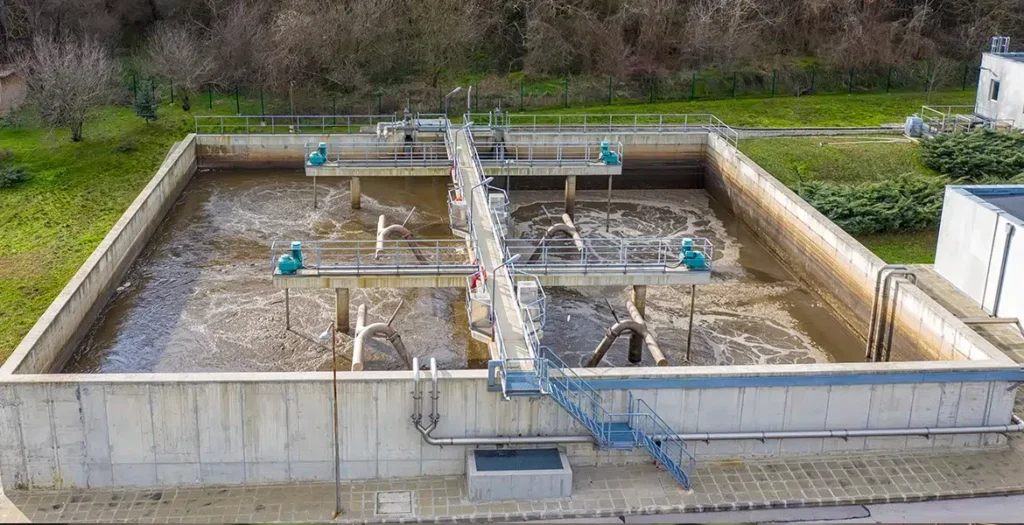
Surface aerators transfer oxygen by mechanically agitating the liquid surface, throwing wastewater into the air as droplets and sheets so that atmospheric oxygen dissolves across a rapidly renewed air-water interface. Unlike systems that inject compressed air below the water column, surface aeration equipment sits at or near the liquid surface and drives both oxygen transfer and basin mixing from a single motor-and-impeller assembly. This makes surface aerators one of the most widely installed aeration technologies in lagoons, oxidation ditches, aerated equalization basins, and industrial pretreatment systems.
The appeal is straightforward: no blowers, no air piping, no submerged diffuser membranes to foul or replace, and installation costs that are often a fraction of a diffused system. The trade-offs are equally real. Standard oxygen transfer efficiency is typically lower per unit of power, cold-climate icing and spray drift require design attention, and aerosol generation carries process and permitting implications. Selecting correctly means understanding which surface aerator configuration matches the basin geometry, oxygen demand, and operating climate.
As part of the broader secondary treatment process train, surface aeration supplies the dissolved oxygen that aerobic microorganisms need to metabolize soluble and particulate organic load. Aeration commonly represents 45 to 60 percent of total plant electrical consumption, so the equipment selected here drives operating cost for the life of the asset.
Aeration tanks play a crucial role in wastewater treatment by introducing air into water to encourage microbial growth. These microorganisms consume organic material, helping to purify and clean wastewater. Aeration tanks are a core component of activated sludge systems used in many treatment plants today.
Air is introduced into aeration tanks primarily through blowers or mixers, each using different techniques to enhance treatment efficiency. The careful design and engineering of these systems directly influence treatment performance.
The design and operation of aeration tanks have a significant impact on efficiency and environmental footprint.
Understanding their role enables more sustainable wastewater management practices.
Key Takeaways
- Aeration tanks are essential for effective wastewater purification.
- Air is introduced using blowers or mechanical mixers.
- System design directly affects efficiency and sustainability.
How Surface Aerators Transfer Oxygen
Surface aeration works on the same two-film mass transfer principle as every other aeration method, but the mechanism for creating interfacial area is entirely different. A submerged system generates area by producing bubbles; a surface aerator generates it by pumping liquid upward and outward into the atmosphere, creating a spray pattern of droplets with very high surface-area-to-volume ratios. Oxygen dissolves during the droplet’s flight time and again at the turbulent plunge point where the spray re-enters the basin.
Because the driving force is surface renewal rather than bubble residence time, surface aerator performance is relatively insensitive to basin depth — a significant contrast with diffused aeration, where deeper submergence increases transfer efficiency but also increases blower discharge pressure. Surface units generally perform best in basins of roughly 8 to 15 feet side water depth, with performance falling off in very deep tanks where the unit cannot maintain adequate bottom velocity.
Standard Aeration Efficiency and Field Correction
Surface aerator performance is published as Standard Aeration Efficiency (SAE) in pounds of oxygen transferred per horsepower-hour under clean water conditions at 20 degrees Celsius, zero dissolved oxygen, and standard pressure. Typical published values fall in the approximate range of 2.0 to 3.5 lb O₂/hp-hr for low-speed units and roughly 1.5 to 2.5 lb O₂/hp-hr for high-speed floating units, though vendor test conditions vary and values should always be traced to a documented clean water test.
Field performance is always lower. The alpha factor, which accounts for the effect of surfactants and mixed liquor constituents on transfer rate, typically ranges from about 0.6 to 0.9 for surface aeration — generally higher than the alpha values seen with fine bubble diffusers, which is one reason surface units hold up comparatively well in high-surfactant industrial wastewaters. Beta corrects for dissolved solids effects on saturation concentration and usually sits near 0.95 for municipal wastewater. Temperature correction uses a theta value of approximately 1.024.
Optimizing diffuser design, bubble size, and aeration rates improves
oxygen transfer efficiency
,
making it a critical factor in sustainable treatment system design.
Mixing Versus Oxygen Demand
Surface aerators serve two functions simultaneously, and the governing requirement is not always oxygen. Every basin has a minimum mixing power requirement — commonly cited in the approximate range of 0.5 to 1.0 hp per 1,000 cubic feet for activated sludge, higher for basins carrying heavy grit or high mixed liquor concentrations. When influent load drops or when a plant is built for future flow, the mixing requirement frequently exceeds the oxygen requirement, and the aerator cannot simply be throttled back without risking solids deposition. This mixing floor is the single most common reason surface aeration systems consume more energy than their oxygen demand alone would suggest.
Types of Surface Aerators
The term covers several mechanically distinct machines with different impeller geometries, rotational speeds, mounting arrangements, and best-fit applications. Understanding the configurations available is the foundation of any credible evaluation of surface aerators in wastewater treatment, because the performance and maintenance profiles differ substantially between types.
Low-Speed Vertical Turbine Aerators
Low-speed vertical turbine aerators use a large-diameter axial-flow impeller driven through a gear reducer, typically rotating between 30 and 60 rpm. The impeller pumps liquid upward from below and discharges it radially in a broad, relatively low-trajectory umbrella pattern. The combination of high pumping rate and moderate velocity produces the best oxygen transfer efficiency in the surface aerator family, commonly 2.5 to 3.5 lb O₂/hp-hr under standard conditions.
These units are usually bridge-mounted or platform-mounted over a fixed basin location, which allows rigid alignment of the motor, gearbox, and shaft. Available sizes commonly run from about 5 to 150 horsepower per unit. Low-speed aerators dominate in municipal activated sludge basins and complete-mix lagoons where efficiency justifies the higher capital cost of the gear reducer and support structure. The gearbox is the principal maintenance item, requiring scheduled oil analysis and changes, and it is the component that most often determines overhaul intervals.
High-Speed Floating Aerators
High-speed floating aerators couple a motor directly to a propeller or mixed-flow impeller at motor speed — typically 900 to 1,800 rpm — with no gear reduction. The assembly is supported by a float and held in position by mooring cables or a guide system. Eliminating the gearbox removes both the largest capital cost and the largest maintenance burden, and the floating mount means the unit self-adjusts to changing water level.
The cost of that simplicity is efficiency. High-speed units generate a narrower, higher-velocity spray plume with shorter droplet flight paths, and standard aeration efficiency typically lands in the 1.5 to 2.5 lb O₂/hp-hr range. They are the default choice for aerated lagoons, equalization basins, emergency and rental service, and any application with widely varying water levels. Mooring design deserves genuine attention: cable fatigue and anchor movement are among the most frequent field failures.
Brush and Horizontal Rotor Aerators
Brush aerators, also called horizontal rotor or Kessener brush aerators, use a horizontally mounted shaft fitted with radial blades or bristles that rotate partially submerged, typically at 40 to 70 rpm. Rather than pumping liquid vertically, the rotor entrains air at the surface and simultaneously imparts horizontal velocity along the channel. That directional thrust is the defining characteristic and the reason brush aerators are the standard technology in oxidation ditches, where maintaining a channel velocity of roughly 1.0 to 1.2 feet per second is essential to keep mixed liquor in suspension.
Oxygen transfer is adjusted by varying immersion depth, usually through an adjustable outlet weir, giving operators a genuine turndown mechanism that most other surface aerator types lack. Blade wear and shaft deflection on long rotors are the recurring maintenance concerns, and bearing alignment is critical on spans exceeding about 30 feet.
Aspirating Aerators
Aspirating aerators occupy the boundary between surface and submerged technology. A motor drives a hollow, angled shaft with a propeller at the submerged end; rotation creates a low-pressure zone that draws atmospheric air down the shaft and shears it into fine bubbles that discharge horizontally below the surface. There is no blower, no air piping, and no spray plume above the water.
This configuration is valuable where surface spray is unacceptable — cold climates with icing risk, sites with aerosol or odor constraints, or basins with restricted freeboard. The directional discharge also provides strong horizontal mixing. Because the operating principle involves shearing entrained air into the liquid, aspirating units share performance characteristics with jet aerators, which use pumped liquid rather than a rotating shaft to achieve a similar result. Transfer efficiency typically falls between high-speed floating and low-speed vertical units.
Fixed-Bridge Versus Floating Mounting
Mounting arrangement is a separate decision from impeller type and materially affects both performance and O&M. Fixed-bridge and platform mounts hold the unit at a constant elevation, permitting precise submergence control and rigid drive alignment, but they require structural support and they fail to maintain design submergence when water level varies. Floating mounts tolerate level swings and simplify installation, at the cost of alignment precision, mooring maintenance, and vulnerability to ice movement and wind loading. Basins with more than roughly two feet of operating level variation generally favor floating installations regardless of aerator type.
Selection and Specification Framework
Choosing among surface aerator configurations is a sequence of constraint checks rather than a search for the single most efficient machine. The following order reflects how the decision usually resolves in practice.
Step One: Establish Actual Oxygen Requirement
Calculate the actual oxygen requirement from BOD load, nitrogenous demand, and endogenous respiration, then convert to standard conditions using site-specific alpha, beta, and temperature factors and the design residual dissolved oxygen. Specify the aerator against the standard requirement, not the field requirement, and confirm which the vendor’s quoted rating reflects. Mixing the two is the most common specification error in surface aeration.
Step Two: Check the Mixing Floor
Compare the horsepower needed for oxygen against the horsepower needed for solids suspension in the basin volume. When mixing governs, the design question shifts from how much aeration capacity to how to modulate it — variable frequency drives, multiple smaller units, cyclic operation, or dedicated mixers paired with smaller aerators.
Step Three: Match Basin Geometry
Each aerator type has a zone of influence. Low-speed vertical units serve roughly square influence areas and are generally spaced so that adjacent zones overlap slightly. Brush rotors require channel geometry with a defined flow path. Aspirating units project a directional plume suited to rectangular basins. Basin depth, length-to-width ratio, and corner geometry frequently eliminate options before efficiency is considered at all.
Step Four: Apply Climate and Site Constraints
Freezing climates, adjacent residential receptors, aerosol restrictions, and available freeboard can override the efficiency ranking entirely. A low-speed unit that ices its own support bridge every winter is not the efficient choice, whatever its clean water rating.
Step Five: Compare Lifecycle Cost
Evaluate installed capital, annual energy at realistic field transfer efficiency and actual load profile, gearbox overhaul or motor replacement intervals, and expected service life. Energy typically dominates over a twenty-year horizon, but a gearbox rebuild on a large low-speed unit is a substantial single expenditure that belongs in the model.
Surface Aerator Comparison
| Type | Typical SAE (lb O₂/hp-hr) | Key Features | Best-Fit Applications | Limitations | Relative Cost | Maintenance Profile |
|---|---|---|---|---|---|---|
| Low-Speed Vertical Turbine | 2.5 – 3.5 | Gear-reduced, 30–60 rpm, large axial impeller, broad umbrella spray | Municipal activated sludge, complete-mix lagoons | Requires bridge or platform; gearbox overhaul cost; icing in cold climates | High capital, low energy | Gearbox oil analysis and changes; periodic overhaul |
| High-Speed Floating | 1.5 – 2.5 | Direct-drive at motor speed, float-mounted, self-adjusting to level | Aerated lagoons, equalization, rental and emergency service | Lower efficiency; mooring maintenance; spray drift | Low capital, higher energy | Mooring and cable inspection; motor and seal service |
| Brush / Horizontal Rotor | 2.0 – 3.0 | Horizontal shaft with radial blades; provides channel velocity | Oxidation ditches, racetrack channels | Requires channel geometry; blade wear; shaft deflection on long spans | Moderate to high | Blade replacement; bearing alignment; weir adjustment |
| Aspirating | 1.8 – 2.8 | Hollow angled shaft draws air below surface; no spray plume | Cold climates, aerosol-sensitive sites, low freeboard basins | Moderate efficiency; shaft and seal wear; limited depth range | Low to moderate | Seal and bearing service; shaft inspection |
Values shown are typical clean water ranges for planning comparison only. Field performance depends on alpha factor, basin geometry, submergence, and load profile, and every specification should be confirmed against a documented clean water test for the specific model and size under consideration.
Overview of Aeration Tanks
Aeration tanks support microbial communities that break down organic matter. By supplying oxygen, these tanks form the backbone of biological wastewater treatment systems.
Definition and Purpose
Aeration tanks are a central component of the activated sludge process. They introduce oxygen into wastewater, enabling aerobic microorganisms to metabolize organic pollutants.
These microbes form flocs that settle easily in subsequent treatment stages, significantly reducing pollutant concentrations. Without sufficient oxygen, microbial activity slows, leading to incomplete treatment.
Historical Development
The activated sludge process emerged in the early 20th century in England, revolutionizing wastewater treatment by introducing biological methods for pollution control.
Over time, advancements in blower technology, diffusers, and control systems improved aeration efficiency and reduced operational costs. These developments highlight the role of innovation in environmental engineering.
Types of Aeration Tanks
Aeration tanks are available in several configurations, each suited to specific treatment needs.
- Continuous-flow tanks: Maintain a steady inflow for consistent treatment
- Sequential batch reactors (SBRs): Treat wastewater in batches, offering operational flexibility
Tanks also differ in aeration methods. Some use diffusers that release air bubbles, while others employ mechanical mixers to distribute oxygen evenly. Tank type selection directly affects treatment efficiency.
Design and Engineering
Aeration tank design influences oxygen transfer, mixing, and overall treatment effectiveness. Key engineering considerations include configuration, materials, aeration method, and oxygen efficiency.
Tank Configurations
Aeration tanks may be rectangular or circular. Rectangular tanks offer efficient space usage and integration with other treatment units, while circular tanks promote turbulent mixing.
Tank dimensions affect oxygen transfer rates and mixing patterns. Proper flow dynamics ensure adequate contact between air and wastewater.
Material Considerations
Material selection affects durability and long-term performance.
- Reinforced concrete: Durable and corrosion-resistant
- Steel: Strong and versatile but requires corrosion protection
Designers must also consider wastewater chemistry, including pH and corrosive compounds, to ensure longevity.
Aeration Methods
Two primary aeration methods are used:
- Blowers: Supply air through bottom diffusers, producing fine bubbles
- Mixers: Mechanically agitate water to distribute oxygen
Method selection depends on energy efficiency, maintenance needs, and wastewater characteristics.
Oxygen Transfer Efficiency
Oxygen transfer efficiency (OTE) measures how effectively supplied air dissolves into wastewater. High OTE supports robust microbial activity and lowers energy costs.
Sustained performance depends on maintaining design submergence, keeping impellers free of rag accumulation, and operating within the motor’s service factor. Plants that treat surface aerators as wastewater treatment efficiency enhancers rather than fixed-output devices generally capture the largest energy savings, because the equipment responds strongly to submergence trimming and dissolved oxygen based control.
Aeration / Energy Estimation Calculator
Planning-level estimation of blower power and energy use based on basin volume and oxygen demand.
Total Oxygen Required: lb/day
Estimated Blower Power: hp
Estimated Electrical Load: kW
Daily Energy Use: kWh/day
Annual Energy Use: kWh/year
Power per Blower: hp
Planning-level estimate only. Actual power depends on diffuser type, alpha factor, depth, fouling, and control strategy.
Operational Parameters
Operational parameters determine how effectively aeration tanks support microbial treatment. Key factors include flow rates, process control, and maintenance practices.
Flow Rates and Loading
Flow rates dictate how much wastewater enters the aeration tank and the time available for treatment. Excessive flow can overload the system, reducing treatment efficiency.
Loading rates reflect the concentration of organic matter entering the tank. Balancing flow and loading rates ensures optimal microbial activity and effective wastewater treatment.
Process Control
Process control involves monitoring dissolved oxygen, pH, and temperature to maintain ideal conditions for microbial health.
- Dissolved Oxygen (DO): Must remain within optimal ranges
- pH Levels: Affect microbial metabolism
- Temperature: Influences reaction rates and treatment stability
Precise control prevents energy waste and ensures consistent treatment performance.
Maintenance and Upkeep
Routine maintenance preserves aeration efficiency and system reliability.
- Inspecting blowers and mixers for wear
- Cleaning tanks to prevent buildup
- Checking seals and mechanical components
Proper upkeep minimizes downtime and extends equipment lifespan.
Applications in Wastewater Treatment
Municipal Wastewater Treatment
Aeration tanks are central to municipal wastewater treatment, enabling large-scale biological processing. In the U.S., they support treatment of over 34 billion gallons of wastewater daily.
They are the core of the activated sludge process, requiring efficient design to manage energy use while meeting regulatory standards.
Industrial Wastewater Management
Industrial wastewater often contains chemicals and heavy metals that require intensive treatment. Aeration tanks reduce pollutant loads before discharge.
Energy efficiency is critical due to high power consumption, making optimized aeration systems essential for compliance and environmental protection.
Agricultural and Aquaculture Uses
In agriculture, aeration tanks treat livestock wastewater and reduce runoff risks. In aquaculture, they maintain dissolved oxygen levels essential for aquatic life.
These applications support sustainable practices and environmental balance.
Environmental Impact and Sustainability
Energy Consumption
Aeration tanks are energy-intensive. Efficiency improvements include variable speed drives, real-time monitoring, and energy recovery systems.
Integrating renewable energy sources further reduces environmental impact.
Emission Controls
Aeration processes may emit greenhouse gases. Gas capture systems and advanced biological treatment methods reduce emissions and odors.
Advances in Sustainable Design
Modern aeration tank designs emphasize improved oxygen efficiency, eco-friendly materials, and nature-based treatment solutions such as constructed wetlands.
Field Notes for Surface Aeration Systems
Cold Weather Operation and Icing
Icing is the defining cold-climate failure mode for spray-type surface aerators. Ice accumulates on floats, mooring cables, support bridges, and the motor housing itself, adding weight that changes submergence and creating unbalanced loading on the drive. The practical mitigations are running units continuously rather than cycling them, increasing submergence to reduce spray height, orienting units so prevailing wind carries spray away from structures, and specifying aspirating or submerged aeration where winter conditions are severe. Heat loss is a second consideration: aggressive surface aeration can drop mixed liquor temperature several degrees, slowing nitrification precisely when nitrification is already marginal.
Common Mistake: Cycling surface aerators off overnight in winter to save energy. Units that stop in freezing conditions frequently cannot restart — ice locks the impeller or the float assembly, and the resulting repair costs far exceed the energy saved.
Spray Drift, Aerosols, and Foam
Spray-type units generate aerosols that carry odor and, in some regulatory contexts, biological constituents beyond the basin edge. Setback distance, windbreak placement, and unit orientation should be evaluated during design rather than after the first complaint. Foaming from filamentous organisms or surfactant load is amplified by surface agitation; foam accumulating around floats and mooring lines can build enough weight to affect trim on floating units and should be addressed as a mechanical concern as well as a process one.
Common Specification Mistakes
- Specifying against field oxygen requirement while comparing vendor ratings quoted at standard conditions, or the reverse
- Ignoring the mixing floor and installing capacity that cannot be turned down without depositing solids
- Overlooking submergence sensitivity — a few inches off design depth measurably changes transfer rate on most surface units
- Sizing mooring and anchor systems for static load only, without accounting for wind, ice, and dynamic thrust
- Selecting a single large unit where two smaller units would provide turndown and redundancy
Operations and Maintenance Comparison
Maintenance burden differs sharply by type. Low-speed geared units concentrate risk in the gear reducer: oil sampling on a defined interval, oil changes per manufacturer schedule, and vibration monitoring to catch bearing degradation before it reaches the gearset. High-speed floating units shift attention to the mooring system, float integrity, and motor seals, with cable inspection at every basin drawdown. Brush rotors require blade condition assessment, bearing alignment checks, and weir mechanism exercise. Across all types, rag and fiber accumulation on impellers is a persistent efficiency drain that is easy to overlook because it degrades performance gradually rather than causing a visible failure.
Pro Tip: Trend motor amperage against dissolved oxygen over time. A rising amp draw at constant DO usually signals impeller fouling or bearing drag; a falling DO at constant amps typically points to changed submergence or increased load. The two together diagnose most surface aerator performance complaints without pulling the unit.
Design Details and Standards
Sizing Methodology
Sizing proceeds from actual oxygen requirement to standard oxygen requirement using site correction factors, then to installed horsepower using the vendor’s documented clean water aeration efficiency, with a design margin for fouling and future load. The result is checked against the basin mixing requirement, and the governing value controls. Unit count and placement are then set by zone of influence and turndown needs rather than by total horsepower alone.
Parameters That Differ by Type
Submergence depth, rotational speed, impeller diameter, zone of influence, and pumping rate all vary by configuration and each affects both transfer and mixing. Brush rotors add immersion depth as an active control variable. Floating units add freeboard, mooring geometry, and level variation range. Aspirating units add shaft angle and discharge depth. A specification that treats these as interchangeable across types will produce non-comparable bids.
Applicable Standards
Clean water oxygen transfer testing for aeration equipment follows ASCE/EWRI 2-06, Measurement of Oxygen Transfer in Clean Water, which establishes the basis for the SAE values quoted by manufacturers. In-process testing under actual conditions follows ASCE 18-96. WEF Manual of Practice No. 8 and the corresponding design references cover process integration and basin design.
Motors are specified to NEMA standards with appropriate enclosure ratings for wet, corrosive service, commonly TEFC or severe-duty variants with moisture-resistant insulation systems. Gear reducers follow ANSI/AGMA service factor conventions for continuous heavy-shock duty. Structural elements for bridge-mounted units must account for dynamic thrust and, in cold climates, ice loading.
Specification Checklist
- Required standard oxygen transfer rate with stated alpha, beta, and theta values and design residual dissolved oxygen
- Documented clean water test data for the specific model and size proposed
- Design submergence and permissible operating range
- Basin dimensions, side water depth, and level variation range
- Minimum mixing power requirement and turndown expectations
- Motor enclosure, service factor, and drive arrangement
- Materials of construction for wetted components and fasteners
- Mooring, anchoring, or structural support requirements including ice and wind loading
- Accessibility provisions for maintenance without basin dewatering where practical
Challenges and Innovations
Operational Challenges
- High energy demand
- Variable oxygen transfer efficiency
- Equipment wear and maintenance
Technological Advances
Energy-efficient blowers, improved diffusers, and advanced control systems have improved performance and reduced costs.
For surface aeration specifically, variable frequency drives paired with dissolved oxygen based control have become the standard energy retrofit, allowing units to track diurnal load rather than running at fixed output. Adjustable submergence mechanisms, improved gear reducer designs with extended service intervals, and corrosion-resistant impeller coatings have all extended practical service life.
Future Prospects
Future aeration systems will increasingly rely on smart technologies, predictive maintenance, renewable energy integration, and enhanced biological processes to improve sustainability and efficiency.
Key Takeaways
- Surface aerators trade efficiency for simplicity — no blowers, air piping, or submerged diffusers, at the cost of lower oxygen transfer per horsepower than fine bubble diffused systems
- The mixing requirement often governs, not oxygen — check the horsepower needed to keep solids in suspension before sizing for oxygen demand alone
- Low-speed vertical turbine units lead on efficiency at roughly 2.5 to 3.5 lb O₂/hp-hr, while high-speed floating units lead on capital cost and level tolerance
- Climate and site constraints frequently override the efficiency ranking — icing, spray drift, aerosols, and freeboard eliminate options before transfer rate matters
- Specify against documented clean water test data with stated alpha, beta, and theta values, and never compare a standard rating to a field requirement
- Brush rotors are the oxidation ditch standard because they deliver channel velocity and oxygen simultaneously, with immersion depth as a genuine turndown control
Conclusion
Surface aeration remains a durable, cost-effective oxygen transfer technology across municipal lagoons, oxidation ditches, industrial pretreatment, and equalization service. The technology is not a single machine but a family of configurations whose performance, maintenance, and site suitability differ substantially, and selection failures usually trace to comparing them on transfer efficiency alone.
A defensible selection follows a fixed order: establish the standard oxygen requirement with site-specific correction factors, verify against the basin mixing floor, screen by basin geometry, apply climate and site constraints, and only then compare lifecycle cost among the options that survive. Applied in that sequence, the decision typically resolves to one or two viable configurations before efficiency becomes the tiebreaker.
Frequently Asked Questions
How does an aeration tank work in water treatment processes?
An aeration tank introduces air into the water, boosting microbial growth. These microbes consume and break down organic material, forming clumps that eventually settle.
What are the primary purposes of using aeration tanks in wastewater management?
Aeration tanks are primarily used to improve water quality by removing organic pollutants. They enhance the breakdown of organic matter, resulting in cleaner effluent.
Can you explain the differences between various types of aeration used in water treatment?
There are different types of aeration systems, such as blowers and mixers. Blowers push air into the water, while mixers help distribute it evenly throughout the tank.
What are the key design considerations for an effective aeration tank?
Design considerations include the size and shape of the tank, the type of aeration system, and the capacity needed to handle the expected wastewater volume efficiently.
How does an aeration tank differ from a conventional septic system?
An aeration tank actively introduces air to break down waste faster, while a septic system relies on natural processes in a more passive manner without added air.
What factors influence the efficiency of an aeration tank in treating wastewater?
Efficiency depends on factors like the tank's design, the type of aeration employed, oxygen levels, and the balance of microbial populations within the system.