
Membrane Bioreactors (MBR): Advancing Wastewater Treatment Technology
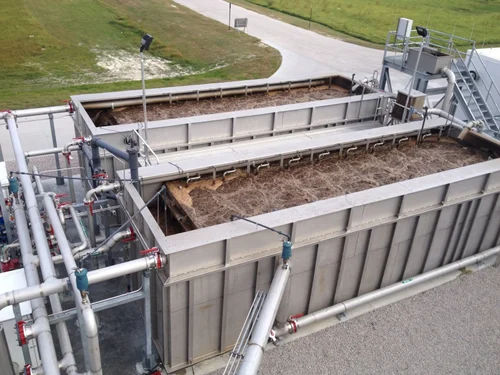
Membrane bioreactors, known as MBRs, are an advanced solution for wastewater treatment, combining conventional biological processes with membrane filtration. This technology has significantly evolved over the past decade, addressing many of the limitations found in traditional treatment methods. MBR systems integrate a suspended growth bioreactor with filtration capabilities, typically utilizing microfiltration or ultrafiltration membranes to separate solids from the treated water.

The membranes in an MBR system serve a crucial role, retaining biomass within the reactor while allowing the treated effluent to pass through. This process not only ensures high-quality effluent but also contributes to the reduction of the footprint required for wastewater treatment facilities. Despite the high efficiency of MBRs in removing contaminants, operational challenges such as membrane fouling require careful management to maintain system performance. Monitoring and research continue to address these challenges, focusing on the longevity, cost-efficiency, and environmental impact of MBR systems.

The single change that defines an MBR is the removal of gravity from the solids separation step. In conventional secondary treatment, the clarifier’s capacity depends on how well the sludge settles, and that settleability is a property of the biology rather than the tank. Replace the clarifier with a membrane and settleability stops mattering entirely — a bulking sludge that would put solids over a clarifier weir is simply held back by the barrier. That decoupling is what allows an MBR to run at mixed liquor concentrations three or four times those of a conventional plant, and it is the root of every advantage the technology has: smaller reactors, longer sludge age, less waste sludge, and an effluent quality that no gravity system can match.

It is also the root of every limitation. The barrier that removes settleability as a constraint replaces it with permeability, and permeability declines as the membrane fouls. An MBR therefore trades a biological problem an operator can influence through process control for a physical one that must be managed through air scour, flux limitation, and chemical cleaning. Energy consumption rises accordingly, and the membranes themselves become a scheduled replacement cost. Whether that trade is worth making is the central question in any MBR evaluation.

Key Takeaways

  • MBR integrates biological treatment with membrane filtration to enhance wastewater purification.
  • The technology ensures high effluent quality and allows for compact wastewater treatment designs.
  • Membrane fouling is a primary operational challenge, necessitating ongoing research and monitoring.

Membrane Bioreactor Fundamentals

Membrane Bioreactors (MBRs) leverage advanced filtration technology to enhance wastewater treatment processes. They provide a pivotal combination of biological degradation and membrane separation.

Definition and Principles

An MBR system primarily consists of a suspended growth bioreactor and a microfiltration or ultrafiltration membrane module. Microfiltration MBRs are specifically designed to retain biomass while allowing treated water to pass through. They facilitate the removal of contaminants, achieving high-quality effluent.

  1. Biological Process: The bioreactor fosters microbial growth which degrades organic matter.
  2. Solids-Liquid Separation: The membrane acts as a barrier, filtering out solids, pathogens, and particulates.

The integrated filtration component is crucial, providing several advantages over traditional treatment methods by ensuring high effluent quality and a reduced footprint.

The pore size distinction matters in practice. Microfiltration membranes operate around 0.1 micron and ultrafiltration well below that, and both provide an absolute physical barrier to suspended solids and to protozoan pathogens such as Cryptosporidium and Giardia. Virus removal is partial and depends on the pore size and on whether the membrane’s integrity is intact, which is why potable reuse trains place reverse osmosis downstream rather than relying on the MBR alone. Effluent turbidity from a properly operating MBR is consistently below the point where conventional filtration would be needed at all.

Historical Development

Membrane technology for wastewater treatment has seen significant use over the past two decades. Initially, MBRs addressed the limitations of conventional activated sludge systems by incorporating membranes into biological reactors. Rapid advancements in membrane production and design have solidified the efficiency and reliability of MBR systems in modern wastewater treatment. With ongoing research and development, MBRs continue to evolve, becoming more cost-effective and efficient.

Subcategory Overview: Topics Within Membrane Bioreactors

This category spans the technology itself, its definition and applications, its operational management, the specialized ion-exchange variant that shares the name, and the equipment supply landscape. The subsections below cover each.

Membrane Bioreactor Technology

Coverage of membrane bioreactor technology takes the forward-looking view: where the technology is heading in materials, energy consumption, and cost. The trajectory over the past two decades has been dominated by falling membrane prices and improving flux, which together moved MBRs from a specialty solution for constrained sites into mainstream consideration for any plant facing a footprint or effluent quality constraint. Current development focuses on anti-fouling surface chemistries, lower-energy air scour regimes, and anaerobic MBRs that produce energy rather than consuming it.

MBR Fundamentals

Introductory material answering what is membrane bioreactor wastewater treatment establishes the concept before the design detail. An MBR is an activated sludge process in which a membrane replaces the secondary clarifier. Everything else follows from that substitution: because biomass cannot escape, mixed liquor concentration can be raised far above conventional practice; because concentration is higher, the reactor can be smaller for the same load; because sludge age is decoupled from hydraulic retention time, the process can be operated at whatever sludge age the biology requires without regard to clarifier capacity.

MBR Applications

The MBR applications area covers where the technology is actually deployed and why. Three situations account for most installations: sites where land is genuinely unavailable and a conventional plant will not fit; discharge permits tight enough that conventional secondary treatment plus tertiary filtration would be needed anyway, making the MBR competitive on total cost; and water reuse schemes where the membrane’s absolute barrier is a required treatment step rather than an optional upgrade. Outside those three, a conventional plant usually costs less to build and considerably less to run.

MBR Process Operation

Practical material on MBR wastewater treatment addresses the daily operating reality. The controlling variables are flux, transmembrane pressure, and air scour rate, and the relationships between them are what an operator manages. Permeability — flux divided by transmembrane pressure, corrected for temperature — is the single most useful health indicator, because it isolates membrane condition from the effect of flow and water temperature. A steadily declining permeability trend signals fouling that cleaning has not fully reversed, and it gives weeks of warning before the system loses capacity.

Ion-Exchange Membrane Bioreactors

The ion-exchange MBR is a genuinely different technology that shares the name. Rather than using a membrane to filter biomass out of mixed liquor, it uses an ion-exchange membrane to separate the contaminated water entirely from a biological compartment on the other side. Target anions such as nitrate or perchlorate diffuse across the membrane and are reduced biologically, while the treated water never contacts the biomass and requires no downstream disinfection or biological polishing. It is a niche technology for specific contaminants rather than a variant of conventional filtration MBR, and readers should not assume the design and operating logic transfers between them.

MBR System Manufacturers

The top MBR system manufacturers area compares suppliers across membrane configuration, module design, flux performance, cleaning regime, and warranty terms. MBR procurement differs from most equipment purchases in one important way: membranes are proprietary and generally not interchangeable between suppliers, so the choice commits the plant to that supplier for replacement modules over the asset life. Warranty terms, guaranteed membrane life, and the supplier’s history of continuing to produce a given module generation are therefore worth as much scrutiny as headline flux figures.

MBR Troubleshooting

MBR troubleshooting covers the diagnostic patterns specific to this technology. Most MBR problems present the same way — declining permeability — but the causes are varied and the corrective actions differ entirely. Fouling from the biology, fouling from inorganic scaling, physical damage from rags that passed the screens, air scour failure, and simple temperature effects all reduce apparent performance, and distinguishing them quickly is what prevents a recoverable fouling event from becoming a membrane replacement.

Types of Membrane Bioreactors

Membrane Bioreactor (MBR) systems have evolved to improve wastewater treatment efficiency and performance. They utilize membranes for filtration, which can be categorized primarily by their configurations: hollow fiber, flat sheet, and tubular.

Hollow Fiber MBR

Hollow fiber membrane bioreactors contain thousands of tiny, straw-like membranes, all bundled together. Each hollow fiber acts as a semi-permeable barrier, allowing water and small molecules to permeate while retaining larger suspended solids and microorganisms. This design maximizes surface area in a compact space, making it a highly efficient filtration system.

The high packing density is both the advantage and the vulnerability. Fibres are close enough together that rags and fibrous material entering the tank braid around them and pull them apart, which is why fine screening upstream is not optional equipment on a hollow fibre installation. Hollow fibre modules also permit backwashing, reversing permeate flow through the fibre to lift the cake layer off the surface, which flat sheet designs generally cannot do.

Flat Sheet MBR

Flat sheet MBRs employ flat, plate-like membranes that are stacked within the reactor. They are suitable for applications that require less frequent cleaning, as the flat surface can be easier to access and maintain. These systems provide a robust and reliable treatment method, with a simpler design that can be advantageous in certain operating conditions.

The wider spacing between plates makes flat sheet modules markedly more tolerant of rags and debris than hollow fibre, and individual panels can be inspected and replaced without removing an entire cassette. The trade-off is packing density: a flat sheet system needs more tank volume for the same membrane area, and because backwashing is not generally available, fouling control depends more heavily on air scour and relaxation cycles.

Tubular MBR

Tubular MBRs utilize cylindrical-shaped membranes, which wastewater flows through. Due to their shape and strength, they are particularly resistant to clogging and are suitable for wastewater with high solid content. They tend to require more space and have higher energy demands, but their resilience to harsh feeds makes them suitable for industrial applications.

MBR System Components

Membrane Bioreactor (MBR) systems are advanced wastewater treatment solutions that integrate a bioreactor with a membrane module. These components work in concert to provide effective treatment of wastewater.

Fine Screening

Before any of the components below, an MBR requires fine screening, and it is the provision most often underestimated. Perforated plate or wedge wire screening at an opening of roughly 1 to 3 millimetres is standard practice, and the choice of perforated plate over bar-type screening matters because a two-dimensional opening intercepts elongated material that would pass lengthwise between bars. Rags reaching the membrane tank braid around hollow fibres and accumulate between flat sheets, causing damage that no cleaning reverses and that is expensive in both membrane replacement and lost capacity. More MBR installations have been compromised by inadequate screening than by any other single design decision.

Bioreactor

The bioreactor is at the heart of the MBR system, cultivating microorganisms responsible for the degradation of organic matter. A higher biomass concentration is maintained in the bioreactor, which directly correlates with its performance in breaking down pollutants. This component is key for the overall reduction of organic compounds in the wastewater.

Mixed liquor concentrations in an MBR commonly run three to four times those of a conventional activated sludge plant, which is what allows the reactor to be correspondingly smaller. That concentration has a cost: oxygen transfer efficiency falls as mixed liquor solids rise, because the thicker liquor is more viscous and holds less dissolved oxygen at the same aeration input. Process aeration in an MBR is therefore less efficient per pound of oxygen delivered than in a conventional plant, and that penalty sits alongside the membrane air scour demand.

Membrane Module

The membrane module is a critical feature that distinguishes MBR systems, serving as a barrier to separate solids from the treated water. The membranes, typically made of materials like polymer fibers, are responsible for filtering out microorganisms and suspended solids. Their pore size determines the quality of the effluent, allowing the system to produce a consistently high-quality filtrate. The membrane filtration effectively replaces secondary clarifiers and sand filters typically used in conventional systems.

Aeration System

An aeration system supplies oxygen to the bioreactor, which is essential for the aerobic bacteria to thrive and break down organic matter. Beyond promoting biological treatment, the bubbles continuously produced help keep the membranes clean by scouring their surfaces, thus maintaining the efficiency of the filtration process. This system’s design considerations are crucial for the energy efficiency of the entire MBR set-up.

It is worth separating the two aeration duties, because they are supplied differently and have different design bases. Process aeration delivers oxygen to the biology through fine bubble diffusers, sized on oxygen demand. Membrane air scour delivers coarse bubbles along the membrane surface to shear the developing cake layer, sized on membrane area rather than on oxygen demand, and it typically accounts for a large share of an MBR’s total energy consumption. Reducing that share through cyclic or intermittent scour regimes is where most of the energy improvement in modern MBR design has come from.

Operational Aspects of MBRs

Membrane Bioreactors (MBR) are advanced solutions for wastewater treatment that combine membrane filtration with biological processes. Efficient operation of MBR systems is crucial, focusing on configuration, retention times, and membrane maintenance.

Process Configurations

MBRs are primarily configured in two ways: submerged and side-stream. The submerged configuration features membranes that are immersed directly in the biological reactor. This setup leads to lower energy consumption because of minimal pumping requirements. In contrast, side-stream MBRs pump the mixed liquor across membranes located externally. Side-stream configurations often require higher energy due to increased pumping demands but can handle higher solid content without significantly affecting performance.

Submerged configurations dominate municipal practice by a wide margin, precisely because the energy difference is large and municipal wastewater does not demand the robustness that sidestream operation provides. Sidestream systems retain a place in industrial applications with aggressive or high-solids feeds, and where the membranes must be accessible without draining a process tank.

Hydraulic and Solids Retention Times

MBRs separate hydraulic retention time (HRT) from solids retention time (SRT). This separation allows for better process control. HRT typically ranges from 3 to 10 hours depending on the design and influent characteristics. SRT in MBRs can be much longer, often over 15 days, promoting complete biodegradation of pollutants. Long SRTs also reduce the production of excess sludge, a significant advantage of MBR technology.

This decoupling is the technology’s most valuable process feature. In a conventional plant the two are linked through the clarifier: raising sludge age raises mixed liquor concentration, which eventually overloads the clarifier’s solids handling capacity. With that constraint removed, an MBR can be operated at whatever sludge age the biological objective requires — long enough to nitrify reliably in cold weather, or to degrade slowly biodegradable compounds — without any consequence for solids separation.

Permeate Flux and Backwashing

Permeate flux refers to the rate at which clean water passes through the membrane and is an indicator of the membrane’s performance. The flux is often limited to prevent rapid fouling, and it’s adjusted based on the quality of the influent wastewater and the membrane’s characteristics. Backwashing is a maintenance procedure used to control membrane fouling, where the permeate flow is reversed to remove solids from the membrane surface. Regular backwashing, along with chemical cleaning protocols, is essential for maintaining the long-term performance of the MBR system.

The concept that ties this together is sustainable flux: the rate at which the system can be operated indefinitely without progressive, irreversible fouling. Operating above it produces a short-term capacity gain and a long-term loss, as the cake layer consolidates into something cleaning cannot fully remove. Because flux and fouling rate are not linearly related, pushing flux modestly above the sustainable level can shorten membrane life disproportionately, which is why peak flow events are managed with equalization or standby cassettes rather than by simply running the membranes harder.

Membrane Fouling and Cleaning

Fouling is the defining operational subject in MBR practice and takes several distinct forms. A cake layer of biomass builds continuously on the membrane surface and is the reversible fraction, removed by air scour, relaxation, and backwash. Pore blocking by fine colloids and by soluble microbial products is less readily reversed. Inorganic scaling deposits calcium, magnesium, and iron compounds on and within the membrane. Biofouling, where organisms colonize the membrane surface itself, is the most persistent form.

The cleaning regime addresses these in escalating steps. Physical control — relaxation, backwash, and air scour — runs continuously as part of normal operation. Maintenance cleaning with a dilute hypochlorite solution is performed frequently, often weekly, in place and without taking the tank out of service, to keep organic fouling from consolidating. Recovery cleaning is a far more intensive soak at higher chemical concentration, typically combining an oxidant for organic fouling with an acid for inorganic scaling, performed a few times a year. The pattern to watch for is a recovery clean that no longer restores permeability to its previous baseline, which indicates irreversible fouling accumulating toward end of membrane life.

Selection and Specification Framework

Step One: Establish Whether the Constraint Justifies an MBR

MBRs cost more to build and considerably more to operate than conventional treatment, so the first question is whether something forces the choice. Genuine footprint constraints, effluent limits that would require tertiary filtration anyway, and reuse schemes needing an absolute barrier are the three situations that justify the technology on merit. Where a conventional plant plus filtration would meet the permit on an available site, it will almost always win on lifecycle cost. Compare against the full alternative including tertiary treatment rather than against secondary treatment alone, since that is the fair comparison.

Step Two: Specify the Screening Before Anything Else

This is the provision that determines whether the installation succeeds. Specify perforated plate or wedge wire at an opening the membrane supplier requires, provide redundancy so screening never bypasses, and design the screenings handling train to match. Every membrane warranty carries screening requirements, and failing to meet them voids protection precisely when it is needed. Retrofitting adequate screening after rags have damaged a membrane tank is both expensive and too late.

Step Three: Select the Membrane Configuration

Hollow fibre offers the highest packing density and permits backwashing, at the cost of vulnerability to fibrous material. Flat sheet is more tolerant of debris and allows panel-level replacement, at the cost of packing density and backwash capability. Tubular sidestream suits aggressive industrial feeds where robustness outweighs energy. Municipal projects on well-screened influent usually come down to hollow fibre versus flat sheet, and the decision often turns on the supplier relationship and warranty as much as on the hydraulics.

Step Four: Design at Sustainable Flux, Not Peak Flux

Size the membrane area on a flux the system can sustain indefinitely at the design water temperature, then handle peak flow through equalization, standby cassettes, or a bypass around the membrane train rather than by raising flux. Cold water increases viscosity and reduces flux at constant transmembrane pressure, so the winter condition governs. Reserve capacity for one cassette out of service for cleaning is standard, since maintenance cleaning is routine rather than exceptional.

Step Five: Budget the Energy and Membrane Replacement Honestly

An MBR’s operating cost is dominated by two items conventional plants do not carry: membrane air scour and periodic membrane replacement. Air scour typically accounts for a large fraction of total plant energy, and membranes are a scheduled capital renewal rather than a repair. A lifecycle comparison that omits either understates MBR cost substantially. Where the comparison is close, those two line items usually decide it.

Step Six: Compare Against the Alternatives

The honest comparison is against conventional activated sludge followed by tertiary treatment, since that combination achieves much of what an MBR achieves at lower energy where site area allows. Where the objective is capacity intensification within existing tanks rather than effluent quality, MBBR and IFAS add biomass on carriers without introducing membranes, and retain the conventional clarifier and its lower operating cost. MBR earns its place where the absolute barrier itself is the requirement.

Comparison Tables

MBR membrane configurations compared
Configuration Packing Density Best-Fit Applications Fouling Control Key Vulnerability Relative Energy
Hollow fibre, submerged Highest Municipal plants; constrained footprint Air scour, relaxation, and backwash Rags and fibrous material braiding the fibres Moderate
Flat sheet, submerged Lower Municipal and industrial; debris-tolerant duty Air scour and relaxation; backwash generally unavailable Larger tank volume for the same area Moderate
Tubular, sidestream Lowest High-strength or high-solids industrial effluent Crossflow velocity High pumping energy Highest
MBR compared with the conventional alternatives
Criterion MBR Conventional AS + tertiary filtration MBBR / IFAS
Effluent quality Absolute barrier; consistently very low solids and turbidity Good, but dependent on filter and clarifier performance Comparable to conventional; clarifier still governs
Footprint Smallest, by a wide margin Largest Intermediate; uses existing tank volume
Sensitivity to sludge settleability None; settleability is irrelevant High; bulking causes solids loss High; clarifier still depends on settling
Energy consumption Highest, driven by membrane air scour Lowest Moderate
Pretreatment demand Fine screening mandatory and non-negotiable Conventional screening adequate Screening needed to protect carriers and screens
Scheduled capital renewal Membrane replacement on a defined cycle Filter media replacement, long interval Carrier loss and replacement, long interval
Operator skill required Highest Moderate Moderate

Applications of MBR Systems

Membrane Bioreactors (MBR) are cutting-edge solutions for wastewater treatment, offering high-quality effluent suitable for a variety of reuse applications.

Municipal Wastewater Treatment

In the realm of municipal wastewater treatment, MBR systems play a pivotal role by integrating conventional biological degradation processes with membrane filtration. This combination results in the effective removal of contaminants and nutrients, leading to the production of clear, disinfected effluent. These systems are particularly valuable in densely populated urban areas where space is limited due to their compact footprint. Moreover, they are capable of handling high volumes of wastewater, making them a scalable choice for cities. For further insight, the U.S. Environmental Protection Agency provides in-depth information on MBR applications in this context (PDF Membrane Bioreactors factsheet).

Industrial Wastewater Treatment

In the industrial wastewater treatment sector, MBRs are utilized due to their efficiency in dealing with high-strength wastewater containing complex and variable organic pollutants. Industries such as pharmaceuticals, petrochemicals, and food and beverage can benefit greatly from MBR technology. It ensures compliance with stringent discharge regulations and allows for the possibility of water recycling within the industrial processes. These systems are designed to provide stable performance even when there are fluctuations in the composition of the wastewater.

Advantages and Limitations

Membrane Bioreactors (MBRs) offer a compelling combination of benefits and challenges that are important for potential users to understand. These systems provide advanced wastewater treatment, but can also present operational complexities.

Enhanced Effluent Quality

MBRs are capable of delivering high-quality effluent which often exceeds the standards for conventional systems. MBRs achieve superior solids removal owing to the microfiltration and ultrafiltration processes. This higher quality of effluent is suitable for reuse in various applications, thereby supporting sustainable water management practices.

Footprint and Modular Expansion

Space efficiency is a notable advantage of MBRs. They require a smaller physical footprint compared to traditional wastewater treatment setups, primarily because the membrane technology enables a more compact design. Furthermore, they accommodate modular expansion, meaning capacity can be increased by adding more membrane modules, rather than extensive reconstruction of the plant.

Operational Considerations

While MBRs boast several advantages, they come with specific operational considerations. On the one hand, these systems can be energy-intensive, leading to higher operational costs. Additionally, membranes are susceptible to fouling, which necessitates regular maintenance and can potentially result in increased downtime and added expenses. Despite these limitations, MBR technology continues to evolve with the development of more robust and fouling-resistant membranes.

MBR Performance and Monitoring

Membrane Bioreactor (MBR) performance and monitoring encompass a variety of factors, primarily focusing on the treatment’s removal efficiencies, necessary operational parameters, and the implementation of monitoring and control strategies to maintain system effectiveness.

Removal Efficiencies

MBR systems are known for their high removal efficiencies of pollutants from wastewater. These systems combine the conventional activated sludge process with membrane filtration, resulting in enhanced reduction of organics, nitrogen, and phosphorus. The research underscores the capability of MBRs to provide high-quality effluent suitable for various reuse applications.

Operational Parameters

The operational parameters of MBR systems include aspects such as air scouring for membrane fouling control, membrane cleaning regimes, and sludge retention times. It is critical to maintain a fine balance in operating costs which largely stem from energy consumption and membrane replacement. The operating parameters play a vital role in the longevity and efficiency of an MBR system, as indicated by the higher capital and operational costs compared to conventional treatment systems for the same throughput.

Monitoring and Control Strategies

Implementing effective monitoring and control strategies is essential for the long-term performance of MBR systems. Monitoring includes tracking parameters like permeate quality, membrane integrity, and fouling rates. Strategies to control the process involve automation for online monitoring and timely responses to variations in wastewater characteristics. Regular assessment of the process is crucial for preventing membrane fouling and ensuring the MBR system operates within its designed specifications.

Membrane integrity monitoring deserves specific mention because it is what distinguishes an MBR from a filter that merely appears to be working. Permeate turbidity is a useful continuous indicator, but a single broken fibre may not raise it detectably while still passing a meaningful load of unfiltered mixed liquor. Periodic pressure decay testing, in which a cassette is isolated and pressurized and the rate of pressure loss measured, is the standard direct integrity check, and it is what a reuse permit will require where the membrane is credited as a pathogen barrier.

Design Details and Standards

Sizing Methodology

Establish the design flows and loads, then size the bioreactor on the required sludge age and the mixed liquor concentration the membranes and aeration system can support, recognizing that oxygen transfer efficiency falls as concentration rises. Size the membrane area on sustainable flux at the design water temperature, taking the winter condition as governing, and add capacity for cassettes out of service for cleaning and for the peak flow management strategy chosen. Size process aeration on oxygen demand at the design mixed liquor concentration, and size membrane air scour separately on membrane area per the supplier’s requirement. Size the fine screening to the membrane supplier’s specification with full redundancy. Finally, confirm the hydraulic profile through screening, bioreactor, and membrane tank, and provide for the peak flow route that avoids exceeding sustainable flux.

Key Parameters

  • Membrane pore size: microfiltration around 0.1 micron and ultrafiltration well below, both giving an absolute barrier to solids and protozoa.
  • Mixed liquor concentration: commonly several times conventional activated sludge levels, with oxygen transfer efficiency falling as it rises.
  • Sustainable flux: the rate maintainable indefinitely without progressive irreversible fouling, and the correct sizing basis.
  • Transmembrane pressure and permeability: permeability, being flux divided by pressure and temperature corrected, is the primary condition indicator.
  • Screening opening: fine perforated plate or wedge wire, sized to the membrane supplier’s requirement and typically a very small opening.
  • Air scour: sized on membrane area rather than oxygen demand, and a major share of total plant energy.
  • Solids and hydraulic retention time: fully decoupled, which is the technology’s principal process advantage.
  • Membrane service life: a scheduled capital renewal item rather than a repair, and a required line in any lifecycle comparison.

All values and relationships above are typical guidance and should be confirmed against the membrane supplier’s published requirements and against pilot data on the actual wastewater.

Applicable Standards and References

No single consensus standard governs MBR design, so practice rests on regulatory reuse frameworks, supplier requirements, and design manuals. Recommended Standards for Wastewater Facilities, the Ten States Standards, addresses membrane bioreactor provisions including screening requirements and redundancy in the states that have adopted them. WEF Manual of Practice No. 8 and ASCE Manual of Practice No. 76, Design of Municipal Wastewater Treatment Plants, provide the underlying biological and hydraulic methodology, and WEF’s membrane systems manual covers the technology specifically. State water recycling criteria, notably California’s rules administered by the Division of Drinking Water, define the pathogen removal credits available to membrane processes and the integrity testing required to claim them. NSF/ANSI 350 applies to onsite water reuse treatment systems. 40 CFR Part 133 defines the secondary treatment requirements the plant must satisfy, and 40 CFR Part 122 governs the NPDES permit. The membrane supplier’s own operating envelope and warranty conditions function as binding design constraints in practice.

Specification Checklist

  • Design average, peak hour, and peak wet weather flows, with the peak flow management strategy defined
  • Influent characterization including rag and fibre content, FOG, and industrial contributions
  • Effluent requirements, and whether the membrane is credited as a pathogen barrier
  • Fine screening type, opening size to supplier specification, redundancy, and screenings handling
  • Membrane configuration and supplier, with the rationale and warranty terms stated
  • Design flux at winter water temperature, identified explicitly as sustainable rather than peak
  • Membrane area including allowance for cassettes out of service
  • Design mixed liquor concentration and the oxygen transfer correction applied
  • Process aeration and membrane air scour sized separately, with the energy split stated
  • Cleaning regime: relaxation, backwash, maintenance clean, and recovery clean, with chemicals and frequencies
  • Chemical storage, containment, and neutralization for cleaning solutions
  • Integrity testing method and frequency
  • Membrane replacement interval assumed, and its treatment in the lifecycle cost analysis
  • Instrumentation: flux, transmembrane pressure, permeate turbidity, and the signals reported to SCADA
  • Operator training provision and the staffing model assumed

Field Notes

Commissioning Considerations

Establish the clean water permeability baseline before any mixed liquor enters the membrane tank, because that number is the reference against which every future fouling assessment is made and it cannot be recovered later. Verify screening performance under real influent rather than at a test flow, and inspect the membrane tank for rag accumulation after the first weeks of operation, since that inspection catches a screening deficiency while it is still correctable. Run a full recovery clean during commissioning to confirm the chemical system, containment, and neutralization all function before they are needed under pressure. Record the energy split between process aeration and membrane air scour, since it is the figure that will drive every later optimization effort.

Common Specification Mistakes

  • Underspecifying the fine screening. This is the leading cause of MBR problems, and the damage rags cause is not reversible by cleaning.
  • Sizing membrane area on peak flux. Design at sustainable flux and handle peaks another way, or membrane life shortens disproportionately.
  • Designing at average water temperature. Cold water reduces flux at constant pressure, so winter governs.
  • Omitting membrane replacement from lifecycle cost. It is a scheduled capital renewal, not a contingency.
  • Ignoring the oxygen transfer penalty at high MLSS. Aeration sized on conventional transfer efficiency will be short.
  • Treating air scour as part of process aeration. The two have different sizing bases and different optimization paths.
  • Comparing MBR against secondary treatment alone. The fair comparison includes the tertiary filtration the MBR displaces.
  • Assuming the staffing model transfers from a conventional plant. MBRs demand more skill and more attention, particularly on chemical cleaning.

Operations and Maintenance Comparison

Hollow fibre systems concentrate maintenance on backwash equipment, aerator cleaning beneath the cassettes, and periodic inspection for fibre damage and rag accumulation. Flat sheet systems trade backwash equipment for panel-level inspection and replacement, and tolerate debris better but need attention to the diffusers below the stack. Sidestream tubular systems shift the burden to the recirculation pumps, which handle abrasive mixed liquor continuously. Common to all is the chemical cleaning programme, which requires storage, dosing, containment, and neutralization for oxidants and acids, and which is the routine most likely to be deferred and most consequential when it is. Membrane replacement is a planned project rather than a maintenance task, and budgeting it as a recurring capital item avoids the awkward conversation later.

Troubleshooting by Symptom

Declining permeability is the universal symptom and the diagnosis lies in the pattern. A gradual decline recovered fully by maintenance cleaning is normal operation. A decline that maintenance cleaning no longer fully reverses indicates fouling consolidating toward the irreversible fraction and calls for an earlier recovery clean. A recovery clean that fails to restore the previous baseline indicates the membrane is approaching end of life. A sudden drop points to a mechanical cause: failed air scour, a blocked permeate line, or debris accumulation. Rising permeate turbidity with normal permeability suggests loss of integrity rather than fouling, and warrants pressure decay testing rather than cleaning. Seasonal permeability variation that recovers each spring is temperature, not fouling, and should be normalized out of the trend before conclusions are drawn.

Pro Tip: Trend Temperature-Corrected Permeability, Not Transmembrane Pressure

Transmembrane pressure is the number most readily displayed and the least informative on its own, because it rises with flux and with falling water temperature regardless of membrane condition. Permeability — flux divided by transmembrane pressure, normalized to a reference temperature — strips both of those out and leaves a clean measure of the membrane itself. Plotted continuously, with each maintenance and recovery clean marked on the chart, it answers the two questions that matter: whether cleaning is still restoring the membrane to its previous baseline, and how quickly that baseline is drifting downward. Together those tell a plant when to clean and when to start budgeting for replacement, months before either becomes urgent.

Future Developments and Research Trends

Membrane bioreactors (MBR) are at the forefront of wastewater treatment technology. Research is predominantly focusing on enhancing the efficiency and cost-effectiveness of these systems. Future trends may include:

  • Material Innovation: Researchers are experimenting with new membrane materials that can resist fouling, thus reducing the frequency and intensity of cleaning required. These materials aim to improve the lifespan and selectivity of membranes.
  • Advanced Fouling Control: Techniques to mitigate membrane fouling remain a priority. Studies are investigating the use of ultrasonic waves and biological agents as new approaches to control fouling.
  • Energy Reduction: Energy consumption is a critical issue, and future MBR systems may incorporate energy-recovery processes. Developing low-energy membrane materials and optimizing system design are critical research paths.
  • Process Optimization: The integration of smart sensors and controls that utilize artificial intelligence can lead to real-time monitoring, automatic adjustments, and predictive maintenance, further enhancing the performance and reliability of MBR systems.
  • Membrane Fabrication Techniques: Novel methods like 3D printing may revolutionize how membranes are produced, offering custom solutions and reducing manufacturing costs.

Highlights:

  • Innovations in anti-fouling materials
  • Enhanced monitoring and automation through AI
  • Implementation of energy-saving practices
  • Exploration of novel manufacturing techniques

The community expects that continual research will yield more robust membranes, efficient operations, and reduced costs, maintaining MBRs as a leading solution in wastewater management.

Environmental Impact and Sustainability

In the context of wastewater treatment, Membrane Bioreactors (MBRs) are evaluated for their environmental impact and sustainability. They are considered in terms of their energy consumption, sludge production, and disposal, and their overall lifecycle assessment to ensure environmental compliance and sustainability.

Energy Consumption

Membrane Bioreactors are an advanced treatment technology that can require a significant amount of energy for membrane filtration processes. The energy used is primarily for aeration, to provide oxygen to the microorganisms that degrade pollutants, and for the pumps that circulate water through the membranes. Comparatively, MBR systems may consume more energy than conventional treatment systems, but innovations in air-based membrane biofilm reactor technology have the potential to lower energy costs.

Sludge Production and Disposal

MBR technologies generate sludge as a byproduct of the treatment process. The sludge contains concentrated contaminants removed from the wastewater. Membrane Bioreactors typically produce a smaller volume of sludge with a higher solids content, which can lead to reduced disposal costs. However, the management and disposal of sludge is critical as it must be treated and disposed of in an environmentally sound manner to prevent secondary contamination.

One consequence worth anticipating is that MBR waste sludge dewaters less readily than conventional waste activated sludge. The long sludge age and high mixed liquor concentration produce a sludge with elevated extracellular polymeric substance content that binds water tightly, so polymer demand at the dewatering stage is typically higher and achievable cake solids lower. Any solids handling design downstream of an MBR should account for that rather than assuming conventional performance.

Lifecycle Assessment

A lifecycle assessment of MBR systems includes the evaluation of environmental impacts from the production of materials and construction, through the operation and maintenance, to the eventual decommissioning and disposal of the plant components. Studies indicate that while the initial material and resource inputs for MBRs are higher, the long-term benefits due to better quality effluent and potential water reuse options might balance out the initial environmental costs.

Frequently Asked Questions

How does a membrane bioreactor function in wastewater treatment?

In wastewater treatment, an MBR integrates conventional biological treatment processes with membrane filtration. The bioreactor uses microorganisms to degrade pollutants, while the membrane acts as a barrier, filtering and retaining solids, bacteria, and viruses, thereby producing cleaner effluent.

What are the primary advantages of using membrane bioreactors over traditional wastewater treatment methods?

Membrane bioreactors offer enhanced pollutant removal with their fine pore-size membranes, leading to higher-quality effluent that often meets stringent discharge standards. They also require less space than traditional treatments due to the elimination of secondary clarifiers and sand filters.

What are the common challenges and limitations associated with membrane bioreactors in sewage treatment plants?

Challenges associated with MBRs include membrane fouling, which can decrease efficiency over time and necessitate regular cleaning or replacement. The technology also typically involves higher energy consumption and operational costs compared to conventional treatment methods.

How do membrane bioreactors compare to Moving Bed Biofilm Reactors (MBBR) in terms of efficiency and cost-effectiveness?

MBRs often provide superior effluent quality compared to MBBRs due to the fine membrane filtration process. However, MBBRs can be less costly to operate and maintain, since they are less energy-intensive and do not require membrane replacement. MBBRs might be preferred for applications where space is not at a premium and top-quality effluent is not critical.

What are the maintenance requirements for ensuring the long-term operation of membrane bioreactors?

To ensure long-term operation, MBR systems require consistent maintenance, which includes monitoring to detect early signs of membrane fouling, periodic cleaning of membranes, and replacement of damaged or aged membranes. Additionally, maintaining optimal biological processes is critical to prevent excessive sludge production and membrane clogging.

Conclusion

Key Takeaways

  • The membrane removes settleability as a constraint — that single change is what allows high mixed liquor concentration, a small reactor, decoupled sludge age, and effluent quality gravity cannot match.
  • It replaces settleability with permeability — fouling becomes the governing operational problem, managed through air scour, flux limitation, and chemical cleaning rather than through process control.
  • Fine screening is not optional — inadequate screening is the leading cause of MBR failure, and rag damage to membranes is not reversible by cleaning.
  • Design at sustainable flux and winter temperature — sizing on peak flux shortens membrane life disproportionately, and cold water reduces flux at constant pressure.
  • Trend permeability, not transmembrane pressure — the temperature-corrected ratio isolates membrane condition from flow and season.
  • Compare against conventional treatment plus tertiary filtration — that is the fair comparison, and it must include membrane air scour energy and scheduled membrane replacement.

Membrane bioreactors solve a specific problem better than anything else available: producing consistently high-quality effluent in a small footprint from a biological process that no longer has to settle. Where land is genuinely unavailable, where the permit would require tertiary filtration anyway, or where reuse demands an absolute barrier, the technology earns its cost. Outside those situations a conventional plant with filtration usually costs less to build and considerably less to run.

Specifying one well comes down to a short sequence: confirm that a real constraint justifies the choice, specify the fine screening to the supplier’s requirement with redundancy, select the configuration against the influent’s rag and solids character, size the membrane area at sustainable flux and winter temperature, and budget air scour energy and membrane replacement as the recurring costs they are. Plants that then trend temperature-corrected permeability against their cleaning events generally know the state of their membranes years in advance; those that watch transmembrane pressure alone tend to find out at replacement time.