
Dewatering in Wastewater Treatment: Essential Methods and Benefits
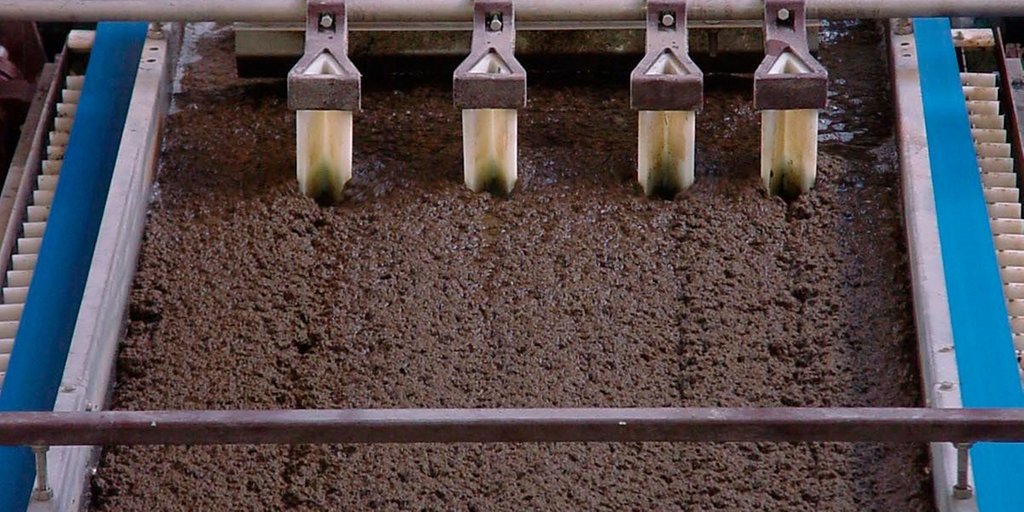
Dewatering is an essential process in wastewater treatment, which involves the removal of water from solid waste or soil. By reducing the volume of sludge, dewatering systems enable more efficient waste handling and disposal. This process is not only crucial for the effective management of wastewater but also has significant cost implications, as transporting and storing drier solids is far less expensive than handling wet sludge. The techniques and equipment used for dewatering vary widely, with different technologies suited to various scales of operation and types of waste material.
In addition to the economic benefits, dewatering plays a crucial role in protecting the environment and complying with regulatory standards. Within the broader sludge processing train, dewatering sits downstream of thickening — the preliminary step that concentrates sludge before mechanical water removal begins — and upstream of disposal or further treatment. As part of the treatment process, it ensures that the byproducts of wastewater are dealt with in a manner that minimizes impact on natural water systems and adheres to legislation governing waste disposal. With ongoing advancements in technology, operational considerations, and adherence to health and safety standards, dewatering systems continue to evolve, offering both improved performance and sustainability.
The economics deserve a moment’s attention because they drive nearly every dewatering decision. Sludge leaving a digester at 2 to 3 percent solids is more than 97 percent water, and hauling it is essentially paying to truck water. Raising cake solids from 18 to 22 percent, a difference that sounds marginal, cuts the mass hauled by roughly a fifth. Multiplied across a year of daily trucking, that difference funds a great deal of equipment and polymer. Dewatering is therefore one of the few processes at a treatment plant where a modest performance improvement produces an immediate, measurable line-item saving.
The counterweight is the sidestream. Every gallon of water pressed out of the sludge returns to the head of the plant carrying dissolved ammonia and phosphorus released during digestion, and on a plant treating digested biosolids that return can represent a substantial share of the total nitrogen load on the biological process. A dewatering decision made purely on cake dryness, without accounting for what the filtrate or centrate does to the aeration basin, is only half a decision.
Key Takeaways
- Dewatering reduces sludge treatment volume for more efficient waste management.
- It is important for economic, environmental, and regulatory compliance.
- Technological advancements are optimizing dewatering systems for sustainability.
Principles of Dewatering
Dewatering in wastewater treatment involves the removal of water from sludge, transforming it from a liquid to a semisolid or solid state. This process reduces the overall volume of sludge, making its handling or disposal more cost-effective and environmentally friendly.
Mechanics of Water Removal
Rotary Fan Presses and Screw Presses are two common technologies utilized for dewatering in wastewater treatment. The mechanics of water removal in these systems are critical to their performance. Rotary Fan Presses operate by applying increasing pressure as sludge travels through a slowly rotating hollow cylindrical screen, which encourages water to escape from the solid particles. On the other hand, Screw Presses feature a filtrate collection system and a rotating screw within a fixed screen, using the screw’s increasing pitch to gradually squeeze out water.
| Technology | Mechanism |
|---|---|
| Rotary Fan Presses | Pressure through rotation |
| Screw Presses | Filtrate system and screw rotation |
The efficiency of these processes is largely dependent on the characteristics of the sludge and the design parameters of the equipment.
Underlying every mechanical method is the same physical distinction. Some of the water in sludge is free water that will drain under gravity alone. Some is interstitial water trapped between floc particles, which requires pressure or centrifugal force to release. Some is surface water bound to particle surfaces, and some is intracellular water held inside the cells themselves, neither of which mechanical dewatering can reach at all. That is why cake solids plateau: every technology eventually reaches the boundary where only chemically or thermally removable water remains, and pushing harder past that point wastes energy without producing a drier cake.
Chemical conditioning is what moves that boundary. Cationic polymer neutralizes the negative surface charge on sludge particles and bridges them into larger, stronger floc that releases interstitial water more readily and resists being squeezed back through the filter medium. Polymer selection, dose, makedown quality, and mixing energy at the point of injection routinely have more effect on dewatering performance than the choice of machine.
Impact on Sludge Characteristics
The dewatering process significantly affects sludge characteristics by reducing its volume and altering its physical properties. Rotary Fan Presses may produce a more uniform cake with a consistent dryness due to the controlled pressure and rotation speed. Conversely, Screw Presses often result in a drier output, as they can effectively handle a variety of sludge types, including those with a higher fiber content. The resulting cake from either technology is generally more stable and easier to handle or transport for further processing, storage, or disposal.
The dewaterability of the sludge arriving at the machine is itself a variable, and one set upstream rather than in the dewatering building. Raw primary sludge dewaters readily. Waste activated sludge dewaters poorly, and the longer its sludge age, the worse it behaves, because extracellular polymeric substances bind water tightly. Anaerobically digested sludge sits between the two and typically demands considerably more polymer than raw sludge of the same solids concentration. Feed solids concentration matters as well: a machine fed at 4 percent solids will outperform the same machine fed at 2 percent, which is the direct link between thickening performance and dewatering results.
By understanding the mechanics of water removal and selecting the appropriate dewatering technology, wastewater treatment facilities can enhance their operations and reduce the environmental impact of the residuals produced.
Equipment and Technologies
In wastewater treatment, efficient dewatering relies on the appropriate selection of technology designed for the specific needs of the process. Several types of equipment are utilized for this purpose, each with distinct mechanisms and advantages. For facilities evaluating vendors and procurement options, a dedicated review of leading dewatering equipment manufacturers provides comparative information on performance specifications, service networks, and equipment footprint across the major technology categories.
Belt Filter Presses
Belt filter presses involve the use of mechanical pressure applied to conditioned slurry by means of two continuous belts that hold the slurry between them. This method is favored for its continuous operation and adaptability to various sludge types, producing a consistently dry cake.
A belt press works in three sequential zones. Conditioned sludge first enters a gravity drainage zone where free water simply drains through the belt, which is where the majority of the water actually leaves. It then passes into a wedge zone where the two belts converge and pressure builds gradually, followed by a high-pressure zone where the sandwiched belts pass around a series of decreasing-diameter rollers, applying shear as well as compression. Cake solids in municipal service commonly land in the mid-teens to low twenties by percent. The defining operational burden is belt wash water, which is continuous, substantial, and returns to the plant along with the filtrate.
Plate and Frame Presses
Plate and frame presses work by alternately arranging plates and frames with filter cloths in between. When sludge is pumped into the system, solids are caught on the cloths and squeezed under high pressure to extract the water, resulting in a solid cake and clarified filtrate.
This is the only common technology that operates in batches rather than continuously, and it achieves the driest cake of any mechanical method, frequently in the thirties or higher by percent solids. That advantage comes at the cost of a labour-intensive cycle: fill, press, dwell, open, discharge, and periodic cloth washing. Where hauling distance is long, disposal is charged by weight, or a landfill imposes a minimum solids criterion, the drier cake justifies the labour. Where continuous unattended operation matters more, it rarely does.
Rotary Fan Presses
Rotary fan presses utilize slowly rotating screws within a perforated screened basket, applying gentle but increasing pressure to dewater sludge. They are known for their low maintenance, energy efficiency, and quiet operation.
The very low rotational speed is the defining characteristic and the source of most of their advantages: minimal wear, low power draw, quiet enclosed operation, and modest wash water demand. The corresponding limitation is throughput per unit, so larger plants require multiple units or a different technology. They suit small to mid-size facilities, and particularly those where the dewatering equipment sits close to occupied buildings or where staffing is thin.
Screw Presses
In screw presses, the slurry is passed through a screened drum with a screw rotating inside. With the turning of the screw, the sludge is conveyed and compressed, forcing out the liquid. Screw presses are recognized for their simplicity and cost-effectiveness. For a detailed examination of design configurations, screening intervals, and performance benchmarks across municipal and industrial applications, see the dedicated coverage of screw press dewatering.
Screw presses have gained ground rapidly in municipal work, largely because they combine acceptable cake solids with very low energy consumption, low wash water use, fully enclosed operation that contains odour, and the ability to run unattended for extended periods. Their weakness is throughput relative to footprint and a sensitivity to grit, which abrades both the screw flights and the screen basket. Plants with poor grit removal upstream will see wear intervals shorten considerably.
Centrifuges
Centrifuges operate by spinning a mixture at high speeds, exerting centrifugal force that separates the solids from the liquids. This equipment is versatile, suitable for a wide range of sludge types, and effective in producing a dry cake with less volume to dispose of. The mechanics, bowl configurations, and polymer conditioning requirements specific to this technology are covered in depth under centrifuge dewatering.
The decanter centrifuge dominates large municipal installations because it delivers high cake solids and high solids capture in a compact, fully enclosed machine with no filter medium and no wash water. Performance is tuned through bowl speed, scroll differential speed, and pond depth, which together trade cake dryness against capture rate and polymer consumption. The costs are the highest power draw of any dewatering technology, the highest polymer demand, significant noise and vibration requiring careful structural design, and scroll wear that makes tungsten carbide tiling and periodic rebuild a scheduled expense rather than a repair.
Emerging Dewatering Technologies
Development in this area continues, and coverage of dewatering equipment and innovation tracks where it is heading. Several directions are active at once: thermal and chemical pretreatment such as thermal hydrolysis that breaks cell walls and releases bound water before the machine ever sees the sludge; electro-dewatering that applies an electric field to drive additional water out of an already-pressed cake; improved polymer chemistries and inline conditioning control; and instrumentation that closes the loop on polymer dosing automatically rather than leaving it to periodic operator adjustment. The common thread is that most of the remaining gains lie in conditioning and pretreatment rather than in the mechanical machine itself.
Each piece of equipment meets different operational demands. The choice depends on the scale of operations, desired dryness of the output, and the nature of the sludge being treated.
Natural Dewatering Systems
Natural dewatering systems utilize passive processes, typically involving the forces of evaporation, transpiration, and drainage, to remove water content from sludge. These systems are environmentally friendly alternatives to mechanical dewatering methods, requiring less energy and often resulting in biosolids that can be safely repurposed or disposed of.
Drying Beds
Drying beds are one of the simplest and oldest methods for sludge dewatering. They are generally composed of a drainage layer of sand and gravel, which supports the sludge while allowing water to percolate down and eventually drain away. The top layer of sludge is then left to dry through evaporation and the process can be enhanced by natural factors like wind and sunlight. These beds are typically used for small to medium-sized wastewater treatment facilities where the climate favors evaporation.
- Construction: A typical drying bed consists of a lined pit with a permeable layer of sand and gravel.
- Operation: Sludge is spread evenly over the bed, allowing water to percolate down and leave solid content behind.
- Maintenance: After drying, the residual solids are manually removed and the beds prepared for the next batch.
Given sufficient time and a favourable climate, drying beds reach solids concentrations no mechanical press can match, since evaporation removes water that pressure cannot. The constraints are land area, weather dependence, and labour for bed cleaning, all of which scale badly. Rainfall during a drying cycle can undo weeks of progress, which is why covered or glazed beds are common in wetter climates and why the method is largely confined to smaller plants with land available.
Reed Beds
Reed beds represent a more ecologically advanced natural dewatering system. These systems facilitate dewatering through the process of phytoremediation, where the planted reeds actively take up water as part of their natural growth process. The roots of reeds create a network that promotes aerobic conditions, enhancing microbial activity and leading to the breakdown of organic matter in the sludge.
- Construction: Reed beds require careful construction involving soil analysis and specific planting techniques.
- Operation: Sludge is applied periodically, with the reeds transpiring water and filtering and transforming waste materials.
- Maintenance: They require relatively less maintenance than mechanical systems, aside from occasional harvesting of the reeds.
The distinguishing feature of a reed bed is its very long cycle. Sludge is applied in thin layers over a period of years, accumulating and mineralizing in place, and the bed is emptied only after that accumulation period ends. This makes reed beds unsuitable where sludge must leave the site promptly, and well suited where land is available and a low-attention, low-energy solution is preferred over a machine requiring daily operator time.
By incorporating these natural dewatering systems into wastewater treatment protocols, facilities can achieve effective sludge reduction with reduced carbon footprint and potential benefits to the local ecosystem.
Selection and Specification Framework
Step One: Define the Cake Solids the Downstream Route Requires
The disposal or reuse pathway sets the target, not the other way around. Landfill disposal may impose a paint filter test or a minimum solids criterion. Land application tolerates wetter cake but is constrained by hauling distance and application windows. Thermal drying or incineration downstream rewards every additional point of cake solids with a direct fuel saving. Composting needs cake dry enough to mix with bulking agent. Establish the destination first, then specify the technology that reaches the required dryness at acceptable cost, rather than selecting a machine and discovering afterward that the cake is too wet for the route available.
Step Two: Characterize the Sludge Honestly
Dewaterability varies enormously between sludge types and is largely determined upstream. Test the actual sludge the plant will produce, not a generic municipal blend: solids concentration, volatile fraction, the ratio of primary to waste activated sludge, sludge age, and whether it will be digested. Capillary suction time and specific resistance to filtration are the standard bench tests, and pilot testing with the actual candidate machines is normal practice for any significant procurement. Manufacturer performance guarantees should be tied to the tested sludge rather than to a nominal specification.
Step Three: Design the Conditioning System First
Polymer is where dewatering performance is won or lost, and it is routinely treated as an afterthought bolted onto the machine. Specify polymer type and charge density against the tested sludge, provide proper makedown equipment with adequate aging time, and give attention to the injection point and the mixing energy there, since polymer added without sufficient mixing produces stringy under-conditioned floc and polymer subjected to excessive shear is destroyed before it reaches the machine. Polymer cost is a major line item, commonly measured in pounds of active polymer per dry ton, and small improvements in conditioning translate directly into both cost and performance.
Step Four: Count the Sidestream
Quantify the ammonia and phosphorus load the filtrate or centrate will return to the head of the plant, particularly where sludge is anaerobically digested. This return can be a significant fraction of the plant’s total nitrogen load and it arrives in a concentrated slug if dewatering runs on a day shift rather than continuously. Options include equalizing the return, running dewatering more hours at lower rate, or treating the sidestream separately. Ignoring it produces an aeration basin that mysteriously struggles every afternoon.
Step Five: Match the Machine to the Staffing and Building
Belt presses demand continuous operator attention and generate a wet, humid, odorous environment. Centrifuges run largely unattended but are noisy, draw heavy power, and require structural design for vibration and provision for scroll removal. Screw presses and rotary fan presses run quietly and unattended in an enclosed housing. Plate and frame presses need an operator for every cycle. Match the choice to the hours the utility can actually staff and to where the building sits relative to neighbours, because a machine that needs attention it will not receive underperforms permanently.
Step Six: Consider the Adjacent Processes
Dewatering does not stand alone in the solids train. Improving thickening upstream raises feed solids and improves dewatering results at no cost to the dewatering equipment itself. Stabilization through digestion changes both dewaterability and polymer demand and determines the biosolids classification available. Where even the driest mechanical cake is still too wet for the intended route, thermal drying takes the material further, at a substantial energy cost that only certain end uses justify. Evaluating dewatering in isolation from these neighbours produces locally optimal, globally expensive decisions.
Comparison Tables
| Technology | Typical Cake Solids | Best-Fit Applications | Key Limitations | Polymer & Energy Demand | Maintenance Profile |
|---|---|---|---|---|---|
| Belt filter press | Mid-teens to low twenties percent | Continuous municipal duty; wide range of sludge types | Continuous wash water; open, humid, odorous operation; needs attention | Moderate polymer, low energy | Belt replacement, roller bearings, wash nozzles |
| Decanter centrifuge | High teens to high twenties percent | Large plants; enclosed operation; high capture required | Highest power draw; noise and vibration; scroll wear | Highest polymer, highest energy | Scheduled scroll re-tiling and bearing rebuild |
| Screw press | Mid-teens to mid twenties percent | Small to mid-size plants; unattended operation; odour containment | Lower throughput per footprint; grit sensitive | Moderate polymer, very low energy | Screw flight and screen basket wear |
| Rotary fan press | Mid-teens to mid twenties percent | Small plants; noise-sensitive sites; minimal staffing | Limited throughput per unit | Moderate polymer, very low energy | Low; slow-speed components |
| Plate and frame press | Thirties percent and above | Long hauling distance; disposal charged by weight; industrial duty | Batch operation; labour intensive; cloth washing | Variable polymer or inorganic conditioning, moderate energy | Cloth replacement, plate and hydraulic service |
| Drying beds | Very high given time and climate | Small plants with land and favourable weather | Land area, weather dependence, manual cleaning | None | Bed cleaning and sand replacement |
| Reed beds | High after a multi-year cycle | Small plants prioritizing low energy and low attention | Very long cycle; large land requirement | None | Reed harvesting; periodic emptying |
| Governing Constraint | Usual Answer | Why | Watch For |
|---|---|---|---|
| Hauling cost dominates | Centrifuge or plate and frame press | Highest cake solids means least mass trucked | Higher polymer and energy cost offsets part of the saving |
| Minimal operator hours available | Screw press or rotary fan press | Enclosed, unattended, low-attention operation | Throughput per unit may require multiple machines |
| Odour complaints or nearby neighbours | Enclosed technology: screw press, rotary fan press, centrifuge | Belt presses are open and generate aerosols and odour | Cake odour after pressing still needs managing |
| Thermal drying or incineration downstream | Whatever reaches the highest cake solids | Every point of solids is a direct fuel saving downstream | Capture rate must stay high or the sidestream worsens |
| Sidestream nitrogen already straining the plant | High capture rate technology, plus return equalization | Poor capture returns solids as well as dissolved load | Batch-shift operation concentrates the return into a slug |
| Poor grit removal upstream | Address the headworks before selecting equipment | Grit abrades screw flights, scrolls, and belts alike | Warranty terms may exclude abrasive wear |
Operational Considerations
Effective dewatering is critical in wastewater treatment as it reduces sludge volume, leading to cost savings in storage, transportation, and disposal. It also minimizes the environmental impact of wastewater facilities. Dewatered biosolids are commonly routed to digestion either before or after mechanical pressing — anaerobic digestion in particular stabilizes organics and reduces pathogen levels in the cake, directly influencing the downstream handling and land-application options available to operators.
Optimization of Dewatering Processes
To achieve optimal efficiency in dewatering processes, operators must select the right equipment and parameters specific to the type of sludge they are processing. This includes careful adjustment of polymer dosages and sludge feed rates, which are crucial for enhancing solid-liquid separation. Implementing real-time monitoring can provide immediate feedback, allowing for quick adjustments to improve performance.
Optimization in practice means finding the operating point rather than a single setting, because the variables interact. Increasing polymer dose improves capture and cake solids up to a point, beyond which additional polymer produces no further benefit and simply costs money. Increasing feed rate raises throughput but reduces both cake dryness and capture. On a centrifuge, deepening the pond improves capture but wets the cake, while increasing differential speed does the reverse. The correct approach is to change one variable at a time, hold it long enough for the machine to reach steady state, and record cake solids, capture rate, and polymer dose together, since improving any one of the three at the expense of the others is not an improvement.
Maintenance Requirements
Regular maintenance is essential to ensure continuous and effective operation of dewatering systems. Maintenance tasks typically include cleaning of filters, replacement of worn components, and lubrication of moving parts, along with inspection of the conditioning system that feeds the machine.
Each technology carries its own recurring items. Belt presses need belt replacement on a defined interval, wash nozzle cleaning to prevent streaking, and roller bearing service in a persistently wet environment. Centrifuges require scroll flight inspection and periodic re-tiling with abrasion-resistant material, main bearing replacement, and vibration monitoring as the primary condition indicator. Screw presses need screw flight and screen basket inspection, with wear intervals driven largely by grit content. Plate and frame presses need cloth washing and eventual replacement, plus hydraulic system service. Common to all of them is the polymer system, where makedown equipment condition and dilution water quality affect performance more than most operators expect.
Design Details and Standards
Sizing Methodology
Start from the dry solids production rate the plant will generate, calculated from influent loading and the solids balance rather than assumed, and include the effect of any planned process changes. Decide the operating schedule, since a machine running five days on a single shift must be sized several times larger than one running continuously, and the shift decision also determines how concentrated the sidestream return will be. Establish the feed solids concentration that thickening will deliver, and select equipment sized on both hydraulic throughput and dry solids throughput, taking whichever governs. Provide redundancy sufficient to keep pace with solids production with one unit out of service, since sludge production does not stop for maintenance and storage volume is usually limited. Finally, size the polymer system, cake conveyance, storage, and loadout for the same peak condition.
Key Parameters
- Cake solids: the primary performance measure, varying widely by technology and sludge type as summarized in the comparison table above.
- Solids capture rate: the percentage of feed solids retained in the cake; low capture returns solids to the plant and inflates the sidestream load.
- Polymer dose: expressed as pounds of active polymer per dry ton, and a major operating cost driver.
- Feed solids concentration: set by thickening performance upstream and directly influencing achievable cake solids.
- Hydraulic and solids throughput: both must be checked, since either can govern depending on feed concentration.
- Wash water demand: substantial for belt presses, minimal for screw and rotary fan presses, none for centrifuges.
- Sidestream return load: ammonia and phosphorus returned to the head of the plant, particularly from digested sludge.
- Operating schedule: hours per day and days per week, which determines both equipment size and sidestream concentration.
All values and relationships above are typical guidance and should be confirmed by bench and pilot testing on the actual sludge, against the governing state standard, and against manufacturer data for the specific equipment.
Applicable Standards and References
40 CFR Part 503 establishes the federal standards for the use or disposal of sewage sludge, including pathogen and vector attraction reduction requirements, metals limits, and the Class A and Class B biosolids classifications that determine land application options. 40 CFR Part 258 governs municipal solid waste landfills and the criteria applicable to sludge accepted there. Recommended Standards for Wastewater Facilities, the Ten States Standards, addresses sludge dewatering, storage, and handling provisions in many states. WEF Manual of Practice No. 8 and ASCE Manual of Practice No. 76 provide the design methodology, with WEF’s dedicated biosolids and solids handling manuals covering the equipment in depth. Standard Methods for the Examination of Water and Wastewater defines the total and volatile solids procedures on which every performance measurement depends. NFPA 820 addresses area classification for sludge handling and storage areas, and OSHA 29 CFR 1910.147 governs lockout and tagout of the dewatering machinery.
Specification Checklist
- Dry solids production rate, derived from a documented solids balance
- Sludge characterization: type, blend ratio, volatile fraction, sludge age, stabilization method
- Bench test results (capillary suction time or specific resistance to filtration) and pilot data where available
- Required cake solids, tied to the specific disposal or reuse route
- Guaranteed cake solids and capture rate, referenced to the tested sludge rather than a nominal specification
- Feed solids concentration delivered by thickening, with its expected range
- Operating schedule, and the redundancy required to keep pace with one unit out of service
- Polymer type, charge density, expected dose, makedown equipment, aging time, and injection arrangement
- Mixing energy at the polymer injection point, with shear explicitly addressed
- Wash water supply, quality, and quantity where applicable
- Projected sidestream flow and load, and the return management strategy
- Cake conveyance, storage volume, and loadout arrangement sized for peak production
- Odour control and ventilation for the dewatering building and cake storage
- Noise and vibration provisions, and structural design where centrifuges are used
- Access and lifting provisions for scroll, belt, screw, or cloth replacement
Field Notes
Commissioning Considerations
Run the acceptance test on the plant’s actual sludge at the actual feed solids concentration, not on a favourable batch prepared for the occasion, and sample cake solids, filtrate or centrate solids, and polymer consumption simultaneously so that capture rate can be calculated rather than assumed. Establish the baseline operating point and record every setting that produced it, since that record is what allows a later performance decline to be diagnosed. Verify the polymer makedown system delivers properly aged, fully activated solution at the design concentration. Measure the sidestream flow and its ammonia concentration during the test, since that number will be needed by whoever is troubleshooting the aeration basin later.
Common Specification Mistakes
- Selecting on cake solids alone. Capture rate, polymer cost, and energy determine whether the drier cake is actually cheaper.
- Treating polymer as an accessory. Conditioning affects results more than the machine choice, and the makedown system deserves equal design attention.
- Ignoring the sidestream. Filtrate and centrate return a substantial nitrogen load, concentrated into a slug if dewatering runs one shift.
- Sizing on average solids production. Peak production plus a maintenance outage is the condition the equipment must cover.
- Guaranteeing performance against a nominal sludge. Tie the guarantee to tested sludge, because dewaterability is highly plant-specific.
- Overlooking grit. Poor headworks performance shortens wear intervals on every mechanical dewatering technology.
- Underestimating cake handling. Conveyance, storage, and loadout are frequently the bottleneck rather than the press itself.
- Neglecting odour from the cake. Dewatered cake generates odour after pressing, and enclosing the machine does not address it.
Troubleshooting by Symptom
Wet cake with normal polymer dose usually points to a change in the sludge rather than the machine: check feed solids concentration, the primary to secondary blend ratio, and whether sludge age or digester performance has shifted. Wet cake accompanied by cloudy filtrate or centrate indicates under-conditioning, and the first check is polymer makedown quality and injection mixing rather than dose. Cloudy filtrate with a dry cake suggests the machine is being pushed too hard, trading capture for dryness. Rising polymer consumption at constant performance is often the earliest sign of deteriorating sludge quality upstream. Vibration on a centrifuge is the primary condition indicator and warrants investigation well before it becomes audible. Streaking or blinding on a belt press points to wash nozzles rather than to the belt itself.
Pro Tip: Track Cake Solids, Capture Rate, and Polymer Dose Together
Any one of these three can be improved at the expense of the other two, which is why single-metric reporting produces so many false victories. Push polymer up and cake solids look better while cost quietly climbs. Push feed rate up and throughput looks better while capture falls and the sidestream load rises. Plotting all three on one chart, normalized per dry ton, is the only way to see whether the process is actually improving. It also identifies the point of diminishing return on polymer, which at most plants is well below the dose being used and represents the single easiest operating cost reduction available in the solids train.
Frequently Asked Questions
What is dewatering in wastewater treatment?
Dewatering is the mechanical or natural removal of water from sludge to convert it from a pumpable liquid into a handleable solid cake. It follows thickening in the solids train and precedes disposal, land application, composting, drying, or incineration. The purpose is volume and mass reduction: sludge leaving a digester is over 97 percent water, and dewatering it to around 20 percent solids reduces the mass requiring transport by roughly a factor of eight.
How much can cake solids realistically be improved?
Within a given technology and sludge type, the practical range is narrower than manufacturers’ best-case figures suggest, because mechanical dewatering can only remove free and interstitial water. Bound surface water and intracellular water require chemical or thermal treatment to release. That is why cake solids plateau and why gains beyond the plateau come from conditioning improvements, thickening improvements, or pretreatment such as thermal hydrolysis rather than from running the machine harder.
Why does polymer dose matter so much?
Cationic polymer neutralizes the negative surface charge on sludge particles and bridges them into larger, stronger floc that releases water more readily and resists being forced back through the filter medium. Under-conditioned sludge produces wet cake and cloudy filtrate simultaneously. Over-conditioning wastes an expensive chemical without further benefit. Because polymer performance depends on makedown quality, aging, and mixing energy as much as on dose, two plants using identical products can see very different results.
What is solids capture rate and why does it matter?
Capture rate is the percentage of feed solids that ends up in the cake rather than in the filtrate or centrate. Solids that escape are returned to the head of the plant, where they must be treated and eventually dewatered again, so poor capture creates a recirculating load that inflates apparent solids production. A well-conditioned machine should capture the large majority of feed solids, and a declining capture rate is often the first measurable sign of a conditioning problem.
How does dewatering affect the rest of the plant?
Through the sidestream. Filtrate and centrate return to the head of the plant carrying dissolved ammonia and phosphorus released during digestion, and on plants treating digested biosolids that return can be a significant share of the total nitrogen load on the biological process. If dewatering runs on a single day shift, that load arrives as a concentrated slug rather than a steady trickle, which is why some plants equalize the return or extend dewatering hours at reduced rate.
Which dewatering technology produces the driest cake?
Among mechanical methods, plate and frame presses generally produce the driest cake, followed by centrifuges, with belt presses, screw presses, and rotary fan presses clustered lower. Natural systems given enough time and a favourable climate exceed all of them, because evaporation removes water that no amount of pressure can. But driest is not automatically best: batch operation, labour, energy, polymer, and footprint all differ, and the right choice depends on what the downstream disposal route actually requires.
Does digestion before dewatering help or hurt?
Both. Anaerobic digestion reduces the mass of solids requiring dewatering, stabilizes the organics, reduces pathogens, and produces biogas, all of which are substantial benefits. It also generally makes the remaining sludge harder to dewater and increases polymer demand, and it releases ammonia and phosphorus that return to the plant in the sidestream. The net is usually strongly favourable, but the dewatering equipment must be specified for digested sludge rather than raw.
Conclusion
Key Takeaways
- Small gains in cake solids produce large savings — moving from 18 to 22 percent cuts hauled mass by roughly a fifth, and hauling is usually the dominant cost in the solids train.
- Conditioning matters more than the machine — polymer selection, makedown quality, aging, and mixing energy at the injection point routinely outweigh the choice of technology.
- Dewaterability is set upstream — sludge type, sludge age, digestion, and thickening performance determine what any machine can achieve before it ever sees the sludge.
- Count the sidestream — filtrate and centrate return a substantial nitrogen load to the head of the plant, concentrated into a slug if dewatering runs a single shift.
- Let the disposal route set the target — landfill criteria, land application, composting, and thermal drying each demand different cake solids, and the destination should drive the technology choice.
- Judge on three numbers, not one — cake solids, capture rate, and polymer dose can each be improved at the expense of the others, so only the three together show real progress.
Dewatering is where the cost of treating wastewater becomes physically visible, in truckloads leaving the site. It is also one of the few processes where a modest technical improvement translates immediately into a smaller invoice, which makes it worth more operational attention than it usually receives. The technologies available span a wide range, from a plate and frame press producing the driest cake at the cost of labour, through centrifuges and belt presses handling the bulk of municipal duty, to screw and rotary fan presses that trade throughput for quiet unattended operation, and finally to drying and reed beds that use nothing but time and climate.
Choosing among them follows a clear sequence: let the disposal route define the required cake solids, characterize the actual sludge by bench and pilot testing rather than by assumption, design the polymer conditioning system with the same care as the machine, quantify what the sidestream will return to the head of the plant, and match the technology to the staffing and the building it will live in. Plants that then track cake solids, capture rate, and polymer dose together generally find they are spending more on polymer than they need to, which is the most accessible saving in the entire solids handling train.