
Activated Sludge Process in Wastewater Treatment: An Efficient Biological Methodology
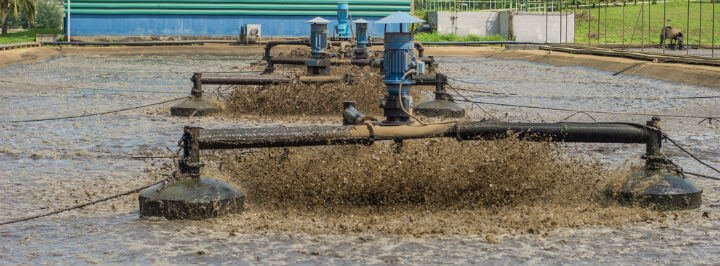
The Activated Sludge Process is a critical part of modern wastewater treatment methods. Through this process, wastewater containing organic matter is aerated in a basin to encourage the growth of microorganisms that consume the organic pollutants. The method vastly improves the quality of the effluent, rendering it safer for discharge into natural water bodies or for further purification. Since its inception in the early 20th century, the activated sludge process has become a standard in the treatment of sewage and industrial wastewaters.
Operational expertise is essential to the success of the activated sludge process. Factors like aeration rate, sludge age, and the mix of microbial populations are carefully controlled to optimize the breakdown of organic material. Alongside these considerations, routine maintenance and troubleshooting of equipment are integral in keeping the process efficient. Advances in technology have also contributed to the refinement of this process, enhancing its effectiveness while reducing the environmental footprint of wastewater treatment.
What makes this process distinctive among the options for secondary treatment is that it is a cultivated ecosystem rather than a machine. The engineer supplies a tank, air, and a return line; the biology does the treatment. That means the operator’s real job is not running equipment but managing a microbial population — deciding how old it should be, how much food it gets, and what conditions it lives in. Nearly every design parameter in the process, from sludge age to the food-to-microorganism ratio, is a way of expressing one of those decisions numerically.
It also means the process has a distinctive failure mode. When an activated sludge plant loses solids over the clarifier weir, the tank is almost never the problem — the biology has changed, usually by selecting for filamentous organisms that do not settle. Diagnosing activated sludge problems therefore starts with a settling test and a microscope rather than with the mechanical equipment, and the fix is nearly always a change in operating conditions rather than in hardware.
Key Takeaways
- The activated sludge process is essential for treating the organic matter in wastewater.
- Proper operation and maintenance are key to optimizing the efficiency of the process.
- Technological advancements continue to improve the process’s sustainability and effectiveness.
Fundamentals of Activated Sludge Process
The activated sludge process is a critical part of modern wastewater treatment, utilizing controlled biological degradation of waste within an aeration basin.
Historical Development
The activated sludge process was developed in the United Kingdom in 1914. It represented a significant advancement in the treatment of wastewater, as it allowed for the efficient degradation of biological waste using aeration and a biological floc composed of bacteria and protozoa.
Basic Concepts and Definitions
At its core, the activated sludge process is a method of treating sewage and industrial wastewater using highly concentrated microbial communities. The process involves introducing air or oxygen to a mixture of wastewater and activated sludge, which is a slurry of microorganisms capable of digesting organic matter.
- Aeration Tank: A basin where sewage is aerated to maintain aerobic conditions.
- Activated Sludge: Sludge particles produced in raw or settled wastewater by the growth of organisms in aeration tanks in the presence of dissolved oxygen.
The word “activated” carries the essential idea. What distinguishes this process from simply aerating sewage is the return of settled biomass from the clarifier back to the head of the aeration basin, which builds and maintains a concentrated population of acclimated organisms rather than starting fresh with each volume of wastewater. That recycle loop is the process. Without it, the system is a lightly aerated lagoon; with it, treatment that would take days happens in hours.
Biochemical Aspects
The biochemical transformation in the activated sludge process primarily involves the conversion of organic matter into carbon dioxide, water, and biosolids through microbial metabolism. The essential elements for this aerobic metabolic activity include oxygen, nutrients, and a diverse microbial community.
- Aerobic bacteria: Key players in oxidizing organic compounds.
- Endogenous respiration: When organic material is scarce, microorganisms consume their protoplasm.
In the activated sludge treatment, these biochemical reactions are carefully controlled to optimize the reduction of organic pollutants, ensuring the treated water can be safely discharged or reclaimed for further use.
Two consequences of this chemistry shape design. Oxygen demand is not a single number: organisms need oxygen to oxidize carbonaceous material and considerably more, per unit of nitrogen, to oxidize ammonia, so a plant required to nitrify has a substantially larger aeration requirement than one that is not. And nitrification consumes alkalinity as it proceeds, which in a poorly buffered water can depress pH far enough to inhibit the very organisms doing the work. Both effects are predictable and both are routinely underestimated in plants that add a nitrification requirement to an existing facility.
Subcategory Overview: Topics Within Activated Sludge
This category covers the operating practice that makes the process work, the numerical parameters used to control it, and the oxidation ditch configuration that represents its most widely installed low-rate variant.
Operating the Process
Coverage of the activated sludge process for plant operators addresses the daily practice rather than the theory: how to read the mixed liquor, when to waste and how much, what a settling test is telling you, and how to respond when the process drifts. The three levers an operator actually controls are wasting rate, return rate, and aeration, and almost every corrective action is some combination of those three. The skill is in recognizing which one applies, because each addresses a different problem and using the wrong one usually makes things worse before it makes them better.
Control Parameters
The activated sludge parameters area covers the numbers used to describe and control the process: mixed liquor suspended solids and its volatile fraction, the food-to-microorganism ratio, solids retention time, sludge volume index, and the return and waste rates derived from them. These are not independent measurements but different views of the same system, and their relationships are what make them useful. Sludge age and F/M ratio are effectively inverse expressions of the same decision about how hard to work the biomass, and choosing one determines the other.
Oxidation Ditch Systems
Oxidation ditch systems are the most widely installed low-rate variant of activated sludge, using a continuous loop channel in which mixed liquor circulates past mechanical aerators that both supply oxygen and drive flow. The long circulation path creates alternating aerobic and anoxic zones around the loop without separate tanks, which delivers nitrogen removal as an inherent feature rather than as an addition. Operating at extended aeration sludge ages, they are stable, tolerant of load variation, produce well-mineralized sludge, and demand relatively little operator attention — which is why they dominate small and mid-size municipal plants. The trade-off is footprint and aeration energy.
Process Configurations
The same biology can be arranged in the tank in several ways, and the arrangement determines how the process behaves under load variation and shock.
Plug Flow and Complete Mix
In a plug flow basin, wastewater and return sludge enter at one end and travel the length of the tank without longitudinal mixing, so organisms at the inlet see a high substrate concentration and those at the outlet see almost none. That gradient favours floc-forming organisms over filaments and generally produces better settling sludge, but it also concentrates oxygen demand at the inlet, requiring tapered aeration. A complete mix basin disperses influent instantly throughout the tank, so every organism sees the same low substrate concentration. That uniformity buffers shock loads well and simplifies aeration, but the persistently low substrate concentration favours filamentous organisms and complete mix plants are historically more prone to bulking.
Step Feed and Contact Stabilization
Step feed distributes the influent at several points along a plug flow basin while returning all the sludge to the head, which spreads the oxygen demand more evenly and holds more biomass in the front of the tank. It also provides a useful operating tool: shifting the feed points redistributes solids and can be used to protect the clarifier during peak flow. Contact stabilization splits the process differently, giving the wastewater only a short contact period with the biomass before separation, then holding the return sludge in a separate aerated basin long enough to metabolize what it adsorbed. The result is a smaller total tank volume for the same load.
Extended Aeration
Extended aeration operates at long sludge age and low F/M ratio, running the biomass in a state of near-starvation where organisms consume their own cell material. It produces the least sludge of any activated sludge configuration, and what it produces is well stabilized and often needs no separate digestion. It nitrifies reliably and tolerates load variation better than any higher-rate configuration. The costs are tank volume and aeration energy, both substantially higher per unit of load treated, which confines it largely to small plants where simplicity outweighs efficiency.
Secondary Clarification and Settleability
No account of activated sludge is complete without the clarifier, because the two are one system. The clarifier must both clarify and thicken, returning sludge concentrated enough to sustain the target mixed liquor concentration while producing an effluent that meets the permit. Its capacity depends on how the sludge settles, measured as sludge volume index, and settleability is a property of the biology rather than the tank. A bulking sludge occupies several times the volume at the same mass, its settling velocity collapses, and no amount of clarifier surface area compensates. This is why the classic activated sludge failure — solids over the weir — is diagnosed in the aeration basin rather than at the clarifier.
Process Design and Operation
The design and operation of an Activated Sludge Process in Wastewater Treatment is complex, involving precise calculations and control of aeration systems, sludge retention time, oxygen requirements, and process control parameters. These factors collectively influence the effectiveness and efficiency of the treatment process.
Aeration Systems
Aeration systems provide the oxygen necessary for microorganisms to break down organic material in wastewater. Two common types exist surface aerators, which release oxygen by agitating the water surface, and subsurface diffusers, which deliver oxygen through fine bubbles from the tank bottom. The choice of system impacts the oxygen transfer efficiency and energy consumption.
Sludge Age and Retention Time
Sludge age, also known as mean cell residence time (MCRT), is the average time that activated sludge particles remain in the system. It is a critical design parameter that affects the biodegradation rates and the system’s ability to handle both organic and nutrient loads. Solids retention time (SRT) is closely managed to ensure optimal microbial activity without allowing excess biomass growth, which could lead to sludge bulking.
Sludge age is the master control variable, because it determines which organisms can survive in the system at all. An organism that reproduces more slowly than the rate at which biomass is wasted will be washed out regardless of how favourable everything else is. This is precisely why nitrification depends on sludge age: nitrifying organisms grow far more slowly than the heterotrophs that remove carbonaceous material, and they grow slower still as temperature falls. A plant that nitrifies comfortably in summer can lose nitrification entirely in winter at unchanged sludge age, which is why cold-weather operation requires a longer one.
Oxygen Requirements and Transfer
Effective treatment hinges on adequate oxygen provision to sustain aerobic digestion. The oxygen requirement is influenced by the biochemical oxygen demand (BOD) of the incoming wastewater, the mass of the activated sludge, and the operating temperature. Engineers must ensure an efficient oxygen transfer rate, which can be achieved through design considerations like diffuser depth and spacing in aeration tanks.
Process Control Parameters
Process control in an Activated Sludge Process is about maintaining the delicate balance required for efficient wastewater treatment. Parameters such as pH, dissolved oxygen levels, and mixed liquor-suspended solids (MLSS) are constantly monitored and adjusted to maintain an environment conducive to the microorganisms. Ensuring the precise operation of these parameters minimizes operational costs while maximizing treatment quality.
Microbiology of Activated Sludge
The Activated Sludge Process is a vital component of modern wastewater treatment, relying on complex microbial communities to degrade organic pollutants. These communities consist largely of bacteria and protozoa, which perform essential functions to maintain system efficiency and reliability.
Bacteria and Protozoa
Bacteria are the backbone of the activated sludge ecosystem. They are responsible for the bulk of organic matter breakdown. A variety of bacteria types are involved, each with specific roles in the treatment process:
- Heterotrophic bacteria decompose organic compounds, converting them into energy, CO2, and water.
- Autotrophic bacteria, like Nitrosomonas and Nitrobacter, are critical for nitrification, converting ammonia to nitrite and then nitrate.
- Floc-forming bacteria promote the formation of clumps known as flocs, which settle out of the water as sludge, thereby separating from the treated effluent.
Additionally, bacteria populations are influenced by process conditions such as temperature, pH, oxygen levels, and the presence of toxic substances.
Protozoa, on the other hand, plays a secondary but crucial role in the activated sludge process. They feed on bacteria and smaller particles, leading to the clarification of the wastewater by reducing turbidity. The presence of certain protozoa can also be indicative of the overall health and operational conditions of the wastewater treatment system.
That indicator value is worth using deliberately. The protozoan population shifts predictably with sludge age: amoebae and flagellates dominate in a young, lightly loaded sludge; free-swimming ciliates appear as it matures; stalked ciliates and rotifers indicate a well-established, older sludge producing a clear effluent. An operator with a microscope can read approximate sludge condition from that succession in a few minutes, well before the numbers from the laboratory come back.
Filamentous Organisms and Bulking
The organisms that cause most activated sludge trouble are filamentous bacteria, which grow as long strands rather than compact flocs. In moderation they serve a useful purpose, forming the backbone that floc particles attach to. In excess they bridge between flocs, prevent compaction, and produce a sludge that occupies far more volume at the same mass — the condition called bulking. Different filaments are favoured by different conditions, which makes identification genuinely useful: persistent low dissolved oxygen, persistently low food-to-microorganism ratio, septic influent bearing sulfides, and nutrient deficiency each select for characteristic organisms. Correcting the condition, rather than dosing chlorine to kill filaments indiscriminately, is what produces a durable fix. Anoxic or anaerobic selectors at the head of the basin, which give floc-formers first access to substrate, are the standard design provision for preventing the problem.
Microbial Ecosystem and Dynamics
The microbial ecosystem in activated sludge systems exhibits dynamic relationships and diversity. A small, global core bacterial community is linked to effective sludge performance, despite the presence of a high diversity of species. These communities follow a Poisson lognormal distribution in terms of abundance and are adapted to the engineered environment of the wastewater treatment plant.
Process control and optimization depend heavily on understanding the interactions within these microbial communities, as they respond to the varying conditions of the wastewater treatment process. By monitoring community composition and the presence of specific microbial populations, such as antibiotic-resistant genes, operators can make informed decisions to improve system performance and ensure that the treated water meets safety standards.
Understanding microbial dynamics is crucial for diagnosing process upsets, anticipating responses to changes in the influent, and development strategies to enhance nutrient removal and overall treatment efficiency. The microbial ecology within activated sludge systems is subject to both deterministic processes, such as selection and competition, as well as stochastic events that can influence community structure and function.
Selection and Specification Framework
Step One: Establish What the Permit Requires of the Biology
The effluent limits determine the process configuration more than any other factor. Carbonaceous BOD removal alone can be achieved at short sludge age in a compact basin. Adding a year-round ammonia limit requires a sludge age long enough for nitrifiers to survive at the coldest expected temperature, which increases tank volume substantially. Adding total nitrogen requires anoxic zones and internal recycle for denitrification. Adding phosphorus requires either an anaerobic selector for biological removal or chemical addition. Each requirement adds volume, complexity, or chemical cost, and stacking them is what turns a simple aeration basin into a multi-zone bioreactor.
Step Two: Set Sludge Age From the Coldest Condition
Sludge age is the master design decision, and winter governs it. Nitrifier growth rate falls steeply with temperature, so the sludge age that maintains nitrification in summer will not do so in winter, and losing nitrification is a permit violation rather than an inconvenience. Design the sludge age for the coldest sustained mixed liquor temperature the plant will see, apply a safety factor, and verify that the resulting mixed liquor concentration is one the clarifier can handle.
Step Three: Choose the Basin Configuration
Plug flow generally produces better-settling sludge because the substrate gradient disfavours filaments, at the cost of tapered aeration and less shock buffering. Complete mix buffers variable and toxic loads better but is more bulking-prone. Step feed offers operational flexibility, particularly the ability to redistribute solids during peak flow. Extended aeration and oxidation ditches trade volume and energy for stability, minimal sludge production, and low operator demand. Match the configuration to the load variability, the staffing model, and whether solids handling capacity is available downstream.
Step Four: Size the Clarifier and the Basin Together
The aeration basin and the clarifier are one system and cannot be designed separately. Raising mixed liquor concentration reduces the basin volume needed but increases the solids load on the clarifier, and at some point the clarifier becomes the binding constraint. Solids flux analysis, evaluating clarifier capacity against sludge settleability and return rate as one problem, is the appropriate tool. Design against a realistic worst-case sludge volume index rather than a nominal one, because settleability degrades in cold weather at exactly the time the process is under most stress.
Step Five: Design Aeration for the Real Demand and the Real Turndown
Calculate oxygen demand for carbonaceous removal and for nitrification separately and add them, since the nitrogen component is substantial and frequently omitted in retrofits. Correct for the reduced transfer efficiency at operating mixed liquor concentration and temperature, which is materially worse than clean water performance. Then design for turndown as well as capacity, since diurnal load variation is large and a blower system that can only run at full output wastes a great deal of energy at night. Dissolved oxygen control with automatic blower modulation is standard practice and among the most reliable energy savings available at a treatment plant.
Step Six: Compare Against the Process Variants
Where footprint is severely constrained, membrane bioreactors replace the clarifier with a membrane, removing settleability as a constraint and allowing much higher mixed liquor concentration in a smaller basin, at substantially higher energy and capital cost. Where flow is small or highly variable, sequencing batch reactors run the same biology in time sequence rather than in separate tanks, providing excellent process flexibility in a single vessel. Where the site allows and simplicity matters, an oxidation ditch delivers stability and inherent nitrogen removal for a larger footprint. Conventional activated sludge remains the efficient answer at medium and large scale where land is available.
Comparison Tables
| Configuration | Typical Sludge Age | Key Advantage | Key Limitation | Sludge Production | Best-Fit Situation |
|---|---|---|---|---|---|
| Conventional plug flow | Short to moderate | Substrate gradient favours good-settling floc | Tapered aeration required; less shock buffering | High | Medium and large plants with stable load |
| Complete mix | Short to moderate | Buffers shock and toxic loads well; simple aeration | Low uniform substrate favours filaments | High | Industrial or variable-strength influent |
| Step feed | Moderate | Even oxygen demand; solids can be redistributed | More complex feed piping and control | High | Plants needing peak flow protection |
| Contact stabilization | Moderate | Smaller total tank volume for the same load | Limited nitrification; more complex operation | High | Retrofit capacity gains in existing tanks |
| Extended aeration | Long | Very stable; reliable nitrification; well-stabilized sludge | Largest volume and aeration energy per unit load | Lowest | Small plants prioritizing simplicity |
| Oxidation ditch | Long | Inherent anoxic zones give nitrogen removal without separate tanks | Large footprint; mechanical aerator maintenance | Low | Small and mid-size municipal plants |
| Sequencing batch reactor | Moderate to long | All phases in one tank; excellent operational flexibility | Batch control complexity; equalization often needed | Moderate | Small plants and variable flow |
| Membrane bioreactor | Long | Settleability irrelevant; smallest footprint; best effluent | Highest energy; membrane replacement; fine screening mandatory | Low | Severe footprint constraint or reuse duty |
| Symptom | Usual Cause | First Check | Corrective Lever |
|---|---|---|---|
| Solids over the clarifier weir, blanket rising | Filamentous bulking raising sludge volume index | Settling test and microscopy | Correct the selecting condition; consider a selector |
| Thick brown stable foam on the basin | Nocardioform or Microthrix organisms | Microscopy; sludge age and grease loading | Reduce sludge age; surface wasting; control FOG |
| White billowing foam | Young sludge, low mixed liquor concentration | MLSS and sludge age | Reduce wasting to build inventory |
| Fine dispersed turbidity, clear otherwise | Pin floc from an over-oxidized, excessive sludge age | Sludge age and F/M ratio | Increase wasting |
| Ammonia breakthrough in winter | Sludge age insufficient for nitrifier growth at temperature | Mixed liquor temperature and sludge age | Increase sludge age ahead of the cold season |
| Rising and falling clumps of sludge in the clarifier | Denitrification in the blanket releasing nitrogen gas | Blanket depth and return rate | Increase return rate to shorten blanket residence |
| Poor treatment with adequate DO and sludge age | Nutrient deficiency or toxic inhibition | Influent nitrogen and phosphorus; industrial contributions | Nutrient dosing or source control |
Maintenance and Troubleshooting
Maintaining the Activated Sludge Process is critical for efficient wastewater treatment. Proactive troubleshooting can prevent costly downtime and environmental non-compliance.
Common Operational Issues
Foaming and bulking are recurring complications in the activated sludge process. Foaming, often due to excessive filamentous bacteria, can cause treatment inefficiencies and overflow issues. Bulking sludge is typically characterized by poor settling due to the growth of specific microorganisms. Operators may observe an increase in the sludge volume index (SVI), indicating a bulking event.
- Nutrient Imbalance: A deficit or surplus of nutrients can lead to poor floc formation.
- Low Dissolved Oxygen (DO): Insufficient aeration can inhibit microbial activity and reduce BOD removal efficacy.
- Temperature Fluctuations: Extremes in temperature can impact bacterial metabolism and treatment performance.
Process Optimization Strategies
Optimizing the activated sludge process involves carefully balancing parameters to encourage efficient waste degradation.
- Aeration Control: Managing aeration rates to maintain optimal DO levels is paramount. This can be achieved through automated DO probes linked to blower systems.
- Sludge Wasting: Regular and strategic sludge wasting helps maintain a healthy age of microorganisms and prevents sludge bulking.
- Nutrient Dosing: Precise nutrient dosing ensures microbial populations have the macronutrients necessary for effective waste processing.
Controlling environmental factors and responding to operational cues are essential for the optimization of the activated sludge process in wastewater.
Design Details and Standards
Sizing Methodology
Begin with the design flows and loads, and with the effluent limits translated into biological requirements. Select the sludge age required to meet those requirements at the coldest expected mixed liquor temperature, applying a safety factor for nitrification where an ammonia limit applies. Calculate the resulting biomass inventory from the sludge age and the observed yield, then divide by the design mixed liquor concentration to obtain the basin volume. Check the food-to-microorganism ratio and hydraulic retention time that result, and confirm they fall within the range appropriate to the configuration chosen. Verify that the clarifier can handle the solids load the selected mixed liquor concentration implies, at a realistic worst-case settleability, and iterate between basin and clarifier until both are satisfied. Finally, calculate oxygen demand including the nitrogenous component, correct for transfer efficiency at operating conditions, and size the aeration system for both peak demand and realistic turndown.
Key Parameters
- Solids retention time: the master design variable, set by the slowest-growing organism the process must retain, and governed by winter temperature where nitrification is required.
- Food-to-microorganism ratio: the inverse expression of the same decision, and the parameter operators most commonly work in.
- Mixed liquor suspended solids: the concentration the basin carries, limited in practice by what the clarifier can handle.
- Mixed liquor volatile suspended solids: the active fraction, and the more meaningful basis for F/M calculation.
- Dissolved oxygen: maintained high enough to avoid selecting for filaments, and no higher, since excess aeration is wasted energy.
- Sludge volume index: the practical measure of settleability and the parameter that most directly limits clarifier capacity.
- Return activated sludge rate: commonly a substantial fraction of influent flow, adjusted to hold the target blanket and mixed liquor concentration.
- Nutrient ratio: a balanced supply of nitrogen and phosphorus relative to BOD is required, and deficiency selects for filaments.
All values and relationships above are typical guidance and should be confirmed against the governing state standard and against site-specific wastewater characterization.
Applicable Standards and References
Recommended Standards for Wastewater Facilities, the Ten States Standards, prescribes aeration basin volumes, organic loading rates, sludge age provisions, aeration capacity, and clarifier criteria for activated sludge plants in many states. WEF Manual of Practice No. 8 and ASCE Manual of Practice No. 76, Design of Municipal Wastewater Treatment Plants, provide the design methodology, and WEF Manual of Practice No. 11, Operation of Water Resource Recovery Facilities, is the standard operating reference. 40 CFR Part 133 defines the secondary treatment effluent requirements the process must meet, and 40 CFR Part 122 governs the NPDES permit under which performance is judged. Standard Methods for the Examination of Water and Wastewater defines the suspended solids, volatile solids, BOD, and sludge volume index procedures on which all process control depends. NFPA 820 addresses area classification for covered basins and associated structures, and OSHA 29 CFR 1910.146 applies to basin entry with 29 CFR 1910.147 covering lockout and tagout of aeration and return equipment.
Specification Checklist
- Design flows and loads, including peak day and peak hour, with seasonal variation stated
- Effluent limits translated into biological requirements: BOD, ammonia, total nitrogen, phosphorus
- Coldest sustained mixed liquor temperature, and the sludge age required at that temperature
- Safety factor applied to nitrification sludge age, with the basis stated
- Design mixed liquor concentration, and the clarifier solids loading it implies
- Basin configuration and the rationale against load variability and staffing
- Selector provision where bulking control is required
- Solids flux analysis reconciling basin and clarifier at worst-case settleability
- Oxygen demand calculated for carbonaceous and nitrogenous components separately
- Transfer efficiency correction at operating MLSS, temperature, and depth
- Aeration turndown range and the dissolved oxygen control strategy
- Alkalinity balance where nitrification applies, with supplemental alkalinity if required
- Return and waste sludge pumping capacity, turndown, and control basis
- Waste sludge quantity and its effect on downstream solids handling
- Instrumentation: dissolved oxygen, MLSS, blanket depth, flows, and the signals reported to SCADA
Field Notes
Commissioning Considerations
Seed the basin with sludge from an operating plant treating comparable wastewater where possible, and build inventory gradually rather than forcing the schedule, since biomass growth sets the pace regardless of how much load is available. Establish the full monitoring routine from the first day — MLSS, settleability, dissolved oxygen profile, and a microscopic examination — so that the relationships between them become familiar before they are needed diagnostically. Measure the dissolved oxygen profile across the basin at several flows rather than at one point, because dead zones and short-circuiting show up there and nowhere else. Verify blower turndown across its full range and confirm the dissolved oxygen control loop is stable rather than hunting.
Common Specification Mistakes
- Setting sludge age from average temperature. Nitrifier growth collapses in cold water, and winter is the governing case.
- Designing the basin without the clarifier. Raising mixed liquor concentration shrinks the basin and loads the clarifier; the two must be solved together.
- Omitting nitrogenous oxygen demand. Nitrification adds a substantial oxygen requirement that retrofits routinely miss.
- Using clean water transfer efficiency. Actual transfer at operating mixed liquor concentration is materially worse.
- Sizing blowers without turndown. Diurnal load variation is large, and a system stuck near full output wastes energy every night.
- Ignoring alkalinity. Nitrification consumes it, and a poorly buffered water will lose pH and then lose nitrification.
- Omitting a selector in complete mix designs. Uniformly low substrate concentration favours filaments, and retrofitting a selector is expensive.
- Assuming a nominal sludge volume index. Design against a realistic worst case, because settleability degrades exactly when the process is most stressed.
Operations and Maintenance Comparison
Diffused aeration systems concentrate maintenance on diffuser cleaning and eventual membrane replacement, on blower service, and on air piping condensate. Fouled diffusers raise back pressure and reduce transfer efficiency long before they produce an alarm, so periodic cleaning on a defined interval outperforms replacing on failure. Mechanical surface aerators, common on oxidation ditches, shift the burden to gearbox and bearing service and to ice management in cold climates. Return and waste sludge pumping needs attention to flow measurement accuracy, since wasting rate is calculated from it and an inaccurate meter means the sludge age is not what the records say. Across all configurations, the most valuable routine is the daily settling test and a weekly look through a microscope, neither of which requires capital.
Troubleshooting by Symptom
The diagnostic sequence for almost any activated sludge complaint is the same: run a settling test, calculate sludge volume index, and look at the mixed liquor under a microscope before touching anything. Solids leaving over the weir with a high index is bulking, and the cause lies in the selecting conditions rather than in the clarifier. Solids leaving with a normal index is hydraulic, pointing to the clarifier, its baffling, or an uneven flow split. Ammonia breakthrough with adequate dissolved oxygen and sludge age suggests inhibition or alkalinity depletion. Foam colour is diagnostic in itself, with white billowing foam indicating young sludge and thick brown stable foam indicating nocardioforms. A sudden loss of treatment across all parameters points to a toxic slug, and the response is to protect the biomass and identify the source rather than to adjust the process.
Pro Tip: Run the Settling Test Daily and Trend It
A graduated cylinder, thirty minutes, and a reading. It costs nothing, requires no instrument calibration, and it is the single most informative measurement available on an activated sludge plant. Settled volume combined with mixed liquor concentration gives sludge volume index, and the trend in that number predicts clarifier trouble weeks before solids appear over the weir. Just as usefully, the appearance of the settled sludge and the supernatant tells an experienced eye what is happening: a sharp interface with clear supernatant is a healthy sludge, a slow diffuse interface means bulking is developing, cloudy supernatant means dispersed growth or a young sludge, and pin floc scattered above a well-settled blanket means the sludge age has gone too long. Plants that run and record this test daily rarely get surprised.
Advancements in Activated Sludge Process
The activated sludge process in wastewater treatment has seen significant enhancements, honing the efficiency and effectiveness of contaminant removal. These improvements span across technological arenas and research domains.
Technological Innovations
Technological innovations in the activated sludge process include the development of the Sequencing Batch Reactors (SBR), which perform the stages of activated sludge in timed batches, rather than continuously. This innovation allows for better control of the environmental conditions within the reactor, optimizing the treatment process. Another significant advancement is the implementation of Real-time Monitoring Systems, which use sensors and data analytics to assess wastewater parameters instantly, ensuring consistent treatment quality and faster response to process fluctuations.
Membrane Bioreactors (MBRs) represent another leap forward, combining activated sludge with membrane filtration to achieve higher-quality effluent. This technology has allowed plants to produce effluent suitable for reuse in irrigation and industrial applications, diminishing the environmental impact.
Emerging Research and Development
Emerging research and developments have been pivotal in addressing nutrient removal, energy consumption, and operational efficiency. Studies are increasingly focusing on Nitrogen and Phosphorus Removal to minimize the ecological impact of wastewater effluents as indicated by research on nitrogen cycling during wastewater treatment. The adoption of technologies serving this research, like Anammox and Enhanced Biological Phosphorus Removal (EBPR), showcases progress in the industry.
Further research is ongoing in the optimization of microbial consortia, which are crucial for the biodegradation processes within the activated sludge. Novel approaches to the selection and management of these biological communities can lead to improved breakdown of organic pollutants and operational stability.
Advancements in the activated sludge process express a continued commitment to environmental stewardship and public health through enhanced wastewater treatment.
Environmental Impact and Sustainability
The activated sludge process plays a crucial role in reducing the environmental impact of wastewater by treating and transforming harmful contaminants into treated effluent and biosolids. Its sustainability largely hinges on the effluent quality produced and the process’s overall energy consumption and carbon footprint.
Effluent Quality and Regulations
Effluent quality is a primary indicator of the activated sludge process’s environmental performance. The process is designed to meet stringent regulatory standards for water quality, ensuring that discharged water is safe for the environment and human health. The U.S. Environmental Protection Agency (EPA) sets these regulations, which mandate acceptable levels of organic and inorganic matter, nutrients, and pathogens in treated water.
- Nitrogen and Phosphorus Removal: Efficient removal of nutrients like nitrogen and phosphorus is vital to prevent eutrophication in water bodies, thereby maintaining ecological balance.
- Pathogen Reduction: A well-managed activated sludge process significantly reduces the number of pathogens, limiting public health risks.
Energy Efficiency and Carbon Footprint
The energy efficiency of the activated sludge process has a direct impact on its carbon footprint. Aeration, the heart of the process, requires significant energy input but also offers room for optimizations:
- Aeration Technology: Advances in aeration technology can lead to improved oxygen transfer efficiency, reducing energy demand and operational costs.
- Process Control: Implementing intelligent process controls can aid in making the entire operation more energy-efficient by adjusting aeration rates in response to real-time demand.
Aeration is typically the largest single electrical load at a treatment plant, frequently accounting for around half of total consumption, which is why it attracts disproportionate attention in any energy programme. The two reliable savings are dissolved oxygen control that modulates blower output to actual demand rather than running at a fixed rate, and maintaining diffusers so that transfer efficiency does not quietly degrade. Neither requires new process technology, and together they typically deliver more than any single equipment upgrade.
By optimizing these factors, treatment plants can drastically lower their greenhouse gas emissions, contributing positively to global efforts in combating climate change. The goal is to achieve a balance between high-quality effluent and minimal environmental impact through sustainable practices in the activated sludge process.
Frequently Asked Questions
What are the essential steps involved in the activated sludge wastewater treatment process?
In the activated sludge process, wastewater flows through several key phases: primary settling to remove physical solids, aeration where bacteria break down organic matter, then final settling to separate the clarified water from the activated sludge.
How does the activated sludge method compare with trickling filter systems in treating wastewater?
The activated sludge method often processes higher volumes of wastewater more efficiently than trickling filter systems, providing enhanced control over microbial activity and treatment conditions.
What are the main components of an activated sludge system, and how do they function?
An activated sludge system typically includes an aeration tank that fosters bacterial growth by supplying oxygen, and a secondary clarifier allowing treated water to separate from the biomass.
What are the most common types of activated sludge treatment processes used in modern wastewater facilities?
Modern facilities frequently employ variations like conventional activated sludge, extended aeration, sequencing batch reactors, and oxidation ditches, depending on treatment goals and capacity.
In the activated sludge process, how is aeration critical for the breakdown of organic matter?
Aeration supplies oxygen to bacteria in activated sludge, enabling them to effectively decompose organic matter, which is vital for reducing biochemical oxygen demand in treated water.
What maintenance practices are crucial for the optimal performance of an activated sludge wastewater treatment plant?
Maintaining optimal performance involves regular monitoring of microbial activity, proper aeration, sludge age management, and the prevention of toxic inflows that could disrupt the biological process.
Conclusion
Key Takeaways
- The process is a cultivated ecosystem, not a machine — the operator’s real job is managing a microbial population through wasting rate, return rate, and aeration.
- Sludge age is the master variable — it determines which organisms survive, and where nitrification is required it must be set from the coldest expected temperature.
- The basin and clarifier are one system — raising mixed liquor concentration shrinks the basin and loads the clarifier, and both must be solved together against realistic settleability.
- Bulking is a condition problem, not a clarifier problem — low dissolved oxygen, low F/M, septicity, and nutrient deficiency each select for filaments, and correcting the condition is the durable fix.
- Aeration is the plant’s biggest electrical load — dissolved oxygen control and diffuser maintenance deliver more savings than most capital upgrades.
- The settling test is the most informative measurement available — daily, free, and predictive of clarifier trouble weeks in advance.
The activated sludge process has been the backbone of municipal wastewater treatment for more than a century because it is remarkably adaptable. The same fundamental arrangement — aerate, settle, return — can be configured for simple carbonaceous removal at a compact high-rate plant, for reliable nitrification at extended aeration sludge ages, for nitrogen and phosphorus removal through anoxic and anaerobic zones, and for very high effluent quality by replacing the clarifier with a membrane. Few processes in any field cover that range.
What the flexibility asks in return is understanding of the biology underneath. Set the sludge age from the coldest condition rather than the average, design the basin and clarifier as one system against a realistic worst-case settleability, calculate oxygen demand including the nitrogen component and correct it for real operating conditions, and provide the selector or configuration that keeps filaments in check. Then run the settling test every day and look at the mixed liquor every week. Plants that do those things rarely have activated sludge problems that surprise them, and the ones that do are usually solved by adjusting a condition rather than by buying anything.