
- Home
- Water
- Water Quality: Essential Insights and Health Impacts
- Monitoring: Essential Strategies for Enhanced Data Security
- Contaminants and Contamination: Understanding Their Sources and Impact
- Standards: Elevating Professional and Industry Benchmarks
- FAQs: Comprehensive Answers to Common Questions
- Physical Water Treatment: Modern Techniques and Benefits
- Activated Carbon Filtration in Water: Essential for Clean, Safe Drinking Supplies
- Ultraviolet (UV) Disinfection in Water: Ensuring Safe and Clean Drinking Water
- Sand Filtration in Water: A Comprehensive Guide to Clean Drinking Solutions
- Ceramic Filtration: Effective Solutions for Clean Water
- Gravity-Based Filtration: Enhancing Water Purity with Simple Technology
- Membrane Filtration in Water: Improving Purity and Efficiency
- Sedimentation: Causes, Impacts, and Prevention Strategies
- Chemical Water Treatment: Essential Methods for Safe and Clean Water
- Coagulation and Flocculation: Essential Techniques for Water Treatment
- pH Adjustment: Essential Techniques for Maintaining Optimal Water Quality
- Chlorination: Essential Methods for Safe Water Treatment
- Ion Exchange: Essential Mechanism for Water Purification
- Ozonation: Advanced Water Purification Method Explained
- Biological Filtration: Enhancing Water Quality Through Natural Processes
- Water Supply: Ensuring Sustainable Future Solutions
- Water Conservation: Essential Strategies for Sustainable Living
- Water Management: Strategies for Sustainable Usage
- Water Quality: Essential Insights and Health Impacts
- Wastewater
- Wastewater Treatment
- Preliminary Treatment
- Screening
- Bar Screening
- Band Screen Wastewater Solutions: Effective Fine Screening Techniques
- Basket Screen Wastewater Solutions: Enhancing Treatment Efficiency
- Drum Screening
- Fine Screens in Wastewater Treatment: Enhancing Solid Removal Efficiency
- Microscreens in Wastewater Treatment: Enhancing Filtration Efficiency
- Parabolic Screen in Wastewater Treatment: Enhancing Solid-Liquid Separation Efficiency
- Static Screen in Wastewater Treatment: Efficiency and Application Overview
- Climber Screens in Wastewater Treatment: Enhancing Solid Waste Removal
- Step Screen in Wastewater Treatment: Enhancing Solid-Liquid Separation Efficiency
- Comminution in Wastewater Treatment: Enhancing Efficiency and Process Reliability
- Grit Removal in Wastewater: Essential Processes and Best Practices
- Screening
- Primary Treatment in Wastewater: The First Step in Pollution Control
- Sedimentation in Wastewater Treatment: The Efficient Separation Strategy
- Discrete Settling in Wastewater: Understanding the Separation Process
- Flocculent Settling in Wastewater: Understanding the Process and Benefits
- Zone Settling in Wastewater Treatment Processes: Understanding the Mechanism
- Compression Settling in Wastewater: Fundamental Principles and Management Strategies
- Primary Clarifiers in Wastewater: Understanding Their Role in Treatment Processes
- Circular Primary Clarifier in Wastewater Treatment: Essential Functions and Design Principles
- Parallel Plate Settlers in Wastewater Treatment: Efficiency and Design Principles
- Tube Settlers in Wastewater Treatment: Enhancing Clarification Efficiency
- Offset Clarifiers in Wastewater Treatment: Enhancing Clarity and Efficiency
- Rectangular Primary Clarifier in Wastewater Treatment: Efficiency and Design Principles
- Dissolved Air Flotation (DAF) in Wastewater: Enhancing Treatment Efficiency
- Full Flow DAF Systems: Revolutionizing Wastewater Treatment Efficiency
- Partial Flow DAF Systems: Advancing Wastewater Treatment Efficiency
- Recycle Flow DAF Systems: Enhancing Wastewater Treatment Efficiency
- Packed Column DAF: Advancing Water Treatment Efficiency
- Subsurface Release DAF Systems: Innovations in Wastewater Treatment
- Dispersed Release DAF Technology: Revolutionizing Wastewater Treatment
- Sedimentation in Wastewater Treatment: The Efficient Separation Strategy
- Secondary Treatment in Wastewater: Understanding the Biological Process
- Biological Treatment in Wastewater: Harnessing Microorganisms for Clean Water Solutions
- Rotating Biological Contactors: An Overview of Wastewater Treatment Efficiency
- Membrane Bioreactors (MBR): Advancing Wastewater Treatment Technology
- Anaerobic Digestion: Effective Waste Management for Renewable Energy
- Anaerobic Digestion in Wastewater Treatment: Optimizing Energy Recovery
- Lagoons in Wastewater Treatment: Sustainable Natural Solutions
- Constructed Wetlands in Wastewater Treatment: Nature’s Solution for Water Purification
- Activated Sludge Process in Wastewater Treatment: An Efficient Biological Methodology
- Trickling Filters in Wastewater Treatment: An Efficient Biofiltration Solution
- Sequencing Batch Reactors: Advancements in Wastewater Treatment Technology
- Aeration in Wastewater Treatment: Enhancing System Efficiency and Water Quality
- Surface Aerators in Wastewater Treatment: Optimization and Efficiency
- Submerged Diffuser Systems in Wastewater Treatment: Enhancing Effluent Disposal Efficiency
- Vertical Loop Reactors in Wastewater Treatment: Enhancing Efficiency and Sustainability
- Small Bubble Aerators in Wastewater: Enhancing Treatment Efficiency
- Jet Aerators in Wastewater Treatment: Enhancing Efficiency and Aeration Performance
- Cascade Aerators in Wastewater Treatment: Enhancing Oxygenation Efficiency
- Secondary Clarification in Wastewater: Enhancing Effluent Quality
- Circular Clarifiers in Wastewater: Essential Components for Water Treatment Efficiency
- Rectangular Clarifiers in Wastewater Treatment: Efficiency and Design Essentials
- Hopper Bottom Clarifiers in Wastewater Treatment: Efficiency and Design Essentials
- Solids Contact Clarifiers: Enhancing Wastewater Treatment Efficiency
- Lamella Clarifiers in Wastewater Treatment: Efficiency and Design Essentials
- Biological Treatment in Wastewater: Harnessing Microorganisms for Clean Water Solutions
- Tertiary Treatment in Wastewater: Ensuring Water Quality and Environmental Safety
- Advanced Treatment in Wastewater: Emerging Technologies and Methods
- UV Disinfection in Wastewater: Effective Strategies for Pathogen Reduction
- Low Pressure UV Systems in Wastewater Treatment: Efficiency and Advantages
- Medium Pressure (MP) UV Systems in Wastewater Treatment: Efficiency and Applications
- Amalgam UV Systems in Wastewater Treatment: Advancements and Efficiency
- Pulsed UV Systems in Wastewater Treatment: Revolutionizing Disinfection Processes
- Smart UV Control in Wastewater Treatment: Enhancing Efficiency and Safety
- Light-Emitting Diode (LED) UV Systems in Wastewater Treatment: Efficiency and Applications
- Ozonation in Wastewater Treatment: Understanding the Purification Process
- Fixed Bed Ozone Reactors in Wastewater Treatment: Efficiency and Application
- Ozone Retention Tanks in Wastewater Treatment: Enhancing Water Quality and Safety
- Sidestream Ozone Injection in Wastewater: Enhancing Treatment Efficiency and Water Quality
- Ozone Laundry Systems in Wastewater Treatment: Enhancing Efficiency and Sustainability
- Vacuum Degasification in Wastewater Treatment: Principles and Applications
- Bubble Diffuser Contactors in Wastewater Treatment: Efficiency and Application
- Ozone Generators in Wastewater Treatment: Efficiency and Applications
- Advanced Oxidation Processes in Wastewater Treatment: Efficiency and Innovation
- Ozonation in Wastewater Treatment: Efficient Disinfection and Organic Removal
- UV/H2O2 in Wastewater Treatment: Harnessing Advanced Oxidation Processes
- Fenton Process in Wastewater Treatment: Efficiency and Application
- Wet Air Oxidation in Wastewater Treatment: Efficiency and Process Insights
- Photocatalysis in Wastewater Treatment: Innovative Approaches for Purification
- Electron Beam Irradiation in Wastewater Treatment: Unlocking Advanced Purification Methods
- Ultrasonic Irradiation in Wastewater Treatment: Efficiency and Applications
- Ion Exchange: Essential Mechanism for Water Purification
- Cation Exchange in Wastewater Treatment: Principles and Applications
- Anion Exchange in Wastewater Treatment: Understanding the Process for Cleaner Effluents
- Ammonia Exchange in Wastewater: Essential Processes and Technologies
- Boron Selective Resins in Wastewater Treatment: Advances and Applications
- Mixed Bed Ion Exchange in Wastewater Treatment: Efficiency and Application
- Electrochemical Ion Exchange in Wastewater: Enhancing Treatment Efficiency
- UV Disinfection in Wastewater: Effective Strategies for Pathogen Reduction
- Sludge Treatment in Wastewater: Enhancing Efficiency and Reducing Environmental Impact
- Thickening in Wastewater Treatment: Optimizing Sludge Management
- Gravity Thickeners in Wastewater Treatment: Enhancing Efficiency and Sustainability
- Dissolved Air Flotation (DAF) in Wastewater: Enhancing Treatment Efficiency
- Rotary Drum Thickeners in Wastewater Treatment: Maximizing Efficiency and Cost-Effectiveness
- Gravity Belt Thickeners in Wastewater Treatment: Enhancing Efficiency and Sustainability
- Centrifuges in Wastewater Treatment: Enhancing Efficiency and Purity
- Cloth Media Filters in Wastewater Treatment: Efficiency and Applications
- Screw Presses in Wastewater Treatment: Efficiency and Applications
- Digestion in Wastewater Treatment: Processes and Benefits
- Autothermal Thermophilic Aerobic Digestion (ATAD): Enhancing Wastewater Treatment Efficiency
- Composting in Wastewater Treatment: Enhancing Sustainability Practices
- Alkaline Stabilization in Wastewater Treatment: Enhancing Process Efficiency and Safety
- Thermal Hydrolysis in Wastewater Treatment: Enhancing Sludge Management Efficiency
- Microwave Irradiation in Wastewater Treatment: An Innovative Approach
- Anaerobic Digestion in Wastewater Treatment: Optimizing Energy Recovery
- Aerobic Digestion in Wastewater Treatment: Efficiency and Process Insights
- Dewatering in Wastewater Treatment: Essential Methods and Benefits
- Belt Filter Presses in Wastewater Treatment: Maximizing Efficiency and Performance
- Plate and Frame Presses in Wastewater Treatment: Efficiency and Application
- Rotary Fan Presses in Wastewater Treatment: Efficient Sludge Dewatering Solutions
- Drying Beds in Wastewater Treatment: An Overview of Sludge Management Techniques
- Reed Beds in Wastewater Treatment: Sustainable Purification Methods
- Centrifuges in Wastewater Treatment: Enhancing Efficiency and Purity
- Thickening in Wastewater Treatment: Optimizing Sludge Management
- Reuse and Disposal: Strategies for Sustainable Waste Management
- Non-Potable Water in Wastewater: Sources, Risks, and Treatment Methods
- Graywater in Wastewater Treatment: Sustainable Reuse and Management Practices
- Blackwater in Wastewater Treatment: Understanding the Challenges and Solutions
- Stormwater in Wastewater Treatment: Managing Runoff Contamination Risks
- Industrial Wastewater Management: Strategies for Sustainable Treatment and Reuse
- Agricultural Wastewater Management: Challenges and Solutions
- Non-Potable Water in Wastewater: Sources, Risks, and Treatment Methods
- Industrial Wastewater Management: Strategies for Sustainable Treatment and Reuse
- Municipal Wastewater Management: Strategies for Sustainable Urban Water Treatment
- Treatment Technologies in Wastewater: Advancements in Modern Medical Therapies
- Preliminary Treatment
- Wastewater Management Strategies for Sustainable Urban Environments
- Wastewater Disposal Strategies: Best Practices for Environmental Safety
- Wastewater Treatment
- US Wastewater Plants
- Online Calculators
- Sodium Hypochlorite Dosing Calculation
- Equalization (EQ) Tank Sizing Calculator
- Contact Time Calculator
- Flow Conversion & Pump Reference Calculator
- Aeration / Energy Estimation Calculator
- Clarifier Surface Loading Calculator
- Sludge Production / Solids Calculator
- Chemical Storage Volume Calculator
- Centrate Sidestream Load Impact Calculator
- Our Services
- Newsletter Signup
- Blog
Aeration in Wastewater Treatment: Enhancing System Efficiency and Water Quality
- Aeration
-
Jan 12
- Share post
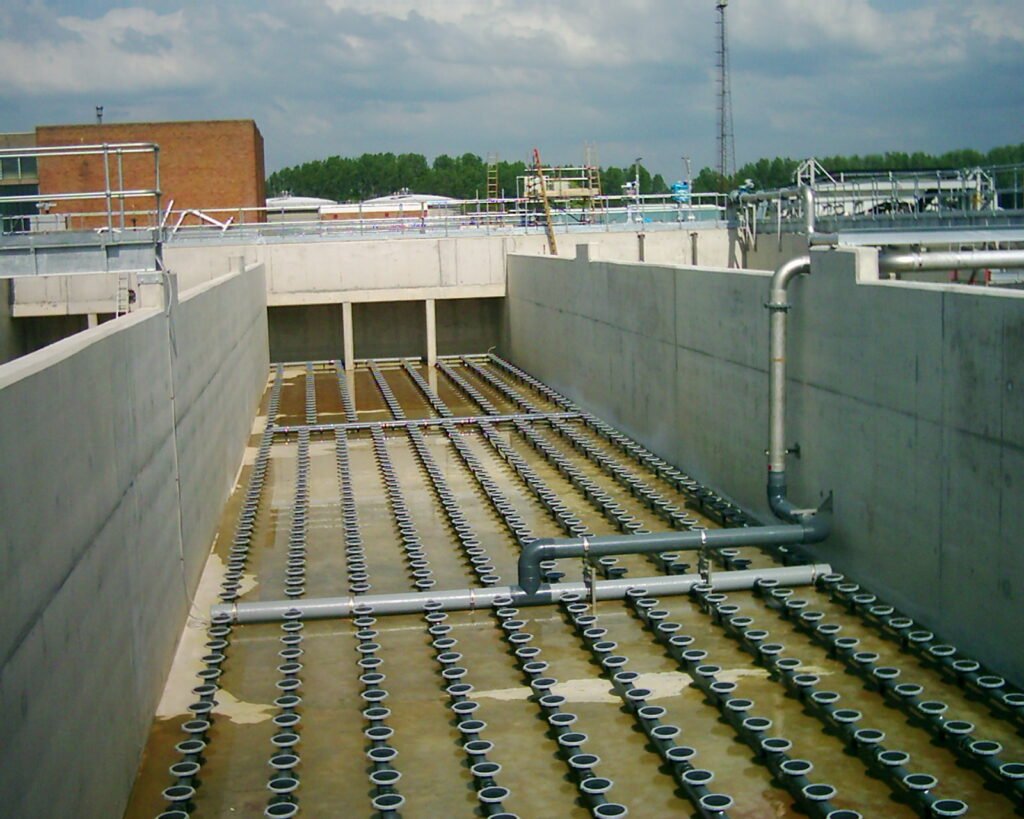
Aeration in Wastewater Treatment: Principles, Techniques, and System Design
Aeration is a critical process in wastewater treatment that involves introducing air into sewage to enable aerobic biodegradation of pollutants. Microorganisms require oxygen to break down organic matter into harmless by-products, making aeration a vital component of biological treatment systems.
By applying appropriate aeration techniques and equipment, treatment plants reduce biochemical oxygen demand (BOD) and chemical oxygen demand (COD) to meet environmental discharge standards. Aeration system design plays a central role in treatment efficiency and continues to evolve through technological innovation.
Key Takeaways
- Aeration enables aerobic microorganisms to degrade organic pollutants.
- Aeration system design is tailored to wastewater type and treatment goals.
- Ongoing innovation improves efficiency and sustainability.
Principles of Aeration
Aeration introduces oxygen into wastewater to support aerobic bacteria responsible for organic matter degradation. Maintaining the correct oxygen environment is essential for effective biological treatment.
Importance of Oxygen in Wastewater Treatment
Oxygen acts as a catalyst for aerobic microorganisms, allowing them to metabolize organic waste. Without sufficient dissolved oxygen, treatment efficiency drops and odors may develop. Maintaining optimal oxygen levels ensures stable microbial activity and consistent treatment performance.
Aeration Process Basics
Aeration typically uses either surface or subsurface methods. Surface aeration agitates wastewater to promote oxygen transfer, while subsurface aeration introduces air through diffusers located at the bottom of treatment tanks.
Efficient aeration depends on bubble size, contact time, and mixing. Smaller bubbles and longer retention times increase oxygen transfer efficiency and improve wastewater mixing.
Aeration Techniques
Aeration techniques vary based on treatment objectives, tank geometry, and energy considerations.
Surface Aeration
Surface aerators agitate wastewater to enhance oxygen transfer from the atmosphere. Paddle wheel and brush aerators are commonly used in shallow basins and provide strong surface mixing.
Submerged Aeration
Submerged aeration uses diffuser systems that release air bubbles near the bottom of tanks. This approach ensures uniform oxygen distribution throughout the wastewater volume and typically relies on blowers or compressors.
Combined Aeration Methods
Combined systems integrate surface and subsurface aeration to maximize oxygen transfer while minimizing energy consumption. These hybrid solutions are adaptable to varying treatment conditions.
Equipment and Devices
Aeration equipment introduces oxygen into wastewater to support microbial activity. Equipment selection affects oxygen transfer efficiency and operational reliability.
Surface Aerators
Surface aerators increase oxygen transfer by agitating the water surface. Common types include paddlewheel and impeller aerators, valued for their simplicity and effectiveness.
Small Bubble Aerators
Small bubble aerators use membrane or ceramic diffusers to release fine bubbles, maximizing surface area for oxygen transfer and providing uniform distribution.
Jet Aerators
Jet aerators use a venturi effect to entrain air into high-velocity water streams, providing effective mixing and aeration in deeper tanks.
Cascade Aerators
Cascade aerators allow wastewater to flow down stepped surfaces, entraining air naturally. They are useful where passive aeration and volatile compound removal are desired.
Design of Aeration Systems
Aeration system design directly influences treatment efficiency by ensuring microorganisms receive sufficient oxygen.
Sizing and Capacity
Aeration tank sizing depends on wastewater volume, biological oxygen demand (BOD), peak flow conditions, and treatment process type. Designs must accommodate load variability while maintaining adequate dissolved oxygen levels.
Layout and Configuration
The layout and configuration of aeration systems strongly affect performance. Systems may use fine bubble, coarse bubble, or mechanical surface aeration. Fine bubble aeration often provides higher oxygen transfer efficiency due to increased surface area.
The layout of diffusers or aerators must ensure uniform oxygen distribution, prevent flow short-circuiting, and optimize contact between wastewater and microorganisms. Tank geometry, access for maintenance, and site constraints are key design considerations.
Aeration / Energy Estimation Calculator
Planning-level estimation of blower power and energy use based on basin volume and oxygen demand.
Total Oxygen Required: lb/day
Estimated Blower Power: hp
Estimated Electrical Load: kW
Daily Energy Use: kWh/day
Annual Energy Use: kWh/year
Power per Blower: hp
Operational Considerations
Operational practices are critical to ensuring aeration systems function efficiently, reliably, and economically.
Maintenance Requirements
Routine maintenance preserves aeration performance and extends equipment lifespan.
- Cleaning: Removing debris and biofilm buildup
- Inspection: Checking diffusers, blowers, and piping
- Replacement: Promptly addressing worn or damaged components
Energy Efficiency
Aeration is energy-intensive, making efficiency a priority.
- Optimized Airflow: Matching blower output to real-time demand
- Innovative Design: Using high-efficiency equipment and variable frequency drives
Process Monitoring
Continuous monitoring ensures aeration effectiveness.
- Dissolved Oxygen Levels: Confirm adequate oxygen supply
- Flow Rates: Maintain appropriate aeration time
Advanced Aeration Technologies
Advanced aeration technologies improve oxygen transfer efficiency and treatment performance.
Vertical Loop Reactors
Vertical loop reactors (VLRs) circulate wastewater in a vertical loop to enhance mixing and oxygen transfer within a compact footprint, offering energy savings and stable treatment performance.
Innovations in Aerator Design
Modern aerators feature improved diffuser materials, smart controls, and variable frequency drives that automatically adjust aeration intensity based on real-time water quality data.
Environmental Impact
Emissions and Regulations
Aeration can contribute to greenhouse gas emissions. Regulatory frameworks such as those from the US EPA set standards to minimize environmental impact while maintaining treatment effectiveness.
Sustainability Practices
Sustainable aeration strategies focus on energy optimization, high-efficiency blowers, and integration of renewable energy sources such as solar or wind power.
Case Studies
Municipal Wastewater Treatment
Municipal treatment plants rely on aeration for biological processes. For example, the City of Springfield improved nitrification rates by upgrading to advanced aeration systems.
- Oxygen Delivery: Matched to biological oxygen demand
- System Type: Fine bubble diffusers
Industrial Applications
Industrial facilities use customized aeration systems for high-strength wastewater. In food processing applications, adjustable aeration effectively reduces BOD and odor levels.
- Load Variability: Flexible aeration rates
- Equipment Durability: Materials resistant to corrosive environments
Frequently Asked Questions
What are the different types of aeration systems used in wastewater treatment?
Different aeration systems are employed in wastewater treatment, including surface aerators, diffused aeration systems that release air bubbles, and subsurface aeration techniques that introduce oxygen below the water’s surface.
How does aeration support the treatment process in a wastewater treatment plant?
Aeration serves as a vital process within wastewater treatment plants by infusing oxygen into the water, which in turn energizes aerobic microorganisms to effectively decompose organic matter in the sewage.
At what stages of wastewater treatment is aeration typically required?
Aeration is generally requisite during the secondary treatment stage of wastewater processing, where bacterial consortia degrade organic materials in biologically active environments.
What are the benefits of implementing proper aeration in water treatment systems?
Proper aeration in water treatment systems enhances the breakdown of pollutants, improves water quality, and prevents anaerobic conditions, which could lead to the production of malodorous gases and toxic compounds.
How is the efficacy of aeration in water treatment measured or optimized?
The efficacy of aeration is gauged by measuring the dissolved oxygen levels in the water and is optimized by adjusting the aeration rate or the technology used to ensure efficient oxygen transfer to the wastewater.
Are there specific dangers or precautions associated with high levels of aeration in water bodies?
Elevated levels of aeration can lead to excessive turbulence and entrained air, potentially harming aquatic life and disrupting the delicate balance of the water body’s ecosystem. It is essential to monitor and regulate aeration to prevent such adverse effects.
- advanced aeration technologies
- Advanced Technologies
- aeration
- Aeration Equipment
- Aeration Process
- Aeration Systems
- aeration techniques
- aerobic bio-degradation
- Bio-degradation
- biochemical oxygen demand
- Biochemical Oxygen Demand (BOD)
- Biodegradation
- Biological Treatment
- Biological Wastewater Treatment
- chemical oxygen demand
- Chemical Oxygen Demand (COD)
- Combined Aeration Methods
- Design of Aeration Systems
- energy efficiency
- Environmental Impact
- equipment and devices
- management
- methods
- Microbial Activity
- Microbial Degradation
- microorganisms
- oxygen
- Oxygen Demand
- Oxygen Transfer
- pollutants
- strategies
- Submerged Aeration
- subsurface aeration
- supply
- surface aeration
- sustainability practices
- sustainable
- system design
- vertical loop reactors
- wastewater treatment
- Wastewater Treatment Plant
- Wastewater Treatment Systems
- water
- water management
- water quality
- water treatment