
- Home
- Water
- Water Quality: Essential Insights and Health Impacts
- Monitoring: Essential Strategies for Enhanced Data Security
- Contaminants and Contamination: Understanding Their Sources and Impact
- Standards: Elevating Professional and Industry Benchmarks
- FAQs: Comprehensive Answers to Common Questions
- Physical Water Treatment: Modern Techniques and Benefits
- Activated Carbon Filtration in Water: Essential for Clean, Safe Drinking Supplies
- Ultraviolet (UV) Disinfection in Water: Ensuring Safe and Clean Drinking Water
- Sand Filtration in Water: A Comprehensive Guide to Clean Drinking Solutions
- Ceramic Filtration: Effective Solutions for Clean Water
- Gravity-Based Filtration: Enhancing Water Purity with Simple Technology
- Membrane Filtration in Water: Improving Purity and Efficiency
- Sedimentation: Causes, Impacts, and Prevention Strategies
- Chemical Water Treatment: Essential Methods for Safe and Clean Water
- Coagulation and Flocculation: Essential Techniques for Water Treatment
- pH Adjustment: Essential Techniques for Maintaining Optimal Water Quality
- Chlorination: Essential Methods for Safe Water Treatment
- Ion Exchange: Essential Mechanism for Water Purification
- Ozonation: Advanced Water Purification Method Explained
- Biological Filtration: Enhancing Water Quality Through Natural Processes
- Water Supply: Ensuring Sustainable Future Solutions
- Water Conservation: Essential Strategies for Sustainable Living
- Water Management: Strategies for Sustainable Usage
- Water Quality: Essential Insights and Health Impacts
- Wastewater
- Wastewater Treatment
- Preliminary Treatment
- Screening
- Bar Screening
- Band Screen Wastewater Solutions: Effective Fine Screening Techniques
- Basket Screen Wastewater Solutions: Enhancing Treatment Efficiency
- Drum Screening
- Fine Screens in Wastewater Treatment: Enhancing Solid Removal Efficiency
- Microscreens in Wastewater Treatment: Enhancing Filtration Efficiency
- Parabolic Screen in Wastewater Treatment: Enhancing Solid-Liquid Separation Efficiency
- Static Screen in Wastewater Treatment: Efficiency and Application Overview
- Climber Screens in Wastewater Treatment: Enhancing Solid Waste Removal
- Step Screen in Wastewater Treatment: Enhancing Solid-Liquid Separation Efficiency
- Comminution in Wastewater Treatment: Enhancing Efficiency and Process Reliability
- Grit Removal in Wastewater: Essential Processes and Best Practices
- Screening
- Primary Treatment in Wastewater: The First Step in Pollution Control
- Sedimentation in Wastewater Treatment: The Efficient Separation Strategy
- Discrete Settling in Wastewater: Understanding the Separation Process
- Flocculent Settling in Wastewater: Understanding the Process and Benefits
- Zone Settling in Wastewater Treatment Processes: Understanding the Mechanism
- Compression Settling in Wastewater: Fundamental Principles and Management Strategies
- Primary Clarifiers in Wastewater: Understanding Their Role in Treatment Processes
- Circular Primary Clarifier in Wastewater Treatment: Essential Functions and Design Principles
- Parallel Plate Settlers in Wastewater Treatment: Efficiency and Design Principles
- Tube Settlers in Wastewater Treatment: Enhancing Clarification Efficiency
- Offset Clarifiers in Wastewater Treatment: Enhancing Clarity and Efficiency
- Rectangular Primary Clarifier in Wastewater Treatment: Efficiency and Design Principles
- Dissolved Air Flotation (DAF) in Wastewater: Enhancing Treatment Efficiency
- Full Flow DAF Systems: Revolutionizing Wastewater Treatment Efficiency
- Partial Flow DAF Systems: Advancing Wastewater Treatment Efficiency
- Recycle Flow DAF Systems: Enhancing Wastewater Treatment Efficiency
- Packed Column DAF: Advancing Water Treatment Efficiency
- Subsurface Release DAF Systems: Innovations in Wastewater Treatment
- Dispersed Release DAF Technology: Revolutionizing Wastewater Treatment
- Sedimentation in Wastewater Treatment: The Efficient Separation Strategy
- Secondary Treatment in Wastewater: Understanding the Biological Process
- Biological Treatment in Wastewater: Harnessing Microorganisms for Clean Water Solutions
- Rotating Biological Contactors: An Overview of Wastewater Treatment Efficiency
- Membrane Bioreactors (MBR): Advancing Wastewater Treatment Technology
- Anaerobic Digestion: Effective Waste Management for Renewable Energy
- Anaerobic Digestion in Wastewater Treatment: Optimizing Energy Recovery
- Lagoons in Wastewater Treatment: Sustainable Natural Solutions
- Constructed Wetlands in Wastewater Treatment: Nature’s Solution for Water Purification
- Activated Sludge Process in Wastewater Treatment: An Efficient Biological Methodology
- Trickling Filters in Wastewater Treatment: An Efficient Biofiltration Solution
- Sequencing Batch Reactors: Advancements in Wastewater Treatment Technology
- Aeration in Wastewater Treatment: Enhancing System Efficiency and Water Quality
- Surface Aerators in Wastewater Treatment: Optimization and Efficiency
- Submerged Diffuser Systems in Wastewater Treatment: Enhancing Effluent Disposal Efficiency
- Vertical Loop Reactors in Wastewater Treatment: Enhancing Efficiency and Sustainability
- Small Bubble Aerators in Wastewater: Enhancing Treatment Efficiency
- Jet Aerators in Wastewater Treatment: Enhancing Efficiency and Aeration Performance
- Cascade Aerators in Wastewater Treatment: Enhancing Oxygenation Efficiency
- Secondary Clarification in Wastewater: Enhancing Effluent Quality
- Circular Clarifiers in Wastewater: Essential Components for Water Treatment Efficiency
- Rectangular Clarifiers in Wastewater Treatment: Efficiency and Design Essentials
- Hopper Bottom Clarifiers in Wastewater Treatment: Efficiency and Design Essentials
- Solids Contact Clarifiers: Enhancing Wastewater Treatment Efficiency
- Lamella Clarifiers in Wastewater Treatment: Efficiency and Design Essentials
- Biological Treatment in Wastewater: Harnessing Microorganisms for Clean Water Solutions
- Tertiary Treatment in Wastewater: Ensuring Water Quality and Environmental Safety
- Advanced Treatment in Wastewater: Emerging Technologies and Methods
- UV Disinfection in Wastewater: Effective Strategies for Pathogen Reduction
- Low Pressure UV Systems in Wastewater Treatment: Efficiency and Advantages
- Medium Pressure (MP) UV Systems in Wastewater Treatment: Efficiency and Applications
- Amalgam UV Systems in Wastewater Treatment: Advancements and Efficiency
- Pulsed UV Systems in Wastewater Treatment: Revolutionizing Disinfection Processes
- Smart UV Control in Wastewater Treatment: Enhancing Efficiency and Safety
- Light-Emitting Diode (LED) UV Systems in Wastewater Treatment: Efficiency and Applications
- Ozonation in Wastewater Treatment: Understanding the Purification Process
- Fixed Bed Ozone Reactors in Wastewater Treatment: Efficiency and Application
- Ozone Retention Tanks in Wastewater Treatment: Enhancing Water Quality and Safety
- Sidestream Ozone Injection in Wastewater: Enhancing Treatment Efficiency and Water Quality
- Ozone Laundry Systems in Wastewater Treatment: Enhancing Efficiency and Sustainability
- Vacuum Degasification in Wastewater Treatment: Principles and Applications
- Bubble Diffuser Contactors in Wastewater Treatment: Efficiency and Application
- Ozone Generators in Wastewater Treatment: Efficiency and Applications
- Advanced Oxidation Processes in Wastewater Treatment: Efficiency and Innovation
- Ozonation in Wastewater Treatment: Efficient Disinfection and Organic Removal
- UV/H2O2 in Wastewater Treatment: Harnessing Advanced Oxidation Processes
- Fenton Process in Wastewater Treatment: Efficiency and Application
- Wet Air Oxidation in Wastewater Treatment: Efficiency and Process Insights
- Photocatalysis in Wastewater Treatment: Innovative Approaches for Purification
- Electron Beam Irradiation in Wastewater Treatment: Unlocking Advanced Purification Methods
- Ultrasonic Irradiation in Wastewater Treatment: Efficiency and Applications
- Ion Exchange: Essential Mechanism for Water Purification
- Cation Exchange in Wastewater Treatment: Principles and Applications
- Anion Exchange in Wastewater Treatment: Understanding the Process for Cleaner Effluents
- Ammonia Exchange in Wastewater: Essential Processes and Technologies
- Boron Selective Resins in Wastewater Treatment: Advances and Applications
- Mixed Bed Ion Exchange in Wastewater Treatment: Efficiency and Application
- Electrochemical Ion Exchange in Wastewater: Enhancing Treatment Efficiency
- UV Disinfection in Wastewater: Effective Strategies for Pathogen Reduction
- Sludge Treatment in Wastewater: Enhancing Efficiency and Reducing Environmental Impact
- Thickening in Wastewater Treatment: Optimizing Sludge Management
- Gravity Thickeners in Wastewater Treatment: Enhancing Efficiency and Sustainability
- Dissolved Air Flotation (DAF) in Wastewater: Enhancing Treatment Efficiency
- Rotary Drum Thickeners in Wastewater Treatment: Maximizing Efficiency and Cost-Effectiveness
- Gravity Belt Thickeners in Wastewater Treatment: Enhancing Efficiency and Sustainability
- Centrifuges in Wastewater Treatment: Enhancing Efficiency and Purity
- Cloth Media Filters in Wastewater Treatment: Efficiency and Applications
- Screw Presses in Wastewater Treatment: Efficiency and Applications
- Digestion in Wastewater Treatment: Processes and Benefits
- Autothermal Thermophilic Aerobic Digestion (ATAD): Enhancing Wastewater Treatment Efficiency
- Composting in Wastewater Treatment: Enhancing Sustainability Practices
- Alkaline Stabilization in Wastewater Treatment: Enhancing Process Efficiency and Safety
- Thermal Hydrolysis in Wastewater Treatment: Enhancing Sludge Management Efficiency
- Microwave Irradiation in Wastewater Treatment: An Innovative Approach
- Anaerobic Digestion in Wastewater Treatment: Optimizing Energy Recovery
- Aerobic Digestion in Wastewater Treatment: Efficiency and Process Insights
- Dewatering in Wastewater Treatment: Essential Methods and Benefits
- Belt Filter Presses in Wastewater Treatment: Maximizing Efficiency and Performance
- Plate and Frame Presses in Wastewater Treatment: Efficiency and Application
- Rotary Fan Presses in Wastewater Treatment: Efficient Sludge Dewatering Solutions
- Drying Beds in Wastewater Treatment: An Overview of Sludge Management Techniques
- Reed Beds in Wastewater Treatment: Sustainable Purification Methods
- Centrifuges in Wastewater Treatment: Enhancing Efficiency and Purity
- Thickening in Wastewater Treatment: Optimizing Sludge Management
- Reuse and Disposal: Strategies for Sustainable Waste Management
- Non-Potable Water in Wastewater: Sources, Risks, and Treatment Methods
- Graywater in Wastewater Treatment: Sustainable Reuse and Management Practices
- Blackwater in Wastewater Treatment: Understanding the Challenges and Solutions
- Stormwater in Wastewater Treatment: Managing Runoff Contamination Risks
- Industrial Wastewater Management: Strategies for Sustainable Treatment and Reuse
- Agricultural Wastewater Management: Challenges and Solutions
- Non-Potable Water in Wastewater: Sources, Risks, and Treatment Methods
- Industrial Wastewater Management: Strategies for Sustainable Treatment and Reuse
- Municipal Wastewater Management: Strategies for Sustainable Urban Water Treatment
- Treatment Technologies in Wastewater: Advancements in Modern Medical Therapies
- Preliminary Treatment
- Wastewater Management Strategies for Sustainable Urban Environments
- Wastewater Disposal Strategies: Best Practices for Environmental Safety
- Wastewater Treatment
- US Wastewater Plants
- Online Calculators
- Sodium Hypochlorite Dosing Calculation
- Equalization (EQ) Tank Sizing Calculator
- Contact Time Calculator
- Flow Conversion & Pump Reference Calculator
- Aeration / Energy Estimation Calculator
- Clarifier Surface Loading Calculator
- Sludge Production / Solids Calculator
- Chemical Storage Volume Calculator
- Centrate Sidestream Load Impact Calculator
- Our Services
- Newsletter Signup
- Blog
Rectangular Primary Clarifier in Wastewater Treatment: Efficiency and Design Principles
- Rectangular clarifiers
-
Jan 20
- Share post
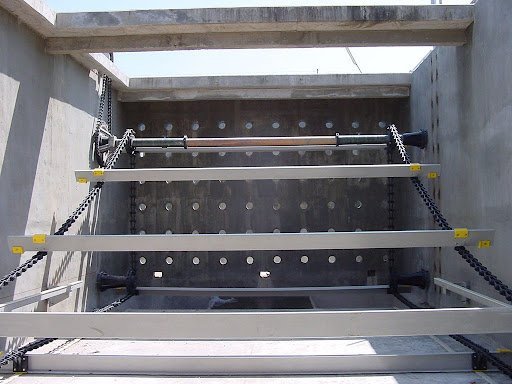
Rectangular Primary Clarifiers in Wastewater Treatment
In the realm of wastewater treatment , the rectangular primary clarifier is a critical first-stage unit designed to reduce solids and organic loads through sedimentation.
This process removes settleable solids and particulate matter before wastewater proceeds to secondary treatment. By optimizing flow distribution and retention time, rectangular primary clarifiers improve overall plant efficiency and reliability.
These clarifiers consist of elongated basins where wastewater flows slowly under quiescent conditions. Gravity causes solids to settle as sludge at the bottom while clarified water exits for further treatment. Ongoing innovations continue to enhance performance, reduce maintenance, and support regulatory compliance.
Key Takeaways
- Rectangular primary clarifiers are vital for sedimentation.
- Their design supports reliable and efficient solids separation.
- Modern innovations improve efficiency and compliance.
Fundamentals of Primary Clarification
Primary clarification is the first major solids-separation step in wastewater treatment, preparing influent for downstream biological processes.
Purpose of Primary Clarification
The main objective of primary clarification is to remove settleable organic and inorganic solids by sedimentation, as well as floating materials through skimming.
In a rectangular primary clarifier, wastewater flows through an open tank that provides adequate retention time for solids to settle as sludge while oils and grease rise to the surface.
Design Principles of Rectangular Clarifiers
Rectangular primary clarifiers are typically designed with length-to-width ratios greater than 4:1. This geometry promotes uniform velocity distribution, minimizes short-circuiting, and maximizes particle settling.
Inlet baffles distribute flow evenly across the basin, reducing turbulence. Sludge collection mechanisms at the bottom of the tank continuously move settled solids toward hoppers for removal.
Components and Functionality
A rectangular primary clarifier consists of several functional zones that work together to achieve effective solid-liquid separation.
Inlet and Outlet Zones
The inlet zone distributes incoming wastewater evenly to minimize turbulence. The outlet zone allows clarified water to exit while preventing the re-entrainment of settled solids, often using weirs or baffles.
Settling Zone
The settling zone is the largest section of the clarifier. Here, gravity causes suspended particles to settle to the bottom, forming sludge.
Typical design parameters:
- Effective depth: 2.5–3.5 meters
- Surface loading rate: 30–80 m³/m²·day
Sludge Collection System
At the bottom of the clarifier, mechanical scrapers move settled sludge toward hoppers for removal. These systems operate slowly to prevent resuspension.
Sludge removal: Typically occurs at one end of the basin
Operation: Continuous or intermittent, depending on sludge characteristics
Clarifier Surface Loading Calculator
Checks surface overflow rate against typical design ranges.
Surface Area: ft²
Surface Overflow Rate: gpd/ft²
Process Optimization
Optimizing a rectangular primary clarifier is essential for improving overall wastewater treatment performance.
Flow Distribution
Uniform flow distribution across the clarifier surface is critical. Engineers use baffles and inlet structures to reduce turbulence and prevent short-circuiting.
Proper flow distribution maximizes detention time and reduces solids carryover.
Solids Removal Efficiency
Solids removal efficiency depends heavily on maintaining appropriate surface loading rates and detention times.
Adjusting rake speeds, ensuring consistent sludge withdrawal, and maintaining a stable sludge blanket interface are key to preventing resuspension and maintaining performance.
Maintenance and Operational Considerations
Cleaning and Upkeep
Routine maintenance ensures reliable clarifier operation and prevents process deterioration.
- Surface skimming to remove floating scum
- Scheduled sludge removal to avoid septic conditions
- Inspection of weirs and baffles for debris
- Mechanical checks of scrapers and drives
Troubleshooting Common Issues
- Poor solids removal: Inspect scraper operation and sludge withdrawal rates
- Odor generation: Indicates excessive sludge retention time
Prompt corrective actions are essential to avoid downstream treatment impacts.
Advancements and Innovations
Technological Improvements
Modern rectangular primary clarifiers benefit from automated sludge collection and real-time monitoring systems that track sludge depth and effluent clarity.
- Real-time sensors for performance monitoring
- Automated controls for optimized operation
Sustainability in Design
Sustainable clarifier designs emphasize lifecycle efficiency, reduced energy use, and durable materials.
- Sustainable construction materials
- Energy-efficient motors and drives
- Renewable energy integration for auxiliary systems
Regulatory and Environmental Impact
Compliance with Regulations
Rectangular primary clarifiers support compliance with Clean Water Act requirements, including:
- BOD reduction: ≥ 85%
- TSS reduction: ≥ 85%
Design standards such as Montana’s Design Standards for Public Sewage Systems highlight their importance.
Impact on Wastewater Treatment
Primary clarifiers typically remove approximately one-third of influent BOD and one-half of suspended solids (US EPA).
This early removal protects downstream processes and reduces environmental impacts such as nutrient overloading and eutrophication.
Frequently Asked Questions
What is the function of a primary clarifier in water treatment processes?
A primary clarifier in water treatment processes serves to remove settleable and floating solids from wastewater. This initial stage of treatment is critical for reducing pollutants before the wastewater undergoes secondary biological treatment.
How do rectangular and circular clarifiers compare in terms of performance and design?
Rectangular and circular clarifiers differ mainly in shape, which affects flow distribution and sludge collection. Circular clarifiers are typically better suited for locations where space is a constraint, while rectangular clarifiers often allow for easier maintenance and can be installed in series for continuous flow.
Can you explain the design considerations for a rectangular clarifier in a wastewater treatment facility?
The design of a rectangular clarifier must consider factors such as the flow rate, detention time, surface area, and depth to ensure efficient solids removal. They are designed with mechanical scrapers to move settled solids toward a hopper for removal.
What are the main factors affecting the efficiency of a rectangular primary clarifier?
The efficiency of a rectangular primary clarifier is influenced by factors such as surface loading rate, sludge removal efficiency, and proper distribution of influent. Additionally, the aspect ratio of length to width is also a critical design factor.
In what scenarios is a rectangular clarifier preferred over a circular one for wastewater treatment?
Rectangular clarifiers are often preferred in wastewater treatment when the facility requires a modular setup that can be expanded over time. They are also chosen when the layout of the plant precludes the use of circular clarifiers due to space restrictions or for integrating with existing rectangular treatment channels.
- Clarifier design
- collection
- Design Principles
- flow distribution
- frequently asked questions
- Maintenance
- Monitoring
- Primary Clarification
- primary clarifier
- process
- Process Optimization
- rectangular clarifier
- rectangular primary clarifiers
- Regulatory
- Regulatory compliance
- Sedimentation
- sludge collection
- Solids Removal
- Solids Separation
- sustainable
- Technological advancements
- treatment
- wastewater treatment
- Wastewater Treatment Plant
- water
- water quality
- water treatment