
Hydrant Flushers for Slurry and High-Solids Service: What Works and What Fails
Introduction
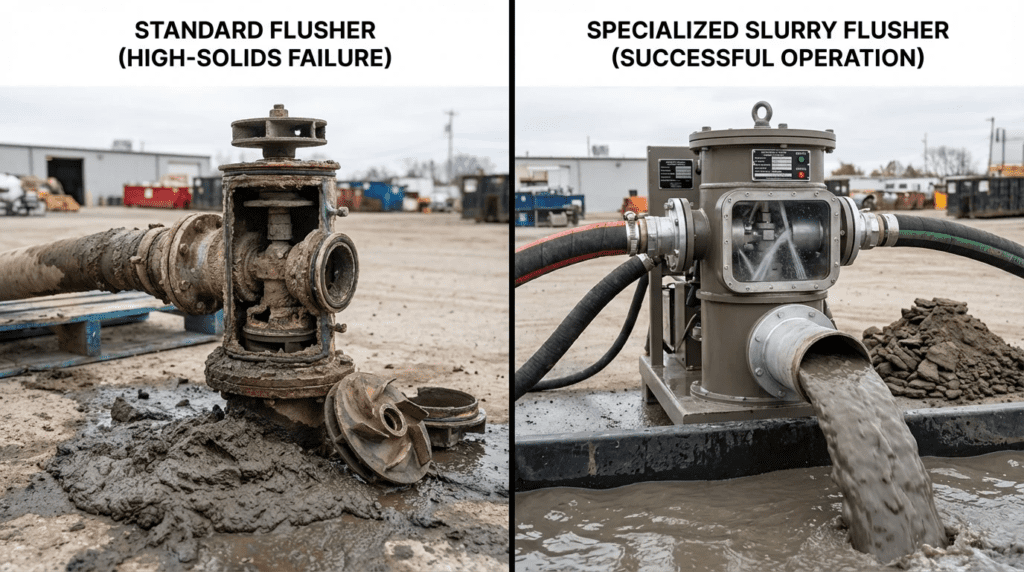
In municipal and industrial water systems, sediment accumulation is a silent efficiency killer. While automatic flushing for potable water distribution systems is a mature technology, applying similar concepts to raw water, wastewater, and industrial slurries presents a drastically different set of engineering challenges. A surprising number of capital projects fail prematurely because specifications rely on potable water hardware for abrasive or solid-laden applications. When engineers attempt to specify Hydrant Flushers for Slurry and High-Solids Service: What Works and What Fails becomes the critical question determining whether a system will operate for twenty years or clog within twenty days.
The core problem lies in the disconnect between fluid mechanics and mechanical design. Potable water flushers rely on clean water to actuate pilot systems and solenoid valves. However, in applications such as wastewater force main blow-offs, mine water management, raw water intake scouring, and lime slurry transport, the fluid itself is the enemy of the mechanism. Statistics from industrial maintenance logs suggest that standard diaphragm-actuated flushers used in high-solids service have a Mean Time Between Failure (MTBF) of less than six months due to pilot port obstruction and elastomeric erosion.
This article addresses the specific needs of engineers tasked with designing flushing points for fluids containing grit, sludge, sand, or chemical precipitates. It moves beyond standard AWWA C502 fire hydrant construction to explore the specialized blow-off assemblies, pinch valves, and automated scouring systems required for dirty water service. By understanding the physics of sediment transport and the limitations of various valve architectures, engineers can specify systems that maintain line velocity and prevent septic conditions without incurring excessive maintenance burdens.
How to Select / Specify
Selecting the correct flushing equipment for high-solids applications requires a departure from standard “clean water” thinking. The focus must shift from pressure retention to abrasion resistance and non-clogging internal geometries.
Duty Conditions & Operating Envelope
The first step in specification is defining the particulate load. Unlike potable water, where turbidity is negligible, slurry service ranges from raw water (low solids) to thickened sludge (high solids). Engineers must quantify:
- Solids Concentration by Weight (%Cw): This determines the viscosity of the fluid and the torque required to close the flushing valve against the flow.
- Particle Size Distribution (d50): Larger particles require larger valve clearances. A general rule is that the valve opening must be at least 3 times the diameter of the largest particle to prevent bridging.
- Specific Gravity (SG): Heavier solids settle faster, requiring higher scour velocities and more frequent flushing intervals.
Defining Hydrant Flushers for Slurry and High-Solids Service: What Works and What Fails in Material Selection
Material compatibility is the primary driver of longevity. In high-solids service, two forms of wear dominate: sliding abrasion (friction from the flow) and impingement (impact from turbulence).
- Valve Bodies: Ductile iron is standard, but in slurry applications, the wetted parts are critical. Full-port designs are mandatory to minimize turbulence. Any restriction or tortuous path will create a localized high-velocity zone where rapid erosion will occur.
- Elastomers vs. Metal Seating: Metal-seated gate valves often fail in slurry service because solids trap in the bottom groove, preventing full closure. Resilient seated valves are superior, but the type of rubber matters. Natural rubber is excellent for abrasion resistance (e.g., sand slurries) but has poor temperature and oil resistance. EPDM or Chlorobutyl may be required for chemical slurries or higher temperatures.
- Trim Hardness: If ball valves are used, the ball and seat must be hardened (e.g., Stellite, Tungsten Carbide coating) to prevent scoring. A scored ball tears the seat, leading to leakage.
Hydraulics & Process Performance
The hydraulic objective of a flusher in this context is to achieve resuspension velocity. The device must open rapidly enough to create a shockwave that mobilizes settled solids, but slowly enough to avoid destructive water hammer.
Process constraints often dictate the discharge location. Unlike potable flushers that can discharge to grade or storm drains (with dechlorination), slurry flushers typically discharge to:
- Retention ponds
- Headworks of treatment plants
- Vacuum trucks (via cam-lock fittings)
The specification must calculate the Head Loss Coefficient (Cv) of the flusher in the fully open position. High-solids flushers must act as an extension of the pipe, offering near-zero restriction to maximize the flushing energy available to scour the pipeline.
Installation Environment & Constructability
Slurry flushers are often located in remote or hazardous areas, such as mining tailings lines or sewer force main low points.
- Burial vs. Vault: Direct burial is risky for complex automated flushers. Vault installation is preferred for access, but requires confined space safety considerations. If direct bury is necessary, the actuator extension spindle must be robust (316SS) to handle the higher torque of unseating a valve stuck with dried solids.
- Freeze Protection: In cold climates, the “dry barrel” concept of a standard hydrant is achieved in slurry service by placing the shut-off valve below the frost line and designing the riser to be self-draining. However, self-draining weep holes common in hydrants will clog immediately with slurry. Therefore, active pumping or compressed air blow-down systems are often required to clear the riser after flushing.
Reliability, Redundancy & Failure Modes
The most common failure mode in Hydrant Flushers for Slurry and High-Solids Service: What Works and What Fails analysis is the jamming of the actuation mechanism.
- Solenoid Failure: Standard automatic flushers use solenoid valves to control a hydraulic pilot. In dirty water, the tiny ports in the solenoid (often 1-2mm) plug instantly. Pro Tip: Never specify pilot-operated diaphragm valves for slurry. Use motorized electric or pneumatic actuators that mechanically force the valve open/closed.
- Seal Wear: In high-grit environments, the seal is a wear part. Design for redundancy often involves installing an isolation valve upstream of the automated flushing valve, allowing maintenance without shutting down the main process line.
Controls & Automation Interfaces
To automate flushing in high-solids applications, timers are rarely sufficient because sediment accumulation rates vary with flow.
- Differential Pressure (dP): Monitoring pressure drop across a specific pipe segment can indicate narrowing due to sediment buildup, triggering a flush cycle.
- Pump Run-Time Integration: For wastewater force mains, flushing often occurs at the start of a pump cycle to resuspend solids, or at the end to clear the line before the fluid becomes stagnant.
- SCADA Feedback: Position feedback (open/closed limit switches) is mandatory. If a slurry valve fails partially open, it will be destroyed by “wire drawing” (high-velocity erosion) within hours.
Lifecycle Cost Drivers
CAPEX for a heavy-duty slurry flushing assembly can be 3-5 times higher than a standard potable automatic flusher. However, the OPEX calculation must account for:
- Labor: Manual flushing of remote lines is labor-intensive. Automation reduces this but requires skilled electrical/instrumentation maintenance.
- Energy: Clogged lines increase pump head requirements. Regular scouring keeps energy costs at design baselines.
- Replacement Frequency: A standard valve may last 6 months in abrasive service; a pinch valve or ceramic-lined ball valve may last 5-10 years.
Comparison Tables
The following tables provide a direct comparison of valve technologies and application suitability. These are designed to help engineers move past marketing terminology and understand the mechanical limitations of different flushing architectures.
Table 1: Valve Technology Comparison for High-Solids Flushing
| Valve Technology | Primary Strengths | Best-Fit Applications | Limitations / Failure Modes | Maintenance Profile |
|---|---|---|---|---|
| Pinch Valve (Open Frame or Enclosed) | Full bore flow (zero obstruction), no mechanical parts in contact with fluid, highest abrasion resistance. | Mining slurry, raw sewage, lime slurry, heavy grit environments. | Requires air supply or high-torque electric actuator. larger footprint. | Low: Sleeve replacement is the only major task; mechanism lasts decades. |
| Knife Gate Valve (Slurry Design) | Cuts through solids to close, short face-to-face dimension, lower cost than pinch valves. | Wastewater isolation, paper pulp, moderate slurry flushing. | Packing leaks are common. Seat cavities can pack with solids preventing closure. | Moderate: Frequent packing adjustments; seat replacement requires removal from line. |
| Ported Ball Valve (Ceramic/Hardened) | Excellent sealing, handles high pressure, compact. | High-pressure slurry lines, small diameter flushing lines (<4"). | Expensive. Cavities behind the ball can trap solids and freeze the valve. | Moderate: Seal replacement is difficult; usually requires factory refurbishment. |
| Pilot-Operated Diaphragm Valve | Low cost, widely available, low power consumption. | Potable water only. (Included for comparison of what NOT to use). | High Failure: Pilot ports clog immediately. Diaphragms erode. | High: Constant cleaning of pilot lines and strainers required. |
Table 2: Application Fit Matrix
| Application Scenario | Solids Characteristic | Recommended Technology | Key Constraint | Relative Cost (CAPEX) |
|---|---|---|---|---|
| Raw Water Intake Flushing | Sand/Silt, abrasive but dilute. | Eccentric Plug or Pinch Valve | Environmental regulations on discharge back to source. | $$ |
| Wastewater Force Main (Dead End) | Organic solids, ragging, grit. | Pinch Valve or Vortex-flow flushing assembly | Odor control and clogging from rags. | $$$ |
| Industrial Process Slurry | High % solids, chemical, abrasive. | Pinch Valve (Sleeve material critical) | Chemical compatibility and abrasion. | $$$$ |
| Stormwater Retention Flushing | Variable, debris heavy. | Tipping Buckets or Gate Valves | Large volumes required rapidly. | $$ |
Engineer & Operator Field Notes
Real-world experience often diverges from catalog data. The following notes are compiled from commissioning reports and operator interviews regarding Hydrant Flushers for Slurry and High-Solids Service: What Works and What Fails in active facilities.
Commissioning & Acceptance Testing
When commissioning a high-solids flushing system, the standard hydrostatic test is insufficient. You must verify the dynamic performance under load.
- Velocity Verification: Use a portable ultrasonic flow meter to verify that the flushing valve actually achieves the design scour velocity (typically >3.5 to 5 ft/s for slurries). If the velocity is too low, the flush is wasting water without moving solids.
- Cycle Testing: Perform at least 20 consecutive open/close cycles during the Site Acceptance Test (SAT). In slurry service, hysteresis or thermal overload in electric actuators often shows up during repeated cycling.
- Discharge Safety: Verify that the thrust restraint on the discharge piping is adequate. The sudden opening of a large diameter flush valve creates significant thrust vectors that can dislodge temporary piping or erode discharge basins.
Common Specification Mistakes
One of the most frequent errors in RFP documents is copying “Automatic Flushing Station” specs from a potable water distribution project. This leads to:
- Undersized Discharge: Specifying a 2″ blow-off on a 12″ sludge line. The velocity generated is insufficient to mobilize solids more than a few feet upstream of the valve.
- Wrong Voltage: Specifying 24VDC solenoids (common for solar/battery potable flushers) for heavy-duty slurry valves. Slurry valves usually require 120VAC or 480VAC motor actuators to generate sufficient torque to cut through settled solids.
- Missing Cleanouts: Failing to provide a mechanical cleanout (wye fitting) upstream of the flush valve. If the flush valve jams closed, there is no way to access the line to jet it out.
O&M Burden & Strategy
Maintenance in slurry service is proactive, not reactive. Once a slurry line plugs, it often requires cutting pipe to fix.
- Exercise Schedule: Valves must be exercised weekly, even if flushing isn’t required. This prevents solids from cementing the valve element in a fixed position.
- Sleeve Inspection: For pinch valves, measure the actuator position vs. sleeve closure. As the sleeve wears, the actuator may need to travel further to seal. Modern smart positioners can track this drift.
- Labor Estimates: Budget 4 hours per month per device for inspection and exercising. This is significantly higher than the “inspect annually” guidance for potable hydrants.
Troubleshooting Guide
Symptom: Valve fails to seal (leaking through)
Root Cause: Solids trapped in the bottom seat (Gate/Globe valves) or wire-draw erosion on the sealing surface.
Remedy: Flush at full velocity to attempt to dislodge debris. If erosion is confirmed, replace the trim with harder material (e.g., switch from 316SS to 17-4PH or Stellite).
Symptom: Actuator torque fault
Root Cause: Dried slurry has increased the friction coefficient of the valve element.
Remedy: Do not simply increase the torque limit; this breaks valve stems. Manually assist the valve (if equipped with a handwheel) to break the bond, then increase flush frequency to prevent drying.
Design Details / Calculations
Engineering the system requires specific calculations to ensure the flusher performs its primary function: sediment transport.
Sizing Logic & Methodology
The sizing of a flusher for slurry service is governed by the Critical Settling Velocity. The flush must exceed this velocity to re-suspend settled solids.
Step 1: Determine Critical Velocity ($V_c$)
For typical municipal wastewater grit, $V_c$ is roughly 2.0 – 3.0 ft/s. For heavier industrial slurries (mining tailings, sand), use the Durand-Condolios correlation or simplified estimates ($V_c approx 4.0 – 6.0$ ft/s).
Step 2: Calculate Required Flow Rate ($Q$)
$$Q = V_c times A_{pipe}$$
Where $A_{pipe}$ is the cross-sectional area of the main line being flushed (not just the flush valve size).
Step 3: Select Valve Cv
Select a flushing valve with a flow coefficient ($C_v$) high enough to pass flow $Q$ with acceptable pressure drop.
Note: In slurry service, undersizing the valve causes high velocity across the valve seat, leading to rapid abrasion. Ideally, the flush valve size should match the main line size (full bore).
Specification Checklist
To ensure you are specifying Hydrant Flushers for Slurry and High-Solids Service: What Works and What Fails correctly, include these mandatory items:
- Port Geometry: Must be specified as “Full Port” or “Round Port.” Rectangular ports (common in some gate valves) create corners where solids build up.
- Actuator Safety Factor: Require a minimum 1.5x safety factor on actuator torque based on the maximum differential pressure and slurry viscosity.
- Coating: Internal and external epoxy coating (min 12 mils) is standard, but for high abrasion, consider internal rubber lining or ceramic coating.
- Access: Specification must require “top entry” or “split body” design for maintenance so the valve body does not need to be cut out of the pipe for service.
Standards & Compliance
While AWWA C500 (Gate Valves) and C517 (Plug Valves) are relevant, they are clean water standards. For slurry service, reference:
- ASME B16.34: Valves – Flanged, Threaded, and Welding End.
- MSS SP-81: Stainless Steel, Bonnetless, Flanged Knife Gate Valves (common baseline, though modifications for slurry are needed).
- FCI 70-2: Control Valve Seat Leakage (Class IV or VI typically required).
FAQ Section
What is the main difference between a potable hydrant flusher and a slurry flusher?
The main difference is the valve architecture and control mechanism. Potable flushers typically use solenoid-controlled diaphragm valves that rely on clean water pilot lines. Slurry flushers use full-port mechanical valves (pinch, ball, or knife gate) driven by heavy-duty electric or pneumatic actuators to handle solids without clogging or eroding.
How do you calculate the required flushing velocity for a slurry line?
You must calculate the critical deposition velocity, often using the Durand or Camp equations. As a general rule of thumb, wastewater force mains require a minimum of 2.5 to 3.5 ft/s (0.75 – 1.1 m/s) to scour grit. Heavier industrial slurries (sand, ore) may require 5.0 to 7.0 ft/s. The flusher must be sized to pass this flow rate at the available system pressure.
Why do solenoid valves fail in high-solids service?
Solenoid valves rely on tiny pilot orifices (often smaller than 2mm) to manage pressure differentials that open and close the main diaphragm. In Hydrant Flushers for Slurry and High-Solids Service: What Works and What Fails scenarios, particulates bridge these small openings instantly, causing the valve to stick either open or closed. They also lack the torque to crush debris trapped on the seat.
What is the typical lifespan of a pinch valve sleeve in slurry service?
In moderate wastewater or raw water service, a high-quality rubber sleeve can last 5-10 years. In severe abrasive mining service (sharp tailings), lifespan may range from 6 to 24 months. However, replacing a sleeve is significantly cheaper and faster than replacing a metal valve body that has been eroded by cavitation or abrasion.
Can I use a standard fire hydrant for flushing sewer force mains?
No. Standard fire hydrants (dry barrel) have weep holes at the bottom to drain the barrel and prevent freezing. If used on a sewer force main, sewage would be forced out of these weep holes into the surrounding soil, creating a contamination hazard. Additionally, the internal mechanics of a hydrant are not designed to pass rags or large solids, leading to immediate clogging.
How much does an automated slurry flushing assembly cost?
Costs vary widely by size and materials. A 4-inch automated pinch valve assembly with controls typically ranges from $8,000 to $15,000. In contrast, a standard potable automatic flusher might cost $2,000 to $4,000. The higher upfront cost is justified by the avoidance of catastrophic clogging events and reduced maintenance labor.
Conclusion
Key Takeaways
- Fluid Physics Matters: Potable water logic does not apply. Designs must prioritize passing solids and resisting abrasion over simple pressure retention.
- Ban Solenoids: Never specify pilot-operated solenoid valves for slurry service. They are the #1 cause of failure. Use motorized or pneumatic mechanical actuators.
- Velocity is King: Ensure the flushing assembly is sized to generate sufficient scour velocity (>3 ft/s typical) in the main line.
- Full Port Geometry: Use Pinch Valves, Full-Port Ball Valves, or Eccentric Plug Valves. Avoid globe or standard diaphragm valves that restrict flow paths.
- Safety Factors: Oversize actuators by 1.5x to handle the increased torque caused by settled solids and drag.
Designing flushing systems for high-solids applications is a balancing act between hydraulic performance, abrasion resistance, and budget. The analysis of Hydrant Flushers for Slurry and High-Solids Service: What Works and What Fails demonstrates that the lowest-bidder mentality—often resulting in the misapplication of clean-water hardware—leads to high lifecycle costs and operational headaches.
Engineers must advocate for robust, purpose-built equipment like pinch valves and slurry-rated knife gates. While the initial capital expenditure is higher than standard utility hardware, the return on investment is realized through system uptime, reduced labor, and the prevention of catastrophic line blockages. When specifying these systems, always demand detailed slurry data (particle size, SG) and consult with manufacturers who specialize in industrial handling rather than general municipal water supply.