
Biological Treatment Technologies for Wastewater: Overview
Introduction
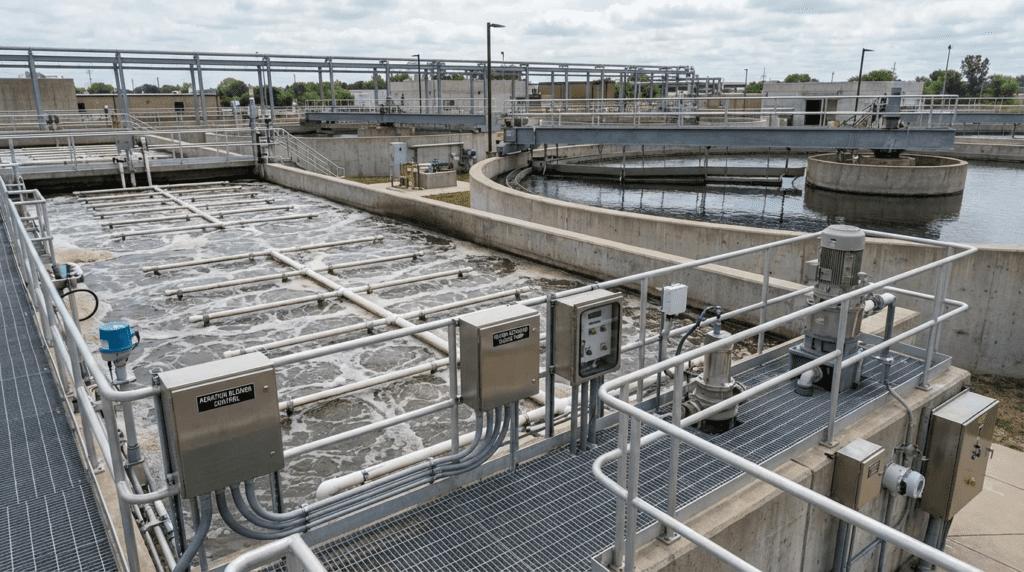
A staggering 50% to 70% of a typical municipal wastewater treatment plant’s energy budget is consumed by a single process: biological aeration. As effluent discharge permits tighten—specifically enforcing stringent Total Nitrogen (TN) and Total Phosphorus (TP) limits—engineers are moving away from brute-force biological oxygen demand (BOD) removal. Selecting the correct process architecture has never been more critical to controlling lifecycle costs. A comprehensive Biological Treatment Technologies for Wastewater: Overview is essential for navigating the complex landscape of modern municipal and industrial water treatment. From footprint-constrained urban facilities requiring ultra-filtration, to high-strength industrial applications generating biogas, the biological process is the heart of the plant.
The scope of secondary biological treatment spans suspended growth, attached growth (fixed-film), anaerobic digestion variants, and advanced hybrid systems. Misapplying a technology—such as specifying a delicate, high-maintenance membrane system for a municipality with a severe lack of skilled operator availability, or relying on a sprawling lagoon system where winter temperatures suppress biological kinetics—leads to chronic non-compliance and massive cost overruns. This pillar article provides a foundational, specification-safe engineering framework covering the entire ecosystem of biological wastewater treatment. It details the subtypes, application fits, design methodologies, and operational profiles required to evaluate and specify these critical systems.
Subcategory Landscape — Types, Technologies & Approaches
The landscape of biological wastewater treatment is broadly categorized into suspended growth (where biomass floats freely in the mixed liquor), attached growth/fixed-film (where biomass grows on a media surface), anaerobic systems (operating without dissolved oxygen for high-strength or sludge applications), and advanced hybrid/emerging processes. Engineers must weigh footprint limitations, required effluent quality, energy intensity, and operator expertise when selecting among the following fundamental subcategories.
Conventional Activated Sludge (CAS)
Conventional Activated Sludge (CAS) is the historical workhorse of municipal wastewater treatment. In this suspended growth process, primary effluent is mixed with return activated sludge (RAS) in an aeration basin, forming mixed liquor. Aeration provides oxygen for microbial metabolism of BOD and ammonia, after which the mixed liquor flows to secondary clarifiers where the biomass settles out. Conventional Activated Sludge (CAS) is typically utilized in medium to large municipal plants and industrial facilities with ample land. It offers high reliability and a massive existing knowledge base. However, its primary limitations are a large footprint requirement and susceptibility to clarifier settling issues like bulking sludge. Engineers generally size these systems for a Mixed Liquor Suspended Solids (MLSS) concentration of 2,000 to 4,000 mg/L and a Solids Retention Time (SRT) of 5 to 15 days, depending on nitrification requirements.
Sequencing Batch Reactors (SBR)
Sequencing Batch Reactors (SBR) are time-oriented, rather than space-oriented, suspended growth systems. All treatment steps—fill, react (aeration), settle, decant, and idle—occur sequentially in a single basin. By eliminating the need for separate secondary clarifiers and RAS pumping, Sequencing Batch Reactors (SBR) significantly reduce the plant footprint. They are widely used in small to medium municipal facilities, industrial batch processing operations, and decentralized packaged plants. The key advantage is high flexibility; cycle times can be easily adjusted via SCADA to achieve biological nutrient removal (BNR). The main limitation is vulnerability to extreme hydraulic peaking (such as Inflow & Infiltration), which can wash out the reactor during the decant phase. Sizing requires careful hydraulic buffering or multiple parallel basins to manage continuous influent flows.
Membrane Bioreactors (MBR)
Membrane Bioreactors (MBR) replace traditional secondary clarifiers with microfiltration or ultrafiltration membranes immersed directly in the aeration basin or situated in an external loop. This absolute physical barrier allows the system to operate at an extremely high MLSS (typically 8,000 to 12,000 mg/L), drastically reducing the biological footprint while producing reuse-quality effluent with near-zero suspended solids. Membrane Bioreactors (MBR) are the technology of choice for urban retrofits, water reclamation projects, and stringent discharge environments. The drawbacks are significantly higher Capital Expenditures (CAPEX) for the membranes, increased aeration energy (due to lower oxygen transfer efficiency in thick mixed liquor), and strict requirements for fine-screen headworks (typically 1-2 mm) to prevent membrane fouling and trash accumulation.
Oxidation Ditches
Oxidation Ditches are a modification of the activated sludge process utilizing a closed-loop, racetrack-shaped channel. Aerators (such as horizontal rotors, surface aspirators, or fine bubble diffusers with directional mixers) provide oxygen and maintain a continuous flow velocity of at least 1.0 ft/s (0.3 m/s) to keep solids suspended. Oxidation Ditches operate at extended aeration SRTs (15 to 30 days), which provides excellent shock-load buffering and highly stable nitrification. They are incredibly popular in small to mid-sized municipalities due to their low operator intervention requirements and simultaneous sludge stabilization. The primary limitation is the extensive land area required, making them unsuitable for densely populated urban sites.
Moving Bed Biofilm Reactors (MBBR)
Moving Bed Biofilm Reactors (MBBR) utilize thousands of engineered plastic carriers (media) suspended in the aeration basin, providing a vast protected surface area for biofilm growth. Retention sieves keep the media inside the reactor. Because the biomass is attached to the media, an Moving Bed Biofilm Reactors (MBBR) process operates without a sludge return (no RAS), simplifying clarifier operation. This technology is highly favored for industrial roughing applications, cold-weather nitrification, and compact modular plants. It provides a massive treatment capacity in a small volume due to high specific surface areas (typically 500 to 1,200 m²/m³). However, it requires robust screening to prevent sieve blinding and consumes slightly more aeration energy to keep the media in active suspension.
Integrated Fixed-Film Activated Sludge (IFAS)
Integrated Fixed-Film Activated Sludge (IFAS) combines the suspended growth of CAS with the attached growth of MBBR in the same basin. By adding plastic media or stationary textile chords to an existing activated sludge tank, engineers can dramatically increase the active biomass inventory without increasing the solids loading on the secondary clarifier. Integrated Fixed-Film Activated Sludge (IFAS) is the premier solution for retrofitting existing, footprint-constrained municipal plants to achieve Total Nitrogen removal or handle increased flow. It allows a plant to maintain a short SRT in the suspended phase for BOD removal, while maintaining a long SRT on the fixed media for slow-growing nitrifying bacteria. Careful hydraulic design is required to ensure even distribution of media and prevent localized dead zones.
Trickling Filters
Trickling Filters are one of the oldest attached-growth processes, consisting of a bed of highly permeable media (traditionally rock, now usually structured cross-flow plastic) over which wastewater is continuously distributed via rotary arms. Air circulates naturally or via forced draft through the void spaces, providing oxygen to the biological slime layer on the media. Trickling Filters are exceptionally energy-efficient since they rely on gravity and natural drafts rather than mechanical blowers. They are ideal for applications prioritizing low operating costs and simplicity. Limitations include a large footprint, susceptibility to cold weather freezing, lower total nitrogen removal capabilities, and nuisance issues like filter flies or snail infestations.
Rotating Biological Contactors (RBC)
Rotating Biological Contactors (RBC) consist of closely spaced, parallel plastic discs mounted on a horizontal shaft that slowly rotates in a contour-bottomed tank. The media is typically 40% submerged; as it rotates, the attached biofilm is alternately exposed to wastewater organics and atmospheric oxygen. Rotating Biological Contactors (RBC) are frequently utilized in decentralized or small municipal applications because they boast a very small footprint, low energy consumption, and virtually silent operation. Historically, their major limitation was mechanical shaft failure due to the heavy weight of thick biofilm and uneven load distribution. Modern specifications strictly require heavy-duty shafts, robust media design, and load cells to monitor biomass weight.
Biological Aerated Filters (BAF)
Biological Aerated Filters (BAF) function as both a biological reactor and a suspended solids filter. Wastewater flows either up or down through a submerged media bed (such as sunken expanded clay or floating polystyrene beads) while process air is sparged into the bed. The biofilm on the media degrades organics and ammonia, while the media matrix physically filters the effluent. Biological Aerated Filters (BAF) eliminate the need for secondary clarifiers and offer one of the most compact footprints available in secondary treatment. They are highly suitable for high-density urban areas or as a tertiary nitrification polishing step. The main drawbacks are the necessity for routine, energy-intensive backwashing (similar to drinking water filters) and higher mechanical complexity.
Aerobic Granular Sludge (AGS)
Aerobic Granular Sludge (AGS) is an advanced batch process where specific hydrodynamic and feast/famine conditions force bacteria to aggregate into dense, fast-settling granules rather than standard biofloc. A single granule contains distinct aerobic, anoxic, and anaerobic zones, allowing simultaneous BOD, nitrogen, and biological phosphorus removal in one structure. Aerobic Granular Sludge (AGS) systems settle incredibly fast (Sludge Volume Index < 50 mL/g), meaning clarifiers are unnecessary and cycle times are short. This technology can reduce footprint by up to 75% compared to CAS. While rapidly gaining adoption globally, AGS requires highly sophisticated, proprietary control algorithms to maintain granule stability, limiting open-market competition.
Upflow Anaerobic Sludge Blanket (UASB)
Upflow Anaerobic Sludge Blanket (UASB) reactors treat high-strength wastewater without aeration. Influent is distributed at the bottom of the reactor and flows upward through a dense blanket of anaerobic granular sludge. The anaerobic digestion process generates biogas (methane and carbon dioxide), which provides internal mixing and can be captured for energy recovery. Upflow Anaerobic Sludge Blanket (UASB) systems are heavily deployed in industrial applications like breweries, paper mills, and food processing plants where influent COD is highly concentrated (often > 2,000 mg/L). They drastically reduce energy footprints and produce less waste sludge than aerobic processes. However, UASB effluent typically requires downstream aerobic polishing to meet strict municipal discharge limits, and they are highly sensitive to temperature drops.
Anaerobic Membrane Bioreactors (AnMBR)
Anaerobic Membrane Bioreactors (AnMBR) couple anaerobic digestion with membrane filtration. Like standard MBRs, they provide absolute retention of solids, but do so in a sealed, oxygen-free environment. Anaerobic Membrane Bioreactors (AnMBR) are an emerging technology primarily utilized in high-strength industrial streams, agricultural runoff, and specialized water reuse scenarios where maximum energy recovery (via methane) and zero aeration costs are desired. The process is constrained by membrane fouling—which is more severe in anaerobic sludge than aerobic sludge—requiring frequent gas-sparging or chemical cleaning, and managing dissolved methane in the effluent to prevent greenhouse gas emissions.
Anammox Processes
Anammox Processes (Anaerobic Ammonium Oxidation) leverage a specialized group of bacteria that directly convert ammonia and nitrite into harmless nitrogen gas without organic carbon. This process is typically applied to high-strength, warm, nitrogen-rich streams, such as anaerobic digester dewatering centrate (sidestream treatment). Anammox Processes represent a paradigm shift in nitrogen removal, offering up to 60% savings in aeration energy and a 100% savings in supplemental carbon (methanol/glycerin) compared to conventional nitrification/denitrification. The main limitation is the incredibly slow growth rate of Anammox bacteria (doubling time of 10-14 days), which makes startup and recovery from toxic shocks extremely difficult without bio-augmentation.
Aerated Lagoons
Aerated Lagoons are large, earthen basins equipped with surface or submerged aerators to provide oxygen and mixing. Unlike CAS, there is generally no sludge return, and MLSS concentrations remain low (100 to 400 mg/L). Settling occurs in a quiescent zone or a separate settling pond. Aerated Lagoons are the definition of low-intensity treatment, used primarily by small rural municipalities or remote industrial sites where land is cheap and technical maintenance capacity is low. Their capital and O&M costs are minimal. However, they struggle to meet stringent BNR limits, have vast footprints, and suffer severely depressed biological kinetics during winter months due to lack of thermal mass conservation.
Selection & Specification Framework
Selecting the optimal path from the Biological Treatment Technologies for Wastewater: Overview landscape requires a methodical decision tree balancing effluent targets, physical constraints, lifecycle cost analysis, and local operator capability. A common pitfall is specifying a high-performance system for a municipality lacking the operational budget to maintain it.
Step 1: Define the Duty Conditions and Influent Profile
Industrial streams with high soluble Chemical Oxygen Demand (COD > 2,000 mg/L) should immediately be evaluated for Upflow Anaerobic Sludge Blanket (UASB) or other anaerobic variants to exploit biogas recovery and bypass massive aeration electrical loads. Conversely, standard domestic municipal wastewater (BOD ~ 250 mg/L) is directed toward aerobic suspended or attached growth systems.
Step 2: Assess Footprint and Hydraulic Constraints
If land is abundant, Conventional Activated Sludge (CAS), Oxidation Ditches, or Aerated Lagoons offer the lowest lifecycle complexity. If space is tightly constrained (urban limits) or flow has outgrown basin capacity, engineers must look to intensification. Integrated Fixed-Film Activated Sludge (IFAS) is ideal for retrofitting existing basins to achieve BNR without pouring new concrete. If new construction on a micro-footprint is required, Membrane Bioreactors (MBR), Biological Aerated Filters (BAF), or Aerobic Granular Sludge (AGS) are the primary candidates.
Step 3: Evaluate Effluent Regulatory Limits
If the discharge permit requires extreme ENR (Enhanced Nutrient Removal, e.g., TN < 3 mg/L, TP < 0.1 mg/L) or Title 22 reuse standards, Membrane Bioreactors (MBR) offer an absolute physical barrier that guarantees ultra-low TSS and associated particulate nutrients. For standard BNR (TN < 10 mg/L), Sequencing Batch Reactors (SBR), oxidation ditches, and IFAS are highly capable when properly configured with anaerobic/anoxic selectors.
CAPEX vs. OPEX Tradeoffs:
A crucial specification dynamic is the inverse relationship between footprint and operating cost. Membrane Bioreactors (MBR) have a high CAPEX (membrane cassettes, fine screens) and high OPEX (membrane replacement every 7-10 years, intensive air scouring). Alternatively, Trickling Filters have higher civil CAPEX (massive structural beds) but almost negligible aeration OPEX. Engineers must perform a 20-year Net Present Value (NPV) calculation, factoring in local electrical rates ($/kWh), to justify intensive technologies.
Comparison Tables
The following tables provide an engineer’s quick-reference guide. Table 1 maps the primary biological technologies against key performance metrics and lifecycle profiles. Table 2 provides a decision matrix for matching application scenarios with the optimal subcategory.
Table 1: Subcategory Comparison of Biological Technologies
| Technology Type | Typical MLSS (mg/L) | Typical SRT (days) | Footprint | Relative Energy/OPEX | Key Limitation |
|---|---|---|---|---|---|
| Conventional Activated Sludge (CAS) | 2,000 – 4,000 | 5 – 15 | Large | Moderate | Vulnerable to clarifier bulking |
| Sequencing Batch Reactors (SBR) | 2,500 – 5,000 | 10 – 20 | Moderate | Moderate | Struggles with continuous peak flows |
| Membrane Bioreactors (MBR) | 8,000 – 12,000 | 15 – 30+ | Very Small | High | Membrane fouling, high lifecycle cost |
| Oxidation Ditches | 3,000 – 5,000 | 15 – 30 | Very Large | Moderate to High | Massive land requirement |
| Integrated Fixed-Film Activated Sludge (IFAS) | 2,000 (Suspended) | Differs by phase | Small | Moderate | Complex hydrodynamics/media mixing |
| Moving Bed Biofilm Reactors (MBBR) | N/A (Attached) | N/A | Small | Moderate to High | Requires robust downstream solids capture |
| Trickling Filters | N/A (Attached) | N/A | Large | Very Low | Prone to freezing and nuisances |
| Aerobic Granular Sludge (AGS) | 8,000+ | 15 – 30 | Small | Low to Moderate | Requires proprietary control logic |
| Upflow Anaerobic Sludge Blanket (UASB) | High (Granular) | 30+ | Moderate | Net Positive (Biogas) | Poor ammonia/nutrient removal |
Table 2: Application Fit Matrix
| Application Scenario | Best-Fit Technology | Secondary Alternative | Key Specification Driver |
|---|---|---|---|
| Small Rural Municipal (Low Skill, Land Rich) | Aerated Lagoons | Oxidation Ditches | Low operational complexity and low OPEX |
| Urban Plant Retrofit for TN Removal | Integrated Fixed-Film Activated Sludge (IFAS) | Moving Bed Biofilm Reactors (MBBR) | Utilizes existing concrete basins, increases biomass |
| High-Strength Industrial (Brewery/Paper) | Upflow Anaerobic Sludge Blanket (UASB) | Anaerobic Membrane Bioreactors (AnMBR) | Energy recovery, handles high COD loading safely |
| Title 22 / Indirect Potable Reuse | Membrane Bioreactors (MBR) | Biological Aerated Filters (BAF) | Absolute physical barrier for pathogen/solids limits |
| Decentralized / Packaged Plant (Variable Flow) | Sequencing Batch Reactors (SBR) | Rotating Biological Contactors (RBC) | Batch operation handles diurnal variations effectively |
| Digester Sidestream Treatment (Centrate) | Anammox Processes | Sequencing Batch Reactors (SBR) | Extreme carbon and aeration savings for high NH3 |
Engineer & Operator Field Notes
Navigating the operational realities of a full-scale plant requires understanding how biological kinetics interact with mechanical equipment. The lifecycle of any Biological Treatment Technologies for Wastewater: Overview evaluation must account for commissioning timelines, maintenance burdens, and common failure modes.
Commissioning Considerations
Biological commissioning is fundamentally different from mechanical startup; it is the process of cultivating a living ecosystem. For Conventional Activated Sludge (CAS) and Oxidation Ditches, operators typically seed the plant with mixed liquor imported from a nearby facility, aiming to establish an initial MLSS of at least 1,000 mg/L before allowing full flow. In fixed-film systems like Moving Bed Biofilm Reactors (MBBR) and Trickling Filters, biofilm development takes significantly longer (4 to 8 weeks). Engineers must specify a gradual step-up in organic loading; slamming raw, high-strength influent into virgin media will result in massive BOD breakthrough. Anammox Processes present the most extreme commissioning challenge due to the bacteria’s incredibly slow reproduction rate, often requiring proprietary seed sludge and months of acclimation.
Common Specification Mistakes
A frequent error is miscalculating the peaking factor impacts on varying systems. For instance, designing Sequencing Batch Reactors (SBR) purely on average daily flow without accounting for sudden wet-weather inflow will lead to blanket washout during decant phases. Another major pitfall occurs when specifying Membrane Bioreactors (MBR): engineers sometimes reuse existing 6mm mechanical bar screens. MBRs require strictly specified fine screens (1-2mm punched hole, not wedgewire) to prevent hair and fibrous material from braiding through the membrane fibers, which causes catastrophic, irreversible fouling.
When retrofitting CAS with Integrated Fixed-Film Activated Sludge (IFAS), it is tempting to increase the suspended MLSS alongside the media addition to push capacity even further. Doing so drastically increases the solids loading rate (SLR) on the secondary clarifier, risking solids carryover. The benefit of IFAS is keeping suspended MLSS low while the media carries the extra nitrifying load.
O&M Comparison and Troubleshooting
Maintenance burdens shift dramatically depending on the technology. Aerated Lagoons require sludge dredging only once every 10 to 20 years, but Membrane Bioreactors (MBR) demand weekly automated maintenance cleans (relaxation/backpulse with sodium hypochlorite) and bi-annual recovery cleans (citric acid to dissolve inorganic scale).
Troubleshooting suspended growth (like Conventional Activated Sludge (CAS)) usually revolves around microscopy and Sludge Volume Index (SVI). Filaments causing bulking are frequently mitigated by adjusting the Food-to-Microorganism (F/M) ratio or adding a chlorine dose to the RAS line. Troubleshooting Rotating Biological Contactors (RBC) often involves mechanical diagnostics—checking bearing temperatures and shaft deflection caused by asymmetrical biofilm growth. In Upflow Anaerobic Sludge Blanket (UASB) reactors, sudden drops in pH or drops in biogas methane percentage indicate volatile fatty acid (VFA) accumulation, warning operators of impending system toxicity.
In systems operating at extremely high solids like Membrane Bioreactors (MBR) or Aerobic Granular Sludge (AGS), standard optical Dissolved Oxygen (DO) probes foul rapidly. Specify automated air-blast or water-wash cleaning mechanisms for all DO instrumentation to ensure accurate aeration control and prevent blower over-speeding.
Design Details & Standards
Engineering design of biological wastewater treatment relies on balancing organic loading rates (OLR), hydraulic retention times (HRT), and oxygen transfer capabilities.
Sizing Methodology Overview
Biological volume is generally governed by the required Solids Retention Time (SRT)—the average time a microorganism spends in the system. BOD removal can occur at SRTs of 2 to 4 days, whereas complete nitrification (ammonia conversion to nitrate) typically requires 8 to 15 days, depending heavily on winter basin temperatures (kinetics halve for every 10°C drop). Volume is calculated by multiplying the influent flow by the HRT, which is derived from the desired SRT and the target MLSS concentration.
Differentiating Parameters by Subcategory
While the underlying biology is identical, the physical sizing differs radically:
- Conventional Activated Sludge (CAS) basins are typically sized with an HRT of 4 to 8 hours and target an F/M ratio of 0.2 to 0.5 kg BOD/kg MLVSS-day.
- Membrane Bioreactors (MBR) utilize much higher MLSS, allowing HRTs to drop to 2 to 4 hours. However, the alpha factor (oxygen transfer efficiency) drops significantly in dense MLSS, requiring roughly 20-30% more blower capacity for the same oxygen demand.
- Moving Bed Biofilm Reactors (MBBR) are sized based on the Surface Area Loading Rate (SALR), typical values range from 4 to 8 g BOD/m²-day. Basin volume is dictated by the media fill fraction (usually 40% to 65% of tank volume).
- Biological Aerated Filters (BAF) are sized on volumetric organic loading, handling massive rates of up to 4 to 6 kg BOD/m³-day, but require careful hydraulic design for backwash pumping loops.
Applicable Standards & Compliance
Engineers must ensure designs align with recognized global and regional standards. In North America, the Recommended Standards for Wastewater Facilities (Ten States Standards) governs many municipal approvals, dictating minimum freeboard, dual-train redundancy, and maximum clarifier overflow rates for systems like Conventional Activated Sludge (CAS) and Oxidation Ditches. The Water Environment Federation (WEF) Manual of Practice (MOP) 8 is the definitive reference for sizing BNR processes. Equipment components (blowers, mixers, membranes) must comply with AWWA, ANSI/ASME piping standards, and NEMA/IEC enclosure ratings for corrosive environments (typically NEMA 4X / IP66 for basin-side panels).
General Specification Checklist
- Influent Characterization: Document 95th percentile peaks for Flow, BOD, TSS, TKN, TP, and minimum/maximum temperatures.
- Redundancy: Specify N+1 for critical rotating equipment (blowers, RAS pumps) across all active subcategories.
- Media/Membrane Warranties: For Moving Bed Biofilm Reactors (MBBR), demand a 15-year media degradation warranty. For Membrane Bioreactors (MBR), require a 10-year prorated permeability warranty.
- Energy Efficiency: Mandate wire-to-water efficiency guarantees for aeration blowers and fine bubble diffusers.
FAQ Section
What are the different types of biological treatment for wastewater?
The primary technologies are divided into suspended growth (like Conventional Activated Sludge (CAS), Sequencing Batch Reactors (SBR), Oxidation Ditches, and Membrane Bioreactors (MBR)); attached growth (like Trickling Filters, Rotating Biological Contactors (RBC), Moving Bed Biofilm Reactors (MBBR), and Biological Aerated Filters (BAF)); hybrid systems (like Integrated Fixed-Film Activated Sludge (IFAS) and Aerobic Granular Sludge (AGS)); and anaerobic or low-energy systems (like Upflow Anaerobic Sludge Blanket (UASB), Anaerobic Membrane Bioreactors (AnMBR), Anammox Processes, and Aerated Lagoons).
How do you choose between CAS and MBR?
Choose Conventional Activated Sludge (CAS) when you have plenty of land, standard secondary discharge limits, and need a reliable, lower-OPEX system. Choose Membrane Bioreactors (MBR) when the plant footprint is highly constrained, or you require absolute physical filtration to meet extreme nutrient limits (e.g., TP < 0.1 mg/L) or Title 22 water reuse standards, provided the budget supports the higher membrane replacement and aeration costs.
What is the most cost-effective biological treatment for small plants?
For very small flows in rural areas with cheap land, Aerated Lagoons are the most cost-effective to construct and operate. If higher effluent quality is needed, Oxidation Ditches offer incredible reliability with low operator oversight. For packaged decentralized systems where footprint matters, Rotating Biological Contactors (RBC) and Sequencing Batch Reactors (SBR) are highly cost-effective.
Why use an MBBR over conventional suspended growth?
A Moving Bed Biofilm Reactors (MBBR) system requires a fraction of the footprint of conventional systems because the high specific surface area of the media concentrates the biomass. Furthermore, an MBBR does not rely on a return activated sludge (RAS) line, making clarifier operation much simpler as there is no need to manage sludge blanket depth and bulking issues.
How do anaerobic biological systems differ from aerobic ones?
Aerobic systems use oxygen (supplied by energy-intensive blowers) to break down organics. Anaerobic systems, such as the Upflow Anaerobic Sludge Blanket (UASB), operate without oxygen, meaning zero aeration energy costs. Furthermore, anaerobic bacteria convert organics into methane-rich biogas, which can be captured to generate electricity, making these systems ideal for high-strength industrial wastewaters.
What is the benefit of Aerobic Granular Sludge (AGS)?
Aerobic Granular Sludge (AGS) causes bacteria to form dense granules that settle rapidly compared to standard biofloc. This eliminates the need for large secondary clarifiers, cuts the plant footprint by up to 75%, and allows simultaneous removal of COD, nitrogen, and phosphorus in a single batch reactor basin.
Conclusion
KEY TAKEAWAYS
- No single biological treatment fits all scenarios; selections must balance footprint, CAPEX, OPEX, effluent targets, and operator skill.
- Use Membrane Bioreactors (MBR) or Biological Aerated Filters (BAF) for maximum intensification and strict limits.
- Use Integrated Fixed-Film Activated Sludge (IFAS) to retrofit existing Conventional Activated Sludge (CAS) basins for nutrient removal without pouring new concrete.
- For high-strength industrial wastes (COD > 2000 mg/L), anaerobic processes like Upflow Anaerobic Sludge Blanket (UASB) offer major OPEX advantages via energy recovery.
- Hydraulic peaking and toxic shock potential must dictate process choice; rigid systems fail under highly variable flow.
Achieving compliance in modern wastewater engineering demands an expert-level grasp of the Biological Treatment Technologies for Wastewater: Overview landscape. The shift from rudimentary BOD removal to complex Enhanced Nutrient Removal has diversified the market into highly specialized subcategories. While Conventional Activated Sludge (CAS) remains a foundational standard, the pressures of urban sprawl and strict discharge permits continually drive the adoption of high-density systems like Aerobic Granular Sludge (AGS) and fixed-film variants.
Engineers must move beyond capital cost evaluation and rigorously analyze the 20-year lifecycle—factoring in membrane replacement intervals, aeration efficiency in variable MLSS concentrations, and the local availability of trained operators. By correctly matching the biological architecture to the specific influent profile and site constraints, engineers can deliver robust, resilient infrastructure that protects environmental waterways while optimizing public or industrial utility budgets.