
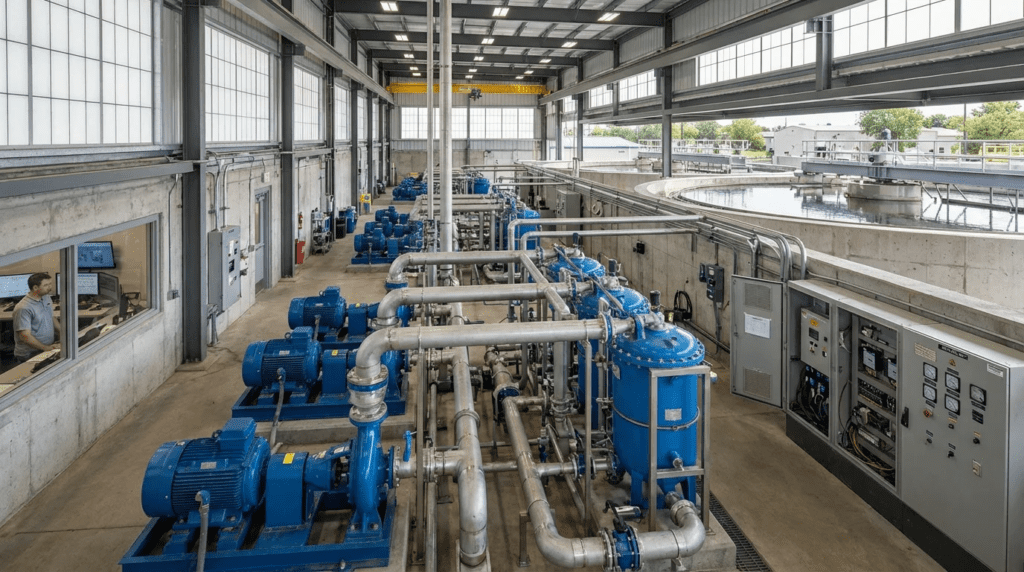
INTRODUCTION
One of the most critical and costly decisions a consulting engineer or plant director will make is the specification of process equipment. Selecting the Top Water Treatment Equipment Manufacturers for Water & Wastewater directly dictates not only the initial capital expenditure (CAPEX) but the operational expenditure (OPEX) for the next 20 to 30 years. A specification error here—whether selecting an OEM with a weak regional service network, locking into a proprietary technology with exorbitant aftermarket parts pricing, or mismatching the equipment duty cycle to the actual plant loading—can cost municipalities and industrial facilities millions in premature replacements and compliance violations.
The municipal and industrial water and wastewater sectors encompass a vast array of specialized subtopics, ranging from high-shear dewatering centrifuges to low-pressure ultraviolet disinfection arrays. Proper understanding of the broader manufacturing landscape matters because the industry is highly fragmented. While large multinational conglomerates offer “end-to-end” plant solutions, highly specialized, niche OEMs often provide superior performance for specific unit processes. Engineers must balance the convenience of single-source procurement against the performance optimization of “best-in-class” unit selection.
This pillar page provides a comprehensive, engineer-focused landscape of the equipment manufacturing sector. It identifies the major equipment subcategories, outlines the technological approaches within each, and provides an objective framework for specifying and selecting between options based on real-world performance, reliability, lifecycle costs, and application fit.
SUBCATEGORY LANDSCAPE — TYPES, TECHNOLOGIES & APPROACHES
Navigating the equipment market requires categorizing manufacturers by the unit processes they serve. Some OEMs dominate in physical separation, while others specialize in complex biological processes or advanced oxidation. When specifying equipment, engineers must categorize their needs based on the hydraulic profile, mass loading rates, and required effluent limits. The following subsections map the landscape of the major equipment subcategories, detailing the technologies, applications, and critical engineering considerations for each.
Headworks and Screening Equipment Manufacturers
Headworks and Screening Equipment Manufacturers specialize in the first line of defense for a wastewater treatment plant (WWTP), producing technologies that remove rags, plastics, and grit before they can damage downstream pumps and process equipment. This subcategory includes multi-rake bar screens, step screens, continuous band screens, perforated plate screens, and grit removal systems (vortex, aerated, and detritus). Fine screens (typically 3mm to 6mm openings) have become the standard for facilities utilizing membrane bioreactors (MBRs) to prevent membrane fouling and physical damage.
These systems are typically deployed at the influent pump station or main plant inlet channel, operating in highly corrosive, high-velocity (typically 2-3 ft/s channel velocity) environments. The key advantage of premium OEM designs is capture efficiency (often measured in Screenings Capture Ratio – SCR) and mechanical reliability under high-grit conditions. Limitations often revolve around hydraulic headloss; finer screens induce higher headloss, requiring careful hydraulic profile design. Critical specification factors include the materials of construction (minimum 304L, preferably 316L stainless steel), the design of the lower sprockets (or completely sprocket-less designs to minimize underwater maintenance), and the robustness of the washing/compacting ancillary equipment.
Clarification and Sedimentation Equipment Manufacturers
Clarification and Sedimentation Equipment Manufacturers produce the mechanisms required for primary, secondary, and tertiary solid-liquid separation relying on gravity. Technologies include circular clarifier mechanisms (scraper, suction header, and spiral blade designs), rectangular chain-and-flight scrapers, dissolved air flotation (DAF) units, and high-rate tube settlers or lamella plates. These mechanisms slowly sweep settled sludge to a hopper while allowing clarified effluent to overflow via weirs.
Clarifiers are ubiquitous in both municipal WWTPs and industrial effluent treatment, sized based on Surface Overflow Rate (SOR) and Solids Loading Rate (SLR). DAF units are highly preferred in industrial applications (like food/beverage or oil/gas) where suspended solids are buoyant or high in fats, oils, and grease (FOG). The main advantage of gravity clarification is exceptionally low energy consumption compared to mechanical filtration. Limitations include a large footprint and vulnerability to hydraulic surges or temperature-induced density currents. When specifying, engineers must focus on torque ratings for the central drive mechanism (often specified in ft-lbs with clear AGMA service factors), energy-dissipating inlet (EDI) designs, and wind/algae protection for the launders.
Aeration and Biological Treatment Manufacturers
Aeration and Biological Treatment Manufacturers provide the core “engine” of secondary wastewater treatment, supplying the oxygen and media necessary for biological nutrient removal (BNR). This massive subcategory includes fine and coarse bubble diffusers, mechanical surface aerators, multi-stage centrifugal and positive displacement blowers, Moving Bed Biofilm Reactor (MBBR) media, and Integrated Fixed-film Activated Sludge (IFAS) systems.
Aeration accounts for 50% to 60% of a typical WWTP’s total energy consumption, making specification in this category highly sensitive to OPEX. These technologies are applied in aeration basins, sequencing batch reactors (SBRs), and oxidation ditches. The primary advantage of fine-bubble diffused aeration is high Standard Oxygen Transfer Efficiency (SOTE, typically 2% per foot of submergence), whereas mechanical aerators offer simpler maintenance without emptying the basin. Limitations of diffusers include scaling and fouling, leading to an increase in blower backpressure over time. Critical selection factors include the alpha factor of the wastewater, required turndown ratios for the blowers (especially critical for matching diurnal load variations), and the durability of the EPDM, silicone, or polyurethane diffuser membranes.
Membrane and Filtration System Manufacturers
Membrane and Filtration System Manufacturers specialize in advanced separation technologies capable of producing extremely high-quality effluent, often suitable for water reuse or discharge into sensitive receiving waters. This includes microfiltration (MF), ultrafiltration (UF), nanofiltration (NF), and reverse osmosis (RO) systems, available in polymeric (PVDF, PES) or ceramic materials, and configured as hollow fiber, flat sheet, or spiral wound elements.
These systems are prevalent in advanced municipal potable water plants, industrial process water generation, and tertiary wastewater polishing. MBRs combine UF/MF with biological treatment to drastically reduce plant footprint. The clear advantage is absolute physical barrier filtration, ensuring pathogen removal and SDI (Silt Density Index) reduction. The primary limitations are high capital cost, significant energy consumption (due to high Transmembrane Pressure – TMP), and susceptibility to irreversible fouling from siloxanes, polymers, or biological growth. Sizing and specification hinge strictly on design flux (typically measured in Liters per square meter per hour – LMH), recovery rates, clean-in-place (CIP) chemical compatibility, and membrane life expectancy (usually guaranteed for 7-10 years on a prorated basis).
Disinfection System Manufacturers
Disinfection System Manufacturers produce equipment designed to inactivate pathogenic microorganisms prior to distribution or discharge. The prominent technologies are Ultraviolet (UV) light arrays (low-pressure/high-output and medium-pressure lamps), Ozone generators, On-Site Sodium Hypochlorite Generation (OSHG), and chlorine gas dosing equipment.
UV and Ozone are heavily favored where chemical residuals (like chlorine) are prohibited in the receiving stream (avoiding the need for dechlorination) or where chlorine-resistant pathogens like Cryptosporidium must be inactivated. The main advantage of UV is safety and lack of disinfection byproducts (DBPs). Limitations include poor efficacy in low UV-Transmittance (UVT) waters, and the significant electrical draw of the lamp banks. Ozone provides simultaneous oxidation of trace organics but has high CAPEX and requires liquid oxygen (LOX) or dry air feed systems. Specification dictates a strict analysis of the target dose (mJ/cm² for UV, typically 30-40 mJ/cm² for standard municipal effluent), hydraulic headloss through the channel, and automated sleeve-wiping mechanisms to prevent quartz tube fouling.
Chemical Feed and Dosing Equipment Manufacturers
Chemical Feed and Dosing Equipment Manufacturers provide the highly precise metering pumps, skids, and control systems necessary to inject coagulants, flocculants, disinfectants, and pH adjustment chemicals into the process stream. Technologies include solenoid-driven diaphragm pumps, motor-driven mechanically actuated diaphragm pumps, peristaltic (hose) pumps, and dry chemical volumetric/gravimetric feeders.
Used universally across virtually all water and wastewater facilities, chemical dosing must be exact; under-dosing fails the process, while over-dosing wastes money and can cause toxicity or permit violations. Peristaltic pumps have the advantage of easily handling highly viscous or off-gassing chemicals (like sodium hypochlorite) without vapor-locking, while diaphragm pumps offer exceptionally high pressure capabilities for injection into pressurized mains. Limitations usually involve the degradation of elastomers and hoses, requiring frequent consumable replacement. Sizing requires careful calculation of the required dosage range (mg/L), specific gravity and viscosity of the chemical, desired turndown ratio (often 1000:1 with modern stepper-motor pumps), and material compatibility (e.g., specifying PVDF liquid ends for aggressive acids).
Sludge Handling and Dewatering Equipment Manufacturers
Sludge Handling and Dewatering Equipment Manufacturers focus on reducing the volume of biological waste and primary solids to minimize hauling and disposal costs. This subcategory encompasses high-speed decanter centrifuges, belt filter presses, rotary screw presses, gravity belt thickeners, and sludge dryers.
Dewatering equipment takes liquid sludge (typically 1-3% dry solids) and produces a stackable cake (15-30% dry solids). Centrifuges are highly favored in large municipal plants due to their small footprint, containment of odors, and high cake dryness. Screw presses are gaining immense popularity in small to medium plants due to their ultra-low energy consumption (<10% of a centrifuge) and slow rotational speed (<1 RPM), which drastically reduces wear. The limitation of screw presses is a generally lower throughput and slightly lower final cake solids compared to a centrifuge. Engineers must evaluate capture rates (typically >95%), active polymer consumption (lbs of polymer per dry ton of solids—a massive OPEX driver), continuous vs. batch operation, and total lifecycle maintenance costs of high-speed rotating assemblies.
Pumping and Fluid Handling Manufacturers
Pumping and Fluid Handling Manufacturers represent the largest volume of equipment in any facility, responsible for moving raw influent, mixed liquor, sludge, and finished water. Technologies include submersible centrifugal pumps, dry-pit non-clog pumps, split-case centrifugal water pumps, progressive cavity (PC) pumps, and axial flow propeller pumps.
Application context is everything: submersible non-clog pumps handle raw sewage with large spherical solid passage, split-case pumps move massive volumes of clean water efficiently, and PC pumps handle thick, viscous sludge with exact volumetric consistency. The main advantage of premium pumping equipment is hydraulic efficiency and robust mechanical sealing. Limitations typically relate to Net Positive Suction Head (NPSH) constraints; cavitation will destroy impellers rapidly if NPSH available (NPSHa) does not comfortably exceed NPSH required (NPSHr). Specification factors include Best Efficiency Point (BEP) matching, VFD (Variable Frequency Drive) compatibility, impeller metallurgy (e.g., high-chrome iron for grit), and non-clog/chopper designs to combat the modern influx of “flushable” wipes.
SELECTION & SPECIFICATION FRAMEWORK
Choosing among the Top Water Treatment Equipment Manufacturers for Water & Wastewater requires a rigid, defensible selection framework. Engineers must not rely solely on vendor representations; they must apply critical analysis to separate marketing claims from hydraulic and mechanical reality.
Decision Framework Logic:
The decision tree begins with the influent characterization and effluent permit limits. If an industrial facility faces a strict total nitrogen (TN) limit, the engineer must select an advanced BNR process. Once the generic process (e.g., MBBR) is identified, the evaluation of Aeration and Biological Treatment Manufacturers begins. The engineer narrows the field by identifying OEMs with proven reference installations treating similar influent profiles at similar scales.
CAPEX vs OPEX Tradeoffs:
The lowest capital cost is rarely the lowest lifecycle cost. For example, when evaluating Sludge Handling and Dewatering Equipment Manufacturers, a belt filter press may be 40% cheaper to purchase than a rotary screw press. However, the screw press consumes a fraction of the electricity, uses less wash water, requires significantly less operator attention, and operates for 50,000 hours before major overhauls. Over a 20-year lifecycle, the screw press OPEX savings dwarf the initial CAPEX premium.
Common Specification Pitfalls:
A common error is the “Frankenstein specification”—where an engineer copies and pastes paragraphs from three different manufacturers into one specification document, resulting in a spec that no single OEM can actually build. Another pitfall is sole-sourcing based on proprietary features that do not materially impact process performance. If an engineer specifies a uniquely patented drive mechanism for a clarifier, they may lock the municipality out of competitive bidding from other top-tier Clarification and Sedimentation Equipment Manufacturers, driving up the price.
Impact of Plant Size and Operator Skill:
Scale and staffing dictate technology. A 50 MGD municipal plant with a staff of specialized mechanics and SCADA technicians can easily manage the complexity of an MBR system sourced from top Membrane and Filtration System Manufacturers. Conversely, a 0.5 MGD rural plant with one part-time operator should rely on passive, robust technologies like lagoon aeration or simple SBRs, avoiding complex automation and high-maintenance sensors.
COMPARISON TABLES
The following tables provide an engineering quick-reference. Table 1 maps the primary equipment subcategories, highlighting key features, applications, and lifecycle traits. Table 2 provides an application-fit matrix matching plant scenarios to the appropriate equipment strategy.
Table 1: Equipment Subcategory Comparison Map
| Equipment Category | Key Technologies | Best-Fit Applications | Primary Limitations | Relative OPEX | Maintenance Profile |
|---|---|---|---|---|---|
| Headworks and Screening Equipment Manufacturers | Multi-rake, Step, Band, Drum screens | Plant influent, pump station protection, MBR pre-treatment | Headloss generation, vulnerability to massive debris surges | Low to Medium | High mechanical wear, frequent wash-water usage. |
| Clarification and Sedimentation Equipment Manufacturers | Circular scraper, Chain & flight, DAF, Lamella | Primary solids settling, secondary RAS/WAS separation, Industrial FOG | Large footprint, sensitive to hydraulic/thermal shock | Low | Low; infrequent drive oil changes and squeegee replacement. |
| Aeration and Biological Treatment Manufacturers | Fine bubble, MBBR media, Mechanical surface, Blowers | Activated sludge basins, SBRs, Oxidation ditches | High energy consumption, diffuser fouling over time | High | Routine blower maintenance, basin draining for diffuser swaps. |
| Membrane and Filtration System Manufacturers | RO, UF, MF, Ceramic, Polymeric | Potable reuse, strict nutrient limits, small footprint constraints | High energy, chemical usage for CIP, fouling risk | Very High | High; strict chemical CIP regimes and eventual membrane replacement. |
| Disinfection System Manufacturers | UV (LP/MP), Ozone, OSHG, Chlorine Gas | Final effluent, potable distribution, no-DBP requirements | Low UVT environments, power quality sensitivity, high LOX costs | Medium to High | Routine UV lamp/sleeve replacement, sensor calibration. |
| Chemical Feed and Dosing Equipment Manufacturers | Peristaltic, Diaphragm, Skid systems | Coagulation, pH adjustment, disinfection | Vapor locking, tube degradation, calibration drift | Low (Equipment) / High (Chemicals) | Frequent tube/diaphragm changes, regular calibration. |
| Sludge Handling and Dewatering Equipment Manufacturers | Centrifuge, Screw Press, Belt Press | Volume reduction prior to landfill, incineration, or land app | High initial CAPEX, precise polymer dosing required | Medium | Varies (Screw press = low; Centrifuge = requires specialized balancing). |
| Pumping and Fluid Handling Manufacturers | Submersible, Split-case, Progressive Cavity | Influent pumping, effluent discharge, thick sludge transfer | Clogging (ragging), cavitation if improperly sized | High (Energy) | Seal replacements, wear ring checks, vibration monitoring. |
Table 2: Application Fit Matrix
| Application Scenario | Recommended Subcategory Focus | Key Constraints | Operator Skill Impact |
|---|---|---|---|
| Small Rural Municipal (< 1 MGD) | Simple Aeration, Screw Presses, Peristaltic Feeders | Minimal budget, lack of SCADA integration, variable flow | Must accommodate basic/part-time operator skill levels. |
| Large Metro Municipal (> 50 MGD) | High-speed Centrifuges, Fine Screens, Advanced BNR Aeration | Space constraints per MGD, massive energy costs | High; requires dedicated mechanics and instrument techs. |
| Industrial (Food & Beverage) | DAF Clarification, MBBR Aeration, UF Filtration | High FOG, highly variable BOD/COD loading surges | Medium; usually automated, but requires process knowledge. |
| Potable Water Reuse (DPR/IPR) | RO/UF Membranes, Ozone/UV Disinfection | Zero-tolerance for pathogen pass-through, strict regulations | Very High; intensive analytical and process control monitoring. |
ENGINEER & OPERATOR FIELD NOTES
Equipment performance on paper rarely perfectly matches field conditions. Engineers and operators must account for variations in installation quality, real-world influent changes, and preventative maintenance disciplines.
Commissioning Considerations
Proper commissioning requires rigorous, documented testing of equipment across its entire operating curve. For Pumping and Fluid Handling Manufacturers, this means verifying pump performance at the minimum, design, and maximum system heads, ensuring no vibration or cavitation occurs. For Chemical Feed and Dosing Equipment Manufacturers, field draw-down tests are mandatory to calibrate the pump output against SCADA flow signals. A critical error during commissioning is failing to properly tension the chains in systems provided by Clarification and Sedimentation Equipment Manufacturers, leading to catastrophic flight snapping during the first cold-weather event.
Common Specification Mistakes
Engineers often accept an OEM’s standard guide specification verbatim. If a guide spec for Headworks and Screening Equipment Manufacturers dictates a specific 17.5-degree angle of inclination that only one vendor makes, but 15-degree or 20-degree screens perform the exact same separation function, the engineer has inadvertently sole-sourced the bid, violating municipal procurement laws and driving up project costs. Always use generic performance specifications (e.g., “capable of passing x MGD with maximum x inches of headloss and capturing >80% of x mm solids”).
O&M Comparison Across Subcategories
The operational burden varies wildly depending on the equipment selected:
- Daily Operator Attention: Chemical Feed and Dosing Equipment Manufacturers and Membrane and Filtration System Manufacturers demand the most daily attention. Operators must verify chemical tank levels, check for air-locked pumps, and monitor TMP trends. Conversely, gravity systems from Clarification and Sedimentation Equipment Manufacturers are virtually “hands-off,” requiring only brief visual inspections of the weir flow.
- Maintenance Intervals & Labor: Equipment from Sludge Handling and Dewatering Equipment Manufacturers requires significant labor. Belt presses require daily washdowns (1-2 hours), while centrifuges require highly specialized annual bearing teardowns. Aeration and Biological Treatment Manufacturers require minimal daily labor but demand massive labor spikes every 5-7 years to drain basins and replace thousands of diffuser membranes.
- Consumable Costs: Disinfection System Manufacturers represent high consumable costs (UV lamps, quartz sleeves, ballasts). Membrane replacement is arguably the highest cyclic consumable cost in the plant.
- Training Requirements: Advanced processes (MBR, Ozone, Centrifuges) require advanced operator training and often PLC/SCADA programming literacy. Low-tech options (lagoons, simple scrapers) require only basic mechanical aptitude.
- Spare Parts Inventory: Plants must keep immediate spares for critical rotating equipment. For Pumping and Fluid Handling Manufacturers, this means spare mechanical seals, O-rings, and impellers. For chemical feed, spare pump tubes and diaphragms must be kept on the shelf, as they degrade rapidly.
Troubleshooting Overview
When biological processes fail, the root cause is often mechanical. If the DO (Dissolved Oxygen) in an aeration basin drops, operators must determine if the blowers (from Aeration and Biological Treatment Manufacturers) are failing to deliver CFM, or if the diffusers are fouled, causing backpressure to trip the blowers. If a UV system fails to achieve permit disinfection limits, troubleshooters must check if the upstream Clarification and Sedimentation Equipment Manufacturers are failing to settle solids, resulting in high TSS/low UVT water blinding the UV light.
While you should pick the best technology for the process, attempt to standardize sub-components. If specifying systems from multiple Top Water Treatment Equipment Manufacturers for Water & Wastewater, require them to use the same brand of electric motors (e.g., Baldor or WEG) and gearboxes (e.g., SEW-Eurodrive or Nord). This drastically reduces the spare parts inventory your maintenance team needs to manage.
DESIGN DETAILS & STANDARDS
Translating conceptual process needs into bid-ready documents requires exact sizing parameters and adherence to strict industry codes.
Sizing Methodology Overview
Equipment sizing starts with the mass balance of the plant. Engineers must define the Minimum Hour, Average Daily Flow (ADF), Maximum Month, and Peak Hourly Flow (PHF). Equipment provided by Headworks and Screening Equipment Manufacturers must be hydraulically sized for the absolute Peak Hourly Flow, as bypassing raw sewage is generally illegal. Conversely, biological systems are typically sized for the Maximum Month loading, as biological masses can absorb short-term hydraulic peaks.
Key Design Parameters by Subcategory
Sizing changes drastically based on the technology chosen:
- Clarification: Sized on Surface Overflow Rate (SOR). A primary clarifier typically operates at 800-1,200 gpd/ft², whereas a secondary clarifier operates at 300-600 gpd/ft² due to lighter floc.
- Dewatering: Sized on hydraulic throughput (gpm) and solids loading (lbs/hr). A centrifuge might process 200 gpm at 2% solids, but if the upstream process changes and solids drop to 1%, the volumetric loading doubles to process the same mass, potentially overwhelming the machine.
- Disinfection: UV sizing relies on a non-linear calculation of flow rate, UV Transmittance (typically 65% for standard wastewater, 95% for potable), and target log-inactivation of specific pathogens.
Applicable Standards & Compliance
Equipment must comply with interlocking layers of standards. Mechanics follow ANSI/AGMA for gearboxes and Hydraulic Institute (HI) standards for Pumping and Fluid Handling Manufacturers. Electrical enclosures must meet NEMA (e.g., NEMA 4X for corrosive wet wells) and UL listings. Potable water components, especially from Chemical Feed and Dosing Equipment Manufacturers and Membrane and Filtration System Manufacturers, must strictly carry NSF/ANSI 61 certification to prove they do not leach toxic compounds into the drinking water.
“All pumping equipment shall be tested in accordance with Hydraulic Institute Standard 14.6, Acceptance Grade 1B, to ensure field performance meets submitted curves without destructive cavitation.” – Typical Specification Standard
Specification Checklist
Regardless of the subcategory, a rigorous specification must include:
- Required materials of construction (e.g., 316L SS vs fiberglass).
- Motor data (Voltage, Phase, Hertz, Inverter Duty rating, service factor).
- Factory acceptance testing (FAT) requirements.
- Minimum required field startup and training days provided by the OEM.
- Explicit warranty definitions (e.g., 12 months from startup or 18 months from delivery, whichever comes first).
FAQ SECTION
What are the different types of equipment categories in a treatment plant?
The market is divided by process function. Headworks and Screening Equipment Manufacturers handle debris removal. Clarification and Sedimentation Equipment Manufacturers handle gravity settling. Aeration and Biological Treatment Manufacturers drive nutrient removal. Membrane and Filtration System Manufacturers provide advanced physical separation. Disinfection System Manufacturers handle pathogen inactivation. Chemical Feed and Dosing Equipment Manufacturers provide reagent injection. Sludge Handling and Dewatering Equipment Manufacturers reduce waste volume, and Pumping and Fluid Handling Manufacturers move all liquids throughout the facility.
How do you choose between different Sludge Handling and Dewatering Equipment Manufacturers?
Selection depends on plant size, required cake dryness, and OPEX budgets. Large facilities with high solids loading typically select centrifuges for their high throughput and high cake solids (>20%). Small to medium facilities often prefer rotary screw presses due to their ultra-low energy consumption, slow rotational speed, and reduced maintenance burden, despite slightly lower throughput capacities.
What is the most cost-effective aeration equipment for small plants?
For small, under-resourced plants, simplicity equals cost-effectiveness. While fine-bubble diffusers offer the best energy efficiency, mechanical surface aerators from top Aeration and Biological Treatment Manufacturers are often more cost-effective for small plants because they do not require complex blower packages, extensive submerged piping, or the periodic draining of basins to clean fouled diffuser membranes.
Why is standardizing Pumping and Fluid Handling Manufacturers important?
Standardizing pumps across a municipality dramatically reduces OPEX. If a plant uses one OEM for submersible non-clog pumps, the maintenance team only needs to stock a few types of mechanical seals, wear rings, and impellers. It also means operators only need to learn one method of pulling, rebuilding, and resetting the equipment, leading to faster repair times and fewer maintenance errors.
How do UV Disinfection System Manufacturers size their equipment?
UV systems are primarily sized based on three metrics: Peak Hourly Flow (which dictates the hydraulic sizing of the channel), UV Transmittance of the water (the clarity of the water allowing light to penetrate), and the target dose (typically measured in mJ/cm², mandated by the permit to achieve a specific log-reduction of pathogens).
What are the common failures in Chemical Feed and Dosing Equipment?
The most common failures involve the wetted parts. In diaphragm pumps, the elastomers rupture over time. In peristaltic pumps, the hose eventually degrades and splits. Another major issue is vapor locking, particularly when dosing sodium hypochlorite, which off-gasses in the lines. Specifying degassing valves or utilizing peristaltic designs from top Chemical Feed and Dosing Equipment Manufacturers mitigates this issue.
CONCLUSION
KEY TAKEAWAYS: Navigating the OEM Landscape
- Analyze the Lifecycle: Do not buy on CAPEX alone. A cheap machine from lower-tier Sludge Handling and Dewatering Equipment Manufacturers will rapidly consume its savings in high polymer use and energy costs.
- Match Tech to Staff: Highly automated technologies require highly trained technicians. Do not specify complex membrane arrays for a facility lacking SCADA and instrumentation specialists.
- Avoid Proprietary Lock-in: Specify based on generic hydraulic and biological performance parameters to ensure competitive bidding among the Top Water Treatment Equipment Manufacturers for Water & Wastewater.
- Standardize Components: Force different process OEMs to utilize standard motors and drives to consolidate your spare parts inventory.
- Size for Real-World Conditions: Ensure headworks are sized for maximum hydraulic peaks, while chemical feed systems possess enough turndown ratio to accurately dose during low-flow periods.
Specifying process equipment in the municipal and industrial water sectors is a complex balancing act between process efficiency, operator capability, capital budgets, and long-term reliability. The Top Water Treatment Equipment Manufacturers for Water & Wastewater offer incredible technological solutions—from energy-neutral BNR processes to absolute physical barrier membranes—but their application is only as good as the engineer’s underlying specification.
By breaking down the market into specialized subcategories, engineers can objectively evaluate the strengths and weaknesses of different technologies. Whether evaluating the low-shear performance of progressive cavity pumps or the oxygen transfer efficiencies of fine-bubble diffusers, a rigorous, numbers-driven approach to procurement guarantees that the selected equipment will reliably meet effluent permits and minimize lifecycle costs for decades to come. When the operational parameters push the boundaries of standard design, involving specialized OEM applications engineers early in the design phase is critical to ensure a resilient, operator-friendly facility.