
Anoxic Zones in Wastewater Treatment: Nitrogen Removal Explained
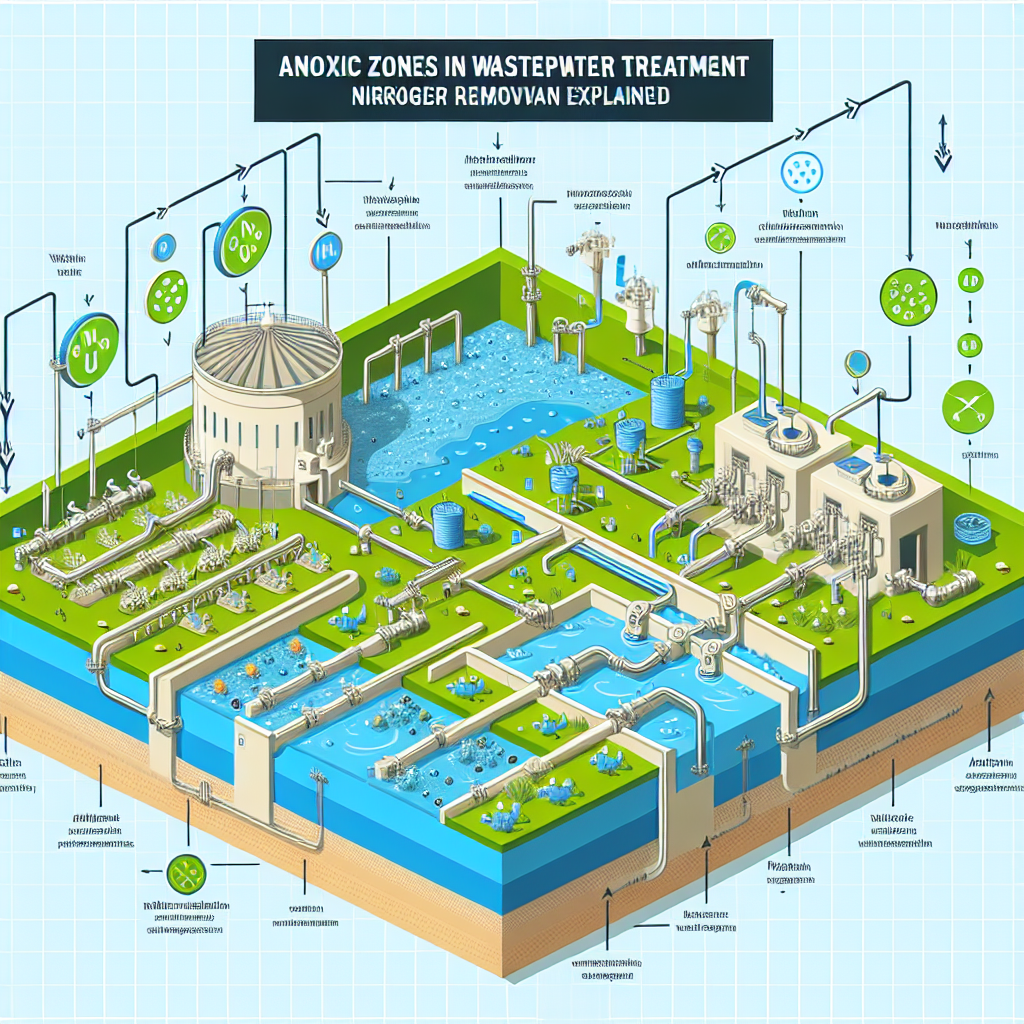
Anoxic Zones in Wastewater Treatment: Nitrogen Removal Explained
Article Overview
Article Type: Informational
Primary Goal: Explain how anoxic zone treatment removes nitrogen in municipal and industrial wastewater, covering microbial mechanisms, common process configurations, design and operational parameters, monitoring and control strategies, retrofit options, technology vendors, and real world examples so engineers and operators can design, operate, and optimize anoxic zones for reliable nitrate removal.
Who is the reader: Municipal wastewater engineers, plant design engineers, wastewater treatment operators, operations managers, and equipment manufacturers involved in biological nutrient removal and plant upgrades who are evaluating designs, troubleshooting performance, or specifying equipment.
What they know: Readers understand basic activated sludge concepts and basics of nitrification. They may not fully understand anoxic zone design parameters, carbon management, denitrifier ecology, or the practical tradeoffs between pre and post denitrification and emerging alternatives such as anammox. They want concrete design guidance, operational setpoints, monitoring strategies, and examples from existing plants.
What are their challenges: They face tightening effluent nitrogen limits, carbon limited influent, space or budget constraints for retrofits, operational instability when sludge age or DO fluctuates, difficulty achieving complete denitrification, high operating cost for external carbon dosing, and vendor selection for mixers, carriers, or online control systems.
Why the brand is credible on the topic: Water and Wastewater provides engineering-focused coverage of treatment technologies, publishes case studies and vendor evaluations, and regularly features contributions from practicing engineers and equipment manufacturers such as Veolia, Evoqua, and Xylem. The site documents design guidance, project case studies, and product datasheets that align with industry standards and WEF guidance.
Tone of voice: Authoritative and technical, with practical engineer oriented language. Prioritize clarity, actionable metrics, worked examples, and neutral comparison of options. Avoid marketing language and focus on evidence based recommendations and operational pragmatism.
Sources:
- US EPA Nutrient Control Design Manual and technology overviews https://www.epa.gov/water-research
- Water Environment Federation Manual of Practice No 8 Biological Nutrient Removal and WEF technical briefs https://www.wef.org/resources/publications/books/manual-of-practice-no-8-biological-nutrient-removal/
- Metcalf amp Eddy Wastewater Engineering Treatment and Resource Recovery textbook, 5th edition, McGraw Hill
- IWA and Water Research review articles on mainstream partial nitritation and anammox such as Lotti et al and recent mainstream anammox reviews on ScienceDirect
- Vendor technical pages and case studies from Veolia, SUEZ, Xylem, Evoqua, and AnoxKaldnes
Key findings:
- Anoxic zones enable biological denitrification by heterotrophic bacteria using nitrate as electron acceptor and require adequate biodegradable carbon and low dissolved oxygen typically under 0.2 mg per L to avoid aerobic inhibition.
- Common configurations include pre denitrification (internal recycle + external carbon if needed), post denitrification, MLE and Bardenpho variants; each has tradeoffs in carbon demand, oxygen efficiency, and footprint.
- Design control levers that most influence performance are nitrate recycle ratio, anoxic zone hydraulic retention time, readily biodegradable COD availability, mixed liquor suspended solids and sludge age, and dissolved oxygen control at the anoxic/anoxic interface.
- Emerging approaches such as mainstream partial nitritation anammox can reduce carbon and oxygen demand but require strict process control and are more commonly applied to sidestream or high strength streams initially.
- Reliable monitoring using online nitrate sensors, DO, oxidation reduction potential ORP probes, and carbon dosing feedback loops drastically improves control and reduces chemical costs compared to manual setpoint control.
Key points:
- Explain microbial mechanism of denitrification and stoichiometric carbon demand with practical dosing guidance for methanol and acetate.
- Compare anoxic zone configurations (pre denitrification, post denitrification, MLE, Bardenpho, SBR, MBBR IFAS) with clear tradeoffs and example use cases.
- Provide actionable design and operational parameters: HRT, recirculation ratios, SRT guidelines, target DO, ORP setpoints, and monitoring strategies including recommended sensors and alarm logic.
- Present troubleshooting checklists for common failures: incomplete denitrification, nitrate breakthrough, carbon limitation, sludge bulking tied to anoxic conditions, and mixing issues, with corrective actions and quick tests.
- Include at least two real case studies or municipal examples and list reputable vendors and technologies with brief notes on where they fit.
Anything to avoid:
- High level or generic marketing claims about specific vendors without technical justification or comparative context.
- Overly simplistic definitions that assume reader is a layperson; maintain engineering level detail.
- Unverified numerical claims or single source anecdotal performance numbers presented as universal truths.
- Promotional language or sales tone favoring any vendor without balanced evaluation.
- Omitting carbon stoichiometry and practical dosing calculations when discussing denitrification design.
External links:
- https://www.epa.gov/water-research/nutrient-control
- https://www.wef.org/resources/publications/books/manual-of-practice-no-8-biological-nutrient-removal/
- https://www.mhprofessional.com/9780073401188-metcalf-eddy-wastewater-engineering
- https://www.sciencedirect.com/science/article/pii/S0043135417310338
- https://anoxkaldnes.com
Internal links:
- Anaerobic Digestion Wastewater Treatment: Efficient Solution for Sustainable Water Management – Water & Wastewater
- Recycle and Reuse of Wastewater: A Sustainable Solution for Water Conservation – Water & Wastewater
- UV Disinfection for Wastewater: Efficient Microbial Control in Treatment Plants – Water & Wastewater
- Wastewater Filtration: Advanced Technologies for Clean Water Solutions – Water & Wastewater
- Activated Carbon Filtration: Essential for Clean Water Systems – Water & Wastewater
Content Brief
Context and writing guidance for the article. State that the article explains how anoxic zone treatment achieves nitrogen removal by biological denitrification, why municipalities and operators choose specific anoxic configurations, and how to size and operate anoxic zones for consistent performance. Emphasize practical engineering deliverables: design equations and worked examples for carbon dosing and recycle ratios, operational setpoints (HRT, SRT, DO, ORP), instrumentation and control recommendations, troubleshooting steps tied to measurable indicators, and vendor technology fit. Use a neutral technical tone, include citations to WEF and EPA where appropriate, and include at least two municipal case studies with specific names and outcomes. Avoid marketing language. Provide parameter ranges supported by literature and note dependencies on influent characteristics.
Principles of Nitrogen Removal in Anoxic Zones
- Describe the biochemical pathway: nitrate reduction to nitrite then to nitrogen gas by heterotrophic denitrifiers; include overall stoichiometry for COD consumption per mg NO3-N removed and explain differences between acetate and methanol as external carbon.
- Explain oxygen inhibition thresholds and why free dissolved oxygen must typically be below 0.2 mg per L to maintain anoxic conditions.
- Define readily biodegradable COD fraction importance and typical targets for influent rbCOD to support denitrification without external carbon.
Microbial Ecology and Kinetics Relevant to Anoxic Zones
- Identify key organisms and functional groups: heterotrophic denitrifiers, floc associated versus biofilm denitrifiers, and how mixed liquor age influences community composition.
- Discuss kinetics: denitrification rates, factors affecting maximum specific denitrification rate qD, temperature dependence, and substrate uptake rates for common carbon sources.
- Explain practical monitoring of biomass activity with batch anoxic tests, nitrate removal rate assays, and use of specific oxygen uptake rate SOUR tests to infer conditions.
Common Anoxic Zone Configurations and When to Use Each
- Pre denitrification with internal recycle: describe configuration, advantages for oxygen savings, typical nitrate recycle ratios (3 1 to 5 1), and scenarios where it is preferred.
- Post denitrification after nitrification: describe advantages in low carbon systems, need for external carbon dosing, and use cases for polishing nitrate effluent.
- MLE and Bardenpho variants: contrast zone sequencing, number of anoxic stages, and expected performance improvements for total nitrogen removal.
- SBR and MBBR / IFAS implementations: detail how anoxic periods are achieved in SBR cycles and how media carriers enable simultaneous nitrification and denitrification in IFAS or MBBR.
Design Parameters and Sizing Guidance
- Provide design HRT ranges for anoxic zones (typical municipal ranges 20 to 80 minutes per anoxic stage) with guidance on how to scale based on influent nitrate load and target removal.
- Give internal recycle calculations example: present step by step calculation for recycle flow given influent flow Q, ammonia load, nitrification efficiency, and target denitrification rate using a worked numeric example.
- Specify SRT and MLSS guidance to support stable denitrifier populations and guidance when to decouple aerobic and anoxic SRTs in IFAS systems.
- List mixing and detention design considerations: mixer types, power input P g per W per m3, and short notes on avoiding shearing flocs in biofilm systems.
Carbon Management and External Carbon Dosing
- Present stoichiometric calculations for COD demand: theoretical COD 2.86 g COD per g NO3-N and practical dosing factors for methanol and acetate with worked example dosing calculation for a 10 mg per L nitrate polishing target.
- Compare carbon sources: methanol, ethanol, acetate, glycerol, and proprietary blends. Include advantages, safety considerations, costs, typical dosing rates, and byproduct concerns (e.g., residual COD).
- Describe control strategies for dosing: feed forward based on flow and nitrate load, and feedback control using online nitrate probes in the effluent and nitrate recycle lines.
Monitoring, Control, and Instrumentation Best Practices
- Recommend sensors and placement: DO probes at anoxic/aerobic interface, online nitrate analyzers in anoxic recycle and effluent, ORP probes as supplemental indicators, and ammonia probes for overall nitrogen balance.
- Outline control logic recipes: DO setpoint cascades, nitrate recycle proportional control, methanol dosing PID or bang bang control options, and fail safe alarm thresholds.
- Discuss maintenance and calibration intervals for sensors and how to interpret drift or false readings in nitrate probes and ORP signals.
Troubleshooting Common Field Problems
- Incomplete denitrification: checklist linking poor performance to low rbCOD, insufficient HRT, excessive DO leaks, low temperature, and suggested corrective actions including temporary external carbon spike and increasing recycle.
- Nitrate breakthrough and nitrate washout during peak flows: explain hydraulic short circuit indicators and temporary operational adjustments such as reducing aerobic DO setpoint and increasing internal recycle.
- Operational problems tied to anoxic conditions such as filamentous bulking and sludge settleability: provide practical steps to diagnose and mitigate including selective wasting, return sludge modifications, and filament control chemicals where warranted.
Technology Options and Vendor Examples
- List vendors and how their technologies map to needs: Veolia and SUEZ for full BNR package plants, Evoqua and Xylem for instrumentation and mixers, AnoxKaldnes Kaldnes carriers for MBBR anoxic zones, and companies supplying external carbon systems like PeroxyChem or methanol distributors. Give typical product fit per application.
- Discuss monitoring and automation vendors offering integrated nitrate control solutions such as Hach and Endress Hauser and how their products perform in municipal plants.
- Provide procurement considerations: skid mounted carbon dosing packages, contractor selection tips, and lifecycle cost tradeoffs between capital intensive retrofit and ongoing chemical costs.
Case Studies and Practical Examples
- Present a municipal pre denitrification case study: summarise a real facility upgrade example such as East Bay Municipal Utility District BNR upgrades or another documented municipal plant that implemented pre denitrification, including before after effluent TN and key design numbers.
- Include a sidestream or mainstream deammonification example where mainstream anammox was trialed or implemented, summarise outcomes and lessons learned and reference published study or plant report.
- Provide a compact worked example for a hypothetical 10 MGD plant showing mass balance, recycle flow, anoxic HRT sizing, and methanol dose calculation to meet a target effluent TN of 3 mg per L.
Retrofit Strategies and Cost Considerations
- Discuss space constrained retrofit options: sequencing changes, conversion of aerobic capacity to anoxic with internal recycle, IFAS retrofits using limited footprint media, and estimated typical capital ranges for each approach.
- Provide rule of thumb operating cost comparisons for methanol dosing versus expanded aeration and energy costs using example unit prices and consumption metrics.
- List permitting, operator training, and commissioning activities that should be budgeted during a retrofit project including pilot testing and performance guarantee methods.
Emerging Trends and Alternatives
- Summarize mainstream partial nitritation anammox and deammonification benefits and limits, typical suitability criteria, and references to plants or trials showing success in mainstream or sidestream contexts.
- Describe hybrid solutions such as shortcut nitritation in combined MLE BNR trains or use of advanced controls and real time sensors to operate intermittent aeration for simultaneous nitrification denitrification.
- Highlight research directions including microbiome control, online carbon quality sensors, and digital twin modeling for optimization.
Frequently Asked Questions
What is the typical dissolved oxygen target in anoxic zones to prevent aerobic inhibition of denitrification
Maintain dissolved oxygen below 0.2 mg per L in the bulk liquid; use DO probes and ORP trends to detect oxygen intrusion and adjust mixing or baffles.
How much external carbon is needed to remove 1 mg of nitrate nitrogen
The theoretical COD demand is about 2.86 g COD per g NO3 N; practical dosing often ranges from 3 to 4 g COD per g NO3 N depending on background COD and process inefficiencies, with methanol dosing conversions provided in the dosing example section.
When is pre denitrification preferred over post denitrification
Pre denitrification is preferred when influent has sufficient biodegradable COD and when oxygen savings are a priority; post denitrification is used when polishing low nitrate effluent is required or when influent rbCOD is low and external carbon can be dosed after nitrification.
Can anammox replace anoxic denitrification in mainstream plants
Mainstream anammox can reduce carbon and oxygen demand but requires strict control of nitrite, low organic load interference, and careful pilot testing; it is more commonly applied to sidestream high strength flows initially.
What sensors are most reliable for closed loop nitrate control
A combination of online nitrate analyzers in the effluent or recycle, DO probes at key interfaces, and ORP probes for quick detection provides robust inputs for closed loop control; select sensors with municipal wastewater proven track records and regular calibration schedules.
How should I troubleshoot sudden loss of denitrification performance
Check for decreased rbCOD, oxygen intrusion, lowered SRT, compromised mixing, or nitrate recycle failures; run a batch anoxic nitrate uptake test and verify sensor integrity before making long term design changes.