
Dissolved Air Flotation: Separating Solids from Wastewater
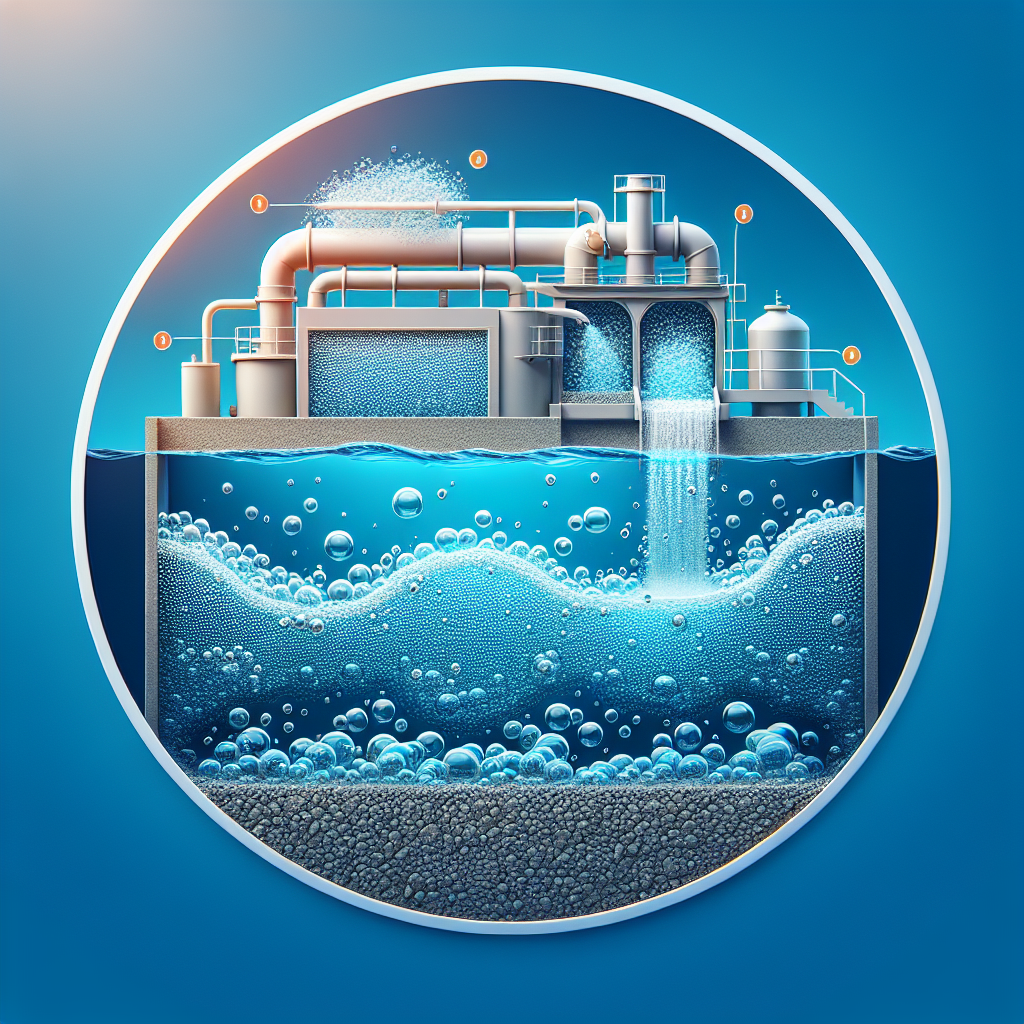
Dissolved Air Flotation: Separating Solids from Wastewater
Article Overview
Article Type: Informational
Primary Goal: Provide municipalities, design engineers, operators, and equipment manufacturers with a practical, technical reference for selecting, designing, operating, and troubleshooting dissolved air flotation systems to optimize solids separation, footprint, and lifecycle cost for municipal and industrial wastewater applications
Who is the reader: Municipal utilities, wastewater treatment plant design engineers, wastewater plant operators, process engineers, and equipment manufacturers evaluating or specifying dissolved air flotation for primary, tertiary, or industrial wastewater applications. Readers are typically in the project evaluation, design, procurement, or operations optimization stage.
What they know: Readers generally understand basic wastewater treatment trains and solids removal concepts. They may be familiar with clarifiers and membrane processes but want deeper, actionable knowledge about DAF principles, design parameters, chemical pretreatment, equipment types, monitoring metrics, and real-world performance data.
What are their challenges: Evaluating whether DAF is the right technology for a given influent and effluent target, sizing equipment correctly, minimizing footprint and energy use, selecting compatible chemicals and polymers, addressing seasonal or influent variability, troubleshooting poor removal or carryover, and comparing DAF to alternatives for retrofit or new-build projects.
Why the brand is credible on the topic: Water and Wastewater provides specialized, industry-focused coverage of treatment technologies, publishes technical guides and case studies for municipal and industrial water professionals, and aggregates manufacturer specifications and field performance data. The site regularly features content from process engineers, plant managers, and suppliers such as Evoqua, Parkson, and Alfa Laval, establishing practical credibility for DAF topics.
Tone of voice: Authoritative and technical but accessible, with pragmatic recommendations, clear metrics, and data-driven comparisons. Use precise engineering language without unnecessary jargon, emphasize operational realities and trade-offs, and prioritize actionable guidance for design and operation decisions.
Sources:
- United States Environmental Protection Agency technical reports and design manuals related to flotation and solids separation
- Water Environment Federation manuals and conference proceedings on clarification and flotation technologies
- Peer reviewed articles from Water Research and Journal of Environmental Engineering on bubble size, recycle ratio effects, and chemical pretreatment performance
- Technical product documentation and case studies from Parkson, Evoqua, Alfa Laval, and Ovivo on DAF unit configurations and field performance
- Industry guides and white papers from IWA and professional society presentations on full-scale DAF retrofits and operational best practices
Key findings:
- Dissolved air flotation is highly effective for removing low density, low settling solids and algae where sedimentation performs poorly, and performance is strongly influenced by bubble size distribution and mixing quality
- Typical recycle ratios, pressurization, and bubble size ranges are critical design variables; producing microbubbles in the 20 to 100 micrometer range improves attachment and rise rates, while recycle flows between 5 to 30 percent and saturation pressures around 2 to 6 bar are common starting points depending on application
- Chemical pretreatment with appropriate coagulants and polymers often increases DAF performance significantly; jar testing and pilot trials are necessary to optimize dose and polymer type for sludge dewaterability and floc strength
- Operational monitoring of solids loading, blanket depth, skimming frequency, and dissolved oxygen/bubble metrics correlates with stable performance; many common failures stem from poor floc formation, excessive hydraulic loading, or inadequate air saturation control
- Lifecycle tradeoffs show DAF has higher CAPEX and energy than simple clarifiers but can reduce footprint, increase TSS and BOD removal, and enable tertiary treatment targets in constrained sites
Key points:
- Clear explanation of DAF separation mechanisms and why microbubble generation, attachment efficiency, and flocculation chemistry determine solids removal
- Specific design and sizing guidance including recycle ratio, saturation pressure, hydraulic loading rate, detention time, bubble size targets, and skid footprint considerations
- Practical chemical pretreatment recommendations with jar testing protocol, typical coagulant and polymer choices, dose ranges, and impacts on sludge characteristics
- Operational controls, instrumentation, and step-by-step troubleshooting for common problems such as carryover, poor sludge compaction, and seasonal performance shifts
- Real-world case studies or performance examples showing influent characteristics, configuration selected, achieved removal rates, footprint and energy metrics, and lessons learned
Anything to avoid:
- Overly promotional language for specific vendors or implying endorsement without comparative data
- Vague or purely conceptual advice without numerical design ranges or operational setpoints
- Unverified absolute claims about performance without source or context, such as fixed removal percentages for all applications
- Deep academic derivations that are not tied back to practical design or operational decisions
- Generic beginner-level explanations of wastewater treatment that do not relate directly to DAF decision criteria
External links:
- https://www.epa.gov/sites/default/files/2015-09/documents/dissolved_air_flotation.pdf
- https://www.wef.org/resources/for-the-publications/ (search WEF manuals on clarification and flotation)
- https://www.sciencedirect.com/journal/water-research
- https://www.parkson.com/products/dissolved-air-flotation/
- https://www.evoqua.com/en/markets/municipal/clarification/daf/
Internal links:
- A Day in the Life of a Wastewater Treatment Plant Manager – Water & Wastewater
- Essential Water Treatment Chemistry: A Complete Guide for Plant Operators – Water & Wastewater
- The Role of Biogas in Sustainable Wastewater Treatment: Powering Circular Economy Solutions – Water & Wastewater
- Car Wash Wastewater Treatment Systems: Efficient Solutions for Environmental Compliance – Water & Wastewater
- Wastewater Treatment Problems And Solutions – Water & Wastewater
Content Brief
Context and writing guidance for the full article. The article should frame dissolved air flotation as a targeted solids separation solution for low-density and poorly settling solids in municipal and industrial wastewater. Cover how DAF fits into treatment trains, when to choose DAF vs sedimentation or membranes, and emphasize measurable design and operational parameters. Adopt a practical, engineering-first approach: include numerical ranges, checklists, and step-by-step protocols (for example, jar testing steps and pilot run metrics). Use real manufacturer examples and cite field case studies for validation. Avoid vendor promotion; present vendors only for specification examples and link to neutral datasheets. Visuals to include suggested: schematic of DAF process (saturation, recycle, flotation tank), bubble size vs rise rate chart, sample jar test results table, and a before/after performance table from a municipal case study. Maintain a tone that is technical but usable by non-academic practitioners, with clear takeaways for design, procurement, and operations.
How dissolved air flotation separates solids
- Explain microbubble attachment mechanism, buoyant rise of floc-bubble aggregates, and difference from sedimentation
- Describe supersaturation, release of dissolved gas via pressure drop, and recycle stream concept
- List typical bubble size distribution targets and why smaller bubbles increase capture efficiency but may increase energy demand
- Provide schematic of flow path: influent, coagulation/flocculation zone, DAF contact zone, flotation tank, skimmer, sludge collection
Key design parameters and sizing guidance
- Present actionable numeric ranges for hydraulic loading rates (m3/m2/day), detention time, and surface loading rates for municipal and industrial applications
- Specify common recycle ratios (5 to 30 percent) and saturation pressures (2 to 6 bar) with guidance on when to choose higher or lower values
- Discuss bubble size targets (approximate microbubble ranges 20 to 100 micrometers), their effect on rise velocity, and methods to measure bubble size in the field
- Give guidance for footprint estimation, required skimming equipment, scum handling and sludge hopper sizing, and site layout considerations
Chemical pretreatment and optimization protocol
- Step-by-step jar testing protocol tailored to DAF: coagulant selection (alum, ferric chloride, polyaluminum chloride), polymer types (cationic, anionic, nonionic), rapid mix and flocculation times, and metrics to record
- Typical dose ranges and decision rules: when to increase polymer versus coagulant, and how chemistry affects sludge dewaterability and flotation
- Impact of pH, temperature, and seasonal influent variability on chemical effectiveness and polymer settling behavior
- Examples from manufacturer or municipal jar test results showing improved TSS and BOD removal after optimized dosing
DAF equipment types and vendor examples
- Compare unit configurations: rectangular channel DAF, horizontal skid-mounted DAF, disk/spiral DAF, and plate pack DAF, with pros and cons for each
- List major vendors with brief capabilities: Parkson, Evoqua, Alfa Laval, Ovivo, and Aqseptence Group, and example product features such as skid integration, automated controls, and microbubble generators
- Guidance on specifying materials of construction, access for maintenance, and instrumentation (pressure, recycle flow, blanket depth, turbidity)
- Checklist for procurement specs: guaranteed removal rates for target influent, energy consumption kWh/m3, footprint, and required pilot testing
Operational best practices and monitoring metrics
- Startup and commissioning checklist including saturation system commissioning, control setpoints, and conditioning the process with optimized chemical dose
- Key performance indicators to monitor: effluent turbidity, TSS, BOD, blanket depth, skimmer cycles per hour, and recycle pressure stability
- Recommended instrumentation and control strategies including PID control for recycle pressure, automatic skimmer control, and online turbidity monitoring for early warning
- Maintenance routines: air compressor and saturation tank checks, skimmer and scraper inspections, polymer feed pump calibration, and sludge removal scheduling
Common failure modes and troubleshooting steps
- Poor solids capture and carryover: diagnose via jar tests, check polymer type and dose, bubble production, hydraulic short-circuiting, or overloaded surface loading
- Excessive sludge volume or poor dewatering: evaluate polymer selection, sludge age, and scum entrapment; recommend specific lab tests and polymer types to trial
- Air saturation or recycle system problems: list checks for leaks, incorrect saturation pressure, improper recycle flow, and compressor maintenance actions
- Operational mitigation strategies with example adjustments and expected response times (for example, increasing polymer dose and expected effluent improvement within X hours)
Case studies and performance examples
- Municipal example: summarize a real-world municipal DAF retrofit where DAF replaced primary clarifiers or polished tertiary effluent, including influent characteristics, configured recycle ratio, chemicals used, achieved TSS and BOD removal percentages, footprint reduction, and energy metrics
- Industrial example: present a food processing or pulp and paper DAF application with influent fat/oil/grease characteristics, polymer regimes, and sludge handling changes
- Before and after performance table template to include in article with columns for influent TSS, effluent TSS, removal percentage, chemical dose, recycle ratio, footprint, and operating cost per cubic meter
- Lessons learned and vendor collaboration anecdotes showing common pitfalls and high-impact optimizations from field projects
Cost, lifecycle considerations, and retrofit guidance
- Breakdown of CAPEX and OPEX drivers: equipment, chemical costs, energy for compressors and pumps, maintenance, and sludge handling and disposal
- Guidance for lifecycle cost comparison with primary clarifiers and membrane solutions, including when higher initial cost is justified by smaller footprint or higher removal efficiency
- Retrofit checklist for converting clarifiers to DAF or integrating DAF as tertiary treatment, including civil works, bypass arrangements, and pilot testing recommendations
- Financing and procurement tips: specifying warranty performance, commissioning acceptance tests, and performance guarantees
Comparing DAF to alternative solids separation technologies
- Clear comparison to primary sedimentation, lamella clarifiers, membrane bioreactors, and centrifugation across criteria: removal efficiency for low density solids, footprint, energy use, chemical dependence, and sludge handling
- Decision matrix template to help readers choose technology based on influent characteristics, site constraints, and effluent requirements
- When to cascade technologies, for example coagulation-DAF followed by media filtration or membrane polishing, with examples of target applications
- Practical tradeoffs and red flags suggesting DAF is not suitable
Frequently Asked Questions
What influent characteristics make DAF a better choice than primary sedimentation
DAF excels when influent contains low density, buoyant materials such as algae, fats, oils, greases, or finely divided solids that do not settle well; high turbidity with small particle size and seasonal algal blooms are common use cases.
What are typical recycle ratios and saturation pressures used in DAF design
Designs commonly use recycle ratios from about 5 to 30 percent of plant flow and saturation pressures roughly between 2 and 6 bar; final selection depends on influent characteristics and required bubble size distribution.
How should I run jar tests for DAF chemical optimization
Perform sequential jar tests varying coagulant type and dose followed by polymer type and dose, record floc size, settling or flotation tendency, and measure expected effluent turbidity; include a mini-DAF column if possible to evaluate floatability.
What operational metrics indicate a DAF unit is underperforming
Rising effluent turbidity or TSS, increased skimmer frequency without improved effluent, unstable blanket depth, and persistent carryover are clear signs to investigate polymer dosing, recycle system pressure, or hydraulic bypass.
Can DAF be retrofitted into existing treatment plants with limited footprint
Yes; DAF often reduces footprint relative to large clarifiers but requires careful civil integration, provisions for skimmings and sludge handling, and typically a pilot to confirm performance before full retrofit.
How much does chemical dosing affect sludge dewaterability from DAF
Chemical selection and polymer dose have a major influence on sludge floc strength and dewaterability; overdosing polymer can worsen cake solids, so optimize through lab testing and pilot trials.
What maintenance tasks are most important for reliable DAF operation
Routine maintenance of compressors and saturation tanks, inspection of recycle pumps and valves, calibration of polymer feed systems, and regular skimmer and hopper cleanouts are essential to prevent performance degradation.