
Endress+Hauser vs Krohne Impeller Equipment: Comparison & Best Fit
Introduction
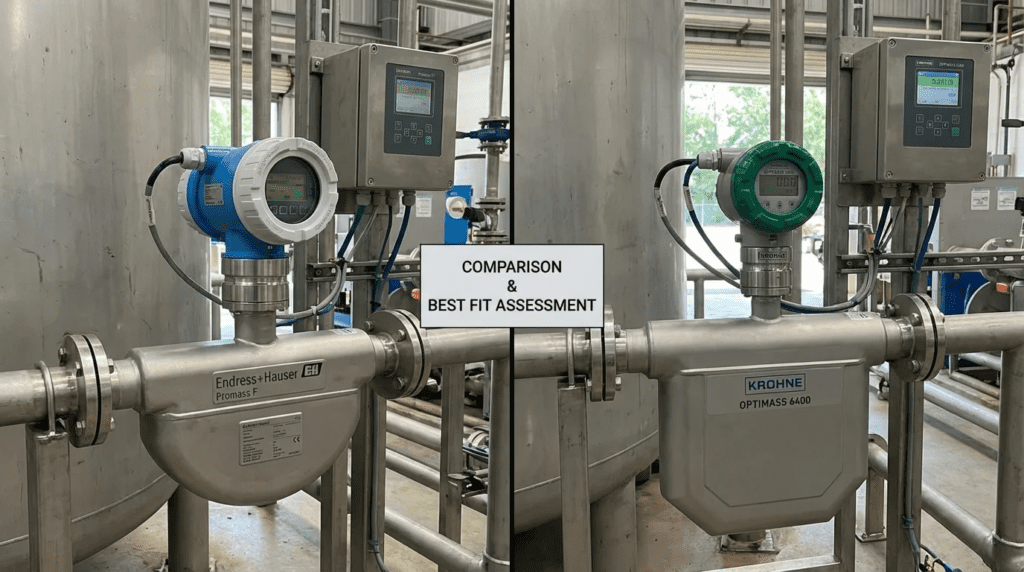
In the municipal and industrial water sectors, the accuracy of flow measurement directly correlates to the operational efficiency of pumping systems. A common challenge facing design engineers is the disconnect between the mechanical performance of pumps and the instrumentation used to monitor them. When specifying flow measurement technologies to monitor pumping assets, the choice often comes down to European heavyweights. Specifically, conducting an Endress+Hauser vs Krohne Impeller Equipment: Comparison & Best Fit analysis is a critical step for many capital improvement projects.
Surveys in wastewater treatment facilities suggest that up to 30% of pump efficiency calculations are incorrect due to poorly selected or installed flow meters, rather than actual pump degradation. This leads to premature pump replacement, wasted energy, and skewed hydraulic modeling. While neither Endress+Hauser (E+H) nor Krohne manufactures the pumps (impellers) themselves, they are the two dominant global manufacturers of the instrumentation required to monitor impeller-driven flow. Their devices—primarily electromagnetic (mag) and Coriolis meters—serve as the “cash register” and “health monitor” for centrifugal and positive displacement pumps.
This article provides a deep engineering analysis of these two manufacturers’ technologies as they relate to pump monitoring. We will explore how their specific features (such as Krohne’s Entrained Gas Management or E+H’s Heartbeat Technology) interact with impeller hydraulics, assist in identifying cavitation, and ensure accurate billing and process control. This guide is designed to help engineers move beyond brand loyalty and select the correct specification based on fluid mechanics, solids loading, and total lifecycle cost.
How to Select / Specify
Selecting the right instrumentation to monitor impeller-driven systems requires a detailed understanding of both the hydraulic profile of the pump and the limitations of the sensor. When performing an Endress+Hauser vs Krohne Impeller Equipment: Comparison & Best Fit evaluation, engineers must look beyond the brochure and into the physics of the application.
Duty Conditions & Operating Envelope
The first step in specification is defining the interaction between the pump curve and the meter’s measurable range.
- Turndown Ratio: Centrifugal pumps often operate on Variable Frequency Drives (VFDs). The flow meter must maintain accuracy (typically ±0.2% to ±0.5%) across the entire speed range. Both manufacturers offer high turndown ratios, but verify accuracy at the low-flow cutoff point (typically < 0.3 m/s).
- Conductivity Floor: For electromagnetic meters, the medium must be conductive. While standard water is rarely an issue (requires > 5 µS/cm), ultra-pure water or heavily polymer-dosed sludges can present challenges. E+H and Krohne have different low-conductivity thresholds depending on the specific converter model selected.
- Flow Profile and Turbulence: Impeller equipment generates swirl and turbulence. If the meter is installed too close to the pump discharge, accuracy degrades. Engineers must evaluate if the specific model requires standard 5xDN upstream straight run or if it supports 0xDN (zero straight run) installation, a feature both vendors have developed for tight retrofits.
Materials & Compatibility
The lifespan of the meter is dictated by the liner and electrode compatibility with the fluid and the abrasives it carries.
- Liner Selection:
- Hard Rubber/Polyurethane: Best for abrasive slurries and grit removal pump stations. Both vendors offer excellent abrasion-resistant liners, but the bonding techniques differ.
- PTFE/PFA: Required for aggressive chemicals (ferric chloride, sodium hypochlorite) or high temperatures. Note that PFA is generally more robust against vacuum conditions (common in pump suction lines) than PTFE.
- Electrode Material: Standard Stainless Steel 316L is sufficient for water. However, for wastewater with high H2S or industrial effluents, Hastelloy C-22 or Titanium may be required. Specifying the wrong material here leads to pitting and signal loss within months.
Hydraulics & Process Performance
Understanding the hydraulic impact of the instrument on the system is vital for energy calculations.
- Pressure Drop: Full-bore electromagnetic meters from both manufacturers introduce negligible pressure drop (equivalent to a straight pipe run). However, if specifying Coriolis meters for high-accuracy chemical dosing pumps, the pressure drop across the bent tubes must be calculated to ensure it does not exceed the pump’s discharge pressure capability or cause flashing.
- Entrained Gas Handling: This is a major differentiator. Impeller equipment in wastewater often creates cavitation or pumps fluids with entrained gas (digested sludge). Gas bubbles disrupt the magnetic field in magmeters and stall the oscillation in Coriolis meters.
If the flow meter is installed on the suction side of a pump (not recommended but sometimes unavoidable) or in a siphon line, you MUST specify a vacuum-resistant liner. Standard PTFE liners can collapse under vacuum, destroying the meter. Reinforced PFA or ceramic liners are necessary here.
Installation Environment & Constructability
The physical constraints of the pump station often dictate the winner in an Endress+Hauser vs Krohne Impeller Equipment: Comparison & Best Fit scenario.
- Submersibility (IP68/NEMA 6P): In pump vaults, meters frequently flood. Both manufacturers offer IP68 ratings, but the “potting” of the remote connection box varies. Specification should require factory-potted terminal boxes or remote transmitters to move electronics out of the vault.
- Compact vs. Remote: For high-vibration environments (directly coupled to pump discharge piping), remote mounted transmitters are mandatory to protect the electronics from mechanical fatigue.
- Grounding: Plastic piping requires grounding rings or reference electrodes. Krohne’s “Virtual Reference” feature in the Optiflux series can sometimes eliminate the need for grounding rings, reducing installation complexity and leak paths.
Reliability, Redundancy & Failure Modes
- Electrode Coating: In sewage applications, grease coats the electrodes, insulating them from the fluid and causing signal drift.
- Detection: Both OEMs offer “Empty Pipe Detection” and “Electrode Coating Detection.”
- Cleaning: Some models offer mechanical scrapers (rare now) or specialized electrode shapes to minimize buildup.
- MTBF (Mean Time Between Failures): The primary failure mode is rarely the flow tube; it is the transmitter electronics or moisture ingress. Specifying dual-compartment housings separates the wiring terminals from the electronics, improving reliability during installation and maintenance.
Controls & Automation Interfaces
Modern pump stations require data beyond just “Flow Rate.”
- Pump Efficiency Monitoring: By integrating the flow rate via EtherNet/IP or Modbus TCP directly to the PLC, and combining it with power data (kW) and pressure (Head), the SCADA system can calculate real-time Wire-to-Water efficiency.
- Diagnostics: E+H’s Heartbeat Technology and Krohne’s Opticheck provide deep diagnostic data. They can tell the operator if the magnetic coil is degrading, if the liner is abraded, or if external noise is interfering with the signal.
Lifecycle Cost Drivers
- Verification Costs: Regulatory bodies often require annual flow meter verification. Traditionally, this meant removing the meter (expensive crane/shutdown). Both vendors now offer in-situ verification tools that generate a compliant verification report without process interruption.
- Spare Parts: Considerations include the availability of replacement electronic inserts (transmitters) that can be swapped without removing the flow tube. This dramatically lowers the 20-year OPEX.
Comparison Tables
The following tables provide a direct engineering comparison. Table 1 focuses on the flagship product lines relevant to impeller equipment monitoring. Table 2 provides an application fit matrix to assist in selection based on fluid type.
| Feature / Criteria | Endress+Hauser (Primary Line: Proline Promag W/P) | Krohne (Primary Line: Optiflux 2000/4000) | Engineering Notes |
|---|---|---|---|
| Primary Application Focus | Digital Integration & Comprehensive Diagnostics (Heartbeat) | Robustness, Sludge, and High Gas Content (EGM) | E+H excels in data-rich environments; Krohne excels in difficult process fluids. |
| Entrained Gas Handling | Multi-frequency excitation available; handles moderate gas but prioritizes alerts. | Entrained Gas Management (EGM): Maintains measurement with up to 100% gas entrainment. | Crucial for digester sludge pumps or lift stations prone to air locking. |
| Installation Constraints (0xDN) | Promag W 400 (0xDN): “Full Bore” design with multiple measuring electrodes for flow profile independence. | Waterflux 3070: Rectangular reduced bore design allows 0xDN inlet/outlet. | E+H approach (full bore) has lower pressure loss; Krohne approach (rectangular) conditions the flow physically. |
| Verification Technology | Heartbeat Technology: Continuous self-monitoring and traceable verification (TÜV certified). | Opticheck: In-situ verification tool and built-in diagnostics. | E+H generally regarded as having the more advanced onboard diagnostic ecosystem currently. |
| Grounding Requirements | Standard grounding rings or reference electrode required for plastic pipe. | Virtual Reference: Available on specific models, eliminating need for rings. | Virtual reference reduces CAPEX and installation error on plastic pipelines. |
| Web Server / Connectivity | Integrated Web Server (WLAN) standard on new transmitters for easy config via laptop/tablet. | Bluetooth/App connectivity available; strong emphasis on HART/Modbus robustness. | E+H web server allows full config without proprietary software. |
| Application Scenario | Fluid Characteristics | Best Fit Strategy | Critical Constraint |
|---|---|---|---|
| Raw Sewage Lift Station | High solids, rags, grease, conductive. | Either (with Hard Rubber/PU Liner). E+H Promag L or W; Krohne Optiflux 2000. | Must use bullet-nose or scraper electrodes if grease is excessive. Remote transmitter to avoid flooding. |
| Thickened/Digested Sludge | High viscosity, entrained methane/gas bubbles. | Krohne Optiflux w/ EGM. | Standard magmeters will drop to zero when gas passes through; Krohne EGM holds the output stable. |
| Potable Water Distribution | Clean water, varying flow rates (night vs day). | E+H Promag W 0xDN. | Allows installation in tight vaults without straight runs. High accuracy at low flow needed for leak detection. |
| Chemical Dosing (Hypo/Polymer) | Corrosive, pulsating flow (diaphragm pumps), or low flow. | Coriolis (E+H Promass or Krohne Optimass). | Magmeters struggle with non-conductive polymers. Coriolis measures mass directly, verifying pump stroke efficiency. |
| RAS/WAS Pumping | Abrasive biological solids, moderate flow. | Magmeter with Polyurethane Liner. | Abrasion resistance is key. PTFE liners may wear prematurely if grit is high. |
Engineer & Operator Field Notes
Real-world experience often deviates from the datasheet. The following notes are compiled from commissioning logs and troubleshooting sessions involving Endress+Hauser and Krohne instrumentation in pumping applications.
Commissioning & Acceptance Testing
- The “Zero” Check: Before starting the pump (impeller equipment), the pipe must be full of liquid and at zero flow to perform a “Zero Point Calibration.”
- Common Mistake: Performing this on a partially empty pipe. This sets a false baseline and offsets the entire pump curve.
- Procedure: Close downstream valve, ensure pump is off, ensure line is flooded, trigger zero cal.
- Low Flow Cutoff: Set the low flow cutoff slightly above the thermal convection currents or vibration noise of the system. Typically 1-2% of full scale. If set to zero, the SCADA system may totalize flow when the pump is off due to fluid sloshing.
- Current Output Scaling: Match the 4-20mA span exactly to the SCADA input. If the meter is 0-1000 GPM and SCADA is 0-1200 GPM, the operator will see inaccurate data.
Common Specification Mistakes
Engineers often match the flow meter size to the pipe size (e.g., 12″ pipe = 12″ meter). However, pumps often operate at velocities of 3-5 ft/s in large pipes. Magmeters are most accurate and self-cleaning at velocities between 6-15 ft/s. It is often better to reduce the line size at the meter (e.g., 10″ meter in 12″ pipe) to increase velocity, improve accuracy, and reduce fouling.
- Cable Length Limits: When using remote transmitters, standard cables have length limits (typically 30-50m depending on conductivity). Exceeding this without factory-approved boosters results in signal capacitance issues.
- Chemical Compatibility Oversight: Specifying standard EPDM gaskets on a line dosing sodium hypochlorite. The meter liner (PTFE) might survive, but the gaskets will fail.
O&M Burden & Strategy
- Verification vs. Calibration:
- Verification (Heartbeat/Opticheck): Checks the internal electronics and coil integrity. Done annually. Takes 30 minutes. Low cost.
- Calibration: Wet-testing against a master meter. Done every 5-10 years or as required by regulation. High cost.
- Electrode Cleaning: In sludge applications, if the signal becomes “noisy” or drifts, it is likely electrode fouling. Modern transmitters can detect impedance changes at the electrode. Schedule mechanical cleaning during pump station shut-downs.
Troubleshooting Guide
- Symptom: Unstable/Jumping Flow Reading.
- Cause 1: Improper grounding. Plastic pipes act as insulators, isolating the fluid voltage.
- Cause 2: Chemical injection upstream. If dosing occurs immediately before the meter, the chemical reaction causes conductivity spikes. Move injection point downstream or 10 pipe diameters upstream.
- Symptom: Flow Reading drops to zero when pump runs.
- Cause: Entrained gas. The pump is cavitating or pulling air. The meter is functioning correctly; the process is failing.
Design Details / Calculations
To ensure the Endress+Hauser vs Krohne Impeller Equipment: Comparison & Best Fit yields a successful design, specific sizing logic must be applied.
Sizing Logic & Methodology
Do not size based on line size. Size based on fluid velocity.
- Determine Minimum and Maximum Flow: Obtain the system curve and pump curve intersection points for single and parallel pump operation.
- Calculate Velocity: $V = frac{Q}{A}$
- $V$ = Velocity (ft/s or m/s)
- $Q$ = Flow Rate
- $A$ = Cross-sectional Area
- Apply Constraints:
- Minimum Velocity: Should be > 2 ft/s (0.6 m/s) to prevent solids settling and maintain accuracy.
- Maximum Velocity: Should be < 20 ft/s (6 m/s) to prevent liner wear (abrasion).
- Ideal Range: 5 to 10 ft/s (1.5 to 3 m/s).
Specification Checklist
When writing the CSI specification (Division 40 or 43), ensure these items are explicit:
- Flange Rating: Match the piping class (ANSI 150 vs 300 / PN10 vs PN16).
- Liner Material: Explicitly state “Polyurethane” or “Hard Rubber” for wastewater; “PTFE” for chemicals. DO NOT say “Manufacturer Standard.”
- Transmitter Enclosure: Specify “Die-cast aluminum, powder-coated” or “Stainless Steel” for corrosive environments. Polycarbonate housings may degrade in direct UV.
- Approvals: NSF-61 for potable water; Class 1 Div 1/2 for hazardous locations (digester galleries).
Standards & Compliance
- AWWA M33: The primary standard for electromagnetic flowmeters in water service.
- ISO 4064: International standard for water meters.
- MCERTS: Vital for UK/European environmental compliance monitoring.
FAQ Section
What is meant by “Impeller Equipment” in the context of E+H and Krohne?
In this context, “Impeller Equipment” refers to the centrifugal pumps, vertical turbine pumps, and submersible pumps used to move fluids. While Endress+Hauser and Krohne do not manufacture the impellers themselves, they manufacture the critical flow, level, and pressure instrumentation required to monitor the performance, efficiency, and flow rate of this impeller equipment.
How does entrained gas affect flow measurement in pump stations?
Entrained gas (bubbles) can cause standard electromagnetic flowmeters to fluctuate or read zero because the gas breaks the conductive path between electrodes. Krohne’s EGM (Entrained Gas Management) technology allows the meter to continue reading even with high gas content, whereas standard meters would require the pump to stop cavitating to regain a signal.
Which liner material is best for wastewater pump discharge?
For general sewage and wastewater, Polyurethane (PU) or Hard Rubber are the best fits. They offer superior abrasion resistance against grit and sand compared to PTFE (Teflon). However, if the wastewater contains high concentrations of industrial solvents or aggressive chemicals, PTFE or PFA may be required despite lower abrasion resistance.
What is the difference between Heartbeat Technology and Opticheck?
Heartbeat Technology is Endress+Hauser’s onboard diagnostic and verification software, allowing for documented verification without external tools. Opticheck is Krohne’s equivalent verification suite. Both aim to extend calibration intervals, but E+H’s Heartbeat is often cited for its deep integration into the web server and ease of report generation via the device’s onboard WLAN.
Can I install these meters directly after a pump elbow?
Standard magmeters typically require 5 pipe diameters (5xDN) of straight run upstream to ensure a symmetric flow profile. However, both E+H (Promag W 0xDN) and Krohne (Waterflux) offer specific models designed for 0xDN installation, allowing placement immediately after elbows or valves without significant accuracy loss.
How often should magmeters on pump stations be calibrated?
Full wet-calibration is typically performed every 5 to 10 years, or as mandated by local regulations. However, electronic verification (using Heartbeat or Opticheck) should be performed annually to ensure the magnetic coils and transmitter electronics have not drifted. This satisfies most ISO 9001 and regulatory requirements for non-custody transfer applications.
Conclusion
Key Takeaways: Selection Framework
- For Difficult Fluids (Sludge/Gas): Krohne tends to lead with its EGM technology and robust “virtual reference” capabilities, making it the rugged choice for digesters and heavy sludge.
- For Digital Plant Integration: Endress+Hauser leads with Heartbeat Technology, web server integration, and intuitive data access, making it ideal for highly automated “Smart Water” facilities.
- Velocity Matters: Do not size the meter based on pipe size. Size for 5-10 ft/s velocity to ensure self-cleaning and high accuracy.
- Material Science is Critical: Match the liner to the abrasion level (PU/Rubber) and the electrodes to the chemical aggression (Hastelloy/SS).
- Installation Geometry: If space is tight, specify the specific 0xDN models (Promag W 400 or Waterflux); otherwise, adhere strictly to 5xDN/2xDN straight run rules.
When conducting an Endress+Hauser vs Krohne Impeller Equipment: Comparison & Best Fit analysis, the decision rarely rests on “accuracy” alone, as both manufacturers offer devices exceeding ±0.5% precision. The decision drives mainly from the application fluid and the maintenance philosophy of the plant.
For engineers designing sludge handling systems, lift stations with potential for cavitation, or abrasive slurry lines, Krohne’s history of heavy-industrial robustness and gas management makes it a strong contender. Conversely, for facilities prioritizing predictive maintenance, IoT integration, and seamless verification reports for regulatory compliance, Endress+Hauser’s Proline series with Heartbeat Technology offers a distinct OPEX advantage.
Ultimately, the “best fit” is the sensor that survives the process conditions while providing the specific data density required by the control strategy. By following the selection criteria and sizing logic outlined above, engineers can specify a solution that protects the pumping assets and ensures reliable data for decades.