
GAC for PFAS Removal: Performance, Design, and When to Use It
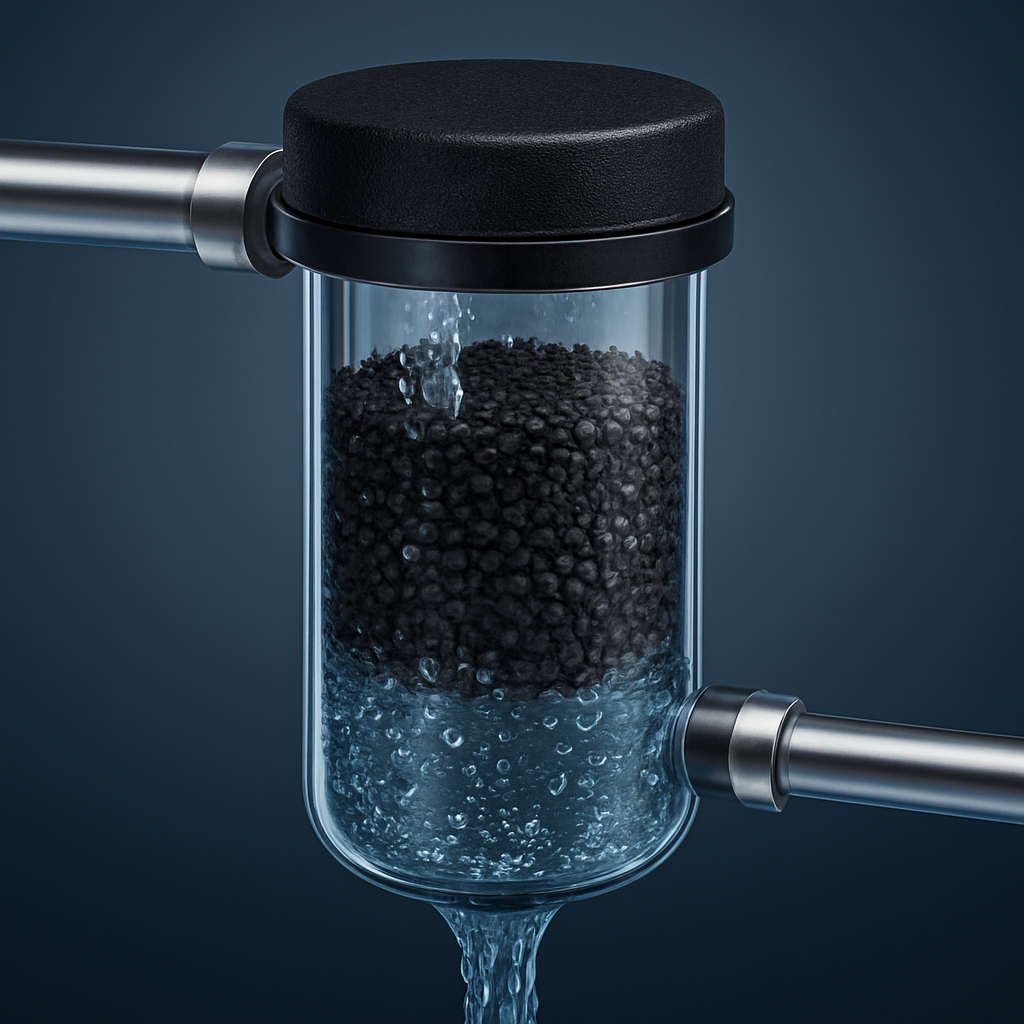
Granular activated carbon pfas removal remains one of the most deployed treatment options for municipal systems, but field performance and lifecycle costs vary widely depending on source water and PFAS speciation. This article gives practical, evidence based guidance for engineers and operators on what to expect from GAC in real systems, how to size and pilot contactors, and how to manage spent media and monitoring. Readers will get numeric design ranges, a pilot test checklist, tradeoffs versus ion exchange and membranes, and procurement tips to put into specifications and budgets.
How GAC Adsorbs PFAS and Factors That Control Performance
Direct assertion: Granular activated carbon removes PFAS by a combination of pore-filling and surface interactions, and practical performance is driven more by which PFAS and the water matrix than by media brand claims.
Mechanisms that matter in real systems
Primary mechanisms: PFAS adsorption on GAC is a mix of hydrophobic partitioning into micropores and electrostatic or polar interactions with surface functional groups.** Long chain PFAS (for example PFOS, PFOA) have stronger hydrophobic affinity and larger effective adsorption coefficients, so they sit in the carbon micropores and stay put under favorable conditions.
Practical limitation: Short chain PFAS (for example PFBA, PFBS) are smaller and more water‑soluble; they do not partition to GAC as strongly, so even with long contact times measured removal often falls short. Relying on longer empty bed contact time alone to fix short chain performance is a common but expensive mistake.
- PFAS chain length and functional group: primary determinant of affinity; longer chains adsorb more strongly.
- Pore size distribution and surface chemistry of the GAC: microporous coconut shell carbons favor small molecules; bituminous carbons with larger mesopores handle bulky organics and fouling differently.
- Natural organic matter and competing adsorbates: humics, surfactants, and oil compete for the same sites and reduce practical capacity.
- Water chemistry: pH, ionic strength, and divalent cations shift electrostatic interactions and can either help or hinder adsorption.
- Hydraulics and fouling: channeling, fines, and biofilm reduce effective contact and accelerate breakthrough.
Real-world example: A municipal groundwater system with low DOC and a PFAS profile dominated by PFOA saw sustained effluent levels below target concentrations for many months on GAC, matching vendor batch expectations. By contrast, a surface water plant with higher TOC and mixed short/long chain PFAS experienced rapid breakthrough within weeks — a reminder that bench is rarely field and pilot tests are nonnegotiable; see the EPA PFAS resources for context EPA PFAS.
Judgment from practice: Manufacturer isotherms and lab kinetics overstate field life when they omit NOM and real hydraulic patterns. Expect a performance drop when TOC or UV254 is elevated and budget both extra media and more frequent PFAS monitoring rather than assuming lab capacity translates linearly to plant life.
Key point: competition from natural organic matter is the single most common driver of reduced GAC capacity for PFAS in municipal systems.
If you plan a pilot, align its feed water chemistry with expected worst-case influent, collect TOC/UV254 alongside the full PFAS suite, and use those results to pick media type and realistic safety factors rather than relying on vendor claims or single-point lab tests. For additional piloting guidance see pilot testing for PFAS and technical notes from suppliers such as Calgon Carbon.
Typical Field Performance and Expected Removal Ranges
Direct point: In real municipal systems, granular activated carbon PFAS removal is predictable for long‑chain PFAS but highly conditional for short‑chain compounds and mixed source waters. Field performance clusters around a few distinguishable scenarios driven by influent PFAS speciation and competing organic load.
What to expect in the field
Long‑chain PFAS (PFOA, PFOS): Under low competing organics and stable hydraulics you should expect high percent removal—commonly in the 80–99 percent range for individual long‑chain analytes. These are the compounds GAC was built to handle; the practical failure mode is shortened run time, not immediate poor removal.
Short‑chain PFAS (PFBA, PFBS and similar): Removal is often poor and inconsistent in the field. Typical observed percent removals cluster below 50 percent and frequently under 20 percent when dissolved organic carbon or surfactants are present. Do not assume longer contact time will convert an ineffective system into an effective one for these compounds.
| PFAS class / example | Typical field removal range (low NOM) | Typical field removal range (higher NOM or mixed sources) | Primary assumption |
|---|---|---|---|
| Long‑chain (PFOA, PFOS) | 80–99% | 40–80% | Stable hydraulics; well water or low TOC feed |
| Medium‑chain (PFHxA, PFHpA) | 40–80% | 20–50% | Moderate competition from humics; variable influent spikes |
| Short‑chain (PFBA, PFBS) | <20–50% | <10–30% | Often dominated by aqueous solubility; GAC affinity low |
Practical limitation: Dissolved organic carbon, surfactants, and oils are the usual accelerants of breakthrough. In practice a plant with intermittent spikes in TOC or poor backwash discipline will see the high end of these ranges collapse toward the low end — shorter runtime and earlier media replacement are the consequence, not mysteriously lower removal chemistry.
Concrete example: A 1 MGD groundwater plant with 0.5 micrograms per liter PFOA and TOC around 0.8 mg/L ran a GAC contactor and achieved >95 percent reduction for PFOA and steady run lengths measured in months before breakthrough. Contrast that with a surface water plant with mixed PFAS, TOC ~4 mg/L and similar hydraulics where PFOA removal started near 70 percent and PFBS removal stayed below detectable improvement; operators observed breakthrough in weeks.
What engineers often misunderstand: Lab isotherms and small column tests overestimate field life because they usually omit realistic NOM fractions and hydraulic imperfections. Treat pilot data aligned with worst‑case influent chemistry as your design baseline rather than vendor batch isotherms — see a pilot checklist at pilot testing for PFAS and EPA guidance on PFAS at EPA PFAS.
Operational consequence: If your influent includes measurable short‑chain PFAS or elevated NOM, plan for alternative or hybrid treatment. Relying on GAC alone without a pilot is a high‑risk decision.
Design Parameters: EBCT, Bed Depth, Hydraulic Loading, and Media Selection
Design first, optimize later. Choose EBCT, bed depth, and hydraulic loading to suit your worst‑case influent chemistry and your physical constraints — not vendor marketing. These four knobs set both removal performance for long‑chain PFAS and how quickly fouling or competing organics eat capacity.
Empty Bed Contact Time (EBCT) and what it buys you
EBCT controls kinetics. Longer contact time improves uptake for slower‑adsorbing compounds and compensates for some hydraulic nonidealities, but it is not a cure for low affinity short‑chain PFAS. Use EBCT to trade footprint for runtime: deeper/longer beds mean fewer recharges but higher capital and backwash volumes.
Practical guidance: For preliminary sizing, select an EBCT consistent with your source water risk (lower EBCT for low NOM groundwater, higher EBCT for higher NOM or mixed PFAS). Confirm with a pilot because DOC, surfactants, and fines change effective kinetics in the field. See GAC design and operation for specification language you can reuse.
Bed depth, mass transfer zone, and hydraulic loading
Mass transfer zone (MTZ) is the bed that actually works. Design bed depth to contain the MTZ plus a safety margin. If the MTZ migrates to the outlet, breakthrough follows quickly; deeper beds extend run length but add headloss and media mass.
- Sizing relationship: bed volume = flow (gpm) × EBCT (min). Use this to set total bed volume before dividing into vessels.
- Hydraulic loading (empty bed velocity): target a velocity compatible with the contactor type — gravity contactors run lower velocities than pressurized vessels; higher velocities reduce EBCT unless you increase bed depth.
- Practical tradeoff: smaller footprint (pressurized vessels) requires more parallel vessels or higher velocities; deeper beds reduce footprint but increase backwash water and structural costs.
Media selection: particle and surface decisions that matter
Choose media for the job, not the brand claim. Coconut shell carbons have tighter micropores and typically perform better on small, hydrophobic molecules but foul faster with certain NOM fractions; bituminous carbons have more mesopores and tolerate higher organics but at the cost of some PFAS affinity for certain compounds. Lignite carbons are an option where cost dominates and DOC is low.
- When to favor coconut shell: low DOC sources with a PFAS profile dominated by small, long‑chain molecules and where thermal reactivation is planned.
- When to favor bituminous: surface waters with higher humic load where fouling and headloss control runtime.
- Supplier note: require performance guarantees tied to pilot results and include reactivation or disposal pricing in the procurement.
Concrete example: For a 1 MGD plant (≈694 gpm) using a chosen EBCT of 20 minutes, bed volume = 13,880 gallons (≈1,856 ft3). With a 5 ft effective bed depth that yields ≈371 ft2 footprint per contactor train. At a bulk density of 40 lb/ft3 that bed holds roughly 74,000 lb (≈34 short tons) of GAC. That configuration produces a low empty bed velocity (~1.9 gpm/ft2) — acceptable for gravity beds but too large a footprint for many sites, which pushes designers to either shorten EBCT, add multiple pressurized vessels, or increase bed depth.
Tradeoff to accept: smaller footprint almost always increases cost elsewhere (more vessels, higher steel, more complex piping). Do not compress EBCT to save area unless pilot data show equivalent PFAS performance at the shorter EBCT.
If you need manufacturer guidelines on media types and handling, consult technical resources such as Calgon Carbon technical resources. Your specification should require a pilot run and a guaranteed basis of design tied to measured MTZ movement and headloss rates from that pilot.
Pilot Testing Protocol and Data to Collect for Full Scale Design
Start the pilot with a clear failure definition. Design the test so you can observe real breakthrough, not a best‑case bench curve; short, underpowered runs give falsely optimistic capacity estimates and bad capital decisions.
Essential pilot steps
- Define objectives and success criteria: spell out which PFAS (target analytes), minimum run length, and the operational triggers that count as breakthrough (see Scaling rules). Include TOC/UV254 limits that will force requalification.
- Select a pilot unit that replicates full‑scale hydraulics: match bed depth, empty bed contact time, and linear velocity. If you must test at reduced scale, document the geometric and hydraulic scale factors and how you will adjust MTZ calculations.
- Run long enough to capture variability: plan for at least several hydraulic and source water cycles—practical minimum is months, not days—so you see seasonal TOC swings, backwash effects, and transient spikes.
- Operational regimen: operate at planned full‑scale flux, perform representative backwashes, and intentionally cycle through anticipated upset conditions (TOC spike, turbidity surge) to test fouling response.
- Sampling plan and frequency: collect influent and effluent PFAS speciation plus TOC, UV254, turbidity, conductivity, and major ions. Typical cadence: high‑frequency early (twice weekly for first month), then weekly while steady, then monthly toward expected end‑of‑run. Increase sampling around any headloss or effluent PFAS changes.
- Analytical QAQC: use accredited labs and methods appropriate for your regulatory target—specify EPA 537.1 or EPA 533 as applicable, chain of custody, matrix spikes, and reporting limits below your compliance goal.
- Record operational metrics continuously: flow, pressure drop across bed, backwash volumes, sampling times, and EBCT stability. Link those to each PFAS sample for interpretation.
- End‑of‑pilot tasks: determine spent media mass and fouling residue, conduct grab isotherm samples if useful, and run a short reactivation trial or lab desorption test if disposal vs reactivation is undecided.
Scaling rules and acceptance criteria. Use the pilot breakthrough curve to calculate the mass transfer zone movement and extrapolate run length; then apply a safety factor that reflects feed variability (1.5 for stable groundwater, 2.0–2.5 for variable surface water). Define operational breakthrough as effluent PFAS reaching a set fraction of your treatment goal (common choice: 10% of the regulatory target for action; use a separate design threshold—for example, 50% of influent concentration—to size bed life estimates).
Practical tradeoff: frequent, low‑limit PFAS analysis is expensive and slow. In practice, use targeted sentinel parameters (TOC and UV254 trends, headloss jumps) to trigger confirmatory PFAS samples, but do not rely on surrogates alone to declare breakthrough—PFAS behavior often decouples from NOM indicators.
Concrete example: A midwestern utility ran a 0.5 MGD pilot (single pressurized vessel with the same bed depth as planned full scale) for nine months. They applied weekly PFAS sampling after initial stabilization, intentionally spiked TOC to simulate seasonal runoff, and used the observed MTZ migration plus a 2.0 safety factor to size full‑scale beds and set a reactivation interval. That conservative approach avoided premature regulatory exceedances after installation.
Design the pilot to fail on the worst credible influent chemistry; if it never stresses fouling and competition you will buy media you will replace early in operation.
Operation, Monitoring, and Spent Media Management
Immediate point: Treat the operational plan, the monitoring program, and the spent‑media pathway as a single packaged decision during procurement rather than three separate items to be solved after installation. Choices made about sampling cadence, train switching, and reactivation logistics change the economics and risk profile more than small differences in media product specs.
Monitoring program design: Build a tiered monitoring strategy that balances direct PFAS analysis with rapid indicators. Do not rely on surrogates alone to confirm PFAS compliance; use surrogates to trigger confirmatory PFAS samples. Specify low reporting limits and turnaround times in contracts because slow lab results turn a detection into an operational blind spot. See EPA PFAS resources at EPA PFAS for method guidance.
Practical monitoring cadence (operational model)
- Baseline intensive sampling: Start operations with an intensive schedule that captures plant variability and validates pilot assumptions; shift to reduced frequency only after demonstrating stable trends.
- Trigger‑based confirmatory testing: Use rising headloss,
UV254excursions, or a pre‑agreed surrogate change to escalate to full PFAS speciation analysis. - Routine surveillance: Maintain scheduled PFAS checks at intervals set by risk tolerance and regulatory drivers; include unscheduled checks after upset events or source water changes.
Operational controls that extend media life: Lead‑lag trains, automated vessel switching, and disciplined backwash protocols buy real runtime. Implement pressure‑drop alarms with trend logging and use simple statistical process control charts on UV254 and headloss to detect accelerating fouling before PFAS shows up in the effluent. These tools are cheap relative to premature reactivation or emergency disposal.
Spent media pathways and the tradeoffs to weigh: You will choose between reactivation, offsite disposal, or high‑temperature destruction. Regulatory classification of spent carbon can change how you can transport and where you can dispose it; require waste characterization testing up front. Reactivation recovers capacity but involves minimum‑batch shipping, lead times, and a carbon footprint; disposal avoids those logistics short term but can create long‑term liability and may be restricted by local landfill permits.
Concrete example: A utility implemented paired lead‑lag trains with automatic switching and negotiated a vendor take‑back agreement. They used control charts on UV254 to authorize confirmatory PFAS sampling and the vendor reactivated spent carbon offsite, simplifying permitting and avoiding on‑site storage. That arrangement reduced unexpected downtime and simplified reporting to regulators.
Key operational judgment: choose the spent‑media route that matches your organizational capability; if you lack hazardous waste handling and transport procedures, vendor reactivation or guaranteed disposal is not a convenience — it is essential risk management.
Next consideration: Before finalizing design, require bidders to provide lead times for reactivation, minimum shipment sizes, and analytical turnaround commitments; align those with your monitoring action levels so operational responses are realistic and executable.
When to Choose GAC versus Ion Exchange or Membranes
Clear decision point: Choose a technology based on the PFAS speciation in your influent and what your plant can reliably manage for residuals and operation, not on vendor claims or single‑point lab numbers.
A practical decision framework
- Start with the PFAS fingerprint: if the profile is dominated by longer perfluoroalkyl acids, granular activated carbon pfas removal is usually the lowest‑complexity solution; if short chain anions are dominant, consider anion exchange or membranes.
- Assess organic competition and fouling risk: high DOC or surfactants favor technologies that either target short chain PFAS explicitly (specialty ion exchange resins) or that include robust pretreatment before membranes.
- Match residual handling capability: GAC produces spent media that needs reactivation or permitted disposal; ion exchange creates brine/regenerant that must be treated; membranes create concentrate that requires disposal or volume reduction.
- Operational capacity and staff expertise: choose the option your operations team can sustain — high recovery RO needs tight pretreatment and energy management, while IX needs chemical handling and resin regeneration logistics.
- Regulatory end‑state and margin: if the compliance goal is near detection limits or evolving downward, defaulting to membrane polishing or staged treatment is the safer technical bet even if capex is higher.
Tradeoff to accept: GAC offers simpler hydraulics and easier retrofits but it gives up selectivity on many short chain PFAS and is vulnerable to NOM; ion exchange is more selective for small anionic PFAS yet requires brine management; membranes remove the broadest suite but carry the largest footprint, energy, and concentrate disposal burden.
Operational judgement: In practice the largest failure mode is mismatch between chosen tech and residuals logistics. Municipal teams frequently choose GAC because it is straightforward to operate, then get surprised by backlog of spent carbon handling or by unaddressed short‑chain exceedances. Plan the disposal/regeneration pathway before you sign the purchase order.
Illustrative use case: A small groundwater system with low organic matter and an influent dominated by PFOA/PFOS installed GAC trains, negotiated vendor reactivation, and met targets for years with routine monitoring. By contrast, an industrial site with high PFBS concentrations moved to a staged approach: pretreatment + selective anion exchange for short chains, then resin regeneration with onsite brine concentration — that avoided frequent GAC swaps and met tight effluent requirements.
If you cannot commit to managing spent carbon, brine, or concentrate reliably, do not pick a technology purely on short‑term capex.
Cost Considerations and Lifecycle Comparison
Straight fact: Upfront capital for a granular activated carbon PFAS removal train is only the opening cost; the real budget risk lives in recurring media turnover, analysis, transport, and regulatory-driven disposal. Plan procurement and operations around multi-year cashflows, not a one-off equipment purchase.
Counting the real costs
- Capital components: vessels, civil works or skid framing, piping, valves, and automation required to operate lead‑lag or parallel trains.
- Media and media handling: virgin GAC purchase, freight, staging, and on‑site handling equipment; include storage and containment for spent loads.
- End‑of‑life pathway: offsite thermal reactivation, high‑temperature destruction, or permitted landfill disposal — each has different unit costs, lead times, and regulatory checkpoints.
- Analytical and monitoring: routine PFAS speciation, confirmatory samples after triggers, and surrogate monitoring (TOC, UV254) with clearly defined turnaround requirements.
- Operational overhead: backwash water handling, energy for pumps and blowers, staffing for switching and QC, and contingency sampling during upsets.
Practical sensitivity: Two small variables dominate lifecycle cost: the effective media life (months vs years) and the chosen spent‑media route. If NOM forces media swaps twice as often as expected, reactivation or disposal costs and freight jump proportionally and can double Opex. Require bidders to show unit prices tied to realistic reactivation frequency scenarios rather than a single media price.
Illustrative ballpark (use only as a planning placeholder): based on continental US logistics and typical vendor practices — expect laboratory PFAS samples to cost in the low hundreds of dollars per sample for full suites, reactivation/disposal logistics to range from several hundred to a few thousand dollars per ton depending on distance and treatment route, and virgin GAC purchase to vary widely by carbon type and quality. These ranges must be qualified by the supplier and tied to your expected throughput and regulatory reporting cadence.
Real application: A suburban utility chose vendor reactivation with scheduled shipments every 9–12 months. That contractor provided unit pricing for reactivation, minimum shipment size, and a guaranteed capacity recovery percentage. Three years later the utility avoided landfill restrictions and maintained predictable Opex, but they accepted longer turnaround (weeks) for reactivated shipments and built inventory buffers to avoid downtime.
Judgment from practice: Reactivation usually wins when accessible and priced within reason — it restores most capacity, reduces material consumption, and lowers long‑term waste volumes. However, it introduces dependency on third‑party capacity and logistics; if reactivation facilities are distant or regulatory classification of spent carbon is uncertain, disposal or on‑site destructive options can suddenly become dominant cost drivers and operational bottlenecks.
Procurement levers that reduce risk: mandate unit pricing for reactivation and disposal, include price escalation clauses tied to fuel or CPI, require sample turnaround guarantees, and specify acceptance criteria based on pilot results. Also include a regulatory sensitivity clause to capture costs if spent carbon handling rules tighten. For sample contract language and procurement checklists see PFAS treatment options and EPA PFAS resources at EPA PFAS.
Next consideration: before issuing RFPs ask bidders for a scenario analysis that includes at least one tighter regulatory target than current requirements and a high‑NOM upset case so you see how costs scale under stress. This is the single most useful exercise to reveal true lifecycle exposure for granular activated carbon PFAS removal.