
Hydrant Flushers Installation Mistakes That Cause Leaks
Introduction
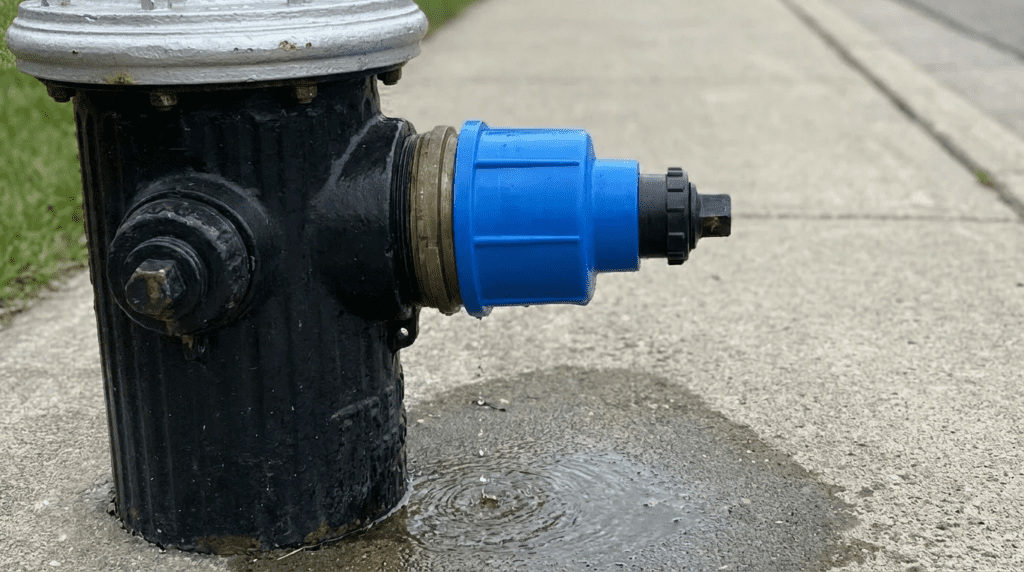
For municipal water utilities, Non-Revenue Water (NRW) represents a significant financial and operational hemorrhage. While aging distribution networks are often the primary culprit, poor installation practices for ancillary equipment contribute disproportionately to this loss. Automatic flushing devices (AFDs) are essential tools for managing water age, maintaining chlorine residuals, and removing sediment in dead-end mains. However, hydrant flushers installation mistakes that cause leaks are surprisingly common, turning a solution for water quality into a source of water loss and structural degradation.
These devices operate at the intersection of hydraulic control, environmental compliance (dechlorination), and harsh physical environments. Whether temporary units attached to fire hydrant nozzles or permanent below-grade stations, the installation requires precise engineering judgment regarding bedding, drainage, thrust restraint, and freeze protection. When specified or installed incorrectly, flushers can suffer from catastrophic casing failures, connection fatigue from water hammer, or subsurface leaks that go undetected for months, eroding road sub-bases and wasting treated water.
This article provides a comprehensive technical analysis for civil engineers, utility superintendents, and public works directors. It moves beyond basic setup instructions to examine the mechanical and hydraulic failure modes associated with improper installation. By understanding the rigorous requirements for duty cycles, material compatibility, and environmental integration, engineers can specify systems that improve water quality without compromising system integrity.
How to Select / Specify Automatic Flushing Systems
Preventing leaks begins long before the excavator hits the ground; it starts with the specification sheet. Engineers must select equipment that matches the hydraulic reality of the distribution system. A mismatch between the device’s pressure rating and the system’s static pressure, or improper material selection for the soil conditions, inevitably leads to premature failure and leakage.
Duty Conditions & Operating Envelope
The operating envelope of a flusher is defined by pressure, flow rate, and temperature. Standard municipal pressure ranges (40–80 psi) generally pose few issues, but systems with high elevation heads or pressure zones exceeding 100 psi require high-pressure spec valves and reinforced piping.
Key considerations include:
- Maximum Static Pressure: Standard solenoid valves may be rated for 150 psi, but transient surges (water hammer) caused by rapid valve closure can spike pressures significantly higher. Specifying soft-close valves or slower actuation speeds is critical to preventing joint fatigue and leaks.
- Required Flow for Scour Velocity: To effectively remove biofilm and sediment, the flusher must achieve a scour velocity (typically 2.5 to 3.0 fps) in the feeding main. Undersized internal piping in the flusher will act as a throttle, preventing this velocity. Conversely, oversizing the unit can lead to excessive water waste.
- Temperature Extremes: In cold climates, the duty condition includes the depth of the frost line. Specifying a unit with a 3-foot bury depth in a region with a 5-foot frost line guarantees freezing, expansion, and a burst casing—a classic example of hydrant flushers installation mistakes that cause leaks.
Materials & Compatibility
Material selection dictates the longevity of the installation, particularly regarding corrosion and abrasion. The flusher interacts with chlorinated water internally and potentially aggressive soil externally.
- Internal Components: Wetted parts should be NSF 61 compliant. Stainless steel or heavy-duty brass is preferred for valve bodies. Plastic components (PVC/HDPE) used in internal piping must be schedule 80 or equivalent to withstand pressure cycles.
- External Casings: For below-grade units, the casing protects the valve assembly. HDPE or non-corrosive composite casings are superior to galvanized steel in acidic soils. If metallic casings are used, cathodic protection may be necessary.
- Dechlorination Systems: The chemical aggressiveness of dechlorination tablets (often sulfites or ascorbic acid) can degrade inferior plastics. The dechlorination chamber design must ensure that the caustic slurry does not sit stagnant against seals or joints when the unit is off.
Hydraulics & Process Performance
The hydraulic integration of the flusher determines its effectiveness and its risk of causing system transients. Engineers must evaluate the head loss curve of the proposed device.
NPSH and Cavitation: While less critical than in pumping, cavitation can occur across the control valve if the pressure drop is excessive. This leads to pitting, seal failure, and eventual external leakage. Selecting a valve with an appropriate Cv (flow coefficient) for the target flow rate ensures stable operation.
Installation Environment & Constructability
The physical environment is the most common source of failure. A flusher is not a fire hydrant; it cycles frequently, vibrating the connection points.
- Bedding and Drainage: Below-grade units often rely on “weep” systems to drain the riser after flushing to prevent freezing. If the installation spec does not call for a deep, crushed-stone sump (French drain style) beneath the unit, the water cannot escape. The riser remains full, freezes, and splits.
- Traffic Loading: If the unit is installed in a roadway or shoulder, it must be traffic-rated (H-20 loading). Installing a standard green-space unit in a traffic area will result in structural collapse and shearing of the connection to the main.
Reliability, Redundancy & Failure Modes
Understanding how these devices fail helps in designing robust installations. The most common leak paths are:
- Solenoid Diaphragm Failure: Resulting in a “stuck open” or “weeping” valve.
- Connection Shearing: Due to lack of thrust restraint on the lateral line.
- Freeze Damage: Due to failure of the auto-drain mechanism.
Reliability specifications should require high-cycle solenoids (rated for 100,000+ cycles) and accessible isolation valves (curb stops) upstream of the flusher to allow for maintenance without shutting down the main.
Controls & Automation Interfaces
While controls don’t leak water directly, poor control strategies cause hydraulic shock. Direct on/off control without ramping can induce water hammer. Engineers should specify controllers that support “soft start/stop” functionality. Furthermore, integration with SCADA or Bluetooth capability allows operators to detect “stuck open” conditions remotely (via pressure drops or flow meters), minimizing the duration of a leak.
Maintainability, Safety & Access
If an operator cannot easily access the components, leaks will be ignored until they surface.
- Above-Ground Access: All electronics and batteries should be accessible from the surface without confined space entry.
- Component Swapping: The internal valve assembly should be removable as a cartridge system. This avoids the need for excavation to repair a leaking valve seat.
- Lockout/Tagout: A dedicated curb stop upstream is a mandatory safety requirement for maintenance access.
Lifecycle Cost Drivers
The initial purchase price of a flusher is negligible compared to the cost of a long-term leak or the labor to excavate a frozen unit. Lifecycle cost analysis must include:
- Water Loss Costs: The cost of treated water lost through leaks or inefficient flushing schedules.
- Civil Repairs: The cost to repair road sub-bases washed out by subsurface leaks.
- Dechlorination Consumables: Efficiency of tablet consumption.
Comparison Tables
The following tables assist engineers in differentiating between the primary architectural approaches to automatic flushing and assessing application fit. These comparisons focus on the physical and hydraulic attributes that influence leak potential and reliability.
| Architecture Type | Primary Features | Best-Fit Applications | Leak Risks & Limitations | Maintenance Profile |
|---|---|---|---|---|
| Temporary Hydrant-Mounted (Nozzle Cap) | Attaches directly to existing hydrant nozzle; battery-operated; above-ground discharge. | Seasonal flushing; emergency water quality fixes; locations without budget for excavation. | High Risk: Freezing (must be removed in winter); vandalism; hydrant valve weeping if main hydrant valve is left open (dry barrel). | Low installation effort; High operational effort (seasonal removal). |
| Permanent Below-Grade (Traffic Rated) | Installed in roadway/shoulder; sub-grade discharge to storm sewer or swale; internal sampling port. | Urban environments; high-traffic areas; cold climates (requires deep bury). | Medium Risk: Connection shearing if bedding is poor; cross-contamination if air gap fails; difficult to detect subsurface leaks. | High installation effort; Low operational effort; Difficult access for repairs. |
| Permanent Above-Grade (Box/Enclosure) | Protective enclosure over valve assembly; direct discharge to grade/pond; easy access. | Rural/Suburban right-of-ways; warm climates; industrial parks; secure facilities. | Low Risk: Leaks are immediately visible. Limitation: Aesthetics and collision risk. | Moderate installation; Easiest access for valve/battery maintenance. |
| Manual Blow-Off (Standard) | Simple valve and riser; no automation; manual operation only. | Low-criticality dead ends; extremely tight budgets. | Variable Risk: Dependent on operator closing valve properly; no automatic hammer protection. | Zero automation maintenance; High labor cost for manual flushing. |
| Application Scenario | Recommended Type | Key Design Constraint | Critical Installation Detail | Relative CAPEX |
|---|---|---|---|---|
| Dead-End Main (Cold Climate) | Permanent Below-Grade | Frost Depth > 48″ | Deep gravel sump for weep drainage to prevent casing burst. | High |
| Dead-End Main (Warm Climate) | Permanent Above-Grade | UV Exposure | Secure concrete pad; UV-resistant enclosure. | Medium |
| Seasonal Chlorine Residual Boost | Temporary Hydrant-Mounted | Portability | Support bracket to prevent thread stress on nozzle. | Low |
| Industrial Loop (Stagnant) | Permanent Above-Grade (SCADA Linked) | Integration | Conduit for power/data; drainage for discharged water. | Medium-High |
Engineer & Operator Field Notes
Experience in the field reveals that hydrant flushers installation mistakes that cause leaks often stem from overlooking minor details in the civil scope or commissioning process. The following sections outline practical guidance for ensuring leak-free performance.
Commissioning & Acceptance Testing
Commissioning is the final gate before the utility accepts liability for the asset. Skipping steps here guarantees future headaches.
- Hydrostatic Pressure Test: Before backfilling completely (for permanent units), the connection line from the main to the flusher curb stop must be pressure tested. Leaks at the corporation stop or the compression fittings are common and impossible to fix without re-excavation once paved.
- Drainage Verification: For self-draining units, perform a “bucket test.” Pour water into the component housing and verify it drains rapidly into the stone sump. If water stands, the unit will freeze and crack in winter.
- Solenoid Cycle Test: Operate the unit through 10-20 cycles during commissioning. Infant mortality in solenoids often presents as a failure to close completely (weeping). Verify a “bubble-tight” shutoff.
Common Specification Mistakes
Specifications often copy-paste generic boilerplate, leading to installation errors.
- Ambiguous Backflow Requirements: Failing to specify the type of backflow prevention (Air Gap vs. RPZ vs. Double Check) leads to confusion. For flushers discharging to storm sewers, a physical air gap is the only fail-safe against cross-contamination, which protects the distribution system but requires specific vertical alignment.
- Wrong Thread Standards: Mixing NST (National Standard Thread) with NPSH (National Pipe Straight Hose) or NPT (National Pipe Taper) is a frequent cause of leaks at the connection point. Forcing mismatched threads damages the brass and ensures a permanent drip.
- Ignoring Soil Conditions: In clay soils with poor percolation, a standard weep hole will not function. The spec must require over-excavation and replacement with washed stone to create a functional drainage field.
When installing permanent flushers connected via poly tubing, installers often undertorque or overtorque the compression fittings. Always mandate the use of stainless steel insert stiffeners inside HDPE tubing to prevent the tube from collapsing under the compression nut’s force, which is a leading cause of cold-flow leaks.
O&M Burden & Strategy
Operational neglect leads to mechanical failure.
- Battery Management: Leaking batteries can corrode the control board and solenoid contacts, causing the valve to stick open. Implement a preventative maintenance schedule to replace batteries annually, regardless of remaining charge.
- Dechlorination Pucks: If pucks are allowed to dissolve completely and sludge builds up, it can prevent the discharge check valve from seating properly. This doesn’t cause a leak out, but it allows groundwater in (infiltration).
- Winterization: Even “frost-proof” units should be inspected before the first freeze. Verify that the auto-drain mechanism is not clogged with insect nests or sediment.
Troubleshooting Guide
When a flusher is reported as leaking:
- Determine the Leak Source: Is water coming from the discharge pipe (internal valve failure) or bubbling up from the ground (external connection failure)?
- Check the Controller: Is the program stuck in a loop? Is the battery dead mid-cycle? Disconnect the battery to see if the solenoid failsafe closes the valve.
- Debris Check: A small pebble lodged in the diaphragm will prevent the valve from sealing. Disassemble the valve top and clean the diaphragm seat.
Design Details / Calculations
Engineering the installation requires checking the math behind the hydraulics and the physical installation.
Sizing Logic & Methodology
To avoid leaks caused by hydraulic strain and to ensure process efficacy, sizing must be precise. The goal is to achieve scour velocity without creating damaging water hammer.
Step 1: Determine Pipe Diameter (D) of the Main.
Step 2: Calculate Required Flow (Q) for Scour Velocity.
A typical target is 2.5 to 3.0 feet per second (fps).
Rule of Thumb:
- 4″ Main: ~100 GPM
- 6″ Main: ~220 GPM
- 8″ Main: ~390 GPM
Step 3: Select Flusher Inlet Size.
A 1″ flusher cannot effectively scour an 8″ main; it will only exchange water (refresh). Trying to force high velocities through undersized flusher valves creates excessive head loss and cavitation vibration, loosening joints over time. For scouring mains 6″ and larger, a 2″ flusher inlet is typically the minimum requirement.
Specification Checklist
To prevent hydrant flushers installation mistakes that cause leaks, the specification must include:
- Thrust Restraint: “All changes in direction, including the 90-degree bend at the flusher base, shall be restrained using concrete thrust blocks or mechanical joint restraints calculated for [test pressure].”
- Bedding: “Unit shall be set on a minimum 6-inch bed of #57 washed stone, extending 12 inches beyond the casing perimeter to facilitate drainage.”
- Connection Tubing: “Service line shall be Type K Copper or HDPE (CTS) with stainless steel stiffeners.”
- Valve Closing Speed: “Control valve shall be slow-closing type to limit pressure surge to no more than 10% above static pressure.”
Installing a self-draining flusher in an area with a high water table is a guaranteed failure. If the groundwater level is higher than the weep holes, groundwater will infiltrate the unit, freeze, and rupture the internal piping. In high water table areas, non-draining units with manual pump-out requirements or above-grade units must be specified.
Standards & Compliance
- AWWA C800: Underground Service Line Valves and Fittings.
- NSF/ANSI 61 & 372: Drinking Water System Components (Lead-Free).
- AWWA C651: Disinfecting Water Mains (Critical for installation hygiene).
Frequently Asked Questions
Why do automatic hydrant flushers leak after freezing temperatures?
Leaks after freezing are typically caused by retained water in the unit’s riser or internal piping. This occurs when the “weep” holes or auto-drain mechanisms are clogged with sediment, or if the unit was installed without a proper gravel sump (French drain) to allow the water to percolate into the soil. When the trapped water freezes, it expands, cracking the valve body or the external casing. This is one of the most prevalent hydrant flushers installation mistakes that cause leaks.
What is the correct bedding material for a below-grade flusher?
The correct bedding is washed crushed stone (typically #57 or similar), not sand or native soil. Washed stone provides large void spaces that allow water ejected from the unit’s auto-drain system to move away from the casing quickly. Sand can compact and clog weep holes, while clay soil prevents drainage entirely, leading to freeze damage.
How does improper sizing lead to flusher leaks?
Improper sizing, specifically undersizing the valve for the required flow, creates high fluid velocities and significant pressure drops across the valve. This can cause cavitation—the formation and collapse of vapor bubbles—which erodes the valve seat and seals. Over time, this erosion prevents the valve from closing continuously (bubble-tight), resulting in a constant leak or “weeping” into the drain.
Should thread sealant or tape be used on flusher connections?
It depends on the material. For metal-to-metal NPT connections, a combination of Teflon tape and quality thread sealant is recommended. However, for plastic threads or connection to HDPE fittings, caution is required. Over-application of tape or using anaerobic sealants that are chemically incompatible with certain plastics can cause stress cracking in the female fitting, leading to leaks. Always follow the manufacturer’s specific torque and sealant recommendations.
What is the difference between a soft-close and hard-close solenoid?
A hard-close solenoid shuts off flow almost instantly, which arrests the momentum of the water column rapidly, creating a pressure wave (water hammer). This shockwave stresses every joint in the connection line. A soft-close solenoid (or a diaphragm valve with a flow control pilot) closes slowly over several seconds. Engineers should always specify soft-close features to prevent hydraulic shock that loosens fittings and causes leaks over the lifecycle of the unit.
How often should hydrant flushers be inspected?
Hydrant flushers should be inspected at least twice a year: once in the spring to verify operation after winter, and once in late autumn to prepare for freezing conditions (checking drainage and batteries). Units in high-use applications or aggressive water conditions (high sediment) may require quarterly inspections to clean screens and check for solenoid seat wear.
Conclusion
KEY TAKEAWAYS
- Drainage is Critical: The lack of a proper gravel sump is the leading cause of freeze-related casing bursts and leaks.
- Manage Momentum: Always specify slow-closing valves to prevent water hammer from fatiguing joints and causing connection leaks.
- Material Compatibility: Match thread types (NST vs. NPT) and ensure chemical compatibility with dechlorination agents.
- Thrust Restraint: Treat the flusher connection like any other dead-end; use thrust blocks or restrained joints to prevent separation.
- Access for Maintenance: If operators cannot easily access the battery or solenoid, minor weeps will turn into major blowouts before they are fixed.
The successful deployment of automatic flushing technology relies less on the electronic bells and whistles and more on fundamental civil and hydraulic engineering. While these devices are invaluable for maintaining water quality in sprawling distribution networks, hydrant flushers installation mistakes that cause leaks can negate their benefits by increasing water loss and operational costs.
Engineers and superintendents must enforce rigorous installation standards—specifically regarding bedding, drainage, and thrust restraint—to ensure these assets perform reliably. By treating the flusher installation with the same level of detail as a fire hydrant or a service connection, utilities can achieve their water quality goals without sacrificing system integrity. The focus must shift from simply “installing a timer” to “engineering a discharge station” that accounts for freeze cycles, hydraulic transients, and long-term maintainability.