
MBR Troubleshooting: Symptoms
INTRODUCTION
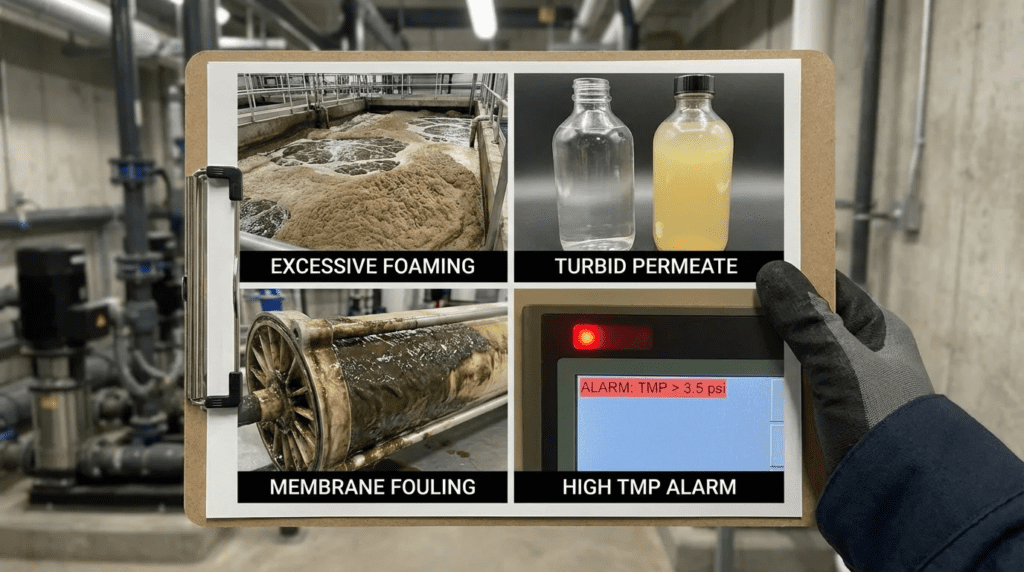
Membrane Bioreactor (MBR) technology has fundamentally transformed municipal and industrial wastewater treatment, offering absolute physical separation, extended solids retention times (SRT), and exceptionally high-quality effluent within a compact footprint. However, this process intensification comes with strict operational boundaries. When process parameters drift, operators are inevitably faced with complex MBR Troubleshooting: Symptoms that can rapidly compromise plant capacity and compliance. While conventional activated sludge systems might slowly degrade in performance over days, an MBR operating beyond its critical flux or suffering from biological upset can experience severe, exponential fouling within hours.
One of the most surprising and costly statistics in MBR operations is that over 70% of premature membrane failures and chronic fouling symptoms are not caused by defective membrane materials, but by upstream process failures—specifically inadequate fine screening, poor aeration control, or biological imbalances leading to excessive Extracellular Polymeric Substances (EPS). Engineers frequently overlook the cascading impact of mixed liquor suspended solids (MLSS) health on membrane permeability, treating the membrane simply as a physical barrier rather than a sensitive biological interface.
MBRs are deployed in environments ranging from municipal water reuse facilities to high-strength industrial effluent plants (such as food and beverage, pharmaceutical, and leachate treatment). In these applications, the cost of process failure is extraordinarily high. Replacing a fouled membrane cassette can cost hundreds of thousands of dollars, and lost production time in industrial settings can be economically devastating. Proper specification of the MBR system, upstream pre-treatment, and integrated diagnostic instrumentation is critical to preventing these catastrophic failures.
This article will help design engineers, plant superintendents, and operators systematically approach MBR system specification and diagnostics. By understanding how mechanical and biological design choices directly influence operational symptoms, engineers can design more resilient plants, and operators can shift from reactive firefighting to proactive, predictive maintenance.
HOW TO SELECT / SPECIFY
Specifying an MBR system requires a holistic approach that links physical equipment limitations to biological process realities. To minimize the severity and frequency of MBR troubleshooting: symptoms, engineers must rigorously define the operational envelope and select equipment that can withstand inevitable process excursions.
Duty Conditions & Operating Envelope
The operating envelope dictates the hydrodynamic stress placed on the membranes. Specifications must clearly delineate average daily flow (ADF), maximum month flow (MMF), and peak hourly flow (PHF). Flux rates—measured in liters per square meter per hour (LMH) or gallons per square foot per day (GFD)—must be carefully selected. Typical municipal average flux ranges from 12-18 LMH, with peaks up to 30-35 LMH for limited durations. Exceeding critical flux boundaries is the primary driver of acute Transmembrane Pressure (TMP) symptoms. Engineers must also account for temperature variations; cold water increases viscosity, significantly reducing permeability and requiring either larger membrane surface areas or higher driving pressures.
Materials & Compatibility
Membrane material selection dictates the chemical cleaning regimens available to resolve fouling symptoms. Polyvinylidene fluoride (PVDF) is the industry standard due to its high tolerance to oxidants like sodium hypochlorite (typically up to 1,000-2,000 mg/L for recovery cleans). Polyethersulfone (PES) offers excellent hydrophilicity, which can lower operating TMP, but generally exhibits lower tolerance to sustained high-concentration chlorine exposure. Specifications must ensure that the selected membrane material is compatible not only with the anticipated wastewater chemistry (including industrial solvents or aggressive pH swings) but also with the chemical concentrations required to reverse severe fouling.
Hydraulics & Process Performance
The hydraulic design of the membrane basin is critical for preventing sludging and localized fouling. Specifications must address cross-flow velocity, air scour distribution, and the hydraulic profile through the cassettes. Dead zones within the membrane tank lead to localized MLSS thickening, which physically restricts flow and causes rapid localized TMP spikes. The pumping system must be specified with highly accurate Variable Frequency Drives (VFDs) capable of maintaining precise flux control. Pumps must satisfy specific Net Positive Suction Head (NPSH) requirements while operating under negative pressure (vacuum) conditions on the suction side.
Installation Environment & Constructability
Proper installation design prevents minor maintenance tasks from becoming major operational burdens. Overhead clearance is paramount; engineers must provide sufficient vertical space and permanently installed lifting equipment (gantry cranes or monorails) to safely hoist membrane cassettes out of the mixed liquor for inspection or chemical recovery. Space constraints often dictate whether flat sheet (FS) or hollow fiber (HF) configurations are selected, as HF typically offers higher packing density but may require more complex header pipework. Proper access platforms and wash-down utilities must be included in the design.
Reliability, Redundancy & Failure Modes
System reliability relies on redundancy and the ability to isolate failing components without taking the entire plant offline. A robust specification will require $N+1$ or $N+2$ redundancy for membrane trains. The Mean Time Between Failures (MTBF) for critical components, such as permeate pumps and air scour blowers, must be evaluated. Membrane fiber breakage is an inevitable failure mode; therefore, the specification must dictate how the system handles integrity breaches. Isolation valves on individual modules or headers allow operators to isolate compromised fibers while maintaining overall train production.
Controls & Automation Interfaces
Advanced SCADA integration is the first line of defense in diagnosing MBR troubleshooting: symptoms. Specifications must require continuous trending of TMP, specific flux, and temperature-corrected permeability. The control strategy must automatically execute relaxation (pausing permeation) or back-pulsing (reversing permeate flow) cycles at configurable intervals. Modern controls should also incorporate cascade loops that adjust coarse-bubble air scour rates based on instantaneous permeability, optimizing energy consumption while preventing sludge accumulation on the fibers.
Maintainability, Safety & Access
Routine chemical cleaning—Clean-In-Place (CIP), Maintenance Cleans (MC), and Recovery Cleans (RC)—must be highly automated to ensure repeatability and operator safety. Specifications should include dedicated chemical dosing skids with double-contained piping to deliver sodium hypochlorite and citric acid directly to the membrane headers. Lockout/tagout (LOTO) provisions must be physically accessible. Because operators handle concentrated acids and bases to resolve fouling symptoms, emergency showers and eye-wash stations must be immediately adjacent to the membrane tanks.
Lifecycle Cost Drivers
The Total Cost of Ownership (TCO) for an MBR heavily depends on OPEX. Capital expenditure (CAPEX) savings achieved by minimizing membrane area will result in aggressively high flux rates, dramatically increasing the frequency of chemical cleans, accelerating membrane degradation, and resulting in premature replacement costs. Air scour accounts for 30-50% of the total energy consumed in an MBR plant; specifying highly efficient positive displacement or turbo blowers is essential. A rigorous lifecycle analysis must balance initial membrane cost, expected lifespan (typically 7-10 years), energy consumption, and chemical usage.
COMPARISON TABLES
The following tables provide an unbiased, technical comparison of major MBR manufacturers and an application fit matrix for diagnosing and resolving common operational issues. Use Table 1 to understand how different OEM configurations influence maintenance and potential fouling symptoms. Use Table 2 as a quick-reference guide for aligning specific operational symptoms with root causes and corrective actions.
| Manufacturer / Product Line | Technology Type | Primary Strengths | Limitations / Considerations | Typical Maintenance Profile |
|---|---|---|---|---|
| Veolia (Suez) ZeeWeed | Hollow Fiber (PVDF) | High packing density; excellent oxidant tolerance; robust outside-in filtration. | Highly sensitive to fine screen bypass; requires rigorous back-pulsing. | Frequent automated back-pulsing; regular maintenance cleans (MC) via backwash dosing. |
| Toray Membray | Flat Sheet & Hollow Fiber | Flat sheet offers high resistance to sludging and hair-pinning; no backwash required. | Lower packing density than HF; higher footprint requirements per unit area. | Relaxation cycles instead of backwashing; extended periods between recovery cleans. |
| Kubota | Flat Sheet (Chlorinated PE) | Extremely robust against debris; simpler hydraulics; handles high MLSS well. | Higher capital cost per surface area; limited backwash capability; heavy cassettes. | Chemical cleaning via gravity dosing from permeate side; minimal physical intervention. |
| Evoqua (Memcor) | Hollow Fiber (PVDF) | Strong mechanical integrity; advanced automated integrity testing features. | Requires stringent 1mm-2mm fine screening; sensitive to extreme peak flow durations. | Proprietary air scour protocols; relies heavily on scheduled CIPs to manage EPS. |
| Mitsubishi (Sterapore) | Hollow Fiber (PE / PVDF) | Unique braiding technology offers very high tensile strength; resists fiber breakage. | Braided fibers can hold onto biological fouling if air scour is maldistributed. | Standard MC/RC regimens; highly dependent on continuous, even aeration. |
| Koch (Puron) | Hollow Fiber (Single Header) | Central aeration nozzle reduces sludging; fibers are free-floating at the top. | Single header design can require specific basin geometries; specialized lifting gear. | Low-energy air scour profile; efficient flushing of debris from fiber bundles. |
| Microdyn-Nadir (BIO-CEL) | Flat Sheet / Polymeric | Combines advantages of flat sheet (low sludging) and hollow fiber (packing density). | Relatively newer configuration in some regions; specific cassette handling required. | Allows for backwashing (unlike traditional FS); self-healing laminate layer. |
| Alfa Laval | Flat Sheet (Gravity) | Ultra-low transmembrane pressure operation; highly energy efficient. | Requires specific hydraulic gradient design; larger footprint for gravity operation. | Minimal chemical consumption; relies on low flux and continuous relaxation. |
| Observed Symptom | Primary Root Cause | Immediate Operator Action | Long-Term Engineering Fix | Impact on OPEX |
|---|---|---|---|---|
| Acute TMP Spike (>3 psi/hr) | Process flow exceeds critical flux; severe aeration failure. | Reduce permeate flux; verify blower operation; initiate relaxation. | Expand membrane area; implement cascade air-flux control programming. | High (premature membrane wear, energy waste) |
| Chronic Permeability Decline | Organic fouling (EPS/SMP) or inorganic scaling (Ca, Fe). | Perform targeted chemical Recovery Clean (RC). | Optimize SRT/HRT to reduce EPS; adjust chemical dosing regimens. | Moderate (increased chemical usage, labor) |
| High Effluent Turbidity / TSS | Breached membrane fibers; compromised O-rings/potting. | Conduct pressure decay test (PDT); isolate failed modules. | Replace damaged cassettes; upgrade pre-treatment screening. | Severe (compliance violation, module replacement) |
| Severe Cassette Sludging | Fine screen bypass (hair/rags); dead zones in aeration. | Manually hoist and power-wash cassettes; inspect diffusers. | Install 1mm-2mm punched-hole fine screens; modify tank baffling. | High (intensive maintenance labor) |
| Excessive Tank Foaming | High surfactant load; low F/M ratio causing Nocardia/Microthrix. | Apply MBR-safe defoamer; reduce aeration temporarily if safe. | Adjust sludge wasting (WAS) rate; implement selector zones. | Low to Moderate (chemical costs) |
ENGINEER & OPERATOR FIELD NOTES
Transitioning from the design phase to active operations exposes the real-world challenges of membrane bioreactors. The following field notes bridge the gap between theoretical specifications and practical MBR Troubleshooting: Symptoms, providing actionable guidance for plant personnel.
Commissioning & Acceptance Testing
Commissioning an MBR requires strict adherence to testing protocols to establish baseline performance metrics. Without accurate baselines, diagnosing future symptoms is impossible.
- Clean Water Testing: Before introducing mixed liquor, perform a clean water flux test using potable water. Record the initial specific permeability. This value represents the absolute maximum capability of the system and serves as the benchmark for all future chemical recovery cleans.
- Aeration Distribution Verification: During the clean water test, visually inspect the air scour distribution. Uneven bubbling indicates blocked diffusers or unleveled cassettes, which will inevitably lead to localized sludging symptoms once MLSS is introduced.
- Instrument Calibration: Calibrate all pressure transmitters and flow meters. A zero-drift in a vacuum transmitter can artificially manifest as a “high TMP” symptom, leading operators down a false troubleshooting path.
- Controls Verification (FAT/SAT): Rigorously test the PLC logic. Manually trigger a high-TMP alarm simulation to ensure the system properly executes emergency relaxation and halts permeate pumps.
Common Specification Mistakes
Many MBR troubleshooting: symptoms are pre-programmed into the plant during the design phase due to specification errors. Avoiding these pitfalls is critical for long-term reliability.
- Inadequate Fine Screening: This is the single most common cause of catastrophic MBR failure. Specifying a 3mm slotted screen instead of a 1mm or 2mm punched-hole screen allows hair and fibrous materials to bypass. These fibers wrap around hollow fiber membranes (hair-pinning), physically blocking flow and rendering chemical cleaning useless.
- Ignoring Peak Flow Durations: Specifying an MBR based purely on Average Daily Flow (ADF) while assuming the membranes can handle unlimited durations of Peak Hourly Flow (PHF) leads to irreversible fouling. Biological resilience drops precipitously when critical flux is exceeded for more than 2-4 hours.
- Under-sizing Aeration Grids: Failing to account for the rheological changes in mixed liquor at varying temperatures and MLSS concentrations can result in inadequate shear force from the air scour blowers, leading to rapid cake layer formation.
Never specify slotted fine screens for an MBR. A 2mm slotted screen will allow a 2mm x 20mm piece of hair or synthetic fiber to pass through length-wise. Only specify perforated (punched-hole) plates or drum screens with maximum 2mm openings (1mm preferred for hollow fiber) to provide two-dimensional physical retention of debris.
O&M Burden & Strategy
Maintaining an MBR is a continuous battle against fouling. A well-executed maintenance strategy relies on predictive trending rather than reactive intervention.
- Maintenance Cleans (MC): Routine MCs (typically 1-3 times per week) use low concentrations of chemicals (e.g., 200-500 mg/L NaOCl) dosed directly into the membrane during a back-pulse or relaxation cycle. This prevents the consolidation of the biological cake layer.
- Recovery Cleans (RC): RCs are intensive procedures required every 3-6 months. They involve soaking the membranes in high concentrations of chemicals (1,000-2,000 mg/L NaOCl for organics, low pH citric acid for inorganics) for 4-24 hours. Labor hours for an RC can range from 8-16 hours per train.
- Spare Parts Inventory: Always maintain a stock of critical spare parts, including permeate pump stators/impellers, air scour diffuser aerators, and spare membrane modules. A delayed replacement of a failed diffuser will cause an entire cassette to sludge within days.
Troubleshooting Guide: Core MBR Symptoms
When investigating MBR Troubleshooting: Symptoms, operators must distinguish between biological process issues, hydraulic limitations, and mechanical failures. Below is a detailed diagnostic guide for the most critical symptoms.
Symptom 1: Rapid Transmembrane Pressure (TMP) Rise
A sudden spike in TMP indicates that the system is suddenly struggling to pull water through the membrane pores.
Root Causes & Diagnostics:
- Hydraulic Overload: Verify if the influent flow has suddenly spiked, pushing the flux beyond the critical limit. If flux is high, reduce it immediately.
- Loss of Air Scour: Check the coarse-bubble aeration blowers. If the air scour stops, the MLSS cake layer will build up on the membranes in minutes, skyrocketing the TMP.
- Severe Sludging: If aeration is running but TMP is high, hoist a cassette to visually inspect for “pancaking” or sludging between the fibers/sheets. This requires mechanical intervention (hose-down).
Symptom 2: Gradual Loss of Permeability
If permeability (Flux divided by TMP) steadily declines over weeks despite routine Maintenance Cleans, the system is experiencing chronic fouling.
Root Causes & Diagnostics:
- Biological Fouling (EPS/SMP): Stressed bacteria produce sticky Extracellular Polymeric Substances. Check the Food-to-Mass (F/M) ratio, Dissolved Oxygen (DO), and Sludge Retention Time (SRT). If EPS is high, perform a sodium hypochlorite Recovery Clean.
- Inorganic Scaling: Calcium carbonate, iron, or phosphorus precipitates can blind the membrane pores. This is common if metal salts (alum, ferric) are over-dosed upstream for phosphorus removal. Perform a Citric Acid Recovery Clean (pH ~2.0-2.5) to dissolve the scale.
Symptom 3: High Effluent Turbidity / Integrity Failure
MBR effluent should have a turbidity of less than 0.1 NTU. Any visible turbidity or reading above 0.2 NTU is a severe symptom of a physical breach.
Root Causes & Diagnostics:
- Broken Fibers or Torn Sheets: Sharp debris passing the fine screens can sever fibers. Run a Pressure Decay Test (PDT). Drain the tank, apply low air pressure to the permeate header, and watch for bubbles in the water. Pin (plug) the leaking fibers to restore integrity.
- Failed Potting or O-Rings: Inspect the connections between the membrane modules and the permeate manifolds. Degraded O-rings will allow raw mixed liquor to bypass the membrane entirely.
Operators often assume that increasing aeration volume will cure an acute TMP spike. However, if the diffusers under the cassette are clogged with debris, turning up the blower speed only forces more air through the few remaining open diffusers, causing severe localized shear while leaving the rest of the cassette completely stagnant and sludged. Always verify distribution, not just volume.
DESIGN DETAILS / CALCULATIONS
Proper sizing and specification rely on precise mathematical modeling of the membrane’s interaction with the mixed liquor. Engineers must utilize standardized calculations to ensure the MBR can sustain design flows without triggering fouling symptoms.
Sizing Logic & Methodology
The fundamental metric of MBR sizing is specific flux ($J$), and its relationship with pressure yields the permeability ($K$). The process involves several steps:
- Determine Design Flows: Establish Average Daily Flow ($Q_{ADF}$) and Peak Hourly Flow ($Q_{PHF}$).
- Calculate Required Membrane Area:
$Area = Q_{ADF} / J_{avg}$
Ensure that the area is sufficient so that during peak flows, $Q_{PHF} / Area$ does not exceed the manufacturer’s recommended peak flux ($J_{peak}$). - Temperature Correction: Cold water is more viscous. All specific permeability readings must be normalized to 20°C to accurately track fouling symptoms. Use the standard formula:
$K_{20} = K_T times theta^{(20-T)}$
Where $K_T$ is the measured permeability at temperature $T$, and $theta$ is the temperature correction factor (typically 1.025 for water). - Calculate TMP:
$TMP = P_{static} + P_{friction} – P_{vacuum}$
(Note: Equation signs vary depending on sensor placement and whether the system is submerged vacuum or sidestream pressurized).
Specification Checklist
To prevent chronic operational symptoms, ensure the final bid documents include the following mandatory items:
- Pre-treatment: 1mm or 2mm perforated plate fine screens, complete with washing/compacting systems and guaranteed bypass limits.
- Instrumentation: High-accuracy magnetic flow meters on the permeate lines, absolute pressure transmitters on the suction headers, and online turbidity meters for continuous integrity monitoring.
- Automation: PLC programming must include automated MC and RC sequences, permeability temperature correction, and cascade loop control for air scour blowers.
- Membrane Warranties: Clearly define the warranty conditions regarding fiber breakage limits, permeability guarantees, and the required operational logs the plant must maintain to keep the warranty valid.
Standards & Compliance
Engineers must ensure the MBR design complies with regional and international standards:
- AWWA & EPA Guidelines: For municipal reuse, adhere to EPA Membrane Filtration Guidance Manual protocols for direct integrity testing (DIT) and log removal value (LRV) calculations.
- Electrical & Controls: Follow IEC/NEMA standards for motor control centers and UL listings for all control panels. VFDs must meet IEEE 519 standards for harmonic mitigation, as pump speed precision is critical for flux control.
- Materials: Ensure membrane potting resins and header materials meet NSF/ANSI 61 standards if the effluent is intended for indirect or direct potable reuse.
FAQ SECTION
What is MBR Troubleshooting: Symptoms, and why is it so critical?
MBR Troubleshooting: Symptoms refers to the diagnostic process of identifying and resolving operational issues in a Membrane Bioreactor, such as high Transmembrane Pressure (TMP), low permeability, or poor effluent quality. It is critical because MBRs operate at the absolute physical limits of liquid-solid separation; ignoring early symptoms like gradual permeability decline can result in irreversible membrane fouling, costing facilities hundreds of thousands of dollars in premature replacement.
How do you differentiate between reversible and irreversible fouling?
Reversible fouling is typically caused by a buildup of a biological cake layer (EPS/SMP) or temporary inorganic scaling. It manifests as a gradual TMP rise and can be completely restored to baseline permeability using scheduled chemical Recovery Cleans (chlorine or citric acid). Irreversible fouling occurs when pore structures are permanently altered or blocked by materials that do not respond to chemical cleaning, such as silicates, severe polymer blinding, or prolonged operation above critical flux.
What is the typical lifespan of an MBR membrane?
In municipal wastewater applications with proper fine screening and optimized chemical cleaning, polymeric MBR membranes (PVDF, PES) typically last 7 to 10 years. In highly fouling industrial applications (e.g., food and beverage, dairy), lifespans may be shorter, ranging from 4 to 7 years. Lifespan is highly dependent on managing upstream biological health and strictly controlling flux rates.
Why does an MBR system experience foaming, and how is it fixed?
Foaming in the membrane tank is usually a biological symptom, often caused by a low Food-to-Mass (F/M) ratio leading to the proliferation of filamentous bacteria like Nocardia or Microthrix, or by the presence of unbiodegraded surfactants. Immediate fixes include applying MBR-safe defoamers (silicone-free to prevent membrane blinding). Long-term engineering fixes involve adjusting the Sludge Retention Time (SRT), optimizing upstream selector zones, and removing surface foam through selective wasting.
How often should MBR membranes be chemically cleaned?
Cleaning frequencies depend on the manufacturer and the operating flux. Generally, automated Maintenance Cleans (MC) are performed 1 to 3 times per week using low concentrations of sodium hypochlorite (200-500 mg/L) for 30-60 minutes. Intensive Recovery Cleans (RC), which require soaking the membranes in high concentrations (1,000-2,000 mg/L) of chlorine or citric acid, are typically executed every 3 to 6 months when temperature-corrected permeability drops below a predefined setpoint.
What happens if the fine screening system fails in an MBR plant?
Fine screening failure is catastrophic for MBRs, particularly hollow fiber configurations. If fibrous materials (hair, string, rags) bypass the screen, they entangle in the membrane fibers—a phenomenon called “hair-pinning” or “braiding.” This physically chokes the fibers, prevents air scour from removing the sludge cake, and leads to rapid, severe sludging. The only remedy is taking the system offline, manually hoisting the cassettes, and physically picking or pressure-washing the debris out, which is incredibly labor-intensive.
How much does it cost to replace MBR membrane cassettes?
Replacement costs vary widely based on plant size and membrane type, but typically range from $10 to $20 per gallon of installed treatment capacity, or roughly $30,000 to $80,000+ per individual cassette train. For a 1 MGD (Million Gallons per Day) facility, full membrane replacement can easily exceed $300,000 to $500,000, underscoring the critical importance of proactive symptom monitoring and maintenance.
CONCLUSION
- Screening is Non-Negotiable: Over 50% of severe MBR troubleshooting: symptoms stem from poor preliminary treatment. Specify 1mm to 2mm punched-hole screens—never slotted.
- Monitor Permeability, Not Just TMP: Always track temperature-corrected permeability ($K_{20}$). TMP alone is misleading because it naturally fluctuates with flow rates and water temperature.
- Respect Critical Flux: Operating beyond the peak design flux for extended periods will cause exponential, irreversible fouling. Ensure the plant has sufficient membrane area for peak events.
- Air Scour Integrity: Maldistributed aeration causes localized sludging. Visual inspection of the bubble pattern during clean water testing and routine maintenance is essential.
- Biological Health Dictates Physical Fouling: Membranes do not foul themselves; poor MLSS characteristics (high EPS, excessive solids) foul membranes. Maintain strict control over SRT, DO, and F/M ratios.
Diagnosing MBR Troubleshooting: Symptoms is a complex engineering challenge that requires equal parts mechanical expertise and biological process knowledge. When design engineers, utilities managers, and operators understand that an MBR is not merely a physical filter, but a deeply interconnected biological system, they can proactively mitigate the most common modes of failure.
Engineers specifying these systems must build in resilience. This means providing adequate redundancy, specifying top-tier fine screening, integrating advanced SCADA diagnostic tools, and designing physical layouts that allow operators to safely and efficiently execute recovery cleans and manual interventions. By establishing rigorous commissioning baselines and committing to a predictive maintenance strategy based on temperature-corrected permeability trending, plants can maximize the lifecycle of their membranes, reduce energy consumption, and ensure continuous, compliance-grade effluent.
Ultimately, successful MBR operation lies in striking a balance between capital efficiency and operational stability. When symptoms such as TMP spikes or turbidity breakthroughs occur, a systematic, data-driven diagnostic approach will invariably lead back to the root cause, allowing for rapid resolution and sustained long-term performance.