
Mud Valves Maintenance: Common Failure Modes and Field Repairs
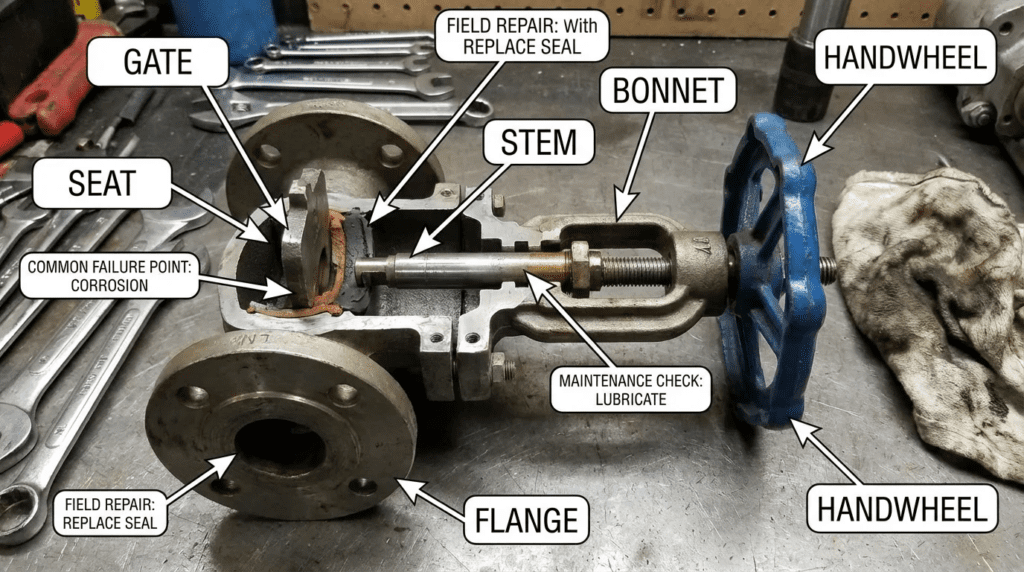
Introduction
In the hierarchy of water and wastewater treatment equipment, mud valves often occupy the lowest tier of attention—quite literally sitting at the bottom of sedimentation basins, clarifiers, and reservoirs. Yet, despite their simplicity, they represent a critical failure point. A single seized mud valve in a sedimentation basin can force a utility to drain millions of gallons of water, hire specialized divers, or rely on expensive vacuum trucks for sludge removal. Industry data suggests that over 40% of clarifier downtime related to drainage systems is caused not by the piping, but by the failure of the isolation mechanism at the sump.
For municipal consulting engineers and plant superintendents, the strategy surrounding Mud Valves Maintenance: Common Failure Modes and Field Repairs is often reactive rather than proactive. These valves remain submerged and static for months or years, subjected to aggressive sludge, grit, and hydrostatic pressure, only to be called upon during a critical maintenance window. If they fail to open—or worse, fail to reseat—the operational consequences are severe.
This article moves beyond basic product descriptions to provide a rigorous engineering analysis of mud valves (also known as plug valves, drain valves, or flapper valves). We will explore the physics of sediment accumulation, the metallurgy required to resist galvanic corrosion in submerged environments, and the specific design criteria that prevent reach rod buckling. By understanding the nuances of Mud Valves Maintenance: Common Failure Modes and Field Repairs, engineers can specify equipment that survives the 20-year lifecycle expectation and operators can implement protocols that prevent catastrophic seizing.
How to Select and Specify Mud Valves
The specification of a mud valve requires more than selecting a diameter that matches the drain pipe. It requires a holistic view of the forces acting on the valve, the chemistry of the fluid, and the mechanical limitations of the actuation system. The following criteria outline the engineering logic required for robust selection.
Duty Conditions & Operating Envelope
Unlike isolation valves in pumped lines, mud valves operate under static head conditions but face unique challenges regarding solids.
- Hydrostatic Head: The valve must be rated for the maximum unseating pressure, which occurs when the tank is full. Engineers must calculate the force required to lift the plug against the full water column height (Head × 0.433 psi/ft).
- Solids Loading: In primary clarifiers or grit chambers, solids concentrations can exceed 5%. The valve design must account for “packing,” where settled solids compact around the seat, increasing the breakaway torque required to open the valve.
- Intermittent Operation: The defining characteristic of a mud valve is long periods of inactivity. A valve that operates daily faces wear; a valve that operates annually faces seizing. The specification must prioritize anti-seize materials over cycle-life endurance.
Materials & Compatibility
Material selection is the primary determinant of longevity in submerged applications. The galvanic series becomes the enemy of the engineer here.
- Body Construction: Cast iron (ASTM A126 Class B) is standard, but must be coated with high-solids epoxy (typically 8-12 mils DFT) to resist corrosion. For industrial or aggressive wastewater, 316 Stainless Steel is preferred despite the cost premium.
- Stem & Lift Nut: This is the most common failure point. Specifying a Bronze lift nut with a Stainless Steel stem is standard to prevent galling. However, in high hydrogen sulfide (H2S) environments, standard bronze may suffer de-alloying. Aluminum Bronze or specific grades of Stainless Steel (e.g., 17-4 PH) may be required for the stem to handle torque loads.
- Seat Material:
- Bronze-to-Bronze: Durable, but prone to leakage if grit gets trapped.
- Resilient (Neoprene/Buna-N): Provides a “drop-tight” seal even with minor grit presence. Essential for tanks where leakage implies lost revenue (treated water) or regulatory violations.
Hydraulics & Process Performance
The hydraulic function of a mud valve is to drain a basin within a specified timeframe. This is a function of the valve’s flow coefficient (Cv) and the head differential.
- Flow Characteristics: Mud valves generally behave like globes or plugs. The pressure drop is significant compared to a gate valve.
- Sump Design: The valve should be located in a depressed sump. Engineers must specify the sump geometry to prevent vortexing before the tank is empty, which can air-bind the discharge line if it feeds a pump.
- Opening Size: The clear opening must pass the largest expected debris without clogging. A 4-inch mud valve is typically the minimum for any wastewater application to preventragging.
Installation Environment & Constructability
The physical installation dictates the actuation mechanism. The distance between the valve floor and the operating floor (the “reach”) is critical.
- Stem Guides: For every 6-8 feet of stem extension, an intermediate wall bracket (stem guide) is required to prevent buckling. Common Mistake: Engineers often neglect to detail the anchor bolts for these guides in retrofits, leading to installation improvisation.
- Offset Operation: If the operating stand cannot be directly above the valve, offset universal joints or chain wheels must be specified. These add mechanical play (hysteresis) and reduce torque transfer efficiency.
Reliability, Redundancy & Failure Modes
Analyzing Mud Valves Maintenance: Common Failure Modes and Field Repairs during the design phase reveals that the stem-to-disc connection is the weak link.
- Shear Pins: Operators often over-torque valves that are stuck. The system should be designed such that a shear pin in the floor stand fails before the stem buckles or the sub-surface connection snaps.
- Redundancy: In large basins, dual drain valves are recommended. If one seizes, the backup allows the tank to be drained for maintenance without diving operations.
Maintainability, Safety & Access
Since the valve is inaccessible during operation, “maintainability” refers to the floor stand and the ease of replacement.
- Indicator: All floor stands must have a visual position indicator. Operators cannot see the valve; they need to know if it is cracked open or fully seated.
- Lubrication: Floor stands should have grease fittings. Submerged components should be “lubricated for life” or rely on fluid lubricity.
- Lifting Lugs: The valve body should have cast or welded lifting lugs to facilitate removal by a hoist when the tank is empty.
Lifecycle Cost Drivers
The CAPEX difference between a high-quality mud valve and a budget option is often less than $2,000. However, the OPEX cost of a single diver intervention to release a stuck valve ranges from $5,000 to $15,000 depending on depth and hazards. Therefore, Total Cost of Ownership (TCO) heavily favors premium materials (SS trim, resilient seats) over basic cast iron/bronze configurations.
Comparison of Valve Technologies
The following tables provide an engineering comparison of common mud valve configurations and their application suitability. These tables are designed to assist in the selection process by highlighting the trade-offs between different mechanical designs and their maintenance implications.
| Valve Type | Primary Mechanism | Best-Fit Application | Limitations/Considerations | Maintenance Profile |
|---|---|---|---|---|
| Flapper / Shear Gate | Hinged disc swings open via cable or rod. | Low head, surface water intakes, simple drains. | Poor sealing at high heads; sealing relies on backpressure. Debris often prevents closure. | High. Hinges foul easily. Cable stretch requires frequent adjustment. |
| Plug / Poppet Style | Rising stem lifts a tapered plug vertically. | Sedimentation basins, clarifiers, reservoirs. | Requires robust stem guidance. High headroom required for stem travel. | Medium. Robust, but stem threads and guides are failure points. Excellent sealing. |
| Telescoping Valve | Sliding tube adjusts overflow elevation. | Sludge withdrawal, supernatant decanting. | Complex installation. Seals between sliding tubes wear out. Not a true isolation valve. | High. Slip seals require replacement every 3-5 years. Torque requirements change with alignment. |
| Hydrostatic Pressure Relief | Check valve (floor mount) that opens if groundwater rises. | Concrete tank protection (prevents floating). | Passive operation only. Cannot be manually operated to drain tank. | Low/Zero. buried in concrete. Failure is usually detected only after tank structural damage. |
| Application Scenario | Typical Fluid | Key Constraint | Recommended Material | Actuation Preference |
|---|---|---|---|---|
| Potable Water Reservoir | Clean Water | Zero leakage allowed (water loss). | SS Body / Resilient Seat | Manual Handwheel (Security Lockable) |
| Wastewater Primary Clarifier | Raw Sludge & Grit | Clogging / “Cementing” of solids. | Cast Iron / Bronze Trim / Non-clog Seat | Electric Actuator (for automated blowdown) |
| Stormwater Detention | Water + Silt/Trash | Infrequent use (corrosion risk). | Fully Encapsulated Plug | Portable Operator (Nut) to prevent vandalism |
| Industrial Chemical Sump | Acidic/Caustic Waste | Chemical compatibility. | 316 SS or Duplex SS | Pneumatic (Fail-Safe Close) |
Field Notes: Mud Valves Maintenance: Common Failure Modes and Field Repairs
Real-world operation often deviates from the clean lines of a CAD drawing. The following section details practical protocols for commissioning and maintaining mud valves, focusing on the realities of submerged equipment.
Commissioning & Acceptance Testing
Acceptance testing is the only time the valve can be verified visually before it is submerged for years.
- Dry Cycle Test: Operate the valve through full travel (0% to 100% open) three times. Measure the torque required. If torque fluctuates significantly (“tight spots”), the stem guides are likely misaligned.
- Seat Dye Test: Apply machinist’s blue or chalk to the seating surface, close the valve, and reopen. Inspect the contact pattern. A continuous ring indicates a good seal. Discontinuous contact suggests a warped body or casting defect.
- Leakage Test: Fill the sump or a localized area around the valve with water while the discharge pipe is open. Observe for drips. For resilient seated valves, zero leakage is the standard. For metal-to-metal, trace leakage (oz/hr) is often permissible per specification.
Common Specification Mistakes
A review of failed installations reveals recurring errors in the bid documents:
- Ignoring Stem Slenderness Ratio (L/r): Specifying a 1-inch stem for a 20-foot deep tank without enough guides. When the valve sticks, the operator applies torque, and the stem twists like a torsion spring or buckles, rendering the valve inoperable.
- Dissimilar Metals in Assembly: Using zinc-plated bolts to attach a stainless stem to a cast iron disc. Galvanic corrosion eats the bolts within 2 years. Pro Tip: Specify 316SS hardware for all submerged connections.
- Undefined “Reach”: Failing to specify the exact elevation of the operating floor versus the valve flange. This leads to field-cutting or welding stems, compromising the protective coating.
O&M Burden & Strategy
The maintenance strategy for mud valves is distinct because 90% of the maintenance is “opportunity-based.”
Even if a tank does not need to be drained, operators should “exercise” mud valves every 6 months. Rotate the handwheel open 10-20% and immediately re-close. This breaks the bond of any calcification or biological growth on the threads and seat without draining the tank significantly.
- Routine Inspection (Monthly): Inspect the floor stand. Grease the lift nut bearings. Check the position indicator for drift.
- Major Inspection (During Tank Outage):
- Power wash the valve seat and plug to remove grit.
- Inspect the stem for straightness.
- Check the stem-to-disc connection pin/bolt for corrosion.
- Replace resilient seats if compression set (permanent deformation) is observed.
Troubleshooting Guide: Failure Modes and Repairs
Symptom: Handwheel spins freely, valve does not open.
Root Cause: Broken stem, stripped threads, or sheared connecting pin.
Diagnostic: If the stem rises through the floor stand but the flow doesn’t start, the connection at the disc is broken. If the stem spins but doesn’t rise, the lift nut threads in the stand are stripped.
Field Repair: Requires tank draining via backup pumps. If the stem is broken, a diver may be required to manually jack the valve open or rig it for removal.
Symptom: High torque required / Valve stuck.
Root Cause: Debris compacted in seat (“Cementing”), bent stem, or lack of lubrication.
Diagnostic: If torque is high immediately, the plug is stuck. If torque spikes mid-travel, the stem is bent or guides are binding.
Field Repair: Do NOT use a “cheater bar” on the handwheel; you will buckle the stem. Use a torque wrench to measure applied force. Try “bumping” the valve (alternating open/close force) to dislodge debris. If unsuccessful, pump water backwards through the drain line (backflushing) to lift the debris off the seat.
Symptom: Valve leaks when closed.
Root Cause: Trash trapped in seat, worn resilient seal, or erosion of metal seat.
Field Repair: Open fully to flush, then slam closed. Repeat. If leakage persists, the seat is damaged. Resurfacing metal seats requires removing the valve (lapping). Resilient seats can sometimes be replaced by divers.
Design Details and Sizing Logic
Correctly sizing a mud valve ensures the tank drains efficiently without stranding solids. The following methodology applies to Mud Valves Maintenance: Common Failure Modes and Field Repairs in the context of design prevention.
Sizing Logic & Methodology
The time required to drain a tank is calculated using a variation of Torricelli’s Law, integrating the changing head pressure over time.
The Simplified Formula for Draining Time (t):
t = [2 × A_tank × (√h1 – √h2)] / [Cd × A_valve × √(2g)]
Where:
- t: Time in seconds
- A_tank: Surface area of the tank (ft²)
- h1: Initial water depth (ft)
- h2: Final water depth (ft) (usually 0)
- Cd: Discharge Coefficient (typically 0.60 for mud valves, check mfg data)
- A_valve: Area of the valve opening (ft²)
- g: Gravity (32.2 ft/s²)
Engineering Rule of Thumb: Target a drain time of 4 to 8 hours for large clarifiers. Draining too fast can damage tank structural liners or cause groundwater flotation issues if hydrostatic relief valves fail.
Specification Checklist
When generating the RFP or technical specification, ensure these line items are explicitly defined:
- [ ] Operating Type: Rising Stem vs. Non-Rising Stem (Rising stem preferred for visual confirmation).
- [ ] Extension Stem Material: 316 SS or Schedule 80 PVC (for small, shallow valves).
- [ ] Guide Spacing: “Intermediate guides shall be provided such that the L/r ratio does not exceed 200.”
- [ ] Actuator Height: “Centerline of handwheel to be 36 inches above operating floor.”
- [ ] Coating: “Fusion Bonded Epoxy or High-Solids Epoxy per AWWA C550.”
Standards & Compliance
While there is no single “AWWA Mud Valve Standard,” the following standards govern the component quality:
- AWWA C550: Protective Epoxy Interior Coatings for Valves and Hydrants.
- ASTM A126 Class B: Standard Specification for Gray Iron Castings (Body Material).
- ASTM A276: Standard Specification for Stainless Steel Bars (Stems).
- NSF/ANSI 61: Drinking Water System Components (Required for potable water reservoirs).
Frequently Asked Questions
What is the difference between a mud valve and a plug valve?
In general terminology, a “plug valve” usually refers to a quarter-turn rotary valve used in piping systems (eccentric plug valves). A “mud valve” is a specific type of lift-plug or poppet valve designed for tank floors. It operates linearly (up/down) rather than rotating, allowing for a large annular opening to pass debris. While they share the name “plug” because of the closure element shape, their applications and mechanics are distinct.
How do you select the right stem material for Mud Valves Maintenance: Common Failure Modes and Field Repairs?
Selection depends on the corrosivity of the fluid and the length of the stem. For standard wastewater, Type 304 Stainless Steel is the baseline. For industrial applications or high-chloride environments, Type 316 Stainless Steel is mandatory to prevent pitting. If the stem is extremely long (>20 ft) and torque requirements are high, 17-4 PH Stainless Steel may be needed for its higher yield strength to prevent twisting.
How often should mud valves be replaced?
A high-quality cast iron mud valve with stainless trim should last 20-25 years, often matching the life of the treatment plant’s major mechanical upgrades. However, the resilient seats (rubber seals) typically require replacement every 7-10 years depending on the grit content of the sludge. Complete valve replacement is usually triggered by severe body corrosion or obsolete mounting patterns during a major tank rehab.
Can mud valves be repaired while the tank is full?
Generally, no. The valve body and seat are submerged. However, the floor stand (actuator) and the upper portion of the stem can be repaired while the tank is full. If the valve is stuck in the closed position, divers can sometimes be deployed to mechanically jack the valve open or clear debris, but this is a high-risk, high-cost operation. Redundant valves are the best mitigation for this scenario.
Why do mud valve stems buckle?
Buckling occurs when the compressive load (pushing down to close or force through debris) exceeds the critical buckling load of the stem column. This happens when: 1) The stem diameter is undersized for the length, 2) Intermediate stem guides are spaced too far apart or missing, or 3) The operator applies excessive torque (using a cheater bar) when the valve is jammed. Proper engineering of the Slenderness Ratio (L/r) is the prevention.
Conclusion
Key Takeaways for Engineers & Operators
- Selection is Critical: 90% of failures are determined at the specification stage. Choose materials compatible with the galvanic environment and aggressive sludge.
- Don’t Ignore the Stem: The stem and its guides are the most vulnerable components. Specify intermediate guides to prevent buckling and ensure alignment.
- Exercise Regularly: Implementing a 6-month “bump test” (partial cycle) prevents calcification and seizing, significantly extending the MTBF.
- Prioritize Access: Design sumps and floor stands to allow for safe, ergonomic operation and eventual replacement without destroying the concrete structure.
- Calculate Drain Times: Ensure the valve Cv matches the operational requirement to drain the tank within a single shift (typically 4-8 hours).
The humble mud valve is a cornerstone of water and wastewater infrastructure operational readiness. While they lack the complexity of high-speed pumps or biological aeration systems, their failure can bring a treatment process to a halt just as effectively. By understanding Mud Valves Maintenance: Common Failure Modes and Field Repairs, engineers can specify robust systems that withstand the harsh, submerged reality of the sedimentation basin.
Successful implementation requires a balance of hydraulic calculation, metallurgical knowledge, and practical foresight regarding maintenance access. When specified correctly and exercised routinely, these valves provide decades of reliable service. When neglected, they become expensive liabilities buried under feet of sludge. The goal of every design and maintenance plan should be to ensure the former.