
PFAS Treatment Systems: Technologies for Municipal and Industrial Use
Introduction
The regulatory landscape surrounding per- and polyfluoroalkyl substances (PFAS) has shifted drastically, establishing parts-per-trillion (ppt) maximum contaminant levels (MCLs) that challenge conventional water and wastewater infrastructure. For engineers and facility directors, selecting the correct PFAS Treatment Systems: Technologies for Municipal and Industrial Use is no longer an emerging consideration—it is a critical compliance mandate. An error in specification or an underestimation of competing background water chemistry can result in rapid media exhaustion, severe operational expenditure (OPEX) overruns, and the generation of concentrated waste streams that leave municipalities and industrial dischargers liable for secondary contamination.
The umbrella of PFAS Treatment Systems: Technologies for Municipal and Industrial Use encompasses a vast landscape of solutions ranging from established phase-separation technologies (like adsorption and membrane filtration) to cutting-edge chemical destruction technologies designed to break the resilient carbon-fluorine bond. Because PFAS compounds vary wildly in chain length, molecular weight, and functional groups, no single technology offers a universal cure. This pillar page serves as a comprehensive engineering hub, detailing every major subcategory of PFAS treatment, the critical design parameters governing their selection, lifecycle cost tradeoffs, and operational realities in the field.
Subcategory Landscape — Types, Technologies & Approaches
Navigating PFAS treatment requires understanding that technologies broadly divide into two categories: separation/concentration (which remove PFAS from water but create a concentrated waste stream requiring disposal) and destruction (which mineralize the compounds into harmless byproducts). Engineers must map the specific PFAS signature, background water chemistry, and application context to the correct technology. The following subcategories represent the distinct branches of PFAS treatment methodologies currently deployed or scaling in the municipal and industrial sectors.
Granular Activated Carbon (GAC) Systems
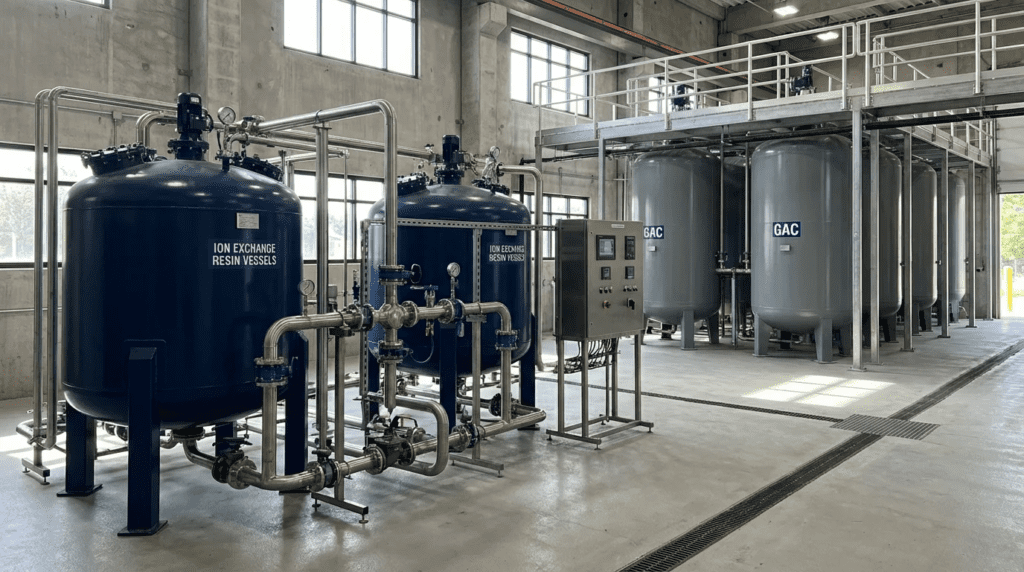
Granular Activated Carbon (GAC) Systems represent the most widely deployed, historically proven technology for PFAS removal in both drinking water and groundwater remediation. These systems rely on physical adsorption, where hydrophobic PFAS molecules accumulate within the highly porous internal structure of the carbon media. Coal-based (bituminous) carbon is typically preferred over coconut-shell carbon for PFAS applications due to its optimal mix of transport pores (macropores) and adsorption pores (mesopores/micropores), which better accommodate the bulky structure of long-chain PFAS molecules like PFOS and PFOA. While highly effective, GAC requires a significant footprint due to the need for a high Empty Bed Contact Time (EBCT)—typically 10 to 20 minutes. GAC is highly susceptible to competitive adsorption from background Total Organic Carbon (TOC), which can prematurely exhaust the media bed, leading to frequent and costly change-outs.
Ion Exchange (IX) Resin Systems
Utilizing highly engineered synthetic polymers, Ion Exchange (IX) Resin Systems specifically target the negatively charged functional groups (carboxylates and sulfonates) of PFAS molecules. PFAS removal via IX functions through a dual mechanism: electrostatic attraction (ion exchange) and hydrophobic interactions (adsorption) within the resin matrix. These systems are predominantly utilized in municipal drinking water and industrial groundwater applications with low to moderate suspended solids. IX offers a distinct advantage over GAC by requiring a much shorter EBCT (typically 2 to 3 minutes), allowing for significantly smaller pressure vessels and a reduced facility footprint. Furthermore, IX resins possess a higher capacity for short-chain PFAS compounds. However, single-use PFAS-selective resins represent a high OPEX consumable, and the resin is highly sensitive to background competing anions, particularly sulfates and nitrates.
Reverse Osmosis (RO) Membrane Systems
For applications requiring a comprehensive barrier against almost all contaminants, Reverse Osmosis (RO) Membrane Systems are utilized to physically separate PFAS from the water stream. Operating at high pressures, RO forces water through a semi-permeable membrane, rejecting >99% of both long-chain and short-chain PFAS compounds. RO is typically deployed in industrial wastewater reuse, advanced municipal water purification, and landfill leachate treatment where broad-spectrum demineralization is required alongside PFAS removal. The primary limitation of RO is the generation of a concentrated reject stream (brine), which can account for 15% to 25% of the total flow. This brine contains highly concentrated PFAS, necessitating secondary treatment or expensive off-site deep-well injection.
Nanofiltration (NF) Systems
Operating on a similar principle to RO but at lower operational pressures, Nanofiltration (NF) Systems utilize a slightly looser membrane pore structure. NF is highly effective at rejecting larger multivalent ions and bulky PFAS molecules while allowing some monovalent ions to pass through, resulting in lower energy consumption compared to RO. NF is commonly evaluated for municipal drinking water softening applications where simultaneous PFAS compliance is mandated. While NF requires less pressure, it still produces a concentrated reject stream that requires complex management, and the membranes are highly vulnerable to biological and inorganic fouling, requiring rigorous pre-treatment.
Foam Fractionation Systems
Exploiting the surfactant nature of PFAS, Foam Fractionation Systems utilize bubbling air through a contaminated water column to create a foam at the surface where PFAS molecules naturally congregate. Because PFAS molecules possess both hydrophobic (fluorinated tail) and hydrophilic (functional head) properties, they preferentially align at the air-water interface. This technology is highly specialized for complex, high-concentration matrices such as landfill leachate, industrial wastewater, and Aqueous Film-Forming Foam (AFFF) runoff. Foam fractionation is an excellent pre-concentration step, capable of reducing millions of ppt of PFAS down to manageable levels without using consumable media. However, it requires polishing steps (like IX or GAC) to reach single-digit ppt regulatory limits, and it generates a hyper-concentrated foamate (“sludge”) requiring destructive disposal.
Novel Adsorbents and Modified Zeolites
As the limitations of traditional GAC and IX become apparent in complex water matrices, Novel Adsorbents and Modified Zeolites have emerged as specialized alternatives. These engineered media, often utilizing organically modified clays, cyclodextrin polymers, or surface-functionalized silicas, are designed for hyper-selectivity against short-chain PFAS or to resist competitive fouling from background dissolved organic matter (DOM). They are increasingly specified in industrial wastewater and groundwater remediation sites where high TOC renders standard GAC uneconomical. While they offer superior kinetics and targeted capacity, these novel media currently carry a significant CAPEX premium and lack the decades of long-term operational data associated with commodity carbon.
Supercritical Water Oxidation (SCWO) Systems
Transitioning from separation to destruction, Supercritical Water Oxidation (SCWO) Systems subject PFAS-contaminated liquids to temperatures exceeding 374°C and pressures above 221 bar (3,200 psi). In this supercritical state, water loses its hydrogen bonding, causing organic compounds and oxygen to become completely miscible. This allows for the rapid, comprehensive oxidation of the carbon-fluorine bonds, reducing PFAS to carbon dioxide, water, and hydrofluoric acid (which is subsequently neutralized). SCWO is utilized exclusively for highly concentrated streams, such as IX regenerant brine, RO reject, and raw AFFF. While offering >99.99% destruction efficiency, SCWO presents immense engineering challenges regarding materials of construction, as the highly corrosive environment rapidly degrades standard stainless steel alloys, necessitating exotic materials like Hastelloy or titanium.
Electrochemical Oxidation (EO) Systems
Electrochemical Oxidation (EO) Systems utilize specialized, non-consumable electrodes—typically Boron-Doped Diamond (BDD) or mixed metal oxides (MMO)—to generate powerful hydroxyl radicals and facilitate direct electron transfer, cleaving the strong C-F bonds of PFAS molecules at ambient temperatures and pressures. EO is primarily applied in industrial settings to treat high-concentration, low-volume waste streams, such as landfill leachate concentrates and membrane brine. EO is highly advantageous because it eliminates the need to transport concentrated PFAS waste off-site. However, the energy consumption per volume treated can be exceptionally high, and engineers must carefully manage the potential generation of toxic byproducts, such as perchlorate or halogenated volatile organics, if the source water contains high levels of chlorides.
Hydrothermal Alkaline Treatment (HALT)
Hydrothermal Alkaline Treatment (HALT) is a destruction technology that applies high temperature (subcritical, roughly 250°C to 350°C), moderate pressure, and an alkaline reagent (like sodium hydroxide) to chemically defluorinate PFAS compounds. The strongly alkaline environment accelerates the breakdown of the fluorinated carbon chain into harmless fluoride salts and simple carbon compounds. HALT is particularly suited for high-strength industrial wastes, sludge, and concentrated membrane rejects where oxidation-based technologies might struggle with high chemical oxygen demand (COD). It offers lower operating pressures than SCWO, reducing materials of construction costs, though the requirement for constant caustic dosing adds to the OPEX and chemical handling complexity.
Non-Thermal Plasma Destruction Systems
Utilizing electricity to generate a plasma gas (often using argon or air) directly over or inside the contaminated water, Non-Thermal Plasma Destruction Systems produce a highly reactive environment filled with free electrons, ions, and ultraviolet radiation. The PFAS molecules at the gas-liquid interface are bombarded and degraded into constituent inorganic fluorides and simple gases. This technology operates at near-ambient bulk water temperatures, providing a safer operational profile than high-heat/high-pressure thermal destruction. Currently scaling from pilot to commercial applications, plasma systems are best fit for intermediate-to-high concentration streams. Scalability to high municipal flow rates remains the primary engineering hurdle.
PFAS Pre-Treatment Filtration Systems
No adsorption or membrane technology can survive without robust PFAS Pre-Treatment Filtration Systems. This subcategory encompasses the essential upstream processes—including greensand filtration for iron and manganese removal, multimedia filtration for total suspended solids (TSS), and bag/cartridge filtration for fine particulates. In PFAS treatment, pre-treatment is critical because iron/manganese will rapidly precipitate inside GAC pores or foul IX resin beds, drastically reducing PFAS capacity and causing unacceptable headloss. Specifications for PFAS systems must always begin with an exhaustive water characterization to determine the necessary pre-treatment train; omitting this step is the most common cause of premature PFAS system failure.
Municipal Drinking Water PFAS Treatment Systems
Viewing the landscape through the lens of application, Municipal Drinking Water PFAS Treatment Systems are highly regulated environments focused on continuous, high-volume flow and the achievement of non-detect or sub-4-ppt effluent targets. System design here heavily favors proven, low-risk phase separation—predominantly GAC and single-use IX. Redundancy is paramount, usually requiring lead-lag vessel configurations to ensure zero breakthrough to the distribution system. Engineers must navigate AWWA standards, NSF/ANSI 61 compliance for wetted materials, and complex regulatory approval processes through state primacy agencies.
Industrial Wastewater PFAS Treatment Systems
Contrasting with municipal applications, Industrial Wastewater PFAS Treatment Systems deal with incredibly complex, highly variable water matrices containing solvents, heavy metals, extreme pH fluctuations, and massive concentrations of competing organics. Applications range from semiconductor manufacturing to textile processing. Treatment trains in this sector are highly customized, often combining Foam Fractionation for bulk reduction, followed by robust pre-treatment and specialized Novel Adsorbents or RO. Regulatory focus here is on National Pollutant Discharge Elimination System (NPDES) permit compliance and minimizing off-site liability, increasingly driving interest toward onsite EO or HALT destruction.
Landfill Leachate PFAS Treatment Systems
Representing one of the most challenging matrices in water engineering, Landfill Leachate PFAS Treatment Systems must handle extreme levels of COD, ammonia, heavy metals, and Total Dissolved Solids (TDS) alongside massive PFAS spikes. Direct application of GAC or IX to raw leachate is technically impossible due to instant fouling. Therefore, treatment trains heavily rely on physical separation (Membrane Bioreactors followed by RO) or Foam Fractionation. The concentrated residuals generated from leachate treatment are the primary driver for the commercialization of SCWO and HALT technologies.
Selection & Specification Framework
Specifying the optimal technology from the PFAS Treatment Systems: Technologies for Municipal and Industrial Use landscape requires navigating a multi-dimensional decision matrix. Engineers cannot simply select based on CAPEX; the lifetime OPEX, driven by media replacement and waste disposal, dictates the true cost of the facility.
1. Decision Tree Logic: The Chemistry Dictates the Tech
The first divergence in the decision tree is based on background water chemistry, specifically Total Organic Carbon (TOC) and competing anions (Sulfates/Nitrates).
* If TOC is high (>2 mg/L) and scaling potential is low, Granular Activated Carbon (GAC) Systems are often ruled out due to rapid pore blinding by background organics.
* If Sulfates are high, single-use Ion Exchange (IX) Resin Systems will suffer from rapid competitive displacement, exhausting the bed prematurely.
* If the water matrix is highly complex (e.g., leachate), direct adsorption is unfeasible, pushing the decision toward Reverse Osmosis (RO) Membrane Systems or Foam Fractionation Systems coupled with downstream destruction.
2. PFAS Chain Length Profile
GAC is highly efficient at removing long-chain PFAS (like PFOS and PFOA) but struggles with short-chain variants (like PFBA and PFBS), allowing them to break through the bed quickly. If the regulatory permit specifically targets a blend heavy in short-chain compounds, IX resins—which have a much higher affinity for short-chains due to specific functional group targeting—become the heavily favored alternative.
3. Footprint and Hydraulics
Plant footprint heavily influences technology selection. A 5 MGD municipal plant using GAC requires massive contactors to achieve a 10-20 minute EBCT. If land is scarce or existing building envelopes must be utilized, the 2-3 minute EBCT of IX resins allows for significantly smaller pressure vessels. However, engineers must account for the higher hydraulic pressure drop across the finer IX resin beads compared to the coarser GAC media, impacting pump sizing.
4. Lifecycle Cost (CAPEX vs OPEX) Tradeoffs
GAC systems generally present the lowest CAPEX (standard steel pressure vessels, inexpensive bulk media). However, if change-outs are required every 6 months due to TOC fouling, the OPEX will shatter the utility budget. Conversely, Novel Adsorbents and Modified Zeolites present a high initial media CAPEX, but their resistance to competitive fouling may stretch the change-out interval to 3 years, yielding a lower 20-year net present value. Similarly, the CAPEX of onsite destruction technologies like Electrochemical Oxidation (EO) Systems is currently exorbitant, but they eliminate the massive, recurring OPEX liability of shipping hazardous PFAS concentrate off-site.
Comparison Tables
The following tables provide a high-level engineering reference guide to navigating the subcategories of PFAS treatment. Table 1 maps the technical features and cost profiles of the distinct technologies, while Table 2 provides a matrix for matching applications to the most appropriate treatment train.
Table 1: Subcategory Technology Comparison
| Technology Type | Mechanism | Target Contaminants | Key Limitations | Relative CAPEX/OPEX |
|---|---|---|---|---|
| Granular Activated Carbon (GAC) Systems | Physical adsorption (porous structure) | Long-chain PFAS, bulk TOC, VOCs | Large footprint (10-20m EBCT); poor short-chain capture; TOC fouling. | Low CAPEX / Mod-High OPEX |
| Ion Exchange (IX) Resin Systems | Electrostatic attraction + adsorption | Short & Long-chain PFAS | Sensitive to high sulfates/nitrates; finer mesh creates higher headloss. | Mod CAPEX / High OPEX |
| Reverse Osmosis (RO) Membrane Systems | High-pressure physical barrier | Broad-spectrum (all PFAS, salts, metals) | Generates large volume of PFAS-rich brine (15-25% reject); high energy. | High CAPEX / High OPEX |
| Foam Fractionation Systems | Air-water interface separation | Bulk PFAS reduction (AFFF, leachate) | Not a polishing step; cannot reach single-digit ppt alone. Generates foamate. | Mod CAPEX / Low OPEX |
| Supercritical Water Oxidation (SCWO) Systems | High heat/pressure thermal destruction | Concentrated PFAS wastes | Corrosion of reactor alloys; high energy input; complex operation. | Very High CAPEX / High OPEX |
| Electrochemical Oxidation (EO) Systems | Hydroxyl radical & electron transfer | Concentrated PFAS wastes | Risk of toxic byproducts (perchlorate); high energy consumption per gallon. | High CAPEX / Mod-High OPEX |
Table 2: Application Fit Matrix
| Application Scenario | Best-Fit Subcategory | Key Engineering Constraints | Operator Skill Requirement |
|---|---|---|---|
| Municipal Groundwater (Low TOC, Mod flow) | Ion Exchange (IX) Resin Systems | Must verify low sulfate levels to prevent resin exhaustion. Requires lead/lag setup. | Basic – Moderate |
| Municipal Surface Water (High TOC, High Flow) | Granular Activated Carbon (GAC) Systems | Requires massive footprint. Pre-filtration required to lower turbidity/organics. | Basic |
| Landfill Leachate / High-Strength Waste | Foam Fractionation Systems + RO | Extreme biological fouling potential. Requires rigorous multi-stage pre-treatment. | Advanced |
| Industrial Plating / Semiconductor Wastewater | Reverse Osmosis (RO) Membrane Systems | Need to manage membrane scaling from heavy metals. Brine requires destruction. | Advanced |
| Onsite Destruction of IX Brine or RO Reject | Hydrothermal Alkaline Treatment (HALT) or SCWO | Materials of construction must handle high corrosivity, caustics, and pressures. | Highly Advanced |
Engineer & Operator Field Notes
Translating PFAS treatment designs from the P&ID to the plant floor reveals nuanced operational challenges. Proper commissioning, rigorous pre-treatment, and preventative maintenance differ sharply across the technology subcategories.
Commissioning Considerations
Commissioning protocols vary heavily depending on the selected media. For Granular Activated Carbon (GAC) Systems, initial media loading must be followed by a 24-to-48 hour soaking period to allow the carbon pores to wet fully, followed by a rigorous initial backwash to stratify the bed and remove carbon fines. Failure to adequately backwash will result in “black water” entering the distribution system. In contrast, Ion Exchange (IX) Resin Systems require significantly less soaking time but must be flushed to remove residual manufacturing leachates (often amines) that can cause fishy odors or localized pH spikes. For Reverse Osmosis (RO) Membrane Systems, commissioning focuses entirely on verifying O-ring integrity and profiling pressure drops across membrane stages to establish an anti-fouling baseline.
Common Specification Mistakes
A frequent error occurs when engineers attempt to retrofit an existing pressure vessel originally sized for GAC with IX resin (or vice versa) without recalculating the hydraulics. IX resins have a much smaller effective size (typically 0.4–0.6 mm) compared to GAC (e.g., 8×30 mesh). Dropping IX into a GAC vessel using standard wedgewire underdrains without a finer screen will result in catastrophic media loss. Furthermore, the headloss through an IX bed will be drastically higher, likely dead-heading the existing transfer pumps.
For any adsorption technology (GAC, IX, or Novel Adsorbents), always specify a lead-lag (series) vessel configuration with intermediate sampling ports. When the lead vessel hits breakthrough, the lag vessel serves as the polishing step. The lead vessel is then taken offline, refilled with fresh media, and valved to become the new lag vessel. This ensures 100% media utilization and zero regulatory violations.
O&M Comparison Across Subcategories
The daily burden on operators and utility budgets varies dramatically across the PFAS treatment landscape:
- Daily Attention & Operator Skill: Adsorption systems (GAC and IX) are largely “set-it-and-forget-it” operations, requiring basic operator skill levels. Monitoring consists mostly of checking differential pressure across the vessels and logging flow. Conversely, Reverse Osmosis (RO) Membrane Systems and destruction technologies like Supercritical Water Oxidation (SCWO) Systems require highly advanced operator training. These systems demand daily monitoring of chemical dosing, normalized permeate flow, flux rates, and complex high-pressure pump mechanics.
- Maintenance Intervals & Labor: GAC requires periodic backwashing (e.g., bi-weekly) to prevent channeling and headloss buildup from suspended solids. Single-use IX systems are typically *not* backwashed (to maintain the mass transfer zone), meaning upstream PFAS Pre-Treatment Filtration Systems must be maintained flawlessly. Media change-outs for GAC/IX involve heavy labor: isolating vessels, slurry-evacuating spent media to vacuum trucks, and hydro-pneumatically loading virgin media—an event that can take 1-3 days per vessel.
- Consumable Costs: GAC media is relatively inexpensive per pound but requires massive volumes per vessel. IX resin is substantially more expensive per cubic foot (often 4-6x the cost of GAC) but requires lower volumes. RO systems require continuous chemical consumables (antiscalants, acid/caustic for CIP) and membrane element replacements every 3-5 years.
- Spare Parts Inventory: For GAC/IX, spare parts are minimal (valve actuators, sample port taps, pressure gauges). For RO and emerging destruction technologies, facilities must stock specialized high-pressure pump seals, custom electrodes (for EO), exotic alloy pipe spools, and proprietary membrane elements.
Troubleshooting Overview
The most common issue in adsorption systems is premature PFAS breakthrough. If a GAC or IX system breaches early, the root cause is almost always either a change in influent water chemistry (a spike in TOC or competing ions like sulfates), or physical channeling caused by poor flow distribution or biological fouling. In Nanofiltration (NF) Systems and RO systems, a sudden drop in permeate flow usually indicates silica or calcium carbonate scaling due to failed antiscalant dosing, while an increase in differential pressure at the lead elements indicates biological or particulate fouling bypassing the PFAS Pre-Treatment Filtration Systems.
Design Details & Standards
Rigorous mathematical modeling and adherence to strict engineering standards are required to correctly size and specify PFAS treatment infrastructure.
Sizing Methodology Overview
For phase-separation adsorption systems, the most critical sizing metrics are Empty Bed Contact Time (EBCT) and Bed Volumes (BV) to exhaustion.
EBCT is calculated as:
EBCT (minutes) = Media Volume (gallons) / Flow Rate (GPM).
Bed Volumes represent the total throughput capacity of the media before breakthrough occurs, calculated as:
BV = Total Gallons Treated / Media Volume (gallons).
A higher BV indicates a longer media lifespan. Rapid Small-Scale Column Tests (RSSCTs) are often executed during the design phase to accurately predict full-scale BV to exhaustion for both GAC and IX.
Key Design Parameters by Subcategory
Design parameters shift dramatically based on the technology chosen:
- GAC Sizing: Requires 10 to 20 minutes of EBCT. Hydraulic loading rates are typically constrained to 2.0 to 5.0 GPM/ft² of cross-sectional bed area. Vessel L/D (length-to-diameter) ratios generally sit between 1:1 and 2:1 to ensure adequate bed depth for the mass transfer zone.
- IX Sizing: Requires only 2 to 3.5 minutes of EBCT. Hydraulic loading rates can be pushed significantly higher, up to 8.0 to 12.0 GPM/ft². Bed depths are typically a minimum of 3 to 4 feet to prevent short-circuiting.
- Membrane Sizing: RO and NF systems are sized based on flux (Gallons per Square Foot per Day – GFD). Typical RO flux for municipal wastewater reuse targeting PFAS is 10-15 GFD, whereas clean groundwater might allow 15-20 GFD. Recovery rates dictate the brine volume; pushing recovery too high (>85%) exponentially increases scaling risk.
Applicable Standards & Compliance
Engineers must ensure specifications conform to industry standards. For drinking water applications, all wetted components and media must adhere to NSF/ANSI Standard 61 (Drinking Water System Components – Health Effects) to ensure no hazardous leaching occurs. GAC media must conform to AWWA B604. Performance validation for municipal systems requires rigorous laboratory testing utilizing strict EPA methodologies, primarily EPA Method 533 and EPA Method 537.1, which dictate the specific sampling, preservation, and LC-MS/MS analytical procedures for detecting PFAS at parts-per-trillion levels.
Specification Checklist
When drafting the mechanical specification for a PFAS facility, ensure the following are included:
- Complete raw water characterization (TOC, Iron, Manganese, Hardness, Sulfates, Nitrates, complete PFAS speciation).
- Identification of specific upstream PFAS Pre-Treatment Filtration Systems required.
- ASME Section VIII Div 1 stamping for all steel pressure vessels.
- Interior vessel coatings: 100% solids epoxy or vinyl ester, spark-tested for holidays (pinholes) to prevent accelerated corrosion from IX resins or GAC galvanic activity.
- Requirement for lead/lag vessel piping with valving that allows either vessel to serve as the lead position.
FAQ Section
What are the different types of PFAS Treatment Systems: Technologies for Municipal and Industrial Use?
The landscape is divided into separation and destruction technologies. Separation technologies include Granular Activated Carbon (GAC) Systems, Ion Exchange (IX) Resin Systems, Reverse Osmosis (RO) Membrane Systems, Nanofiltration (NF) Systems, Foam Fractionation Systems, and Novel Adsorbents and Modified Zeolites. Destruction technologies, which mineralize the compounds, include Supercritical Water Oxidation (SCWO) Systems, Electrochemical Oxidation (EO) Systems, Hydrothermal Alkaline Treatment (HALT), and Non-Thermal Plasma Destruction Systems. All must be supported by PFAS Pre-Treatment Filtration Systems.
How do you choose between Granular Activated Carbon (GAC) Systems and Ion Exchange (IX) Resin Systems?
The choice hinges on footprint, background organics, and PFAS chain length. If the facility has abundant space, high background TOC, and primarily targets long-chain PFAS, GAC is usually the most cost-effective lifecycle choice. If footprint is highly constrained, background TOC is low, and the regulatory target involves strict limits on short-chain PFAS, IX is preferred due to its shorter EBCT (2-3 minutes) and higher specific affinity for short-chain compounds.
What is the most cost-effective approach for small plants?
For small Municipal Drinking Water PFAS Treatment Systems (under 1 MGD), single-use IX systems often present the best economics. Although the media is more expensive than GAC, the significantly smaller pressure vessels, reduced piping footprints, and smaller concrete pad requirements drastically reduce the initial CAPEX. Furthermore, because small systems lack dedicated maintenance teams, the long interval between IX media change-outs (often 12-24 months) lowers O&M burden.
How do background water chemistry parameters affect PFAS removal?
Background chemistry dictates system viability. High Iron and Manganese will physically precipitate and blind both GAC pores and IX beads, necessitating upstream PFAS Pre-Treatment Filtration Systems. High Total Organic Carbon (TOC) acts as a competitive adsorbent, prematurely exhausting GAC capacity. High concentrations of background anions, specifically sulfates and nitrates, will aggressively compete for exchange sites on Ion Exchange (IX) Resin Systems, causing early PFAS breakthrough.
What is the role of Foam Fractionation Systems in PFAS management?
Foam fractionation is used primarily in Industrial Wastewater PFAS Treatment Systems and Landfill Leachate PFAS Treatment Systems as an initial bulk-reduction step. It is not a polishing technology and cannot reach low-ppt drinking water standards alone. Instead, it is used to strip 80-90% of massive PFAS concentrations out of complex, dirty water matrices without using consumable media, protecting downstream RO or IX polishing systems from rapid exhaustion.
How do you size an adsorption vessel for PFAS removal?
Sizing is fundamentally driven by Empty Bed Contact Time (EBCT). First, establish the required EBCT based on the media (e.g., 15 minutes for GAC). Using the design flow rate (e.g., 1000 GPM), multiply the flow by the EBCT to find the required media volume (15,000 gallons or ~2,000 cubic feet). The vessel dimensions are then selected to maintain a hydraulic loading rate of 2-5 GPM/ft² and an appropriate Length-to-Diameter ratio to ensure an adequate mass transfer zone.
Conclusion
- Design by Chemistry, not CAPEX: An exhaustive water characterization (TOC, heavy metals, sulfates, PFAS speciation) is mandatory before selecting a technology.
- Space vs. OPEX: Granular Activated Carbon (GAC) Systems require massive footprints (10-20m EBCT) but have cheaper bulk media. Ion Exchange (IX) Resin Systems have small footprints (2-3m EBCT) but costly consumable media.
- Pre-treatment is Non-Negotiable: Neglecting PFAS Pre-Treatment Filtration Systems for iron/TSS removal guarantees premature failure of downstream adsorption or membrane systems.
- Destruction is the Future for Concentrates: For managing RO brine or AFFF wastes, thermal and chemical destruction (like SCWO or HALT) eliminates long-term secondary liability.
- Always use Lead-Lag Configurations: Ensure a primary and polishing vessel setup to guarantee zero breakthrough of PFAS into the distribution system.
The successful deployment of PFAS Treatment Systems: Technologies for Municipal and Industrial Use demands a rigorous, multi-disciplinary engineering approach. No single subcategory represents a silver bullet. Municipal engineers operating clean groundwater plants will continue to rely heavily on the proven phase-separation physics of GAC and IX, balancing vessel footprint against media consumption models. Conversely, industrial facility managers dealing with high-strength leachates or manufacturing effluents must pivot toward robust separation like RO combined with emerging destruction technologies—such as SCWO, EO, or HALT—to permanently sever the carbon-fluorine bond and terminate off-site liability. Ultimately, balancing capital availability, regulatory stringency, operator capability, and the precise chemical signature of the source water will dictate the correct technological path.