
Top Digester Manufacturers for Wastewater Sludge Treatment
Introduction
In modern municipal and industrial facilities, biosolids management frequently accounts for up to 50% of a plant’s total operating budget. Specifying the wrong sludge reduction technology can lead to catastrophic downstream issues, including foaming, sour digesters, excessive polymer consumption during dewatering, and skyrocketing disposal costs. Navigating the landscape of the Top Digester Manufacturers for Wastewater Sludge Treatment is critical for engineers tasked with balancing capital expenditure (CAPEX), operational expenditure (OPEX), and stringent environmental compliance regarding volatile solids reduction (VSR) and pathogen destruction.
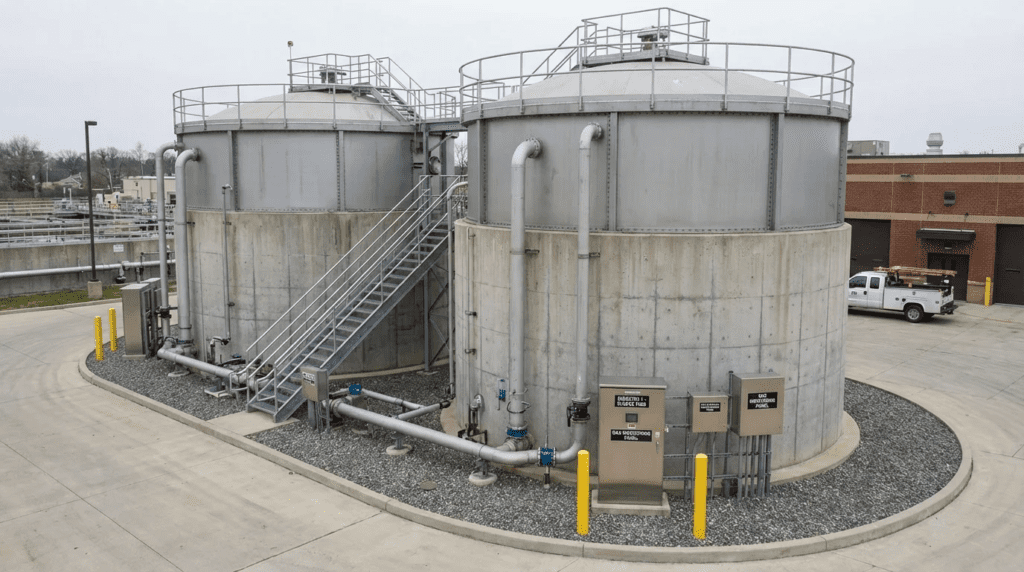
This pillar page provides a comprehensive, vendor-neutral analysis of the leading digester technologies, equipment components, and the original equipment manufacturers (OEMs) that dominate the space. Sludge treatment is not a monolith; it encompasses a broad spectrum of biological and thermal processes. Understanding the differing subcategories—from low-maintenance aerobic package systems for small municipalities to advanced thermal hydrolysis configurations for massive regional plants—is essential. This guide will walk engineers through the variants, application fits, design parameters, and operational realities required to properly specify and procure digestion systems that offer long-term reliability and lifecycle value.
Subcategory Landscape — Types, Technologies & Approaches
The landscape of sludge digestion encompasses the underlying biological processes, the specific structural and mechanical components that make the process possible, and the major OEMs that engineer these systems. Engineers must navigate this matrix carefully, as manufacturers often specialize heavily in specific mixing paradigms, cover designs, or biological environments. The following subsections detail the critical subcategories that define the modern biosolids treatment sector.
Anaerobic Digestion Systems
Anaerobic Digestion Systems represent the industry standard for medium-to-large municipal wastewater treatment plants (typically >5 MGD) and high-strength industrial applications. These systems operate in the absence of oxygen, utilizing a complex consortium of bacteria to break down organic matter into biogas (primarily methane and carbon dioxide) and stabilized biosolids. The key advantage is energy recovery; the generated biogas can be captured and utilized in combined heat and power (CHP) engines or upgraded to renewable natural gas (RNG). However, these systems require substantial capital investment, large footprint concrete structures, and stringent process monitoring to prevent pH swings and toxicity. Specification relies heavily on balancing Hydraulic Retention Time (HRT)—typically 15 to 25 days—with Volatile Solids Loading Rates (VSLR).
Aerobic Digestion Systems
Aerobic Digestion Systems are predominantly deployed in smaller municipal facilities (typically <5 MGD) where simplicity of operation is prioritized over energy recovery. These processes utilize forced aeration to maintain an oxygen-rich environment, allowing aerobic bacteria to consume organic sludge and, eventually, their own cellular mass (endogenous respiration). They are highly effective at volatile suspended solids (VSS) reduction and produce a relatively odor-free, stable biosolid suitable for land application. The primary limitation is the high OPEX associated with aeration blower power, which scales linearly with the biological oxygen demand. Engineers typically specify these systems for decentralized plants or retrofits where existing open-top tanks can be utilized with submerged diffused aeration.
Mesophilic Anaerobic Digestion
Operating typically between 35°C and 38°C (95°F–100°F), Mesophilic Anaerobic Digestion is the most widely adopted configuration globally due to its balance of stability, VSR, and manageable heating requirements. The mesophilic bacterial consortium is relatively robust against mild temperature fluctuations and loading shock. This process usually achieves 40-50% volatile solids destruction. The primary limitation is that it generally only achieves Class B biosolids classification (under US EPA Part 503 regulations), meaning land application options are geographically or seasonally restricted. It requires continuous, reliable sludge heating loops and external heat exchangers to maintain the tight thermal window necessary for methanogenesis.
Thermophilic Anaerobic Digestion
Thermophilic Anaerobic Digestion operates at higher temperatures, typically 50°C to 57°C (122°F–135°F), promoting faster reaction kinetics and higher volatile solids destruction (often 50-60%). Because of the elevated temperature and specific retention times, it can reliably produce EPA Class A biosolids, allowing for unrestricted public use or agricultural application. The tradeoffs include increased thermal energy requirements, higher susceptibility to process upsets from temperature drops (methanogens at this tier are highly sensitive), and a greater propensity for generating nuisance odors and volatile fatty acids (VFAs) in the dewatered cake. Engineers must strictly specify high-efficiency heat recovery systems and robust insulation when selecting this subcategory.
Temperature Phased Anaerobic Digestion (TPAD)
Temperature Phased Anaerobic Digestion (TPAD) combines the rapid pathogen destruction of thermophilic systems with the stability and biogas conditioning of mesophilic systems. Sludge typically enters a short-retention thermophilic stage (3–5 days) followed by a longer mesophilic stage (10–15 days). This phased approach maximizes biogas yield, achieves Class A biosolids status, and significantly reduces the total tank volume required compared to a pure mesophilic system. It does, however, increase mechanical complexity, requiring two sets of tanks, intermediate cooling systems (to drop sludge from 55°C down to 35°C), and sophisticated process controls. It is best suited for medium-to-large facilities facing strict land application regulations but lacking the footprint for extended mesophilic HRT.
Autothermal Thermophilic Aerobic Digestion (ATAD)
Autothermal Thermophilic Aerobic Digestion (ATAD) is an advanced aerobic process that operates in insulated, enclosed tanks. Through intensive aeration and mixing, the biological heat generated by the aerobic oxidation of organics is conserved, naturally driving the sludge temperature into the thermophilic range (typically 55°C to 65°C). ATAD is highly efficient, achieving high VSR and Class A pathogen destruction in a very short HRT (often 5 to 9 days). However, the process generates high-strength off-gases (ammonia and volatile organic compounds) that require specialized chemical scrubbers or biofilters. It is typically specified for mid-sized plants that require Class A solids but lack the operational bandwidth for anaerobic gas handling.
Thermal Hydrolysis Process (THP) Systems
For mega-plants and regional biosolid hubs, Thermal Hydrolysis Process (THP) Systems have revolutionized pretreatment. THP acts as a high-pressure “pressure cooker” for sludge prior to anaerobic digestion. By exposing thickened sludge to high temperatures (approx. 165°C) and elevated pressure for 20-30 minutes, cell walls rupture and the viscosity of the sludge plummets. This allows digesters to be loaded at double or triple the conventional solids concentration (up to 10-12% dry solids), drastically increasing biogas yields and producing high-quality Class A biosolids. The dewaterability of the final cake is substantially improved, cutting disposal costs. THP requires massive CAPEX, highly trained operators, and robust steam generation infrastructure.
Digester Mixing Systems
Effective mass transfer is the heartbeat of digestion, making Digester Mixing Systems a critical subcategory. Poor mixing leads to grit accumulation, scum blanket formation, and dead zones that drastically reduce active volume. Technologies include draft tube mechanical mixers, linear motion mixers (up-and-down plunging action), pumped liquid jet systems, and compressed biogas mixing lances. The choice impacts energy consumption dramatically. For instance, linear motion mixers offer very low continuous power draw, while pumped systems provide excellent flexibility with externally mounted pumps. Specifications must dictate a specific mixing energy metric (e.g., W/m³ or HP/1000 ft³) or a guaranteed active volume percentage (typically >90%).
Digester Cover Manufacturers
Containment and gas pressurization fall under the purview of specialized Digester Cover Manufacturers. Options include fixed steel/concrete covers, floating covers (which rise and fall with sludge volume or gas pressure), and dual-membrane gasholders. Floating covers provide intrinsic gas storage and prevent vacuum collapse during sludge withdrawal, but require extensive maintenance of roller guides and skirts. Dual-membrane covers have become the standard for modern installations due to their lightweight nature, high gas storage capacity, and lack of moving metallic parts in the corrosive headspace. Material specification (e.g., stainless steel vs. specialized PVC/PTFE fabrics) is vital for achieving a 20+ year lifecycle.
Biogas Handling and Treatment Equipment
If anaerobic digestion is chosen, specifying Biogas Handling and Treatment Equipment is mandatory. Raw biogas is saturated with water and contains destructive contaminants like hydrogen sulfide (H2S) and siloxanes. Components include moisture traps, sediment filters, biological or chemical desulfurization towers, chilling/drying skids, and activated carbon vessels for siloxane removal. Failure to properly treat biogas will void warranties on downstream CHP engines or boilers within months due to pitting and silica-glass deposition on cylinder heads.
Sludge Heating and Heat Exchangers
Biological methanogenesis stalls if temperatures fluctuate by even 1°C per day. Therefore, robust Sludge Heating and Heat Exchangers are required. Common configurations include spiral heat exchangers, concentric tube (tube-in-tube) exchangers, and water-bath heaters. Concentric tube systems are highly favored for their large clearances that prevent plugging by rags and hair (common in poorly screened municipal sludge). Specifications must ensure high fluid velocities to maintain turbulent flow, which maximizes heat transfer coefficients and prevents baking or scaling of sludge on the tube walls.
Ovivo Digestion Systems
As a leading OEM, Ovivo Digestion Systems provides comprehensive anaerobic and aerobic solutions, heavily recognized for their linear motion (LM) mixing technology. The LM Mixer provides gentle, low-shear, full-volume mixing using an oscillating disc, resulting in OPEX savings (often up to 50% less power than draft tubes) and minimal maintenance since the drive unit is completely external to the tank. Ovivo is frequently specified for municipal retrofits where reducing plant power consumption and eliminating in-tank maintenance are primary utility goals.
Evoqua Water Technologies Digesters
Evoqua Water Technologies Digesters (now integrated into Xylem) are renowned for their robust, traditional fixed-film and suspended growth systems, including their Dystor® dual-membrane gas storage systems and draft tube mixers. Their cover designs are an industry staple, engineered to handle extreme wind, snow loading, and UV degradation. Evoqua systems are typically favored in conservative, long-standing municipal specifications where proven, heavy-duty American iron and concrete configurations are preferred.
WesTech Engineering Digester Equipment
Known for highly customized engineering and heavy-duty steel fabrication, WesTech Engineering Digester Equipment encompasses everything from extreme-duty floating covers to specialized gas-mixing apparatuses. WesTech excels in applications that require bespoke tank geometries or retrofitting into irregular existing infrastructure. They provide comprehensive process guarantees and are a go-to specification for industrial wastewater applications (e.g., food & beverage, rendering) where organic loading rates fluctuate severely.
Xylem Sanitaire Digestion Solutions
Primarily dominant in the aerobic and advanced aeration space, Xylem Sanitaire Digestion Solutions specializes in fine-bubble and coarse-bubble diffused aeration systems for aerobic digesters. Their systems emphasize long-term diffuser longevity and high Standard Oxygen Transfer Efficiency (SOTE). For smaller-to-medium plants focusing on endogenous decay without the complexities of anaerobic gas handling, Sanitaire’s engineered grid layouts and smart blower controls prevent dead-zones while optimizing aeration OPEX.
Cambi Thermal Hydrolysis Systems
The undisputed global pioneer in THP is Cambi Thermal Hydrolysis Systems. Their batch and continuous THP skids are standard in mega-plant upgrades looking to double digester capacity without building new concrete tanks. The Cambi system is specifically specified when a utility must produce Class A biosolids, vastly reduce outbound sludge volume, and maximize RNG production. It requires a facility capable of managing high-pressure steam boilers and dealing with high ammonia return streams (side-stream treatment) from the dewatering process.
Vaughan Rotamix Systems
When ragging and hair accumulation plague a facility, engineers turn to Vaughan Rotamix Systems. Based around Vaughan’s legendary chopper pumps, the Rotamix system is a pumped liquid jet mixing configuration. The external chopper pumps continuously macerate the sludge while propelling it through internal floor-mounted glass-lined nozzles. This dual-action prevents nozzle plugging and completely homogenizes the digester contents. It is highly recommended for plants with poor primary screening where conventional mixers would quickly bind.
Enviroquip Aerobic Digesters
Another strong player in the biological aeration market is Enviroquip Aerobic Digesters (now part of Ovivo). They specialize in flat-plate membrane bioreactor (MBR) integration and thick-sludge aeration. Their systems are highly resilient and operator-friendly, often specified in packaged decentralized plants, residential development wastewater stations, and smaller industrial setups. Their equipment excels at providing shear-resistant aeration required for higher-solids aerobic digestion.
Landia Digester Mixing Systems
Landia Digester Mixing Systems are widely specified for their externally mounted GasMix system and high-efficiency submersible chopper mixers. The GasMix system operates uniquely by drawing biogas from the headspace and injecting it into the pumped sludge loop, creating aggressive agitation via gas expansion without relying on in-tank mechanicals or compressors. Landia is a top choice for agricultural biogas facilities, co-digestion plants, and municipal digesters handling thick, fibrous material like FOG (fats, oils, and greases).
Anaergia High-Solid Digesters
Focused on resource recovery and organic waste co-digestion, Anaergia High-Solid Digesters provide high-efficiency systems capable of digesting sludge with extremely high dry-solids content (up to 15% using their Omnivore process). By utilizing robust hydraulic mixing and specialized recuperative thickening, Anaergia retrofits can triple the capacity of existing tanks. They are the premier choice for facilities transforming into “resource recovery centers” by accepting imported food waste or municipal solid waste organics alongside wastewater sludge.
Selection & Specification Framework
Choosing among the Top Digester Manufacturers for Wastewater Sludge Treatment requires a rigid decision matrix. Engineers cannot simply scale up an aerobic package plant for a major city, nor can they justify THP for a 2 MGD rural facility.
- Decision Tree Logic by Plant Size & Capacity:
- < 5 MGD: Default to Aerobic Digestion Systems. The CAPEX of gas handling, boilers, and safety equipment for anaerobic digestion is rarely offset by the minimal biogas produced at this scale.
- 5 – 20 MGD: Standard Mesophilic Anaerobic Digestion is optimal. This is the sweet spot for balancing CAPEX against energy recovery, utilizing systems from OEMs like Evoqua Water Technologies Digesters or WesTech Engineering Digester Equipment.
- 20 – 50 MGD (Class A required): Evaluate Temperature Phased Anaerobic Digestion (TPAD) or Thermophilic Anaerobic Digestion.
- > 50 MGD (or capacity-constrained): Thermal Hydrolysis Process (THP) Systems (e.g., Cambi Thermal Hydrolysis Systems) provide the highest lifecycle ROI by cutting digester volume needs in half and maximizing RNG revenue.
- Mixing System Selection (CAPEX vs OPEX): Externally pumped systems like Vaughan Rotamix Systems have higher continuous power draw (OPEX) but keep all maintenance outside the tank (safety/labor). Conversely, Ovivo Digestion Systems LM mixers have higher upfront mechanical complexity but drastically lower power draw.
- Common Specification Pitfalls: A frequent engineering error is specifying mixing energy purely on a horsepower-per-volume basis (e.g., 0.2 HP/1,000 ft³) without considering the non-Newtonian rheology of thickened sludge. At 5% solids, sludge behaves like a liquid; at 8% solids, it behaves like a gel. Specifying high-solids processes like Anaergia High-Solid Digesters requires computational fluid dynamics (CFD) modeling, not just standard HP formulas.
Comparison Tables
The following tables provide an engineer-level quick-reference guide. Table 1 maps the primary OEMs and technologies, highlighting limitations and maintenance profiles. Table 2 provides a strict application-fit matrix based on operational scenarios.
Table 1: OEM & Subcategory Comparison
| Subcategory / Manufacturer | Primary Strengths | Best-Fit Applications | Limitations | Maintenance Profile |
|---|---|---|---|---|
| Cambi Thermal Hydrolysis Systems | Doubles digester capacity, guarantees Class A solids, max biogas. | Mega-plants (>50 MGD), severe space constraints. | Massive CAPEX, requires high-pressure steam & boiler operators. | High (pressure vessels, steam lines, complex controls). |
| Ovivo Digestion Systems (LM Mixer) | Extremely low power OPEX, gentle full-volume mixing. | Municipal mesophilic retrofits looking to lower energy costs. | May struggle with severely heavy grit deposits compared to jet pumping. | Low (all drive components external/roof mounted). |
| Vaughan Rotamix Systems | Impervious to ragging; continuous maceration. | Facilities with poor primary screening or high fibrous loads. | Higher power consumption due to continuous pump operation. | Moderate (chopper pump wear plate adjustments). |
| WesTech Engineering Digester Equipment | Highly customized steel fabrication, robust gas holders. | Industrial applications, custom tank geometries. | Heavier traditional designs may require stronger civil foundations. | Low to Moderate (standard mechanical up-keep). |
| Xylem Sanitaire Digestion Solutions | High oxygen transfer efficiency, smart aeration controls. | Small-to-mid municipal aerobic digestion. | No energy recovery, high blower power costs. | Moderate (diffuser cleaning/replacement every 7-10 years). |
Table 2: Application Fit Matrix
| Application Scenario | Best Fit Subcategory | Key Design Constraints | Operator Skill Impact |
|---|---|---|---|
| Small Town WWTP (<3 MGD), land application allowed. | Aerobic Digestion Systems | Blower sizing for peaking factors; freezing climates. | Low (Basic biological monitoring). |
| Mid-Size Regional (15 MGD), looking for CHP power offset. | Mesophilic Anaerobic Digestion | Requires 15-20 days HRT volume; strict heating loops. | Moderate (Gas safety, pH balancing). |
| City WWTP (30 MGD), strict Class A regulations for fertilizer sale. | Temperature Phased Anaerobic Digestion (TPAD) | Tank sequencing; inter-stage sludge cooling equipment. | High (Multi-stage process control). |
| Agricultural Co-Digestion handling manure and FOG. | Landia Digester Mixing Systems | High viscosity handling; aggressive grit accumulation. | Moderate (Pump/chopper maintenance). |
Engineer & Operator Field Notes
Equipment looks great on P&ID drawings, but reality in the field is dictated by grit, grease, and biological unpredictability. The operational demands vary wildly depending on the path chosen.
Commissioning Considerations
Commissioning differs heavily across technologies. When starting Anaerobic Digestion Systems, the tank must be “seeded” with active sludge from a neighboring facility. Bringing a mesophilic tank up to temperature must be done slowly (approx. 1°C per day) to prevent shocking the seed sludge. During this time, the gas produced will be rich in CO2 and highly flammable, requiring strict flaring protocols. Conversely, commissioning Aerobic Digestion Systems is primarily a mechanical exercise—testing blower variable frequency drives (VFDs), checking DO (dissolved oxygen) probes, and monitoring foam production as endogenous respiration begins.
Common Specification Mistakes
A frequent error among consulting engineers is poor integration of Biogas Handling and Treatment Equipment. Engineers often undersize the condensate traps. Raw biogas cools rapidly as it exits the digester, dropping copious amounts of water. If traps are undersized or slope is improper, water pools in the gas lines, leading to flow restriction, pressure spikes under Digester Cover Manufacturers equipment, and subsequent safety-relief valve blow-offs.
O&M Comparison Across Subcategories
Operational expenditure and labor hours dictate the long-term success of the installation.
- Daily Operator Attention: Autothermal Thermophilic Aerobic Digestion (ATAD) and Thermal Hydrolysis Process (THP) Systems require high daily attention, including monitoring steam pressures, biofilter odor controls, and complex valve sequencing. Aerobic Digestion Systems are the most “hands-off,” often requiring just a daily check of DO levels and blower oil.
- Maintenance Intervals: Digester Mixing Systems that are in-tank (like draft tubes) require complete tank drainage every 5-7 years for inspection—a massive undertaking. External systems like Vaughan Rotamix Systems allow for continuous maintenance of pump seals without taking the tank offline.
- Consumables: Anaerobic systems require occasional iron sponge or activated carbon media replacement for biogas scrubbers. Aerobic systems require higher polymer doses during the dewatering phase due to the shearing of the biological floc by the diffusers.
- Training Requirements: Boiler operator licenses are often mandatory for THP systems. Anaerobic systems demand NFPA 820 explosion-proof safety training.
Troubleshooting Overview
When an anaerobic system “goes sour” (pH drops abruptly due to volatile fatty acid accumulation outpacing methanogenesis), operators must cease feeding immediately and dose alkalinity (lime or sodium bicarbonate). For Aerobic Digestion Systems, the most common issue is severe foaming caused by Nocardia bacteria; operators must troubleshoot by adjusting the sludge retention time (SRT) or applying targeted surface sprays. If an anaerobic digester begins losing active volume, it is almost always a failure of the Digester Mixing Systems, allowing grit to settle on the floor and scum to harden at the surface.
Design Details & Standards
Sizing Methodology Overview
Sizing fundamentals depend entirely on the target volatile solids reduction (VSR). For Mesophilic Anaerobic Digestion, engineers target an HRT of 15-20 days. The required tank volume (V) is simply the daily sludge volume flow rate (Q) multiplied by the HRT. However, the Volatile Solids Loading Rate (VSLR) must also be checked; typical limits are 0.12 to 0.16 lbs VS/ft³/day. Exceeding this causes organic overloading. For Aerobic Digestion Systems, the design relies on the Sludge Age (SRT), typically 40-60 days for municipal solids, to ensure adequate VSR according to the degree-days formula (Temperature × SRT).
Parameters Differing by Subcategory
When switching from mesophilic to Thermophilic Anaerobic Digestion, the required HRT drops significantly (often to 10-12 days), shrinking tank sizing. However, the heating load calculation must account for a much higher Delta-T (raising sludge from ambient 15°C to 55°C instead of 35°C). Furthermore, sizing Anaergia High-Solid Digesters changes the paradigm completely; because sludge is fed at 10-12% solids instead of 4%, the volumetric flow rate (Q) is drastically smaller, allowing a tank one-third the size to accomplish the same mass processing.
Applicable Standards & Compliance
Engineers must design digestion systems to stringent standards:
- NFPA 820: Standard for Fire Protection in Wastewater Treatment and Collection Facilities. Dictates hazardous classification zones (Class I, Div 1/2) around all Biogas Handling and Treatment Equipment and under gas-holding covers.
- Ten States Standards: Mandates minimum HRT, dual digestion tanks for redundancy, and minimum mixing energies for municipal systems.
- EPA Part 503: The ultimate regulatory driver for biosolids, defining the time/temperature regimes necessary to achieve Class A or Class B status.
- API 650 & AWWA D100: Standards governing the structural steel design of tanks and Digester Cover Manufacturers.
Specification Checklist
- For ALL systems: Tank working volume, structural live/dead loads, corrosion-resistant coatings (H2S attacks concrete above the liquid line).
- For Anaerobic: Gas headspace volume, relief valve pressure settings, heating loop Delta-T guarantees.
- For Aerobic: Alpha/Beta factors for oxygen transfer, turn-down ratio on blowers, cold-weather freeze protection.
FAQ Section
What are the different types of sludge digestion technologies?
The primary categories are Anaerobic Digestion Systems (operated without oxygen to produce biogas) and Aerobic Digestion Systems (operated with aeration). Within anaerobic, there are subsets based on temperature: Mesophilic Anaerobic Digestion (35°C) and Thermophilic Anaerobic Digestion (55°C). Advanced variants include Temperature Phased Anaerobic Digestion (TPAD), Autothermal Thermophilic Aerobic Digestion (ATAD), and pretreatment approaches like Thermal Hydrolysis Process (THP) Systems.
How do you choose between Anaerobic and Aerobic Digestion Systems?
The choice hinges on plant scale and energy goals. For facilities under 3-5 MGD, Aerobic Digestion Systems are more cost-effective due to lower CAPEX and simpler operation. For larger plants, the energy recovery (biogas) and lower sludge disposal volumes make Anaerobic Digestion Systems the standard, despite the need for Biogas Handling and Treatment Equipment.
What is the most cost-effective digester mixing setup for high-grit plants?
For plants lacking fine screening or grit removal, external pumped mixing like Vaughan Rotamix Systems is highly effective. By pulling sludge out, chopping it, and jetting it back in, you avoid the ragging and fouling that commonly disables in-tank mechanical draft tubes. Routine maintenance can be done without emptying the tank.
Why specify Thermal Hydrolysis Process (THP) Systems?
Thermal Hydrolysis Process (THP) Systems like those from Cambi Thermal Hydrolysis Systems act as high-pressure pretreatment. They boil and rupture sludge cells, vastly lowering viscosity. This allows operators to load digesters at double or triple the normal solids concentration, cutting the required digester volume in half and guaranteeing Class A biosolids.
What are the critical maintenance tasks for Digester Cover Manufacturers?
For fixed steel covers, regular recoating of the interior to prevent H2S corrosion is critical. For floating covers, operators must lubricate roller guides and monitor the annular space for scum buildup. Modern dual-membrane covers require less mechanical maintenance but need routine checks for fabric UV degradation and blower fan operation that maintains the air pocket.
How does mixing energy affect Ovivo Digestion Systems vs. traditional draft tubes?
Ovivo Digestion Systems utilize Linear Motion (LM) mixers that plunge a disc up and down. This creates a gentle, full-tank hydraulic wave requiring extremely low horsepower. Draft tubes use rotating impellers inside a tube to create localized high-velocity flow, which generally requires significantly higher continuous electrical draw (OPEX) to homogenize the tank.
What causes an anaerobic digester to go sour?
A “sour” digester occurs when acid-forming bacteria outpace methane-forming bacteria, dropping the pH below 6.8. This is usually caused by organic overloading, sudden temperature drops due to failing Sludge Heating and Heat Exchangers, or toxicity. The methane bacteria die off, biogas production halts, and the tank fills with foul-smelling volatile fatty acids.
Conclusion
Key Takeaways for Specifying Digester Systems
- Size Dictates the Path: Use Aerobic Digestion Systems for small municipal applications, and Mesophilic Anaerobic Digestion for medium-to-large plants to enable energy recovery.
- Plan for Pretreatment: Maximize capacity at mega-facilities using Thermal Hydrolysis Process (THP) Systems like Cambi.
- Mixing is Paramount: Select Digester Mixing Systems based on the grit/rag profile of your influent. Externally mounted systems lower O&M risks.
- Safety First: Ensure all Biogas Handling and Treatment Equipment strictly adheres to NFPA 820 explosion-proof standards.
- Look at Lifecycle Cost: Don’t just evaluate the lowest bidder. Factor in power draw over 20 years, polymer costs for dewatering, and final biosolids disposal costs.
Selecting the optimal configuration among the Top Digester Manufacturers for Wastewater Sludge Treatment requires an exhaustive evaluation of a facility’s mass balance, energy goals, footprint constraints, and operator capabilities. Engineers must view sludge treatment not as a standalone tank, but as an integrated resource recovery process. The choice of biological environment—whether mesophilic, thermophilic, or aerobic—dictates the structural engineering of the tanks, the thermal load on the heating systems, and the complexity of the gas handling infrastructure. By strictly matching the application scenario to the right technological subcategory and leveraging the specific strengths of proven OEMs, municipal and industrial plants can transform sludge from a massive disposal liability into a stable, manageable, and potentially profitable renewable resource.