
Top OEMs for Mud Valves
Introduction
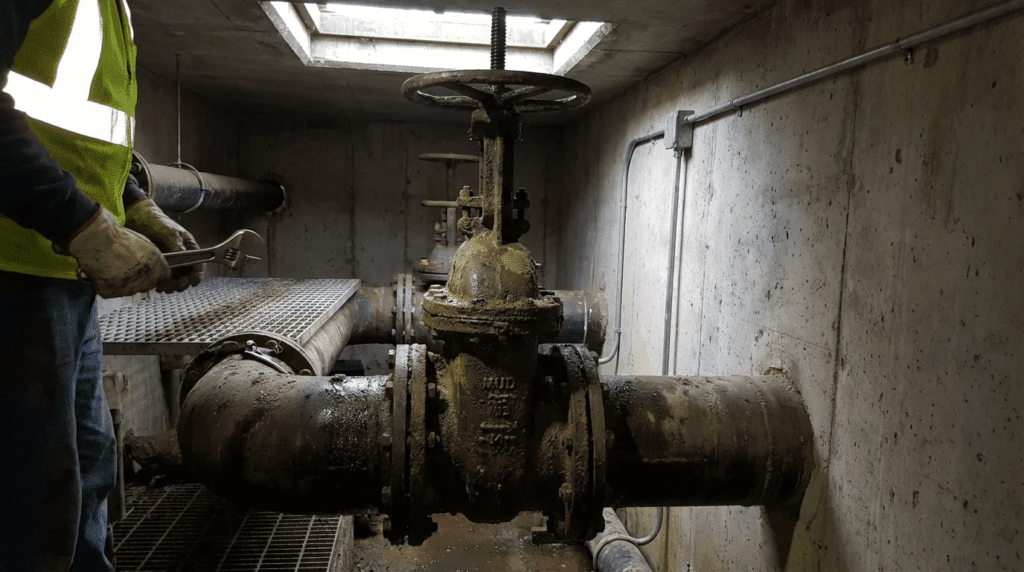
In the hydraulic architecture of municipal water treatment plants (WTP) and wastewater treatment plants (WWTP), mud valves perform a critical, albeit frequently obscured, function. Located at the lowest points of sedimentation basins, clarifiers, flocculation tanks, and reservoirs, these valves are responsible for the gravity draining of accumulated sludge, silt, and process fluids. Unlike flow control valves that operate continuously, mud valves often remain static for extended periods, submerged in solids-laden water, only to be called upon during scheduled maintenance, cleaning cycles, or emergency draining procedures.
The “mud valve” category encompasses specific floor-mounted poppet designs intended for tank draining, as well as robust isolation valves used in piping galleries to handle heavy sludge lines. The failure of a mud valve presents a significant operational crisis. A valve that fails to open prevents the gravity draining of a basin, necessitating the deployment of submersible pumps and confined space entry teams—drastically increasing maintenance time and safety risk. Conversely, a mud valve that fails to seal allows the continuous loss of treated water or the inadvertent dewatering of a process tank, disrupting hydraulic profiles and wasting resources.
For consulting engineers and plant superintendents, the specification of mud valves requires a distinct approach compared to standard isolation valves. These components must withstand external hydrostatic pressure, potential galvanic corrosion from submersion, and the abrasive nature of settled solids. Furthermore, because the valve body is often inaccessible without draining the tank, the reliability of the actuation mechanism—typically a long extension stem and floor stand—is as critical as the valve itself.
This article provides a comprehensive technical analysis of mud valves, focusing on selection criteria, material specifications, and a detailed evaluation of four distinct Original Equipment Manufacturers (OEMs): Penn-Troy Manufacturing, ITT Engineered Valves, DeZURIK, and Mueller. The objective is to equip decision-makers with the data required to specify equipment that minimizes lifecycle costs and maximizes operational reliability.
How to Select Mud Valves: Engineering Criteria
Selecting a mud valve is not merely a matter of matching pipe size. It involves a holistic view of the tank geometry, the physical characteristics of the sludge, and the mechanical linkage required to operate the valve from a safe operating deck. The following criteria outline the essential engineering considerations for specifying mud valves in municipal and industrial applications.
1. Valve Design Architecture
There are two primary architectural approaches to valves used for mud service:
- Floor-Mounted Poppet/Plug Style: This is the traditional “mud valve.” It consists of a flanged body mounted to a pipe flush with the tank floor. A plug or disc is lifted vertically (rising stem) or the stem rises through the nut (non-rising stem) to open the valve. These are ideal for basin draining but rely heavily on proper seating surfaces to prevent leakage.
- Pipe-Mounted Isolation Style (Plug/Knife/Diaphragm): In some modern designs or piping galleries, engineers utilize eccentric plug valves, knife gate valves, or diaphragm valves for mud lines. While not always floor-mounted, these are specified for their ability to cut through solids and provide tight shutoff in sludge lines.
2. Materials of Construction and Corrosion Resistance
Since the valve body is permanently submerged, material selection is paramount to prevent oxidation and galvanic corrosion.
- Body Materials: Cast iron (ASTM A126 Class B) is the standard for freshwater applications, often coated with fusion-bonded epoxy. However, for wastewater applications with high hydrogen sulfide (H2S) potential or industrial applications, 316 stainless steel or duplex stainless steel bodies may be required to prevent graphitic corrosion.
- Trim and Seating: Bronze trim is traditional but can be susceptible to dezincification in certain water chemistries. Neoprene or EPDM resilient seats are preferred for their ability to provide a drop-tight seal even when small particulate matter is trapped in the seating area. 316 Stainless steel stems are the minimum engineering standard to prevent seizing.
3. Sealing Mechanisms and Leakage Class
The primary failure mode for mud valves is leakage. A leaking mud valve in a clarifier can upset the sludge blanket or result in unmetered water loss.
- Resilient vs. Metal-to-Metal: Metal-to-metal seats are durable but require precise alignment and are unforgiving of debris. Resilient seats (tapered plugs with rubber facing) compress to form a seal and are generally superior for mud applications where grit is present.
- Hydrostatic Considerations: Engineers must verify that the valve design utilizes the hydrostatic head of the tank to assist in sealing (sealing with pressure) rather than fighting against it, although most mud valves are designed to open against the head.
4. Actuation and Extension Stem Dynamics
In many applications, the valve is 15 to 30 feet below the operator. The mechanical linkage is the most common point of failure.
- Column Strength (L/r Ratio): The extension stem must be sized not just for torque, but for buckling resistance (compressive load) if the valve is a push-to-close design, or tensile strength for pull-to-open. Engineers must calculate the slenderness ratio.
- Stem Guides: Unsupported stems will whip or buckle. Intermediate stem guides must be specified at intervals (typically every 6-10 feet) consistent with the stem diameter and material modulus. The guides themselves must be made of corrosion-resistant materials (316SS or bronze-bushed cast iron).
- Floor Stands: The operator interface—whether a handwheel, nut, or electric actuator—requires a robust floor stand. The stand must feature an indicator to show valve position, as the valve itself is not visible.
5. Debris Handling and Clogging
Mud valves operate in the worst possible media environment. Sediment, rags, and grit will settle around the valve.
- Non-Clogging Geometry: The valve design should minimize cavities where solids can pack and harden. Flapper-style valves or sloping body designs help facilitate clearing.
- Break-Away Torque: After sitting closed for months under a pile of sludge, the torque required to unseat the valve can be significantly higher than the running torque. The actuator and stem must be sized with a safety factor of 1.5x to 2.0x the theoretical unseating torque.
6. Installation and Serviceability
Maintenance access is virtually non-existent without draining the tank. Therefore, the design must prioritize “install and forget” reliability.
- Fastener Integrity: All submerged fasteners must be 316SS. Utilizing standard plated bolts is a catastrophic error in submerged mud service.
- Seat Replacement: Ideally, the design should allow for the internal components to be withdrawn for service without removing the body from the concrete floor, though this is rare in simple poppet designs.
Comparison Table: Mud Valve OEMs
The following table provides a comparative analysis of the four designated OEMs. This comparison is not a ranking but a guide to understanding where each manufacturer’s engineering philosophy aligns with specific project requirements. Engineers should interpret this data in the context of their specific application—whether that be a standard water treatment sedimentation basin, a heavy-duty wastewater sludge tank, or a specialized industrial process.
Note: The “Primary Valve Focus” indicates the design style most commonly associated with that OEM for mud and sludge service.
| OEM Name | Primary Valve Focus for Mud Service | Typical Material Standards | Key Engineering Strengths | Best-Fit Application |
|---|---|---|---|---|
| Penn-Troy Manufacturing | Specialized Mud Valves (Floor Type) & T-Valves | Cast Iron, Stainless Steel, Bronze Trim | Integrated valve and actuation systems; heavy-duty casting focus; custom stem guide solutions. | Municipal water treatment sedimentation basins requiring robust floor-mounted draining systems. |
| ITT Engineered Valves | Fabri-Valve (Knife Gate) & Diaphragm Valves | Stainless Steel, Exotic Alloys, Lined Bodies | Superior handling of abrasive slurries and corrosive media; zero-leakage designs for suspended solids. | Industrial wastewater, mining, and chemical processing where corrosion and abrasion are high. |
| DeZURIK | Eccentric Plug Valves (PEC) & Knife Gates | Cast Iron, Ductile Iron, Nickel Seats | Industry-standard solids handling; rectangular port design prevents clogging; high flow capacity. | Wastewater sludge lines, digester drains, and applications requiring throttling capability. |
| Mueller | Traditional Floor-Type Mud Valves (A-260 Series) | Cast Iron, Bronze Mountings | Classic AWWA design; widespread availability; standardized parts; proven long-term reliability. | Standard municipal water treatment plant clarifiers and reservoirs with non-corrosive environments. |
Top OEM Manufacturers
The following analysis details the specific capabilities and engineering features of the mandated OEMs. This evaluation focuses on technical merit, portfolio breadth, and suitability for critical infrastructure.
Penn-Troy Manufacturing
Penn-Troy Manufacturing is a specialized entity often recognized for its specific focus on water and wastewater valve actuation and specialty valves. Unlike broad-line manufacturers, Penn-Troy’s reputation in the mud valve sector is built on robust, purpose-built designs that integrate seamlessly with their actuation products.
Technical Analysis:
Penn-Troy’s mud valves are typically characterized by heavy-duty cast iron construction designed to withstand the physical stresses of installation in concrete tanks. Their designs often emphasize the integration of the valve with the extension stem and floor stand. This is a critical engineering advantage; by sourcing the valve, stem, guides, and operator from a single source, engineers eliminate tolerance stack-up issues that frequently lead to stem binding.
Key Features:
- Robust Guiding Systems: Penn-Troy excels in providing rigid stem guiding systems, which are essential for deep-tank applications where stem buckling is a risk.
- Seat Design: Their valves utilize durable seating surfaces designed to cut through settled debris upon closing, ensuring a tight seal even in silt-heavy environments.
- Customization: They offer flexibility in flange drilling and stem materials, allowing engineers to specify 316SS or other alloys for aggressive environments.
ITT Engineered Valves
ITT Engineered Valves brings a different philosophy to the “mud” category, heavily influenced by their industrial and chemical processing pedigree. Their solutions, particularly under the Fabri-Valve and Dia-Flo brands, are engineered for extreme services where standard cast iron valves would fail due to corrosion or abrasion.
Technical Analysis:
While they offer solutions that can serve as mud valves, ITT is the premier choice when the “mud” is chemically aggressive or highly abrasive. Their Knife Gate valves are frequently used as dump valves in applications where a floor-mounted poppet is insufficient. The knife gate design slices through heavy sludge columns, ensuring positive closure. Additionally, their Diaphragm valves offer a weir-type or straight-through design that isolates the working mechanism from the fluid, preventing corrosion of the stem and bonnet.
Key Features:
- Corrosion Isolation: Diaphragm technology isolates the bonnet from the line fluid, making it ideal for corrosive sludge.
- Solids Handling: The knife gate designs are specifically engineered to handle high-solids concentrations without jamming, a common failure mode in standard poppet valves.
- Lining Options: ITT offers extensive lining options (glass, rubber, plastic) for valve bodies, extending lifecycle in acidic or caustic wastewater streams.
DeZURIK
DeZURIK is a dominant force in the wastewater market, particularly known for the Eccentric Plug Valve (PEC). While the term “mud valve” often implies a floor-mounted poppet, in practical engineering terms, DeZURIK plug valves are the industry standard for controlling and isolating sludge and mud lines.
Technical Analysis:
The DeZURIK Eccentric Plug Valve is designed with a rectangular port and an eccentric action that moves the plug away from the seat immediately upon opening. This reduces friction and wear. In mud applications, this is vital because it prevents the “rubbing” of abrasive particles against the seat face. Furthermore, the straight-through flow path reduces head loss and minimizes places where solids can accumulate. For tank draining, these are often mounted on the side of the tank bottom or in a piping gallery beneath the tank.
Key Features:
- Eccentric Action: Eliminates sliding friction between the plug and seat, significantly extending seal life in abrasive mud service.
- Nickel Seats: DeZURIK typically specifies welded nickel seats for wastewater, which resist corrosion and erosion far better than bronze or epoxy-coated seats.
- Resilient Plug Facings: The plugs are faced with resilient materials (Chloroprene, NBR, etc.) that can seal tightly over trapped solids.
- Bearings: Sintered stainless steel bearings in the bonnet and body ensure the valve does not seize even after long periods of inactivity.
Mueller
Mueller is one of the most recognized names in municipal water distribution and treatment. Their approach to mud valves represents the traditional, proven AWWA standard. The Mueller mud valve (typically the A-260 series) is the archetype of the floor-mounted drain valve found in thousands of water treatment plants across North America.
Technical Analysis:
Mueller’s designs prioritize standardization and ease of replacement. These valves typically feature a cast iron body, bronze stem, and bronze mountings. They are flanged valves designed to mount directly to a floor pipe. The design is a non-rising stem (NRS) or rising stem configuration that lifts a disc off a seat. While less exotic than ITT or DeZURIK designs, Mueller valves are optimized for clean water sedimentation basins where the mud is primarily silt and floc, rather than aggressive chemical sludge.
Key Features:
- Simplicity: The design has few moving parts, reducing the complexity of failure modes.
- Bronze-to-Bronze Seating: Traditional models use bronze seat rings, which provide a durable, long-lasting metal seal suitable for non-abrasive applications.
- Integrated System: Mueller offers a complete ecosystem of extension stems, floor stands, and position indicators designed to work natively with their valves.
- Cost-Effectiveness: For standard municipal water applications, Mueller provides a balance of performance and capital cost that is difficult to beat.
Application Fit Guidance
To ensure long-term reliability, engineers must match the OEM strengths to the specific hydraulic and environmental conditions of the facility.
Municipal Water Treatment (Sedimentation/Flocculation)
Preferred OEMs: Mueller, Penn-Troy.
Reasoning: In WTP applications, the “mud” is typically alum or ferric sludge, which is relatively consistent and non-aggressive. The primary requirement is a reliable floor-mounted drain. Mueller and Penn-Troy offer the classic poppet-style valves that integrate easily into the concrete floor design of large basins. The bronze trim options are generally sufficient for the pH ranges found in potable water treatment.
Municipal Wastewater (Primary/Secondary Clarifiers & Digesters)
Preferred OEMs: DeZURIK, Penn-Troy.
Reasoning: Wastewater sludge is heavier, contains grease/ragging material, and is biologically active. DeZURIK’s eccentric plug valves are often preferred for sludge withdrawal lines because they do not clog and can cut through lighter debris. If a floor-mounted drain is required, Penn-Troy’s robust construction is beneficial. 316SS trim should be specified to resist H2S corrosion.
Industrial Process & Chemical Slurries
Preferred OEM: ITT Engineered Valves.
Reasoning: When the media involves mining tailings, chemical precipitates, or pulp stock, standard cast iron valves will corrode or erode rapidly. ITT’s lined diaphragm valves or robust knife gates are engineered to survive these harsh abrasive and corrosive environments. The ability to isolate the bonnet from the media is a critical safety and longevity factor here.
Deep Tank / Reservoir Draining
Preferred OEMs: Penn-Troy, Mueller.
Reasoning: Deep reservoirs require extremely long extension stems. The engineering challenge shifts from the valve to the actuation mechanics. Both Penn-Troy and Mueller have extensive catalogs of heavy-duty floor stands (geared and manual) and stem guide systems necessary to operate a valve located 30+ feet below grade without stem whipping or buckling.
Engineer & Operator Considerations
Beyond OEM selection, the success of a mud valve installation depends heavily on specification details and operational protocols.
Installation Best Practices
- Stem Alignment: The number one cause of mud valve failure is not the valve itself, but stem misalignment. If the floor stand is not perfectly plumb with the valve stem, the side-loading forces will eventually bend the stem or strip the lift nut. Laser alignment or plumb-bob verification during installation is mandatory.
- Anchor Bolt Material: Never use galvanized steel anchors for submerged mud valves. Type 316 Stainless Steel anchors are the minimum requirement to prevent the valve from breaking loose from the floor over decades of submersion.
- Grouting: Properly grouting the base of the floor stand is essential to prevent vibration and movement during operation, which can transmit stress down the stem to the valve.
Common Specification Mistakes
- Undersizing the Actuator: Engineers often calculate torque based on differential pressure but fail to account for “break-away” torque required to unseat a valve buried in compacted sludge. Always apply a generous safety factor (minimum 1.5) to the operator sizing.
- Ignoring Stem Guides: Specifying an extension stem without adequate intermediate guides (L/r ratio calculation) will lead to stem buckling. A general rule of thumb is a guide every 6 to 8 feet, but this must be calculated based on stem diameter.
- Wrong Seat Material: Specifying metal-to-metal seats in a grit-heavy wastewater application will lead to leakage. Resilient seats are generally preferred for any application involving abrasive solids.
Maintenance and Reliability
- The Exercise Protocol: Mud valves sit static for long periods. Operators must schedule a “stroke test” (partial open/close) at least quarterly to prevent calcification and sediment build-up on the stem threads and guides.
- Spare Parts Strategy: Because these valves are hard to access, stocking a spare valve is rarely useful. Instead, utilities should stock spare stem couplings, shear pins (for the floor stand), and a spare floor stand crank/wheel.
Conclusion
The selection of mud valves is a foundational decision in the design of water and wastewater treatment structures. While they are often low-cost items relative to high-service pumps or aeration blowers, their strategic location at the bottom of critical tanks gives them a disproportionate impact on plant reliability. A failed mud valve can turn a routine cleaning operation into a costly, hazardous confined-space emergency.
For standard municipal water treatment, Mueller provides the industry-standard reliability and parts availability that utilities expect. For heavy-duty wastewater applications and complex actuation requirements, Penn-Troy Manufacturing offers robust, integrated solutions. DeZURIK remains the benchmark for sludge handling in piping galleries and wastewater process lines through their eccentric plug technology. Finally, for industrial applications involving aggressive slurries or chemicals, ITT Engineered Valves delivers the necessary material science and specialty designs to ensure longevity.
Engineers must move beyond simple catalogue selection and perform rigorous analysis of the actuation mechanics, material compatibility, and solids-handling characteristics. By aligning the specific OEM strengths with the facility’s operational profile, utilities can ensure decades of trouble-free tank draining and sludge management.