
Wastewater Aeration Systems: Improving Treatment Efficiency
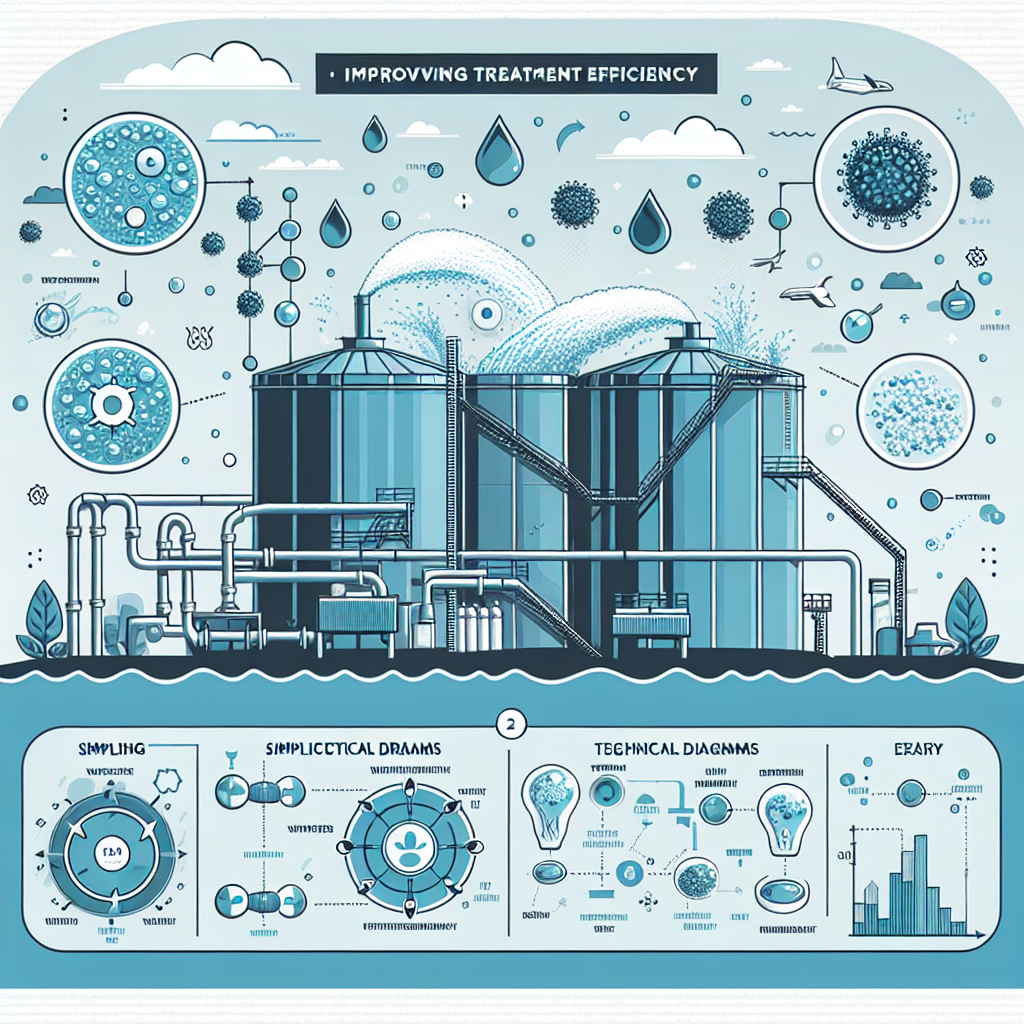
Wastewater Aeration Systems: Improving Treatment Efficiency
Aeration system wastewater installations typically consume 45 to 60 percent of a municipal treatment plant energy budget and determine whether biological processes meet effluent nitrogen and BOD targets. This guide gives plant managers, process engineers, and operators a practical roadmap for selecting, designing, operating, retrofitting, and maintaining aeration system wastewater installations to maximize oxygen transfer efficiency and minimize lifecycle cost. You will get actionable metrics, calculation checklists, technology trade offs, control strategies, and real utility retrofit examples to evaluate diffusers, blowers, DO control, and expected energy savings.
Why Optimizing Aeration Systems Matters for Treatment Efficiency
Straight to the point: upgrading and tuning an aeration system wastewater installation changes both operating cost and process reliability faster than almost any other plant intervention. Improvements in oxygen delivery, control, and mixing directly influence whether biological treatment meets BOD and nitrogen targets while keeping energy and chemical needs in check. See the resource on energy efficiency for program-level opportunities.
Process consequences: dissolved oxygen availability is the gatekeeper for carbon oxidation and the nitrification process in wastewater treatment. Running DO too low to save energy risks incomplete nitrification and forces higher nitrate recycle or external carbon dosing later in the process. Running DO higher than needed wastes energy and can suppress denitrification when you want it to occur downstream.
A practical tradeoff: fine bubble diffusers improve oxygen transfer but can underperform on bulk mixing in large or shallow basins; mechanical surface aerators mix well but transfer less oxygen per unit energy. That means the technically optimal choice depends on basin geometry, target effluent (for example strict nitrification), and the plant ability to monitor and control DO zones. Hybrid layouts are often the best compromise.
Common misjudgments operators make
- Trusting vendor SOTE numbers blindly: vendor test conditions rarely match your mixed liquor, surfactant load, or basin hydraulics – always request in-situ verification.
- Replacing diffusers without checking blower turndown: better diffusers can increase headloss and expose inadequate blower control, negating expected energy savings.
- Focusing only on oxygen transfer: ignoring mixing and short-circuiting creates dead zones that defeat gains from higher oxygen transfer efficiency.
Concrete example: A mid-sized municipal plant replaced aging coarse bubble grids with modern membrane diffusers, added VFDs to the blowers, and implemented DO-feedback control in the aeration tank. Within months the plant met a new nitrification permit with lower supplemental carbon dosing and noticeably fewer blower starts per day. The retrofit succeeded because the team tested in-situ SOTE and adjusted diffuser layout to correct mixing blind spots.
Next consideration: before specifying equipment, gather site data: basin geometry, MLSS, temperature profile, existing blower curves, and recent DO profiles. For procurement and retrofit guidance see the aeration systems overview at Waste and Wastewater Aeration Systems and the EPA link above.
Key Performance Metrics and Site Data to Gather Before Design or Retrofit
Begin with the oxygen mass balance, not vendor claims. Convert your required mass of oxygen for carbon removal and nitrification into a target airflow only after you have realistic oxygen transfer numbers for your wastewater and basin hydraulics.
Core metrics and what they tell you
Standard Oxygen Transfer Efficiency (SOTE): the practical baseline for sizing — insist on numbers tied to test conditions. SOTE lets you convert oxygen demand into air flow, but treat manufacturer lab data as optimistic unless accompanied by site-like testing.
Alpha factor and temperature corrections: alpha adjusts lab air-to-water transfer to real wastewater; temperature changes oxygen solubility and SOTE. Both effects are multiplicative — misestimate either and blower sizing goes wrong.
Standard Aeration Efficiency (SAE) and OTE: use SAE for energy-focused comparisons and OTE when you need per-unit transfer at operating DO. SAE guides lifecycle energy cost comparisons; OTE helps set DO-control targets in practice.
- Hydraulic and physical data: basin plan and section, effective depth, baffles, inlet/outlet locations, and short-circuiting evidence
- Process and liquor data: influent BOD/COD, TKN, MLSS, solids fraction, surfactant or industrial load indicators, and historical DO profiles
- Equipment and piping: blower curves, existing valve characteristic data, header and diffuser grid layout, diffuser headloss vs flow
- Operational records and constraints: current DO setpoints, blower run-hours, maintenance logs for diffusers, and permit effluent targets (BOD, NH4-N)
- Measurement capability: DO sondes locations and calibration history, airflow meters, and whether SCADA supports fast DO-feedback loops
Measurement essentials before trusting calculations: perform in-situ SOTE or short-duration field transfer tests, map DO spatially with portable sondes, and run a tracer or conductivity test if you suspect dead zones. These tests expose mixing problems that better SOTE alone will not fix.
Tradeoff to watch: high SOTE diffusers often increase system headloss. That can push smaller blowers into inefficient operating points or require VFDs and different staging. You will pay in capital or energy if you ignore blower turndown and pressure.
Concrete example: A 12 MGD municipal activated sludge plant ran site transfer tests and found an alpha factor near 0.65 compared with vendor 0.85 claims. Designers increased blower capacity and reworked diffuser spacing; the retrofit met nitrification targets without recurring low-DO excursions and avoided underperforming blowers during hot weather.
Do not accept vendor SOTE without a statement of test basin depth, surface conditions, and liquor surrogate; demand or budget for at least one in-situ transfer test.
Next consideration: once you have this dataset, run a simple oxygen mass-balance and a blower operating-point check before selecting diffusers or controls. If you skip either, expect at least one costly iteration during commissioning.
Comparing Aeration Technologies and When to Use Each
Start with the controlling constraint: choose the technology that resolves your basin’s limiting factor — whether that is oxygen transfer, bulk mixing, footprint, or operational simplicity. A high-performing diffuser is useless if the basin hydraulics leave large dead zones or your blowers cannot operate at the required pressure and turndown.
Quick technology decision grid
| Technology | Primary advantage | Primary drawback | Best application / when to pick | Typical vendor examples |
|---|---|---|---|---|
| Fine bubble membrane diffusers | High oxygen transfer per unit airflow (good SOTE potential) | Can give poor large-scale mixing in shallow or wide basins; membranes foul | Deep activated sludge basins targeting nitrification where energy efficiency matters | Xylem, Evoqua |
| Coarse bubble diffusers / mechanical surface aerators | Reliable bulk mixing and resistance to fouling | Lower oxygen transfer efficiency per kW; larger footprint or surface maintenance | Shallow basins, lagoons, or retrofit cases where mixing is the limiting factor | Sulzer, Parkson |
| Jet and high-efficiency surface aerators | Concentrated mixing with optional transfer gains in compact layouts | Higher maintenance on nozzles; sensitive to solids loading | Compact plants or where existing infrastructure limits diffuser installation | Manufacturers of jet aeration systems and specialized OEMs |
| Pure oxygen systems | Very high transfer capacity in small footprint; useful for high-strength waste | High capital and operational complexity; oxygen supply logistics | Industrial plants with high BOD/COD or space-constrained tertiary/reactor designs | Suppliers of oxygen systems and integrated process vendors |
| Hybrid layouts (diffusers + mixers or surface aerators) | Balance of high SOTE and robust mixing; tailored to basin hydraulics | More complex control and installation planning | Basins with mixed depth, legacy piping, or strict effluent nitrogen targets | Most major vendors support hybrid deployments |
Practical tradeoff to watch: improving oxygen transfer often raises system headloss. That usually forces blower upgrades or VFDs to recover expected energy savings. In practice, projects that skip a blower re-evaluation end up with underperformance or higher operating cost despite better diffusers.
Concrete example: an industrial brewery treatment plant with episodic high-strength discharges used a small pure oxygen skid for peak loads and diffused aeration for base loading. The hybrid reduced peak blower sizing and avoided repeated permit excursions. The procurement team sourced the oxygen skid from a specialty supplier and kept membrane diffusers for day-to-day operation, which limited capital cost and simplified maintenance.
- Match hydraulics, not labels: verify diffuser layout with a mixing model or tracer test before committing.
- Blower compatibility: request headloss vs airflow curves from diffuser vendors and overlay them on your blower operating map.
- Maintenance regime matters: assess fouling risk from industrial surfactants and plan membrane replacement cycles into lifecycle costing.
Choosing based on SOTE alone is a common mistake; always evaluate mixing performance, blower operating point, and maintenance burden together.
Next consideration: quantify the oxygen mass requirement for your target effluent and run a blower turndown and mixing check before locking in hardware. That sequence saves money and avoids the classic retrofit loop of swapping diffusers, then blowers, then controls.
Design and Sizing: From Oxygen Demand to Blower Selection
Concrete point: sizing an aeration system wastewater installation is an exercise in turning a mass-of-oxygen requirement into a reliable, controllable air delivery system that fits your basin hydraulics and operational profile. Get the oxygen numbers right first, then match equipment and control strategy to how the plant actually runs.
Step-by-step sizing workflow
- Calculate process O2 demand: sum the oxygen required for carbon oxidation and for nitrification using stoichiometry (for nitrification use ~4.57 kg O2 per kg NH4-N). Add a margin for diurnal peak and industrial spikes.
- Apply site transfer factors: convert that mass to required air using your measured or conservative SOTE and alpha values at design temperature; do not use vendor lab figures without correction.
- Determine diffuser zoning and headloss: translate airflow per zone into diffuser counts and header pressure using vendor headloss curves; include valve and pipe losses, and size headers to avoid pressure drop-driven imbalances.
- Select blower type and turndown: overlay diffuser headloss curves on candidate blower maps. For municipal activated sludge the practical choice is usually a centrifugal blower with VFD for wide turndown; positive displacement is acceptable for low-pressure, narrow-range applications.
- Design for operability and redundancy: choose staging and valve zoning so you can run efficient partial loads; provision at least N+1 or 2×50% redundancy depending on permit criticality.
Practical tradeoff: higher-efficiency fine bubble diffusers reduce required airflow but commonly operate at greater static pressure. That shifts the blower into a different point on its efficiency map and can reduce blower kW savings unless you add VFDs or select a blower designed for that pressure regime.
Judgment that matters: designers often overvalue single-point metrics such as published SOTE. In practice you should size to a realistic operating SOTE, then enforce that with in-situ tests and guarantee clauses. Also think about part-load efficiency: an oversized blower that never leaves low-efficiency operation often costs more over a decade than a slightly larger initial capital spend for a properly matched machine.
Concrete example: For a 10 MGD activated sludge plant targeting full nitrification, designers estimated 2,200 kg O2/day demand at peak loading. Using an in-situ SOTE of 6.5 kg O2/kW-hr and an alpha factor measured on-site, the team specified two centrifugal blowers with VFDs and valve-zoned diffuser grids so one blower can handle typical day loads while both run for peaks. During commissioning the zoning made it possible to isolate and rebalance a short-circuiting corner without stopping the process.
If you can only do one verification step before procurement, perform an in-situ transfer test and a blower operating-point overlay; skipping either is the single most common cause of retrofit underperformance.
Control Strategies to Minimize Energy While Meeting Treatment Goals
Direct point: energy savings from aeration controls are real but fragile — they only materialize when sensor quality, actuator range, and blower performance are engineered together. A well-tuned control strategy reduces on-air time and prevents DO overshoot, but a poor sensor or an inflexible blower will turn that strategy into instability and higher cost.
Core control elements and practical tradeoffs
- Zone-based DO control: partition the aeration basin into carbon and nitrification zones and give each a separate DO cascade. This buys targeted oxygen use but requires reliable cross-zone flow control and clear physical separation.
- Ammonia-based override: run DO low for energy efficiency but backstop with online NH4-N feedback to protect nitrifiers. Effective where ammonia probes are maintained; risky where probes are unreliable.
- Intermittent aeration sequencing: use timed on/off cycles or demand-driven cycles to create in-situ anoxic windows for denitrification. Saves oxygen and carbon but raises mixing requirements and complicates DO sensing during transition periods.
- Blower staging + VFDs: stage blowers by capacity and control them with VFDs mapped to diffuser headloss curves. Good turndown prevents low-efficiency blower operation but adds capital and requires proper tuning.
- Automatic sensor validation: implement voting, plausibility checks, and ramp-limits to avoid control hunting from a single bad sensor.
Practical insight: DO control setpoints should be tuned to the biology, not to a number in a manual. For example, a nitrification-critical zone often needs a higher minimum DO than a carbon-only zone; however, running DO 0.5-1.0 mg/L higher than required wastes energy and can reduce downstream denitrification efficiency. Tune setpoints with short-duration load tests and confirm with online ammonia or nitrite when possible.
Concrete example: A regional municipal plant swapped three fixed-speed blowers for two VFD-driven blowers and layered an ammonia-based override on top of their DO cascade. During the first months they used automated sensor validation routines to suppress erroneous DO spikes; the result was stable effluent NH4-N, far fewer blower starts, and noticeably smoother DO profiles during morning peaks. The team avoided aggressive low-DO switching until online ammonia proved reliable.
When more control is worth the cost: model predictive control or adaptive optimization is justified when loads are highly variable (industrial spikes or strong diurnal swings) and the plant has solid instrumentation. These systems squeeze extra energy savings but require continuous model maintenance and vendor support; if your instrumentation is weak, MPC underperforms simple cascaded PID with robust sensor checks.
Focus first on reliable measurements and blower-operating maps; advanced algorithms help only after those foundations are solid.
SCADA) before expecting energy savings. Include these deliverables in procurement so control logic is testable during commissioning.Operation, Maintenance, and Troubleshooting to Sustain Efficiency Gains
Start with predictable maintenance, not emergency fixes. Most efficiency losses show up gradually: rising diffuser header pressure, slowly creeping DO setpoint adjustments, or increasing blower run-hours. Treat those trends as the earliest failure signals and assign them priority before blown membranes or a failed blower force an unplanned outage.
A practical maintenance rhythm: schedule small, frequent interventions rather than infrequent deep-clean cycles. Weekly visual checks, monthly pressure and airflow trending, quarterly spot SOTE measurements in representative zones, and an annual comprehensive diffuser-grid inspection is a realistic cadence that keeps performance predictable without large, disruptive interventions.
Troubleshooting workflow that gets plants back to spec fast
Diagnose, isolate, repair, verify. When effluent quality slips or energy spikes, follow a short diagnostic chain: 1) verify sensor health and calibration, 2) confirm header and zone pressures, 3) map DO spatially to find under-aerated pockets, 4) inspect diffuser membranes or surface aerator bearings. Avoid replacing components before you complete step 1 — bad sensors cause most premature interventions.
- Quick checks: compare current blower kW per m3-to-air to baseline; sudden increases imply headloss or blower inefficiency.
- If DO falls but airflow is stable: check for fouling, membrane tears, or blocked ports — pockets of surfactants or filamentous solids often create localized oxygen starvation.
- If header pressure rises: inspect valve positions and header leaks; a small blocked cluster can shift airflow and hide itself behind average readings.
Tradeoff to accept: aggressive mechanical cleaning restores SOTE quickly but shortens membrane life and can introduce particulate shedding. Chemical cleaning reduces shear damage but costs downtime and chemicals. Choose based on fouling type: organics and biofilm respond to low-concentration chemical cycles, mineral encrustation benefits from physical scraping or higher-strength chemicals.
Concrete example: A 8 MGD municipal plant saw a 20 percent rise in blower kW for stable flows over two months. Operators first calibrated sondes and confirmed DO behavior, then ran a targeted header isolation test that revealed three partially clogged diffuser runs. The team performed staged air scouring and replaced two membrane modules; post-repair SOTE rebounded and blower kW returned to baseline within a week.
Do not assume even airflow: use periodic zone balancing tests and pressure-drop logs to catch hidden imbalances before they force higher energy use or permit excursions.
Judgment call operators often miss: sensor maintenance is not optional. Reliable DO and ammonia probes reduce false alarms, prevent unnecessary blower cycling, and protect control strategies such as intermittent aeration. Budget probe spares and enforce calibration routines — otherwise advanced control features will underperform or destabilize the process.
Next consideration: build a performance-verification clause into contracts that requires post-maintenance SOTE tests and a short-run warranty period; if those tests are omitted, expect slower return on retrofit investments and recurring troubleshooting cycles.
Retrofit Pathways, Lifecycle Costing, and Financing Options
Direct point: retrofits are the pragmatic route for most plants — you can often hit permit and energy targets faster and cheaper than a full rebuild, but only if you plan for interactions between diffusers, blowers, controls, and hydraulics up front.
Paths to retrofit and what each actually fixes
There are distinct retrofit tiers with different risks and payback profiles. Treat each tier as a systems intervention, not a parts swap: changing diffusers without testing blower capability or basin mixing is a common failure mode.
- Low-impact tune-up: controls and sensor upgrades, DO setpoint tuning, and staged blower sequencing. Low capital, quick permitting, but limited if hardware is worn.
- Diffuser upgrade only: installs fine-bubble membrane or upgraded ceramic diffusers. Strong oxygen transfer gains possible but check header pressure and turndown before signing contracts.
- Blower + controls + diffusers: coordinated replacement that aligns pressure requirements with blower maps and adds VFDs. Higher capital but avoids the iterative retrofit loop.
- Hybrid or cell-by-cell conversion: mixes surface aerators, diffusers, or pure oxygen for spot problems; minimizes downtime but increases control complexity.
- Full process reconfiguration: when basin geometry, hydraulic short-circuiting, or stringent permit changes force a redesign — expensive but sometimes unavoidable.
Practical tradeoff: staging reduces process risk but raises project management complexity and short-term capital needs. If your goal is quick permit compliance, phase critical zones first; if long-term OPEX reduction is priority, invest in blower-control alignment early.
Lifecycle costing essentials: count capital, incremental energy (model over expected O&M life), maintenance cycles (membrane replacement intervals, cleaning frequency), spare parts lead times, and the value of avoided chemical dosing or external carbon. Use a 10- to 20-year horizon and run scenarios with modest and aggressive energy-price escalation.
Judgment most teams miss: guaranteed percent energy savings are only as good as the measurement plan. Require an M&V framework (define baseline, measurement frequency, and adjustments for load) and demand vendor commitments tied to in-situ SOTE results rather than lab curves.
Concrete example: A regional utility executed a three-stage project: first, VFDs and DO sensor upgrades; second, selective diffuser replacement in the deepest nitrification lanes; third, header rebalancing and re-zoning during a low-flow season using mobile blowers to keep the plant online. Financing combined a state SRF loan and an energy-incentive rebate; the project avoided a disruptive full-plant shutdown and met new ammonia limits within the first year.
Financing options and a caution: low-interest SRF loans and energy program rebates are the usual first stops; ESCO or performance contracting can bridge capital gaps but will require tight contract language on measurement and compensation for deviations. Avoid open-ended guarantees without capped adjustment clauses for influent variability.
Next consideration: before committing funds, run two quick checks: a blower headloss overlay with candidate diffuser curves and a short pilot or in-situ transfer test in the intended retrofit cell. If either fails, the project scope — and the financing case — must change.
Procurement and Vendor Evaluation Checklist
Critical procurement rule: treat vendor proposals as engineering hypotheses, not finished solutions. For an aeration system wastewater RFP, the contract must force verification of performance in your actual basin conditions and make the vendor accountable for integration with blowers, controls, and hydraulics.
Minimum contractual deliverables to require
- In-situ transfer guarantee: require an SOTE/OTE test performed in your basin (specified depth and temperature) with the test protocol attached and remedies defined if results miss the guarantee.
- Blower performance package: supply full blower maps, measured kW curves at candidate operating points, and demonstrated turndown to the lowest expected operating load with VFD strategy described.
- Headloss and piping data: deliver headloss vs airflow for the complete diffuser assembly including headers, valves, and fittings so you can overlay on blower curves.
- Integration deliverables: provide SCADA interfaces, DO/NH4 probe integration details, alarm logic, and
SCADA-level test scripts for commissioning. - M&V plan and baseline definition: define baseline period, normalization rules for influent load, measurement frequency, and payment milestones tied to verified savings or performance.
- Spare parts and lead times: itemized spare-part list with lead times and stocked items for the first 2 years, plus a pricing schedule for replacements.
- Training and documentation: on-site operator training, maintenance manuals, and a commissioning checklist with hands-on acceptance tests.
- Warranty and remedy clauses: clear warranty durations for membranes, blowers, and controls; include obligation to retrofit or compensate if acceptance tests fail.
- Comparable installations and references: recent in-situ test reports from at least two comparable municipal or industrial sites, with contactable references.
- Safety and maintenance SOPs: vendor-provided lockout/tagout procedures, confined-space plans, and recommended preventive maintenance intervals.
Practical tradeoff: overly prescriptive hardware lists limit competition and invite high bids; vague performance specs invite low capital bids that fail on commissioning. The best approach is a performance-based RFP with firm acceptance tests — specify what must be achieved, not only which parts must be used.
Evaluation tip: score proposals on three pillars: verifiable in-situ performance (weight highest), total lifecycle cost with conservative energy assumptions, and vendor capacity to support commissioning and spares locally. Ask for a worked blower-overlay showing how their diffuser headloss sits on the blower map for both normal and low-flow scenarios.
Concrete example: A municipal utility in the western U.S. required an on-site SOTE run and retained 10% of final payment until acceptance tests passed. The first vendor test underperformed due to incorrect header sizing; the vendor reworked headers under warranty and reran the test. That contractual M&V avoided months of troubleshooting and extra change orders during commissioning.
Last judgment: require measurable, testable outcomes in the RFP and budget for a small pilot or cell-by-cell acceptance window. Insisting on paperwork alone — datasheets and lab curves — is cheaper short-term and costlier during commissioning. Attach recent DO maps and blower run-hours to the RFP and link supplier claims to site-like evidence (see product resource diffusers and blowers).
Frequently Asked Questions
Straight answer first: treat these FAQs as decision rules, not platitudes. Each reply below ties a practical test or trigger to the common question so you can act during procurement, commissioning, or routine operations.
What metric should I use to compare diffuser performance?
Short answer: insist on site-equivalent SOTE reported with the test protocol. Use SOTE for sizing, OTE for DO-control tuning at operating DO, and SAE when comparing energy per mass O2 across options. Demand the test depth, temperature, and liquor surrogate used, and require an in-situ run as a contractual deliverable (see WEF aeration guidance).
Can I retrofit fine bubble diffusers without changing blowers?
Reality check: sometimes yes, sometimes no. The decisive step is an overlay of diffuser headloss vs your blower map. If the new grid moves the operating point into a high-pressure, low-efficiency region, you will either need VFDs or a different blower—otherwise theoretical energy savings disappear.
Concrete example: a suburban plant installed membrane diffusers expecting big savings and delayed blower upgrades. The original blowers spent most hours in an inefficient clutch of the map and the utility had to add a VFD months later, erasing part of the projected payback. That extra work would have been avoided by the simple overlay test before procurement.
How much energy savings can intermittent aeration deliver?
What to expect: savings depend on load variability and how well mixing and sensors work. Intermittent strategies can cut hours of active aeration when flows and loads are stable or predictable, but they require robust DO and ammonia validation to avoid process upset. Pilot a single cell and measure normalized kW per kg O2 before rolling out.
How often should I run in-situ SOTE testing?
Use triggers, not a calendar: run in-situ SOTE after any diffuser or blower change, after cleaning campaigns, and when performance indicators move outside tolerance. Practical triggers include a sustained increase in kW per unit airflow, repeated low-DO events in a zone, or major influent composition shifts. This keeps testing focused and cost-effective.
What are reliable signs diffusers need cleaning or replacement?
Monitor trends rather than single observations. Watch for persistent rises in header pressure, growing kW per kg O2, and stable airflow with falling DO in specific zones. Those trends point to fouling or blocked ports before membranes visibly fail. Balance cleaning frequency with membrane life based on the fouling chemistry you observe.
When are pure oxygen systems appropriate?
Fit to the problem: choose pure oxygen for space constraints, very high-strength waste, or to avoid oversized air handling for short, extreme peaks. Expect higher capital, O2 logistics, and safety controls. They solve a narrow set of problems effectively; they are not a drop-in energy cure for typical municipal plants.
Why does the alpha factor matter in oxygen transfer?
Practical implication: alpha scales lab transfer to your liquor; surfactants, solids, and temperature knock down transfer by a measurable fraction. Use conservative site-measured alpha in blower sizing and contract guarantees — vendors quoting optimistic alphas are the single biggest source of mismatch between predicted and achieved performance.
Next actions you can implement this week: overlay your most recent blower curve with candidate diffuser headloss data; add trigger-based SOTE checks to your SCADA alarms; and insert an in-situ transfer-test requirement into the next RFP. For procurement language and test protocol examples, see the aeration systems overview at Waste and Wastewater Aeration Systems and the EPA energy guidance at EPA wastewater energy.