
Bray vs Crane Control Valves Equipment: Comparison & Best Fit
Introduction
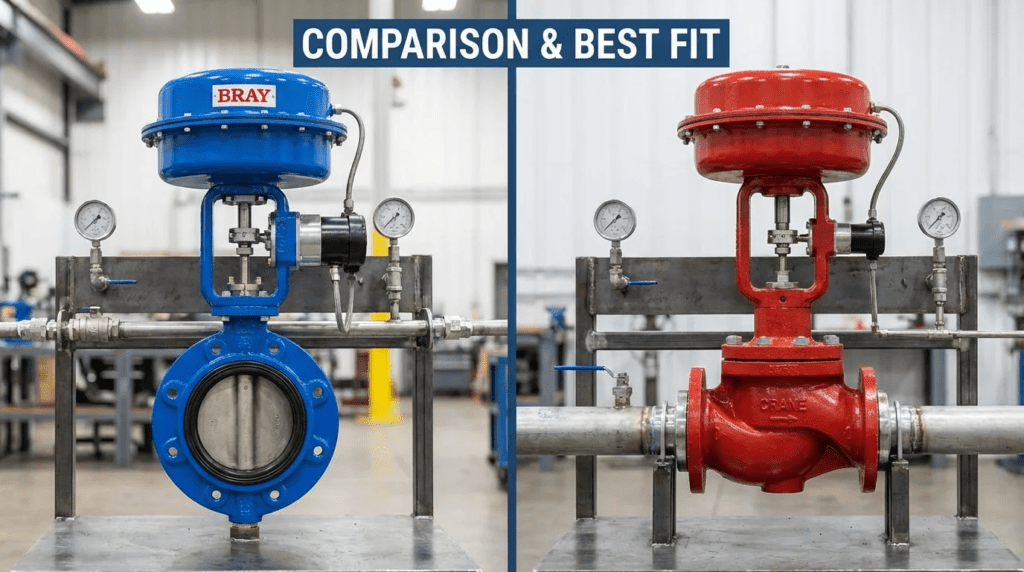
In the municipal and industrial water treatment sector, the “control valve” specification section is often where operational efficiency is either secured or compromised for decades. Engineers frequently encounter a critical decision point when reviewing valve submittals or writing proprietary specifications: the choice between two industry heavyweights. This article provides a technical deep-dive into Bray vs Crane Control Valves Equipment: Comparison & Best Fit to assist engineering professionals in making data-driven decisions.
A surprising industry statistic suggests that up to 60% of control valve issues in treatment plants—ranging from hunting and hysteresis to premature seat failure—stem not from manufacturing defects, but from misapplication of the valve type to the process conditions. Engineers often overlook the subtle differences in seat geometry, shaft connection technologies, and actuator integration that distinguish manufacturers like Bray and Crane (and its subsidiary brands like Center Line and Flowseal). These oversights can lead to significant increases in OpEx, specifically regarding energy consumption due to unnecessary head loss or maintenance hours spent on seat replacements.
This equipment is the central nervous system of hydraulic management in Water Treatment Plants (WTP) and Wastewater Treatment Plants (WWTP). From modulating airflow in aeration basins to precise chemical dosing and regulating raw sewage influent, the control valve dictates process stability. The stakes are high: poor selection can result in water hammer, inability to maintain setpoints, and non-compliance with discharge permits.
The following sections will guide design engineers, plant directors, and maintenance supervisors through the nuanced differences between these two manufacturers. By focusing on constructability, hydraulic performance, and maintenance realities, this guide aims to move beyond brand loyalty and focus on technical suitability for specific unit processes.
How to Select / Specify
When evaluating Bray vs Crane Control Valves Equipment: Comparison & Best Fit, engineers must look beyond the catalog pressure ratings and delve into the mechanical design philosophy of each manufacturer. The selection process requires a holistic view of the operating envelope and the physical constraints of the facility.
Duty Conditions & Operating Envelope
The first step in specification is defining the process variable dynamics. Both Bray and Crane offer extensive lines of butterfly, ball, and check valves, but their sweet spots differ based on duty.
- Modulating vs. Isolation: For strictly isolation duty (Open/Close), a standard resilient seated butterfly valve is sufficient. However, for throttling control, the valve’s ability to handle high pressure drops without cavitation is critical. Engineers must calculate the predicted pressure drop at low opening angles (15-20%).
- Flow Coefficient (Cv) Requirements: Compare the Cv curves. A valve with a higher Cv at 100% open offers less head loss but may provide poorer resolution at low flow rates.
- Velocity Constraints: Municipal specs often cap velocity at 8-12 fps for liquids. High-velocity applications (e.g., pump discharge headers) require robust disc-to-stem connections (spline or double-D) to prevent fretting corrosion, a common failure point in high-cycle applications.
Materials & Compatibility
Water and wastewater environments are deceptively aggressive. The “standard” trim usually includes a Ductile Iron body and a Stainless Steel disc, but nuances exist.
- Seat Elastomers: EPDM is standard for water, but wastewater with high hydrocarbon content or industrial influent may require Buna-N (Nitrile). Crane’s Center Line Series 200 is famous for its phenolic-backed cartridge seat, which provides a rigid support ring. Bray’s Series 30/31 typically utilizes a tongue-and-groove resilient seat design that isolates the body but installs differently.
- Coatings: In wastewater headworks or sludge lines, H2S corrosion attacks valve bodies. Specifications should mandate a holiday-free epoxy coating (typically nylon or fused epoxy) on the valve body. Verify that the coating thickness meets AWWA C550 standards.
- NSF Certification: For potable water applications, NSF-61 and NSF-372 (lead-free) certifications are non-negotiable. Both manufacturers maintain these listings, but they must be verified for specific trim combinations (disc/seat/stem).
Hydraulics & Process Performance
In control applications, the Valve Authority is paramount. A control valve must consume a portion of the system friction to control flow effectively.
- Characteristic Curves: Most butterfly valves exhibit an “equal percentage” inherent characteristic that shifts toward “linear” when installed in a system. Engineers should overlay the specific valve’s inherent curve with the system curve to predict installed gain.
- Rangeability: High-performance butterfly valves (Double Offset or Triple Offset) offered by both manufacturers (e.g., Bray McCannalok vs. Crane Flowseal) offer significantly better rangeability (typically 50:1 or 100:1) compared to standard resilient seated valves (20:1).
- Recovery Factor: In applications prone to cavitation (high pressure drop), the valve recovery factor comes into play. Rotary valves generally have low recovery factors, making them susceptible to cavitation.
Installation Environment & Constructability
Physical installation often dictates the choice between lug and wafer styles.
- End-of-Line Service: If a valve might be used for dead-end service (e.g., during expansion or maintenance), a Lug Style valve is mandatory. Wafer valves cannot be used for dead-end service without a downstream flange.
- Actuator Orientation: Space in pipe galleries is premium. Engineers must specify actuator orientation to ensure handwheels are accessible and digital positioners can be viewed from the floor.
- Weight & Support: For large diameter valves (>24 inch), the weight difference between valve designs can impact pipe support requirements.
Reliability, Redundancy & Failure Modes
Reliability analysis focuses on the weakest links: the shaft seal and the actuator interface.
- Shaft Sealing: Look for a “blow-out proof” stem design. This is a safety critical feature. Both manufacturers offer this, but the retention method varies (snap ring vs. gland plate).
- Stem Connection: The connection between the disc and stem determines the valve’s hysteresis (lag). Splined connections (common in high-performance lines) generally offer lower hysteresis than pinned connections, providing tighter control.
- MTBF (Mean Time Between Failures): In abrasive slurry applications (e.g., lime slurry, grit), soft seats are the primary failure mode. Consider metal-seated ball valves or pinch valves if the media is highly abrasive, regardless of the brand.
Controls & Automation Interfaces
The valve is only as good as its actuator. This is a major differentiator in the Bray vs Crane Control Valves Equipment: Comparison & Best Fit analysis.
- Single Source Responsibility: Bray manufactures its own actuators (electric and pneumatic) and positioners, offering a factory-mated package. Crane often utilizes varying actuation brands depending on the region and specific product line (though they own brands like Hytork). Single-source can simplify warranty claims.
- Smart Positioners: For critical process control, digital positioners (HART, Profibus, Foundation Fieldbus) are required for diagnostics (partial stroke testing, cycle counting).
Maintainability, Safety & Access
Operator safety and ease of repair drive the Total Cost of Ownership (TCO).
- Seat Replacement: Field-replaceable seats are preferred in wastewater. Bonded seats (vulcanized to the body) are essentially non-repairable; if the seat fails, the valve is scrap. Cartridge seats (Crane Center Line style) or boot seats (Bray style) allow for field repair, though cartridge seats are often easier to swap out without special tools.
- Lockout/Tagout: Ensure the manual override on actuators has provisions for padlocks in the off position.
Lifecycle Cost Drivers
Initial CAPEX for valves is often 10-20% of the lifecycle cost. Energy loss from head pressure and replacement labor dominate the equation. High-performance valves may cost 2x initially but last 4x longer in modulation duty, reducing plant downtime.
Comparison Tables
The following tables provide a direct technical comparison between the equipment offerings. Table 1 focuses on specific product lines commonly specified in water/wastewater, distinguishing between the different engineering approaches of Bray and Crane. Table 2 provides an application fit matrix to assist in selecting the right tool for the job.
| Category | Feature / Criteria | Bray (Typical Series 30/31, 40/41) | Crane (Typical Center Line 200, Flowseal) | Engineering Considerations |
|---|---|---|---|---|
| Resilient Seated Butterfly Valves (Standard Muni Duty) | Seat Design | Tongue-and-Groove Resilient Seat (Boot style). Isolates body from media. | Phenolic-Backed Cartridge Seat (Center Line Series 200). Rigid ring support. | Cartridge seats (Crane) generally offer lower, more consistent torque and resist deformation under vacuum better than non-backed seats. |
| Stem/Disc Connection | Double D or Spline connection (High strength, no pins). | Pin and Taper (Standard) or Spline options available. | Pin connections can be weak points for corrosion or loosening in high-vibration service. Spline/Double D is preferred for modulation. | |
| Pressure Rating | Typically up to 250 psi (bi-directional). | Typically up to 200 psi (Series 200). Series 225/250 for higher. | Verify bi-directional dead-end service ratings specifically; they often differ from the body rating. | |
| High Performance Butterfly Valves (HPBV) | Design Standard | Bray Series 40/41 (Double Offset). | Crane Flowseal (Double Offset). | Used for high-pressure aeration or pump control. Both offer excellent throttling. |
| Seat Material | RTFE (Standard), Metal options. | RTFE, PTFE, Fire-Safe options. | Flowseal has a unique “soft seat” design that utilizes system pressure to assist sealing. | |
| Actuation & Controls | Integration | Vertical integration. Bray manufactures actuators (Series 70 electric, Series 92 pneumatic) and accessories. | Conglomerate approach. Often paired with Hytork, Bettis, or external brands depending on distributor. | Bray’s single-brand package simplifies “finger-pointing” during troubleshooting. Crane packages are robust but may involve mixed O&M manuals. |
| Application | Service Characteristics | Best Fit Tech | Selection Logic (Bray vs Crane Context) |
|---|---|---|---|
| Aeration Basin Air Control | Clean gas, modulating, low pressure, high temperature (sometimes). | High Performance Butterfly (HPBV) | Standard rubber-seated valves often fail due to heat aging (blower discharge). Use HPBV (Bray 41 or Crane Flowseal) for precise control and temperature resistance. |
| RAS / WAS (Sludge) | Viscous, solids bearing, low pressure. | Eccentric Plug or Resilient Butterfly | If using Butterfly: Crane Center Line 200’s rigid seat resists dragging/tearing better than softer boot styles. However, full-port Plug Valves are superior to both for solids. |
| Filter Isolation | Clean water, frequent cycling, tight shutoff required. | Resilient Seated Butterfly | Both brands excel here. Selection often comes down to actuator connectivity (SCADA) and local distributor support for rapid parts. |
| Chemical Feed (Hypo/Polymer) | Corrosive, low flow, high accuracy. | Diaphragm or V-Ball | Crane owns Saunders (the standard for diaphragm valves). Bray is strong in V-Ball control. For corrosive slurries (lime), Saunders is preferred. For clean chemical modulation, V-Ball offers better rangeability. |
| Pump Check / Control | High velocity, potential water hammer. | Tilted Disc Check or Controlled Closing Butterfly | Crane (Duo-Chek) is an industry standard for wafer checks. For pump control valves, ensure the actuator speed is adjustable to prevent surge. |
Engineer & Operator Field Notes
Real-world experience often diverges from the datasheet. The following insights regarding Bray vs Crane Control Valves Equipment: Comparison & Best Fit are curated from field commissioning and long-term maintenance records.
Commissioning & Acceptance Testing
During the Site Acceptance Test (SAT), the interface between the valve and the control system is the most common failure point.
- Zero and Span Calibration: Ensure the 4mA signal corresponds strictly to the “closed” position and 20mA to 100% open. Verify that the valve seats fully at 4mA. A common issue with butterfly valves is that the actuator stops hitting the limit switch before the disc is fully seated, causing leakage.
- Deadband Settings: In modulating service, hunting (constant oscillation) is common if the deadband is too tight. Start with a deadband of 1-2% and tighten only if process dynamics require it.
- Speed Control: For pump discharge valves, the closing speed must be tuned to the hydraulic deceleration of the system to prevent water hammer. Pneumatic actuators must have flow control valves (speed controllers) installed on the exhaust ports.
When sizing actuators for wastewater service, do not use the manufacturer’s “clean water” torque values. Grease, biofilm, and grit accumulate on the disc edge and seat, increasing break-to-open torque significantly. Apply a safety factor of at least 1.5x (or 25-30%) over the published wet torque. Both Bray and Crane provide “dry” and “wet” torque ratings—know which one you are reading.
Common Specification Mistakes
- “Or Equal” Ambiguity: Writing “Crane Center Line or Equal” without defining the seat type (cartridge vs. bonded) allows mechanical contractors to supply lower-cost bonded seat valves that are difficult to repair. Be specific about seat reparability.
- Ignoring Actuator Duty Cycle: Specifying a standard electric actuator for a modulating aeration valve will lead to motor burnout. Modulating valves require continuous duty (Class IV or higher) motors capable of 1,200 starts per hour, not standard Open/Close duty motors.
- Incorrect disc materials: Specifying Nylon 11 coated discs for abrasive grit service is common, but once the coating is scratched, the underlying iron corrodes rapidly. 316 Stainless Steel discs are the baseline recommendation for all wetted wastewater parts.
O&M Burden & Strategy
Maintenance teams perceive Bray and Crane differently based on repairability.
- Seat Replacement: Operators often prefer the Crane Center Line phenolic-backed seat because it is rigid and slides into the body easier than the flexible boot-style seats, which can collapse or pinch during installation if not lubricated and positioned perfectly.
- Packing Adjustments: High-performance valves (HPBV) have adjustable packing glands. These should be checked annually. Standard resilient seated valves usually have non-adjustable shaft seals; when they leak, the seat or bushings must be replaced.
- Exercise Schedules: Valves that sit static for months (isolation valves) will develop “set” in the elastomer, increasing torque. They should be cycled 10-15% at least quarterly.
Design Details / Calculations
Proper sizing prevents the “oversized valve” syndrome, where a valve operates near the closed position (0-15%), causing seat erosion and poor control resolution.
Sizing Logic & Methodology
Do not size the control valve to match the line size. The valve size should be calculated based on the required Cv.
- Define Process Data:
- $Q_{min}$, $Q_{norm}$, $Q_{max}$ (Flow rate)
- $P_{1}$ (Inlet Pressure) and $P_{2}$ (Outlet Pressure) at each flow condition.
- Specific Gravity ($G_f$)
- Calculate Required Cv:
Use the standard formula: $$ Cv = Q sqrt{frac{G_f}{Delta P}} $$ - Select Valve:
Consult the Bray or Crane Cv tables.- Select a valve where $Cv_{max}$ (process) is approx. 80-90% of the valve’s rated Cv at 90 degrees open.
- Check that $Cv_{min}$ (process) occurs at an opening angle greater than 20 degrees. Operating below 20 degrees risks cavitation and erosion.
Specification Checklist
To ensure you get the specific equipment performance required, include these line items in your specification (MasterFormat Div 40 or 43):
- Design Standard: Valve shall comply with AWWA C504 (Rubber Seated) or AWWA C517 (Eccentric Plug).
- Seat Type: Specify “Replaceable Cartridge Type with Phenolic or Aluminum Backing” (favors Crane Center Line style) or “Resilient Tongue-and-Groove” (favors Bray style). Do not leave open.
- Actuator Interface: Actuator mounting shall comply with ISO 5211.
- Testing: Manufacturer shall provide a Certificate of Compliance for shell test and seat leak test per AWWA C504.
- Coating: Interior and exterior ferrous surfaces shall be coated with fusion-bonded epoxy per AWWA C550.
Standard resilient seated valves can have their liners sucked into the flow stream under high vacuum conditions (e.g., suction side of pumps). If vacuum service is expected, you must specify a bonded seat or a cartridge seat specifically rated for vacuum. Both Bray and Crane have specific “vacuum rated” configurations.
Frequently Asked Questions
What is the primary difference between Bray Series 30/31 and Crane Center Line 200?
The primary difference lies in the seat design. The Crane Center Line Series 200 features a phenolic-backed cartridge seat, which is rigid and non-collapsible, making it generally easier to replace and better at maintaining torque consistency. The Bray Series 30/31 typically uses a resilient tongue-and-groove seat (boot style) that relies on the valve body for support. Both are high-quality, but the rigid seat of the Crane 200 is often preferred for vacuum service and ease of maintenance.
Can Bray and Crane valves be used interchangeably?
For general isolation duty, yes, provided the face-to-face dimensions (lay length) match industry standards (usually MSS SP-67). However, for control applications, the flow characteristics (Cv curves) differ. Swapping a Bray valve for a Crane valve (or vice versa) in a calibrated control loop without re-tuning the PID loop can result in instability. Additionally, actuator mounting patterns may differ if not specified as ISO 5211.
Which manufacturer is better for chemical feed applications?
For chemical feed, the brand hierarchy is complex. Crane Co. owns Saunders, which is the global standard for diaphragm valves used in corrosive chemical dosing (acids, caustics). Bray excels in V-Ball control valves (Series 19), which are excellent for polymer or high-volume chemical modulation. For standard butterfly valves, both offer PTFE-lined options, but specialized chemical valves are often better sourced from the specific sub-brands (Saunders) or specialized product lines.
How do I choose between a Lug and Wafer style valve?
Select Lug Style if the valve acts as an end-of-line isolation point (dead-end service) or if you need to remove downstream piping while keeping the upstream system pressurized. Select Wafer Style for lower cost and weight if the valve is sandwiched between two flanges and will never require downstream piping removal while under pressure. Note that Lug valves are generally heavier and take longer to install due to the number of bolts required.
What is the typical lifespan of these control valves?
In municipal water service, a properly specified butterfly valve body can last 20-30 years. The seat (elastomer) is the wear item, typically lasting 5-10 years depending on cycle frequency and water quality. Actuators usually require overhaul or replacement every 10-15 years. High-performance valves (metal or PTFE seated) in clean service can last significantly longer than rubber-seated valves.
Why do my butterfly valves leak after installation?
Post-installation leakage is often caused by improper installation of the mating flanges. Using slip-on flanges or failing to center the valve can cause the disc to strike the pipe ID or flange face, preventing full closure. Another common cause is “actuator stop” settings; if the actuator stops 1 degree short of vertical, the disc may not fully engage the seat compression. Always verify the mechanical stops on the actuator.
Conclusion
Key Takeaways for Engineers
- Seat Geometry Matters: Crane’s phenolic-backed seat (Center Line) offers advantages in vacuum service and ease of replacement. Bray’s resilient design is robust and widely supported but requires careful installation during seat changes.
- Single Source Actuation: Bray offers a strong advantage in vertical integration, manufacturing their own actuators and positioners, which simplifies warranty and support. Crane often relies on a portfolio of acquired actuator brands.
- Size for Control, Not Pipe: Never line-size a modulating control valve. Calculate the Cv to ensure the valve operates between 20% and 80% open.
- Specify the Connection: For high-cycle modulating duty, specify splined or double-D stem connections to avoid the hysteresis common with pinned connections.
- Total Cost of Ownership: While resilient seated valves are cheaper (CAPEX), High Performance Butterfly Valves (Bray 40/41 or Crane Flowseal) often offer lower lifecycle costs for aeration and critical pump control due to durability and rangeability.
When finalizing the choice between Bray vs Crane Control Valves Equipment, there is no single “winner” for every application. Crane (specifically the Center Line brand) remains the gold standard for robust, general-purpose municipal isolation valves due to the cartridge seat design. Bray has carved out a leadership position in automated process packages, offering cohesive valve-actuator-positioner assemblies that appeal to plants prioritizing smart integration and single-source accountability.
For the design engineer, the “Best Fit” is determined by the specific constraints of the unit process: use rigid-backed seats for vacuum and heavy duty, use high-performance designs for aeration modulation, and prioritize single-source actuation for complex control loops. By specifying the mechanical characteristics defined in this guide rather than just a brand name, utilities can ensure reliable performance for the lifecycle of the plant.