
Wisconsin Wastewater Treatment Plants
Introduction
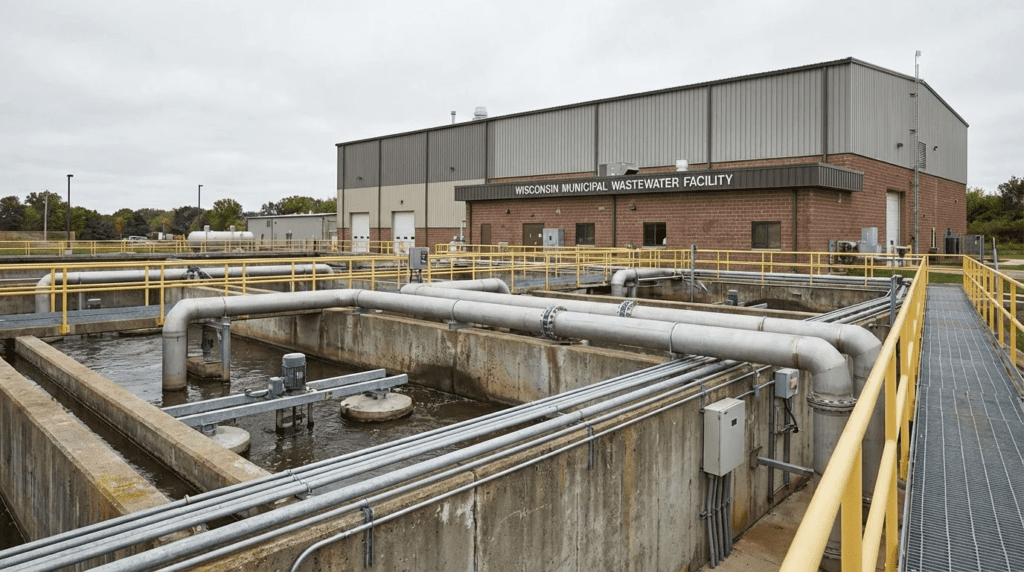
Wisconsin’s wastewater infrastructure is defined by a unique combination of high-density urban treatment needs and significant industrial loading from the state’s robust food and paper processing sectors. The state operates under the regulatory oversight of the Wisconsin Department of Natural Resources (WDNR), which enforces some of the strictest phosphorus discharge limits in the United States. This regulatory environment drives substantial capital investment in nutrient removal technologies and watershed adaptive management strategies.
Currently, Wisconsin manages over 600 municipal wastewater treatment facilities ranging from massive regional reclamation districts to small lagoon systems. The state serves a population of nearly 6 million, protecting vital water resources including Lake Michigan, Lake Superior, and the Mississippi River basin. The infrastructure landscape is currently shifting from simple compliance to resource recovery, with major utilities like Milwaukee and Green Bay leading the nation in energy neutrality and biosolids reuse.
With the influx of federal funding through the Infrastructure Investment and Jobs Act (IIJA) and a robust Clean Water Fund Program (CWFP), Wisconsin is seeing a surge in project activity. Consulting engineers and vendors will find opportunities concentrated in aging infrastructure replacement, advanced phosphorus removal, PFAS mitigation, and energy optimization projects.
Recent Developments & Projects
In the last 36 months, Wisconsin’s wastewater sector has focused heavily on nutrient management and resiliency. The implementation of stricter phosphorus limits (NR 217) has forced hundreds of facilities to upgrade filtration systems or enter into Water Quality Trading partnerships. Notably, the state is a pioneer in “Adaptive Management,” allowing utilities to fund non-point source pollution controls (like agricultural buffers) rather than building gray infrastructure, creating unique consulting opportunities.
Major upgrades have also been driven by climate resilience. Following historic flooding events, facilities in the Driftless Area and along the Lake Michigan shoreline are hardening infrastructure. The Milwaukee Metropolitan Sewerage District (MMSD) continues to expand its world-renowned Deep Tunnel system to mitigate combined sewer overflows (CSOs).
Technologically, there is a distinct trend toward energy neutrality. Green Bay’s NEW Water recently completed its R2E2 project, a landmark achievement in solids incineration and energy generation. Similarly, smaller municipalities are increasingly adopting biological phosphorus removal and tertiary filtration to meet discharge permits as low as 0.075 mg/L.
Top 20 Largest Treatment Plants in Wisconsin
The following list ranks the largest wastewater treatment facilities in Wisconsin based on design flow capacity (MGD). These facilities represent the primary procurement hubs for large-scale equipment and engineering services.
| Rank | Plant Name | City/Location | Design Capacity (MGD) | Population Served | Operating Authority |
|---|---|---|---|---|---|
| 1 | South Shore Water Reclamation Facility | Oak Creek | 300 MGD | ~600,000 | Milwaukee MSD |
| 2 | Jones Island Water Reclamation Facility | Milwaukee | 300 MGD* | ~500,000 | Milwaukee MSD |
| 3 | Nine Springs Wastewater Treatment Plant | Madison | 56 MGD | 380,000 | Madison MSD |
| 4 | Green Bay Facility (NEW Water) | Green Bay | 48 MGD | 238,000 | Green Bay MSD |
| 5 | Racine Wastewater Utility | Racine | 36 MGD | 125,000 | City of Racine |
| 6 | Kenosha Water Utility WWTP | Kenosha | 28 MGD | 100,000 | Kenosha Water Utility |
| 7 | Waukesha Clean Water Plant | Waukesha | 14 MGD | 72,000 | City of Waukesha |
| 8 | Appleton Wastewater Treatment Plant | Appleton | 13 MGD | 75,000 | City of Appleton |
| 9 | Sheboygan Regional WWTP | Sheboygan | 18 MGD | 68,000 | City of Sheboygan |
| 10 | La Crosse Isle La Plume WWTP | La Crosse | 20 MGD | 80,000 | City of La Crosse |
| 11 | Eau Claire Wastewater Treatment Plant | Eau Claire | 16 MGD | 69,000 | City of Eau Claire |
| 12 | Oshkosh Wastewater Treatment Plant | Oshkosh | 20 MGD | 67,000 | City of Oshkosh |
| 13 | Heart of the Valley MSD | Kaukauna | 11.9 MGD | 55,000 | HOVMSD |
| 14 | Janesville Wastewater Utility | Janesville | 16 MGD | 64,000 | City of Janesville |
| 15 | Wausau Wastewater Treatment Facility | Wausau | 10.5 MGD | 40,000 | City of Wausau |
| 16 | Fond du Lac Regional WWTP | Fond du Lac | 13 MGD | 55,000 | City of Fond du Lac |
| 17 | Superior Wastewater Treatment Plant | Superior | 10 MGD | 27,000 | City of Superior |
| 18 | Beloit Water Pollution Control Facility | Beloit | 12 MGD | 37,000 | City of Beloit |
| 19 | Stevens Point WWTP | Stevens Point | 6.8 MGD | 26,000 | City of Stevens Point |
| 20 | Manitowoc Wastewater Treatment Facility | Manitowoc | 13 MGD | 33,000 | City of Manitowoc |
*Note: South Shore and Jones Island capacities vary based on wet weather configuration; combined peak capacity exceeds 600 MGD.
Detailed Profiles: Top 5 Largest Plants
1. South Shore Water Reclamation Facility
- Location: Oak Creek, Milwaukee County, WI
- Design Capacity: 300 MGD (Peak)
- Average Flow: ~100 MGD
- Operating Authority: Milwaukee Metropolitan Sewerage District (MMSD)
- Receiving Water: Lake Michigan
- Treatment Process: Primary clarification, activated sludge, anaerobic digestion, disinfection.
- Infrastructure: Functions as the primary wet-weather handling facility for the district. Significant biosolids processing capacity via anaerobic digestion producing biogas for on-site power.
- Recent Upgrades: Ongoing aeration system rehabilitation and major improvements to primary clarification to handle wet weather flows.
2. Jones Island Water Reclamation Facility
- Location: Milwaukee, Milwaukee County, WI
- Design Capacity: 300 MGD (Peak)
- Operating Authority: Milwaukee Metropolitan Sewerage District (MMSD)
- Notable Feature: Home to the production of Milorganite®, a commercially sold organic nitrogen fertilizer made from heat-dried microbes.
- Treatment Process: Advanced secondary treatment using activated sludge, unique heavy solids loading for fertilizer production.
- Compliance: Famous for high-level pathogen kill requirements to produce Class A biosolids.
- Link: View MMSD Plant Profile
3. Nine Springs Wastewater Treatment Plant
- Location: Madison, Dane County, WI
- Design Capacity: 56 MGD
- Average Flow: 42 MGD
- Operating Authority: Madison Metropolitan Sewerage District
- Receiving Water: Badfish Creek / Rock River
- Treatment Process: Advanced biological nutrient removal (BNR), UV disinfection.
- Innovation: Features the Ostara Nutrient Recovery process, which harvests phosphorus and nitrogen to create crystal fertilizer (struvite), preventing struvite scaling in pipes and reducing phosphorus discharge.
- Energy: extensive biogas utilization program.
4. Green Bay Facility (NEW Water)
- Location: Green Bay, Brown County, WI
- Design Capacity: 48 MGD
- Operating Authority: NEW Water (Green Bay Metropolitan Sewerage District)
- Receiving Water: Fox River / Green Bay (Lake Michigan)
- Recent Upgrades: The R2E2 (Resource Recovery and Electrical Energy) project. This state-of-the-art facility uses fluid bed incineration and steam turbines to generate electricity, moving the plant toward energy independence.
- Service Area: Handles significant industrial load from local paper mills and dairy processing.
5. Racine Wastewater Utility
- Location: Racine, Racine County, WI
- Design Capacity: 36 MGD
- Average Flow: 18 MGD
- Operating Authority: City of Racine
- Receiving Water: Lake Michigan
- Treatment Process: Activated sludge with anaerobic digestion.
- Infrastructure: Critical facility for protecting Lake Michigan beaches. Recent focus has been on UV disinfection upgrades and wet weather flow management to prevent sewer backups.
Plants with Approved Budgets & Expansion Projects
Wisconsin’s current capital improvement landscape is dominated by phosphorus compliance, aging infrastructure rehabilitation, and energy optimization. The following projects represent confirmed activity derived from CIPs, bond issuances, and SRF Intended Use Plans.
A. Major Projects Under Construction (2024-2026)
Madison MSD – Liquid Processing Improvements (Phase 3 & 4)
- Location: Madison, WI
- Total Budget: ~$85 Million
- Project Scope: Comprehensive rehabilitation of the secondary treatment trains, including aeration tank concrete repairs, blower replacement, and flow distribution improvements.
- Funding: Clean Water Fund Program (SRF) Loans, District Capital Funds.
- Timeline: Construction active through 2026.
- Drivers: Aging infrastructure (50+ years old) and energy efficiency.
- Key Tech: High-efficiency turbo blowers, fine bubble diffusion.
Waukesha Clean Water Plant – Return Flow Capital Project
- Location: Waukesha, WI
- Total Budget: ~$25 Million (Component of larger Water Supply Program)
- Project Scope: As part of Waukesha’s switch to Lake Michigan water, the WWTP must construct return flow pumping infrastructure to return treated effluent to the Root River (flowing back to the Great Lakes) to meet the Great Lakes Compact requirements.
- Timeline: Completion expected late 2024/early 2025.
- Drivers: Regulatory compliance (Great Lakes Compact).
- Expected Benefits: Ensures 100% flow return to the Lake Michigan basin.
Heart of the Valley MSD – Interceptor Rehabilitation
- Location: Kaukauna, WI
- Total Budget: ~$18 Million
- Project Scope: Rehabilitation of major interceptor sewers using CIPP (Cured-in-Place Pipe) technology to reduce inflow and infiltration (I/I) and corrosion.
- Status: Construction active.
- Key Contractors: Visu-Sewer (Primary contractor for segments).
B. Projects in Design/Planning Phase (2025-2027)
Sheboygan Regional WWTP – Solids Handling Improvements
- Estimated Budget: $15 – $20 Million
- Funding: Pending SRF Loan application.
- Scope: Upgrade of anaerobic digesters and dewatering equipment to improve biogas production and reduce disposal volume.
- Anticipated Start: 2025.
Milwaukee MSD – Watercourse & Flood Management
- Estimated Budget: $40+ Million (Annual recurring capital)
- Scope: Removal of concrete channels and renaturalization of waterways (Kinnickinnic River) to improve flood retention and reduce peak flows into the treatment plants.
- Status: Ongoing multi-year phases.
C. Recently Completed Major Projects (2022-2024)
NEW Water (Green Bay) – Solid Waste Management (R2E2)
- Investment: $170 Million (Final phases optimized recently)
- Key Improvements: Installation of fluid bed incineration and energy recovery loops.
- Results: The plant now generates nearly 50% of its own electricity demand and has significantly reduced greenhouse gas emissions.
Stevens Point WWTP – Nutrient Removal Upgrade
- Investment: $18 Million
- Key Improvements: Installation of new final clarifiers and chemical feed systems for low-level phosphorus compliance.
- Completion: 2023.
Summary Statistics
- Total Active Capital Investment: >$450 Million currently programmed in major WI utilities.
- Primary Project Drivers:
- Phosphorus Compliance (NR 217): 40% of projects.
- Aging Infrastructure/Replacement: 35% of projects.
- Energy/Biogas: 15% of projects.
- Funding Source Breakdown: Wisconsin Clean Water Fund Program (CWFP) provides subsidized interest loans for approximately 70% of municipal projects.
Regulatory & Compliance Landscape
Wisconsin is widely considered to have one of the most rigorous regulatory environments for wastewater in the Midwest, particularly regarding nutrients. Consulting engineers must be intimately familiar with the following:
- Phosphorus Rule (NR 217): Wisconsin establishes site-specific phosphorus criteria. Many plants face limits as low as 0.075 mg/L or even 0.04 mg/L. This drives the market for tertiary filtration (disk filters, cloth media) and chemical polishing.
- Adaptive Management & Water Quality Trading: The WDNR allows facilities to offset discharge by funding non-point source reductions (e.g., paying farmers for cover crops) within the same watershed. This is a vital “soft infrastructure” market in Wisconsin.
- PFAS (Forever Chemicals): The WDNR is aggressively sampling for PFAS. While final effluent limits are evolving, many utilities are actively conducting source tracking and pilot testing GAC (Granular Activated Carbon) and Ion Exchange solutions.
- Chlorides: Communities utilizing water softeners are facing strict chloride limits at the WWTP, leading to “Lime Softening” initiatives at water plants or source reduction campaigns.
Technology Trends in Wisconsin
Due to the specific industrial and regulatory pressures in the state, several technologies are seeing higher-than-average adoption rates:
- Resource Recovery: Following the lead of MMSD (Milorganite) and Madison (Struvite), mid-sized plants are exploring biosolids drying and fertilizer production.
- Advanced Filtration: Cloth media disk filters are the standard choice for meeting strict TSS and Phosphorus limits in tertiary treatment steps.
- Biogas Utilization: Combined Heat and Power (CHP) systems are increasingly common in plants >5 MGD to offset rising electrical costs.
- Real-Time Control (RTC): Use of ammonia and nitrate sensors to automate aeration blowers, reducing energy consumption in the harsh Wisconsin winters.
Resources for Engineers & Operators
- Wisconsin DNR – Wastewater Program: The primary regulatory authority. Visit WDNR.
- WWOA (Wisconsin Wastewater Operators’ Association): The main networking body for plant staff, hosting regional meetings and an annual conference.
- CSWEA (Central States Water Environment Association): The regional WEF member association covering Wisconsin, Illinois, and Minnesota—vital for consulting engineers.
- Clean Water Fund Program (CWFP): The state’s SRF program administering low-interest loans for infrastructure.
Frequently Asked Questions
- What is the largest wastewater treatment plant in Wisconsin?
- The Jones Island and South Shore Water Reclamation Facilities in Milwaukee are the largest, both operated by MMSD. They have a combined peak design capacity exceeding 600 MGD.
- What are the phosphorus limits for Wisconsin treatment plants?
- Limits vary by watershed, but many new permits require effluent phosphorus concentrations between 0.075 mg/L and 0.1 mg/L, which is significantly lower than the national average.
- How many wastewater treatment plants are in Wisconsin?
- There are approximately 620 regulated wastewater facilities in Wisconsin, ranging from large mechanical plants to smaller stabilization lagoon systems.
- What is “Adaptive Management” in Wisconsin wastewater compliance?
- Adaptive Management is a regulatory compliance option where a treatment plant funds phosphorus reduction in the watershed (agriculture/urban runoff) to improve overall water quality, rather than building expensive filtration at the plant.
- Is there funding available for WWTP upgrades in Wisconsin?
- Yes. The Clean Water Fund Program (CWFP) provides subsidized loans. Additionally, IIJA (Bipartisan Infrastructure Law) funds are flowing through the state for emerging contaminants (PFAS) and energy efficiency projects.
- Which engineering firms are active in Wisconsin wastewater?
- Major firms with significant market share in Wisconsin include Donohue & Associates, Strand Associates, AECOM, Jacobs, Ruekert & Mielke, and MSA Professional Services.