
ABB vs Thermo Fisher Adapter & Adaptation Kits Equipment
Introduction
In municipal and industrial water treatment, the reliability of process analytics—pH, conductivity, dissolved oxygen, and turbidity—often hinges not on the sensor electronics, but on the mechanical interface with the process stream. A surprising 25% of premature sensor failures in wastewater applications are attributed to improper mounting, poor flow dynamics at the insertion point, or the inability to safely remove sensors for cleaning. For engineers tasked with retrofitting aging facilities or designing new instrumentation loops, the choice of mounting hardware is a critical infrastructure decision that impacts Operational Expenditure (OPEX) for decades.
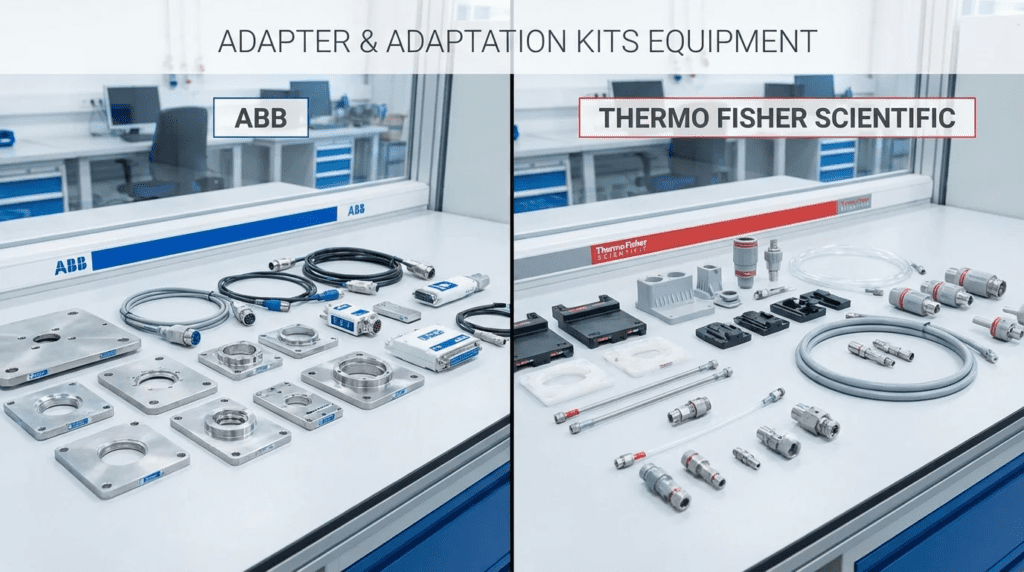
When evaluating process analytical integration, engineers frequently encounter a choice between the two dominant ecosystems in the sector: ABB vs Thermo Fisher Adapter & Adaptation Kits Equipment. Both manufacturers provide extensive lineups of sensors, but their approaches to mechanical adaptation—how those sensors connect to pipes, tanks, and basins—differ significantly. These adapter kits are the physical bridge between delicate sensing elements and harsh process environments, ranging from aggressive chemical dosing lines to sludge recirculation loops.
The “adapter” category includes flow-through cells, immersion dip tubes, retractable assemblies, and specific retrofit hardware designed to allow one brand’s sensor to fit into a competitor’s existing tee or nozzle. Proper selection determines whether an operator can calibrate a pH probe in 15 minutes or if the task requires a two-person crew, a confined space permit, and system shutdown.
This article provides a technical, comparative analysis of the mechanical adaptation strategies employed by ABB and Thermo Fisher Scientific. It focuses on the engineering criteria required to specify the correct mounting hardware, ensuring process integrity, operator safety, and long-term maintainability without relying on marketing claims.
How to Select / Specify ABB vs Thermo Fisher Adapter & Adaptation Kits Equipment
Selecting the correct adaptation equipment requires a rigorous analysis of the process interface. The adapter must survive the same conditions as the piping system while facilitating the delicate operation of the analytical sensor. The following criteria should guide the specification process.
Duty Conditions & Operating Envelope
The primary failure mode for adaptation kits is a mismatch between the hardware ratings and the process variability. Unlike the sensors themselves, which have defined limits, the adapters (retractable assemblies, ball valves, and packing glands) become part of the pressure boundary.
- Pressure Ratings: Verify the static and dynamic pressure ratings. A retractable assembly may be rated for 100 psi static, but only 30 psi during insertion/retraction. ABB and Thermo Fisher utilize different sealing mechanisms (O-ring vs. compression fittings) that dictate these limits.
- Temperature Cycling: Thermal expansion differences between a stainless steel adapter and a PVC piping system can lead to leaks. High-temperature applications (e.g., anaerobic digestion or thermal hydrolysis) often require 316SS or Hastelloy adapters rather than CPVC or PVDF options.
- Flow Velocity: High-velocity streams (>8 ft/s) can induce vibration in immersion tubes or long-insertion adapters. Structural rigidity calculations or the specification of wake frequency constraints are necessary for immersion lengths exceeding 1 meter.
Materials & Compatibility
The material selection for the adapter kit is distinct from the sensor body. While a sensor might be glass and Ryton, the adapter kit exposes larger surface areas to the media.
- Chemical Resistance: For coagulation/flocculation (Ferric Chloride, Alum), 316SS adapters may suffer pitting corrosion. In these applications, PVDF or Titanium adaptation kits are mandatory.
- Galvanic Corrosion: When retrofitting, avoid mixing dissimilar metals. Connecting a 316SS ABB retractable assembly to a carbon steel pipe without dielectric isolation can weld the assembly in place over time due to galvanic action.
- Elastomers: The O-rings within the adaptation kits are critical weak points. Ensure specifications explicitly call out EPDM, Viton (FKM), or Kalrez (FFKM) based on the specific chemical presence (e.g., ozone presence degrades standard Nitrile rapidly).
Installation Environment & Constructability
The physical footprint of ABB vs Thermo Fisher Adapter & Adaptation Kits Equipment varies, affecting installation feasibility in crowded pipe galleries.
- Insertion Clearance: Retractable assemblies require a “withdraw zone” equal to the length of the probe plus the retraction mechanism. Engineers often specify a location on a drawing without accounting for the 2-3 feet of clearance needed to pull the sensor.
- Weight and Support: Heavy stainless steel ball-valve retraction assemblies can exert significant torque on PVC saddles or non-metallic pipe walls. Specifications should require external pipe supports for any side-stream assembly exceeding 15 lbs.
- Retrofit Interfaces: When adapting a new sensor to an existing nozzle, verify the thread standard. The industry is split between NPT (National Pipe Taper) and BSP (British Standard Pipe). Using an adapter to bridge these without proper sealing surfaces is a common cause of leaks.
Reliability, Redundancy & Failure Modes
The adapter kit introduces mechanical failure modes independent of the sensor electronics.
- Seal Integrity: Retractable assemblies rely on sliding dynamic seals. The Mean Time Between Failure (MTBF) for these seals decreases in abrasive fluids (e.g., mixed liquor, grit chamber effluent).
- Locking Mechanisms: Safety locks are essential for retractable units to prevent “blowout” during removal. Compare the safety interlocks: does the kit mechanically prevent removal while the valve is open?
- Leak Detection: Advanced adaptation kits may include ports for leak detection, allowing operators to see if the primary process seal has failed before the fluid reaches the exterior environment.
Maintainability, Safety & Access
The “Total Cost of Ownership” for analytical loops is largely labor. The adaptation kit determines the labor hours required for routine cleaning and calibration.
- Tool-Free Access: Adaptation kits that require specialized tools or multiple wrenches to remove a sensor increase downtime. Twist-lock or bayonet-style adapters (common in some Thermo Fisher lines) offer faster access than multi-bolt flange adapters.
- Automated Cleaning Interfaces: Some adapter kits feature integrated spray nozzles (air or water) for in-situ cleaning. Specifying these kits for sludge applications can reduce manual cleaning intervals from daily to weekly.
- Ergonomics: For immersion assemblies in open tanks, specify swing-arm adapters that allow the operator to lift the probe to the walkway deck rather than leaning over a handrail.
Lifecycle Cost Drivers
While the initial purchase price of the adapter is a factor, the long-term drivers are:
- Spare Parts Uniformity: Standardizing on one manufacturer’s adaptation ecosystem reduces the inventory of O-rings, compression nuts, and special tools.
- Sensor Lifespan Extension: Proper adaptation protects the sensor tip from direct impact (using shrouds) and ensures it stays wet during tank draining (using specific entrapment designs), significantly extending sensor life.
Comparison of Adaptation Ecosystems
The following tables provide an engineering comparison between the mechanical adaptation approaches of ABB and Thermo Fisher Scientific. These comparisons focus on structural and functional characteristics relevant to system design and maintenance planning.
| Feature / Category | ABB Adaptation Ecosystem | Thermo Fisher (Orion/AquaSensors) Ecosystem | Engineering Considerations |
|---|---|---|---|
| Primary Connection Standard | Heavy reliance on NPT threads (3/4″ and 1″) and standard flange interfaces. | Mix of NPT threads and proprietary “Union” or Twist-Lock designs (especially AquaSensors line). | Standard NPT (ABB) offers easier generic retrofitting; Union mounts (Thermo) offer faster tool-free removal. |
| Retractable Assemblies | Robust stainless steel ball-valve assemblies; emphasize safety interlocks (Safe-T-Clean). | Ball valve hardware available; emphasizes compact insertion designs and “hot-tap” hardware. | ABB units are often heavier/larger, favored for high-pressure; Thermo units are often more compact for tight skids. |
| Material Options | Extensive range: 316SS, PVC, PVDF, and exotic options for specific chemical lines. | Strong CPVC and PEEK offerings; highly specialized for ultra-pure water and standard wastewater. | Verify chemical compatibility of the entire wetted assembly, not just the sensor body. |
| Cleaning Integration | Hydraulic and pneumatic cleaning adapters are a core part of the portfolio (EZClean). | cleaning heads available; focus often on flat-face sensor designs to minimize fouling naturally. | Active cleaning adapters (ABB) are superior for sticky sludge; passive flow designs (Thermo) work well in cleaner streams. |
| Retrofit Capability | Offer “universal” retrofit kits to fit ABB sensors into competitors’ hardware (e.g., pH sensor adapters). | Strong ecosystem for upgrading legacy Orion installations; adaptation to generic NPT ports is standard. | Check “L-dimension” (insertion depth) carefully when cross-adapting sensors to prevent dead-zone measurement. |
| Application Scenario | Preferred Adaptation Style | Key Constraints | Relative Cost Impact |
|---|---|---|---|
| Aeration Basin (Activated Sludge) | Immersion Assembly with Swing Arm or Handrail Mount | Must allow retrieval without leaning over rails. Vibration from aeration can loosen fittings. | Medium – Requires structural mounting hardware. |
| Pressurized Effluent Line (>50 psi) | Retractable Assembly (Ball Valve Insertion) | Safety requires anti-blowout stops. Must allow sensor removal without process shutdown. | High – Complex mechanical assembly required. |
| Chemical Dosing (Acid/Caustic) | Flow-Through Cell (Side-stream) or Flanged Inline | Material compatibility (PVDF/Teflon). Avoid threaded PVC which can crack under chemical attack. | Medium/High – Dependent on exotic materials. |
| Influent / Headworks (High Solids) | Immersion with Jet Wash Adapter | Ragging is the primary failure mode. Adapter must not have snag points. | Medium – Cost of air/water cleaning utility supply. |
| Clean Water / Drinking Water | Low-Volume Flow Cell | Minimize sample waste. Fast response time required. | Low – Simple acrylic or SS flow cells. |
Engineer & Operator Field Notes
The following insights are derived from real-world commissioning and operation of analytical loops involving ABB vs Thermo Fisher Adapter & Adaptation Kits Equipment. These notes address the practical realities often missed in catalog data.
Commissioning & Acceptance Testing
When commissioning new adaptation equipment, the “Water Test” is insufficient. Acceptance testing must verify mechanical integrity under process conditions.
- The “Wrench Test”: For threaded adapters (NPT), verify that installation was performed with the correct torque. Over-tightening plastic adapters (PVDF/PVC) into metal pipes often causes hairline cracks that only leak after thermal cycling. Use a strap wrench for plastic fittings, not a pipe wrench.
- Retraction Verification: For retractable assemblies, perform a full insertion and retraction cycle before the line is pressurized. Check for binding or misalignment of the sliding tube. Once the line is active, binding can result in a sensor being stuck in the “inserted” position.
- Orientation Check: pH sensors generally require an installation angle of at least 15 degrees above horizontal to keep the internal electrolyte in contact with the reference junction. Ensure the adapter kit is not installed perfectly horizontal or inverted unless the sensor utilizes a pressurized gel or solid state reference designed for any orientation.
Never use standard copper or nickel anti-seize on stainless steel adapter threads in potable water applications, as it can contaminate the sample. Use food-grade, PTFE-based thread lubricants/sealants that are NSF-61 certified.
Common Specification Mistakes
Errors in the specification phase often lead to expensive change orders during installation.
- Ignoring Pipe Schedule: Specifying an insertion length based on the outer diameter of the pipe without accounting for Schedule 80 wall thickness often results in the sensor tip sitting in the low-flow boundary layer rather than the bulk stream.
- Material Incompatibility: Specifying a “Stainless Steel Adapter” is ambiguous. In high-chloride environments (desalination, ferric dosing), 304SS will corrode. Specifications must explicitly state 316L SS or higher alloys.
- Missing Isolation Valves: Specifying a flow-through cell without upstream/downstream isolation valves makes it impossible to service the sensor without draining the main line. Always detail the isolation, sample, and check valves in the P&ID.
- Blind Flange Adaptation: Adapting a sensor to a blind flange often creates a dead leg where solids accumulate. The adapter must ensure the sensing element extends past the flange face into the active flow.
O&M Burden & Strategy
Maintenance teams must live with the adaptation choice for the life of the plant. A strategy centered on accessibility reduces burden.
- Seal Replacement: Retractable assemblies rely on O-rings that wear out. Schedule O-ring replacement annually. ABB and Thermo Fisher both sell “service kits” for their hardware; these should be stocked as critical spares.
- Cleaning Access: If an adapter requires removing 8 flange bolts to clean a pH probe in a lime softening application, the probe will not get cleaned. Select quick-release adapters (Tri-Clamp or Union style) for high-fouling applications.
- Standardization: Attempt to standardize on one thread size (e.g., 1″ NPT) across the plant. This allows maintenance to use generic plugs if a sensor fails and a spare is unavailable, maintaining process containment.
Design Details & Sizing Logic
Proper design of the mounting interface ensures accurate measurement and mechanical safety. The following methodologies apply to both ABB and Thermo Fisher equipment.
Sizing Logic: Insertion Depth
The insertion depth ($L_{ins}$) is critical for representative sampling. The sensor active area (glass bulb or electrode surface) must be located in the turbulent core of the pipe flow.
- Identify Internal Pipe Diameter ($D_{ID}$): Consult standard pipe tables (ANSI B36.10) for the specific Schedule (40, 80, etc.).
- Determine Nozzle Height ($H_{noz}$): Measure the distance from the pipe wall OD to the top face of the mounting flange or threadlet.
- Calculate Minimum Insertion:
$$L_{min} = H_{noz} + Wall_{thickness} + (0.2 times D_{ID})$$
Note: The sensor tip should generally penetrate at least 20% into the pipe diameter to avoid wall effects. - Verify Max Insertion: Ensure the probe does not hit the opposite wall or interfere with inline mixers/pumps. $L_{max} < D_{ID} - 1 text{ inch}$.
Specification Checklist
When preparing bid documents for ABB vs Thermo Fisher Adapter & Adaptation Kits Equipment, include the following must-have requirements:
- Process Connection: Explicitly state type (NPT, BSP, ANSI Flange, Tri-Clamp) and size.
- Wetted Materials: Define materials for Body, Seals, and Hardware independently (e.g., Body: PVDF; Seals: Viton; Hardware: 316SS).
- Pressure/Temperature Rating: Must meet or exceed Process Design Conditions, not just Operating Conditions.
- Retraction Safety: For retractable units, “Safety Stop” or “Anti-Blowout” mechanisms are mandatory.
- Certifications: CRN (Canadian Registration Number) if applicable, NSF-61 for potable water wetted parts.
Standards & Compliance
Adherence to industry standards ensures safety and interoperability.
- ASME B31.3 (Process Piping): Adaptation kits effectively become piping components. They must comply with pressure-temperature ratings defined in this standard.
- NEMA 250 / IEC 60529: The junction box or head connecting to the adapter must be rated for the environment (typically NEMA 4X / IP66 for washdown areas).
- EPA Method 334.0: For drinking water chlorine analysis, the flow cell design must be verified to maintain the hydraulic conditions required for accurate measurement.
Frequently Asked Questions
What is the difference between an insertion assembly and a retractable assembly?
An insertion assembly is fixed in place; the process line must be depressurized and drained to remove the sensor for cleaning or calibration. A retractable assembly (often called a “hot-tap” or “ball-valve” insertion) includes a mechanism to withdraw the sensor into a chamber, close a valve, and then remove the sensor while the process line remains pressurized and in operation. Retractable assemblies are significantly more expensive but necessary for critical continuous processes.
Can I use an ABB sensor in a Thermo Fisher adapter (or vice-versa)?
Generally, cross-compatibility is possible if standard thread interfaces are used. Both ABB and Thermo Fisher manufacture sensors with standard 3/4″ or 1″ NPT threads. However, proprietary “twist-lock,” “quick-connect,” or union-style adapters are typically not interchangeable between brands. When retrofitting, engineers must check the physical thread type and the sensor insertion length to ensure the active element reaches the process stream.
When should I specify a flow-through cell instead of pipe insertion?
Flow-through cells (bypass loops) are preferred when the main process line is large (>6 inches), has high vibration, or is difficult to access. They are also ideal for clean water applications where precise flow regulation is needed for the sensor. However, bypass loops introduce a time delay (lag time) in the measurement and require sample pumps or pressure differentials to drive flow, adding maintenance points.
How does the adapter material affect pH measurement accuracy?
The adapter material itself does not change the pH, but it can affect the electrical ground. For accurate pH measurement, especially with differential pH sensors, a solution ground (liquid earth) is often required. If the adapter is non-conductive plastic (PVC/PVDF) and the pipe is also plastic, the sensor may require an integrated solution ground pin (metal) to function correctly and avoid noisy signal drift. Stainless steel adapters naturally provide this ground reference.
What is the typical lifecycle of a retractable assembly seal kit?
In typical wastewater applications (e.g., aeration basins), the dynamic seals in a retractable assembly should be inspected every 6-12 months and replaced annually. In abrasive applications like grit chambers or lime slurry, seal life may be reduced to 3-6 months. Failure to replace seals leads to process fluid leaking into the retraction chamber, potentially seizing the mechanism or damaging the sensor.
Why is “ABB vs Thermo Fisher Adapter & Adaptation Kits Equipment” a critical specification decision?
The choice between these manufacturers dictates the long-term maintenance ecosystem of the plant. Standardizing on one adapter style streamlines inventory and training. Mixing adaptation kits (e.g., some requiring wrenches, others twist-lock) increases the risk of operator error and extends the time required for routine calibration tasks, directly impacting data availability.
Conclusion
Key Takeaways for Engineers
- Match the Adapter to the Process, Not Just the Sensor: Ensure pressure, temperature, and chemical compatibility ratings of the mounting hardware meet the worst-case process conditions.
- Prioritize Access: The most common cause of sensor neglect is difficult access. Specify retractable or swing-arm assemblies that allow safe, tool-free access for operators.
- Standardize Interfaces: Where possible, utilize standard NPT interfaces or a single proprietary system (ABB or Thermo Fisher) plant-wide to reduce spare parts inventory.
- Check Insertion Depth: Verify calculations to ensure the sensor tip sits in the active flow, avoiding boundary layers and dead legs.
- Material Compatibility: Do not assume stainless steel is universally safe; verify compatibility with specific chemicals (chlorides, acids) to prevent catastrophic corrosion failures.
The selection of ABB vs Thermo Fisher Adapter & Adaptation Kits Equipment is more than a procurement detail; it is a foundational design choice that affects the reliability and maintainability of the plant’s instrumentation. While both manufacturers offer high-quality sensors, their mechanical integration philosophies differ. ABB tends to excel in robust, heavy-duty industrial retractable assemblies and hydraulic cleaning systems suitable for difficult wastewater streams. Thermo Fisher (through its Orion and AquaSensors brands) often provides compact, operator-friendly designs ideal for clean water, standard process compliance, and space-constrained skids.
For the consulting engineer and plant director, the goal is not merely to buy a sensor, but to design a measurement point that is safe, representative, and serviceable. By rigorously evaluating the mechanical attributes of these adaptation kits—pressure ratings, material options, and retraction safety—engineers can ensure that their instrumentation investment delivers accurate data for the life of the facility.