
How to Specify Valves – Construction Service for Wastewater Service (Materials Coatings and Standards)
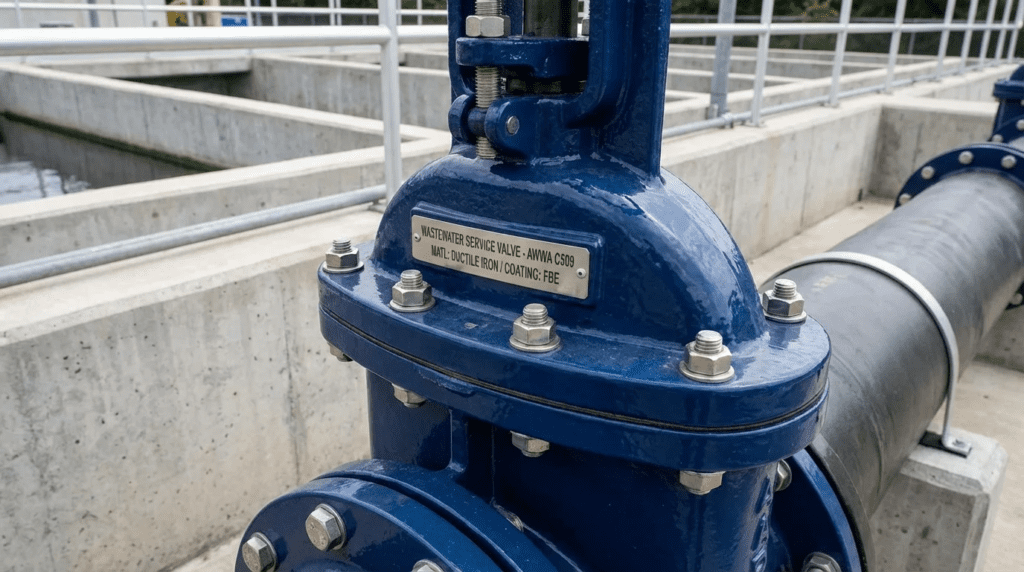
INTRODUCTION
In municipal and industrial treatment environments, equipment survivability is dictated heavily by the presence of grit, rags, hydrogen sulfide (H2S), and fats, oils, and grease (FOG). For consulting engineers and utility managers, understanding exactly How to Specify Valves – Construction Service for Wastewater Service (Materials Coatings and Standards) is a critical skill that directly impacts plant lifecycle costs and operator safety. A surprising industry statistic suggests that up to 70% of premature valve failures in wastewater applications are not due to mechanical fatigue, but rather the misapplication of valve types, incorrect elastomer selection, or inadequate internal protective coatings.
What many design engineers overlook is the drastic difference between potable water service and raw sewage or sludge service. Copying and pasting clean-water valve specifications into a wastewater lift station or headworks design frequently results in catastrophic ragging, rapid seat abrasion, or coating delamination. Specifying the correct metallurgy, seat material, and exterior/interior coatings is the only way to ensure a standard 20- to 30-year operational lifecycle.
Valves in these environments are deployed across a vast array of subsystems, including raw sewage lift stations, primary clarification, return activated sludge (RAS), waste activated sludge (WAS), anaerobic digestion, and chemical dosing. Each application carries distinct operating conditions. A valve handling 6% solids abrasive sludge requires an entirely different specification approach than a valve modulating secondary effluent. Poor choices lead to bypass pumping requirements, confined space entry hazards, and massive unplanned maintenance expenditures.
This comprehensive technical article will help engineers, plant directors, and public works decision-makers navigate the complex landscape of wastewater valve design. By strictly adhering to established industry standards and understanding the nuances of metallurgy and polymer science, professionals can confidently draft rigorous, bulletproof specifications.
Understanding How to Specify Valves – Construction Service for Wastewater Service (Materials Coatings and Standards)
Selecting the right isolation, check, and control valves requires a systematic evaluation of process conditions. The following criteria represent the core engineering framework for valve specification in harsh municipal and industrial environments.
Duty Conditions & Operating Envelope
The operating envelope dictates the fundamental mechanical requirements of the valve body and trim. Engineers must evaluate typical and peak flow rates, operating pressures, and maximum temperatures. In wastewater service, fluid velocity is a paramount concern. Velocities that are too low (typically under 2-3 ft/s) allow suspended solids and grit to settle, potentially seizing the valve mechanism. Conversely, velocities that are too high (exceeding 8-10 ft/s) drastically accelerate the abrasion of internal coatings and elastomeric seats.
Operating modes must also be defined. Continuous modulation requires robust trim materials (such as 316 Stainless Steel or Duplex alloys) to resist cavitation and wire-drawing. Intermittent operation, typical of pump discharge isolation valves, requires seat designs that will not stick or vulcanize to the body over long periods of inactivity. Furthermore, future capacity considerations must be factored in; oversized valves operating nearly closed to restrict flow will suffer from localized high velocities, leading to rapid degradation.
Materials & Compatibility
Material selection is the bedrock of wastewater valve longevity. The body material must withstand external soil loads (if buried), pipe stresses, and internal pressure transients (water hammer). Ductile Iron (typically ASTM A536 Grade 65-45-12) has universally replaced Cast Iron (ASTM A126) in modern wastewater specifications due to its superior tensile strength and yield properties, making it highly resistant to fracture from impact or pressure surges.
Trim materials (stems, discs, plugs, and seating surfaces) require rigorous attention to corrosion resistance. For raw sewage and sludge, Type 316 Stainless Steel stems are the minimum standard due to the presence of H2S and organic acids.
Elastomer compatibility is the most common point of failure. Buna-N (NBR – Nitrile Butadiene Rubber) is the industry standard for raw municipal wastewater due to its excellent resistance to fats, oils, and greases (FOG) and hydrocarbons. Conversely, EPDM (Ethylene Propylene Diene Monomer), while superior for high-temperature and aeration applications, degrades rapidly when exposed to the animal fats and petroleum products common in raw sewage. Specifying EPDM for a raw influent isolation valve is a guaranteed failure mode. For highly corrosive chemical feed systems (e.g., sodium hypochlorite or ferric chloride), advanced elastomers like FKM (Viton) or PTFE (Teflon) must be specified.
Hydraulics & Process Performance
Process performance hinges on the hydraulic characteristics of the selected valve. Engineers must evaluate the Flow Coefficient (Cv), which represents the volume of water (in GPM) that will pass through the valve with a 1 psi pressure drop. In raw sewage, heavily restricted flow paths must be avoided to prevent ragging (the accumulation of stringy materials and wipes).
This is why traditional butterfly valves are typically prohibited in raw sewage lines; the shaft crosses the center of the flow path, acting as a hook for rags. Instead, full-port resilient wedge gate valves or eccentric plug valves (which offer up to 80-100% clear port openings) are preferred. When modulating flow, the inherent flow characteristic of the valve (linear, equal percentage, or quick opening) must match the process control loop requirements to avoid hunting and premature actuator wear.
Installation Environment & Constructability
The physical environment dictates valve configuration and constructability. For direct buried valves, non-rising stems (NRS) with 2-inch AWWA operating nuts are standard, requiring robust extension stems and valve boxes. Buried valves must be heavily protected against soil corrosivity, often requiring polyethylene encasement (AWWA C105) over factory epoxy coatings.
For valves installed in below-grade vaults or dry pits, submergence is a critical risk. Vaults frequently flood due to sump pump failures or pipe ruptures. Actuators and limit switches in these environments must carry a true IP68 rating (continuous submergence), and the specification should state the required depth and duration of submergence (e.g., “IP68 rated for 10 meters for 72 hours”). Furthermore, spatial constraints dictate valve orientation; eccentric plug valves, for instance, must be installed with the plug rotating to the top of the pipe to prevent grit from settling in the bearing journals.
Reliability, Redundancy & Failure Modes
Wastewater valves face severe failure modes: grit abrasion, H2S corrosion, and mechanical blockages. Mean Time Between Failures (MTBF) can be drastically improved by understanding these modes. For abrasive slurries, metal-seated knife gate valves or heavily lined pinch valves may outlast standard plug valves.
Redundancy is critical in continuous treatment processes. Where a single valve failure could result in an unpermitted sanitary sewer overflow (SSO), dual valve configurations (e.g., a pump discharge line featuring both a check valve and an isolation gate valve) are mandatory. Specifications should require standardized, locally available spare parts, particularly for consumable items like packing rings, cover gaskets, and elastomeric seats.
Controls & Automation Interfaces
Modern wastewater facilities rely heavily on SCADA integration. Automated valves require electric, pneumatic, or hydraulic actuators. Electric actuators are most common in municipal plants due to the lack of plant air at remote lift stations. Specifications for electric actuators must detail the required power supply (e.g., 480V, 3-phase), the control signal (4-20mA for modulating, discrete 120VAC or 24VDC for open/close), and the communication protocol (Modbus TCP, EtherNet/IP, or Profibus DP).
Engineers must specify fail-safe requirements: should the valve fail-open, fail-closed, or fail-in-last-position upon loss of power? In critical bypass operations, battery backups or spring-return mechanisms are required. Furthermore, position feedback via highly reliable limit switches or continuous position transmitters is necessary for the SCADA system to verify command execution.
Maintainability, Safety & Access
Operators must live with the valves the engineers specify. Maintainability is non-negotiable. Repacking a valve stem under pressure is a critical safety feature; specifications should mandate that stem packing can be replaced while the valve is in service and under line pressure (often achieved via specific O-ring arrangements or back-seating stems).
Safety considerations extend to ergonomics. Manually operated valves requiring excessive rim pull force (typically anything over 40-80 lbs depending on plant standards) must be equipped with gear reducers. Chainwheels should be specified for valves located out of reach, but they must include safety restraints to prevent the chain from falling on operators. Lockout/tagout (LOTO) provisions must be explicitly stated, requiring lockable handwheels or actuator declutch levers.
Lifecycle Cost Drivers
Initial Capital Expenditure (CAPEX) represents only a fraction of a valve’s Total Cost of Ownership (TCO). Operational Expenditure (OPEX) drivers include maintenance labor, spare parts, and the process cost of leaks (which force pumps to run longer, wasting energy).
A standard industrial cast iron valve might save 30% on initial purchase compared to a fully compliant AWWA ductile iron valve with fusion-bonded epoxy. However, when the industrial valve’s uncoated interior corrodes within 36 months, the cost of bypass pumping, excavation, labor, and replacement will exceed the initial savings tenfold. Engineers must perform TCO analyses that account for typical 20-year lifespans, prioritizing heavy-duty construction, standardized face-to-face dimensions (for easy drop-in replacement), and proven coating longevity.
COMPARISON TABLES
The following tables provide an objective, engineering-focused matrix to aid in the selection of valve technologies and material combinations for specific wastewater applications. Use Table 1 to evaluate the inherent mechanical advantages of different valve types, and Table 2 to match materials and coatings to precise treatment environments.
Table 1: Valve Technologies for Wastewater Service
| Technology/Type | Primary Features | Best-Fit Applications | Limitations / Considerations | Typical Maintenance |
|---|---|---|---|---|
| Eccentric Plug Valve | 1/4 turn, clear port opening (up to 100%), resilient coated plug, out-of-flow seating. | Raw sewage isolation, pump discharge, RAS/WAS lines, sludge isolation. | Higher pressure drops than full-port gates. Must be installed with proper orientation to avoid grit in bearings. | Periodic exercising, V-type packing adjustment, grease in bearing journals (if not self-lubricating). |
| Resilient Wedge Gate Valve | Full port, low head loss, elastomer-encapsulated wedge, bubble-tight shutoff. | Direct buried force mains, collection system isolation, clean effluent. | Can trap grit in the bottom seat area if velocities are too low. Not suitable for throttling/modulation. | Exercising to clear seat tracks, occasional replacement of stem O-rings. |
| Knife Gate Valve | Thin profile, sharp beveled edge to cut through solids, self-cleaning seat. | Heavy sludge (>4% solids), grit slurry, dry bulk solids, severe ragging. | Can leak to atmosphere past the packing gland in standard designs. Bi-directional sealing requires specific models. | Frequent repacking of the stuffing box, blade inspection for scoring. |
| Swing Check Valve (Lever & Weight/Spring) | Automatic backflow prevention, full flow area, adjustable closure speed. | Pump discharge lines to prevent reverse rotation and water hammer. | Prone to slamming if not properly dampened. Hinge pins can wear rapidly in turbulent flow. | Inspection of hinge pins, replacement of clapper facing, adjusting dampeners. |
| Air Release / Air Vacuum Valve | Vents entrained air or breaks vacuums. Specific wastewater designs feature elongated bodies. | High points on force mains, pump volutes, long discharge headers. | Standard water air valves will foul instantly in wastewater. Must use tall-body wastewater specific designs. | Backflushing via integral blow-off valves, float inspection, seal cleaning. |
Table 2: Material & Coating Selection Matrix
| Application Environment | Recommended Body Material | Recommended Trim/Stem | Required Elastomer | Required Coating (Internal) |
|---|---|---|---|---|
| Raw Sewage (Influent) | Ductile Iron (ASTM A536) | 316 Stainless Steel | Buna-N (NBR) – Resists FOG | Fusion Bonded Epoxy (AWWA C550), min 8-12 mils |
| Aeration / Blower Air | Ductile Iron or Carbon Steel | 304/316 Stainless Steel | EPDM – Resists high temps (up to 250°F) | High-temp Epoxy or Uncoated (if dry air) |
| Heavy Primary Sludge / Grit | Ductile Iron | Hardened SS or Duplex | Polyurethane or Buna-N | Glass Lining or Ceramic Epoxy for extreme abrasion |
| Anaerobic Digester Gas | Ductile Iron | 316 Stainless Steel | Buna-N (NBR) | Fusion Bonded Epoxy (AWWA C550) |
| Sodium Hypochlorite Dosing | PVC, CPVC, or Titanium | Titanium or Hastelloy | PTFE (Teflon) or FKM (Viton) | Solid polymer body or heavily lined PTFE |
Criteria for How to Specify Valves – Construction Service for Wastewater Service (Materials Coatings and Standards)
Bridging the gap between the design specification and the real-world operational reality requires strict enforcement of testing, validation, and maintenance protocols.
Commissioning & Acceptance Testing
A specification is only as good as the testing protocols used to enforce it. For critical valves, engineers should mandate a Factory Acceptance Test (FAT). The FAT should include hydrostatic shell testing (typically at 1.5 times the rated working pressure) and seat leakage testing (at rated pressure) in accordance with AWWA standards (e.g., AWWA C504 for butterfly valves, though applied to plug/gate valves).
Crucially for wastewater, the internal coatings must be validated. Specifications must require holiday testing (spark testing) of all Fusion Bonded Epoxy (FBE) linings. A “holiday” is a microscopic pinhole in the coating. In an H2S-rich wastewater environment, a single pinhole allows sulfuric acid to reach the ductile iron substrate, causing rapid sub-film corrosion and complete delamination of the coating. Documented proof of 100% holiday-free coatings prior to shipment is mandatory.
Site Acceptance Testing (SAT) should verify proper installation, smooth actuator operation across the full stroke without binding, and correct integration with SCADA systems (verifying 4-20mA feedback loops and open/close limit switch accuracy).
Common Specification Mistakes
The single most common error is specifying an AWWA C504 Butterfly valve with EPDM seats for a raw sewage lift station. The shaft will catch rags, creating a blockage, and the FOG in the sewage will chemically degrade the EPDM seat within months, leading to failure. Always specify full-port or clear-waterway valves with Buna-N elastomers for raw sewage.
Another frequent error is under-specifying the coating application method. Simply stating “epoxy coated” allows manufacturers to use cheap, sprayed-on two-part liquid epoxies that offer minimal adhesion. Engineers must specify Fusion Bonded Epoxy (FBE) applied in a fluidized bed in accordance with AWWA C550. This ensures a thermally cured, highly bonded protective layer.
Ambiguity regarding operating pressure classes also causes issues. Specifying a “Class 150” valve without defining whether it is ANSI B16.1 Class 150 (flange drilling) or a working pressure rating of 150 PSI leads to submittals of mismatched equipment. Always explicitly state the required Working Water Pressure (WWP) independent of the flange drilling standard.
O&M Burden & Strategy
Valves are not “install and forget” assets. The O&M strategy heavily influences valve lifecycle. Specifications should facilitate easy maintenance. For example, grease fittings for eccentric plug valve trunnion bearings should be easily accessible, ideally piped to a centralized block if the valve is in a difficult-to-reach location.
Operators must implement a routine “valve exercising” program. Wastewater valves left static for years will inevitably seize due to the buildup of struvite, scale, or dried sludge. Preventative maintenance schedules should require fully cycling critical isolation valves every 6 to 12 months. When drafting specifications, engineers should mandate that manufacturers provide comprehensive O&M manuals detailing specific torque values, lubrication types (e.g., food-grade lithium grease vs. synthetic), and precise intervals for preventative maintenance.
Troubleshooting Guide
When failures occur, operators need actionable diagnostic procedures. A valve that is “passing” (leaking when closed) in wastewater is usually caused by debris trapped between the elastomer and the metal seat. The standard troubleshooting procedure is to partially open the valve to increase localized velocity, flushing the debris, and then re-closing. If passing persists, the elastomeric seat is likely scored or degraded.
Stuck valves (unable to turn the stem) are typically the result of either dried solids in the body cavity or seized packing/bearings. Operators should never use excessive force or heavy machinery (like a backhoe) to force a stuck valve wheel, as this will snap the stem or sheer the operating nut. Diagnostics involve slightly backing off the packing gland nuts, applying penetrating oil to external moving parts, and attempting gentle back-and-forth manipulation.
Design Details / Calculations for How to Specify Valves – Construction Service for Wastewater Service (Materials Coatings and Standards)
Rigorous sizing and adherence to domestic and international standards separate robust engineering designs from empirical guesswork.
Sizing Logic & Methodology
Proper valve sizing is critical, particularly for modulating control applications. An oversized valve will operate too close to its seated position, causing high-velocity “wire drawing” that cuts into the seat material. An undersized valve will create excessive pressure drop and waste pumping energy.
The core sizing parameter is the Flow Coefficient (Cv). The fundamental calculation is:
Cv = Q * √(G / ΔP)
Where Q is flow rate in GPM, G is specific gravity (approx. 1.0 for standard wastewater), and ΔP is the allowable pressure drop across the valve in PSI.
Rule of Thumb for Wastewater Sizing: For isolation valves, match the pipe line size to maintain velocities between 3 to 8 ft/s. Velocities below 2 ft/s allow solids to settle. For modulating control valves, size the valve so that it operates between 30% and 70% open under typical flow conditions, ensuring it does not operate near the extreme ends of its stroke. Always verify that the maximum pressure drop at peak flow does not induce cavitation; request cavitation indices (Sigma values) from the valve manufacturer for critical control applications.
Specification Checklist
A bulletproof valve specification must explicitly address the following elements:
- Valve Type & Function: e.g., Eccentric Plug Valve, Modulating Service.
- Body Material: Ductile Iron ASTM A536 Grade 65-45-12.
- End Connections: Flanged ANSI B16.1 Class 125, or Mechanical Joint (AWWA C111).
- Trim Material: Type 316 Stainless Steel plug/disc edge and stem.
- Seat / Elastomer: Buna-N (NBR) for standard wastewater; explicitly prohibit EPDM if FOG is present.
- Internal Coating: Fusion Bonded Epoxy per AWWA C550, min 8 mils dry film thickness (DFT), holiday-tested.
- Actuation: Manual (handwheel/nut with specified max rim pull) or Automated (electric/pneumatic with specified NEMA/IP ratings).
- Testing & Submittals: Require FAT data, hydrostatic test certificates, and coating holiday test reports.
Standards & Compliance
Referencing the correct AWWA (American Water Works Association) standards is the most effective way to guarantee minimum quality levels. Key standards for wastewater include:
- AWWA C517: Resilient-Seated Eccentric Plug Valves. (The primary standard for wastewater plug valves).
- AWWA C515: Reduced-Wall, Resilient-Seated Gate Valves for Water Supply Service. (Widely adopted in wastewater for isolation, replacing the older heavier-wall C509 standard).
- AWWA C508: Swing-Check Valves for Waterworks Service, 2-in. Through 24-in. NPS.
- AWWA C550: Protective Interior Coatings for Valves and Hydrants. (Crucial for corrosion prevention).
- AWWA C111/A21.11: Rubber-Gasket Joints for Ductile-Iron Pressure Pipe and Fittings.
In addition to AWWA, actuators must comply with NEMA (National Electrical Manufacturers Association) or IEC (International Electrotechnical Commission) enclosure ratings. A NEMA 4X rating (watertight, dusttight, corrosion-resistant) is standard for outdoor plant installations, while NEMA 6P or IP68 is required for submersible vault applications.
FAQ SECTION
What is the typical lifespan of a properly specified wastewater valve?
In raw sewage applications, a fully compliant ductile iron valve with AWWA C550 fusion-bonded epoxy and Buna-N elastomers typically lasts 20-30 years with routine maintenance. Wet end elastomeric components may require replacement every 10-15 years. Improperly specified valves (e.g., uncoated cast iron or inappropriate EPDM seats) often fail within 3-5 years.
What is the difference between Buna-N and EPDM elastomers in wastewater service?
Buna-N (Nitrile/NBR) offers excellent resistance to hydrocarbons, animal fats, and oils (FOG) commonly found in raw municipal wastewater. EPDM has poor resistance to oils and fats and will swell and degrade rapidly in raw sewage. However, EPDM has superior thermal stability and is the preferred choice for high-temperature aeration blower air systems.
Why are butterfly valves generally avoided in raw sewage applications?
Standard concentric butterfly valves feature a shaft that runs directly across the center of the flow path. In raw sewage, stringy materials, rags, and “flushable” wipes easily catch on this shaft, leading to massive blockages (ragging). Eccentric plug valves or fully unobstructed gate valves are preferred to maintain a clear waterway.
How do you select the right coating for a wastewater valve?
For almost all municipal wastewater applications, Fusion Bonded Epoxy (FBE) applied via a fluidized bed process conforming to AWWA C550 is the gold standard. It provides exceptional adhesion and corrosion resistance against H2S. For highly abrasive sludge or grit slurry, glass linings or specialized ceramic-filled epoxies may be required to resist gouging.
What is holiday testing, and why is it critical for valve coatings?
Holiday testing (or spark testing) is an electrical continuity test used to detect microscopic pinholes, voids, or thin spots in a protective coating. In wastewater, H2S gas converts to sulfuric acid. A single pinhole (holiday) allows this acid to attack the ductile iron substrate underneath the epoxy, causing the coating to peel off in large sheets. Specifying 100% holiday-free coatings is critical.
How much does it typically cost to replace a failed buried valve?
While a standard 8-inch isolation valve might cost $1,500 to $3,000 to purchase, the total replacement cost for a buried valve can easily range from $15,000 to $30,000+. This includes excavation, shoring, bypass pumping, street repair, and specialized labor. This extreme replacement multiplier underscores why specifying premium materials and coatings upfront is critical for total cost of ownership.
CONCLUSION
- Material is Everything: Always specify Ductile Iron (ASTM A536) bodies over Cast Iron for superior impact resistance and durability against pressure transients.
- Know Your Elastomers: Specify Buna-N (NBR) for raw wastewater and sludge to resist FOG. Reserve EPDM strictly for clean water or high-temperature aeration lines.
- Coatings Prevent Catastrophe: Mandate AWWA C550 Fusion Bonded Epoxy (FBE) for internal coatings, and strictly require documented holiday (spark) testing prior to shipment.
- Avoid Rags: Do not specify valves with obstructed flow paths (like standard butterfly valves) for raw sewage; utilize full-port resilient wedge gate valves or eccentric plug valves.
- Design for Maintenance: Ensure valves in vaults feature IP68-rated submersible actuators, and mandate repacking capabilities under continuous line pressure.
Mastering How to Specify Valves – Construction Service for Wastewater Service (Materials Coatings and Standards) is a critical competency for any engineer or facility manager dealing with municipal or industrial effluent. The harsh realities of grit, rags, hydrogen sulfide, and hydrocarbons mercilessly expose any shortcuts taken during the design and procurement phase.
By shifting focus away from initial capital expenditure and toward Total Cost of Ownership (TCO), decision-makers can justify the necessity of premium metallurgies, robust elastomeric compounds, and meticulously tested epoxy coatings. Relying on strict adherence to established AWWA, ASTM, and ANSI standards ensures that the equipment delivered to the job site matches the rigorous demands of the process environment.
Ultimately, a well-specified valve goes unnoticed—operating reliably in the background for decades. By applying the material compatibilities, hydraulic sizing logic, and constructability guidelines detailed in this article, engineering teams can eliminate premature failures, drastically reduce emergency maintenance burdens, and ensure the safe, continuous operation of vital water and wastewater infrastructure.