
Advanced Membrane Technologies in Water Treatment
Introduction
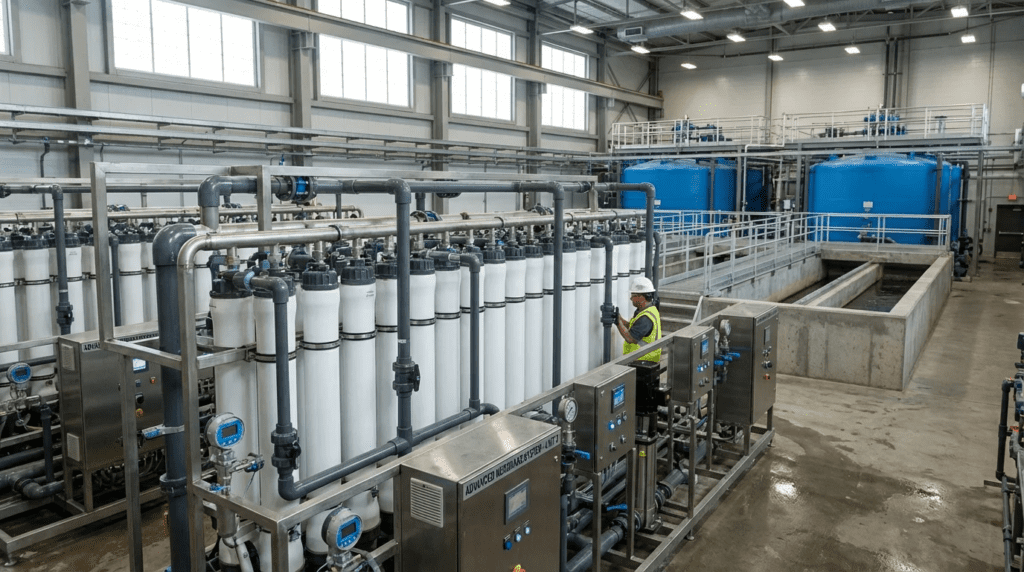
As municipalities and industrial facilities face increasingly stringent effluent regulations, emerging contaminant mandates (such as PFAS and endocrine disruptors), and growing freshwater scarcity, conventional clarification and media filtration are often no longer sufficient. Plant engineers are continuously turning to Advanced Membrane Technologies in Water Treatment to achieve superior contaminant rejection, reduce facility footprints, and enable aggressive water reuse and Zero Liquid Discharge (ZLD) schemes. However, treating these technologies as universally applicable commodities is a critical specification error. Specifying the wrong membrane material, configuration, or pore size leads to chronic fouling, catastrophic flux decline, and prohibitive lifecycle costs.
This pillar guide explores the comprehensive landscape of advanced membrane systems utilized across municipal drinking water, industrial wastewater, and desalination sectors. Because this field encompasses a massive array of materials, driving forces, and configurations, understanding the nuances between process variants is essential for process engineers, plant directors, and consulting firms. This article will define the primary technologies, map the engineering frameworks for selecting between them, detail operational constraints, and provide standardized design guidelines to ensure reliable, cost-effective water treatment deployments.
Subcategory Landscape — Types, Technologies & Approaches
The realm of Advanced Membrane Technologies in Water Treatment cannot be viewed through a single lens. Engineers must evaluate membranes based on their separation spectrum (pore size/molecular weight cutoff), their fundamental driving force (pressure, electrical potential, or osmotic gradients), their material composition (polymeric vs. ceramic), and their physical module configuration (hollow fiber, spiral wound, tubular). Understanding how these subcategories interlock is the first step in successful plant design. Below are the major subcategories that govern modern membrane engineering.
Reverse Osmosis (RO) Systems
Reverse Osmosis (RO) Systems represent the tightest end of the pressure-driven membrane spectrum, utilizing semi-permeable membranes to remove dissolved salts, multivalent and monovalent ions, and low-molecular-weight organics. Operating by overcoming the natural osmotic pressure of the feed water, RO requires high-pressure feed pumps, typically operating between 150–300 psi for brackish water (BWRO) and up to 1,000–1,200 psi for seawater (SWRO). They are the cornerstone of desalination, ultrapure water (UPW) generation, and indirect potable reuse (IPR) facilities. While RO provides unmatched permeate purity (often >99% salt rejection), it is an energy-intensive process that is highly susceptible to biological and inorganic fouling, requiring rigorous pretreatment—such as ultrafiltration or chemical conditioning—to maintain a feed Silt Density Index (SDI) below 3.0. Engineers must carefully design energy recovery devices (ERDs) and manage concentrate (brine) disposal when specifying RO.
Nanofiltration (NF) Technologies
Nanofiltration (NF) Technologies bridge the gap between reverse osmosis and ultrafiltration, offering a typical molecular weight cutoff (MWCO) of 200 to 1,000 Daltons. NF membranes are characterized by their selective rejection profile: they allow a high passage of monovalent ions (like sodium and chloride) while heavily rejecting multivalent ions (like calcium, magnesium, and sulfate) as well as dissolved organic matter (DOM) and synthetic organic compounds. This makes NF the premier technology for municipal water softening, sulfate removal in offshore oil injection, and the removal of disinfection byproduct (DBP) precursors without the heavy energy penalty of full RO. Operating typically between 70–150 psi, NF reduces operational expenditure compared to RO but still requires careful monitoring of concentration polarization and scale formation, particularly calcium carbonate and calcium sulfate.
Ultrafiltration (UF) Membranes
Ultrafiltration (UF) Membranes utilize a porous structure with absolute pore sizes ranging from approximately 0.01 to 0.1 microns, designed to operate at low transmembrane pressures (TMP) of 3 to 30 psi. They provide a physical barrier against suspended solids, colloids, bacteria, and most viruses, achieving up to 4-log or higher removal values (LRV). UF is overwhelmingly deployed as a pretreatment step ahead of RO to protect spiral wound elements from particulate fouling, as well as a standalone primary treatment for low-turbidity surface water and groundwater under the direct influence of surface water (GWUDI). While UF is highly effective at delivering consistent permeate quality independent of feed turbidity spikes, it cannot remove dissolved salts or true soluble organics. Specification heavily relies on selecting the right flux rate (gallons per square foot per day, or gfd) and determining the correct backwash and air scour frequencies.
Microfiltration (MF) Systems
Operating slightly upstream of UF on the separation spectrum, Microfiltration (MF) Systems feature pore sizes from 0.1 to 1.0 microns. These systems effectively remove total suspended solids (TSS), turbidity, protozoa (such as Giardia and Cryptosporidium), and most bacteria. MF systems operate at very low pressures, typically relying on suction or low-head pressure feeding, making them highly energy efficient. They are frequently used in municipal drinking water plants treating high-quality surface waters, in food and beverage processing, and as secondary clarification steps. While MF shares similar operational profiles with UF, its larger pore size makes it unsuitable for reliable virus removal without downstream disinfection, though it generally allows for slightly higher operational flux rates for a given feed quality.
Membrane Bioreactors (MBR)
Membrane Bioreactors (MBR) integrate conventional biological activated sludge processes with UF or MF membrane filtration, entirely replacing the secondary clarifiers and tertiary filters found in traditional wastewater treatment plants. The membranes, usually submerged directly into the aeration basin or positioned in a side-stream loop, pull clear effluent through the fibers under a gentle vacuum. MBRs allow biological basins to operate at exceptionally high Mixed Liquor Suspended Solids (MLSS) concentrations—typically 8,000 to 12,000 mg/L compared to 2,000 to 4,000 mg/L in conventional plants—drastically reducing the required footprint. The resulting effluent is of reuse quality, free of suspended solids, and ideal as RO feed for industrial ZLD. However, MBRs require higher aeration energy to scour the submerged membranes and prevent extreme mixed-liquor fouling.
Forward Osmosis (FO) Processes
Unlike pressure-driven variants, Forward Osmosis (FO) Processes rely on the natural osmotic gradient across a semi-permeable membrane. A highly concentrated “draw solution” is used on the permeate side to pull pure water from the feed stream, leaving contaminants behind. Because there is minimal applied hydraulic pressure, FO membranes exhibit significantly lower irreversible fouling and compaction rates compared to RO, making them suitable for handling ultra-high salinity brines, heavily organically loaded wastewaters, and landfill leachates. The major engineering constraint with FO is not the separation itself, but the recovery step: the diluted draw solution must typically be separated from the product water (often using RO or thermal distillation), which adds secondary capital and energy costs. FO remains a niche but highly valuable tool for complex industrial concentration and minimal liquid discharge (MLD) applications.
Electrodialysis and Electrodialysis Reversal (EDR)
Electrodialysis and Electrodialysis Reversal (EDR) deviate from standard membrane technologies by using direct current (DC) electrical potential rather than hydraulic pressure as the driving force. In EDR, water flows between alternating cation- and anion-exchange membranes; the electrical field pulls ions out of the feed stream and into a concentrate channel. EDR periodically reverses the DC polarity, which swaps the dilute and concentrate channels, effectively self-cleaning the membrane surfaces and breaking up early scale formation. This unique mechanism makes EDR highly robust against silica scaling and calcium sulfate precipitation, allowing for much higher recovery rates on difficult brackish waters than RO. While it excels at desalination of brackish groundwater, EDR only removes ionized species; it does not remove uncharged organics, suspended solids, or pathogens.
Ceramic Membrane Systems
Categorized by their material composition, Ceramic Membrane Systems are manufactured from inorganic materials such as alumina (Al₂O₃), silicon carbide (SiC), or titanium dioxide (TiO₂). These highly engineered modules operate typically in the MF or UF range but possess extraordinary thermal, chemical, and mechanical stability. Ceramic membranes can treat extreme streams that would destroy polymeric fibers, including high-temperature industrial effluents, oil-water emulsions (such as produced water in the oil and gas sector), and solvents. They can be aggressively cleaned with high concentrations of acids, caustics, and oxidants without degrading, often boasting lifespans exceeding 15 to 20 years. The primary limitation is their high initial capital expenditure (CAPEX) and physical weight, though total lifecycle costs are highly competitive in extreme-duty applications.
Polymeric Hollow Fiber Membranes
The vast majority of municipal UF, MF, and MBR installations rely on Polymeric Hollow Fiber Membranes. Spun from polymers like Polyvinylidene Fluoride (PVDF) or Polyethersulfone (PES), these modules consist of thousands of straw-like fibers bundled together inside a pressure vessel or submerged in a tank. Hollow fiber configurations offer immense surface-area-to-volume ratios (high packing density) and can be operated in either “outside-in” or “inside-out” flow patterns. Crucially, they tolerate physical backwashing, where permeate is forced backward through the pores to dislodge accumulated filter cake—a feature impossible with spiral wound modules. Engineers must carefully specify the exact polymer (PVDF offers better chemical resistance to chlorine, PES offers higher hydrophilicity) and manage fiber breakage via regular integrity testing.
Spiral Wound Membrane Elements
The standard configuration for RO and NF, Spiral Wound Membrane Elements consist of flat sheet membranes, feed channel spacers, and permeate collection layers wrapped tightly around a central perforated permeate tube. This design maximizes the active membrane area within a standard cylindrical pressure vessel (commonly 4-inch or 8-inch diameters). Feed water flows axially across the membrane surface in a cross-flow pattern, while permeate spirals inward to the central tube. Because they contain narrow feed spacer channels, spiral wound elements cannot be physically backwashed and are highly susceptible to particulate plugging and biofouling. Therefore, robust upstream filtration is non-negotiable. Designing with spiral elements requires precise calculation of cross-flow velocities to sweep contaminants away and minimize concentration polarization.
Tubular Membrane Configurations
Tubular Membrane Configurations feature large internal channel diameters (typically 0.5 to 1.0 inches), distinguishing them entirely from hollow fibers and spiral wound modules. These membranes are designed for applications with immense suspended solids, heavy viscosities, or severe scaling potential, such as industrial metal finishing wastes, food processing slurries, and landfill leachate. Operating in a cross-flow mode, the large diameter allows for extreme fluid velocities that generate high shear forces, constantly scouring the membrane wall and preventing cake formation. The severe trade-off for this ruggedness is packing density and energy cost; tubular configurations require massive recirculation pumps to maintain the required velocity, resulting in the highest specific energy consumption (SEC) among pressure-driven configurations.
Membrane Fouling Control and CIP Systems
Regardless of the separation process or material, maintaining flux requires robust Membrane Fouling Control and CIP Systems. Fouling occurs via particulate plugging, biological growth, organic adsorption, and inorganic scaling. To counter this, engineers design automated sequences that include hydraulic backwashing, air scouring, Chemically Enhanced Backwash (CEB), and full Clean-In-Place (CIP) procedures. CIP systems involve dedicated chemical storage (acids like citric/hydrochloric for scale; bases like sodium hydroxide for organics; oxidants like sodium hypochlorite for biofouling), heating elements, and recirculation pumps. Specifying correct CIP velocities and chemical compatibility is critical; applying an oxidant to a non-compatible polymer like polyamide (standard RO material) will cause instant, irreversible membrane degradation.
Selection & Specification Framework
With a diverse landscape of advanced membrane systems available, selecting the proper technology requires a rigorous engineering decision framework that evaluates raw water characterization against final effluent targets, operator capability, and lifecycle costs.
Step 1: Raw Water Characterization & The Separation Matrix
The first parameter dictating membrane selection is the target contaminant. If the goal is particulate, bacterial, or protozoan removal (e.g., surface water treatment), Ultrafiltration (UF) Membranes or Microfiltration (MF) Systems are the default choices due to low CapEx and low operating pressure. If the objective is dissolved solids removal (desalination) or absolute trace organic destruction, Reverse Osmosis (RO) Systems are mandatory. Nanofiltration (NF) Technologies sit in the middle—ideal if softening or color removal is required without the energy penalty of full RO.
Step 2: Stream Complexity & Configuration Choice
Once the pore size is established, the physical characteristics of the feed stream dictate the configuration. Clean well-waters or pre-filtered streams can utilize Spiral Wound Membrane Elements safely. Conversely, wastewaters with high TSS or aggressive chemical profiles require physical resilience. An activated sludge application demands submerged Polymeric Hollow Fiber Membranes via an MBR setup. If the wastewater contains free oil, high temperatures, or extreme abrasives, polymeric membranes will fail, necessitating the shift to rugged Ceramic Membrane Systems or high-shear Tubular Membrane Configurations.
Step 3: Lifecycle Cost Analysis (CAPEX vs. OPEX)
The tradeoff between capital expenditure and operational expenditure is stark in membrane engineering. High-pressure RO and tubular configurations carry immense energy costs (OPEX) and require continuous anti-scalant dosing. Low-pressure UF/MF require higher initial module investments relative to output but feature vastly lower pumping costs. Ceramic membranes represent the extreme of this scale: their initial CAPEX is often 3x to 5x that of polymeric equivalents, but their 20-year lifespan and resistance to chemical degradation provide a lower total cost of ownership in harsh industrial environments.
Step 4: Operator Skill Level & Plant Scale
Scale and operational capability cannot be ignored. RO, FO, and EDR systems are complex, involving precision instrumentation, high-pressure pumps, and continuous chemical monitoring. Small municipalities lacking advanced operator licensing should lean toward highly automated, low-pressure UF skids or packaged MBRs where possible. Furthermore, specification documents must clearly demarcate the lines between membrane OEMs, skid builders, and system integrators to avoid gaps in control system logic and CIP sequencing.
Comparison Tables
The following matrices provide a high-level engineering reference for comparing the different subcategories of advanced membrane technologies. Table 1 outlines technical features and relative costs, while Table 2 maps technologies to specific application environments.
Table 1: Subcategory Technology Comparison
| Type / Technology | Key Features / Separation Target | Best-Fit Applications | Key Limitations | Relative OPEX |
|---|---|---|---|---|
| Reverse Osmosis (RO) Systems | 0.0001 µm; High pressure; Monovalent/multivalent ion rejection | Desalination, UPW, ZLD, IPR | High energy, susceptible to fouling, requires strict pretreatment | High |
| Nanofiltration (NF) Technologies | 0.001 µm; Multivalent ion rejection (softening) | Municipal softening, organics removal, sulfate removal | Scaling potential (CaCO3, CaSO4), complex concentrate disposal | Medium-High |
| Ultrafiltration (UF) Membranes | 0.01-0.1 µm; Low pressure; Virus & colloid removal | RO pretreatment, drinking water, MBR integration | Cannot remove dissolved salts or true soluble organics | Low-Medium |
| Microfiltration (MF) Systems | 0.1-1.0 µm; Low pressure; Bacteria & TSS removal | Drinking water, food & beverage, secondary clarification | Inadequate for virus removal without downstream UV/chlorine | Low |
| Membrane Bioreactors (MBR) | Combines biological treatment with MF/UF barrier | Municipal/industrial wastewater reuse, footprint-constrained sites | High aeration energy, sensitive to toxic shock and peaking factors | Medium |
| Forward Osmosis (FO) Processes | Osmotic pressure driven; extremely low fouling propensity | High TDS brines, landfill leachate, ZLD concentration | Requires draw solution regeneration step (adds cost/complexity) | Medium-High |
| Electrodialysis (EDR) | Electrical DC driving force; polarity reversal cleans scale | High-silica brackish water, roughing desalination | Cannot remove uncharged species (organics, silica, microbes) | Medium |
| Ceramic Membrane Systems | Alumina/SiC materials; extreme temperature/chemical tolerance | Produced water, oil/water separation, hot industrial waste | Very high initial Capital Expenditure (CAPEX); heavy modules | Low |
| Polymeric Hollow Fiber Membranes | High surface area, backwashable, inside-out or outside-in | Standard municipal UF/MF and MBR platforms | Fiber breakage risks, strict limits on oxidant exposure (for some) | Low-Medium |
| Spiral Wound Membrane Elements | Cross-flow flat sheets; high packing density for high pressure | Standard RO and NF deployments | Not physically backwashable; highly vulnerable to particulate plugging | High |
| Tubular Membrane Configurations | Wide channels (0.5-1.0 inch); handles extreme solids levels | Metal plating waste, heavy slurries, leachate | Requires massive recirculation pumps; very low packing density | Very High |
Table 2: Application Fit Matrix
| Application Scenario | Primary Recommended Technology | Key Constraint / Consideration | Operator Skill Required |
|---|---|---|---|
| Surface Water to Potable Water (Low Turbidity) | Ultrafiltration (UF) Membranes | Manage seasonal algae blooms via enhanced coagulation/CEB | Moderate |
| Brackish Groundwater High in Silica | Electrodialysis and Electrodialysis Reversal (EDR) | Evaluate against NF based on specific silica saturation limits | High |
| Seawater Desalination | UF Pretreatment + Reverse Osmosis (RO) Systems | Energy Recovery Devices (ERD) are mandatory for economic viability | Very High |
| Municipal Wastewater Upgrade (Footprint Constrained) | Membrane Bioreactors (MBR) | Requires robust fine screening (typically <2mm) to protect fibers | Moderate-High |
| Industrial Wastewater with High Temperature/Oils | Ceramic Membrane Systems | High initial CAPEX justified by avoiding pre-cooling equipment | Moderate |
| Ultra-High Salinity Industrial Brine (ZLD) | Forward Osmosis (FO) Processes or EDR | Requires complex integration with thermal crystallizers | Very High |
Engineer & Operator Field Notes
While theoretical separation capabilities dictate design, field execution dictates operational success. Operational demands vary wildly between membrane variants. The following notes bridge the gap between design specification and actual plant operations across different technology types.
Commissioning Considerations
Membrane systems cannot simply be “turned on.” Commissioning requires strict adherence to manufacturer protocols. For Reverse Osmosis (RO) Systems and Spiral Wound Membrane Elements, elements are shipped in a preservative solution (often sodium bisulfite) that must be thoroughly flushed at low pressures to prevent membrane compaction before the system is brought to full operational pressure. For Polymeric Hollow Fiber Membranes, particularly dry-shipped modules, fibers must undergo extensive wetting procedures (sometimes involving glycerin removal) to ensure uniform flux distribution. Failure to wet fibers properly leads to localized high-flux zones, accelerating premature fouling.
Common Specification Mistakes
Engineers frequently err by copying and pasting specifications from one membrane subcategory to another. A primary mistake is improperly sizing feed pumps by neglecting temperature correction factors (TCF). Membrane permeability drops significantly as water temperature decreases (due to increased viscosity). A Microfiltration (MF) Systems plant designed strictly for summer temperatures will fail to produce required capacity in the winter unless the pumps and membrane surface area are upsized to account for the cold-water flux penalty. Another common error is assuming that all Polymeric Hollow Fiber Membranes possess the same chemical resistance; specifying chlorine-based CIP for a PES membrane without strict concentration limits will degrade the polymer, whereas PVDF can handle much higher free chlorine exposure.
Operations & Maintenance Comparison
The operational rhythm of a membrane plant is entirely dependent on its configuration. Low-pressure systems like Ultrafiltration (UF) Membranes run in semi-continuous modes, pausing every 20-60 minutes for a 1-2 minute physical backwash, followed by daily or weekly Chemically Enhanced Backwashes (CEB). Conversely, Reverse Osmosis (RO) Systems run continuously, relying on high cross-flow velocities and chemical anti-scalants to remain clean, requiring full offline Membrane Fouling Control and CIP Systems only every 3 to 6 months. If an RO system requires CIP monthly, the pretreatment design has failed. MBR operations focus heavily on biological health; if the MLSS viscosity spikes due to poor aeration or EPS (extracellular polymeric substances) generation, the physical filtration limit of the membranes will be breached.
Troubleshooting Matrix
Effective troubleshooting requires distinguishing between reversible and irreversible fouling.
- Symptom: Rapid TMP increase immediately after a CIP. Cause: The Membrane Fouling Control and CIP Systems regimen is using the wrong chemical profile, or the fouling is irreversible (e.g., severe silica scaling or organic blinding on Nanofiltration (NF) Technologies).
- Symptom: High salt passage but normal flux. Cause: Often mechanical failure rather than membrane failure. Check O-rings on the interconnectors between Spiral Wound Membrane Elements within the pressure vessel.
- Symptom: Loss of vacuum in MBR header. Cause: Severe sludging of Membrane Bioreactors (MBR) modules due to failure of the air scour blowers or inadequate MLSS wasting, requiring physical manual removal (hosing down the cassettes).
Design Details & Standards
To ensure competitive bidding and functional, compliant plants, engineers must utilize standardized sizing methodologies and adhere to established industry codes.
Sizing Methodology Overview
The core sizing metric across all pressure-driven advanced membrane technologies is Flux, typically expressed in LMH (liters per square meter per hour) or GFD (gallons per square foot per day). Total required membrane area is calculated by dividing the design flow rate by the design flux. However, design flux is not a static number—it is a variable selected by the engineer based on feed water quality. A clean well water might allow an RO flux of 15–18 GFD, while a tertiary wastewater RO might be strictly limited to 10–12 GFD to prevent concentration polarization. Design must also incorporate recovery rate (permeate flow divided by feed flow). High recovery reduces concentrate volume but increases the scaling potential at the tail end of the membrane array.
Varying Parameters by Subcategory
Sizing parameters shift drastically depending on the chosen subcategory:
- Recovery: Ultrafiltration (UF) Membranes typically achieve 90–95% recovery. Reverse Osmosis (RO) Systems typically operate at 50% (seawater) to 75–85% (brackish/industrial). Tubular Membrane Configurations might operate in batch modes achieving up to 98% volume reduction on sludges.
- Energy (SEC): RO consumes approximately 3.0 to 5.0 kWh/m³ for seawater. Low-pressure MF/UF typically requires only 0.1 to 0.3 kWh/m³.
- Cross-Flow Velocity: Critical for Spiral Wound Membrane Elements to prevent scaling, but entirely irrelevant to dead-end hollow fiber UF systems.
Applicable Standards & Compliance
Engineers must ensure membrane specifications reference appropriate regulatory and industrial standards:
- NSF/ANSI 61 & 372: Mandatory for any membrane element, pressure vessel, or chemical used in municipal drinking water.
- AWWA Standards: AWWA B110 for Membrane Systems, AWWA B112 for Microfiltration and Ultrafiltration Membrane Systems.
- EPA LT2ESWTR Compliance: For surface water treatment, Microfiltration (MF) Systems and UF must undergo daily Direct Integrity Testing (DIT)—typically a pressure decay test—to prove they are meeting 3-log or 4-log removal requirements for Cryptosporidium.
Specification Checklist
A comprehensive engineering specification must include:
1. Complete feed water chemistry profile (minimum/maximum/average), including temperature, TDS, TOC, silica, barium, and strontium.
2. Minimum required Log Removal Values (LRV) or maximum effluent concentrations (e.g., < 0.5 mg/L Boron).
3. Clear definitions of nominal vs. absolute pore size (especially for Polymeric Hollow Fiber Membranes).
4. Allowable maximum Transmembrane Pressure (TMP) and required clean water permeability baseline.
5. Complete sequence of operations for Membrane Fouling Control and CIP Systems, including chemical neutralization requirements for waste disposal.
FAQ Section
What are the different types of advanced membrane technologies?
The market is broadly divided into pressure-driven separation categories based on pore size: Reverse Osmosis (RO) Systems (finest), Nanofiltration (NF) Technologies, Ultrafiltration (UF) Membranes, and Microfiltration (MF) Systems. These are deployed via different configurations like Spiral Wound Membrane Elements, Polymeric Hollow Fiber Membranes, and Tubular Membrane Configurations. Other advanced types utilize different driving forces, such as Forward Osmosis (FO) Processes (osmotic) and Electrodialysis and Electrodialysis Reversal (EDR) (electrical). Materials range from standard polymers to rugged Ceramic Membrane Systems, and they can be combined with biological processes in Membrane Bioreactors (MBR).
How do you choose between Reverse Osmosis and Nanofiltration?
The choice between Reverse Osmosis (RO) Systems and Nanofiltration (NF) Technologies depends entirely on the required ionic rejection. If you must remove monovalent ions (like sodium and chloride) for desalination or ultrapure water, RO is mandatory. If your primary goal is removing multivalent ions (like calcium and magnesium for softening) or large organics (like color and disinfection byproduct precursors) while allowing salt passage to save energy and reduce operating pressure, NF is the correct engineering choice.
What is the most cost-effective membrane technology for small, footprint-constrained wastewater plants?
For footprint-constrained municipal or industrial wastewater scenarios, Membrane Bioreactors (MBR) are typically the most cost-effective choice. Because MBRs utilize submerged Polymeric Hollow Fiber Membranes directly in the aeration basin, they eliminate the need for large secondary clarifiers and tertiary media filters. While their aeration energy (OPEX) is higher, the massive reduction in capital civil construction and land acquisition costs makes them ideal for small sites upgrading to meet strict reuse standards.
Why do membranes foul and how is it controlled?
Membranes foul due to particulate buildup, biological slime formation, organic adsorption, and inorganic mineral scaling (like calcium carbonate). This is managed through integrated Membrane Fouling Control and CIP Systems. Low-pressure systems utilize regular hydraulic backwashing and air scouring. High-pressure systems rely on continuous chemical anti-scalant dosing and cross-flow velocity to sweep the membrane. Both require periodic deep chemical cleaning (Clean-In-Place) using acids to dissolve scale and bases/oxidants to destroy organics and biofouling.
When should ceramic membranes be specified over polymeric membranes?
Ceramic Membrane Systems should be specified when the feed water contains conditions that will physically or chemically destroy standard polymers. This includes industrial streams with extreme temperatures (e.g., >40°C), aggressive solvents, high concentrations of free oil (like produced water from oil extraction), or highly abrasive solids. While ceramics possess a much higher CAPEX, their near-indestructible nature and 20+ year lifespan offer excellent ROI in these aggressive environments.
Conclusion
Key Engineering Takeaways
- Design for the Water, Not the Spec: Low-pressure Ultrafiltration (UF) Membranes are ideal for particulate and pathogen barriers, while high-pressure Reverse Osmosis (RO) Systems are required for dissolved ion removal.
- Acknowledge the Pretreatment Penalty: The success of Spiral Wound Membrane Elements relies 100% on the upstream pretreatment ensuring SDI < 3.0.
- Match Configuration to Solids Loading: Use hollow fibers for backwashable clarity, spirals for high-purity cross-flow, and Tubular Membrane Configurations for extreme solids/sludges.
- Temperature is Critical: Always correct flux expectations for cold water conditions to prevent catastrophic under-sizing of membrane surface area.
- Factor CIP into CAPEX: Automated, chemically compatible Membrane Fouling Control and CIP Systems are non-negotiable for system longevity.
The successful implementation of Advanced Membrane Technologies in Water Treatment requires engineers to look past generic marketing claims and understand the fundamental physics, chemistry, and operational burdens associated with each subcategory. Designing a state-of-the-art facility is not simply a matter of selecting the tightest pore size possible; it is an exercise in optimization. Over-specifying RO for a stream that only requires Nanofiltration (NF) Technologies will burden the facility with decades of unnecessary energy costs. Conversely, under-specifying pretreatment for standard polymeric modules in an environment suited for Ceramic Membrane Systems will result in catastrophic failure and constant membrane replacement.
By utilizing the decision frameworks outlined in this guide—carefully mapping the raw water profile to the correct driving force, module configuration, and material—consulting engineers and plant operators can design resilient, cost-effective treatment plants. Whether deploying Membrane Bioreactors (MBR) for municipal reuse, Electrodialysis and Electrodialysis Reversal (EDR) for complex brackish groundwater, or Forward Osmosis (FO) Processes for cutting-edge zero liquid discharge, matching the specific advanced membrane tool to its appropriate application is the cornerstone of modern water treatment engineering.