
Advanced Filtration Technologies in Water Treatment
Introduction
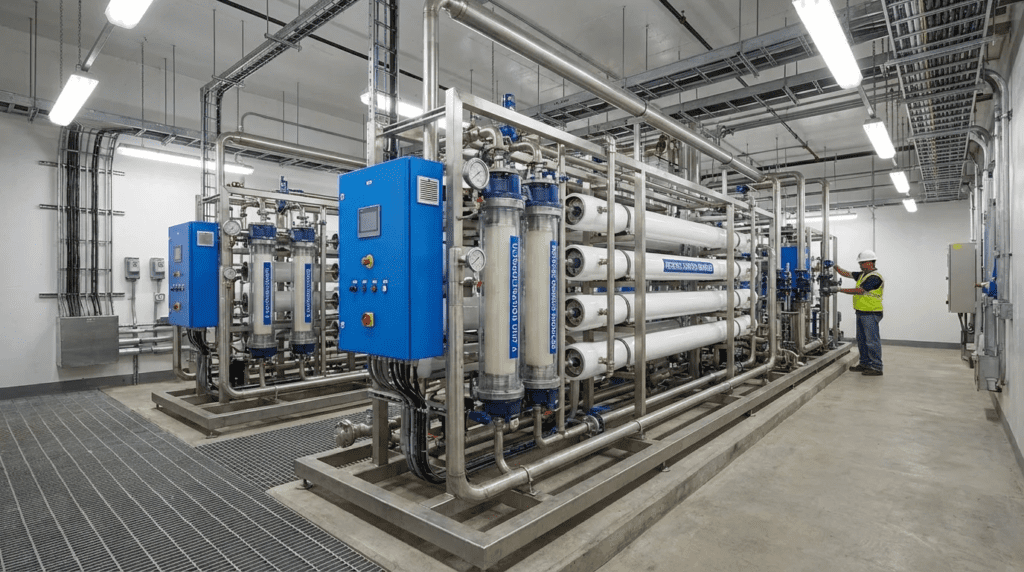
The evolution of water quality regulations has fundamentally shifted the burden on utility engineers. Where conventional sedimentation and sand filtration once sufficed, regulators now demand near-absolute removal of pathogens, micro-pollutants, and emerging contaminants like PFAS. Consequently, Advanced Filtration Technologies in Water Treatment have transitioned from niche applications to foundational infrastructure requirements. These systems—ranging from low-pressure membranes to sophisticated adsorptive media—serve as the critical barrier protecting public health and enabling the water reuse economy.
Selecting the right technology involves navigating a complex matrix of tradeoffs. A microfiltration system that excels at turbidity removal in a municipal drinking water plant may foul catastrophically in an industrial application containing high concentrations of hydrocarbons. Similarly, a reverse osmosis array capable of producing ultrapure water carries a significant energy penalty and complex brine disposal challenges that make it unsuitable for standard secondary effluent polishing.
This pillar guide provides a comprehensive engineering framework for evaluating the landscape of Advanced Filtration Technologies in Water Treatment. It covers the specific mechanisms, application fits, and lifecycle considerations for every major subcategory, equipping consulting engineers and plant operators with the data required to specify systems that are both technically robust and economically viable.
This page sits within the site’s broader tertiary treatment coverage and is organized in two parts. The first covers the deployable technologies an engineer specifies today — membranes, media, and adsorption platforms with established design criteria and operating history. The second covers the emerging materials research that will define the next generation of these platforms, most of which sits at laboratory or pilot scale rather than in a specification. Keeping that distinction visible matters, because the materials literature in this field advances considerably faster than the equipment market does.
Subcategory Landscape — Types, Technologies & Approaches
Advanced filtration is not a monolithic category; it comprises distinct physical and chemical separation mechanisms. Understanding the pore size spectrum, driving forces, and specific removal capabilities of each subcategory is essential for proper process design. The following technologies represent the core toolkit available to modern water engineers.
Microfiltration (MF)
Microfiltration utilizes membrane filtration with a pore size typically ranging from 0.1 to 10 micrometers, effectively acting as a physical sieve. It operates at low transmembrane pressures (TMP), usually between 1 and 30 psi. MF is exceptionally effective at removing suspended solids, bacteria, protozoa (including Giardia and Cryptosporidium), and turbidity. It is widely deployed as a pretreatment step for reverse osmosis systems or as a direct replacement for conventional media filtration in surface water treatment plants. Limitations include the inability to remove dissolved solids, viruses, or organics. From a sizing perspective, engineers must carefully evaluate the flux rate (gallons per square foot per day, or GFD) against the fouling potential of the source water, often integrating air scour and backwash systems to maintain permeability.
Ultrafiltration (UF)
Ultrafiltration bridges the gap between microfiltration and nanofiltration, featuring pore sizes between 0.01 and 0.1 micrometers. UF membranes are typically characterized by their Molecular Weight Cut-Off (MWCO), ranging from 10,000 to 500,000 Daltons. The primary advantage of UF is its ability to provide an absolute barrier against viruses and high-molecular-weight organic compounds, achieving significant log removal values (LRV) required for direct potable reuse (DPR) projects. Common applications include municipal drinking water production and tertiary wastewater filtration. Because UF fibers are highly susceptible to fibrous debris and hair, a fine screening pretreatment (typically 300 microns or less) is a strict specification requirement to prevent physical damage to the fiber bundles.
Nanofiltration (NF)
Often referred to as “loose reverse osmosis,” nanofiltration operates in the 0.001 to 0.01 micrometer range. Unlike MF and UF, NF relies on both sieving and charge-based rejection (Donnan exclusion). It excels at softening water by removing divalent ions such as calcium and magnesium, while allowing monovalent ions like sodium and chloride to pass. This selectivity makes NF the premier choice for hardness removal, color removal, and Disinfection Byproduct (DBP) precursor mitigation. Operating pressures range from 50 to 150 psi. A critical design limitation is the potential for scaling; engineers must specify antiscalant dosing systems and rigorously calculate the Langelier Saturation Index (LSI) of the concentrate stream to prevent membrane fouling.
Reverse Osmosis (RO)
Reverse Osmosis represents the pinnacle of pressure-driven separation, utilizing semi-permeable membranes with pore sizes below 0.0001 micrometers. RO effectively rejects nearly all dissolved salts, ions, and low-molecular-weight organics, achieving desalination rates exceeding 99%. It is the definitive technology for seawater and brackish water desalination, industrial boiler feedwater production, and advanced water purification for indirect potable reuse. However, RO is extremely energy-intensive, requiring operating pressures between 200 and 1,200 psi. Furthermore, the resulting brine or concentrate—often 15% to 50% of the feed volume—presents a significant disposal challenge, frequently requiring deep well injection, ocean outfalls, or evaporation ponds.
Granular Activated Carbon (GAC) Filtration
GAC filtration operates via adsorption rather than physical straining. As water passes through the highly porous carbon bed, organic compounds adhere to the carbon surface through van der Waals forces. Activated carbon is highly effective for taste and odor control, removal of total organic carbon (TOC), and increasingly, the removal of PFAS and micro-pollutants. Design parameters center on Empty Bed Contact Time (EBCT), typically ranging from 5 to 20 minutes depending on the target contaminant. The primary operational constraint is media exhaustion; engineers must plan for periodic replacement or on-site thermal reactivation, and must consider biological growth within the bed, which can be beneficial (Biologically Active Filtration) or detrimental if it causes excessive headloss.
Ion Exchange (IX) Filtration
Ion Exchange utilizes resin beads charged with mobile ions that swap places with contaminant ions in the water stream. This technology is dominant in water softening (replacing calcium with sodium), nitrate removal, and specialized PFAS treatment using anion exchange resins. IX systems offer extremely high removal efficiencies for specific targeted ions and can be regenerated on-site using brine or caustic solutions. The limitations are significant regarding waste stream management; the regeneration process produces a highly concentrated, salty waste brine that requires careful disposal. Engineers must also account for “chromatographic peaking,” where poorly managed regeneration cycles can release slugs of concentrated contaminants into the effluent.
Cloth Media Filtration
Cloth media filtration, often utilizing pile cloth or microfiber discs, serves as a highly efficient tertiary polishing step for wastewater effluent. These systems typically operate at high hydraulic loading rates (5 to 8 gpm/ft²) within a compact footprint. They are capable of reducing total suspended solids (TSS) to below 5 mg/L and turbidity to under 2 NTU. Because they operate via gravity and utilize automated backwash mechanisms, their energy consumption is remarkably low compared to membrane systems. However, cloth filters do not remove dissolved constituents or provide a significant barrier to viruses, limiting their use in direct reuse applications without downstream disinfection.
Membrane Bioreactors (MBR)
MBR technology integrates biological treatment (activated sludge) with membrane filtration (MF or UF) in a single process unit. By replacing the traditional secondary clarifier with a physical membrane barrier, MBRs can operate at much higher mixed liquor suspended solids (MLSS) concentrations—typically 8,000 to 12,000 mg/L—drastically reducing the footprint of the biological process. MBRs produce exceptionally high-quality effluent suitable for reuse. The tradeoffs include high energy consumption for membrane scouring (air), complex process control requirements, and a high sensitivity to fats, oils, and grease (FOG) which can irreversibly foul the membrane surfaces.
Ceramic Membrane Filtration
Unlike standard polymeric membranes, ceramic membranes are constructed from inorganic materials such as alumina, titania, or zirconia. This construction provides exceptional mechanical strength, chemical resistance (pH 0-14), and thermal stability. Ceramic membranes support extremely high flux rates and can withstand aggressive cleaning protocols, offering a lifespan of 15 to 20 years compared to 5 to 10 years for polymeric alternatives. They are the preferred choice for high-solids industrial applications, oil and gas produced water, and municipal plants requiring high-recovery operation. The primary barrier to adoption remains the high capital expenditure (CAPEX), which can be 2 to 3 times that of polymeric systems.
Electrodialysis Reversal (EDR)
EDR is an electrically driven membrane process that uses ion-selective membranes and a direct current to move ions out of the water stream. Uniquely, the polarity is periodically reversed to flush scaling and fouling from the membrane surfaces. This self-cleaning capability allows EDR to operate on challenging feed waters with high silica or scaling potential where RO would fail. It is commonly used in brackish water desalination and industrial process water treatment. While EDR offers high recovery rates (up to 94%), it is only effective for removing ionic species; it does not remove neutral organics, bacteria, or viruses, often requiring supplemental disinfection.
Media Filtration (Sand and Multi-Media)
Traditional media filtration remains a cornerstone of water treatment, utilizing layers of sand, anthracite, and garnet to remove particulates through straining, sedimentation, and adhesion. While often classified as “conventional,” modern high-rate multi-media filters serve as critical pretreatment for advanced membrane systems, protecting them from particulate fouling. These systems are robust, tolerant of variable influent conditions, and relatively simple to operate. Design typically involves loading rates between 2 and 10 gpm/ft², with specific attention paid to backwash rates to ensure adequate bed fluidization (typically 20-30% bed expansion) without media loss.
Emerging Filtration Materials and Research Platforms
The technologies above are deployable today, with published design criteria and decades of operating history behind them. The material covered in this section is different in kind: it is the research layer working on the substances those platforms are built from — the membranes, sorbents, and surfaces themselves. Almost none of it is specifiable on a current project, and the honest framing for an engineer is that these are the candidates from which the next generation of membranes and adsorbents will be drawn, not alternatives to a membrane system today. Work in this space also connects closely to advanced membrane technologies, where several of these materials are ultimately applied.
The Advanced Materials Field
The broadest body of this research is collected under advanced materials for water filtration, which covers a wide span of emerging approaches — from novel adsorbent chemistries and anti-fouling surface treatments through to process concepts such as fluidized bed crystallization, pervaporation, and zero liquid discharge. The common thread is that each attempts to solve a limitation of conventional filtration: fouling, selectivity, regeneration cost, or the energy penalty of pressure-driven separation. Readiness varies enormously across that collection, from technologies with commercial installations to concepts demonstrated only at bench scale, and separating the two is the main practical task for anyone surveying the field.
Hydrogel and Polymer Platforms
Hydrogel-based water purification covers a family of crosslinked polymer networks that absorb and hold large volumes of water while selectively binding target contaminants. The variants of interest include thermally responsive hydrogels that release captured water on a temperature swing, magnetically responsive formulations that can be recovered from suspension with a field rather than by filtration, and photonic crystal structures used as optical sensors. The attraction is regeneration without pressure or chemicals; the limitation is mechanical robustness and throughput at any meaningful scale. Related polymer work includes chitosan-based water treatment, which uses a biopolymer derived from crustacean shells as a coagulant and heavy metal adsorbent, and lignin-based water treatment, which repurposes a byproduct of pulp and paper production into sorbent material. Both are notable less for performance than for feedstock economics — they turn a waste stream into treatment media.
Bio-Derived and Biomimetic Approaches
Biomimetic water purification takes design cues from biological systems, most prominently aquaporin channels, the protein structures that move water across cell membranes with extraordinary selectivity and almost no energy cost. Incorporating aquaporins or synthetic analogues into engineered membranes is the most commercially advanced idea in this space, with several products having reached pilot and limited commercial deployment. Nanocellulose-based water purification follows a parallel logic with plant-derived material, producing high-surface-area nanofiber mats from wood pulp or agricultural residue. Both approaches share the appeal of renewable feedstock and biodegradability, and both face the same scale-up question: whether laboratory selectivity survives manufacture at square-meter quantities with acceptable defect rates.
Engineered Surfaces and Structured Materials
A final group manipulates material structure rather than chemistry. Femtosecond laser-induced graphene uses ultrafast laser pulses to convert polymer surfaces into porous graphene directly, creating conductive, high-surface-area structures for adsorption and electrochemical treatment without conventional graphene synthesis. Organosilica water purification employs hybrid organic-inorganic silica frameworks whose pore chemistry can be tuned during synthesis, and xerogel water purification uses the dried, highly porous solids that result when a gel’s liquid phase is removed without collapsing the network. Metamaterial-enhanced water treatment sits furthest from application, using engineered structures whose properties derive from geometry rather than composition. Engineers tracking this group should watch manufacturing cost per square meter and fouling behavior in real water, since those two variables — not removal efficiency in clean laboratory solution — are what determine whether any of it reaches a treatment plant.
Selection & Specification Framework
Choosing the appropriate filtration technology requires a rigorous decision framework that balances water quality objectives against economic realities and operational capacity. Engineers must resist the temptation to specify the “highest” level of treatment available if the specific contaminant removal goals do not require it.
Step 1: Define the Removal Target. The pore size spectrum dictates the primary choice. If the objective is removing suspended solids and protozoa, Microfiltration or high-rate media filtration is sufficient. If viruses must be removed, Ultrafiltration is required. If dissolved salts or specific ions are the target, the process must shift to Nanofiltration, Reverse Osmosis, or Ion Exchange.
Step 2: Analyze Feedwater Characteristics. The Silt Density Index (SDI) and Total Organic Carbon (TOC) content are critical. High fouling potential in industrial applications may immediately disqualify polymeric membranes in favor of Ceramic Membrane Filtration, despite the higher capital cost. High scaling potential (high silica or calcium) may favor Electrodialysis Reversal over RO.
Step 3: Evaluate Lifecycle Costs (CAPEX vs. OPEX). Membrane systems typically carry a lower footprint CAPEX but a significantly higher OPEX due to energy consumption, chemical cleaning, and membrane replacement (typically every 5-7 years). Conversely, media filtration has a higher civil construction cost but minimal long-term consumable expense. A 20-year Net Present Value (NPV) analysis is mandatory for a defensible recommendation.
Step 4: Assess Operator Capability. A small rural utility with a part-time operator cannot maintain a complex MBR or RO array. Specifying robust, simple technologies like cloth media or gravity sand filters often yields better long-term compliance results than a technically superior but operationally demanding system.
Comparison Tables
The following tables provide a structured comparison of the major subcategories to assist in preliminary screening and application matching.
Table 1: Subcategory Comparison of Advanced Filtration Technologies
| Technology | Typical Pore Size / Mechanism | Best-Fit Applications | Key Limitations | Maintenance Profile |
|---|---|---|---|---|
| Microfiltration (MF) | 0.1 – 10 µm (Sieving) | Turbidity removal, RO pretreatment, protozoa barrier | No dissolved solids or virus removal | Frequent backwash; periodic CIP |
| Ultrafiltration (UF) | 0.01 – 0.1 µm (Sieving) | Virus removal, potable reuse, drinking water | Requires fine pre-screening; fiber breakage risk | Automated backwash; integrity testing |
| Nanofiltration (NF) | 0.001 – 0.01 µm (Charge/Sieving) | Softening, color removal, DBP precursors | Scaling potential; concentrate disposal | Antiscalant dosing; chemical cleaning |
| Reverse Osmosis (RO) | < 0.0001 µm (Diffusion) | Desalination, ultrapure water, PFAS removal | High energy use; brine management | High-pressure pump maintenance; CIP |
| GAC Filtration | Adsorption (EBCT driven) | Taste/odor, TOC, micro-pollutants | Media exhaustion; biological growth | Media replacement/reactivation |
| Ion Exchange (IX) | Ionic Substitution | Softening, nitrate, PFAS (anionic) | Brine waste stream; ion peaking | Regeneration cycles; resin replacement |
| Ceramic Membranes | 0.01 – 1 µm (Inorganic) | Industrial, produced water, high-solids | Very high CAPEX; heavy modules | Aggressive cleaning tolerated; 15-20 yr life |
| Cloth Media | 5 – 10 µm (Depth/Surface) | Tertiary wastewater polishing | No dissolved or pathogen removal | Low energy; periodic cloth replacement |
Table 2: Application Fit & Selection Matrix
| Application Scenario | Recommended Primary Technology | Supporting Technology | Critical Design Driver |
|---|---|---|---|
| Municipal Surface Water Treatment | Ultrafiltration (UF) | Media Filtration (Pretreatment) | Pathogen log removal; turbidity spikes |
| Direct Potable Reuse (DPR) | Reverse Osmosis (RO) | Ultrafiltration (Pretreatment) | Multi-barrier redundancy; TOC limits |
| Industrial Produced Water | Ceramic Membranes | Chemical Pretreatment | Oil/grease tolerance; thermal stability |
| Tertiary Wastewater Polishing | Cloth Media Filtration | Disinfection (UV/Cl2) | TSS limits; hydraulic loading rate |
| PFAS Remediation | Ion Exchange (IX) | GAC Filtration | Breakthrough curves; media disposal |
| Brackish Water Desalination | Electrodialysis Reversal (EDR) | Cartridge Filtration | Silica scaling; recovery rate |
Engineer & Operator Field Notes
Theoretical performance rarely matches field reality without meticulous attention to commissioning, specification details, and maintenance protocols. The following insights address common failure points in advanced filtration deployments.
Commissioning Considerations
Commissioning membrane systems requires strict adherence to manufacturer wetting and flushing protocols. New polymeric membranes often contain preservative chemicals (such as glycerin or sodium bisulfite) that must be thoroughly flushed to prevent chemical breakthrough into the distribution system. Furthermore, engineers must establish baseline performance metrics—specifically specific flux (GFD/psi) and salt rejection—during the first 48 hours of operation. These baselines are critical for normalizing future performance data; without them, it is impossible to accurately diagnose fouling versus scaling in later years.
Common Specification Mistakes
A frequent and costly error is the under-specification of pretreatment. Engineers often focus intensely on the membrane array while neglecting the feedwater conditioning. Specifying a UF system without adequate fine screening (below 300 microns) will invariably lead to fiber abrasion and integrity loss. Similarly, failing to account for temperature variability is a critical mistake; membrane flux decreases significantly in cold water. A system sized for summer conditions (25°C) may fail to meet demand in winter (5°C) unless a temperature correction factor is rigorously applied during the design phase.
Pro Tip: Normalizing Performance Data
Do not rely on raw operating data to assess membrane health. Always normalize flux and salt passage data to standard conditions (temperature, pressure, and feed concentration). A rising trend in normalized pressure drop indicates biological or particulate fouling, whereas a rise in normalized salt passage typically indicates oxidation damage or O-ring leaks.
O&M Burden & Troubleshooting
The operational burden varies drastically across subcategories. GAC systems require heavy logistical coordination for media changeouts but demand little daily attention. In contrast, RO systems require constant monitoring of differential pressure and antiscalant dosing.
When troubleshooting declining flux, the diagnostic sequence should follow the “Pressure Drop Profile.” If the pressure drop is highest in the lead elements, the cause is typically particulate or biological fouling. If the pressure drop is highest in the tail elements, the cause is almost certainly mineral scaling (calcium carbonate or silica). This distinction dictates whether a low-pH or high-pH clean-in-place (CIP) chemical regimen is required.
Common Mistake: Ignoring Integrity Testing
Regulatory compliance for pathogen removal relies on membrane integrity. Operators sometimes neglect daily Pressure Decay Tests (PDT). A failed PDT indicates a broken fiber, which allows raw water to bypass treatment entirely. Automated PDT protocols and marking/pinning procedures for compromised fibers must be a standard part of the O&M manual.
Design Details & Standards
Effective design of advanced filtration systems requires strict adherence to hydraulic and regulatory standards to ensure both performance and public safety.
Sizing Logic & Methodology
Sizing generally begins with the design flux rate. For municipal UF systems treating surface water, a conservative design flux typically ranges from 30 to 50 GFD (gallons per square foot per day). Engineers calculate the required membrane area by dividing the peak design flow by the design flux, then adding redundancy (typically N+1 train configuration) to allow for offline cleaning or repair without compromising capacity.
For adsorption systems like GAC, sizing relies on Empty Bed Contact Time (EBCT). EBCT is calculated by dividing the volume of the media bed by the flow rate. Increasing EBCT extends the run time before breakthrough but requires larger vessels and higher capital costs.
Parameter Variations by Subcategory
- Membranes (MF/UF): Design Flux (GFD), Transmembrane Pressure (TMP), Recovery Rate (%).
- High-Pressure Membranes (NF/RO): Specific Energy Consumption (kWh/kgal), Concentration Polarization, Beta Factor.
- Media Filters: Hydraulic Loading Rate (gpm/ft²), Bed Expansion (%), Effective Size (ES) of media.
- Adsorption (GAC/IX): Empty Bed Contact Time (EBCT), Bed Volumes to Breakthrough, Regeneration Frequency.
Applicable Standards & Compliance
Compliance is governed by a matrix of federal and industry standards. In the United States, the EPA Membrane Filtration Guidance Manual (MFGM) is the primary authority for validating pathogen removal credits, detailing requirements for challenge testing and daily integrity verification. Additionally, AWWA Standard B110 covers membrane systems, while NSF/ANSI 61 certification is mandatory for all components in contact with drinking water. For reuse applications, engineers must consult state-specific regulations, such as California’s Title 22, which dictates stringent requirements for filtration and disinfection in recycled water systems.
Specification Checklist
- Define peak, average, and minimum flow rates with corresponding temperature ranges.
- Specify required log removal values (LRV) for Giardia, Cryptosporidium, and viruses.
- Establish maximum allowable Transmembrane Pressure (TMP) and clean-in-place (CIP) frequency.
- Detail the waste stream characteristics (backwash volume, brine TDS) and disposal method.
- Require manufacturer warranties for membrane life and specific flux performance.
FAQ Section
What are the different types of advanced filtration technologies in water treatment?
The primary subcategories include pressure-driven membranes (Microfiltration, Ultrafiltration, Nanofiltration, Reverse Osmosis), adsorptive systems (Granular Activated Carbon, Ion Exchange), physical media systems (Cloth Media, Multi-Media Filtration), and specialized hybrid systems (Membrane Bioreactors, Ceramic Membranes, Electrodialysis Reversal). Each targets a specific range of contaminant sizes and chemical properties.
How do you choose between Ultrafiltration and Microfiltration?
The decision hinges on virus removal requirements. Microfiltration (0.1-10 µm) effectively removes bacteria and protozoa but cannot reliably remove viruses. Ultrafiltration (0.01-0.1 µm) provides an absolute barrier against viruses. If the treatment goal includes potable reuse or high-level pathogen protection, UF is required; if the goal is simply turbidity removal or RO pretreatment, MF is more cost-effective.
What is the most cost-effective technology for tertiary wastewater polishing?
For standard tertiary polishing where the goal is reducing Total Suspended Solids (TSS) and turbidity, Cloth Media Filtration is generally the most cost-effective solution. It offers a small footprint, low energy consumption (gravity flow), and high hydraulic loading rates. However, if the effluent requires disinfection credits or reuse-quality standards, membrane filtration becomes necessary.
How does temperature affect membrane filtration performance?
Temperature has a significant impact on water viscosity and, consequently, membrane flux. As water temperature decreases, viscosity increases, requiring higher pressure to maintain the same flow rate. Generally, flux decreases by approximately 2-3% for every 1°C drop in temperature. Systems must be sized for the coldest expected water temperature to ensure year-round capacity.
What causes membrane fouling and how is it prevented?
Fouling is caused by particulate matter, organic compounds, biological growth (biofouling), and mineral scaling. Prevention strategies include robust pretreatment (screening and coagulation), chemical dosing (antiscalants and biocides), physical cleaning (backwashing and air scouring), and periodic chemical cleaning (CIP) using acids, caustics, or surfactants.
Can advanced filtration remove PFAS?
Yes, but effectiveness varies by technology. Reverse Osmosis and Nanofiltration are highly effective at physically rejecting PFAS compounds. Granular Activated Carbon and Ion Exchange resins are also widely used, adsorbing the compounds onto media. Conventional media filtration, Microfiltration, and Ultrafiltration are generally ineffective against dissolved PFAS.
What is the typical lifespan of filtration membranes?
Polymeric membranes (PVDF, PES) typically last 5 to 10 years, depending on feedwater quality and cleaning frequency. Ceramic membranes have a significantly longer lifespan, often 15 to 20 years, due to their mechanical and chemical durability. Media such as GAC requires replacement or reactivation much more frequently, often every 6 to 24 months depending on loading.
Are emerging filtration materials ready to specify on a project?
Generally not. Biomimetic aquaporin membranes are the furthest advanced, with pilot and limited commercial deployment, and biopolymer sorbents such as chitosan have niche commercial use. The remainder — hydrogels, xerogels, organosilica, laser-induced graphene, metamaterials — sit at laboratory or early pilot stage. The two variables that determine whether any of them reach a treatment plant are manufacturing cost per square meter and fouling behavior in real water, neither of which is settled by removal efficiency data in clean laboratory solution. Engineers should track this work and support piloting where a research partner funds it, but should base current specifications on the established platforms above.
Conclusion
Key Takeaways
- Match Pore Size to Target: Do not specify RO if the goal is turbidity removal; align the technology’s separation mechanism with the specific contaminant.
- Pretreatment is Non-Negotiable: The majority of membrane failures stem from inadequate upstream screening and conditioning.
- Account for Temperature: Design flux must be calculated based on the coldest water temperature to prevent capacity shortfalls in winter.
- Separate Deployable from Emerging: Established platforms carry design criteria and operating history; emerging materials carry neither, and the distinction belongs in every technology evaluation.
- Consider the Waste Stream: Brine disposal and spent media handling often dictate the feasibility of advanced filtration more than the treatment performance itself.
- Lifecycle over CAPEX: Ceramic membranes and robust media filters may cost more upfront but frequently offer lower 20-year costs than polymeric alternatives.
The landscape of Advanced Filtration Technologies in Water Treatment offers unprecedented capabilities for producing high-quality water from challenging sources. However, the complexity of these systems demands a disciplined engineering approach. Success depends not on selecting the most technologically sophisticated option, but on rigorously matching the treatment mechanism to the specific water quality objectives, feedwater characteristics, and operational realities of the facility.
As regulatory pressures continue to mount around emerging contaminants and water scarcity drives reuse initiatives, these technologies will become increasingly central to infrastructure planning. Engineers who thoroughly understand the tradeoffs between energy consumption, waste generation, operational complexity, and treatment efficacy will be best positioned to deliver systems that perform reliably across their full design life.