
Advanced Materials for Water Filtration: Emerging Technologies
Introduction
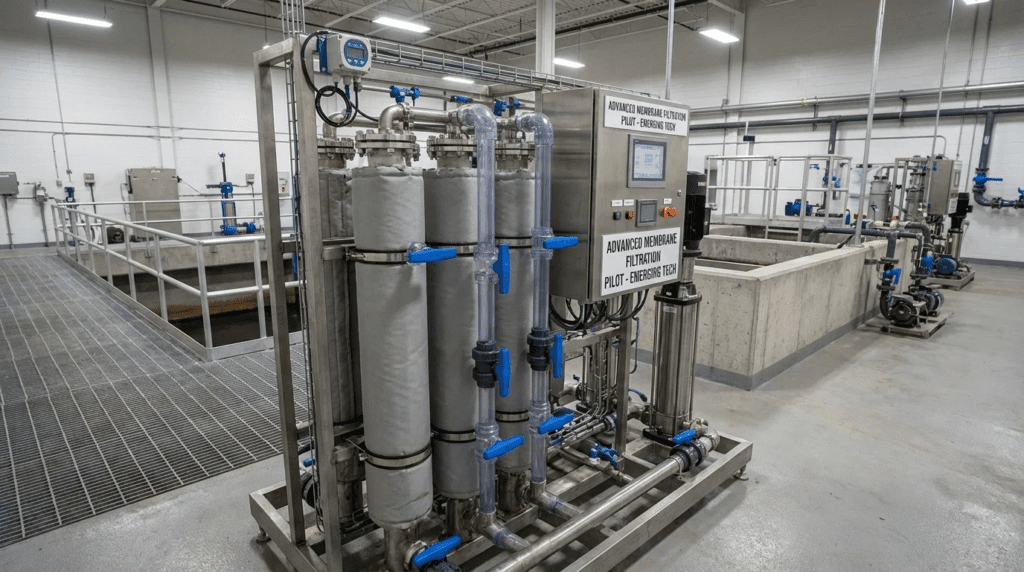
As municipal and industrial treatment plants face increasingly stringent regulatory limits for PFAS, microplastics, heavy metals, and trace pharmaceuticals, engineers are discovering the limitations of conventional polymeric membranes and granular activated carbon (GAC). To achieve higher permselectivity while reducing the severe energy penalties of high-pressure reverse osmosis (RO), plant designers must look to the next generation of separation science. The implementation of Advanced Materials for Water Filtration: Emerging Technologies represents a critical shift in hydraulic and environmental engineering, moving the industry from passive barrier separation to active, targeted molecular extraction.
This pillar page provides a comprehensive engineering framework for Advanced Materials for Water Filtration: Emerging Technologies. It catalogs the diverse landscape of nanomaterials, biomimetic structures, and advanced composites currently transitioning from bench-scale research to pilot and full-scale implementation. Whether upgrading a direct potable reuse (DPR) facility, designing a zero liquid discharge (ZLD) industrial loop, or troubleshooting severe biofouling in a desalination plant, understanding the mechanical, hydraulic, and chemical properties of these subcategories is vital. This guide details the applications, operational tradeoffs, lifecycle costs, and specification standards required to deploy these next-generation materials successfully.
Subcategory Landscape — Types, Technologies & Approaches
Navigating Advanced Materials for Water Filtration: Emerging Technologies requires understanding that these solutions are not monolithic. They span two-dimensional nanomaterials, highly porous crystalline structures, biological proteins, and composite matrices. Engineers must evaluate these materials based on their primary separation mechanism—size exclusion, electrostatic repulsion, adsorption, or catalytic degradation—and match them to the specific duty conditions of the raw water matrix. The following subsections detail the major technology branches within this discipline.
Carbon Nanotubes (CNTs)
Carbon Nanotubes (CNTs) are seamless cylindrical structures of graphene sheets, utilized either as vertically aligned membrane arrays or as fillers in polymer matrices. Due to the atomic smoothness of their inner hydrophobic walls, water molecules experience near-frictionless flow, resulting in water permeability rates up to 10 to 100 times higher than conventional RO membranes at equivalent pore sizes. They are typically deployed in high-flux desalination and advanced wastewater polishing where energy consumption (OPEX) is the primary constraint. Carbon Nanotubes (CNTs) exhibit exceptional tensile strength and anti-fouling properties, though their high CAPEX and difficulties in large-scale uniform alignment currently limit them to specialized, high-value industrial applications. Engineers specifying CNTs must account for a typical operating pressure reduction of 20-30% compared to standard thin-film composite (TFC) membranes.
Graphene Oxide (GO) Membranes
Graphene Oxide (GO) Membranes leverage two-dimensional carbon nanosheets decorated with oxygen-containing functional groups (hydroxyl, epoxy, carboxyl) to create precisely tunable interlayer spacing (typically 0.8 to 1.4 nm). This allows water to pass rapidly through the capillary networks while completely excluding larger ions and organic molecules. These membranes are highly effective for selective ion separation, dye removal in textile wastewater, and heavy metal extraction. A key advantage of Graphene Oxide (GO) Membranes is their exceptional hydrophilicity, which significantly delays organic fouling compared to standard polysulfone or polyamide materials. However, in highly alkaline environments or high-salinity conditions, GO membranes can suffer from interlayer swelling, requiring cross-linking agents during manufacturing to maintain mechanical stability and strict molecular weight cut-off (MWCO) tolerances.
Metal-Organic Frameworks (MOFs)
Metal-Organic Frameworks (MOFs) are highly crystalline, porous materials formed by coordinating metal ions with organic ligands, resulting in unprecedented specific surface areas (often exceeding 2,000 to 7,000 m²/g). In water filtration, MOFs are engineered as advanced adsorbents or membrane fillers designed to capture trace contaminants with extreme affinity—most notably short-chain PFAS, arsenic, and specific pharmaceutical compounds. Unlike GAC, which has random pore distributions, Metal-Organic Frameworks (MOFs) offer deterministic, uniform pore sizes that can be synthetically tuned to the exact angstrom size of the target pollutant. While their adsorption capacity is unmatched, pure MOFs often suffer from hydrothermal instability; thus, engineers must specify water-stable MOF variants (such as UiO-66 or ZIF-8) and carefully evaluate regeneration protocols, as chemical backwashing can sometimes degrade the crystalline lattice.
Covalent Organic Frameworks (COFs)
Similar to MOFs, Covalent Organic Frameworks (COFs) are highly crystalline porous polymers, but they are constructed entirely from light non-metal elements (C, H, O, N) linked by strong covalent bonds. This fundamental structural difference gives Covalent Organic Frameworks (COFs) superior chemical and hydrothermal stability, particularly in extreme pH environments (pH 1-14) where MOFs would typically dissolve. They are emerging as premium materials for aggressive industrial wastewater treatment, including acid mine drainage and highly alkaline chemical processing effluents. Their rigid pore structures provide exceptional molecular sieving capabilities, though their current manufacturing costs are prohibitive for standard municipal scale-up. Specification relies heavily on identifying the precise crystalline topology required to exclude specific industrial solvents or metal complexes.
Electrospun Nanofiber Mats
Electrospun Nanofiber Mats are produced by applying a high-voltage electric field to polymer solutions, creating a non-woven mesh of continuous fibers with diameters ranging from 50 to 500 nanometers. This architecture yields a membrane with exceptionally high porosity (often 80-90%, compared to 5-15% in phase-inversion membranes) and fully interconnected void spaces. In municipal and industrial applications, Electrospun Nanofiber Mats are highly prized as low-pressure pre-treatment microfiltration (MF) or ultrafiltration (UF) layers, drastically reducing the transmembrane pressure (TMP) required for operation. Their primary limitation is lower mechanical strength against high crossflow velocities, meaning they are often specified as composite support layers or must be reinforced via thermal calendering to withstand standard backwash regimens.
Aquaporin-Based Biomimetic Membranes
Mimicking the natural water transport mechanisms found in biological cell walls, Aquaporin-Based Biomimetic Membranes incorporate purified aquaporin proteins into a synthetic polymer or lipid matrix. These proteins feature an hourglass-shaped channel with precise electrostatic filtering that allows only single-file water molecules to pass, rejecting 100% of ions and organics. Because water transport through aquaporins is driven by natural osmotic pressure with minimal resistance, Aquaporin-Based Biomimetic Membranes represent the gold standard for Forward Osmosis (FO) and low-energy RO systems, particularly in zero liquid discharge (ZLD) and space-based water recovery systems. The engineering challenge lies in the operational limits; the delicate protein structures can be permanently denatured by standard chlorine dosing, requiring strict adherence to zero-oxidant feed water specifications and alternative biofouling control strategies.
Mixed Matrix Membranes (MMMs)
To bridge the gap between the scalability of standard polymers and the high performance of nanomaterials, engineers frequently turn to Mixed Matrix Membranes (MMMs). These are formed by dispersing inorganic or organic nanofillers (like zeolites, CNTs, MOFs, or silica nanoparticles) directly into a continuous polymer casting solution. By altering the polymer chain packing, Mixed Matrix Membranes (MMMs) overcome the classic “trade-off” curve between permeability and selectivity, offering simultaneous increases in both. They are highly versatile, utilized across UF, NF, and RO regimes in both municipal drinking water and industrial desalination. A critical specification factor is ensuring compatibility between the filler and the polymer matrix to prevent interfacial micro-voids, which can cause internal bypass and compromise the membrane’s MWCO rating.
Catalytic Ceramic Membranes
While standard ceramic membranes (alumina, zirconia, titania) are well-known for their robustness, Catalytic Ceramic Membranes represent a significant emerging upgrade. These materials are doped or coated with catalytic agents (such as iron, manganese, or copper oxides) allowing them to function simultaneously as physical filters and advanced oxidation process (AOP) reactors. When paired with ozone or hydrogen peroxide, Catalytic Ceramic Membranes generate highly reactive hydroxyl radicals directly within the membrane pores, instantly degrading organic foulants and emerging contaminants. They are the ideal choice for heavily contaminated, high-temperature, or high-fouling industrial effluents (e.g., pulp and paper, petrochemical). Due to their extreme CAPEX and high weight, they are rarely used for low-TOC municipal waters but offer unrivaled lifecycle (20+ years) in severe duty conditions.
MXene Nanosheet Adsorbents
MXene Nanosheet Adsorbents are a class of two-dimensional transition metal carbides, nitrides, or carbonitrides characterized by high metallic conductivity and excellent hydrophilicity. In water treatment, their unique stacked-layer structure and abundant surface functional groups make them extraordinary scavengers for heavy metals (lead, mercury, copper) and radioactive isotopes. Furthermore, due to their photothermal properties, MXene Nanosheet Adsorbents are being heavily researched for solar-driven interfacial desalination, where they localize solar heat to evaporate water without heating the entire bulk volume. For conventional pump-and-treat applications, engineers must consider their tendency to oxidize and degrade in aerated water over time, requiring storage and deployment in specific inert or controlled redox environments.
Stimuli-Responsive (Smart) Membranes
Stimuli-Responsive (Smart) Membranes are engineered polymers grafted with specific functional groups that dynamically alter their pore size, wettability, or surface charge in response to external environmental triggers such as temperature, pH, light, or magnetic fields. For example, a thermo-responsive membrane utilizing PNIPAM will collapse its polymer chains when heated above 32°C, actively expelling foulants from its pores. This “self-cleaning” capability drastically reduces the need for chemical clean-in-place (CIP) operations. Stimuli-Responsive (Smart) Membranes are particularly advantageous in variable-effluent industrial processes, such as food and beverage manufacturing, where fluctuating feed streams quickly blind static membranes. Specification requires rigorous control system integration to actively modulate the feed parameters (e.g., pH swings) required to trigger the cleaning cycle.
Engineered Biochar Media
Moving beyond conventional GAC, Engineered Biochar Media involves the pyrolysis of specific waste biomass under tightly controlled thermal conditions, subsequently activated or doped with metals (like magnesium or iron) to target specific contaminants. It provides an aggressively sustainable, circular-economy alternative for tertiary wastewater treatment and stormwater runoff filtration. Engineered Biochar Media excels in agricultural runoff applications for phosphate and nitrate capture, turning the exhausted media into a high-value fertilizer. While highly cost-effective (low CAPEX), engineers must account for the high variability in raw material feedstocks; specifying biochar requires demanding strict batch-to-batch uniformity testing for ash content, specific surface area (typical range 200–800 m²/g), and structural crush strength to prevent media loss during air scour backwashing.
Layered Double Hydroxides (LDHs)
Often referred to as anionic clays, Layered Double Hydroxides (LDHs) consist of positively charged metal hydroxide layers with charge-balancing anions residing in the interlayer spaces. Through an “ion-exchange” and “memory effect” mechanism, LDHs are uniquely suited for capturing harmful anionic pollutants, such as arsenate, chromate, fluoride, and phosphate. Unlike standard cation exchange resins, Layered Double Hydroxides (LDHs) exhibit a high affinity for these toxic anions even in the presence of competing background ions like chloride and sulfate. They are typically deployed as granular media in pump-and-treat columns for groundwater remediation. Engineers must carefully design the empty bed contact time (EBCT) and monitor the pH, as LDH dissolution can occur in acidic waters (typically below pH 5.0).
Selection & Specification Framework
Choosing among Advanced Materials for Water Filtration: Emerging Technologies requires engineers to move beyond traditional flux-and-pressure calculations. The decision framework rests on a matrix balancing raw water aggressiveness, target contaminant size/charge, operational budget, and site-specific energy constraints.
Decision Logic and Triggers:
- If the primary constraint is extreme biofouling or high organics: Prioritize Catalytic Ceramic Membranes paired with ozonation, or Graphene Oxide (GO) Membranes for their supreme hydrophilicity.
- If targeting ultra-low trace contaminants (PFAS, distinct pharmaceuticals): Specify Metal-Organic Frameworks (MOFs) or Covalent Organic Frameworks (COFs) embedded in Mixed Matrix Membranes (MMMs) to provide angstrom-level steric exclusion.
- If treating chemically aggressive, high-temperature industrial wastewater (pH <2 or >12, T >80°C): Rely on Covalent Organic Frameworks (COFs) or Catalytic Ceramic Membranes. Polymeric or biomimetic options will fail rapidly.
- If minimizing energy consumption in desalination or ZLD processes: Specify Aquaporin-Based Biomimetic Membranes or Carbon Nanotubes (CNTs) to drastically lower TMP requirements.
CAPEX vs. OPEX Tradeoffs:
Most emerging materials require high upfront capital expenditure (CAPEX). For instance, Carbon Nanotubes (CNTs) and Aquaporin-Based Biomimetic Membranes can cost 3 to 10 times more per square meter than conventional polyamide RO membranes. However, lifecycle cost analyses often justify these investments through dramatic OPEX reductions—slashing high-pressure pump energy consumption by up to 40% and cutting CIP chemical usage in half due to intrinsic anti-fouling properties.
Common Specification Pitfalls:
The most frequent engineering failure when adopting these materials is over-specification. Specifying Graphene Oxide (GO) Membranes for a standard municipal drinking water facility treating low-turbidity surface water adds unnecessary cost without realizing proportionate benefits; conventional UF followed by standard RO is vastly more economical. Another pitfall is ignoring matrix incompatibilities. For example, utilizing Aquaporin-Based Biomimetic Membranes in a plant that relies on continuous free chlorine dosing will result in total protein denaturation within hours.
Comparison Tables
The following tables provide a quick-reference engineering map to navigate the complex landscape of advanced filtration materials. Table 1 compares the physical features, ideal applications, and operational profiles of each subcategory, while Table 2 matches specific facility scenarios to their optimal technology fit.
Table 1: Subcategory Technology Comparison
| Type/Technology | Key Features | Best-Fit Applications | Limitations / Constraints | Relative Cost | Maintenance Profile |
|---|---|---|---|---|---|
| Carbon Nanotubes (CNTs) | Frictionless flow, high tensile strength | Low-energy Desal, Advanced Reuse | Scaling up uniform alignment is difficult | Very High | Low CIP frequency |
| Graphene Oxide (GO) Membranes | Tunable 2D layers, extreme hydrophilicity | Ion separation, Textile dye removal | Swelling in highly alkaline/saline waters | High | Moderate (requires swelling checks) |
| Metal-Organic Frameworks (MOFs) | Ultra-high surface area, tunable pore size | PFAS capture, Trace heavy metals | Hydrothermal instability in some variants | High | Frequent regeneration needed |
| Covalent Organic Frameworks (COFs) | High chemical/thermal stability, metal-free | Acid mine drainage, Aggressive industrial | Complex, expensive synthesis process | Very High | Low (highly durable) |
| Electrospun Nanofiber Mats | 80-90% porosity, ultra-low pressure drop | UF pre-treatment, MBR support layers | Low mechanical tear strength | Moderate | High sensitivity to backwash pressure |
| Aquaporin-Based Biomimetic Membranes | 100% rejection, natural osmotic transport | Forward Osmosis, Space water recovery | Zero chlorine tolerance, delicate proteins | High | Strict chemical limits during CIP |
| Mixed Matrix Membranes (MMMs) | Composite approach, beats trade-off limits | Municipal NF/RO upgrades | Interfacial voiding if poorly manufactured | Moderate | Standard CIP protocols apply |
| Catalytic Ceramic Membranes | Filtration + AOP reactor in one | Petrochemical, Pulp/Paper effluents | Extremely heavy, rigid infrastructure needed | Highest | Very Low (self-cleaning via AOP) |
| Stimuli-Responsive (Smart) Membranes | Changes pore size based on pH/Temp | Variable organics, Food & Beverage | Requires complex PLC/control integration | High | Automated self-cleaning |
| Engineered Biochar Media | Sustainable GAC alternative, modifiable | Stormwater, Ag runoff, Tertiary polishing | Variable feedstock quality control | Low | Frequent media replacement |
| Layered Double Hydroxides (LDHs) | High affinity for toxic anions | Groundwater remediation (Arsenic, Fluoride) | Dissolves at pH < 5.0 | Moderate | pH monitoring is critical |
Table 2: Application Fit Matrix
| Application / Scenario | Optimal Subcategory | Key Engineering Constraint | Operator Skill Impact |
|---|---|---|---|
| Municipal ZLD / Desalination | Aquaporin-Based Biomimetic Membranes | Requires aggressive non-oxidizing pre-treatment to protect proteins. | High (strict chemical dosing control) |
| Aggressive Industrial Effluent (High Temp/pH) | Catalytic Ceramic Membranes / COFs | Skid and piping must support extreme system weight and ozone injection. | Very High (ozone/AOP management) |
| Targeted PFAS / Trace Metals Removal | Metal-Organic Frameworks (MOFs) | EBCT scaling and establishing breakthrough curves specific to MOF type. | Moderate (similar to GAC operations) |
| Low-Energy Wastewater Polishing | Electrospun Nanofiber Mats | Must precisely limit backwash velocities to prevent fiber tearing. | Moderate |
| Stormwater / Agricultural Runoff | Engineered Biochar Media | Sizing against highly variable TSS and seasonal flow fluctuations. | Low (passive gravity operations) |
Engineer & Operator Field Notes
Transitioning from traditional media and polymers to Advanced Materials for Water Filtration: Emerging Technologies requires a paradigm shift in daily plant operations. Because these materials operate at the nanoscale or rely on delicate molecular mechanisms, standard O&M assumptions rarely apply.
Commissioning Considerations
Commissioning advanced nanomaterials involves stringent wetting and flushing protocols. For highly hydrophobic materials like Carbon Nanotubes (CNTs), standard water will not easily enter the pores at atmospheric pressure; systems often require an initial low-surface-tension solvent flush (like isopropyl alcohol) followed by controlled pure water displacement to establish baseline permeability. Conversely, extremely hydrophilic materials like Graphene Oxide (GO) Membranes require a slow, incremental ramp-up of transmembrane pressure. Subjecting a new GO membrane to immediate high-pressure dead-end filtration can cause “layer compaction,” permanently reducing its flux capacity before operational Day 1. For adsorption media like Metal-Organic Frameworks (MOFs), the commissioning phase must include a rigorous fines-flushing step, as loose crystalline nanoparticles escaping into the effluent can violate downstream turbidity or toxicity limits.
Common Specification Mistakes
Engineers often err by applying conventional design parameters to next-generation materials. A critical mistake is ignoring the leaching potential of nanoparticles. When specifying Mixed Matrix Membranes (MMMs) or MXene Nanosheet Adsorbents for municipal drinking water, engineers must demand rigorous, long-term leachate testing to prove the nanomaterials do not detach from the polymer matrix under high crossflow velocities. Another frequent error is specifying Layered Double Hydroxides (LDHs) without implementing strict upstream pH control; if the feed water drops below pH 5.0, the LDH matrix will dissolve, releasing the captured toxic anions (like arsenic) in a concentrated spike back into the effluent.
Engineers accustomed to specifying standard RO membranes often assume emerging technologies have similar chlorine tolerances (typically measured in ppm-hours). However, Aquaporin-Based Biomimetic Membranes have ZERO tolerance for active chlorine. A single failure of upstream bisulfite dosing will permanently denature the protein channels, instantly destroying the membrane’s rejection capabilities.
O&M Comparison Across Subcategories
Which subcategories require the most daily operator attention versus which are hands-off? The operational burden varies vastly across these technologies.
- Most Intensive Operator Attention: Stimuli-Responsive (Smart) Membranes and Catalytic Ceramic Membranes demand highly skilled operators capable of managing integrated PLC controls, thermal adjustments, pH swings, and advanced oxidation (ozone/H2O2) dosing. They require advanced sensor calibration and continuous monitoring.
- Hands-Off / Passive Operations: Engineered Biochar Media and Layered Double Hydroxides (LDHs) operate as simple flow-through packed beds. Aside from routine pressure-drop monitoring, they require only basic operator skill levels until breakthrough occurs.
- Maintenance Intervals & Labor: Electrospun Nanofiber Mats require frequent integrity checks and careful manual oversight during backwash cycles to prevent mechanical tearing. In contrast, Covalent Organic Frameworks (COFs) and Catalytic Ceramic Membranes boast intervals of months between major cleanings due to their inherent durability and self-cleaning traits.
- Consumables: Technologies reliant on Metal-Organic Frameworks (MOFs) will incur high consumable costs associated with chemical regenerants (acids/bases) or outright media replacement once adsorption capacity is reached. Aquaporin-Based Biomimetic Membranes require non-oxidizing biocides, which are significantly more expensive than standard sodium hypochlorite.
- Spare Parts Inventory: Facilities utilizing Carbon Nanotubes (CNTs) or Mixed Matrix Membranes (MMMs) must carry specialized, OEM-specific membrane modules on hand, as lead times for nanostructured membranes can exceed 6-9 months compared to off-the-shelf standard TFC elements.
Troubleshooting Overview
When emerging materials fail, the root causes are often microscopic rather than macroscopic.
- Symptom: Sudden increase in MWCO / loss of rejection in MMMs.
Root Cause: Polymer aging or pressure-cycling has caused interfacial voiding—micro-cracks forming between the polymer continuous phase and the nanomaterial fillers within the Mixed Matrix Membranes (MMMs). Action: Replace the module; ensure upstream dampeners are mitigating water hammer. - Symptom: Gradual flux decline in GO membranes despite standard CIP.
Root Cause: Interlayer swelling. High ionic strength or high-pH feed streams have caused the 2D sheets of the Graphene Oxide (GO) Membranes to swell and trap foulants deeply within the capillary networks. Action: Adjust feed pH to neutral; apply specific chemical swelling-reversal agents recommended by the OEM. - Symptom: AOP performance drop in catalytic systems.
Root Cause: The catalytic sites on the Catalytic Ceramic Membranes are poisoned by unexpected heavy metals (like lead or mercury) in the feed stream. Action: Perform an aggressive acid wash to strip the foulants from the metal-oxide active sites.
When troubleshooting high pressure drops in nanostructured media, do not rely solely on standard Darcy-Weisbach equations. Nanomaterials like Carbon Nanotubes (CNTs) induce “slip-flow” dynamics where the no-slip boundary condition of fluid mechanics breaks down. Always utilize the manufacturer’s specific slip-length adjustment coefficients when calculating theoretical permeability vs. actual field performance.
Design Details & Standards
Deploying Advanced Materials for Water Filtration: Emerging Technologies requires adjustments to standard design methodologies to account for the unique surface chemistry and extreme porosities of these materials.
Sizing Methodology Overview
For pressure-driven membranes (like Mixed Matrix Membranes (MMMs) and Electrospun Nanofiber Mats), sizing is still fundamentally based on the required design flux (Liters per square meter per hour, LMH). However, because these materials operate at significantly higher specific fluxes, the active membrane area required can be reduced by 30-50% compared to conventional polymeric equivalents. This allows engineers to design smaller skid footprints. For adsorption media like Metal-Organic Frameworks (MOFs) and Engineered Biochar Media, sizing is governed by Empty Bed Contact Time (EBCT) and mass transfer zone (MTZ) calculations. Due to their ultra-high specific surface area, MOF contactors can often achieve required removal efficiencies with an EBCT of 2-3 minutes, compared to the 10-15 minutes typically required for conventional GAC.
Key Design Parameters That Differ by Subcategory
Design parameters fluctuate wildly depending on the selected subcategory. If utilizing Carbon Nanotubes (CNTs), engineers must design for extremely low Transmembrane Pressures (TMP)—often reducing high-pressure pump sizing by 30-40%. Conversely, if deploying Catalytic Ceramic Membranes, the hydraulic design must accommodate massive system weight (requiring reinforced concrete pads and structural steel skids) and include advanced gas-liquid mixing injection arrays for ozone integration directly upstream of the membrane face.
Applicable Standards & Compliance
Because these materials are relatively new, regulatory compliance is the tightest bottleneck to municipal adoption.
- NSF/ANSI 61 & 372: Any material in contact with drinking water must pass this standard. Proving that nanoparticles from MXene Nanosheet Adsorbents or Carbon Nanotubes (CNTs) do not leach into the permeate is currently the primary focus of certification bodies.
- NSF/ANSI 419: For public drinking water UF/MF compliance, Electrospun Nanofiber Mats and Catalytic Ceramic Membranes must undergo rigorous module-specific challenge testing (using Cryptosporidium surrogates) to establish log-removal values (LRVs).
- ASTM D6908: Standard test methods for integrity testing of water filtration membranes. Standard pressure-decay tests must be carefully calibrated for materials like Aquaporin-Based Biomimetic Membranes to prevent over-pressurization and membrane rupture.
Specification Checklist
When writing procurement specifications for these technologies, engineers must explicitly define:
- Nanomaterial Leachate Limits: Require independent third-party lab verification of zero nanoparticle leaching at 150% of design crossflow velocity.
- Chemical Tolerance Matrices: Clearly define continuous and shock-dosing limits for free chlorine, chloramines, ozone, and pH for sensitive materials like Aquaporin-Based Biomimetic Membranes and Layered Double Hydroxides (LDHs).
- Regeneration Protocols: For Metal-Organic Frameworks (MOFs) and Covalent Organic Frameworks (COFs), the vendor must supply certified MTZ curves and the exact chemical composition, concentration, and volume of regenerant required per cycle.
FAQ Section
What are the different types of Advanced Materials for Water Filtration: Emerging Technologies?
The landscape includes several major categories: 2D nanomaterials like Carbon Nanotubes (CNTs) and Graphene Oxide (GO) Membranes; ultra-porous crystalline structures like Metal-Organic Frameworks (MOFs) and Covalent Organic Frameworks (COFs); biomimetic solutions like Aquaporin-Based Biomimetic Membranes; advanced polymers like Electrospun Nanofiber Mats, Stimuli-Responsive (Smart) Membranes, and Mixed Matrix Membranes (MMMs); reactive systems like Catalytic Ceramic Membranes and MXene Nanosheet Adsorbents; and sustainable media like Engineered Biochar Media and Layered Double Hydroxides (LDHs).
How do you choose between Graphene Oxide (GO) Membranes and Carbon Nanotubes (CNTs)?
The choice depends on the target contaminant and separation mechanism. Carbon Nanotubes (CNTs) excel in bulk water transport and high-flux desalination due to frictionless flow through their hollow cores. In contrast, Graphene Oxide (GO) Membranes are ideal for precise ion exclusion and separating specific organic molecules (like textile dyes) based on their tunable interlayer spacing and high surface hydrophilicity.
What is the most cost-effective advanced material for small or rural plants?
For small-scale or decentralized operations treating stormwater or agricultural runoff, Engineered Biochar Media is the most cost-effective. It provides a highly sustainable, low-CAPEX alternative to GAC, effectively capturing heavy metals and nutrients without complex mechanical equipment. For specific groundwater contaminants like arsenic, Layered Double Hydroxides (LDHs) offer an efficient, passive pump-and-treat solution.
Why are Metal-Organic Frameworks (MOFs) better than standard Granular Activated Carbon (GAC) for PFAS?
While GAC relies on a random assortment of macro and micropores, Metal-Organic Frameworks (MOFs) possess perfectly uniform, synthetically tunable pore sizes. This allows engineers to design the MOF to the exact angstrom size of specific short-chain PFAS molecules, drastically increasing adsorption capacity and kinetics (often achieving equilibrium in 1/5th the time of GAC) while preventing competition from background organic matter.
What are the unique maintenance challenges of Aquaporin-Based Biomimetic Membranes?
The primary challenge with Aquaporin-Based Biomimetic Membranes is protecting the biological protein structures from oxidants. They have virtually zero tolerance for free chlorine or standard oxidizing biocides used in typical CIP operations. Operators must implement strict upstream dechlorination and utilize specialized enzymatic or non-oxidizing chemical cleaners to manage biofouling without destroying the membrane.
How do Catalytic Ceramic Membranes reduce fouling in industrial wastewater?
Unlike passive barriers, Catalytic Ceramic Membranes actively destroy foulants. Doped with metal-oxide catalysts, they are paired with ozone or hydrogen peroxide to generate hydroxyl radicals directly at the membrane surface (Advanced Oxidation Process). This continuously degrades organic foulants (like oils, greases, and biofilms) into harmless byproducts, enabling them to self-clean and maintain high fluxes in heavily contaminated industrial streams.
Conclusion
KEY TAKEAWAYS
- Match Mechanism to Contaminant: Use Metal-Organic Frameworks (MOFs) for precision adsorption (PFAS), Graphene Oxide (GO) Membranes for ion exclusion, and Catalytic Ceramic Membranes for aggressive organic degradation.
- Balance CAPEX vs. Energy: High upfront costs for Carbon Nanotubes (CNTs) and Aquaporin-Based Biomimetic Membranes are justified by massive, long-term OPEX reductions via lower TMP and pumping energy.
- Beware Chemical Incompatibilities: Biomimetics fail in chlorine; Layered Double Hydroxides (LDHs) dissolve below pH 5.0; and Graphene Oxide (GO) Membranes can swell in high-salinity waters.
- Demand Leachate Testing: Ensure all nanomaterial solutions (like Mixed Matrix Membranes (MMMs) and MXene Nanosheet Adsorbents) pass rigorous NSF/ANSI 61 testing to prove stability under operational crossflow velocities.
- Re-calculate Sizing Parameters: Nanomaterials allow for significantly smaller footprints. Expect EBCT reductions of 50-70% for advanced media and massive flux increases per square meter for emerging membranes compared to traditional polymers.
The implementation of Advanced Materials for Water Filtration: Emerging Technologies provides water treatment engineers with unprecedented tools to address the complex contaminant profiles of the 21st century. Selecting the appropriate technology requires moving beyond basic hydraulic sizing to deeply understanding the nanoscale mechanisms of rejection, adsorption, and catalytic destruction. By systematically evaluating raw water chemistry, energy constraints, and operator skill levels against the specific profiles of nanomaterials, biomimetics, and advanced ceramics, engineers can specify systems that reliably out-perform conventional infrastructure while ensuring strict regulatory compliance and sustainable lifecycle costs.