
Advanced Filtration Technologies in Water Treatment
Introduction
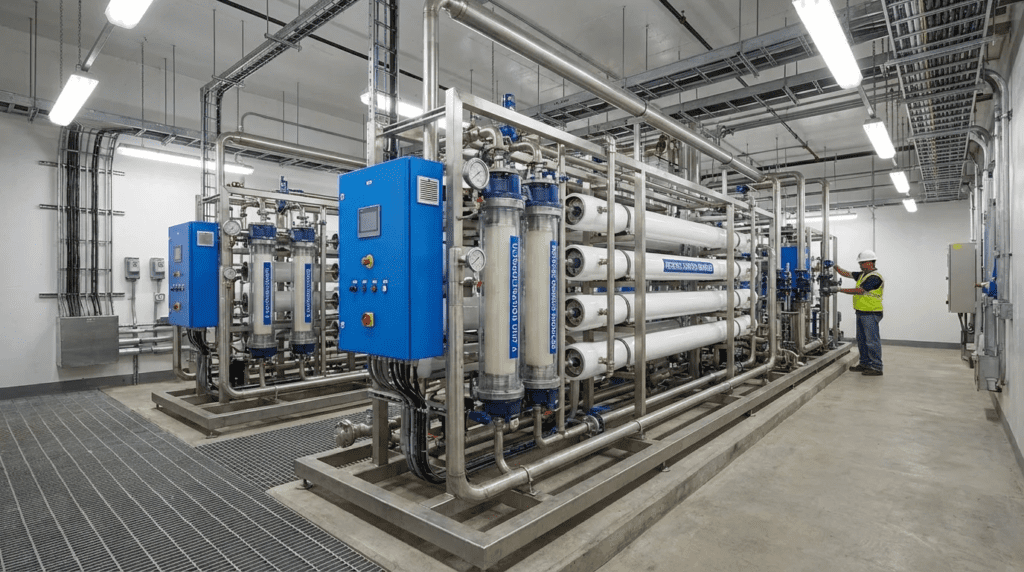
In modern municipal and industrial infrastructure, conventional granular media filtration is increasingly falling short of tightening regulatory discharge limits and complex feed water profiles. As facilities face emerging contaminants like PFAS, microplastics, and trace pharmaceuticals, coupled with a push toward direct potable reuse (DPR) and zero liquid discharge (ZLD), engineers are pivoting to Advanced Filtration Technologies in Water Treatment. A critical specification mistake in these systems—such as mismatching a membrane’s pore size to the feed’s Silt Density Index (SDI) or under-designing the Empty Bed Contact Time (EBCT) for an adsorption system—can result in catastrophic fouling, exponential increases in operational expenditures (OPEX) due to frequent Clean-In-Place (CIP) requirements, or outright regulatory failure.
The term Advanced Filtration Technologies in Water Treatment encompasses a broad spectrum of separation processes, spanning from pressure-driven membrane systems to active biological and adsorptive media. Each technology is engineered to target specific contaminant classes, from suspended solids and high-molecular-weight organics to dissolved monovalent ions. Understanding the performance envelopes, lifecycle costs, footprint requirements, and fouling thresholds of these disparate systems is paramount for plant directors, public works decision-makers, and design engineers. This pillar page serves as a comprehensive hub, mapping out the complete landscape of advanced filtration, detailing the subcategories, providing a rigorous selection framework, and outlining critical design standards to ensure long-term, reliable plant operation.
Subcategory Landscape — Types, Technologies & Approaches
The landscape of advanced filtration is primarily divided into pressure-driven membrane processes, physical/adsorptive media filtration, and hybrid biological-physical systems. Navigating these options requires engineers to evaluate the exact molecular weight cutoff (MWCO) or particle size requiring removal, alongside the feed water’s fouling propensity. The following subsections define the major technological branches, each of which merits dedicated, deep-dive evaluation based on project-specific requirements.
Microfiltration (MF) Systems
Microfiltration (MF) Systems utilize porous membranes, typically with a pore size ranging from 0.1 to 10 microns, to separate suspended particles, large colloids, and most bacteria from feed water. Operating at relatively low transmembrane pressures (TMP) of 5 to 30 psi, these systems function via a physical sieving mechanism. They are predominantly deployed as pretreatment steps for RO systems in desalination plants, for secondary municipal wastewater effluent polishing, and in industrial processes requiring clarification without the removal of dissolved solids. While MF provides excellent turbidity reduction, it is limited by its inability to remove viruses, dissolved organics, and multivalent ions. Engineers must heavily weigh the feed water’s total suspended solids (TSS) concentration, as high spikes will necessitate aggressive backwashing and chemical cleaning protocols to maintain design flux.
Ultrafiltration (UF) Systems
Operating one step finer than MF, Ultrafiltration (UF) Systems feature nominal pore sizes of 0.01 to 0.1 microns (or an MWCO of 1,000 to 100,000 Daltons). UF membranes reliably achieve a 4-log to 6-log removal of pathogens, including bacteria, protozoa (like Cryptosporidium and Giardia), and most viruses. Operating at 10 to 50 psi, UF is widely considered the gold standard for surface water treatment and high-grade municipal drinking water production. Compared to MF, UF offers a tighter barrier and superior permeate quality, making it a more resilient pretreatment for downstream RO. However, UF is highly susceptible to organic fouling from natural organic matter (NOM) and extracellular polymeric substances (EPS), requiring engineers to specify robust coagulation/flocculation pretreatment or frequent chemically enhanced backwashes (CEB).
Nanofiltration (NF) Systems
Nanofiltration (NF) Systems bridge the gap between UF and RO, featuring pore sizes around 0.001 microns and operating at higher pressures (50 to 150 psi). NF is uniquely engineered to reject multivalent ions (such as calcium and magnesium, providing softening capabilities) and larger molecular weight dissolved organics, while allowing monovalent ions (like sodium and chloride) to largely pass through. This selective rejection makes NF highly advantageous for municipal groundwater softening, color/organics removal (such as humic acids), and industrial sulfate removal without the extreme energy penalty of full RO. The critical specification factor is balancing the desired scaling reduction against the osmotic pressure required; poor pretreatment can lead to rapid membrane scaling if calcium carbonate or silica saturation indices are exceeded in the concentrate stream.
Reverse Osmosis (RO) Filtration
Reverse Osmosis (RO) Filtration represents the tightest level of pressure-driven separation, utilizing semi-permeable membranes to reject dissolved monovalent ions, heavy metals, and nearly all organic compounds. Relying on diffusion rather than physical sieving, RO requires significant feed pressures—typically 150 to 400 psi for brackish water and 800 to 1,200 psi for seawater—to overcome the water’s natural osmotic pressure. It is the core technology for seawater desalination, high-purity industrial boiler feed, and direct potable reuse (DPR) trains. The primary limitation of RO is its high energy consumption and the generation of a concentrated brine stream (concentrate) that requires complex disposal or ZLD processing. Engineers must strictly control feed water SDI (typically keeping it below 3.0) and utilize antiscalants to prevent irreversible biofouling and mineral scaling.
Forward Osmosis (FO) Technologies
Unlike RO, Forward Osmosis (FO) Technologies operate via the natural osmotic pressure gradient across a semi-permeable membrane, pulling water from a lower concentration feed into a highly concentrated “draw” solution. This requires virtually zero applied hydraulic pressure, drastically reducing mechanical fouling compaction and allowing FO to treat highly challenging, high-fouling, or high-TDS feed waters (such as landfill leachate or oil & gas produced water). The extracted clean water must then be separated from the draw solution, typically requiring a secondary thermal or RO process. While FO offers unparalleled fouling resistance and high water recovery in complex industrial applications, the energy required for draw solution regeneration remains a significant limitation and critical lifecycle cost consideration.
Electrodialysis Reversal (EDR) Systems
Electrodialysis Reversal (EDR) Systems utilize an applied direct current (DC) electrical field to move dissolved ions across alternating cation- and anion-exchange membranes, effectively desalting the water without forcing the water itself through a membrane. By periodically reversing the polarity of the electrodes, EDR systems self-clean and inhibit scaling, allowing them to operate at exceptionally high recovery rates (up to 95%) on high-silica or high-calcium feed waters. EDR is ideal for brackish water desalination, cooling tower blowdown recovery, and agricultural runoff treatment. Its primary limitation is that it only removes ionized compounds; uncharged organics, suspended solids, and pathogens are not removed, necessitating complementary filtration stages.
Membrane Bioreactors (MBR)
Membrane Bioreactors (MBR) integrate suspended-growth biological wastewater treatment with advanced membrane filtration (typically MF or UF) in a single unit process, completely replacing the secondary clarifiers and tertiary filters of conventional activated sludge plants. By physically retaining the biomass, MBRs can operate at highly elevated mixed liquor suspended solids (MLSS) concentrations (typically 8,000 to 12,000 mg/L), drastically reducing the plant footprint while producing reuse-quality effluent. MBRs are the technology of choice for municipal wastewater plant expansions in space-constrained footprints and industrial effluent treatment. Design engineers must carefully balance aeration requirements for membrane scouring (to prevent cake layer formation) against the overall plant energy budget.
Ceramic Membrane Filtration
Constructed from inorganic materials like alumina, silicon carbide, or titanium dioxide, Ceramic Membrane Filtration offers extreme physical and chemical durability compared to polymeric membranes. They can withstand high temperatures (up to 100°C+), aggressive pH ranges (0-14), and high concentrations of solvents or free oil. These attributes make ceramic membranes exceptionally suited for heavy industrial wastewater, produced water in oil and gas, and scenarios requiring aggressive chemical cleaning. While their CAPEX is substantially higher than polymeric alternatives, their expected lifespan of 15 to 20 years and ability to handle abrasive solids often results in a favorable lifecycle cost for severe-duty applications.
Biologically Active Filtration (BAF)
Biologically Active Filtration (BAF) operates by intentionally cultivating a biofilm on granular media (such as sand or granular activated carbon) to biologically degrade organic contaminants alongside physical filtration. Ozonation is often utilized upstream to break down complex organics into assimilable organic carbon (AOC), which the biofilm then consumes. BAF is increasingly specified in advanced drinking water plants to reduce disinfection byproduct (DBP) formation potential, remove taste and odor compounds, and reduce chemical consumption. The design requires meticulous control of empty bed contact time (EBCT)—typically 10 to 20 minutes—and careful backwash regimens to remove excess biomass without stripping the active biofilm layer.
Granular Activated Carbon (GAC) Filtration
Utilizing high-porosity carbonaceous media, Granular Activated Carbon (GAC) Filtration relies on physical adsorption to remove low-molecular-weight organics, volatile organic compounds (VOCs), taste and odor agents, and notably, per- and polyfluoroalkyl substances (PFAS). GAC can function in a pressure vessel or a gravity filter configuration. It is an operational staple in municipal drinking water and groundwater remediation. The critical engineering metric is the media exhaustion rate, monitored via breakthrough curves. Because GAC media must be periodically removed and thermally reactivated or replaced, OPEX is highly sensitive to the influent concentration of competing organics (like TOC), which can prematurely consume the carbon’s adsorptive capacity.
Ion Exchange (IX) Filtration
Ion Exchange (IX) Filtration employs synthetic resin beads that exchange non-harmful ions (like chloride or sodium) for target ionic contaminants in the feed water. Widely used for water softening (calcium/magnesium removal), demineralization, and targeted removal of specific contaminants like nitrate, arsenic, and PFAS. IX systems offer highly predictable performance and rapid kinetics, allowing for smaller footprints than GAC. However, the resins require periodic chemical regeneration (using brine, acid, or caustic solutions), creating a concentrated waste stream. Engineers must evaluate resin selectivity, potential for resin fouling by iron or manganese, and the logistics of regenerant chemical handling.
Cloth Media Filters
Cloth Media Filters utilize engineered textiles configured in disks or drums to provide depth-like filtration in a very compact footprint. Operating at low headloss, these filters are primarily utilized for tertiary suspended solids removal in municipal wastewater, achieving final effluent TSS of less than 5 mg/L. They are also highly effective for phosphorus reduction when paired with upstream chemical precipitation. Their key advantage is a very small footprint compared to conventional sand filters and the ability to handle high solids loading rates. However, they are not designed for the removal of dissolved organics or microscopic pathogens.
Continuous Upflow Sand Filters
Also known as moving bed sand filters, Continuous Upflow Sand Filters operate without the need to take the unit offline for backwashing. Feed water flows upward through a descending bed of sand; the contaminated sand at the bottom is continuously airlifted to a central wash box, cleaned, and returned to the top of the bed. This continuous steady-state operation makes them ideal for industrial process water, municipal tertiary treatment, and denitrification applications. While highly reliable and mechanically simple, they generally require deeper concrete basin construction and handle lower hydraulic loading rates compared to pressurized membrane systems.
Disc Filtration Systems
Disc Filtration Systems consist of stacks of grooved plastic discs tightly compressed together. Water flows from the outside in, and the intersecting grooves create a three-dimensional depth filtration matrix that traps suspended solids. During backwash, the pressure is released, the discs separate, and water is sprayed tangentially to spin and clean them. They typically provide absolute filtration down to 20-400 microns. Disc filters are the workhorse technology for protecting downstream UF and RO systems from macro-fouling, as well as for cooling tower side-stream filtration and agricultural irrigation. They provide excellent footprint efficiency and fully automated cleaning, though they are strictly limited to physical particulate removal.
Selection & Specification Framework
Selecting among the myriad of advanced filtration technologies requires a structured decision matrix based on feed water characterization, target effluent limits, and lifecycle constraints. Engineers should avoid the common pitfall of selecting a technology based solely on capital expenditure (CAPEX), as the operational expenditure (OPEX) related to pumping energy, chemical cleaning, and media/membrane replacement often dominates the lifecycle cost over a 20-year horizon.
1. Define Target Contaminant and Particle Size: The primary fork in the decision tree is based on what must be removed. If the target is strictly macro-particulates (>20 microns) to protect downstream equipment, Disc Filtration Systems or automatic screen filters are adequate. If the goal is pathogen removal (Cryptosporidium/Giardia) and turbidity reduction without removing dissolved minerals, Ultrafiltration (UF) Systems or Microfiltration (MF) Systems are specified. When municipal softening or targeted organics removal is required, Nanofiltration (NF) Systems fit best. If complete demineralization or seawater desalination is the objective, Reverse Osmosis (RO) Filtration is the only viable pressure-driven option.
2. Evaluate Feed Water Fouling Propensity: High-fouling waters dictate specific technology choices. If the feed water contains high levels of free oil, grease, or extremes in temperature and pH, polymeric membranes will rapidly fail, necessitating the specification of Ceramic Membrane Filtration. For municipal wastewater with high biochemical oxygen demand (BOD) and TSS, integrating biological treatment with physical separation via Membrane Bioreactors (MBR) eliminates the need for separate clarifiers and tertiary Cloth Media Filters.
3. Specific Contaminant Targeting (PFAS, Toxins, Specific Ions): When dealing with dissolved trace contaminants that do not require full bulk demineralization, adsorptive and exchange technologies are more cost-effective than RO. Granular Activated Carbon (GAC) Filtration is the default for PFAS and VOC removal. If the footprint is constrained, or the target is a specific ion like nitrate or arsenic, Ion Exchange (IX) Filtration offers faster kinetics and shorter EBCT. For biologically degrading complex organics and mitigating DBPs in surface water, Biologically Active Filtration (BAF) is specified prior to terminal disinfection.
4. Brine Management and ZLD Goals: For applications constrained by inland brine disposal regulations, utilizing RO can be highly problematic. In high-scaling, high-recovery environments, Electrodialysis Reversal (EDR) Systems offer superior recovery rates (minimizing brine volume) and scale resistance. Alternatively, for extreme wastewater streams where osmotic pressures exceed standard RO limits, Forward Osmosis (FO) Technologies can extract clean water, though the process complexity increases.
Comparison Tables
The following tables provide an engineer-level quick reference for evaluating advanced filtration technologies. Table 1 maps the fundamental characteristics, capabilities, and lifecycle profiles of each subcategory. Table 2 provides a matrix aligning these technologies with real-world application scenarios and typical constraints.
Table 1: Subcategory Technology Comparison
| Technology Subcategory | Primary Removal Target | Pore Size / Mechanism | Relative CAPEX | Relative OPEX / Energy | Key Maintenance Factor |
|---|---|---|---|---|---|
| Reverse Osmosis (RO) Filtration | Dissolved monovalent ions, heavy metals | <0.001 µm (Diffusion) | High | Very High (Pump Energy) | Antiscalant dosing, CIP, Brine disposal |
| Nanofiltration (NF) Systems | Multivalent ions, hardness, color | ~0.001 µm | High | High | Scaling prevention, CIP regimens |
| Ultrafiltration (UF) Systems | Viruses, pathogens, fine colloids | 0.01 – 0.1 µm | Medium | Medium | Fiber integrity testing, CEB frequency |
| Microfiltration (MF) Systems | Bacteria, TSS, large colloids | 0.1 – 10 µm | Medium | Low/Medium | Backwashing, Air scouring |
| Membrane Bioreactors (MBR) | BOD, Ammonia, TSS, Pathogens | 0.04 – 0.1 µm + Biology | High | High (Aeration) | Membrane scouring, Sludge wasting |
| Ceramic Membrane Filtration | Harsh solids, oils, extreme pH | 0.01 – 1.0 µm | Very High | Medium | Aggressive chemical cleaning |
| Granular Activated Carbon (GAC) Filtration | PFAS, VOCs, Taste/Odor | Adsorption | Medium | High (Media replacement) | Media changeouts based on breakthrough |
| Ion Exchange (IX) Filtration | Specific ions (Nitrate, Softening, PFAS) | Chemical Exchange | Medium | Medium/High (Salt/Chem) | Resin regeneration, waste stream handling |
| Biologically Active Filtration (BAF) | AOC, DBPs, trace organics | Biological degradation | Medium | Low | Backwash control to maintain biofilm |
| Electrodialysis Reversal (EDR) Systems | High TDS, high silica brackish water | Electrical Potential | High | Medium/High | Electrode maintenance, stack cleaning |
| Cloth Media Filters | Tertiary TSS, Precipitated Phosphorus | 5 – 10 µm (Depth/Barrier) | Low/Medium | Low | Cloth replacement (3-5 yrs), solids disposal |
| Continuous Upflow Sand Filters | TSS, Denitrification (with carbon) | Granular Media Depth | Medium | Low | Airlift maintenance, sand level monitoring |
| Disc Filtration Systems | Macro-solids, RO Pretreatment | 20 – 400 µm | Low | Low | Disc stack un-jamming, automated flush checks |
| Forward Osmosis (FO) Technologies | High-fouling industrial ZLD | Osmotic Gradient | High | High (Draw recovery) | Draw solution management, membrane cleaning |
Table 2: Application Fit Matrix
| Application Scenario | Best-Fit Technology | Key Constraints & Specification Focus |
|---|---|---|
| Seawater Desalination | Reverse Osmosis (RO) Filtration with Ultrafiltration (UF) Systems pretreatment | High energy demand. Energy recovery devices (ERD) are mandatory. Strict SDI < 3.0 control. |
| PFAS Removal (Municipal Drinking) | Granular Activated Carbon (GAC) Filtration or Ion Exchange (IX) Filtration | Requires pilot testing for TOC competition. Must design for appropriate EBCT (10-20 min for GAC). |
| High-Silica Brackish Groundwater | Electrodialysis Reversal (EDR) Systems | RO would scale rapidly. EDR allows high recovery without massive anti-scalant dosing. |
| Space-Constrained Plant Expansion | Membrane Bioreactors (MBR) | Replaces clarifiers. High aeration OPEX. Must ensure screening (usually 2mm) to protect membranes. |
| Produced Water / High Oil & Grease | Ceramic Membrane Filtration | Polymeric membranes will foul irreversibly. Ceramics allow aggressive thermal and solvent cleaning. |
| DBP Precursor Mitigation (Surface Water) | Ozone + Biologically Active Filtration (BAF) | Requires careful monitoring of backwash to not strip biofilm. Temperature impacts biological kinetics. |
Engineer & Operator Field Notes
Translating an advanced filtration design into a reliable operating asset requires strict adherence to commissioning protocols, precise specification, and rigorous Operations & Maintenance (O&M) practices. The requirements differ sharply depending on whether the system relies on pressure-driven membranes, adsorptive media, or biological processes.
Commissioning Considerations
Commissioning protocols are highly subcategory-specific. For polymeric membrane systems like Ultrafiltration (UF) Systems and Reverse Osmosis (RO) Filtration, the critical first step is flushing preservative solutions (like sodium bisulfite) prior to introducing process water. Engineers must mandate baseline Direct Integrity Testing (DIT) for UF/MF to confirm >4-log removal credit out of the gate. Conversely, commissioning Biologically Active Filtration (BAF) requires an “acclimation period” of 2 to 6 weeks, where the biofilm develops on the media; during this time, effluent TOC and DBP reduction will not meet final performance specs. For Ion Exchange (IX) Filtration, operators must execute a rigorous backwash and initial regeneration cycle to classify the resin bed and remove fines before placing the system online.
Common Specification Mistakes
The most frequent errors in advanced filtration design stem from overly optimistic flux rates or inadequate pretreatment.
Engineers frequently undersize the pretreatment for Reverse Osmosis (RO) Filtration to save on footprint. Relying solely on cartridge filters for surface water feeds often results in catastrophic RO fouling. A robust pretreatment train utilizing Ultrafiltration (UF) Systems or Disc Filtration Systems is practically mandatory to reliably maintain an SDI below 3.0.
Another prevalent mistake occurs in specifying Membrane Bioreactors (MBR). Engineers sometimes utilize standard municipal fine screens (6mm). MBRs require ultra-fine screening, typically 1mm to 2mm perforated plate screens, to prevent hair and fibrous material from braiding the hollow fiber membranes, which leads to irreversible “sludging” and membrane death.
Operations & Maintenance (O&M) Profiles
The OPEX burden varies dramatically across technologies. Systems relying on physical separation, like Cloth Media Filters and Continuous Upflow Sand Filters, have highly predictable, low-burden O&M profiles, requiring only periodic lubrication of drives and occasional media/cloth replacement. Membrane systems demand extensive chemical management. Operators of Microfiltration (MF) Systems and UF systems must manage daily Chemically Enhanced Backwashes (CEB) using sodium hypochlorite and citric acid, alongside rigorous monthly Clean-In-Place (CIP) routines. Granular Activated Carbon (GAC) Filtration shifts the burden from daily intervention to massive logistical events: coordinating multi-ton media swap-outs every 12 to 24 months based on breakthrough curves.
Troubleshooting Matrix
Troubleshooting requires interpreting specific operational data.
- Rising Transmembrane Pressure (TMP): In Ultrafiltration (UF) Systems, a rapid TMP spike post-backwash indicates irreversible organic or biological fouling, requiring an immediate recovery CIP. If TMP rises in Membrane Bioreactors (MBR), operators should immediately check the MLSS concentration and membrane aeration blowers; lack of air scouring leads to rapid cake layer formation.
- Loss of Salt Rejection: In Reverse Osmosis (RO) Filtration, a drop in rejection coupled with a drop in differential pressure often indicates an O-ring failure or membrane oxidation from free chlorine. If rejection drops while differential pressure spikes, scaling (e.g., calcium sulfate) is the likely culprit.
- Premature Breakthrough: If a Granular Activated Carbon (GAC) Filtration or Ion Exchange (IX) Filtration vessel exhibits early contaminant breakthrough, investigate hydraulic short-circuiting (channeling) caused by improper backwashing, or an unexpected spike in competing contaminants (like a sudden increase in TOC competing with PFAS).
Never troubleshoot a membrane system based solely on raw flow or TMP. Always use normalized data. A drop in flow might simply be due to a drop in feed water temperature (which increases water viscosity). Normalizing flow and differential pressure to a standard temperature (typically 25°C) is the only accurate way to monitor true membrane fouling over time.
Design Details & Standards
The successful specification of advanced filtration technologies relies on adhering to established design sizing metrics and industry standards.
Sizing Methodology and Key Parameters
For pressure-driven membranes, the fundamental sizing metric is Flux, typically measured in Liters per Square Meter per Hour (LMH) or Gallons per Square Foot per Day (GFD).
A typical design flux for Ultrafiltration (UF) Systems treating high-quality secondary effluent might be 50 to 60 LMH, whereas surface water with high organics might be de-rated to 35 to 45 LMH. Over-estimating sustainable flux leads to rapid fouling. For Reverse Osmosis (RO) Filtration, sizing also involves defining the recovery rate and array configuration (e.g., a 2-stage 2:1 array is common for brackish water aiming for 75-80% recovery).
For adsorptive and biological systems, volumetric parameters dictate the design. The Empty Bed Contact Time (EBCT) is calculated by dividing the media volume by the volumetric flow rate. For Granular Activated Carbon (GAC) Filtration targeting PFAS, an EBCT of 10 to 15 minutes is standard. For Biologically Active Filtration (BAF), an EBCT of 15 to 20 minutes is typical to allow sufficient contact time for the biofilm to assimilate organics.
Applicable Standards & Compliance
Engineers must ensure specifications conform to recognized standards to guarantee public safety and equipment reliability:
- AWWA B130: Standard for Membrane Bioreactor Systems.
- AWWA B604 / B605: Standards for Granular Activated Carbon and Reactivation.
- NSF/ANSI 61: Mandatory certification for all system components (membranes, media, vessel linings, O-rings) in contact with drinking water to ensure no toxic leaching.
- NSF/ANSI 419: The definitive standard for Public Drinking Water Equipment Performance for Microfiltration (MF) Systems and UF systems, dictating pathogen removal validation.
- ASME BPVC: Boiler and Pressure Vessel Code Section VIII dictates the construction of pressurized housings for RO and large-scale media vessels.
FAQ Section
What are the different types of Advanced Filtration Technologies in Water Treatment?
The landscape encompasses several categories based on mechanisms. Pressure-driven membrane systems include Microfiltration (MF) Systems, Ultrafiltration (UF) Systems, Nanofiltration (NF) Systems, and Reverse Osmosis (RO) Filtration. Biological and hybrid systems include Membrane Bioreactors (MBR) and Biologically Active Filtration (BAF). Adsorptive and physical media processes include Granular Activated Carbon (GAC) Filtration, Ion Exchange (IX) Filtration, Continuous Upflow Sand Filters, and Cloth Media Filters. Specialized applications may utilize Ceramic Membrane Filtration, Electrodialysis Reversal (EDR) Systems, Forward Osmosis (FO) Technologies, or Disc Filtration Systems.
How do you choose between Ultrafiltration (UF) Systems and Microfiltration (MF) Systems?
The choice depends on target pathogen removal and pretreatment needs. Ultrafiltration (UF) Systems have a tighter pore size (0.01 to 0.1 microns) and provide reliable virus removal, making them the standard for drinking water and primary RO pretreatment. Microfiltration (MF) Systems (0.1 to 10 microns) do not reliably remove viruses but operate at lower pressures, making them suitable for secondary effluent polishing where virus removal is handled by downstream UV or chlorine.
What is the most cost-effective filtration for targeted PFAS removal?
For trace PFAS removal in municipal drinking water, Granular Activated Carbon (GAC) Filtration or Ion Exchange (IX) Filtration are the most cost-effective technologies. While Reverse Osmosis (RO) Filtration rejects PFAS perfectly, treating an entire municipality’s water with RO solely for PFAS carries an unjustifiable capital and energy penalty, alongside creating a concentrated PFAS brine disposal issue. GAC and IX allow for targeted removal with low pressure drop.
When should an engineer specify Ceramic Membrane Filtration over polymeric?
Ceramic Membrane Filtration is specified when feed water conditions will destroy standard polymeric membranes. This includes scenarios with extreme temperatures (>40°C), aggressive pH (<2 or >11), high free oil and grease concentrations (like oilfield produced water), or high concentrations of abrasive suspended solids. Though capital costs are higher, the 15-20 year lifespan and ability to use aggressive chemical cleaners justify the investment.
How does Membrane Bioreactor (MBR) technology reduce plant footprint?
Membrane Bioreactors (MBR) replace both the secondary clarifiers and tertiary filtration steps (like Continuous Upflow Sand Filters or Cloth Media Filters) of conventional activated sludge plants. By providing absolute physical separation of the biomass via integrated membranes, the biological process can operate at mixed liquor suspended solids (MLSS) concentrations 2 to 3 times higher than conventional plants, drastically shrinking the required volume of the aeration basins.
What causes irreversible fouling in Reverse Osmosis (RO) Filtration?
Irreversible fouling in Reverse Osmosis (RO) Filtration typically occurs due to mineral scaling (like silica, calcium sulfate, or barium sulfate) precipitating onto the membrane surface when concentration limits are exceeded and antiscalants fail. It can also be caused by severe biofouling if upstream pretreatment (such as Ultrafiltration (UF) Systems) is bypassed, or by chemical damage if free chlorine is allowed to contact the sensitive polyamide membrane layer.
Conclusion
- Specify Ultrafiltration (UF) Systems over MF for guaranteed virus removal and superior RO pretreatment.
- Select Granular Activated Carbon (GAC) Filtration or Ion Exchange (IX) Filtration for trace organics and PFAS; do not use RO unless total demineralization is required.
- Always evaluate lifecycle OPEX (energy + chemical CIPs + media replacement). Reverse Osmosis (RO) Filtration has the highest energy penalty.
- Use Membrane Bioreactors (MBR) when municipal plant footprint is constrained, but heavily invest in 1-2mm fine screening to prevent catastrophic membrane braiding.
- Rely on Ceramic Membrane Filtration when treating industrial streams with high temperatures, high solvent loads, or free oil.
- Never evaluate membrane performance without normalizing TMP and flow data to standard temperatures.
Designing and integrating Advanced Filtration Technologies in Water Treatment demands a rigorous, analytical approach to feed water chemistry and long-term operational sustainability. The era of “one size fits all” sand filtration has ended, replaced by a nuanced landscape of specialized technologies. Whether an engineer is sizing Biologically Active Filtration (BAF) for DBP control, laying out arrays for Nanofiltration (NF) Systems for softening, or specifying Disc Filtration Systems to protect downstream assets, the foundational logic remains the same: accurately identify the target contaminant, quantify the fouling propensity of the source water, and balance capital investments against the decades-long realities of plant OPEX and maintenance.
By leveraging the frameworks, normative data, and troubleshooting principles detailed across these subcategories, design engineers and plant operators can avoid the costly pitfalls of under-engineered pretreatment and misapplied technology, ultimately delivering resilient, compliant, and cost-effective water treatment infrastructure.