
Belt Press vs Centrifuge: Choosing the Best Sludge Dewatering Solution
Belt Press vs Centrifuge: Choosing the Best Sludge Dewatering Solution
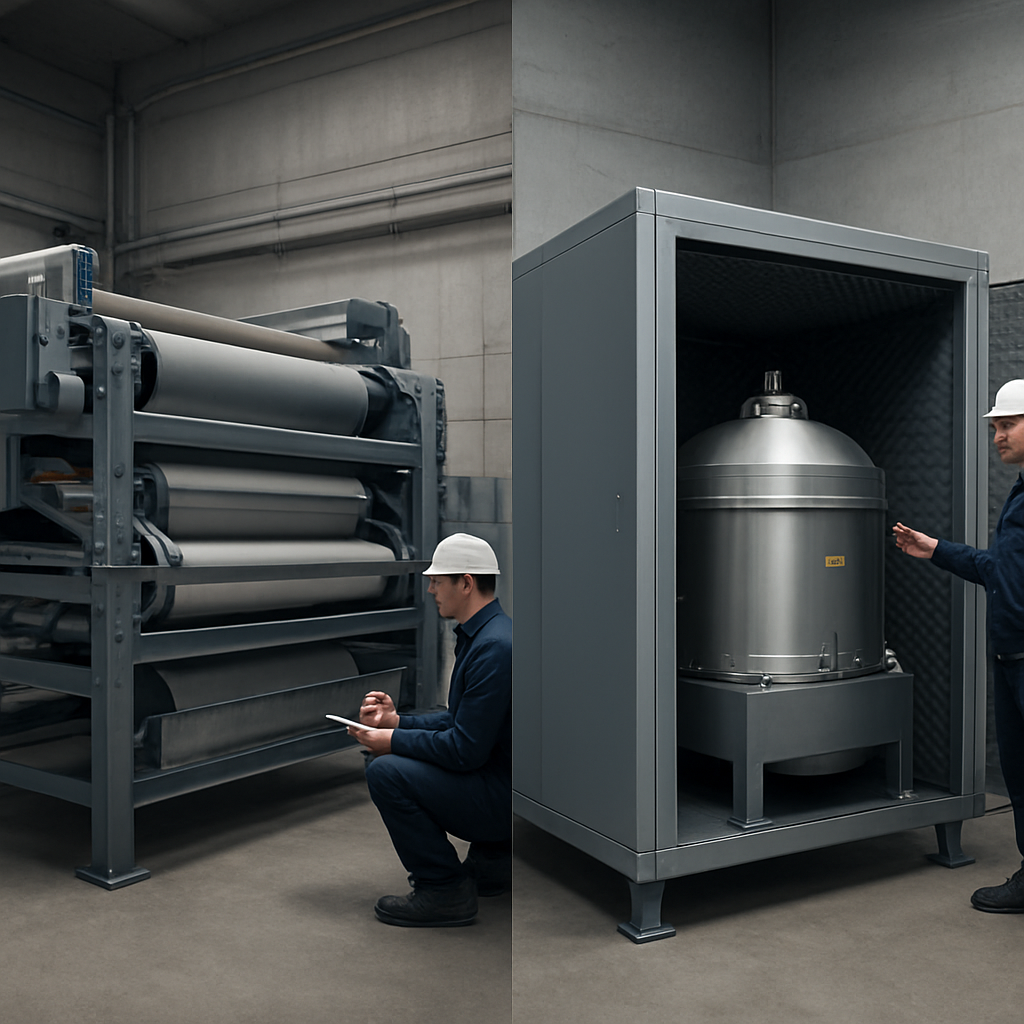
When choosing how to cut sludge volumes and disposal costs, the belt press vs centrifuge sludge dewatering decision is one wastewater manager faces every day. This post compares belt press dewatering and centrifuge dewatering on performance, energy and operational costs, maintenance and footprint, and environmental impact to help you pick the right dewatering method for your plant.
Frequently Asked Questions
Quick answer: when comparing belt press vs centrifuge sludge dewatering, the right choice depends on whether you prioritize steady low-energy operation and simple maintenance (belt press) or higher cake dryness, smaller footprint, and better handling of compressible or difficult sludges (centrifuge). This FAQ focuses on the practical trade-offs operations teams actually face, not marketing promises.
Common operational questions
Throughput and cake dryness: centrifuges typically deliver lower sludge moisture and can handle higher instantaneous flows, while belt presses are predictable at steady, continuous loads and often use less energy per tonne. Trade-off: expect higher polymer consumption and more skilled operators with centrifuges; expect more routine mechanical upkeep and belt replacement on presses.
- Q: Which costs more over 10 years? Capital for centrifuges is higher and operational costs can be higher too; total cost depends on energy price, polymer use, and maintenance regimes.
- Q: Do centrifuges always beat belt presses on dewatering performance? Not always — centrifuges generally outperform belt presses on digested or thermally pretreated sludge, but poorly conditioned sludge can reduce that advantage.
- Q: How much polymer will I need? Centrifuges often need more precise polymer dosing; belt presses can be more forgiving but will still require optimization to hit target cake dryness.
- Q: Are there environmental or site considerations? Centrifuges have smaller footprints and lower sludge haulage volumes but consume more electricity and produce louder operation noise. Belt presses are quieter, simpler to ventilate, and easier to integrate in cramped low-skill plants.
Concrete Example: A mid-sized municipal plant switched from a single older belt press to a centrifuge after installing thermal hydrolysis. The centrifuge reduced haulage volume substantially and handled variable digester outputs, but the plant had to hire a dedicated operator and budget for polymer testing. Over two years the operational savings covered much of the higher capital outlay, but only because the plant treated thermally pretreated sludge with improved settleability.
Common mistake: teams pick based on lowest capital price and then struggle with polymer, energy, or staffing costs. If you lack trained operators or steady influent, a belt press frequently delivers more reliable uptime. If you need maximum dryness and have complex sludge, a centrifuge usually pays off but expect higher operational discipline.
- Run a pilot: test your actual sludge on both technologies or use vendor-run side-by-side trials before buying.
- Model lifecycle costs: include energy, polymer, maintenance hours, and disposal haulage over 10–15 years, not just CAPEX.
- Assess staffing and noise: confirm operator availability for centrifuge control and measure noise limits if the plant is near communities.
- Plan for polymer trials: allocate budget and time for polymer screening and ongoing optimization post-installation.