
Crane vs Henry Pratt Check Valves Equipment: Comparison & Best Fit
INTRODUCTION
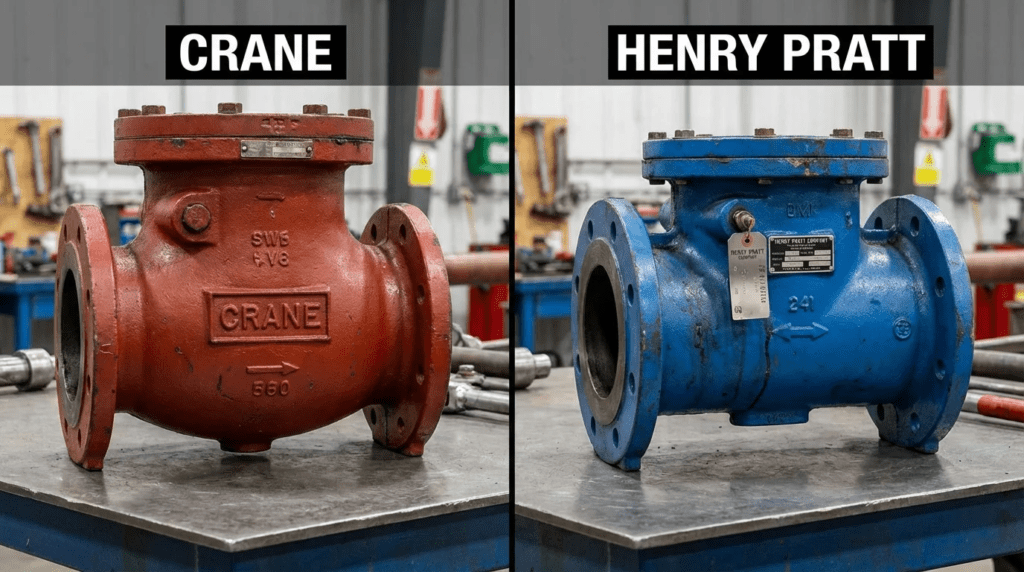
The selection of check valves in municipal water and wastewater treatment plants is often treated as an afterthought compared to the rigor applied to pump selection. However, the check valve is the primary defense against water hammer, reverse flow damage to rotating assemblies, and severe piping fatigue. When engineers evaluate Crane vs Henry Pratt Check Valves Equipment: Comparison & Best Fit, they are often comparing two different philosophies of valve design: the compact, high-performance designs often associated with Crane (specifically their Duo-Chek and Noz-Chek lines) versus the heavy-duty, AWWA-standard-centric designs associated with Henry Pratt (now part of Mueller Water Products).
This equipment is critical in high-head lift stations, distribution pump stations, and treatment process headers where flow reversal must be checked instantly to prevent surge. A poor selection here does not just mean a leaking valve; it can result in catastrophic line bursts or pump shaft shearing. While Crane typically dominates in industrial and high-pressure wafer-style applications, Pratt holds a significant installed base in municipal swing and tilted disc applications.
Understanding the nuance between these manufacturers requires looking beyond the brand name to the underlying fluid dynamics. This article assists engineers in navigating the Crane vs Henry Pratt Check Valves Equipment: Comparison & Best Fit by analyzing hydraulic performance, mechanical reliability, and lifecycle costs to ensure the specified equipment matches the unique hydraulic profile of the system.
HOW TO SELECT / SPECIFY
Proper specification requires moving beyond simple “line size” selection. The valve must be matched to the pump’s deceleration characteristics and the system’s potential for surge. The following criteria provide a framework for analyzing Crane vs Henry Pratt Check Valves Equipment: Comparison & Best Fit.
Duty Conditions & Operating Envelope
The primary driver for selection is the dynamic behavior of the system upon pump trip. Engineers must evaluate:
- Deceleration of the Liquid Column: High-head systems often see rapid flow reversal. Crane’s spring-assisted dual-plate valves (Duo-Chek) generally close faster than standard swing checks, reducing slam potential in high-dynamic systems.
- Minimum Velocity for Full Open: A common failure mode is oversizing. If the normal flow velocity is insufficient to hold the disc fully open against its stop or spring, the valve will chatter (oscillate), leading to rapid wear of hinge pins and seats.
- Pressure Class: Crane excels in high-pressure applications (ASME Class 150 to 2500), whereas Pratt’s portfolio is heavily optimized for AWWA municipal pressure classes (typically 150-250 psi).
Materials & Compatibility
Material selection dictates longevity, particularly in wastewater environments where hydrogen sulfide (H2S) attack is a concern.
- Body Materials: Pratt valves frequently utilize Ductile Iron or Cast Iron with epoxy coatings, aligning with AWWA C508 standards. Crane offers a broader range of exotic alloys (Duplex, Monel, Inconel) standard in their catalog, which may be over-specified for potable water but essential for aggressive industrial wastewater or desalination brine.
- Seat Materials: In wastewater containing grit, soft seats (Buna-N, EPDM) provide tight shutoff but are prone to abrasion. Metal-to-metal seating (common in Tilted Disc designs from both manufacturers) offers better durability but slightly higher leakage rates.
Hydraulics & Process Performance
The hydraulic efficiency varies significantly between the design types offered by these manufacturers.
- Head Loss (Cv): Pratt’s Tilted Disc check valves are renowned for low head loss due to the airfoil design of the disc. Crane’s wafer dual-plate valves have a central rib that obstructs flow slightly more, creating higher head loss, though their Nozzle Check (Noz-Chek) design offers excellent pressure recovery.
- Non-Slam Characteristics: “Non-slam” is not a binary feature; it is a relationship between valve closing speed and system reversal time. Crane’s spring-loaded dual plates are inherently “non-slam” because they close before flow reverses. Pratt swing checks may require external levers and weights or air cushions to achieve similar non-slam performance.
Installation Environment & Constructability
Space constraints often dictate the winner in the Crane vs Henry Pratt Check Valves Equipment: Comparison & Best Fit analysis.
- Laying Length: Crane’s wafer-style valves (Duo-Chek) fit between flanges and require a fraction of the space of a conventional flanged swing check. This is critical in retrofits or crowded dry wells.
- Weight: A 24-inch wafer check valve might weigh 500 lbs, whereas a 24-inch flanged swing check can exceed 2,000 lbs. This impacts structural support requirements and the need for overhead cranes during installation.
- Orientation: Most dual-plate valves can be installed in vertical flow-up or horizontal positions easily. Swing checks in vertical lines are generally discouraged unless specifically designed for it (risk of solids settling on the seat).
Reliability, Redundancy & Failure Modes
Reliability profiles differ based on the mechanical complexity.
- Hinge Pin Wear: Both designs rely on hinge pins. In un-dampened swing checks (Pratt style), constant flutter wears the pin oval, leading to misalignment and leakage. In dual-plate checks (Crane style), the springs are the wear component; if a spring breaks, one plate may drag.
- Solids Handling: For raw sewage, the unobstructed flow path of a Pratt swing check (or ball check) is superior. The central rib of a Crane dual-plate valve can catch rags and “rag-up,” preventing closure.
Maintainability, Safety & Access
Maintenance philosophy varies by plant size and union requirements.
- Internal Access: Pratt swing checks usually feature a bolted bonnet, allowing operators to replace the disc or seat without removing the valve body from the line.
- Replacement vs. Repair: Crane wafer valves typically must be removed from the line for service. Given their lower initial cost and compact nature, they are often treated as “replace” rather than “repair” items in smaller sizes (< 12 inches).
Lifecycle Cost Drivers
The Total Cost of Ownership (TCO) analysis involves energy and maintenance.
- Energy Cost: Over a 20-year lifecycle, the head loss across a valve can cost more in pumping energy than the valve itself. Pratt’s Tilted Disc valves often justify their higher CAPEX through OPEX energy savings.
- Installation Cost: Crane’s lighter weight reduces shipping costs and simplifies installation labor, lowering initial CAPEX.
COMPARISON TABLES
The following tables provide a direct comparison to assist in the Crane vs Henry Pratt Check Valves Equipment: Comparison & Best Fit decision-making process. These tables distinguish between the manufacturers’ primary design philosophies.
| Manufacturer / Brand Focus | Primary Strengths | Key Product Lines | Limitations / Considerations | Typical Maintenance Profile |
|---|---|---|---|---|
| Crane (Crane Co.) Focus: Industrial, Compact, High Pressure |
– Extremely compact (wafer style) – Fast closure (spring-assisted) – High pressure ratings available – Broad alloy selection |
– Duo-Chek: Dual plate wafer – Noz-Chek: Non-slam nozzle – Uni-Chek: Single plate wafer |
– Solids Handling: Poor. Central stem/plate catches rags (ragging). – Head Loss: Higher than tilted disc due to obstruction. – Repair: Must remove from line to service. |
Low frequency, but typically requires unit replacement or removal for shop refurbishment. Spring fatigue is primary failure mode. |
| Henry Pratt (Mueller) Focus: Municipal, AWWA, Durability |
– Full bore flow (Swing/Ball) – Extremely low head loss (Tilted Disc) – Top-entry maintenance – Superior solids handling |
– Rubber Flapper: Swing check – Tilted Disc: High efficiency – Ball Check: Wastewater specialty |
– Footprint: Large and heavy. – Cost: Higher initial CAPEX for Tilted Disc. – Slam: Standard swing checks require external cushions/weights to prevent slam. |
Moderate frequency (greasing external hinges). Internal parts replaceable inline (bonnet access). Hinge pin wear is primary failure mode. |
| Application Scenario | Crane Best Fit (Dual Plate/Nozzle) | Pratt Best Fit (Swing/Tilt/Ball) | Critical Decision Factor |
|---|---|---|---|
| Clean Water Distribution (High Volume, Constant Speed) |
Good fit for tight spaces; economical. | Best Fit: Tilted Disc. Energy savings from low head loss outweigh initial cost. | Energy efficiency (Head Loss). |
| Raw Sewage / Wastewater (High Solids/Rags) |
Avoid: Risk of ragging on central post. | Best Fit: Ball Check or Swing Check with external lever. | Clog resistance (Passage diameter). |
| High Head / Water Hammer Risk (Vertical Lift, fast reversal) |
Best Fit: Nozzle Check or High-Performance Dual Plate (fast closure). | Good Fit: Tilted Disc with dashpot/cushioning. | Dynamic response (Closure speed). |
| Retrofit / Limited Space (Vaults, Dry Wells) |
Best Fit: Wafer style fits between existing flanges easily. | Difficult: Requires spool piece removal and significant support modifications. | Laying length and weight. |
ENGINEER & OPERATOR FIELD NOTES
Real-world experience often diverges from catalog data. The following notes are compiled from field observations regarding Crane vs Henry Pratt Check Valves Equipment: Comparison & Best Fit.
Commissioning & Acceptance Testing
During the Factory Acceptance Test (FAT) and Site Acceptance Test (SAT), specific attention must be paid to the check valve’s acoustic signature.
- The “Thud” Test: During pump shutdown, a properly selected check valve should seat quietly. A loud metallic “bang” indicates the valve is closing after flow reversal has begun, amplifying the surge pressure. This is common in un-cushioned swing checks (Pratt type) if not properly adjusted.
- Low Flow Chatter: Run the pump at its minimum operating point on the VFD curve. Place a mechanics stethoscope on the valve body. A rhythmic clicking or tapping indicates the disc is not fully stable. This is a common specification mistake where the valve is sized to the pipe rather than the flow.
Common Specification Mistakes
One of the most frequent errors in specifications is the “copy-paste” of legacy requirements.
- Specifying “Swing Check” Universally: Engineers often default to “AWWA C508 Swing Check” for all applications. For high-head lift stations, this is often the wrong choice, leading to severe water hammer. A Tilted Disc (Pratt) or Spring-Assisted Dual Plate (Crane) should be specified for high-dynamic systems.
- Ignoring Cracking Pressure: In gravity flow or low-head applications, the spring strength in a Crane Duo-Chek matters. If the spring is too strong, the head loss will be excessive. If too weak, it won’t close fast enough.
O&M Burden & Strategy
- Pratt (Swing/Tilt): Maintenance focuses on external levers, weights, and dashpots. The packing glands on the hinge pins must be inspected for leaks. If the valve has an oil cushion, oil levels must be checked monthly.
- Crane (Wafer): These are generally “fit and forget” until failure. There are no external glands to leak. However, because they are enclosed, operators cannot visually verify position. Diagnostics rely entirely on downstream pressure gauges and auditory checks.
Troubleshooting Guide
- Symptom: Severe Water Hammer.
- Pratt Swing: The lever weight may be incorrectly positioned, or the dashpot air/oil cushion is clogged/empty.
- Crane Dual Plate: The springs may have fatigued, causing delayed closure. Alternatively, the valve is oversized, and the plates were never fully open, leading to instability.
- Symptom: Valve Chatter.
- Root Cause: Flow velocity is insufficient to keep the disc against the stop.
- Fix: Verify if the pump is running too slow (VFD). If the hydraulic design is fixed, the valve may need to be replaced with a smaller size or a different style (e.g., changing from swing to a lighter spring dual-plate).
DESIGN DETAILS / CALCULATIONS
When engineering a solution involving Crane vs Henry Pratt Check Valves Equipment: Comparison & Best Fit, quantitative analysis is required.
Sizing Logic & Methodology
Valve sizing should follow this logic, rather than matching line size:
- Determine Minimum flow: Identify the lowest flow rate the pump will deliver (check VFD minimum speed).
- Calculate Velocity: $V = Q / A$. Calculate fluid velocity at this minimum flow.
- Check Min Velocity Thresholds:
- Swing Check (Pratt): Typically requires 6-8 ft/s to hold fully open.
- Tilted Disc (Pratt): Typically requires 4-6 ft/s.
- Dual Plate (Crane): Variable based on spring selection, but often stable at lower velocities (3-5 ft/s) if sprung correctly.
- Calculate Cv (Flow Coefficient): Ensure that at maximum flow, the head loss through the valve does not push the pump back on its curve significantly.
Formula: $Delta P = SG times (Q / Cv)^2$
Specification Checklist
To ensure a robust procurement, include the following in the specification:
- Closure Speed Characterization: Require the manufacturer to provide curves showing reverse velocity vs. system deceleration.
- Seat Testing: Specify testing per AWWA C508 (Swing) or API 598 (Industrial/Wafer). API 598 generally has stricter leakage allowances.
- Materials: Explicitly state “316 Stainless Steel Springs” for dual plate valves to prevent chloride stress corrosion cracking, even in fresh water.
- Body Marking: Direction of flow must be cast into the body, not just painted on.
Standards & Compliance
- AWWA C508: Swing-Check Valves for Waterworks Service. (Pratt stronghold).
- AWWA C518: Dual-Plate Check Valves for Waterworks Service. (Crane/Stockham alignment).
- NSF 61/372: Mandatory for all potable water contact components (Lead-free).
FAQ SECTION
What is the main difference between Crane Duo-Chek and Pratt Swing Check valves?
The primary difference lies in the design configuration and application focus. The Crane Duo-Chek is a wafer-style, dual-plate valve utilizing springs to assist closure, making it compact, fast-closing, and ideal for high-pressure or space-constrained clean water applications. The Pratt Swing Check is a heavy-duty, full-body valve often equipped with external levers and weights, designed for AWWA municipal specifications, superior solids handling in wastewater, and inline maintainability.
How do you select between Crane and Pratt for wastewater applications?
For wastewater containing solids or rags, Henry Pratt (or similar AWWA swing/ball check designs) is generally the superior choice. The unobstructed flow path prevents clogging. Crane’s dual-plate valves have a central hinge post that catches stringy materials (“ragging”), which can prevent the valve from closing or opening. Crane valves should generally be reserved for final effluent or clean water service, while Pratt is best for raw influent.
Which valve type offers better protection against water hammer?
Water hammer protection depends on the system dynamics. For systems with rapid flow reversal (high head, steep pipe gradient), Crane’s spring-assisted Duo-Chek or Nozzle Check valves are often superior because they close before flow reverses, eliminating the “slam.” Pratt’s Tilted Disc check valves are also excellent for this but may require dashpots. Standard swing checks are the most prone to slamming unless equipped with properly tuned air/oil cushions.
What is the typical lifespan of these check valves?
In clean water service, both Crane and Henry Pratt valves can last 20-30 years with proper maintenance. However, the wear components differ. Pratt swing checks may require hinge pin packing adjustments or periodic disc replacement (every 10-15 years). Crane dual-plate valves may require spring replacement if they fatigue (every 7-10 years) or complete unit replacement if the body seat wears, as they are harder to repair in the field.
Why is valve chatter a problem and how does it relate to brand selection?
Valve chatter occurs when the flow velocity is insufficient to keep the valve disc fully open against the stop or spring force. This causes the disc to oscillate, destroying the hinge pins and seats. This is not necessarily a brand fault but a sizing fault. However, Crane’s dual-plate valves generally tolerate lower velocities better than standard un-weighted swing checks due to the aerodynamic lift on the plates, provided the correct spring torque is selected.
CONCLUSION
KEY TAKEAWAYS
- Application Rules: Use Pratt (Swing/Ball) for raw wastewater and solids. Use Crane (Wafer/Nozzle) or Pratt (Tilted Disc) for clean water, high-pressure, or space-constrained headers.
- Surge Control: Crane’s spring-assisted closure is inherently better at preventing slam in high-dynamic systems without external accessories. Pratt requires dashpots/cushions to match this performance.
- Sizing Matters: Do not size purely by line size. Ensure minimum velocity is met to prevent chatter (typically >5 ft/s).
- Maintenance Access: Pratt allows top-entry inline repair. Crane wafer valves usually require removal from the piping for service.
- Energy Efficiency: Pratt Tilted Disc valves generally offer the lowest lifecycle energy cost (lowest Cv).
The decision in the Crane vs Henry Pratt Check Valves Equipment: Comparison & Best Fit debate is rarely about which manufacturer is “better” in the abstract, but rather which design philosophy aligns with the specific hydraulic and physical constraints of the project. Crane provides a solution that maximizes space, handles high pressures, and mitigates surge through fast, spring-assisted closure. Henry Pratt provides the robustness required for municipal specifications, the pass-through capability for solids, and the inline maintainability preferred by municipal operations teams.
For the design engineer, the critical path involves calculating the system deceleration and comparing it to the valve’s reverse velocity characteristics. For the operator, the focus is on ease of access and failure modes. By aligning the equipment selection with the specific fluid type (clean vs. wastewater) and the surge potential, engineers can ensure a reliable installation that protects the facility’s most expensive assets: the pumps and piping infrastructure.