
- Home
- Water
- Water Quality: Essential Insights and Health Impacts
- Monitoring: Essential Strategies for Enhanced Data Security
- Contaminants and Contamination: Understanding Their Sources and Impact
- Standards: Elevating Professional and Industry Benchmarks
- FAQs: Comprehensive Answers to Common Questions
- Physical Water Treatment: Modern Techniques and Benefits
- Activated Carbon Filtration in Water: Essential for Clean, Safe Drinking Supplies
- Ultraviolet (UV) Disinfection in Water: Ensuring Safe and Clean Drinking Water
- Sand Filtration in Water: A Comprehensive Guide to Clean Drinking Solutions
- Ceramic Filtration: Effective Solutions for Clean Water
- Gravity-Based Filtration: Enhancing Water Purity with Simple Technology
- Membrane Filtration in Water: Improving Purity and Efficiency
- Sedimentation: Causes, Impacts, and Prevention Strategies
- Chemical Water Treatment: Essential Methods for Safe and Clean Water
- Coagulation and Flocculation: Essential Techniques for Water Treatment
- pH Adjustment: Essential Techniques for Maintaining Optimal Water Quality
- Chlorination: Essential Methods for Safe Water Treatment
- Ion Exchange: Essential Mechanism for Water Purification
- Ozonation: Advanced Water Purification Method Explained
- Biological Filtration: Enhancing Water Quality Through Natural Processes
- Water Supply: Ensuring Sustainable Future Solutions
- Water Conservation: Essential Strategies for Sustainable Living
- Water Management: Strategies for Sustainable Usage
- Water Quality: Essential Insights and Health Impacts
- Wastewater
- Wastewater Treatment
- Preliminary Treatment
- Screening
- Bar Screening
- Band Screen Wastewater Solutions: Effective Fine Screening Techniques
- Basket Screen Wastewater Solutions: Enhancing Treatment Efficiency
- Drum Screening
- Fine Screens in Wastewater Treatment: Enhancing Solid Removal Efficiency
- Microscreens in Wastewater Treatment: Enhancing Filtration Efficiency
- Parabolic Screen in Wastewater Treatment: Enhancing Solid-Liquid Separation Efficiency
- Static Screen in Wastewater Treatment: Efficiency and Application Overview
- Climber Screens in Wastewater Treatment: Enhancing Solid Waste Removal
- Step Screen in Wastewater Treatment: Enhancing Solid-Liquid Separation Efficiency
- Comminution in Wastewater Treatment: Enhancing Efficiency and Process Reliability
- Grit Removal in Wastewater: Essential Processes and Best Practices
- Screening
- Primary Treatment in Wastewater: The First Step in Pollution Control
- Sedimentation in Wastewater Treatment: The Efficient Separation Strategy
- Discrete Settling in Wastewater: Understanding the Separation Process
- Flocculent Settling in Wastewater: Understanding the Process and Benefits
- Zone Settling in Wastewater Treatment Processes: Understanding the Mechanism
- Compression Settling in Wastewater: Fundamental Principles and Management Strategies
- Primary Clarifiers in Wastewater: Understanding Their Role in Treatment Processes
- Circular Primary Clarifier in Wastewater Treatment: Essential Functions and Design Principles
- Parallel Plate Settlers in Wastewater Treatment: Efficiency and Design Principles
- Tube Settlers in Wastewater Treatment: Enhancing Clarification Efficiency
- Offset Clarifiers in Wastewater Treatment: Enhancing Clarity and Efficiency
- Rectangular Primary Clarifier in Wastewater Treatment: Efficiency and Design Principles
- Dissolved Air Flotation (DAF) in Wastewater: Enhancing Treatment Efficiency
- Full Flow DAF Systems: Revolutionizing Wastewater Treatment Efficiency
- Partial Flow DAF Systems: Advancing Wastewater Treatment Efficiency
- Recycle Flow DAF Systems: Enhancing Wastewater Treatment Efficiency
- Packed Column DAF: Advancing Water Treatment Efficiency
- Subsurface Release DAF Systems: Innovations in Wastewater Treatment
- Dispersed Release DAF Technology: Revolutionizing Wastewater Treatment
- Sedimentation in Wastewater Treatment: The Efficient Separation Strategy
- Secondary Treatment in Wastewater: Understanding the Biological Process
- Biological Treatment in Wastewater: Harnessing Microorganisms for Clean Water Solutions
- Rotating Biological Contactors: An Overview of Wastewater Treatment Efficiency
- Membrane Bioreactors (MBR): Advancing Wastewater Treatment Technology
- Anaerobic Digestion: Effective Waste Management for Renewable Energy
- Anaerobic Digestion in Wastewater Treatment: Optimizing Energy Recovery
- Lagoons in Wastewater Treatment: Sustainable Natural Solutions
- Constructed Wetlands in Wastewater Treatment: Nature’s Solution for Water Purification
- Activated Sludge Process in Wastewater Treatment: An Efficient Biological Methodology
- Trickling Filters in Wastewater Treatment: An Efficient Biofiltration Solution
- Sequencing Batch Reactors: Advancements in Wastewater Treatment Technology
- Aeration in Wastewater Treatment: Enhancing System Efficiency and Water Quality
- Surface Aerators in Wastewater Treatment: Optimization and Efficiency
- Submerged Diffuser Systems in Wastewater Treatment: Enhancing Effluent Disposal Efficiency
- Vertical Loop Reactors in Wastewater Treatment: Enhancing Efficiency and Sustainability
- Small Bubble Aerators in Wastewater: Enhancing Treatment Efficiency
- Jet Aerators in Wastewater Treatment: Enhancing Efficiency and Aeration Performance
- Cascade Aerators in Wastewater Treatment: Enhancing Oxygenation Efficiency
- Secondary Clarification in Wastewater: Enhancing Effluent Quality
- Circular Clarifiers in Wastewater: Essential Components for Water Treatment Efficiency
- Rectangular Clarifiers in Wastewater Treatment: Efficiency and Design Essentials
- Hopper Bottom Clarifiers in Wastewater Treatment: Efficiency and Design Essentials
- Solids Contact Clarifiers: Enhancing Wastewater Treatment Efficiency
- Lamella Clarifiers in Wastewater Treatment: Efficiency and Design Essentials
- Biological Treatment in Wastewater: Harnessing Microorganisms for Clean Water Solutions
- Tertiary Treatment in Wastewater: Ensuring Water Quality and Environmental Safety
- Advanced Treatment in Wastewater: Emerging Technologies and Methods
- UV Disinfection in Wastewater: Effective Strategies for Pathogen Reduction
- Low Pressure UV Systems in Wastewater Treatment: Efficiency and Advantages
- Medium Pressure (MP) UV Systems in Wastewater Treatment: Efficiency and Applications
- Amalgam UV Systems in Wastewater Treatment: Advancements and Efficiency
- Pulsed UV Systems in Wastewater Treatment: Revolutionizing Disinfection Processes
- Smart UV Control in Wastewater Treatment: Enhancing Efficiency and Safety
- Light-Emitting Diode (LED) UV Systems in Wastewater Treatment: Efficiency and Applications
- Ozonation in Wastewater Treatment: Understanding the Purification Process
- Fixed Bed Ozone Reactors in Wastewater Treatment: Efficiency and Application
- Ozone Retention Tanks in Wastewater Treatment: Enhancing Water Quality and Safety
- Sidestream Ozone Injection in Wastewater: Enhancing Treatment Efficiency and Water Quality
- Ozone Laundry Systems in Wastewater Treatment: Enhancing Efficiency and Sustainability
- Vacuum Degasification in Wastewater Treatment: Principles and Applications
- Bubble Diffuser Contactors in Wastewater Treatment: Efficiency and Application
- Ozone Generators in Wastewater Treatment: Efficiency and Applications
- Advanced Oxidation Processes in Wastewater Treatment: Efficiency and Innovation
- Ozonation in Wastewater Treatment: Efficient Disinfection and Organic Removal
- UV/H2O2 in Wastewater Treatment: Harnessing Advanced Oxidation Processes
- Fenton Process in Wastewater Treatment: Efficiency and Application
- Wet Air Oxidation in Wastewater Treatment: Efficiency and Process Insights
- Photocatalysis in Wastewater Treatment: Innovative Approaches for Purification
- Electron Beam Irradiation in Wastewater Treatment: Unlocking Advanced Purification Methods
- Ultrasonic Irradiation in Wastewater Treatment: Efficiency and Applications
- Ion Exchange: Essential Mechanism for Water Purification
- Cation Exchange in Wastewater Treatment: Principles and Applications
- Anion Exchange in Wastewater Treatment: Understanding the Process for Cleaner Effluents
- Ammonia Exchange in Wastewater: Essential Processes and Technologies
- Boron Selective Resins in Wastewater Treatment: Advances and Applications
- Mixed Bed Ion Exchange in Wastewater Treatment: Efficiency and Application
- Electrochemical Ion Exchange in Wastewater: Enhancing Treatment Efficiency
- UV Disinfection in Wastewater: Effective Strategies for Pathogen Reduction
- Sludge Treatment in Wastewater: Enhancing Efficiency and Reducing Environmental Impact
- Thickening in Wastewater Treatment: Optimizing Sludge Management
- Gravity Thickeners in Wastewater Treatment: Enhancing Efficiency and Sustainability
- Dissolved Air Flotation (DAF) in Wastewater: Enhancing Treatment Efficiency
- Rotary Drum Thickeners in Wastewater Treatment: Maximizing Efficiency and Cost-Effectiveness
- Gravity Belt Thickeners in Wastewater Treatment: Enhancing Efficiency and Sustainability
- Centrifuges in Wastewater Treatment: Enhancing Efficiency and Purity
- Cloth Media Filters in Wastewater Treatment: Efficiency and Applications
- Screw Presses in Wastewater Treatment: Efficiency and Applications
- Digestion in Wastewater Treatment: Processes and Benefits
- Autothermal Thermophilic Aerobic Digestion (ATAD): Enhancing Wastewater Treatment Efficiency
- Composting in Wastewater Treatment: Enhancing Sustainability Practices
- Alkaline Stabilization in Wastewater Treatment: Enhancing Process Efficiency and Safety
- Thermal Hydrolysis in Wastewater Treatment: Enhancing Sludge Management Efficiency
- Microwave Irradiation in Wastewater Treatment: An Innovative Approach
- Anaerobic Digestion in Wastewater Treatment: Optimizing Energy Recovery
- Aerobic Digestion in Wastewater Treatment: Efficiency and Process Insights
- Dewatering in Wastewater Treatment: Essential Methods and Benefits
- Belt Filter Presses in Wastewater Treatment: Maximizing Efficiency and Performance
- Plate and Frame Presses in Wastewater Treatment: Efficiency and Application
- Rotary Fan Presses in Wastewater Treatment: Efficient Sludge Dewatering Solutions
- Drying Beds in Wastewater Treatment: An Overview of Sludge Management Techniques
- Reed Beds in Wastewater Treatment: Sustainable Purification Methods
- Centrifuges in Wastewater Treatment: Enhancing Efficiency and Purity
- Thickening in Wastewater Treatment: Optimizing Sludge Management
- Reuse and Disposal: Strategies for Sustainable Waste Management
- Non-Potable Water in Wastewater: Sources, Risks, and Treatment Methods
- Graywater in Wastewater Treatment: Sustainable Reuse and Management Practices
- Blackwater in Wastewater Treatment: Understanding the Challenges and Solutions
- Stormwater in Wastewater Treatment: Managing Runoff Contamination Risks
- Industrial Wastewater Management: Strategies for Sustainable Treatment and Reuse
- Agricultural Wastewater Management: Challenges and Solutions
- Non-Potable Water in Wastewater: Sources, Risks, and Treatment Methods
- Industrial Wastewater Management: Strategies for Sustainable Treatment and Reuse
- Municipal Wastewater Management: Strategies for Sustainable Urban Water Treatment
- Treatment Technologies in Wastewater: Advancements in Modern Medical Therapies
- Preliminary Treatment
- Wastewater Management Strategies for Sustainable Urban Environments
- Wastewater Disposal Strategies: Best Practices for Environmental Safety
- Wastewater Treatment
- US Wastewater Plants
- Online Calculators
- Sodium Hypochlorite Dosing Calculation
- Equalization (EQ) Tank Sizing Calculator
- Contact Time Calculator
- Flow Conversion & Pump Reference Calculator
- Aeration / Energy Estimation Calculator
- Clarifier Surface Loading Calculator
- Sludge Production / Solids Calculator
- Chemical Storage Volume Calculator
- Centrate Sidestream Load Impact Calculator
- Our Services
- Newsletter Signup
- Blog
Diffused Aeration: Enhancing Water Quality Through Efficient Oxygen Transfer
- Aeration
-
Nov 14
- Share post
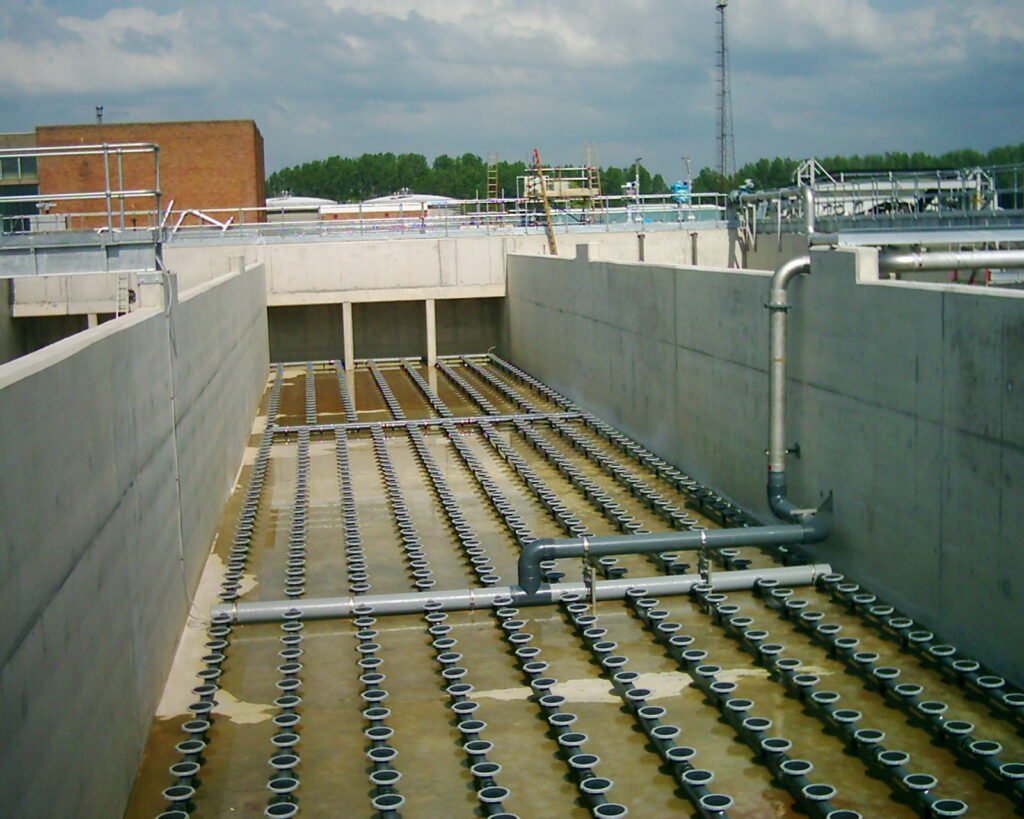
Diffused Aeration: Principles, Systems, and Performance in Wastewater Treatment
Diffused aeration is a critical process widely used in wastewater treatment and other applications requiring efficient oxygen transfer. This technique uses fine bubbles to introduce air or oxygen into water, promoting effective degradation of organic materials.
Understanding how diffused aeration works—and the systems that support it—helps facilities optimize performance and improve water quality. With evolving environmental regulations, advanced aeration technologies are increasingly important for compliance and sustainability.
Key Takeaways
- Diffused aeration improves oxygen transfer efficiency in wastewater treatment.
- Multiple system types exist to match specific treatment needs.
- Proper design and maintenance are essential for long-term performance.
Basics of Diffused Aeration
Diffused aeration enhances water quality by introducing air into water to raise dissolved oxygen levels and support biological treatment processes.
Principles of Aeration
Diffused aeration works by injecting air through aeration diffusers positioned within the water. Common diffuser types include:
- Fine Bubble Diffusers: Produce small bubbles with high surface area, delivering excellent oxygen transfer efficiency
- Coarse Bubble Diffusers: Generate larger bubbles that provide strong mixing but lower oxygen transfer efficiency
As air bubbles rise, they create turbulence that distributes oxygen throughout the water, supporting aerobic microorganisms responsible for breaking down organic matter.
Role in Wastewater Treatment
In wastewater treatment, diffused aeration is central to the activated sludge process. It supports microbial activity that removes biological oxygen demand (BOD) from sewage.
Well-designed aeration systems can remove up to 95% of BOD, significantly improving effluent quality. Selecting appropriate diffuser types based on water depth, application, and oxygen demand is key to maximizing efficiency.
Types of Diffused Aeration Systems
Diffused aeration systems generally fall into two main categories: fine bubble and coarse bubble diffusers.
Fine Bubble Diffusers
Fine bubble diffusers release tiny air bubbles that rise slowly, maximizing oxygen transfer through increased surface area.
They are commonly manufactured from membrane or ceramic materials and are widely used in aeration tanks due to their high efficiency and low energy consumption.
- High Efficiency: Achieves elevated dissolved oxygen levels
- Reduced Energy Use: Lower power consumption per unit of oxygen transferred
- Versatility: Suitable for municipal, industrial, and aquaculture systems
Coarse Bubble Diffusers
Coarse bubble diffusers generate larger bubbles, resulting in lower oxygen transfer efficiency but stronger mixing.
They are often constructed from durable plastic or rubber and perform well in deeper water bodies where mixing and circulation are primary objectives.
- Low Headloss: Performs well under variable water levels
- Durability: Handles debris and reduces clogging risk
- Aeration Zones: Ideal for stormwater ponds and mixing applications
Design and Engineering
Effective diffused aeration system design ensures reliable oxygen delivery, manageable energy use, and simplified maintenance.
Diffuser Configuration
Diffuser configuration refers to diffuser type, material, and placement. Fine bubble diffusers may use membrane or ceramic materials with varying pore sizes.
- Submerged Diffusers: Installed at tank bottoms to maximize contact time
- Suspended Diffusers: Mounted at adjustable depths for flexible design
Configuration directly influences oxygen transfer efficiency and overall system energy demand.
System Layouts and Components
System layout includes diffuser placement, piping, and air supply equipment.
- Blowers: Supply air at required pressure and volume
- Piping: Distributes air while minimizing pressure loss
Efficient layouts consider tank geometry, depth, and flow patterns to ensure uniform air distribution and effective treatment.
Aeration Efficiency
Aeration efficiency determines how effectively oxygen is transferred from air into water and directly affects treatment outcomes and operating costs.
Oxygen Transfer Rates
Oxygen transfer rate (OTR) measures how efficiently oxygen dissolves into wastewater. Diffused aeration systems typically achieve higher OTR than surface aerators.
- Bubble Size: Smaller bubbles increase surface area
- Water Depth: Greater depth improves contact time
- Temperature: Warmer water holds less dissolved oxygen
High-performance systems often target OTR values exceeding 30% to sustain biological activity.
Comparison with Surface Aerators
Surface aerators introduce oxygen through surface agitation but are less effective in deeper applications.
- Lower energy use per BOD removed
- Improved odor control
- More stable temperature profiles
Studies show that diffused aeration offers superior efficiency for large-scale wastewater treatment systems.
Maintenance and Operational Considerations
Proper maintenance and proactive operation are essential for sustaining diffused aeration system performance.
Cleaning and Maintenance
Routine cleaning prevents clogging caused by debris, algae, or sediment buildup.
- Inspect Diffusers: Check for fouling or damage
- Clean Components: Remove buildup using approved methods
- Monitor Equipment: Inspect blowers and piping regularly
Maintaining adequate dissolved oxygen levels helps identify early signs of system inefficiency.
Operational Challenges
Operational challenges may arise due to variable water levels, temperature changes, and energy demands.
- Pressure fluctuations: Can cause uneven oxygen distribution
- Temperature effects: Higher temperatures reduce oxygen solubility
- Energy costs: Continuous aeration requires close monitoring
Proactive management ensures reliable performance and long-term sustainability.
Aeration / Energy Estimation Calculator
Planning-level estimation of blower power and energy use based on basin volume and oxygen demand.
Total Oxygen Required: lb/day
Estimated Blower Power: hp
Estimated Electrical Load: kW
Daily Energy Use: kWh/day
Annual Energy Use: kWh/year
Power per Blower: hp
Suppliers and Market
The diffused aeration market includes a wide range of suppliers offering equipment designed to improve wastewater treatment efficiency. Understanding supplier selection criteria and market trends helps facilities make informed investments.
Selecting Suppliers
When choosing aeration diffuser suppliers, facilities should evaluate product quality, service support, and cost-effectiveness.
- Product Quality: Durable materials improve lifespan and efficiency
- Customer Support: Assistance with installation and maintenance
- Cost-Effectiveness: Competitive pricing without sacrificing performance
Suppliers with proven industry experience, certifications, and positive reviews are typically more reliable partners.
Market Trends
The diffused aeration market continues to evolve toward efficiency and sustainability.
- Increased Automation: Smart controls optimize aeration rates
- Eco-Friendly Materials: Reduced environmental impact
- Innovative Designs: Improved oxygen transfer and reduced maintenance
Keeping pace with these trends enables facilities to adopt more efficient and future-ready systems.
Case Studies and Applications
Municipal Wastewater Treatment
Municipal plants frequently deploy fine bubble diffusers to enhance oxygen transfer efficiency.
A 500,000-gallon-per-day treatment facility achieved a 30% reduction in energy consumption after upgrading to diffused aeration, while also improving contaminant removal rates.
Industrial Applications
Industrial facilities benefit from modular diffused aeration systems tailored to specific process requirements.
A chemical processing plant increased treatment capacity by 20% while lowering energy costs through optimized aeration design.
Future Developments
Future advancements in diffused aeration focus on efficiency, automation, and sustainability.
- Advanced diffuser materials for improved oxygen transfer
- Smart control systems using real-time data
- Integration of renewable energy sources
- Enhanced sensor technologies for system optimization
As these innovations mature, diffused aeration will continue to play a vital role in modern water treatment practices.
- Activated Sludge Process
- aeration
- Aeration Efficiency
- Aeration Systems
- Aeration Technologies
- Blowers
- challenge
- changes
- Coarse Bubble Diffusers
- Design and Engineering
- Diffused Aeration
- Environmental Regulations
- Fine Bubble Diffusers
- Industrial Applications
- management
- methods
- Monitoring
- Municipal Wastewater Treatment
- Oxygen Transfer
- supply
- Sustainability
- sustainable
- treatment
- Wastewater Management
- wastewater treatment
- water
- water management
- water quality
- water treatment