
Dissolved Air Flotation: Optimizing Solids Removal in Primary and Tertiary Treatment
Dissolved Air Flotation: Optimizing Solids Removal in Primary and Tertiary Treatment
Dissolved air flotation for solids removal is the practical choice when clarifiers struggle with low-density, hydrophobic, or algal solids, but only when the system is designed and tuned correctly. This how-to guide gives municipal decision makers, design engineers, and plant operators a field-tested roadmap for selecting and specifying DAF equipment, setting recycle and saturation parameters, optimizing coagulation and polymer dosing, and troubleshooting common issues. Expect concrete design ranges, measurement-based tuning steps, and retrofit strategies you can apply on site to improve TSS, BOD, and phosphorus removal.
How DAF Captures Solids: Physics that Matter for Design
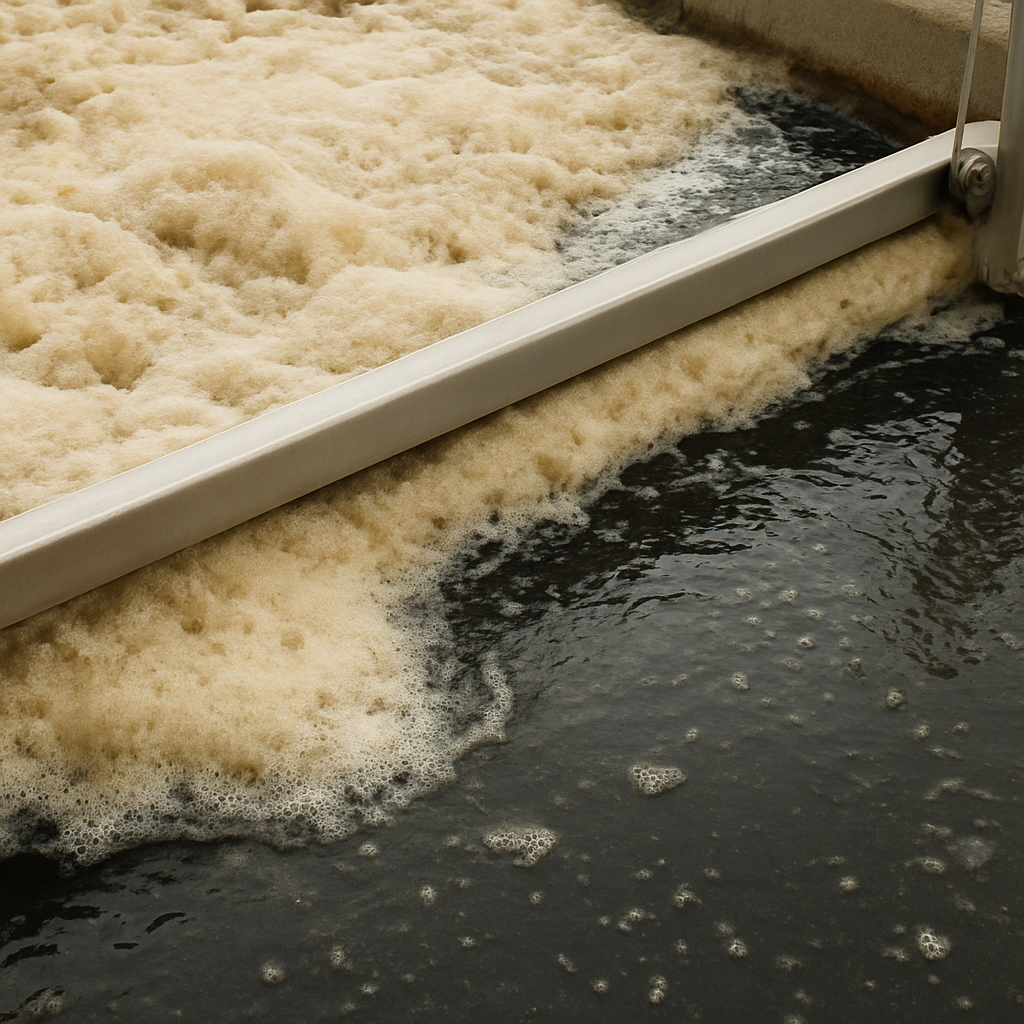
Key mechanism: DAF removes solids by generating a dense field of microbubbles that attach to flocs, convert negative or neutral buoyancy into positive buoyancy, and carry particles to the surface where a skimmer removes the float. The practical design question is not whether bubbles lift particles but how fast and reliably they do so under real plant hydraulics and chemistry.
What actually controls capture efficiency
- Bubble size distribution: smaller bubbles increase collision and attachment probability for sub-100 micron flocs, but they cost energy to produce and are sensitive to surfactants.
- Floc properties: density, porosity, and surface hydrophobicity determine whether a floc will attach and how compact the float will be; metal coagulants change floc density and attachment kinetics.
- Relative velocity (rise minus upflow): capture requires bubble-floc rise velocity to exceed hydraulic upflow; design the tank so net upward velocity allows floatation within available detention time.
- Collision and attachment efficiency: governed by Brownian motion, differential settling/ rise, and turbulent shear in the flocculation zone; chemical dosing influences this more than most teams expect.
Practical tradeoff: chasing the smallest possible microbubble is a common mistake. Very fine bubbles raise capture probability but increase saturator pressure, recycle energy, and create wetter, harder-to-dewater sludge. Match bubble size to the dominant floc size you actually generate through coagulation and flocculation.
Concrete example: Assume a working microbubble effective rise velocity of 0.005 m/s (5 mm/s) for a 50 micron bubble attached to a 50 micron floc – a conservative, field-anchored estimate. For a DAF depth of 1.2 m the theoretical rise time is 1.2 / 0.005 = 240 seconds, or 4 minutes. That means the hydraulic upflow at the inlet and the tank detention must allow at least this relative settling window for reliable capture; if upflow velocity exceeds the relative rise rate the float layer will not form effectively.
What teams miss in practice: many operators set a recycle ratio and saturator pressure by vendor spec and leave it. In reality you should tune recycle ratio to bubble flux needed for the measured influent TSS and floc size distribution, then confirm with jar tests and short pilots. Recycle ratio and pressure are control levers, not fixed parameters.
Design implication: tank geometry, flocculation energy, and bubble generation method must be specified together. You cannot optimize DAF performance by sizing the tank alone; you must match chemical strategy and microbubble characteristics to the influent solids.
Where to go next: pilot a candidate dissolved air flotation system and include bubble imaging or simple rise-time tests during commissioning. For practical guidance on selecting equipment and matching features to performance objectives, see the equipment guide and the EPA DAF overview at EPA DAF.
Design Parameters and Typical Ranges for Primary versus Tertiary DAF
Direct point: design targets for a dissolved air flotation for solids removal differ sharply depending on whether the unit is replacing or supplementing primary clarifiers or serving as a tertiary polisher. Treat the two tasks as distinct design problems: primary DAFs must handle high solids loads and produce compact float, while tertiary DAFs must produce very low turbidity with tight chemical control and smaller bubbles.
Typical parameter ranges (starting points)
| Parameter | Primary DAF (typical design ranges) | Tertiary DAF (typical design ranges) |
|---|---|---|
| Recycle ratio (percent) | 5–15% | 10–30% |
| Saturator pressure | 40–70 psi (2.8–4.8 bar) | 50–90 psi (3.5–6.2 bar) |
| Target microbubble size | 50–150 μm (favor larger bubbles to reduce moist sludge) | 20–60 μm (smaller for colloids and low turbidity) |
| Hydraulic surface loading (SOR) | 2–6 m3/m2·h | 1–3 m3/m2·h |
| Tank working depth | 1.0–1.8 m | 0.8–1.4 m |
| Hydraulic detention / residence window | 4–8 minutes effective rise window | 2–6 minutes (rely on higher bubble flux and chemistry) |
| Coagulant dose (typical) | 20–80 mg/L (ferric/PACl ranges; site-specific) | 10–60 mg/L (often optimized for turbidity/phosphorus) |
| Polymer dose (active) | 0.3–3 mg/L | 0.5–5 mg/L |
Practical tradeoff: pushing high saturator pressure and recycle to get ultra-fine bubbles is an expensive shortcut. It improves capture of colloids but raises energy use and produces a wetter, less compact float that drives polymer consumption and dewatering costs. In primary service, prioritize floc density through coagulant selection; in tertiary service, accept higher chemical control and finer bubbles.
- Design priority for primary DAF: maximize float compaction and continuous sludge removal; use moderate bubble flux and stronger metal coagulants to lift light organics and FOG.
- Design priority for tertiary DAF: minimize effluent turbidity and phosphorus; design for stable microbubbles, tighter coagulant control, and often higher polymer dosing to get crisp floats that skim cleanly.
Concrete example: A 40,000-population plant installed a tertiary DAF ahead of filters to control seasonal algae. Engineering set a 15–18% recycle, saturator at ~65 psi, PAC at 20 mg/L followed by 1.0 mg/L cationic polymer. The DAF stabilized seasonal turbidity spikes and allowed the plant to reduce backwash frequency on downstream filters; the team verified doses with jar tests during startup and adjusted polymer down when float compaction improved.
Judgment that matters: designers too often specify a single recycle percent and pressure in the contract and treat it as immutable. In real plants those parameters must be tunable and tied to chemical control loops. Insist on access to saturator controls, field-adjustable recycle valves, and metered coagulant/polymer feed so operators can move along the ranges above as loads and seasons change.
Chemical Strategies: Coagulation and Polymer Optimization for Consistent Solids Removal
Chemical control beats magic bubbles. In practice the choice and sequence of coagulant and polymer determine whether your dissolved air flotation for solids removal actually produces a compact float and low turbidity effluent or an oily, waterlogged scum that ruins downstream filters. Coagulants set floc density and surface chemistry; polymers control bridging and compaction. Get those two right and the flotation cell operation becomes stable across seasons and load swings.
A field-ready dosing and feed-point sequence
- Primary coagulant upstream: dose the metal coagulant into the highest-energy mixer you have so charge neutralization and initial destabilization occur quickly.
- Controlled flocculation: follow with gentle mixing in a short floc basin to grow flocs to the target size distribution; avoid destructive shear that breaks flocs back down to colloids.
- Polymer placement for compaction: feed the cationic polymer after the flocculation zone or immediately before the DAF inlet to maximize bridging and reduce float moisture; avoid feeding polymer into the high-shear mixer.
- Split dosing when needed: for surfactant-rich or variable influent, a small upstream polymer dose to aid initial bridging and a low-dose flush at the DAF inlet can stabilize performance without overusing polymer.
Tradeoff to watch: heavy metal coagulants remove phosphorus and make dense flocs, but they also acidify sludge, increase polymer demand for dewatering, and change sludge chemistry for downstream disposal. If sludge disposal costs are sensitive, budget that impact during chemical selection and include pH correction in your trial plan. Small savings on chemical purchase can become larger OPEX penalties at the dewatering stage.
Field example: At an industrial food-processing plant the team switched from intermittent alum slugging to a continuous PACl feed ahead of a short flocculator, then moved polymer feed to a point just prior to the DAF inlet. The result: visible, compact float that skimmed cleanly, a measurable drop in effluent turbidity, and the operations crew reported lower polymer consumption over the first six months as they tuned feed rates with online turbidity feedback.
What jar tests miss and what to add: standard jar tests give a first-order dose estimate but they do not recreate bubble-particle attachment dynamics or sludge consolidation behavior. Add a small continuous pilot or bench-scale saturated-recycle test to measure float dryness and SVI after polymer conditioning. Include measurements for settled cap volume and the ease of skimming — these predict real-world sludge handling costs better than turbidity alone.
Key point: use coagulant to create the floc you want, use polymer to finish compaction and dewatering; place the polymer where it sees flocs but not high shear.
Next consideration: plan dosing flexibility into your spec. Specify field-adjustable chemical feed rates, metered polymer pumps, and the ability to re-route polymer feed points during commissioning so operators can find the true operating sweet spot instead of chasing vendor defaults.
Instrumentation, Controls, and Performance Monitoring
Direct requirement: reliable dissolved air flotation for solids removal depends on instrumentation that provides actionable signals, not on more sensors. Pick measurements that change before the float layer fails and that operators can act on without guessing.
What to measure — and why it matters
Essential metrics: combine real-time and periodic data. Online turbidity and differential turbidity (influent vs effluent) are your primary control inputs; add saturator pressure, recycle flow, and recycle pump amperage for mechanical health; track polymer feed rate and coagulant dosing trends to link chemistry to performance. Alone, any single probe is misleading; together they tell a story.
- Primary KPIs: influent TSS/turbidity, effluent turbidity, percent removal (calculated), and daily sludge solids concentration
- Operational signals: saturator pressure, recycle flow rate, skimmer torque or speed, and saturator flow (to detect air leaks or fouling)
- Health indicators: pump power draw and vibration, probe fouling index (time since clean), and polymer dosing stability
Control approach: use simple, prioritized closed-loops. First loop: keep recycle flow within a band tied to a manual setpoint and alarm when outside it. Second loop: cascade polymer/coagulant dosing to a smoothed influent turbidity signal using small incremental dose changes, not step functions. Reserve PID/autotune for well-understood loops; aggressive auto-adjust can chase noise and destabilize the float.
Tradeoff to accept: more automation reduces operator workload but increases dependency on sensor integrity and on correct filtering of signals. If your turbidity probes foul daily or your polymer meter drifts, automation will make poor decisions faster. Build in manual override, easy probe cleaning access, and simple dashboards operators trust.
Concrete example: A 75,000-population plant added a dedicated effluent turbidity probe and tied polymer dosing to a 10-minute rolling average of that signal. Within two months they reduced polymer consumption by 18% and cut filter backwashes by half during seasonal algae events. They prevented false control actions by installing a daily automatic probe rinse cycle and an alarm if turbidity and pump power diverged.
Diagnostics that reveal root cause: parallel trends are powerful — rising effluent turbidity with stable coagulant feed suggests flocculation or bubble issues; rising pump current with falling recycle flow indicates partial blockages or air binding. Don’t rely on single alarms; require corroborating signatures before changing chemical strategies.
Next consideration: make instrumentation choices with maintenance reality in mind. A sophisticated bubble-imaging system is useful for pilots and troubleshooting but is a poor replacement for rugged turbidity probes and clear operational procedures for everyday control and long-term reliability.
Mechanical and Equipment Considerations: Choosing the Right DAF System
Start with the hard constraint: the mechanical layout and skimming/sludge handling options determine day-to-day operability more than the vendor's bubble-size claims. Pick a configuration that matches your solids character, rag load, and maintenance capability, not the one with the smallest footprint on paper.
Configuration tradeoffs that matter
Plate-pack versus open-basin: plate packs reduce hydraulic footprint and improve quiescent zones but create confined flow paths that bog down when ragging or FOG occur. For plants with high rag loads or seasonal FOG, an open rectangular tank or circular unit with larger clearances is easier to keep running.
Skimmer and sludge removal choices affect downstream costs. Continuous scraper systems give steady removal for primary service; air-lift or pump-sludge extraction combined with a compaction screw reduces polymer demand but adds mechanical complexity and maintenance points. If your goal is reduced sludge volume for trucking or composting, prioritize compaction performance over the lowest initial capex.
- Saturator approach: integrated skid with buffer tanks simplifies install; separate industrial saturators scale better for large plants and are easier to maintain.
- Recycle pump arrangement: specify VFDs and N+1 redundancy so you can tune recycle ratio and survive pump failures without manual bypasses.
- Materials and access: stainless contact areas or properly coated carbon steel pay off where FOG, chloride, or process acids are present; insist on access hatches and removable skimmer blades.
Real-world limitation to accept: plate-pack DAFs often carry a hidden maintenance tax. They save concrete and civil cost, but expect more frequent cleaning outages and longer dewatering troubleshooting during the first year. Budget for that service time and require FAT demonstrations showing how the vendor clears typical rag scenarios.
Concrete example: A municipal plant serving roughly 55,000 replaced aging clarifiers with a modular plate-pack DAF to free up land for development. The DAF met effluent targets and cut footprint by half, but during the first winter the team saw recurring ragging in the pack channels; the vendor retrofit included removable inspection panels and a backflush routine, which solved the issue but added two weeks of contractor service during commissioning.
Integration judgement: packaged DAF units are attractive for speed, but they limit piping and flocculation layout. If you need flexible split-feed, long flocculation basins, or specialized dewatering pairs, specify a field-built solution or insist the packaged unit include adaptable tie-ins and space for future additions.
Final operational consideration: demand saturator and recycle controls be field-adjustable and visible on your PLC. Insist on simple local overrides and clear alarms for skimmer torque, saturator pressure drift, and recycle flow deviation so operators can act before effluent quality slips. The next step is to require a short pilot or FAT that reproduces your typical ragging, FOG, and sludge-strength conditions and verifies the chosen DAF equipment under load.
Optimization and Troubleshooting Checklist Operators Can Apply Today
Straight to it: you can materially improve dissolved air flotation for solids removal with a disciplined, measurement-driven tune-up over days, not months. Start with the things that give you early, reversible wins—hydraulics, saturator health, and chemistry—in that order.
On-site tuning steps (do these in sequence)
- Flow and distribution check: confirm influent split, measure actual upflow velocity at the inlet, and look for short-circuit paths. Use a simple dye or tracer test if plumes or bypass pockets are suspected; fix baffles or weirs before changing chemistry.
- Saturator and recycle verification: log saturator pressure stability for 24 hours, verify recycle flow meter calibration, and check for air leaks or entrainment. If pressure drifts or you see slugging, clean saturator internals and re-tighten fittings before adjusting recycle percent.
- Baseline jar-plus-float test: run a quick three-dose jar test but add a small bench saturated-recycle step to observe float compaction. Increase coagulant in 10–25% increments and note turbidity and float dryness after a 10-minute simulated flotation.
- Polymer placement trial: trial moving polymer feed to different feed points (post-flocculation, at inlet, split feed) in controlled 24–72 hour runs and log sludge solids and polymer mass per dry tonne of sludge — where you feed polymer often beats how much you feed.
- Skimmer and sludge checks: monitor skimmer torque and float cake thickness. If floats are wet and greasy, try reducing recycle slightly and increasing polymer in small steps to improve compaction; if skimmer mechanical alarms spike, check ragging or floats catching on blades.
- Instrumentation validation: clean and bump-test turbidity probes, verify pump amperage sensors, and confirm time-synced logs for turbidity, saturator pressure, recycle flow, and chemical dosing so you can correlate cause and effect.
- Controlled automation steps: once sensors are trusted, enable a simple cascade where polymer dosing nudges to meet a 10-minute rolling average effluent turbidity. Avoid aggressive autotune until you have consistent, clean signals.
Field case: a medium-size municipal plant ran this sequence over three weeks: corrected a fractured inlet baffle, fixed a leaking saturator valve, and moved polymer feed 2 meters downstream of the flocculator. Effluent turbidity dropped visibly and polymer use fell enough to recoup the saturator repair in under six months.
Practical tradeoff: pushing saturator pressure or recycle to extremes can mask poor floc formation and produce wetter float that drives up polymer and dewatering costs. In practice, prioritizing floc quality through coagulant choice and polymer placement is the lower-OPEX path, even if it takes an extra jar-test cycle.
Common misstep to avoid: automating on a single turbidity probe without a routine cleaning schedule. Automation amplifies sensor errors; if probes foul daily, keep control manual or use parallel corroborating signals (saturator pressure, pump power).
Next consideration: if these steps stop yielding improvement, escalate to a short pilot that tests alternate coagulants or a different saturator configuration. The decision point is practical: if marginal chemical cost per additional kg TSS removed exceeds your disposal or regulatory penalty cost, plan a capital retrofit rather than pour more chemicals into the process.
Retrofit Strategies and Real-World Examples
Direct point: retrofitting a dissolved air flotation for solids removal into an existing plant is rarely a plug-and-play exercise. The decision is driven by hydraulic routing and sludge logistics more than by vendor bubble-size claims. If you cannot route recycle piping, locate a saturator skid, or provide a practical sludge-handling path, the retrofit will underperform or impose large hidden OPEX.
Practical layout tactics
Use physical constraints to drive your choice of configuration. Where floor space is tight, favor modular DAF skids that sit on a slab and connect to existing floc basins. If rag loads are high, avoid deep plate packs unless the vendor demonstrates clearing procedures during FAT. When clarifier space is available, consider reusing clarifier basins as pre-flocculation or for buffering rather than demolishing them outright.
- Bypass-first installation: run the DAF in parallel with existing clarifiers during commissioning so you can compare performance without risking permits.
- Split-feed strategy: divide high-strength and low-strength streams so you can dose chemicals to each stream independently and protect the DAF from shock loads.
- Use existing infrastructure: tie chemical feed and sludge piping into current systems where practical to save capex, but verify pipe sizes and pump NPSH for saturator service.
- Phased commissioning: bring saturator and recycle online first, then add chemical tuning and skimming in discrete steps so root causes of issues are identifiable.
Tradeoff to accept: retrofits frequently trade capital for operational complexity. You can save civil costs by installing a packaged DAF skid, but expect more field adjustments to flocculation length, polymer placement, and skimmer timing. Conversely, a field-built DAF costs more up front and reduces tuning during operations. Choose based on your plant's staffing and tolerance for hands-on commissioning.
On-the-ground example: a municipal plant in the industrial Midwest converted a decommissioned grit building into a DAF footprint and installed a modular saturator skid on an adjacent pad. They split brewery and municipal flows so the DAF only saw the algae- and grease-prone stream. Within four months the DAF reduced seasonal turbidity excursions enough to cut filter backwashes, but polymer costs increased; the team captured the net benefit because hauling and sludge disposal dropped significantly.
Pilot work is non-negotiable. A short continuous pilot that reproduces diurnal peaks and storm-linked solids will reveal whether your proposed saturator, recycle ratio, and chemical scheme actually deliver compact float and acceptable sludge dryness. Insist the vendor include a step during commissioning that measures float solids concentration and polymer consumption and ties those to payment milestones. For retrofit procurement guidance see the equipment guide and the EPA DAF overview at EPA DAF.
Next consideration: before committing capital, run a realistic payback scenario that includes higher polymer and dewatering OPEX; if marginal chemical cost per kg TSS removed approaches disposal or regulatory penalty costs, the retrofit is justified—otherwise re-evaluate scope or consider phased upgrades.
Maintenance, Safety, and Long-Term Performance Management
Straight to the point: long-term performance of a dissolved air flotation for solids removal is decided by disciplined maintenance and realistic safety practices, not by initial vendor promises. If preventive work slips, microbubble generation degrades, skimmers fail, and polymer use drifts up — often quietly until a regulatory exceedance forces an emergency fix.
Core maintenance activities and cadence
| Task | Why it matters | Typical interval |
|---|---|---|
| Saturator internals inspection and gasket check | Leaks or fouling reduce available air and change bubble size distribution | Monthly (visual); full internal clean annually |
| Recycle pump VFD and seal check | Maintains steady recycle ratio and prevents cavitation/air binding | Weekly visual; quarterly service |
| Skimmer blades, scraper bearings, and torque logging | Prevents ragging, mechanical seizure, and uneven cake removal | Daily visual; lubrication monthly |
| Turbidity probe cleaning and calibration | Reliable control depends on clean sensors; fouled probes cause bad automation decisions | Daily rinse cycle; calibration quarterly |
| Polymer feed lines and metering pump verification | Avoids under/over dosing which affects float compaction and dewatering | Weekly visual; pump rebuild annually |
Practical tradeoff: aggressive cleaning and frequent shut-downs prevent unplanned outages but reduce productive time and can disrupt chemical steady-state. Pick intervals that your operations team can execute reliably and provide spares and redundancy (N+1 pumps, spare skimmer blades) to avoid breaking process continuity when scheduled maintenance happens.
Safety first — but sensible: saturators are pressurized gas systems and must be treated as confined pressure equipment, with documented pressure-relief devices, routine leak checks, and lockout-tagout for work on recycle pumps and skimmers. Chemical handling for coagulants and polymers requires local exhaust, neutralization stations, and clear PPE protocols; simple investment here prevents most incidents and lost days.
Insist on serviceability when you buy: removable saturator covers, external bearings, accessible skimmer blades, and clear instrument access will save weeks of contractor work over the life of the asset.
Sludge lifecycle reality: expect SVI and cake moisture to drift with seasons and influent changes. That means polymer recipes must be treated as living recipes: adjust cationic polymer type and feed point as sludge character changes, and track polymer mass per dry tonne as a KPI. If your dewatering equipment is marginal, tightening DAF float dryness in the DAF may be a cheaper long-term fix than replacing centrifuges.
Concrete example: At an 80,000-population plant that installed DAF ahead of filters, an overlooked saturator gasket leak reduced effective air saturation and produced intermittent turbidity spikes. After replacing the gasket, instituting a weekly saturator check, and adding a spare recycle pump, effluent stability returned and the team reduced emergency contractor hours by two-thirds in the next year.
Performance audits and metrics that matter: run an annual audit that combines mechanical uptime hours, polymer use per dry tonne, sludge cake solids trend, saturator leak rate, and recordable safety incidents. Use that audit to decide whether to invest in a saturator rebuild, a higher-capacity dewatering train, or a service contract — not on ad hoc complaints about turbidity spikes.
Next consideration: before closing procurement, cost out a three-year maintenance and safety budget and compare lifecycle OPEX across equipment choices; for plants short on staff, favor simpler open-basin designs and stronger vendor support agreements rather than minimal-capex, high-maintenance options. For commissioning and O&M templates see the equipment guide and the EPA DAF resources at EPA DAF.