
Double Disc Pump VFD Setup: Preventing Overheating
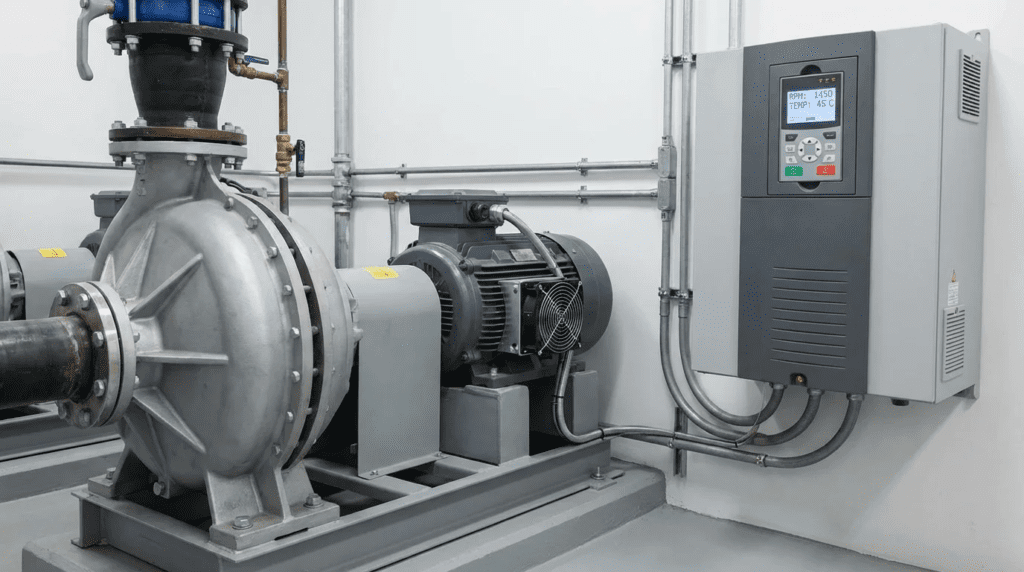
Introduction
In the realm of municipal wastewater treatment and industrial slurry handling, the double disc pump has carved out a niche as a robust solution for difficult fluids containing solids, rags, and grit. However, a surprising number of these installations fail prematurely, not due to mechanical inadequacy, but because of improper Variable Frequency Drive (VFD) integration. A common oversight in engineering specifications is treating these positive displacement units like centrifugal pumps during the electrical design phase. This misalignment leads to a critical operational failure: thermal overload.
Consulting engineers often specify VFDs for flow control without accounting for the constant torque characteristics of double disc technology. The result is a system where the motor overheats at low speeds, or the pump mechanism suffers thermal stress during deadhead conditions that the drive fails to detect. Correctly configuring the Double Disc Pump VFD Setup: Preventing Overheating is not merely a matter of wiring; it requires a distinct approach to parameterization, motor selection, and thermal monitoring that differs significantly from standard water pumping applications.
This article provides a comprehensive engineering guide to selecting, specifying, and commissioning VFDs for double disc pumps. It addresses the specific thermal challenges associated with low-speed high-torque operation, defines the necessary protection parameters, and outlines how to ensure long-term reliability in harsh wastewater environments.
How to Select / Specify
Designing a reliable pumping system requires more than matching a pump curve to a system head curve. When dealing with double disc technology, the interaction between the driver (motor/VFD) and the fluid mechanics is linear but unforgiving. The following criteria are essential for a specification that prioritizes thermal management and longevity.
Duty Conditions & Operating Envelope
Unlike centrifugal pumps, double disc pumps are positive displacement devices. They discharge a fixed volume of fluid for every rotation, regardless of discharge pressure (up to the mechanical limits). This physics dictates that the torque requirement remains relatively constant across the speed range.
Engineers must specify the operating envelope with the understanding that slowing the pump down does not significantly reduce the torque load on the motor.
- Flow Rates: Define minimum and maximum flow rates. The turndown ratio is critical. A 10:1 turndown (e.g., running at 6 Hz) on a standard TEFC motor without auxiliary cooling is a recipe for overheating.
- Pressure: Discharge pressure dictates the torque. High-pressure applications (e.g., filter press feed) require motors sized for the maximum torque at the minimum speed.
- Operating Modes: Continuous operation at low speeds generates significant heat in the motor windings. Intermittent duty cycles allow for cooling, but the VFD ramp times must be adjusted to prevent current spikes.
Materials & Compatibility
While materials are typically selected for chemical compatibility, thermal properties are equally important in a VFD-driven system.
- Elastomers: The trunnions and discs generate friction heat. In a run-dry scenario or a closed-valve situation, the internal temperature of the pump housing can rise rapidly. Specify elastomers (Ethelyn Propylene, Viton, or Buna-N) that can withstand transient temperature spikes.
- Housing Construction: Verify that the pump housing design allows for adequate heat dissipation. Cast iron provides better thermal mass than fabricated steel in some instances, helping to absorb heat generated during brief upset conditions.
Hydraulics & Process Performance
Process constraints often dictate the need for a VFD, but they also introduce thermal risks.
- Slip Factors: As discharge pressure increases, some “slip” occurs within the pump (fluid bypassing the discs). This slip generates heat. A VFD setup must account for this by ensuring the pump runs fast enough to overcome slip without running so fast that it cavitates or overheats the fluid in a recirculation loop.
- Efficiency: PD pump efficiency drops at very low speeds due to slip. Operating below 15-20% of rated speed may move zero net fluid while still consuming energy and generating motor heat.
Installation Environment & Constructability
The physical environment heavily influences the Double Disc Pump VFD Setup: Preventing Overheating strategies.
- Motor Cooling: If the pump is installed in a hot, humid pump gallery, the standard motor cooling fan is less effective. Specifications should mandate Totally Enclosed Blower Cooled (TEBC) motors for applications requiring continuous operation below 20-30 Hz.
- VFD Location: Distance matters. Long cable runs (>100 ft) between the VFD and the motor can cause voltage spikes (dV/dt) that degrade motor insulation, leading to internal arcing and overheating. Specify load reactors or dV/dt filters for long runs.
Reliability, Redundancy & Failure Modes
Engineers must anticipate failure modes related to heat.
- Deadhead Protection: A double disc pump is a positive displacement machine; if the discharge is blocked, pressure builds instantly. Unlike a centrifugal pump that simply churns, a DDP will break pipe or burn belts. The VFD must be programmed with a high-torque trip or high-pressure interlock to stop the pump immediately.
- Run-Dry: While DDPs are marketed as “run-dry safe,” indefinite run-dry generates friction heat in the trunnions. The VFD should monitor active power (kW) to detect a loss of load (dry running) and trip the pump after a set interval.
Controls & Automation Interfaces
The SCADA integration is the brain of the thermal management system.
- Thermistors: Require Positive Temperature Coefficient (PTC) thermistors in the motor windings, wired directly into the VFD’s thermistor input. This is the ultimate failsafe against motor overheating.
- Torque Monitoring: The VFD should output torque data to SCADA. A rising torque trend at a constant speed indicates a line blockage or ragging event before it becomes a thermal incident.
Lifecycle Cost Drivers
Investing in the correct VFD setup upfront saves significant OPEX.
- Motor Replacement: A motor burned out by low-speed overheating costs thousands to replace, plus downtime. A TEBC motor adds minimal CAPEX but eliminates this risk.
- Energy Efficiency: While VFDs save energy, running a DDP too slowly can be energy inefficient due to slip. The “sweet spot” for efficiency helps manage heat generation and reduces cost per gallon pumped.
Comparison Tables
The following tables assist engineers in differentiating between pump technologies regarding thermal sensitivity and determining the best-fit applications for double disc pumps when paired with VFDs. These comparisons focus on the mechanical-electrical interface and thermal risks.
| Technology Type | VFD Torque Requirement | Low-Speed Thermal Risk (Motor) | Run-Dry Heat Sensitivity (Pump) | Best-Fit VFD Application |
|---|---|---|---|---|
| Double Disc Pump (DDP) | Constant Torque | High (Requires TEBC or derating below 20Hz) | Low/Moderate (Can run dry mechanically, but friction heat builds over time) | Sludge transfer, Scum, Grit, Lime slurry (Linear flow control) |
| Progressive Cavity (PC) | Constant Torque (High Starting Torque) | High (Requires cooling at low speeds) | Critical (Stators burn out quickly if run dry; requires strict protection) | Thickened sludge, Polymer dosing (Precise metering) |
| Rotary Lobe | Constant Torque | High | High (Tight clearances generate rapid heat if fluid is lost) | RAS/WAS, Digestor feed (Compact spaces) |
| Centrifugal (Non-Clog/Chopper) | Variable Torque (Quadratic) | Low (Load drops significantly at low speeds) | Moderate (Seal failure is primary risk; mechanical heat buildup takes time) | Lift stations, Influent pumping, Dilute sludge |
| Application Scenario | Fluid Characteristic | Key Constraint | VFD/Thermal Strategy | Suitability |
|---|---|---|---|---|
| Primary Sludge Transfer | High Solids (3-6%), Rags | Variable flow needed for clarifier balance | Set min speed >15Hz. Use torque monitoring for clog detection. | Excellent |
| Scum Pumping | Floatables, Grease, Intermittent flow | Frequent run-dry potential | Program “Under-load” trip on VFD to stop pump when pit is empty to prevent friction heat. | Excellent |
| Filter Press Feed | High Pressure (Variable) | High torque at low speed (end of cycle) | Critical: Must use TEBC motor. VFD in Sensorless Vector Control mode for torque holding. | Good (with proper sizing) |
| Grit Removal | Abrasive Slurry | Wear increases with speed | Oversize pump to run slow. Use VFD to cap max speed to reduce abrasion heat/wear. | Good |
Engineer & Operator Field Notes
The gap between a specification document and a functioning plant is bridged by field implementation. The following notes are derived from commissioning experiences and failure analysis of Double Disc Pump VFD Setup: Preventing Overheating scenarios.
Commissioning & Acceptance Testing
Commissioning a double disc pump involves more than checking rotation direction. The VFD must be tuned to the motor and the load.
- Auto-Tuning: Always perform a rotational auto-tune on the VFD with the motor uncoupled (if possible) or a stationary tune if coupled. This measures stator resistance and inductance, allowing the VFD to manage current (and heat) accurately.
- Carrier Frequency: Set the carrier frequency (switching frequency) as low as the noise requirements permit (typically 2-4 kHz). Higher carrier frequencies increase VFD switching losses and heat, although they reduce audible motor whine.
- Thermal Overload Testing: During the Site Acceptance Test (SAT), simulate a locked rotor or high-torque condition (safely) to verify the VFD trips before the motor reaches its thermal limit.
Common Specification Mistakes
Engineers accustomed to centrifugal pumps often leave VFD specs on default “Variable Torque” (VT) settings. Double disc pumps are Constant Torque (CT) loads. A VT-rated drive or setting will limit current at low speeds, causing the motor to stall or the VFD to trip on overload when trying to start thick sludge. Always specify Constant Torque rated drives and motors.
Other frequent errors include:
- Undersized Motors for VFD Operation: A 10 HP motor running at 60Hz produces 10 HP of cooling. That same motor at 30Hz produces significantly less cooling. If the load is still high (Constant Torque), the motor creates heat it cannot dissipate.
- Ignoring Service Factor: On VFD power, the motor Service Factor (e.g., 1.15) effectively becomes 1.0 due to harmonic heating. Do not size into the service factor.
O&M Burden & Strategy
Operational strategies play a massive role in preventing overheating.
- Temperature Monitoring: Operators should use IR guns to baseline the temperature of the pump trunnion housing and the motor casing during normal operation. A deviation of >20°F often indicates internal binding or belt slippage before failure occurs.
- Belt Tension: Many double disc pumps are belt-driven. Loose belts slip, generating friction heat that transfers to the pump shaft and sheaves. Over-tight belts overload the motor bearings, causing localized heating.
- Predictive Maintenance: Use the VFD’s internal logic. Set a “Maintenance Alarm” based on running hours or, better yet, cumulative torque load.
Troubleshooting Guide
Symptom: Motor Overheat Trip (VFD Fault)
- Root Cause 1: Speed too low for too long. Fix: Increase minimum frequency parameter or install external cooling fan.
- Root Cause 2: VFD in Variable Torque mode. Fix: Change VFD to Constant Torque mode/curve.
- Root Cause 3: Clogged line/discharge valve closed. Fix: Check discharge pressure; clear blockage.
Symptom: Pump Housing Hot to Touch
- Root Cause: Running dry or internal recirculation (worn discs). Fix: Check suction conditions; inspect discs for wear/damage.
- Root Cause: Deadheading. Fix: Verify pressure relief system and VFD high-torque trip settings.
Design Details / Calculations
To ensure a robust Double Disc Pump VFD Setup: Preventing Overheating, the design phase must include specific sizing logic and specification details.
Sizing Logic & Methodology
When sizing the motor and VFD, the “Constant Torque” rule is paramount.
1. Determine Torque Requirement:
Unlike centrifugal pumps where $HP propto Speed^3$, for double disc pumps:
$$HP = frac{Torque times Speed}{5252}$$
Since Torque is constant (determined by the system pressure and pump mechanics), HP scales linearly with speed.
2. The Thermal Derating Factor:
If using a standard TEFC (Totally Enclosed Fan Cooled) motor, you must apply a derating factor for low-speed operation.
- At 60 Hz: 100% Cooling Capacity
- At 30 Hz: ~50-60% Cooling Capacity
- At 15 Hz: ~25% Cooling Capacity
If the pump requires full torque at 15 Hz, a standard motor will overheat.
Design Rule of Thumb: If continuous operation is expected below 20 Hz (33% speed), specify an Inverter Duty motor with a constant torque speed range of 1000:1 or install a blower cooling kit (TEBC).
Specification Checklist
Include these specific line items in your electrical and mechanical specifications:
- Motor Spec: NEMA MG1 Part 31 Compliant (Inverter Duty). Insulation Class H (preferred) or F with B temperature rise.
- VFD Spec: Constant Torque (Heavy Duty) rating. 150% overload capability for 60 seconds.
- Thermal Protection: Motor to be equipped with normally closed thermostats or PTC thermistors wired to the VFD safety circuit.
- Cable: Shielded VFD cable (VFD-grade) with symmetric ground geometry to reduce common-mode noise and heating.
- Minimum Speed: VFD programmed minimum speed shall be no less than 10 Hz (or manufacturer recommendation) to ensure lubrication of pump internals.
Standards & Compliance
Adherence to standards ensures safety and reliability:
- NEMA MG1 Part 31: Defines insulation systems for motors operated on adjustable speed drives. Essential for preventing voltage stress and thermal breakdown.
- NFPA 70 (NEC) Article 430: Governs motor circuits and overload protection. Ensure the VFD provides thermal memory retention to prevent immediate restarts after a thermal trip.
- UL 508A: Industrial Control Panels. Ensure the VFD enclosure layout allows for adequate airflow to cool the drive itself (VFDs generate heat ~3% of the load).
FAQ Section
What is the minimum speed for a double disc pump on a VFD?
Typically, double disc pumps should not be operated below 5-10 Hz continuously. While they can mechanically turn slower, two issues arise: 1) The motor (if TEFC) loses cooling capacity and may overheat, and 2) the internal slip of the fluid may equal the displacement volume, resulting in zero net flow while still generating friction heat within the pump body. Always consult the specific manufacturer’s curve for the minimum efficient speed.
Why do double disc pumps require Constant Torque VFDs?
Double disc pumps are positive displacement devices. They must push a fixed volume of fluid against the system pressure during every revolution. The force (torque) required to do this remains roughly the same whether the pump is turning at 10 RPM or 100 RPM. A Variable Torque (VT) VFD limits current at low speeds, assuming the load will drop (like a fan). If used on a DDP, a VT drive will fail to provide enough starting or low-speed torque, causing stalls and high current warnings.
Can a double disc pump run dry with a VFD?
Mechanically, double disc pumps handle run-dry conditions better than progressive cavity pumps because they lack the interference fit of a rotor/stator. However, “run-dry” is not “run-forever.” Without fluid to remove heat, the friction in the trunnions and discs will eventually raise the housing temperature. A VFD setup should include an “Under-Load” or “Low Power” trip to shut down the pump if it detects a run-dry condition for more than a set period (e.g., 5-10 minutes).
Do I need a special motor for Double Disc Pump VFD Setup: Preventing Overheating?
Yes. You should specify a motor rated for “Inverter Duty” per NEMA MG1 Part 31. For applications requiring wide speed ranges (e.g., slowing down significantly for a feed cycle), a Totally Enclosed Blower Cooled (TEBC) motor is recommended. This motor has an independent fan that runs at full speed regardless of the motor shaft speed, providing constant cooling and preventing thermal failure.
How does VFD carrier frequency affect overheating?
The carrier frequency is the switching rate of the VFD’s transistors. A higher carrier frequency (e.g., 8-12 kHz) makes the motor quieter but increases heat generation within the VFD and puts more voltage stress on the motor insulation. For wastewater applications, a lower carrier frequency (2-4 kHz) is preferred to keep the VFD cooler and maximize the allowable cable length, even if the motor “whine” is slightly more audible.
What VFD parameter protects against deadheading?
To protect against deadheading (pumping against a closed valve), configure the Torque Limit or High Current Trip parameters. Since pressure is proportional to torque in a PD pump, setting a trip point at roughly 10-15% above the maximum operating torque will shut the pump down instantly if a blockage occurs, preventing mechanical damage and rapid heat buildup.
Conclusion
Key Takeaways for Engineers
- Specify Constant Torque: Never use Variable Torque (Fan/Pump) ratings for Double Disc Pump VFDs.
- Manage Low-Speed Heat: Use TEBC motors or derate TEFC motors if operating continuously below 20-30 Hz.
- Thermal Sensors are Mandatory: Require PTC thermistors in the motor windings wired to the VFD for direct thermal protection.
- Protect Against Deadhead: Use the VFD’s internal torque monitoring to trip the pump on high pressure/blockage.
- Detect Run-Dry: Program under-load monitoring to prevent prolonged dry running and housing heat buildup.
- Cable Length Matters: Install load reactors for motor leads exceeding 100 feet to protect motor insulation.
The successful deployment of double disc technology relies heavily on the correct Double Disc Pump VFD Setup: Preventing Overheating strategies. While the mechanical unit is rugged and capable of handling aggressive wastewater solids, it is the electrical drive system that often dictates the reliability of the installation. By shifting the design mindset from “centrifugal/variable torque” to “positive displacement/constant torque,” engineers can eliminate the most common causes of motor failure and thermal overload.
Ultimately, the goal is to match the drive’s capabilities to the pump’s mechanical physics. This involves robust motor specifications (Inverter Duty/TEBC), precise VFD parameterization (Torque Limits, Min Speeds), and active monitoring (Thermistors). When these elements align, the double disc pump becomes one of the most reliable assets in a treatment plant, delivering consistent performance without the risk of thermal failure.