
Gravity Water Filtration Systems: Low‑Energy Solutions for Small Utilities
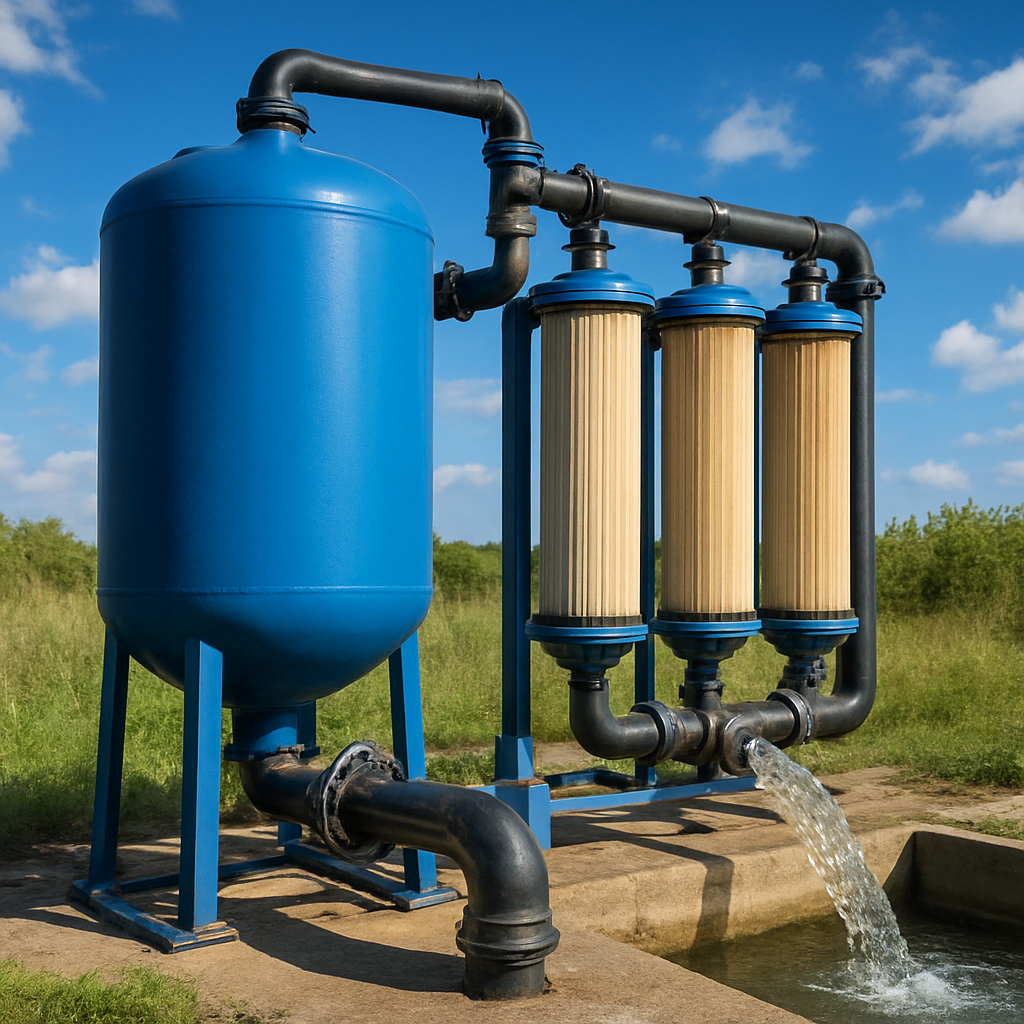
Gravity Water Filtration Systems: Low‑Energy Solutions for Small Utilities
Small utilities face energy costs, space constraints, and variable water quality. gravity water filtration offers a practical, low-energy path to reliable drinking water when properly matched to headloss and media choices. This article compares configurations, media stacks, and underdrain options, and provides a concrete implementation roadmap for retrofit or new installations.
Gravity Filtration Fundamentals for Small Utilities
Gravity filtration relies on hydrostatic head to move water through a packed bed, and the filtration performance is governed primarily by headloss and the media stack rather than by high pump pressures. Understanding this dynamic is the first step to sizing a low‑energy, gravity‑driven system for a small utility.
Differentiate between slow sand filtration and rapid gravity filtration. Slow sand operates at very low flow velocities and builds a biologically active surface; it minimizes headloss but limits throughput and requires more manual maintenance. Rapid gravity filtration uses a multi‑media bed (often anthracite over silica sand, sometimes with garnet) to sustain higher flows with controlled headloss, but it demands more deliberate backwash scheduling and energy planning for the underdrain system.
In practice, gravity filtration pays dividends when source water quality allows stable operation and predictable backwash needs. It fits best for surface waters with moderate turbidity and seasonal variation where the objective is reliable filtration with low energy use. Heavy organics or fines complicate the media configuration and backwash dynamics but do not derail a well‑designed rapid gravity train.
Concrete example: a small town averaging 0.8 mgd retrofits a single rapid gravity filter stage with a dual‑media stack (anthracite over silica sand) and Johnson Screens underdrains. After commissioning, the plant experiences lower energy per unit filtered water versus the prior pressure‑filter arrangement, and backwash intervals stabilize around 48 hours in dry seasons while shortening during turbidity spikes.
A practical misstep is treating media choice and underdrain design as separate decisions. In practice, media depth, grain size distribution, and underdrain geometry interact to set headloss curves and backwash requirements. Plan for regular media health checks and for backwash water handling up front to avoid downstream constraints.
Next consideration: map the headloss envelope across anticipated source‑water conditions and align backwash energy strategy with site constraints, including potential solar or diesel pumping alternatives.
Media Configurations and Underdrain Technologies
Media configurations and underdrain designs are the quiet determinants of performance in gravity water filtration. The media stack governs capture efficiency and how headloss grows, while the underdrain architecture dictates backwash distribution and the ability to sustain longer filter runs. For small utilities, dialing these two elements in correctly reduces energy use, lowers maintenance frequency, and minimizes the risk of media migration during backwash.
Media Stack Configurations
Dual-media stacks are the workhorse for low-energy gravity filtration. On top, coarse anthracite promotes porosity and resistance to early clogging; below it, finer silica sand handles the finer solids. In deeper beds, a bottom dense layer such as garnet can improve density and headloss control, but it adds material cost and can increase backwash energy if not sized to flow.
| Media Layer | Role |
|---|---|
| Anthracite (top) | High porosity; initiates filtration and reduces rapid clogging |
| Silica Sand (middle) | Fine filtration; increases solids removal at higher headloss |
| Garnet (bottom) | Dense bed; stabilizes flow and lowers vertical channeling |
Underdrain technologies and backwash strategies matter as much as media choices. Uniform distribution from modular underdrains—such as Johnson Screens or equivalent designs—minimizes dead zones, improves backwash effectiveness, and reduces the risk of media migration. Alternative designs, including perforated-panel or tile-based systems, can be viable but require careful hydrodynamic checks to avoid channeling or uneven wear.
Backwash water handling and media health drive lifecycle costs. Design backwash to keep solids within plant capacity and consider filtrate reuse where permissible. Establish media replacement schedules based on turbidity performance and headloss trends; typical sand–anthracite blends may need replacement every several years under moderate feed, with garnet requiring closer monitoring if aggressive backwash is used.
A small municipality retrofit replaced a single-media sand bed with a dual-media stack and a Johnson Screens underdrain. At design flow, headloss dropped around 30–40 percent, enabling the existing pump to operate nearer its best efficiency point, and backwash frequency dropped from daily to every 2–3 days, cutting energy use and sludge handling requirements.
Key takeaway: Underdrain and media choices dominate energy and maintenance in gravity filtration. Design for headloss targets and backwash energy from the outset.
Takeaway: align media stack and underdrain with site constraints and energy goals; the next step is a hydraulic model and a backwash energy budget for retrofit or new builds.
Energy Optimization Strategies
Energy optimization in gravity filtration starts with where energy is spent: pumping head before the filter and the energy used in backwashing. The headloss through the media bed and underdrain dictates the required feed pressure, so selecting media stacks and bed geometry that minimize headloss pays off more than chasing higher throughput. In practical terms, run the filtration train at the lowest reliable head and reserve capacity for cleanings rather than maximum flow.
- Headloss optimization: select media stacks and underdrain geometry that minimize resistance; dual-media configurations can lower headloss while preserving filtration performance, with ongoing media health checks. See the EPA energy guidance for broader context: EPA energy resources.
- Flow arrangement and bed depth: stage trains to keep gravity flow steady, avoid over-sizing a single bed, and use parallel or staggered trains to spread headloss and maintenance burden.
- Backwash energy optimization and reuse: implement on-demand backwash triggered by turbidity or setpoints, minimize wash volume, and recover filtrate for non contact uses where feasible.
- Energy supply integration: employ variable speed drives on feed pumps and explore solar PV with storage or low-cost diesel backup; design for diurnal patterns and reliability.
Concrete Example: A small municipality operating two gravity trains with constant feed pumping adopted VSDs, a depth-optimized dual-media bed, and turbidity-driven backwash scheduling. In the first year, filtration energy fell by roughly a quarter while turbidity targets remained met.
Trade-offs and limitations: deeper or finer media reduce headloss but raise backwash volumes and media replacement needs; garnet adds cost and weight; integrating solar requires storage and upfront capital; retrofits may encounter space, piping, and disinfection compatibility constraints.
Takeaway: Start with a hydraulic model of the gravity filtration train, set headloss targets, and pair that with an energy plan that includes adaptive pumping and renewable power where feasible. The next step is a phased retrofit plan with pilot tests and monitored results.
Economic Viability and Total Cost of Ownership
In gravity filtration projects for small utilities, the economics hinge on long-term energy and maintenance costs, not the sticker price of equipment. The filtration step itself is energy-light when headloss is minimized, but pumping, backwash, and media care drive the lifecycle cost. The operating profile of a gravity-fed filtration system often makes it the most cost-effective option when you plan for headloss control and water reuse early in the design. For benchmarks, consult EPA energy efficiency resources and AWWA guidance during early planning.
- Size and run-time: define target flow, peak demand, and expected filter run length.
- Headloss and energy model: quantify pumping energy and backpressure across the beds.
- Backwash and water handling: estimate volumes, disposal or reuse options, and treatment needs.
- Lifecycle cash flow: apply a discount rate, account for capex, O&M, maintenance, and regulatory costs.
Example: A 0.6 MGD municipality retrofit shifts from a high-pressure filter to a gravity filtration system with dual-media beds. Capital cost runs around $3–4 million; annual energy costs drop by 40–60% due to reduced pumping and more efficient backwash, and backwash-water reuse lowers makeup water and disposal charges. With current energy prices, payback lands in about 6–8 years, subject to maintenance and permitting costs.
Trade-off: upfront capital, ongoing savings. The balance depends on site conditions, energy price trajectories, and the ability to manage headloss without oversized backwash cycles. If energy prices fall or if headloss grows faster than expected, the projected savings compress. Space constraints, backwash water handling, and underdrain life can push total costs higher than simple estimates.
Maintenance and media life drive predictability. Deeper media stacks with garnet or ceramic filters can improve headloss dynamics and run length but raise capex. Regular media health checks and a disciplined replacement plan prevent sudden headloss spikes, while thoughtfully scheduled backwash reduces water waste without compromising disinfection and turbidity goals.
| Cost Component | Typical Range (USD) |
|---|---|
| Capital cost (retrofit or new gravity filtration system) | $2.0M – $6.0M |
| Annual operating costs (energy, backwash, chemicals, labor) | $100k – $350k |
Takeaway: Build your procurement and retrofit plan around a TCO model that foregrounds energy, backwash, and media life; run sensitivity analyses on energy price trajectories and backwash reuse to define scope, financing, and risk management.
Implementation Roadmap for Municipal Projects
Implementation relies on disciplined project management as much as gravity filtration performance. For small utilities, success hinges on a tightly sequenced roadmap that begins with defining what success looks like in turbidity control, disinfection compatibility, and backwash handling, and ends with a commissioning package ready for regulator sign-off. This roadmap should align with existing capital programs, site constraints, and a clear energy-savings target, since the technology's real payoff is low-energy operation when headloss is controlled, in line with EPA guidance and AWWA best practices EPA AWWA.
To keep delivery predictable, structure the design-procurement process around milestones and decision gates.
- Key point: Define performance objectives — target turbidity, residual disinfectant compatibility, headloss limits, and backwash frequency.
- Key point: Conduct a site assessment — space, drainage, backwash water disposal, power supply, and access for construction.
- Key point: Select configuration and media — gravity filtration media and underdrain choices, and compatibility with retrofits.
- Key point: Develop design deliverables — layouts, P&IDs, standard specifications, commissioning and start-up plans.
- Key point: Choose procurement strategy — design-bid-build vs design-build, risk allocation, and contractor interfaces.
- Key point: Prepare regulatory and stakeholder engagement — permit readiness, public communications, and safety interfaces.
Beyond design, risk planning is critical. Without it, delays creep and budgets blow. Common risk items include permitting delays, piping reconfigurations for existing disinfection systems, backwash water disposal compliance, space constraints, and long procurement lead times that outlive project funds. Coordinate with regulators per EPA guidelines EPA and WHO drinking-water guidelines sanitationhealth/water-quality/drinking-water-quality-guidelines/en/ target=_blank>WHO.
Example: a 0.6 MGD municipal plant retrofits an aging rapid gravity filtration stage to a gravity-filtration configuration with a dual-media stack and Johnson Screens underdrains. By aligning design with a design-build contract and a 12–18 month design-to-commission window, the utility reduces filtration energy demand and improves run length, while backwash energy becomes a smaller fraction of total pumping energy.
Takeaway: Start with a procurement-ready design package and a risk register that ties to the project timeline.
Operations, Maintenance, and Reliability
In gravity water filtration, reliability rests on a disciplined, data-driven maintenance regime rather than ad hoc fixes. The filtration step itself is energy-frugal, but failure modes cluster around media degradation, underdrain clogging, and backwash mis-timing. A clear maintenance plan converts that risk into predictable performance.
Set up a straightforward monitoring suite: turbidity in the filtrate, residual disinfectant downstream, and differential head across each filter. Track headloss trends weekly and after backwash; sudden jumps indicate media packing, underdrain issues, or dirty backwash water lines. Keep a live log so that you can see decay patterns and trigger maintenance before the run length collapses.
- Backwash sequencing: maintain a consistent cycle length based on headloss and turbidity, not calendar days.
- Media health checks: set replacement thresholds for media grains and observe color or fines shedding during sampling.
- Underdrain inspection: schedule periodic inspection and cleaning to prevent channeling and clogging.
- Backwash water handling: ensure disposal or reuse aligns with discharge permits and energy use goals.
- Spare parts and redundancy: stock critical spare media, diaphragms, and valves to minimize downtime.
- Disinfection compatibility: verify that backwash returns do not disrupt residual levels or disinfection processes.
Concrete example: a small town retrofit added inline turbidity sensors and differential pressure transmitters to two gravity-fed filters. After a 2-month calibration, operators reduced backwash frequency by 15-20 percent while maintaining target turbidity, cutting energy use and waste production. The plant rode out a storm event with minimal filter-wash penalties thanks to the telemetry and an updated SOP.
Key lever: backwash optimization, guided by real-time headloss and turbidity data, yields the biggest reliability gains without expensive capital upgrades.
Disinfection and turbidity controls must steer backwash design. If backwash water carries lower residual disinfectant or reintroduces solids upstream, it can undermine treatment objectives. Tie backwash decisions to regulatory limits and maintain compatibility with downstream processes; see EPA guidance for principles on monitoring and optimization EPA water research. For practical design details, review AWWA publications on gravity filtration media health and underdrains. For practical perspectives, see YARN-based resource on gravity filtration.
Takeaway: treat backwash optimization, media health, and underdrain cleanliness as the primary reliability levers, not afterthought activities.