
How Much Does A Wastewater Treatment Plant Cost
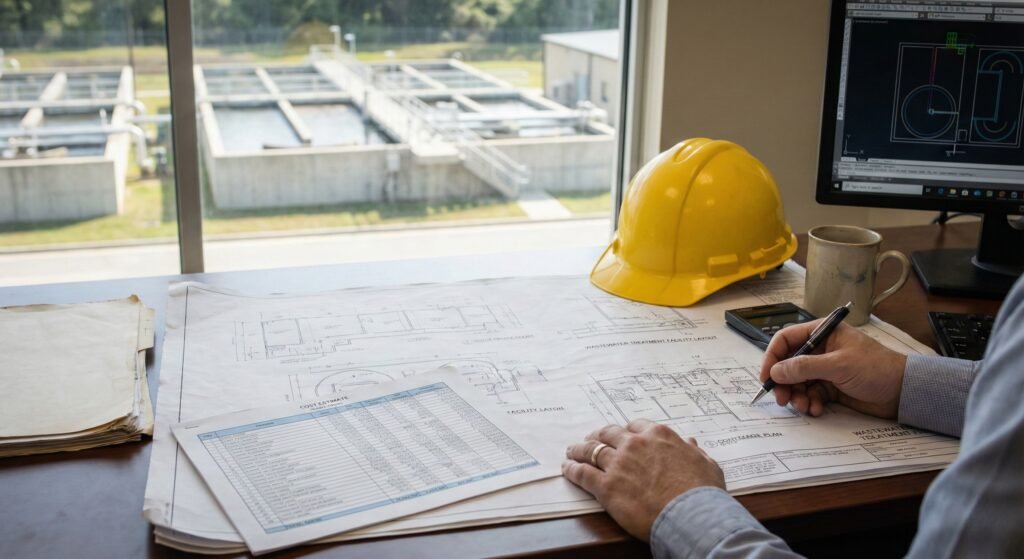
How Much Does a Wastewater Treatment Plant Cost? A Comprehensive Guide for Municipal and Industrial Buyers
For municipal owners, utilities, and consulting engineers, the cost of a wastewater treatment plant is determined less by any single process choice and more by how well the facility is aligned with local operating conditions, regulatory trajectory, and long-term system flexibility. Capital costs set the initial hurdle, but operating and compliance costs ultimately define affordability over the plant’s service life.
This guide focuses on the real cost drivers that materially affect budgets, offering concrete benchmarks, design implications, and implementation strategies rather than theoretical process discussions.
1. Establishing a Reliable Cost Baseline
Before selecting treatment technologies, project teams must define the economic boundary conditions of the facility. Cost estimates that fail to anchor to local realities often underestimate total lifecycle cost by a wide margin—sometimes by as much as 30-40% over the facility’s operational lifespan.
Key Baseline Inputs
A defensible feasibility study treats these inputs as primary design constraints, not assumptions to be refined later:
Design Flow and Peak Factors
Average daily flow represents baseline capacity, but peak wet-weather events drive infrastructure sizing. Plants designed for 2:1 peak-to-average ratios will cost significantly less than those designed for 4:1 ratios common in older combined sewer systems. Understanding your collection system’s infiltration and inflow characteristics directly impacts capital investment.
Influent Strength and Variability
Industrial contributions can double or triple typical residential BOD and TSS concentrations. A facility designed for 250 mg/L BOD will have fundamentally different equipment requirements than one designed for 150 mg/L. Pretreatment programs can reduce influent strength, but enforcement infrastructure carries its own costs.
Available Land and Zoning Restrictions
Land cost per acre varies from $10,000 in rural communities to over $1 million in dense urban areas. Beyond acquisition cost, setback requirements, buffer zones, and future expansion space determine whether low-cost treatment approaches remain feasible. A site that appears adequate for current needs but cannot accommodate a future membrane bioreactor or tertiary filter train creates long-term liabilities.
Local Labor Rates and Construction Market Conditions
Construction labor costs in major metropolitan areas can run 40-60% higher than rural regions. Material delivery logistics, union requirements, and prevailing wage determinations all affect the conversion from design to built infrastructure. Markets with active construction pipelines face premium pricing; timing your project around regional capacity can yield significant savings.
Energy Tariff Structure
Electricity costs vary from $0.08/kWh to over $0.20/kWh across the United States. Time-of-use rates, demand charges, and power factor penalties can double effective energy costs. Facilities with access to industrial rate structures or municipal utilities enjoy substantial operational advantages over those purchasing power at commercial retail rates.
Sludge Disposal Pathways and Hauling Distances
Biosolids management costs range from $50 per dry ton for land application programs to over $400 per dry ton for incineration in restricted markets. Hauling distance matters—every 50 miles adds approximately $15-20 per wet ton. Communities within biosolids-beneficial-use programs realize significant cost advantages over those dependent on landfill disposal.
Anticipated Regulatory Tightening
Designing to current discharge limits without acknowledging regulatory trajectory creates stranded assets. Total nitrogen limits dropped from 10 mg/L to 3 mg/L in many Chesapeake Bay watersheds. Total phosphorus limits below 0.1 mg/L are increasingly common. Facilities designed with hydraulic and process flexibility accommodate these changes through operational adjustments rather than capital retrofits.
2. Capital Expenditure (CAPEX): What Actually Drives Construction Cost
2.1 Hydraulic Capacity and Treatment Level
Capital cost scales primarily with hydraulic capacity, but treatment level multiplies cost in ways that fundamentally alter project economics.
Planning-Level Benchmarks (2024 USD, >1 MGD capacity):
- Conventional Secondary Treatment: $6.50 – $7.50 per gallon of capacity
- Includes preliminary treatment, biological treatment, secondary clarification, and chlorine disinfection
- Assumes moderate site conditions and standard odor control
- Typical for communities meeting conventional NPDES limits
- Advanced Tertiary Treatment: $8.50 – $10.50 per gallon
- Adds tertiary filtration, enhanced nutrient removal, and UV disinfection
- Required for sensitive receiving waters or water reuse applications
- Premium increases with stricter nutrient limits (TN <3 mg/L, TP <0.1 mg/L)
- Natural or Low-Energy Systems: $0.80 – $1.50 per gallon (excluding land acquisition)
- Constructed wetlands, lagoon systems, or land treatment
- Requires 10-50x more land area than mechanical systems
- Best suited for communities with land availability and less stringent discharge requirements
- Membrane Bioreactor (MBR) Systems: $9.50 – $12.00 per gallon
- Produces superior effluent quality with smaller footprint
- Higher energy and membrane replacement costs offset by reduced clarification and filtration infrastructure
- Increasingly competitive for new plants in land-constrained settings
Regional and Site Adjustments:
These baseline values require adjustment for:
- Urban construction premiums: +25-40% for dense metropolitan areas
- Seismic design requirements: +8-15% for high-risk zones
- Floodplain infrastructure: +10-20% for hardening and elevation requirements
- Architectural and aesthetic requirements: +5-12% for public-facing facilities
- Brownfield or contaminated site remediation: +15-35% depending on contamination extent
2.2 Land Availability and Site Constraints
Land availability often determines whether a low-cost treatment approach is feasible at all, representing one of the earliest and most consequential project decisions.
Compact Mechanical Plants:
- Require 0.5-2 acres per MGD
- Favor urban sites with limited land availability
- Higher CAPEX offset by lower land acquisition costs
- Enable multi-story designs when site footprint is severely constrained
- Typical for retrofit and expansion projects
Land-Intensive Systems:
- Require 5-25 acres per MGD depending on treatment approach
- Reduce equipment and energy costs substantially
- Increase permitting risk and timeline
- May face public opposition in residential areas
- Most viable for greenfield rural projects with available inexpensive land
Site Geometry and Topography:
- Irregular parcels increase civil engineering complexity and costs by 15-30%
- Significant grade changes require additional pumping or elaborate piping networks
- Natural drainage can reduce stormwater management costs
- Proximity to receiving waters reduces outfall construction costs but may increase permitting complexity
Early Site Screening Benefits:
Performing thorough site screening during the planning phase frequently produces larger savings than process optimization conducted during design development. A site that enables gravity flow between treatment stages can save $500,000-$2 million in pumping infrastructure over a plant’s lifetime.
2.3 Economy of Scale Effects and Their Implications
Smaller plants experience disproportionately higher unit costs because fixed infrastructure does not scale linearly, creating financial challenges for small communities.
Fixed Infrastructure Components:
- Laboratory and operations buildings cost nearly the same for 0.5 MGD as for 2 MGD
- Standby generators, control systems, and backup equipment represent larger capital fractions
- Professional engineering fees constitute a higher percentage of smaller project budgets
- Permitting, legal, and environmental assessment costs are comparable regardless of plant size
Redundancy Requirements:
- Treatment units require backup capacity (N+1 or N+2 configurations)
- Smaller plants dedicate 30-40% of capacity to standby equipment
- Larger plants achieve redundancy at 15-20% premium
- This disparity magnifies as treatment complexity increases
Advanced Treatment Burden:
- Nutrient removal adds $1.50-$2.50 per gallon for plants under 1 MGD
- Same treatment adds $0.80-$1.20 per gallon for plants over 10 MGD
- Small communities face difficult choices between treatment levels and rate affordability
Design Implication:
Treatment upgrades that are marginal cost increases for large utilities can be financially destabilizing for small communities. A 0.5 MGD plant facing total nitrogen limits may need to consider regional consolidation or shared facilities to achieve affordable compliance.
2.4 Process-Specific Capital Cost Considerations
Different treatment processes carry distinct capital cost profiles:
Activated Sludge Variants:
- Conventional: $5.5-$7.0 million per MGD all-in
- Extended aeration: $6.0-$7.5 million per MGD
- Oxidation ditch: $5.0-$6.5 million per MGD
- Sequencing batch reactor (SBR): $6.5-$8.0 million per MGD
Advanced Biological Treatment:
- Modified Ludzack-Ettinger (MLE): $7.0-$8.5 million per MGD
- Five-stage Bardenpho: $8.5-$10.0 million per MGD
- Integrated fixed-film activated sludge (IFAS): $7.5-$9.0 million per MGD
Tertiary Treatment Add-ons:
- Cloth disk filters: $1.2-$1.8 million per MGD
- Deep bed sand filters: $1.5-$2.5 million per MGD
- Membrane filtration: $2.5-$4.0 million per MGD
3. Operational Expenditure (OPEX): Long-Term Cost Control
While capital costs command attention during project development, operational expenses determine long-term affordability and rate stability. A facility with 10% lower CAPEX but 20% higher OPEX costs significantly more over its 30-year service life.
3.1 Energy Consumption as a Primary Cost Driver
Energy typically represents 25-40% of total OPEX, making it the largest controllable operating cost and a critical design variable rather than an afterthought.
Primary Energy Consumers:
Aeration Systems (40-60% of plant energy):
- Fine bubble diffused aeration: 1,400-1,800 kWh per million gallons treated
- Coarse bubble aeration: 1,800-2,400 kWh per million gallons treated
- Mechanical surface aerators: 2,000-2,600 kWh per million gallons treated
- High-purity oxygen: 2,200-2,800 kWh per million gallons treated
The choice between these technologies represents a 30-50% variance in the single largest energy cost. Modern high-efficiency blowers with wide turndown capability can reduce aeration energy by 25-35% compared to older constant-speed equipment.
Pumping Systems (20-30% of plant energy):
- Influent pumping: 150-300 kWh per million gallons
- Return activated sludge (RAS) pumping: 100-200 kWh per million gallons
- Effluent discharge pumping: 100-250 kWh per million gallons
- Process pumping and mixing: 200-400 kWh per million gallons
Total dynamic head (TDH) dramatically affects pumping costs. Each additional 10 feet of head increases annual pumping costs by approximately $3,000-$5,000 per MGD of capacity. Site layouts that minimize elevation changes and pipeline friction losses pay dividends throughout plant operation.
Mixing and Solids Processing (15-25% of plant energy):
- Digester mixing and heating: 300-600 kWh per million gallons
- Dewatering equipment: 150-300 kWh per million gallons
- Chemical feed and storage: 50-100 kWh per million gallons
Demand Charges and Time-of-Use Rates:
Understanding utility tariff structure often matters more than equipment efficiency ratings. Facilities on demand-charge tariffs face $10-$20 per kW monthly charges for peak consumption. A 500 kW demand spike sustained for just 15 minutes can add $5,000-$10,000 to annual electricity costs.
Actionable Energy Design Measures:
- High-Efficiency Blowers with Wide Turndown:
- Modern centrifugal or turbo blowers achieve 30-40% energy savings
- Wide turndown capability (20-100% capacity) maintains efficiency across load ranges
- Payback period typically 3-5 years
- Load-Based Aeration Control:
- Dissolved oxygen monitoring with automated valve control
- Reduces over-aeration during low-load periods
- Saves 15-25% of aeration energy with minimal capital investment
- On-Site Energy Recovery Evaluation:
- Combined heat and power (CHP) from digester gas
- Microturbine or engine-generator sets sized to plant thermal loads
- Economic feasibility improves dramatically above 2-3 MGD capacity
- Can offset 40-70% of plant electricity costs in optimal conditions
- Explicit Tariff Modeling:
- Model annual energy costs using actual utility rate schedules
- Consider time-of-use shifting for batch processes
- Evaluate power factor correction investments
- Assess feasibility of behind-the-meter energy storage
Critical Design Error:
Ignoring tariff structure during equipment selection often causes larger lifecycle cost errors than equipment efficiency variations. A facility that selects blowers based on wire-to-air efficiency alone, without considering demand charge implications, may select equipment that costs $50,000 more annually despite appearing more efficient in catalog specifications.
3.2 Sludge and Solids Management Costs
After energy, solids handling is usually the most volatile and locally dependent operating expense. Biosolids management strategies established during design phase drive costs for the plant’s entire operational life.
Representative Disposal Costs (2024 USD):
- Land application programs: $50-$120 per dry ton
- Composting and beneficial use: $80-$180 per dry ton
- Landfill disposal: $170-$280 per wet ton
- Incineration: $250-$400 per dry ton
- Restricted markets or emergency disposal: $350-$500+ per wet ton
Key Cost Drivers:
Sludge Volume Production:
- Conventional activated sludge: 0.45-0.65 lb dry solids per lb BOD removed
- Extended aeration: 0.35-0.50 lb dry solids per lb BOD removed
- MBR systems: 0.30-0.45 lb dry solids per lb BOD removed
- Process selection directly determines solids production rates
Dewatering Performance:
- Cake solids concentration affects hauling frequency and cost
- Belt press: 16-22% solids
- Centrifuge: 18-28% solids
- Screw press: 18-26% solids
- Filter press: 25-35% solids
Higher cake solids reduce hauling costs proportionally. A facility producing 100 wet tons per month at 20% solids spends approximately $17,000 monthly on disposal. Improving dewatering to 28% solids (same dry mass, less water) reduces volume to 71 wet tons and saves $5,000 monthly—$60,000 annually.
Hauling Distance and Logistics:
- Local land application (<25 miles): $15-$25 per wet ton
- Regional land application (25-100 miles): $35-$65 per wet ton
- Remote disposal (>100 miles): $80-$150 per wet ton
Communities without local beneficial-use programs face structural cost disadvantages. A 2 MGD plant producing 300 dry tons annually and hauling 150 miles spends $150,000-$200,000 more annually than a similar facility with local land application access.
Disposal Regulations and Market Dynamics:
- Part 503 federal biosolids regulations establish baseline requirements
- State programs overlay additional restrictions on metals, pathogens, and application rates
- Permit availability fluctuates with agricultural economics
- Alternative disposal options provide cost stability but at premium pricing
Strategic Design Consideration:
Solids strategy should be defined during preliminary design, not during commissioning when correction becomes expensive. Facilities designed for thickening and hauling cannot easily convert to advanced digestion and beneficial use without major capital reinvestment. The reverse is also true—plants with expensive digestion infrastructure but limited beneficial use outlets face ongoing cost burdens.
3.3 Staffing and Labor Costs
Personnel costs represent 20-35% of OPEX and scale with plant complexity rather than capacity alone.
Typical Staffing Models:
Small Plant (< 1 MGD):
- 2-3 certified operators
- 1 maintenance technician
- 0.5 FTE laboratory/administrative
- Annual staffing cost: $180,000-$280,000
Medium Plant (1-5 MGD):
- 4-6 certified operators (shift coverage)
- 2-3 maintenance technicians
- 1-2 laboratory technicians
- 1 plant manager
- Annual staffing cost: $550,000-$850,000
Large Plant (> 10 MGD):
- 8-12 certified operators
- 4-6 maintenance staff
- 2-4 laboratory personnel
- 2-3 administrative/management
- Specialized positions (electrician, instrumentation technician)
- Annual staffing cost: $1.5-$3.0 million
Factors Affecting Staffing Requirements:
- Treatment complexity increases required operator certification levels
- Nutrient removal demands more process oversight
- Older facilities require more maintenance labor
- Automation reduces routine operational labor but increases instrumentation maintenance
- 24/7 coverage requirements double base staffing needs
3.4 Chemical Costs and Usage Patterns
Chemical costs vary with market conditions but typically represent 10-15% of OPEX.
Primary Chemicals and Typical Dosages:
Polymers (for dewatering):
- Usage: 5-20 lb active polymer per dry ton solids
- Cost: $2.50-$5.00 per pound active
- Annual cost (2 MGD plant): $50,000-$120,000
Sodium Hypochlorite (disinfection):
- Usage: 5-15 mg/L chlorine dose
- Cost: $0.80-$1.50 per gallon (12.5% solution)
- Annual cost (2 MGD plant): $30,000-$75,000
Sodium Bisulfite (dechlorination):
- Usage: 1.1 lb per lb chlorine residual
- Cost: $0.50-$0.90 per pound
- Annual cost (2 MGD plant): $15,000-$35,000
Supplemental Carbon (for denitrification):
- Usage: 3-4 lb per lb nitrate-nitrogen removed
- Cost: $0.40-$0.75 per pound
- Annual cost with TN < 5 mg/L (2 MGD plant): $80,000-$180,000
Metal Salts (for phosphorus removal):
- Usage: 8-15 lb alum per lb phosphorus removed
- Cost: $0.35-$0.65 per pound alum
- Annual cost with TP < 0.5 mg/L (2 MGD plant): $60,000-$140,000
Chemical costs fluctuate with commodity markets. Alum costs increased 40-60% during 2021-2022 supply chain disruptions. Facilities with chemical dose optimization programs and alternative phosphorus removal strategies (enhanced biological phosphorus removal) demonstrated greater cost stability.
3.5 Maintenance and Repair Reserves
Systematic maintenance extends equipment life and prevents catastrophic failures, but requires dedicated funding.
Annual Maintenance Budget Guidelines:
- Routine maintenance: 2-3% of equipment replacement value
- Major repairs reserve: 1-2% of facility replacement value
- Emergency repair contingency: 0.5-1% of facility replacement value
For a $15 million facility, this translates to $525,000-$900,000 annual maintenance budget. Plants that defer maintenance experience accelerated degradation and face 2-3x higher costs over time through emergency repairs and premature equipment replacement.
Equipment-Specific Maintenance Costs:
- Blowers: $5,000-$15,000 annually per unit
- Pumps: $2,000-$8,000 annually per unit
- Clarifier mechanisms: $8,000-$20,000 annually
- Dewatering equipment: $15,000-$40,000 annually
- SCADA and instrumentation: $10,000-$30,000 annually
4. Disinfection Costs and Compliance Impacts
Disinfection choice directly affects both capital and operating budgets, particularly where reuse or strict pathogen limits apply. This decision carries long-term implications for operational flexibility and regulatory compliance.
4.1 Ultraviolet (UV) Disinfection Cost Factors
Capital Costs:
- Small systems (< 1 MGD): $200,000-$400,000
- Medium systems (1-5 MGD): $500,000-$1,200,000
- Large systems (> 10 MGD): $1,500,000-$4,000,000
Cost Drivers:
Required Dose and Redundancy:
- Secondary effluent disinfection: 30-50 mJ/cm² dose
- Title 22 water reuse: 100-300 mJ/cm² dose
- Cryptosporidium inactivation: 40-186 mJ/cm² depending on log removal
- N+1 or N+2 bank redundancy requirements
Higher disinfection requirements increase lamp quantity, channel length, and electrical demand proportionally.
Influent UV Transmittance (UVT):
- Good secondary effluent: 65-75% UVT
- Advanced treated effluent: 75-85% UVT
- Poor quality effluent: 50-65% UVT
Each 10% reduction in UVT requires approximately 30% more lamp intensity or dose contact time, directly increasing capital and operating costs.
Operating Costs:
Lamp Replacement:
- Replacement cycle: 8,000-14,000 hours (12-18 months continuous operation)
- Cost per lamp: $150-$400 depending on manufacturer and technology
- Medium plant (1 MGD) with 48 lamps: $10,000-$20,000 annually
Electrical Demand:
- Low-pressure high-output (LPHO) lamps: 100-200 watts per lamp
- Medium-pressure (MP) lamps: 1,000-3,000 watts per lamp
- Energy cost (1 MGD, LPHO): $15,000-$30,000 annually
- Energy cost (1 MGD, MP): $35,000-$70,000 annually
Cleaning and Maintenance:
- Automatic mechanical wipers reduce manual cleaning
- Chemical cleaning systems maintain lamp efficiency
- Annual maintenance: $8,000-$25,000 for medium systems
Design Implications:
Better upstream treatment directly improves UV economics. A plant that invests in tertiary filtration achieves both better UVT and lower lamp fouling rates, reducing UV system size by 20-30% and extending lamp life by 30-40%. This upstream investment generates downstream operational savings.
4.2 Chlorination System Cost Considerations
Chlorination offers lower initial capital costs but introduces different operational and regulatory considerations.
Capital Costs:
- Sodium hypochlorite system (< 1 MGD): $75,000-$150,000
- Sodium hypochlorite system (1-5 MGD): $150,000-$350,000
- On-site hypochlorite generation (> 5 MGD): $400,000-$1,200,000
- Gaseous chlorine system (< 1 MGD): $150,000-$300,000
Operating Cost Components:
Chemical Procurement:
- Bulk sodium hypochlorite: $1.00-$1.80 per gallon (12.5% available chlorine)
- On-site generation: $0.40-$0.80 per pound chlorine equivalent
- Gaseous chlorine: $0.45-$0.75 per pound (delivered bulk)
For a 2 MGD plant with 8 mg/L average dose:
- Commercial hypochlorite: $55,000-$95,000 annually
- On-site generation: $25,000-$50,000 annually (plus capital recovery)
Safety Systems and Training:
- Leak detection and scrubber systems: $15,000-$40,000 capital
- Personal protective equipment: $2,000-$5,000 annually
- Safety training and drills: $3,000-$8,000 annually
- Chlorine building ventilation and monitoring: $5,000-$12,000 annually
Dechlorination Requirements:
- Required when chlorine residual exceeds discharge limits
- Sodium bisulfite: $0.50-$0.90 per pound
- Adds 15-25% to chemical disinfection costs
- Increases operational complexity and monitoring requirements
Residual Compliance Risk:
Chlorine residual discharge limits have tightened significantly, with many permits now requiring < 0.011 mg/L total residual chlorine (TRC). Achieving consistent compliance requires sophisticated control systems and introduces potential for permit violations. Facilities with sensitive receiving waters face increasing regulatory pressure to switch to UV disinfection.
Strategic Consideration:
Chlorination minimizes CAPEX while increasing OPEX and regulatory exposure. For small communities with capital constraints and access to commercial hypochlorite supply, chlorination may represent the lowest initial hurdle. Larger facilities or those facing strict residual limits increasingly favor UV despite higher capital costs.
5. Regulatory Cost Escalators That Affect Lifecycle Cost
Regulatory requirements evolve continuously, and facilities designed without anticipating this trajectory face expensive retrofits or compliance challenges.
5.1 PFAS Treatment Cost Impacts
Per- and polyfluoroalkyl substances (PFAS) regulations represent one of the most significant emerging cost drivers in wastewater treatment. EPA’s PFAS National Primary Drinking Water Regulation and state-level regulations for biosolids and surface water discharge are fundamentally changing project economics.
Treatment Technology Options:
Granular Activated Carbon (GAC):
- Capital cost: $1.5-$3.0 million per MGD
- Carbon replacement: 3-12 months depending on influent concentrations
- Operating cost: $200,000-$600,000 annually per MGD
Ion Exchange:
- Capital cost: $2.0-$4.0 million per MGD
- Resin regeneration or replacement: 6-18 months
- Operating cost: $250,000-$750,000 annually per MGD
Reverse Osmosis:
- Capital cost: $3.5-$6.0 million per MGD
- Membrane replacement: 5-7 years
- Operating cost: $400,000-$900,000 annually per MGD
- Concentrate disposal adds significant complexity and cost
Cost Impact by System Size:
Small System (< 1 MGD):
- PFAS treatment adds 40-60% to total facility cost
- May require 100-150% increase in user rates
- Often economically infeasible without state/federal funding
Medium System (1-5 MGD):
- PFAS treatment adds 25-40% to total facility cost
- Rate increases of 40-80% common
- Creates difficult decisions between treatment levels and affordability
Large System (> 10 MGD):
- PFAS treatment adds 15-25% to total facility cost
- Economies of scale partially offset burden
- Larger rate base distributes costs more equitably
Residual Handling and Disposal:
PFAS treatment generates spent media or concentrate requiring specialized disposal. This secondary waste stream costs $400-$800 per ton for incineration or secure landfill disposal, adding $100,000-$500,000 annually depending on treatment scale and media replacement frequency.
Monitoring and Reporting Requirements:
PFAS analytical costs range from $400-$1,200 per sample depending on analyte list. Monthly monitoring for a facility tracking 40+ PFAS compounds adds $20,000-$60,000 annually in laboratory costs alone.
Design Strategy:
Facilities in watersheds with industrial or airport fire-training areas face highest PFAS risk. Design provisions for future PFAS treatment (space reservation, hydraulic capacity, electrical infrastructure) cost 5-10% of potential future retrofit costs while preserving flexibility.
5.2 Nutrient Removal and Ultra-Low Limits
Nutrient discharge limits continue tightening nationwide, driven by harmful algal blooms, hypoxia, and aquatic ecosystem impairment.
Historical Nutrient Limit Progression:
Total Nitrogen:
- 1990s: 10-15 mg/L typical
- 2000s: 8-10 mg/L common
- 2010s: 3-8 mg/L for sensitive waters
- 2020s: 3 mg/L increasingly standard, <2 mg/L emerging
Total Phosphorus:
- 1990s: 1-2 mg/L typical
- 2000s: 0.5-1.0 mg/L common
- 2010s: 0.1-0.5 mg/L for sensitive waters
- 2020s: 0.1 mg/L increasingly standard, <0.05 mg/L emerging
Cost to Achieve Various Nutrient Levels (incremental to secondary treatment):
Total Nitrogen < 10 mg/L:
- Modified Ludzack-Ettinger (MLE) process
- Added cost: $0.80-$1.20 per gallon capacity
- Operating cost impact: +15-25%
Total Nitrogen < 5 mg/L:
- Five-stage Bardenpho or equivalent
- Added cost: $1.50-$2.50 per gallon capacity
- Operating cost impact: +25-40%
Total Nitrogen < 3 mg/L:
- Advanced biological treatment plus tertiary denitrification filter
- Added cost: $2.50-$4.00 per gallon capacity
- Operating cost impact: +40-60%
Total Phosphorus < 1.0 mg/L:
- Metal salt addition (alum, ferric, or lime)
- Added cost: $0.30-$0.60 per gallon capacity
- Operating cost impact: +8-15%
Total Phosphorus < 0.1 mg/L:
- Chemical addition plus tertiary filtration
- Added cost: $1.00-$1.80 per gallon capacity
- Operating cost impact: +25-40%
Total Phosphorus < 0.05 mg/L:
- Chemical addition, filtration, plus secondary polishing
- Added cost: $1.80-$3.20 per gallon capacity
- Operating cost impact: +40-65%
Design for Future Limits:
Facilities can build flexibility through:
- Oversizing tankage for future internal recycle requirements
- Installing stub connections for supplemental carbon feed systems
- Providing space for future filter installations
- Designing electrical and chemical feed systems for expansion
These provisions typically add 8-12% to current construction costs but reduce future retrofit costs by 40-60%.
5.3 Water Reuse and Recycling Mandates
Water scarcity is driving reuse mandates in arid regions, fundamentally changing treatment requirements and economics.
Reuse Treatment Levels:
Non-Potable Reuse (irrigation, cooling):
- Requires secondary treatment plus disinfection
- Added cost: $1.50-$2.50 per gallon capacity
- Dual distribution systems add $10-$25 per linear foot
Indirect Potable Reuse (groundwater recharge):
- Requires secondary treatment, filtration, reverse osmosis, advanced oxidation
- Added cost: $4.50-$7.50 per gallon capacity
- Monitoring and validation requirements increase OPEX by 50-80%
Direct Potable Reuse (drinking water supply):
- Requires multiple advanced treatment barriers
- Added cost: $7.00-$12.00 per gallon capacity
- Regulatory approval challenges and public acceptance barriers
- Not yet permitted in many jurisdictions
Reuse Economics:
Water reuse projects compete economically when:
- New potable water supplies cost > $4,000 per acre-foot
- Environmental compliance favors reuse over discharge
- Grants or subsidies reduce reuse project capital costs
- Regional water markets enable reuse water sales
Communities in California, Arizona, Nevada, and Texas increasingly view wastewater as a water resource rather than a disposal problem, altering facility design philosophy fundamentally.
6. Practical Design Strategies to Reduce Cost Risk
Successful project delivery balances initial investment with long-term operational reality. These strategies consistently separate economically sustainable facilities from those that struggle with affordability throughout their service lives.
6.1 Lifecycle Cost Modeling
Net Present Value (NPV) Analysis:
Proper lifecycle cost analysis discounts future costs to present value, enabling apples-to-apples comparison of alternatives with different CAPEX/OPEX profiles.
Example Comparison:
Option A – Conventional Aeration:
- CAPEX: $8.0 million
- Annual OPEX: $650,000
- 30-year NPV (4% discount): $19.1 million
Option B – High-Efficiency Aeration:
- CAPEX: $9.2 million
- Annual OPEX: $525,000 (19% energy savings)
- 30-year NPV (4% discount): $18.3 million
Option B costs $1.2 million more initially but saves $800,000 over 30 years in NPV terms. The payback period is approximately 8 years, well within the equipment’s useful life.
Sensitivity Analysis:
Model cost impacts of:
- Energy rate escalation (2%, 4%, 6% annually)
- Regulatory requirement changes
- Sludge disposal cost variability
- Equipment replacement timing
Facilities that perform sensitivity analysis identify cost-risk areas and design appropriate hedging strategies.
6.2 Design for Operational Flexibility
Hydraulic Flexibility:
- Provide 20-30% overcapacity in tankage volumes
- Design parallel treatment trains that can operate independently
- Install flow splitting structures for seasonal or load-based optimization
- Size piping for future flow increases
Process Flexibility:
- Provide zones that can operate aerobic, anoxic, or anaerobic
- Install redundant chemical feed systems for multiple treatment approaches
- Design clarifiers for both conventional and biological nutrient removal modes
- Reserve space for future treatment technologies
Example Cost Differential:
Designing a 5 MGD plant for future expansion to 7.5 MGD adds approximately 8-12% to initial construction costs. Retrofitting for capacity expansion later costs 40-60% more than the incremental original design cost.
6.3 Energy as a Design Variable
Holistic Energy Strategy:
- Load profiling and demand management:
- Shift non-critical loads to off-peak periods
- Stage equipment startups to minimize demand spikes
- Can reduce demand charges by 15-25%
- Energy recovery integration:
- Digester gas to CHP systems
- Heat recovery from dewatering operations
- Can offset 30-50% of facility energy costs at optimal scale
- Equipment right-sizing:
- Select equipment that maintains efficiency across expected load ranges
- Avoid oversizing that operates equipment at inefficient partial loads
- Saves 10-20% energy versus conventional design
- Renewable energy evaluation:
- Solar PV systems: $2.50-$4.00 per watt installed
- Can provide 15-40% of facility load depending on available area
- Power purchase agreements (PPAs) eliminate upfront costs
A 2 MGD facility consuming $250,000 in annual electricity can reduce this by $75,000-$125,000 through systematic energy optimization, providing 5-8 year payback on incremental investments.
6.4 Solids Management Strategy Definition
Decision Framework:
Class A Biosolids Production:
- Requires advanced treatment (thermal drying, composting, or advanced digestion)
- Enables unrestricted beneficial use
- Capital premium: $2.0-$4.0 million for 2 MGD plant
- Operating cost premium: $40,000-$80,000 annually
- Disposal cost savings: $60,000-$150,000 annually
Class A biosolids achieve positive return on investment when land application outlets are limited or remote. Markets with restricted disposal options see payback periods of 3-7 years.
Digestion vs. Aerobic Stabilization:
Anaerobic Digestion:
- CAPEX: $1.5-$3.0 million (2 MGD plant)
- Produces biogas (energy recovery potential)
- Reduces solids mass by 40-50%
- Operating cost: $80,000-$150,000 annually
Aerobic Digestion:
- CAPEX: $600,000-$1.2 million (2 MGD plant)
- No energy recovery
- Reduces solids mass by 30-40%
- Operating cost: $100,000-$180,000 annually (includes aeration energy)
Dewatering Technology Selection:
- Belt press: Lower capital cost, moderate performance
- Centrifuge: Moderate capital cost, high performance, higher maintenance
- Screw press: Higher capital cost, excellent cake dryness, lower maintenance
- Filter press: Highest capital cost, best cake dryness, batch operation
Each percentage point improvement in cake dryness reduces disposal costs by 4-5% for facilities hauling biosolids.
6.5 Phased Construction Strategies
Benefits of Phasing:
- Reduces immediate capital burden
- Aligns capacity additions with load growth
- Incorporates operational lessons into future phases
- Provides off-ramps if growth projections don’t materialize
Effective Phasing Approaches:
Parallel Train Phasing:
- Build 50% of treatment capacity initially
- Reserve space and install piping for second train
- Add second train when flows reach 70-80% of Phase 1 capacity
Process Intensification Phasing:
- Build conventional process initially
- Add IFAS media or MBR membranes in future phase
- Doubles treatment capacity within existing tankage
- Requires initial design for future loads (mixing, aeration, structure)
Advanced Treatment Phasing:
- Build secondary treatment to ultimate capacity
- Add tertiary treatment when regulations require
- Most cost-effective when regulatory timeline is uncertain
Phasing Cost Premium:
- Properly designed phasing adds 5-8% to ultimate build-out cost
- Saves carrying costs on unused capacity for 5-15 years
- Net present value savings typically 10-18%
6.6 Risk Mitigation and Contingency Planning
Realistic Contingency Allowances:
Many projects underestimate contingency needs:
Design Contingency:
- Preliminary design (30% complete): 20-30%
- Design development (60% complete): 12-18%
- Final design (90% complete): 8-12%
Construction Contingency:
- New construction, low complexity: 8-12%
- Retrofit and upgrade projects: 15-20%
- Projects with geotechnical unknowns: 18-25%
Owner’s Contingency:
- Scope changes and enhancements: 5-10%
- Long-term construction projects (>2 years): Add 3-5% annually for inflation
Pilot Testing for Cost Certainty:
Treatability studies and pilot testing cost $150,000-$500,000 but can reduce design uncertainty and prevent expensive corrections:
- Confirms design parameters for new processes
- Identifies chemical optimization opportunities
- Validates equipment performance claims
- Reduces construction contingency requirements by 3-5%
ROI on pilot testing typically achieves 3:1 to 8:1 through avoided design errors and operational optimization.
7. Financing and Funding Strategies
7.1 Traditional Municipal Financing
General Obligation Bonds:
- Backed by municipality’s full faith and credit
- Lowest interest rates (2.5-4.5% typical)
- Requires voter approval in many jurisdictions
- May impact municipality’s overall debt capacity
Revenue Bonds:
- Backed by utility revenues only
- Slightly higher rates (3.0-5.0% typical)
- No voter approval required
- Does not impact general credit
- Requires demonstrated revenue sufficiency
State Revolving Funds (SRF):
- Below-market interest rates (0.5-2.5% typical)
- 20-30 year terms
- May include principal forgiveness for disadvantaged communities
- Requires federal cross-cutting requirements compliance
- Application timelines extend project schedules by 6-12 months
7.2 Grant and Subsidy Programs
Available Federal Programs:
- Water Infrastructure Finance and Innovation Act (WIFIA): Low-interest loans up to $1 billion
- EPA Water Infrastructure Improvements for the Nation (WIIN) Act Grants: Up to 75% project cost for small/disadvantaged communities
- USDA Rural Development Grants: Up to 75% project cost for rural communities
- Community Development Block Grants (CDBG): Varies by community
State-Level Programs:
- State SRF principal forgiveness: 10-50% of project cost
- State infrastructure banks
- Water quality improvement grants
- Economic development incentives
Grant Pursuit Costs:
- Application development: $25,000-$75,000
- Typically 4-9 month process
- Success rates vary by program (15-40%)
Grant funding dramatically improves project economics but introduces schedule constraints and administrative requirements.
8. Total Cost of Ownership Examples
Case Study 1: Rural Community Secondary Treatment Plant
Project Parameters:
- Design flow: 0.75 MGD
- Population: 8,000
- Conventional activated sludge with chlorination
- Lagoon ultimate disposal
- Rural site with adequate land
Capital Costs:
- Land acquisition (10 acres): $120,000
- Site work and civil: $1,200,000
- Treatment structures: $2,800,000
- Mechanical/electrical equipment: $1,500,000
- Engineering and administration: $650,000
- Contingency (15%): $940,000
- Total CAPEX: $7.2 million
Annual Operating Costs:
- Staffing (2.5 FTE): $220,000
- Energy (480,000 kWh @ $0.11/kWh): $53,000
- Chemicals: $35,000
- Maintenance: $95,000
- Sludge disposal (180 wet tons): $31,000
- Laboratory and administration: $45,000
- Total Annual OPEX: $479,000
30-Year Lifecycle Cost (NPV @ 3.5%): $15.8 million
Cost per Household (8,000 people, 2,500 households):
- Initial impact: $2,880 per household
- Monthly cost: $16.00 per household
Case Study 2: Suburban Advanced Treatment Facility
Project Parameters:
- Design flow: 4.5 MGD
- Population: 45,000
- MLE process with tertiary filtration
- TN < 5 mg/L, TP < 0.5 mg/L
- UV disinfection
Capital Costs:
- Land acquisition (8 acres urban): $3,200,000
- Site work and civil: $8,500,000
- Treatment structures: $28,000,000
- Mechanical/electrical equipment: $16,500,000
- UV disinfection system: $1,800,000
- SCADA and controls: $2,200,000
- Engineering and administration: $7,500,000
- Contingency (12%): $8,180,000
- Total CAPEX: $75.9 million
Annual Operating Costs:
- Staffing (8 FTE): $720,000
- Energy (3,250,000 kWh @ $0.14/kWh): $455,000
- Chemicals (including nutrient removal): $380,000
- Maintenance: $950,000
- Sludge disposal (720 wet tons): $122,000
- Laboratory and administration: $180,000
- UV lamp replacement: $45,000
- Total Annual OPEX: $2,852,000
30-Year Lifecycle Cost (NPV @ 3.5%): $127.5 million
Cost per Household (45,000 people, 14,000 households):
- Initial impact: $5,421 per household
- Monthly cost: $17.00 per household
Case Study 3: Large Urban Tertiary Treatment Facility
Project Parameters:
- Design flow: 25 MGD
- Population: 350,000
- Five-stage Bardenpho with cloth disk filters
- TN < 3 mg/L, TP < 0.1 mg/L
- UV disinfection for unrestricted reuse
- CHP with digester gas
Capital Costs:
- Land acquisition (35 acres): $28,000,000
- Site work and civil: $55,000,000
- Treatment structures: $180,000,000
- Mechanical/electrical equipment: $95,000,000
- Advanced treatment (filters/UV): $32,000,000
- SCADA and controls: $12,000,000
- CHP facility: $8,500,000
- Engineering and administration: $48,000,000
- Contingency (10%): $45,850,000
- Total CAPEX: $504.4 million
Annual Operating Costs:
- Staffing (32 FTE): $3,200,000
- Energy (19,000,000 kWh @ $0.16/kWh): $3,040,000
- Energy offset from CHP: -$1,520,000
- Chemicals (including nutrient removal): $2,100,000
- Maintenance: $6,200,000
- Sludge disposal (4,800 wet tons): $816,000
- Laboratory and administration: $950,000
- UV lamp replacement: $280,000
- Total Annual OPEX: $15,066,000
30-Year Lifecycle Cost (NPV @ 3.5%): $751.3 million
Cost per Household (350,000 people, 105,000 households):
- Initial impact: $4,804 per household
- Monthly cost: $12.00 per household
Note: Larger facilities achieve lower per-household costs through economies of scale
Conclusion: Designing for Long-Term Affordability
Wastewater treatment plant costs are shaped as much by future uncertainty as by current design choices. The most successful projects share common attributes:
Prioritize Lifecycle Value Over Lowest Bid:
- Facilities optimized for 30-year cost consistently outperform those optimized for construction bid price
- Energy efficiency investments provide predictable, ongoing returns
- Quality equipment from established manufacturers reduces maintenance costs and downtime
Design Flexibility Into Infrastructure:
- Accommodate regulatory tightening without major retrofits
- Enable operational optimization as loads and conditions change
- Preserve options for future technology adoption
Treat Energy as a Primary Design Variable:
- Model actual utility tariffs during equipment selection
- Consider energy recovery at appropriate scales
- Design for load-based control and optimization
Define Solids Strategy Early:
- Biosolids management drives 20-30% of lifecycle cost variance
- Retrofit options are limited and expensive
- Local disposal markets change over time; plan accordingly
Align Treatment Design With Regulatory Trajectory:
- Ultra-low nutrient limits will continue spreading to new watersheds
- PFAS regulations will affect more facilities over time
- Water reuse mandates are expanding in water-scarce regions
Engage Stakeholders Throughout Development:
- Rate impacts determine political and financial feasibility
- Community understanding prevents project delays
- Operator input during design improves long-term functionality
For municipalities and engineering firms, success is not defined by the lowest bid or the most sophisticated technology—but by predictable, sustainable affordability across the plant’s full service life. Facilities that balance capital efficiency with operational optimization, build in flexibility for future requirements, and maintain focus on total cost of ownership consistently deliver the best value to the communities they serve.
The most economical wastewater treatment plant is not the cheapest to build—it’s the one that delivers reliable regulatory compliance at stable, affordable rates over multiple decades of operation. Achieving this outcome requires disciplined planning, lifecycle cost analysis, and design decisions that prioritize long-term sustainability over short-term capital minimization.
For assistance with wastewater treatment plant planning, preliminary engineering, or lifecycle cost analysis, consult with experienced treatment technology manufacturers and engineering firms who can provide site-specific evaluations and recommendations.