
The authoritative technical profile for the Southwest’s largest wastewater treatment facility.
FACILITY BASIC INFORMATION
- Plant Name: Hyperion Water Reclamation Plant (HWRP)
- Location: 12000 Vista del Mar, Playa del Rey, Los Angeles, CA 90293
- Operating Authority: LA Sanitation & Environment (LASAN) / City of Los Angeles
- Design Capacity: 450 MGD (dry weather) / 800 MGD (peak wet weather)
- Current Average Flow: ~260 MGD
- Population Served: ~4 million residents
- Service Area: 600 square miles (City of LA + 29 contract agencies)
- Receiving Water Body: Santa Monica Bay (Pacific Ocean)
- NPDES Permit Number: CA0109991
- Year Commissioned: 1894 (Original site); 1950 (Current facility base); 1998 (Full Secondary)
1. INTRODUCTION
The Hyperion Water Reclamation Plant (HWRP) is the largest and most critical wastewater treatment facility west of the Mississippi River. Operated by LA Sanitation & Environment (LASAN), the plant serves a massive 600-square-mile sewershed, processing wastewater for approximately 4 million people in the City of Los Angeles and 29 contract agencies, including Santa Monica, Beverly Hills, and Culver City. Located on a 144-acre site adjacent to Dockweiler State Beach and LAX, Hyperion is a marvel of 20th-century hydraulic engineering currently undergoing a 21st-century transformation.

Historically designed for ocean discharge, Hyperion treats an average of 260 million gallons per day (MGD) to a high-quality secondary standard using High Purity Oxygen Activated Sludge (HPOAS) technology. The facility is currently at the center of “Operation NEXT,” a multi-billion dollar initiative to transform the plant into a 100% water recycling facility by 2035. This transition marks a paradigm shift from waste disposal to resource recovery, aiming to reduce Los Angeles’ reliance on imported water while adhering to strict environmental compliance mandates for the protection of the Santa Monica Bay ecosystem.
2. FACILITY OVERVIEW
A. Service Area & Coverage
Hyperion serves the Hyperion Service Area (HSA), which encompasses central, western, and northern Los Angeles. The collection system feeding the plant is one of the world’s most complex, consisting of over 6,700 miles of public sewers. Major interceptors, including the North Outfall Sewer (NOS) and the Coastal Interceptor Sewer (CIS), converge at the headworks. The service area is heavily urbanized, with a mix of high-density residential, commercial, and industrial inputs, requiring robust industrial pretreatment programs to protect biological processes.
B. Operational Capacity
The plant has a dry weather design capacity of 450 MGD and a wet weather peak hydraulic capacity of approximately 800 MGD. Historically, flows peaked in the 1980s but have steadily declined despite population growth, largely due to successful water conservation mandates and low-flow fixture retrofits across the city. Currently, the plant operates at approximately 58% of its dry weather design capacity (averaging 260 MGD), providing significant redundancy but also presenting challenges regarding low-flow velocities in the collection system.
C. Discharge & Compliance
Treated effluent is discharged into Santa Monica Bay via the “5-Mile Outfall,” a 12-foot diameter pipe terminating 190 feet below the ocean surface. The depth and length of the outfall ensure distinct thermal stratification, trapping the effluent plume below the surface to prevent shoreline contamination. A secondary “1-Mile Outfall” exists solely for emergency bypass scenarios. The facility operates under a stringent NPDES permit issued by the Los Angeles Regional Water Quality Control Board, with strict limits on BOD, TSS, and toxicity.
3. TREATMENT PROCESS
Hyperion utilizes a sophisticated treatment train defined by its use of High Purity Oxygen (HPO) and thermophilic digestion. The process is divided into preliminary, primary, and secondary treatment, with a portion of flow diverted for tertiary recycling.
A. PRELIMINARY TREATMENT (Headworks)
Raw wastewater enters the headworks where eight bar screens remove large debris (rags, wood, plastic). Following screening, the flow enters aerated grit chambers where velocity is reduced to allow inorganic solids (sand, gravel, coffee grounds) to settle while keeping organic material in suspension. The removed grit and screenings are dewatered and trucked to landfills. The headworks facility is fully enclosed with negative air pressure and chemical scrubbers to mitigate odors, a critical requirement given the plant’s proximity to residential neighborhoods.
B. PRIMARY TREATMENT
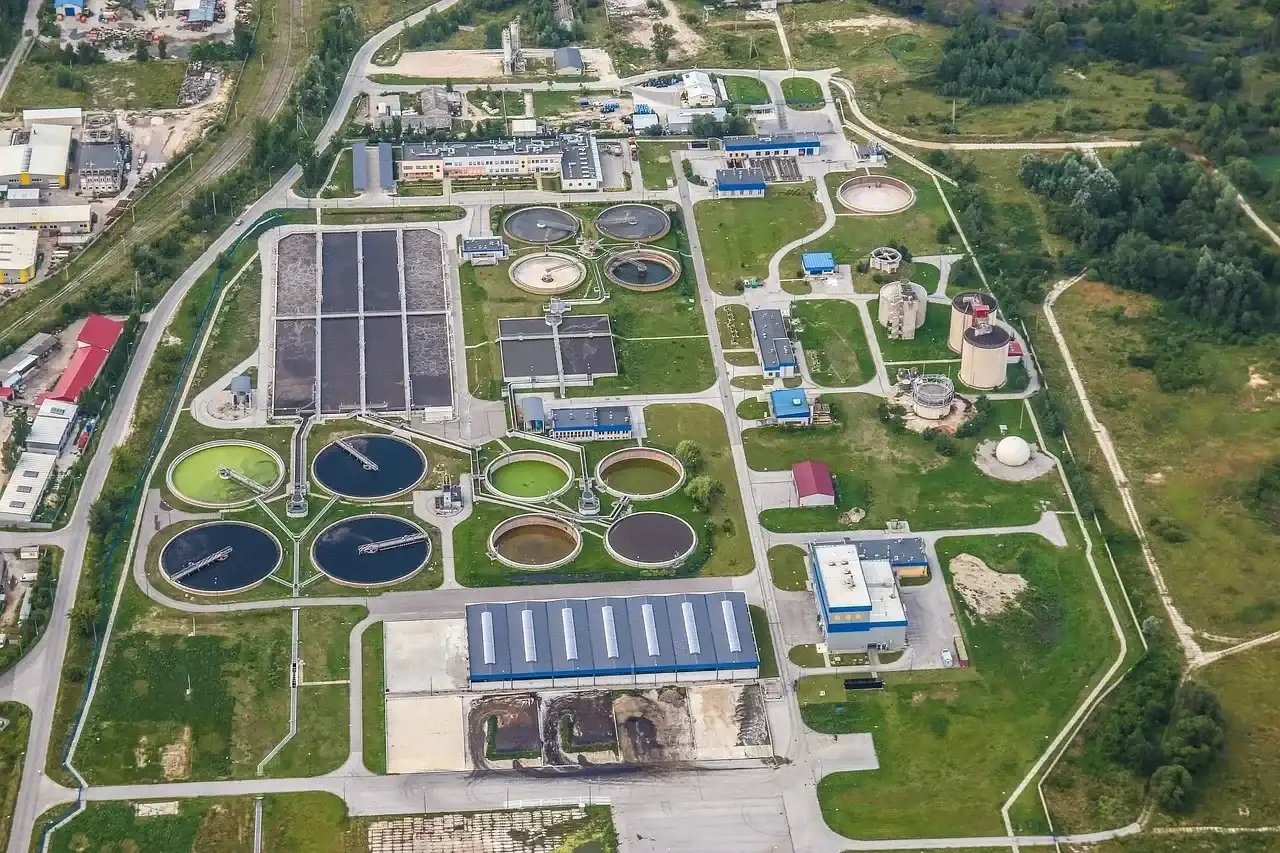
Wastewater flows into covered primary sedimentation batteries. The plant utilizes rectangular clarifiers where flow velocity is minimized, allowing approximately 60-65% of suspended solids to settle as primary sludge and 35-40% of BOD to be removed. Surface skimmers remove fats, oils, and grease (FOG). The primary tanks are covered with concrete decks to capture fugitive emissions, which are routed to two-stage wet chemical scrubbers.
C. SECONDARY TREATMENT (High Purity Oxygen)
Hyperion employs a High Purity Oxygen Activated Sludge (HPOAS) process, which differs from conventional aeration by using pure oxygen (>90%) rather than atmospheric air. This allows for higher biomass concentrations and smaller reactor volumes.
- Cryogenic Air Separation: The plant operates an on-site cryogenic air separation facility to generate pure oxygen from the atmosphere.
- Reactor Modules: The oxygen is injected into covered aeration basins containing the mixed liquor. The covered basins facilitate high oxygen transfer efficiency and capture off-gases.
- Secondary Clarifiers: Mixed liquor flows to 36 circular secondary clarifiers. The biological floc settles, yielding a clear effluent.
- Efficiency: The secondary process typically achieves >95% removal of BOD and TSS, consistently meeting the NPDES limit of 30 mg/L (monthly average).
D. WATER RECYCLING INTERFACE
While Hyperion discharges the majority of its secondary effluent to the ocean, approximately 35-40 MGD is pumped to the neighboring Edward C. Little Water Recycling Facility (operated by West Basin Municipal Water District). There, it undergoes tertiary and advanced treatment (MF/RO/UV) for irrigation and groundwater replenishment. Hyperion acts as the source water provider for this critical regional reuse partnership.
E. SOLIDS HANDLING
Hyperion is a pioneer in thermophilic digestion.
- Thickening: Primary sludge and Waste Activated Sludge (WAS) are thickened using centrifuges.
- Anaerobic Digestion: The thickened sludge is pumped to egg-shaped digesters (ESDs). The plant utilizes a continuous thermophilic process (130°F – 140°F), which is hotter than conventional mesophilic digestion. This achieves higher volatile solids destruction and pathogen reduction.
- Biosolids Class: The resulting biosolids meet EPA Class A Exceptional Quality (EQ) standards, allowing for unrestricted land application.
- Dewatering: Digested sludge is dewatered via high-speed centrifuges to produce a cake (~28-30% solids) which is hauled for land application (agriculture) or composting.
4. INFRASTRUCTURE & FACILITIES
A. Physical Plant
The 144-acre site is architecturally distinct, featuring the iconic “Egg-Shaped Digesters” comprising 20 vessels visible from the coastline. The plant includes extensive underground gallery systems for piping and cabling, an administration building, an environmental learning center, and advanced machine shops capable of fabricating parts for the facility’s legacy equipment.
B. Energy Systems (Biogas Utilization)
Hyperion is a leader in energy recovery. The thermophilic digestion process generates significant volumes of methane-rich biogas (digester gas).
- Biogas Generation: Approximately 7-8 million cubic feet of gas per day.
- Cogeneration: The gas is sent to the Hyperion Bioenergy Facility. Steam and electricity are generated on-site. The steam is essential for heating the thermophilic digesters, while the electricity powers heavy machinery, including the cryogenic plant and main effluent pumps.
- Energy Independence: The facility aims for 100% energy self-sufficiency, reducing demand on the local grid and lowering operational carbon footprints.
C. Odor Control
Due to its location in the affluent South Bay and proximity to beaches, odor control is paramount. The plant utilizes a “contain, capture, and scrub” strategy. All primary treatment areas are covered. Foul air is extracted and treated through a combination of biotrickling filters, wet chemical scrubbers (caustic/hypochlorite), and carbon adsorption units before release.
5. RECENT UPGRADES & MAJOR PROJECTS
Operation NEXT (Planning Phase: 2020-2035)
Status: Pilot/Planning
Projected Cost: $3+ Billion (Program wide)
Objective: To maximize water recycling from the Hyperion service area. The goal is to recycle 100% of the available flow by 2035. This involves retrofitting the plant with Membrane Bioreactors (MBR) and Reverse Osmosis (RO) to produce purified water for groundwater replenishment and potentially direct potable reuse (DPR).
Advanced Water Purification Facility (AWPF) Pilot
Timeline: 2023-Present
Scope: Construction and operation of a 1.0 MGD demonstration facility testing MBR, RO, and Ultraviolet/Advanced Oxidation Processes (UV/AOP). This pilot is gathering critical data to inform the full-scale design of the future Hyperion transformation.
Digester Gas Utilization Project (DGUP)
Completion: 2017
Budget: ~$130 Million
Scope: This project allowed LASAN to take full ownership of the power generation process (previously operated by a third party). It included the installation of new combustion gas turbine generators and steam turbine generators to efficiently utilize digester gas, ensuring the reliable supply of steam required for the thermophilic digestion process.
Headworks Odor Control Improvements
Timeline: Ongoing
Scope: Replacement of aging scrubber media, ductwork upgrades, and the installation of more efficient fans to maintain negative pressure in the headworks building, ensuring zero fugitive emissions during peak loading events.
6. REGULATORY COMPLIANCE & ENVIRONMENTAL PERFORMANCE
A. Permit Requirements
Hyperion operates under NPDES Permit No. CA0109991.
- BOD5 & TSS: 30 mg/L (30-day average) with >85% removal efficiency.
- Settleable Solids: 1.0 ml/L.
- Toxicity: Strict chronic toxicity limits to protect marine life in Santa Monica Bay.
B. 2021 Flooding Incident & Recovery
In July 2021, the facility experienced a catastrophic flooding event at the headworks due to debris clogging the bar screens during a non-rain event. This forced the plant to bypass the secondary process, discharging millions of gallons of primary-treated (and some untreated) effluent via the 1-mile emergency outfall. LASAN has since implemented aggressive corrective actions, including hardened screening protocols, improved bypass logic, and structural flood mitigation. The facility has returned to full compliance, but the event serves as a critical case study in hydraulic redundancy and crisis management for the industry.
C. Environmental Stewardship
Hyperion’s consistent operation (outside the 2021 event) is credited with the restoration of the Santa Monica Bay ecosystem. Since the cessation of sludge disposal in the ocean in 1987 and the move to full secondary treatment in 1998, local marine biodiversity has rebounded significantly. The plant also pioneered the “Class A” biosolids program, diverting tons of organic waste from landfills to agricultural use.
7. OPERATIONAL EXCELLENCE
LASAN employs over 350 staff at Hyperion, including distinct teams for operations, predictive maintenance, and laboratory sciences. The on-site Environmental Monitoring Division (EMD) laboratory is ELAP-certified and conducts thousands of tests annually, not just on effluent, but on ocean water quality at dozens of monitoring stations in the Bay.
The facility utilizes a distributed control system (DCS) for real-time process management. Engineers are currently integrating AI-driven logic to optimize chemical dosing for chemically enhanced primary treatment (CEPT) during wet weather flows to prevent biomass washout.
8. CHALLENGES & FUTURE PLANNING
The Transition to MBR: The most significant engineering challenge is the spatial constraint of converting an HPO plant to MBR within the existing footprint while maintaining continuous operation. This requires a phased demolition and construction schedule spanning over a decade.
Climate Resilience: As a coastal facility, Hyperion faces risks from sea-level rise. While the plant elevation is generally safe, the hydraulics of the gravity-fed outfall system must be evaluated against rising tide levels, which could impact discharge head pressure.
Solid Waste Debris: The changing composition of municipal sewage (flushable wipes, increasing plastics) continues to plague the headworks, necessitating the installation of more robust, heavy-duty screening equipment.
9. TECHNICAL SPECIFICATIONS SUMMARY
| Parameter | Specification |
|---|---|
| Facility Type | High Purity Oxygen Activated Sludge (HPOAS) |
| Design Capacity (Dry) | 450 MGD |
| Current Average Flow | 260 MGD |
| Peak Hydraulic Capacity | 800 MGD |
| Secondary Treatment | Closed-reactor pure oxygen activated sludge |
| Oxygen Source | On-site Cryogenic Air Separation |
| Disinfection | Chlorination (service water/tertiary feed); Ocean discharge relies on depth/dilution |
| Biosolids Class | Class A (Thermophilic Digestion) |
| Digesters | 20 Egg-Shaped Digesters (2.5 MG each) |
| Energy Generation | ~20 MW (Biogas cogeneration) |
| Outfall | 5-Mile Outfall (12ft diameter, 190ft depth) |
| Total Site Area | 144 Acres |
| Year of Major Secondary Upgrade | 1998 (Full Secondary Completion) |
10. RELATED FACILITIES
- Edward C. Little Water Recycling Facility: Located adjacent to Hyperion; receives secondary effluent from Hyperion to produce 5 types of “designer water” for reuse.
- Terminal Island Water Reclamation Plant: A sister LASAN facility utilizing advanced purification.
- Donald C. Tillman Water Reclamation Plant: An upstream plant in the San Fernando Valley that relieves flow to Hyperion.
11. FAQ SECTION
Technical Questions
Q: Why does Hyperion use High Purity Oxygen?
A: HPO was selected in the 1980s because the site is space-constrained (144 acres). Pure oxygen allows for a higher biomass concentration in the aeration tanks, meaning the plant can treat more water in a smaller physical footprint compared to conventional air systems.
Q: Is Hyperion currently a potable reuse facility?
A: No. Hyperion currently discharges secondary effluent to the ocean. However, Operation NEXT plans to convert the plant to 100% recycling by 2035, which will include groundwater replenishment and potentially direct potable reuse.
Q: What is the detention time in the digesters?
A: The thermophilic digestion process typically has a detention time of approximately 12 to 15 days.
Public Interest Questions
Q: Does the plant smell?
A: While wastewater naturally has odors, Hyperion employs extensive odor control systems (scrubbers and covered tanks). Most of the time, odors are contained, though maintenance events or atmospheric inversions can occasionally lead to local detection.
Q: Can I visit the plant?
A: Yes. LASAN offers tours of the Hyperion Environmental Learning Center and the facility for schools and community groups, though access may be restricted due to operational needs or construction.
Q: Is the water discharged into the ocean safe for swimmers?
A: Yes. The effluent is discharged 5 miles offshore at a depth of 190 feet. This distance, combined with the treatment level and salt water dilution, ensures that shoreline water quality meets all health standards for swimming.