
Industrial Centrifugal Pumps: Key Advancements in 2024
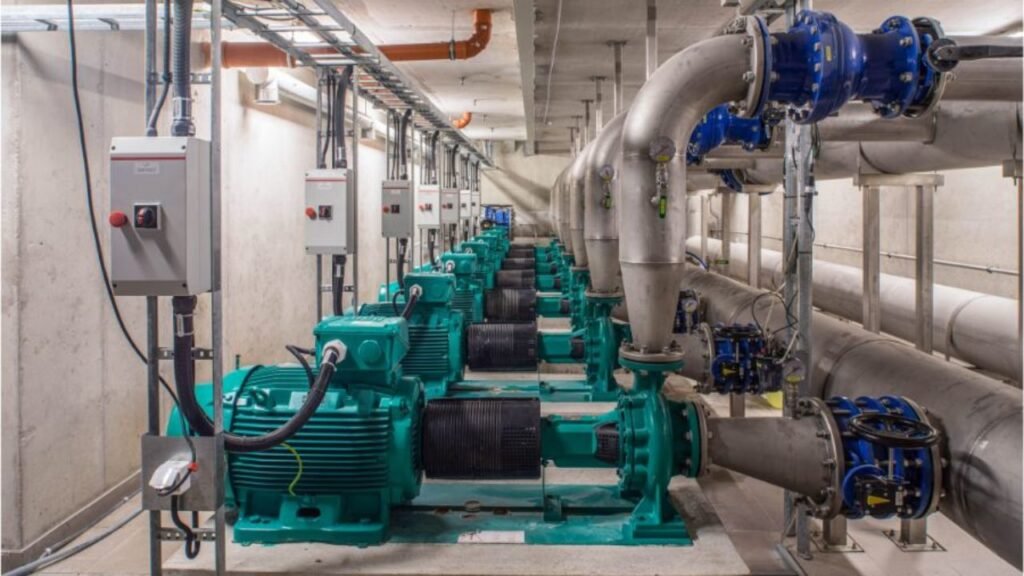
Industrial centrifugal pumps move most of the water, wastewater, and process liquid in service today. This guide covers how they work, how they are selected and sized, the efficiency standards that now apply to them, and the advances in materials, monitoring, and control that are changing how plants operate them.
Each configuration described below belongs to the broader family of centrifugal pumps used across water and wastewater treatment.
Fundamentals of Centrifugal Pumps
Centrifugal pumps are vital in many industries. They move fluids using centrifugal force. These pumps have key design features and operate in specific ways.
Design Principles
Centrifugal pumps have an impeller inside a casing. The impeller has curved blades attached to a central hub. As it spins, it creates a low-pressure area at its center.
Fluid enters through the suction inlet at the center. The spinning impeller flings the fluid outward using centrifugal force. This increases the fluid’s speed and pressure.
The casing shape is important too. It changes the high-speed fluid into high-pressure flow. The fluid then exits through the discharge outlet.
Pump size and impeller design affect its performance. Larger impellers generally move more fluid. Blade shape impacts efficiency and pressure output.
Operational Mechanics
When running, centrifugal pumps convert mechanical energy to fluid energy. An electric motor or engine typically powers the impeller shaft.
As the impeller spins, it creates a pressure difference. This draws fluid in and pushes it out. The pump doesn’t create constant flow or pressure on its own.
System conditions affect pump output. Factors like pipe size, length, and elevation changes matter. Pump curves help match pumps to system needs.
Most centrifugal pumps need priming to start. This means filling the pump casing with fluid. It prevents air pockets that can stop pumping action.
What Counts as an Industrial Centrifugal Pump
Industrial centrifugal pumps are the workhorses of process plants, water and wastewater facilities, power stations, and mining operations. The term covers several distinct configurations rather than a single product, and the choice among them is usually driven by flow, head, and the nature of the liquid.
- End suction: The most common configuration, with the inlet on the end of the casing. Compact and economical for moderate flow and head; see our detailed guide to the end suction centrifugal pump.
- Horizontal split case: A double suction impeller between bearings, used for high flow at moderate head in water supply and cooling service.
- Vertical turbine: Stacked bowl assemblies suspended in a wet well or well casing, used where suction lift rules out a horizontal pump.
- Multistage: Impellers in series for high-pressure duties such as boiler feed and reverse osmosis.
- Solids-handling and sealless designs: Non-clog impellers for wastewater, and magnetic drive or canned motor pumps where containment of the liquid matters more than efficiency.
Selection and Sizing Basics
Most avoidable pump problems trace back to selection rather than manufacture. Four checks cover the majority of cases.
- Define the duty point honestly. Calculate the system curve from static head plus friction losses at the real flow range, rather than adding a safety factor to a guess. Oversizing is the most common and most expensive error.
- Select near the best efficiency point. A pump that runs continuously well to the left or right of its best efficiency point suffers higher radial loads, shorter bearing and seal life, and recirculation damage. This applies as much to small centrifugal pumps on auxiliary duties as it does to large process units.
- Confirm suction conditions. Net positive suction head available must exceed the pump’s required value with margin, taking account of liquid temperature, suction piping losses, and strainer fouling.
- Match materials to the liquid. Cast iron and bronze suit clean water. Abrasive slurries need hardened alloys or elastomer linings, and chlorides or acids call for duplex stainless or engineered plastics. Bearing arrangement matters too: most process pumps are overhung pumps, with the impeller cantilevered off the end of the shaft.
Efficiency Standards and Life-Cycle Cost
Energy dominates the cost of owning a pump. Over a typical service life, electricity commonly accounts for far more than the purchase price, which is why life-cycle cost analysis rather than first cost should drive procurement.
Regulation now reinforces this. In the United States, the Department of Energy’s energy conservation standards for clean water pumps (10 CFR Part 431, subpart Y) set minimum efficiency requirements expressed as a pump energy index, and covered equipment must be tested and rated accordingly. Variable speed operation, correctly trimmed impellers, and premium efficiency motors are the practical levers for beating the minimum.
Advances and Innovations
Industrial centrifugal pumps have seen major upgrades in recent years. New technologies boost efficiency and add smart features for better performance.
Energy Efficiency
Modern centrifugal pumps use advanced materials and designs to cut energy use. Many now have high-efficiency motors that need less power to run. Some pumps adjust their speed based on demand, saving energy when full power isn’t needed.
New impeller shapes also help pumps work better. These parts move fluid more smoothly, reducing waste. Some pumps now use special coatings that lower friction, letting them run with less effort.
Engineers have also improved pump casings. Better shapes help fluid flow with less trouble. This means pumps don’t have to work as hard to move liquids.
Smart Monitoring Systems
Today’s pumps often come with built-in sensors and controls. These tools watch how the pump works and can spot problems early.
Some systems track vibration, temperature, and pressure. If something’s wrong, they alert operators right away. This helps prevent big breakdowns and costly repairs.
Many pumps now connect to computer networks. This lets workers check on pumps from far away. They can change settings or turn pumps on and off without being there.
Smart pumps can also learn from data over time. They figure out the best ways to run and can change their settings on their own. This makes them work better and last longer.
Regulatory and Safety Considerations
Industrial centrifugal pumps require careful attention to regulatory standards and safety protocols. Proper compliance and safety measures protect workers, equipment, and the environment.
Compliance with Standards
Centrifugal pumps must meet strict industry standards. These include guidelines from organizations like OSHA, ISO, and API. Pump designs need to follow specific rules for materials, construction, and performance.
Key compliance areas:
- Pressure ratings
- Efficiency requirements
- Noise levels
- Emission controls
Manufacturers must test pumps to ensure they meet these standards. Regular inspections and certifications are often required. This helps maintain safe and reliable pump operation over time.
Proper labeling is crucial for regulatory compliance. Pumps should have clear markings for operating limits and potential hazards.
Safety Protocols
Safe operation of centrifugal pumps is vital. Companies must establish clear safety procedures for pump use and maintenance.
Important safety measures include:
- Proper personal protective equipment (PPE)
- Lock-out/tag-out procedures
- Regular equipment checks
Workers should receive thorough training on pump operation and safety. This includes how to recognize and respond to potential issues.
Emergency shutdown procedures are essential. These should be clearly posted and practiced regularly.
Routine maintenance is key to preventing accidents. This includes checking for wear, leaks, and unusual vibrations. Proper documentation of all maintenance activities is crucial for safety compliance.