
Kentucky Wastewater Treatment Plants
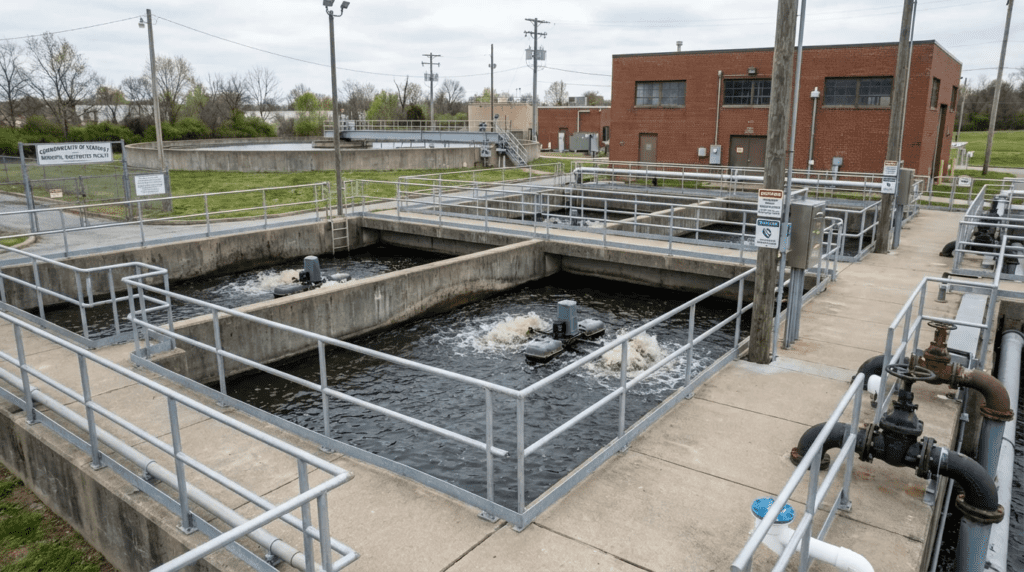
The authoritative resource for consulting engineers, utility managers, and municipal decision-makers tracking Kentucky’s wastewater infrastructure landscape.
1. Introduction
Kentucky’s wastewater infrastructure represents a complex dichotomy between the advanced, high-capacity systems of the “Golden Triangle” (Louisville, Lexington, and Northern Kentucky) and the decentralized challenges of the Appalachian and rural western regions. The Commonwealth manages a robust network of treatment facilities overseen by the Kentucky Division of Water (KDOW), ensuring compliance with both the Clean Water Act and specific Ohio River Valley Water Sanitation Commission (ORSANCO) standards.
Currently, Kentucky faces significant engineering challenges related to Combined Sewer Overflows (CSOs) in its historic river cities, requiring multi-billion dollar consent decree investments. Additionally, the state is grappling with unique geological constraints, specifically the extensive karst topography in the south-central region, which complicates conveyance design. With over 4.5 million residents served and a resurgence in industrial manufacturing (particularly in the EV battery sector), the demand for treatment capacity expansion and technological upgrades is at an all-time high.
2. Recent Developments & Projects
In the last 36 months, Kentucky has seen a massive influx of capital directed toward wet weather management and biosolids optimization. The Louisville and Jefferson County Metropolitan Sewer District (MSD) recently completed the massive Waterway Protection Tunnel, a pivotal component of their IOAP (Integrated Overflow Abatement Plan). Similarly, Sanitation District No. 1 (SD1) in Northern Kentucky is advancing its “Clean H2O40” program, utilizing smart sewer technology to optimize storage and conveyance rather than solely relying on gray infrastructure expansion.
Funding availability has surged due to the Infrastructure Investment and Jobs Act (IIJA), administered through the Kentucky Infrastructure Authority (KIA). Significant focus is also being placed on resilience following the catastrophic 2022 flooding in Eastern Kentucky, prompting new designs for flood-proof lift stations and treatment plants. Furthermore, the massive BlueOval SK Battery Park in Glendale has triggered urgent requirements for new municipal infrastructure in Hardin County to support the influx of industrial wastewater and population growth.
3. Top 20 Largest Treatment Plants in Kentucky
The following table ranks the largest wastewater treatment plants in Kentucky by design capacity (MGD). Data is compiled from KDOW facility reports, EPA ECHO databases, and municipal utility annual reports.
| Rank | Plant Name | City/Location | Design Capacity (MGD) | Population Served | Operating Authority |
|---|---|---|---|---|---|
| 1 | Morris Forman WQTC | Louisville | 120.0 | 650,000+ | Louisville MSD |
| 2 | Dry Creek WWTP | Villa Hills (N. KY) | 46.5 | 280,000+ | Sanitation District No. 1 (SD1) |
| 3 | Town Branch WWTP | Lexington | 30.0 | 160,000 | Lexington-Fayette UCG |
| 4 | Derek R. Guthrie WQTC | Louisville | 26.5 | 185,000 | Louisville MSD |
| 5 | West Hickman Creek WWTP | Lexington | 21.0 | 110,000 | Lexington-Fayette UCG |
| 6 | Max E. Walters Regional WQTC | Owensboro | 16.0 | 60,000 | RWRA |
| 7 | Bowling Green WWTP | Bowling Green | 15.0 | 75,000 | Bowling Green Municipal Utilities |
| 8 | Paducah WWTP | Paducah | 14.0 | 25,000 | Paducah McCracken JPA |
| 9 | Hite Creek WQTC | Louisville | 11.0 | 60,000 | Louisville MSD |
| 10 | Hopkinsville Hammond-Wood | Hopkinsville | 10.5 | 32,000 | Hopkinsville Water Env. Authority |
| 11 | Elizabethtown WWTP | Elizabethtown | 9.5 | 30,000 | City of Elizabethtown |
| 12 | Western Regional WRF | Union | 8.5 | 45,000 | Sanitation District No. 1 (SD1) |
| 13 | Richmond WWTP | Richmond | 8.0 | 36,000 | Richmond Utilities |
| 14 | Frankfort WWTP | Frankfort | 7.9 | 28,000 | City of Frankfort |
| 15 | Georgetown WWTP | Georgetown | 7.5 | 35,000 | Georgetown Municipal Water |
| 16 | Floyds Fork WQTC | Louisville | 6.5 | 38,000 | Louisville MSD |
| 17 | Winchester WWTP | Winchester | 6.0 | 19,000 | Winchester Municipal Utilities |
| 18 | Ashland WWTP | Ashland | 6.0 | 20,000 | City of Ashland |
| 19 | Eastern Regional WRF | Alexandria | 5.5 | 25,000 | Sanitation District No. 1 (SD1) |
| 20 | Henderson North WWTP | Henderson | 5.5 | 28,000 | Henderson Water Utility |


Profiles of the Top 5 Largest Facilities
1. Morris Forman Water Quality Treatment Center
- Location: Louisville, Jefferson County
- Design Capacity: 120 MGD (Peak wet weather capacity > 300 MGD)
- Operating Authority: Louisville MSD
- Receiving Water: Ohio River
- Service Area: Metro Louisville and parts of Oldham County
Treatment Process: The flagship facility for MSD utilizes pure oxygen activated sludge secondary treatment. It features advanced preliminary treatment with coarse and fine screening to handle the heavy combined sewer load.
Infrastructure Highlights: Morris Forman is the regional hub for solids processing. It utilizes anaerobic digestion and a massive thermal hydrolysis process (THP) currently being integrated to produce Class A biosolids. The plant generates substantial renewable energy via methane capture and cogeneration.
Recent Upgrades: A major $200M+ Biosolids Processing Solution project is underway to replace aging dryers with new technology to produce marketable fertilizer pellets.
2. Dry Creek Wastewater Treatment Plant
- Location: Villa Hills, Kenton County
- Design Capacity: 46.5 MGD
- Operating Authority: Sanitation District No. 1 (SD1)
- Receiving Water: Ohio River
- Service Area: Northern Kentucky (Boone, Kenton, and Campbell Counties)
Treatment Process: Conventional activated sludge with biological nutrient removal capabilities. The plant handles flows from a significant portion of the Cincinnati metropolitan area lying within Kentucky.
Infrastructure Highlights: Dry Creek serves as the central control node for SD1’s expansive network of pump stations and equalization tanks.
Compliance: Operating under an amended consent decree, the facility has seen significant investment in wet weather flow management to reduce CSOs into the Ohio River.
3. Town Branch Wastewater Treatment Plant
- Location: Lexington, Fayette County
- Design Capacity: 30.0 MGD (Peak flow 64 MGD)
- Operating Authority: Lexington-Fayette Urban County Government (LFUCG)
- Receiving Water: Town Branch of Elkhorn Creek
- Service Area: Downtown and North Lexington
Treatment Process: Advanced secondary treatment utilizing oxidation ditches and vertical loop reactors. Tertiary treatment includes deep bed gravity filters and UV disinfection.
Recent Upgrades: As part of Lexington’s EPA Consent Decree, Town Branch has undergone massive rehabilitation, including a new Wet Weather Flow Storage facility capable of holding 22 million gallons.
4. Derek R. Guthrie Water Quality Treatment Center
- Location: Louisville, Jefferson County
- Design Capacity: 26.5 MGD
- Operating Authority: Louisville MSD
- Receiving Water: Ohio River
Treatment Process: Uses a vertical shaft oxidation ditch system. It is a key facility for managing suburban growth in southern Jefferson County.
Infrastructure: Known for its energy efficiency and automated SCADA integration. The plant utilizes UV disinfection to eliminate chlorine hazards.
5. West Hickman Creek Wastewater Treatment Plant
- Location: Lexington, Jessamine County line
- Design Capacity: 21.0 MGD
- Operating Authority: LFUCG
- Receiving Water: West Hickman Creek
Treatment Process: Utilizes vertical loop reactors for biological treatment. The plant is critical for the rapidly growing southern sector of Lexington.
Notable Features: Recipient of multiple NACWA Peak Performance Awards. Recent projects include filter improvements and chemical feed system upgrades for phosphorus removal.
Regional & Significant Facilities (Rank 6-20)
Regional Hubs (Rank 6-10)
- Max E. Walters (Owensboro): 16 MGD. Operated by RWRA. Features a comprehensive telemetry system monitoring over 50 pump stations.
- Bowling Green WWTP: 15 MGD. Operated by BGMU. Dealing with rapid industrial growth; sits in a high-risk karst zone requiring specialized conveyance engineering.
- Paducah WWTP: 14 MGD. Recently upgraded screw pumps and grit removal systems to handle Ohio River flood stages.
Major Municipal Plants (Rank 11-15)
- Elizabethtown WWTP: 9.5 MGD. Currently facing the most pressure in the state due to the Ford BlueOval SK battery plant construction nearby; major expansion planning is imminent.
- Western Regional (SD1): 8.5 MGD. Newer facility designed to support the explosive residential growth in Boone County.
4. Plants with Approved Budgets & Expansion Projects
Kentucky utilities are currently executing over $750 million in capital improvement projects driven largely by Consent Decree compliance and economic development.
A. Major Projects Under Construction (2024-2026)
Location: Morris Forman WQTC, Louisville
Total Budget: $220 Million
Project Scope: Replacement of aging biosolids equipment with thermal hydrolysis pre-treatment and new high-efficiency dryers.
- Drivers: Aging infrastructure failure risk and regulatory compliance regarding Class A biosolids.
- Funding: Revenue Bonds and WIFIA Loan.
- Timeline: Construction active; substantial completion expected 2026.
- Benefits: Production of high-quality fertilizer, significant reduction in volume for disposal, and increased biogas generation.
Location: Boone County (SD1)
Total Budget: $55 Million
Project Scope: Construction of a deep rock tunnel to store and convey wet weather flows.
- Drivers: Elimination of sanitary sewer overflows (SSOs) and support for population growth.
- Timeline: Construction ongoing, projected completion 2025.
- Key Contractor: Kokosing Construction.
B. Projects in Design/Planning Phase (2025-2027)
- Elizabethtown Regional Sewer Expansion:
- Budget: Est. $45 Million
- Scope: Capacity expansion and interceptor upgrades to serve the Glendale mega-site (BlueOval SK).
- Status: Engineering design and right-of-way acquisition.
- Frankfort Sewer System Rehabilitation:
- Budget: $18 Million (KIA Funding)
- Scope: Rehabilitation of downtown collectors to reduce I/I (Inflow & Infiltration).
C. Recently Completed Major Projects (2022-2024)
- Waterway Protection Tunnel (Louisville): Completed in 2022. A $200M+ project creating a 4-mile long tunnel aimed at preventing combined sewer overflows into the Ohio River.
- Bowling Green Pump Station Expansions: Completed in 2023. Upgrades to key lift stations to navigate karst terrain challenges and support industrial parks.
Summary Statistics: Kentucky Active Capital Investment
- Total Active Capital Investment: ~$850 Million currently programmed or under construction.
- Number of Major Active Projects: 14 facilities with >$10M projects.
- Primary Project Drivers: Consent Decrees (55%), Industrial Growth (25%), Aging Asset Replacement (20%).
- Funding Source Breakdown:
- Revenue Bonds: 45%
- SRF (KIA) Loans: 35%
- Federal Grants (IIJA/ARPA): 20%
5. Regulatory & Compliance Landscape
Kentucky facilities operate under the Kentucky Pollutant Discharge Elimination System (KPDES), managed by the Kentucky Division of Water (KDOW). The regulatory landscape is heavily influenced by the EPA’s focus on eliminating sanitary sewer overflows.
- Consent Decrees: Louisville MSD, LFUCG (Lexington), and SD1 (Northern KY) are all operating under long-term federal consent decrees requiring billions in spending to mitigate CSOs and SSOs.
- Nutrient Removal: With the Ohio River being a major contributor to Gulf hypoxia, KDOW is enforcing stricter limits on Total Nitrogen and Total Phosphorus for major dischargers.
- PFAS: Kentucky is currently conducting statewide sampling of influent, effluent, and biosolids for PFAS. While strict limits are not yet universal in permits, anticipation of federal MCLs is driving testing.
6. Infrastructure Challenges & Opportunities
Karst Topography: A unique challenge for Kentucky engineers, particularly in the Bowling Green and South Central areas, is the limestone karst geology. Pipe bedding failures and sinkholes are constant risks, requiring specialized geotechnical engineering for all conveyance projects.
Workforce Development: Like many states, Kentucky faces a “Silver Tsunami” of retiring operators. Opportunities exist for firms offering automation, remote SCADA monitoring, and operational consulting to bridge the skills gap.
7. Technology Trends in Kentucky
- Thermal Hydrolysis: Louisville MSD’s adoption of THP is setting a trend for large-scale biosolids management in the region.
- Peracetic Acid (PAA): Several plants are piloting or switching to PAA for disinfection to reduce the safety risks associated with chlorine gas and the cost of dechlorination.
- Real-Time Control (RTC): SD1 and MSD are leaders in using smart sensors and actuated gates to maximize in-system storage during storm events, reducing the need for building massive concrete storage tanks.
8. Directory of Facilities
Browse our resources for specific plant data. (Full directory links to be populated)
- Louisville Region Facilities (MSD)
- Lexington & Bluegrass Region Plants
- Northern Kentucky / SD1 Facilities
- Western Kentucky & Paducah Area
9. Resources for Engineers & Operators
- Kentucky Division of Water (KDOW): Website – Permitting and compliance data.
- Kentucky Water & Wastewater Operators Association (KWWOA): Website – Training and certification.
- Kentucky Infrastructure Authority (KIA): Website – SRF loan information and funding cycles.
- KY/TN Water Environment Association: Website – Regional WEF member association.
10. FAQ Section
How many wastewater treatment plants are in Kentucky?
Kentucky has over 250 municipal wastewater treatment plants, ranging from the massive 120 MGD Morris Forman facility to small package plants serving rural communities.
What is the largest wastewater treatment plant in Kentucky?
The Morris Forman Water Quality Treatment Center in Louisville is the largest, with a design capacity of 120 MGD and wet weather handling capabilities exceeding 300 MGD.
Which Kentucky utilities are under Consent Decrees?
The three largest utility operators—Louisville MSD, Lexington-Fayette UCG, and Sanitation District No. 1 (Northern KY)—are all currently executing projects under federal Consent Decrees to reduce sewer overflows.
What funding is available for wastewater projects in Kentucky?
Funding is primarily available through the Kentucky Infrastructure Authority (KIA), which administers the Clean Water State Revolving Fund (CWSRF). Additional funding has been made available through the federal IIJA and Cleaner Water Program grants.
How is Kentucky addressing PFAS in wastewater?
The Kentucky Division of Water (KDOW) and the Department for Environmental Protection have initiated statewide sampling studies to determine the prevalence of PFAS in wastewater effluent and biosolids, though specific discharge limits are pending federal EPA finalization.