
Puerto Rico Wastewater Treatment Plants
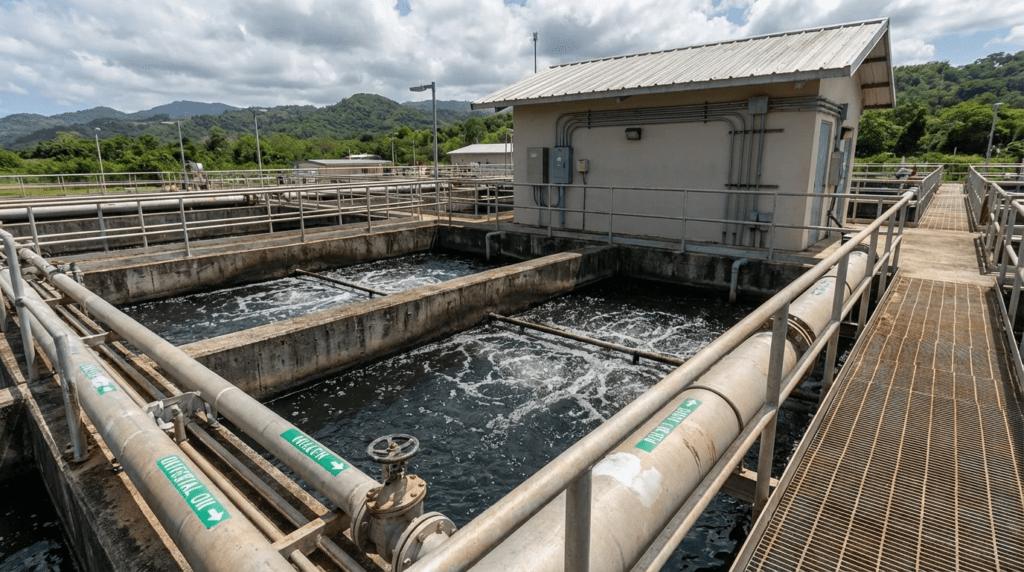
1. Introduction to Puerto Rico’s Wastewater Infrastructure
Puerto Rico’s wastewater infrastructure presents a unique and dynamic environment for consulting engineers, utility managers, and equipment vendors. Unlike most mainland U.S. states where utilities are managed at the municipal or county level, Puerto Rico’s entire public water and wastewater system is operated by a single entity: the Puerto Rico Aqueduct and Sewer Authority (PRASA), or Autoridad de Acueductos y Alcantarillados (AAA). This centralized structure makes PRASA one of the largest water and wastewater utilities in the United States, serving a population of approximately 3.2 million residents.
Currently, PRASA operates 51 wastewater treatment plants (WWTPs), down from over 60 in recent years due to strategic facility consolidations designed to improve compliance and operational efficiency. The island’s total wastewater treatment capacity exceeds 350 Million Gallons per Day (MGD). A significant portion of this capacity is concentrated in the San Juan metropolitan area, served by massive regional facilities that utilize deep ocean outfalls under EPA 301(h) waivers.
The regulatory environment in Puerto Rico is tightly overseen by EPA Region 2 and the Puerto Rico Department of Natural and Environmental Resources (DNER). PRASA operates under a comprehensive, island-wide EPA Consent Decree initially established in 2003 and heavily modified in 2015 to address sanitary sewer overflows (SSOs) and aging infrastructure. Following the devastating impacts of Hurricanes Maria (2017) and Fiona (2022), the island is currently undergoing a historic, multibillion-dollar infrastructure modernization effort, heavily backed by FEMA, HUD CDBG-DR funds, and the Clean Water State Revolving Fund (CWSRF), presenting unprecedented opportunities for infrastructure planning professionals and service providers.
2. Recent Developments & Major Projects
The last three years have marked a pivotal shift in Puerto Rico’s wastewater sector, transitioning from emergency disaster recovery to long-term resilience and technological modernization. PRASA is currently executing a 10-year, $6.1 billion Capital Improvement Program (CIP), with over $2 billion specifically earmarked for wastewater and sanitary sewer infrastructure.
One of the most critical ongoing initiatives is the island-wide deployment of microgrids, combined heat and power (CHP) systems, and emergency backup generation. Because power grid instability (managed by LUMA Energy/PREPA) frequently leads to pump station failures and SSOs, PRASA has secured hundreds of millions in FEMA 428 alternative procedures funding to ensure every critical WWTP and major pump station has redundant, elevated power sources. Facilities are being hardened against Category 5 hurricanes, with electrical MCCs and SCADA systems being relocated above newly established 500-year flood elevations.
Additionally, PRASA is heavily leveraging federal Bipartisan Infrastructure Law (IIJA) funding and SRF loans to execute sewer trunk rehabilitations, eliminate aging package plants by tying them into regional systems, and deploy smart-water network technologies. Notable public-private partnerships (P3s) are also being explored for smart metering and biosolid management. Furthermore, climate resilience is driving a push toward advanced sludge dewatering, anaerobic digestion upgrades for biogas recovery, and enhanced coastal protection for shoreline facilities facing sea-level rise.
3. Top 20 Largest Treatment Plants in Puerto Rico
Below is a comprehensive ranked list of the 20 largest wastewater treatment plants in Puerto Rico by design capacity. Due to PRASA’s centralized nature, all facilities are owned and operated by the Authority, though they serve diverse regional watersheds.
| Rank | Plant Name | City/Municipality | Design Capacity (MGD) | Population Served | Operating Authority |
|---|---|---|---|---|---|
| 1 | Puerto Nuevo RWWTP | San Juan | 72.0 MGD | ~500,000 | PRASA |
| 2 | Bayamón RWWTP | Bayamón | 60.0 MGD | ~350,000 | PRASA |
| 3 | Carolina RWWTP | Carolina | 45.0 MGD | ~300,000 | PRASA |
| 4 | Mayagüez RWWTP | Mayagüez | 28.0 MGD | ~100,000 | PRASA |
| 5 | Barceloneta RWWTP | Barceloneta | 15.0 MGD | ~60,000* | PRASA |
| 6 | Ponce (Bucaná) RWWTP | Ponce | 14.0 MGD | ~95,000 | PRASA |
| 7 | Arecibo RWWTP | Arecibo | 10.0 MGD | ~65,000 | PRASA |
| 8 | Aguadilla RWWTP | Aguadilla | 8.5 MGD | ~55,000 | PRASA |
| 9 | Caguas WWTP | Caguas | 8.0 MGD | ~70,000 | PRASA |
| 10 | Guayama RWWTP | Guayama | 6.0 MGD | ~40,000 | PRASA |
| 11 | Fajardo WWTP | Fajardo | 5.5 MGD | ~35,000 | PRASA |
| 12 | Humacao WWTP | Humacao | 5.0 MGD | ~30,000 | PRASA |
| 13 | Vega Baja WWTP | Vega Baja | 4.5 MGD | ~35,000 | PRASA |
| 14 | Cayey WWTP | Cayey | 4.0 MGD | ~25,000 | PRASA |
| 15 | Dorado WWTP | Dorado | 3.5 MGD | ~25,000 | PRASA |
| 16 | San Germán WWTP | San Germán | 3.0 MGD | ~20,000 | PRASA |
| 17 | Juncos WWTP | Juncos | 3.0 MGD | ~20,000 | PRASA |
| 18 | Yauco WWTP | Yauco | 2.5 MGD | ~15,000 | PRASA |
| 19 | Coamo WWTP | Coamo | 2.0 MGD | ~15,000 | PRASA |
| 20 | Cidra WWTP | Cidra | 2.0 MGD | ~15,000 | PRASA |
*Barceloneta population equivalent is much higher due to heavy pharmaceutical industrial base.
Detailed Profiles of the Top 5 Largest Plants
1. Puerto Nuevo Regional Wastewater Treatment Plant – Rank #1
- Location: San Juan, PR
- Design Capacity: 72.0 MGD (Peak hydraulic capacity >100 MGD)
- Current Average Flow: 55.0 MGD
- Population Served: ~500,000 residents
- Operating Authority: PRASA
- Receiving Water: Atlantic Ocean (via deep ocean outfall)
- Service Area: San Juan, Guaynabo, and parts of surrounding municipalities
Treatment Process:
- Preliminary: Automated bar screens, aerated grit chambers.
- Primary: Advanced primary clarification with chemical enhancement (CEPT – polymer/ferric chloride addition).
- Secondary: N/A (Operates under EPA Section 301(h) secondary treatment waiver).
- Disinfection: Chlorination/Dechlorination prior to outfall discharge.
Infrastructure & Recent Upgrades: Puerto Nuevo is the backbone of the San Juan metro area’s sanitation. Due to its coastal location, it suffered severe flooding during Hurricane Maria. PRASA is executing a massive $120M+ hazard mitigation project, elevating critical electrical substations, replacing main influent pumps, and installing a new CHP microgrid to ensure 100% operational autonomy during grid failures. The plant also features an extensive biosolids dewatering facility serving the metro region.
2. Bayamón Regional Wastewater Treatment Plant – Rank #2
- Location: Bayamón, PR
- Design Capacity: 60.0 MGD
- Current Average Flow: 42.0 MGD
- Population Served: ~350,000 residents
- Operating Authority: PRASA
- Receiving Water: Atlantic Ocean (deep ocean diffuser outfall shared with Puerto Nuevo)
- Service Area: Bayamón, Cataño, Toa Baja, parts of Toa Alta
Treatment Process & Infrastructure: Like Puerto Nuevo, Bayamón relies on Advanced Primary Treatment (CEPT) under a 301(h) waiver. It acts as a massive regional hub receiving flows from dozens of peripheral pump stations. Active projects at this facility include a $45M comprehensive SCADA upgrade and the replacement of coarse and fine screening systems to prevent equipment fouling. It is currently undergoing a massive sludge handling facility redesign to increase centrifuge capacity.
3. Carolina Regional Wastewater Treatment Plant – Rank #3
- Location: Carolina, PR
- Design Capacity: 45.0 MGD
- Current Average Flow: 30.0 MGD
- Population Served: ~300,000 residents
- Operating Authority: PRASA
- Receiving Water: Atlantic Ocean (via outfall)
- Service Area: Carolina, Trujillo Alto, Loíza, Canóvanas
Infrastructure & Compliance: The Carolina facility rounds out the “Big Three” metro primary plants. A major focus over the last three years has been odor control, deploying advanced biological scrubbers and activated carbon systems to mitigate impacts on nearby dense urban and tourist areas. Under the EPA Consent Decree, the collection system feeding Carolina is undergoing extensive slip-lining and CIPP (Cured-In-Place Pipe) rehabilitation to reduce heavy Inflow and Infiltration (I&I) during tropical rain events.
4. Mayagüez Regional Wastewater Treatment Plant – Rank #4
- Location: Mayagüez, PR
- Design Capacity: 28.0 MGD
- Current Average Flow: 16.0 MGD
- Population Served: ~100,000 residents
- Operating Authority: PRASA
- Receiving Water: Mona Passage (Caribbean Sea / Atlantic boundary)
- Service Area: Mayagüez, Hormigueros, Cabo Rojo, Añasco
Treatment Process & Upgrades: Serving the west coast of the island, this plant also operates via CEPT with a deep ocean outfall. The Mayagüez RWWTP recently completed a $25M outfall structural rehabilitation and diffuser upgrade. Currently, the plant is the site of a $38M electrical hazard mitigation and backup generation project, incorporating highly resilient switchgear designed to withstand seismic events, a major consideration given the seismic swarm activity in southwestern Puerto Rico in 2020.
5. Barceloneta Regional Wastewater Treatment Plant – Rank #5
- Location: Barceloneta, PR
- Design Capacity: 15.0 MGD
- Current Average Flow: 10.0 MGD
- Population Served: ~60,000 residents (plus massive industrial equivalent)
- Operating Authority: PRASA
- Receiving Water: Atlantic Ocean
Treatment Process & Notable Features: Unlike the top four, Barceloneta is a full secondary treatment facility (Activated Sludge). It is arguably the most complex WWTP on the island due to its influent profile: it processes wastewater from one of the densest pharmaceutical manufacturing hubs in the world. The plant utilizes robust preliminary equalization, extended aeration, and advanced biological nutrient removal to handle complex organic loads and active pharmaceutical ingredients (APIs). Strict industrial pretreatment programs (IPP) are enforced here. Recent upgrades involve $20M in aeration blower modernizations using high-efficiency turbo blowers.
Condensed Listings (Ranks 6-20)
Large Regional Plants (Rank 6-10):
- Ponce (Bucaná) RWWTP – Ponce: 14.0 MGD capacity. Serves the southern capital. Full secondary treatment with active $30M aeration and clarifier rehab underway.
- Arecibo RWWTP – Arecibo: 10.0 MGD capacity. Major northern regional facility. Recently upgraded primary clarifier mechanisms.
- Aguadilla RWWTP – Aguadilla: 8.5 MGD capacity. Serves the northwest coast, secondary treatment. Upgrading UV disinfection systems.
- Caguas WWTP – Caguas: 8.0 MGD capacity. Largest inland facility, discharges to the Loíza River watershed. Strict nutrient limits.
- Guayama RWWTP – Guayama: 6.0 MGD capacity. South coast secondary facility, handles significant industrial/manufacturing flows.
Major Municipal Plants (Rank 11-15):
- Fajardo WWTP – Fajardo: 5.5 MGD capacity. Eastern coast hub, critical for tourist regions and marinas.
- Humacao WWTP – Humacao: 5.0 MGD capacity. East coast secondary plant, recently underwent $15M post-Hurricane Maria structural repair.
- Vega Baja WWTP – Vega Baja: 4.5 MGD capacity. North central region, utilizing activated sludge.
- Cayey WWTP – Cayey: 4.0 MGD capacity. Inland mountainous region plant, currently expanding anaerobic digestion capabilities.
- Dorado WWTP – Dorado: 3.5 MGD capacity. Serves high-end residential and resort areas, employing advanced odor control technologies.
Significant Facilities (Rank 16-20):
- San Germán WWTP – San Germán: 3.0 MGD. Inland western facility.
- Juncos WWTP – Juncos: 3.0 MGD. Receives high pharmaceutical/manufacturing industrial pretreatment flow.
- Yauco WWTP – Yauco: 2.5 MGD. Upgraded for seismic resiliency following the 2020 earthquakes.
- Coamo WWTP – Coamo: 2.0 MGD. Small regional plant addressing arid southern region capacity.
- Cidra WWTP – Cidra: 2.0 MGD. Inland plant with strict effluent limits discharging to the La Plata lake watershed.
4. Plants with Approved Budgets & Expansion Projects
Puerto Rico is executing one of the largest consolidated water infrastructure programs in the hemisphere. Over $2 billion in wastewater projects are advancing through FEMA, HUD, and EPA SRF pipelines.
A. MAJOR PROJECTS UNDER CONSTRUCTION (2024-2026)
Puerto Nuevo RWWTP – $115 Million Hazard Mitigation & Resiliency Project
- Location: San Juan, PR
- Project Scope: Elevation of master electrical substations, installation of 15MW redundant backup generation microgrid, replacement of 6 main influent pumps.
- Total Budget: $115 million
- Funding Breakdown: 90% FEMA Public Assistance/428, 10% CDBG-DR match.
- Timeline: Design completed Q4 2023; Construction started Q1 2024; Expected completion Q3 2026.
- Project Drivers: Extreme vulnerability to storm surge, grid failures, and EPA Consent Decree requirements for uninterrupted operation.
- Key Contractors: CSA Group (Design Engineer), CH2M/Jacobs (Program Management).
Ponce (Bucaná) RWWTP – $42 Million Secondary Treatment Rehabilitation
- Location: Ponce, PR
- Project Scope: Complete rehabilitation of aeration basins, replacement of surface aerators with fine-bubble diffusers and high-efficiency blowers, clarifier mechanism replacement.
- Total Budget: $42 million
- Funding Breakdown: 60% SRF Loan, 40% PRASA Revenue Bonds.
- Timeline: Construction start Aug 2024; Projected in-service date Dec 2025.
- Technology Upgrades: Automated DO (Dissolved Oxygen) control systems, advanced turbo blowers for energy reduction.
- Project Drivers: Aging infrastructure (30+ years old), energy efficiency mandates.
Bayamón RWWTP – $65 Million Biosolids & Dewatering Expansion
- Location: Bayamón, PR
- Project Scope: Construction of a new regional sludge dewatering facility with high-solids centrifuges and automated polymer dosing.
- Total Budget: $65 million
- Timeline: Started Q2 2024; Expected completion Q2 2026.
- Project Drivers: Landfill capacity shortages in PR necessitate drier biosolid cake; reduction in hauling costs.
B. PROJECTS IN DESIGN/PLANNING PHASE (2025-2027)
- San Lorenzo WWTP Elimination & Trunk Sewer – $55 Million
- Funding: EPA SRF and IIJA Grants.
- Scope: Decommissioning the aging San Lorenzo plant and building a major trunk sewer and pump station to convey flows to the Caguas WWTP.
- Anticipated construction start: Early 2025.
- Carolina RWWTP Outfall Diffuser Replacement – $30 Million
- Funding: FEMA / PRASA CIP.
- Scope: Deep-sea marine engineering to replace deteriorating diffuser ports to maintain 301(h) compliance.
- Anticipated construction start: Mid 2025.
- Island-Wide Pump Station Telemetry Upgrades – $80 Million
- Funding: IIJA and local funds.
- Scope: Equipping over 400 wastewater pump stations with advanced SCADA, cellular/satellite redundancy, and smart flow meters.
C. RECENTLY COMPLETED MAJOR PROJECTS (2022-2024)
- Arecibo RWWTP Main Pump Station Reconstruction (Completed Nov 2023)
- Investment: $22 million.
- Key improvements: Replaced all dry-pit submersibles, elevated VFDs above flood lines.
- Results: Zero SSOs during tropical storms in 2024.
- Guayama WWTP Hurricane Fiona Repairs (Completed Jan 2024)
- Investment: $12 million.
- Key improvements: Rebuilt clarifier bridges and repaired damaged UV channels.
SUMMARY STATISTICS: PRASA Wastewater Capital Program
- Total Active Capital Investment: ~$2.1 billion dedicated to wastewater over the next 5 years.
- Number of Plants with Active Projects: 45 out of 51 facilities.
- Primary Project Drivers: Resiliency/FEMA mitigation (45%), EPA Consent Decree compliance (30%), Aging infrastructure (25%).
- Funding Source Breakdown: FEMA (60%), SRF / IIJA (25%), CDBG-DR / PRASA Revenue (15%).
5. Regulatory & Compliance Landscape
The regulatory environment for wastewater in Puerto Rico is stringent, shaped predominantly by a sweeping EPA Consent Decree (Civil Action No. 15-2283). Originally established to address decades of chronic Sanitary Sewer Overflows (SSOs), poor maintenance, and effluent violations, the decree was heavily renegotiated following Hurricane Maria to allow PRASA to align environmental compliance schedules with FEMA disaster recovery funding timelines.
For engineering firms, this means almost all major collection system rehabilitations, pump station upgrades, and plant modernizations are strictly timeline-driven under federal oversight. Compliance reporting is rigorous.
Another major regulatory feature is the Section 301(h) waivers for Puerto Rico’s largest coastal facilities (Puerto Nuevo, Bayamón, Carolina, Mayagüez, Aguadilla, Ponce). These waivers allow PRASA to discharge primary or advanced-primary treated effluent into deep ocean waters without full secondary biological treatment, provided they meet strict marine water quality standards. Maintaining these waivers requires extensive coastal monitoring, toxicity testing, and highly engineered, deep-water outfall diffusers.
Furthermore, emerging contaminants, particularly PFAS, are becoming a focal point. While PRASA’s primary focus remains on basic sanitation and infrastructure resilience, EPA Region 2 is beginning to enforce PFAS monitoring in PRASA’s industrial pretreatment programs, particularly given the island’s heavy pharmaceutical and manufacturing footprint in areas like Barceloneta and Juncos.
6. Infrastructure Challenges & Opportunities
Puerto Rico faces compounding infrastructure challenges that create distinct opportunities for specialized engineering, consulting, and equipment manufacturing firms.
- Grid Instability & Resilience: The island’s electrical grid is fragile. Prolonged outages mean WWTPs and lift stations must run on diesel generators for days or weeks. There is a massive market opportunity for microgrids, robust switchgear, automatic transfer switches (ATS), and engine-driven bypass pumps.
- Topography & Lift Stations: Puerto Rico’s steep, mountainous terrain requires an unusually high number of wastewater pump stations (over 700 island-wide) to convey sewage to coastal plants. Asset management, I&I reduction, and pump station reliability are top priorities.
- Workforce Shortages: There is a critical shortage of certified wastewater operators and local engineering technical staff due to outmigration. This drives a need for high automation, advanced SCADA, remote monitoring, and low-maintenance equipment.
- Supply Chain & Logistics: As an island, procuring parts and specialized chemicals (like polymers or chlorine gas) involves complex maritime logistics (Jones Act). Equipment vendors who can offer local inventory, robust local service networks, or easily shippable modular solutions hold a distinct advantage.
7. Technology Trends in Puerto Rico
Because of the unique challenges mentioned above, technology adoption in Puerto Rico is heavily skewed toward resiliency and remote autonomy rather than hyper-advanced biological nutrient removal (except in sensitive inland watersheds).
Key Trends:
- Smart Water Networks & SCADA: PRASA is investing heavily in transitioning from localized, isolated control panels to a centralized, cloud-based SCADA infrastructure utilizing cellular and satellite redundancy to maintain visibility during hurricanes.
- Advanced Primary Treatment (CEPT): To maximize the efficiency of 301(h) coastal plants, there is high utilization of automated chemical dosing systems (ferric and polymers) to optimize settling in primary clarifiers.
- Trenchless Technology: Cured-In-Place Pipe (CIPP) and horizontal directional drilling (HDD) are extensively deployed to rehabilitate aging terra-cotta and concrete sewers in densely populated, historic districts like Old San Juan where open-cut excavation is impossible.
- Energy Optimization: Inland secondary plants are replacing aging blowers with magnetic bearing turbo blowers and incorporating DO-paced automation to cut power consumption.
8. Complete Directory of Facilities
Browse our comprehensive directory of PRASA-operated wastewater treatment plants in Puerto Rico. (Links direct to individual facility data pages):
Major Regional Facilities (>40 MGD)
- Puerto Nuevo Regional WWTP (San Juan)
- Bayamón Regional WWTP
- Carolina Regional WWTP
Large Municipal Plants (10-40 MGD)
- Mayagüez Regional WWTP
- Barceloneta Regional WWTP
- Ponce (Bucaná) Regional WWTP
- Arecibo Regional WWTP
Medium-Sized Plants (3-10 MGD)
- Aguadilla RWWTP
- Caguas WWTP
- Guayama RWWTP
- Fajardo WWTP
- Humacao WWTP
- Vega Baja WWTP
- Cayey WWTP
- Dorado WWTP
- San Germán WWTP
- Juncos WWTP
Smaller Community Plants (<3 MGD)
- Yauco WWTP
- Coamo WWTP
- Cidra WWTP
- Plus 31 additional regional package and small municipal facilities…
Return to the US Treatment Plant Directory Main Page
9. Resources for Engineers & Operators
Professionals working or looking to bid on projects in Puerto Rico’s water sector should connect with the following organizations and portals:
- PRASA Official Portal (AAA): Access to the Capital Improvement Program (CIP), bids, RFPs, and supplier registration.
- Colegio de Ingenieros y Agrimensores de Puerto Rico (CIAPR): The mandatory licensing and professional association for all engineers practicing in PR. Excellent for networking and continuing education.
- Puerto Rico Water & Environment Association (PRW&EA): The local WEF (Water Environment Federation) member association, hosting the largest annual water infrastructure conference in the Caribbean.
- JCA/DNER Operator Certification: The Junta de Calidad Ambiental (now under DNER) manages state operator certification exams and training requirements.
10. Frequently Asked Questions (FAQ)
How many wastewater treatment plants are in Puerto Rico?
Currently, PRASA operates 51 wastewater treatment plants across the island, representing a consolidation from over 60 plants to improve operational efficiency and regulatory compliance.
Who operates the water and wastewater infrastructure in Puerto Rico?
Unlike mainland US states with municipal utilities, all public water and wastewater infrastructure in Puerto Rico is centrally managed by the Puerto Rico Aqueduct and Sewer Authority (PRASA/AAA).
What are the 5 largest treatment facilities in Puerto Rico?
The top five largest plants by capacity are the Puerto Nuevo RWWTP (72 MGD), Bayamón RWWTP (60 MGD), Carolina RWWTP (45 MGD), Mayagüez RWWTP (28 MGD), and Barceloneta RWWTP (15 MGD).
What funding is available for treatment plant upgrades in Puerto Rico?
PRASA’s $6.1 billion CIP is funded heavily by FEMA (Public Assistance and 428 Alternative Procedures), HUD CDBG-DR funds, EPA Clean Water State Revolving Funds (CWSRF), and the Bipartisan Infrastructure Law (IIJA).
Why do Puerto Rico’s largest plants not use secondary treatment?
The largest coastal plants (Puerto Nuevo, Bayamón, Carolina) operate under EPA Section 301(h) waivers, which permit advanced primary treatment (CEPT) accompanied by discharge through highly engineered deep-ocean outfall diffusers, provided marine water quality standards are met.
Which Puerto Rico treatment plants are under consent decrees?
Virtually the entire PRASA wastewater system operates under an island-wide EPA Consent Decree (modified in 2015), which dictates mandatory upgrade schedules, maintenance requirements, and SSO elimination milestones for plants and collection systems.
What treatment technologies are most common in Puerto Rico?
Common technologies include Chemically Enhanced Primary Treatment (CEPT) for coastal plants, conventional activated sludge for inland plants, extensive deep-sea outfall diffusers, and an increasing reliance on microgrids and robust diesel bypass pumping systems for hurricane resiliency.
How is Puerto Rico addressing infrastructure resilience?
PRASA is utilizing billions in FEMA funding to elevate critical electrical panels above flood lines, install dual-feed power systems, deploy permanent multi-megawatt backup generators, and harden structures against Category 5 wind loads.