
Sand Filtration Systems: The Ultimate Guide for Treatment Plants
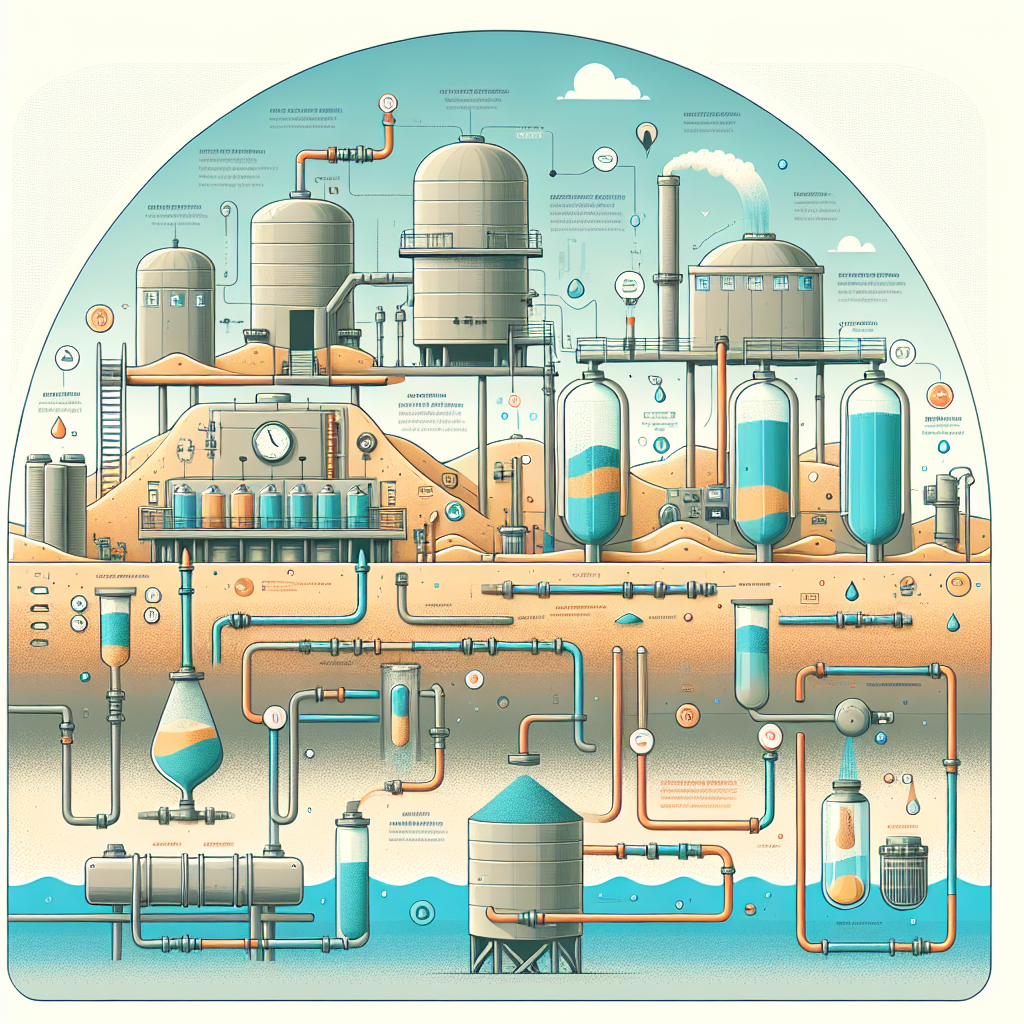
Sand Filtration Systems: The Ultimate Guide for Treatment Plants
Introduction
Welcome to the deep dive into the world of sand filtration systems! If you’ve ever sipped clean water from your home faucet or taken a refreshing swim in a pool, you might have unknowingly benefited from these unsung heroes of water purification. Sand filters are like the bouncers of the water treatment process, ensuring only the finest, purest H2O makes it through.
But what exactly is this magical sand? It’s not just any old beach sand; we’re talking about a carefully designed filtration system that can tackle everything from muddy river water to municipal wastewater. With options like slow sand filtration and rapid sand filtration, these systems are as versatile as they are effective.
In this ultimate guide, we’ll explore the ins and outs of sand filter design, maintenance tips that can extend their lifespan (which averages between 5-10 years!), and how they fit into larger systems like wastewater treatment plants and even aquifer recharge systems. Whether you’re an engineer looking to optimize your designs or a municipality seeking eco-friendly solutions, we’ve got you covered!
So grab your goggles and let’s plunge into the sandy depths of filtration technology. By the end of this guide, you’ll be equipped with all the knowledge you need to make informed decisions about your water treatment processes. Ready? Let’s get filtering!
Everything that follows sits inside the wider practice of Sand Filtration as it is applied across water and wastewater treatment. This page is concerned specifically with the system as installed — the filter box, the media, the underdrain, the wash arrangement, and the operating regime around them — rather than with the underlying separation mechanism or the individual filter types, both of which are treated separately and are linked at the appropriate points below.
Understanding Sand Filtration
So, what exactly is sand filtration? Imagine a superhero of the water treatment world, swooping in to save the day by removing impurities from water. In essence, sand filtration is a natural filtration method that uses layers of sand and gravel to trap particles and contaminants, ensuring we get clean water for drinking, swimming, and even industrial use.
Did you know? Sand filtration systems have been used for centuries! Their reliability and effectiveness in the water purification process make them a go-to choice for municipalities and wastewater treatment plants.
The Importance of Sand Filtration in Water Purification
When it comes to water purification, sand filters are like the trusty sidekick that never lets you down. They play a crucial role in the overall water treatment process, offering several benefits:
- Turbidity Reduction: By effectively removing suspended solids, sand filters help improve the clarity of water.
- Sediment Removal: These systems excel at trapping larger particles that can clog pipes or cause damage downstream.
- Cost-Effectiveness: Compared to other filtration methods like activated carbon filters or multimedia filtration systems, sand filters are often more economical to operate and maintain.
- Sustainability: Sand filtration aligns with eco-friendly water purification methods, making it an attractive option for sustainable water management practices.
A Closer Look at Sand Filter Design
The design of a sand filter can make or break its performance. Key considerations include:
- Layer Configuration: The arrangement of gravel and sand layers is pivotal for optimal flow rates and effluent quality.
- Filter Bed Depth: A deeper bed allows for greater sediment removal but requires careful management to avoid clogging.
- Sizing: Proper sizing ensures that your filtration system can handle peak flow rates without compromising performance.
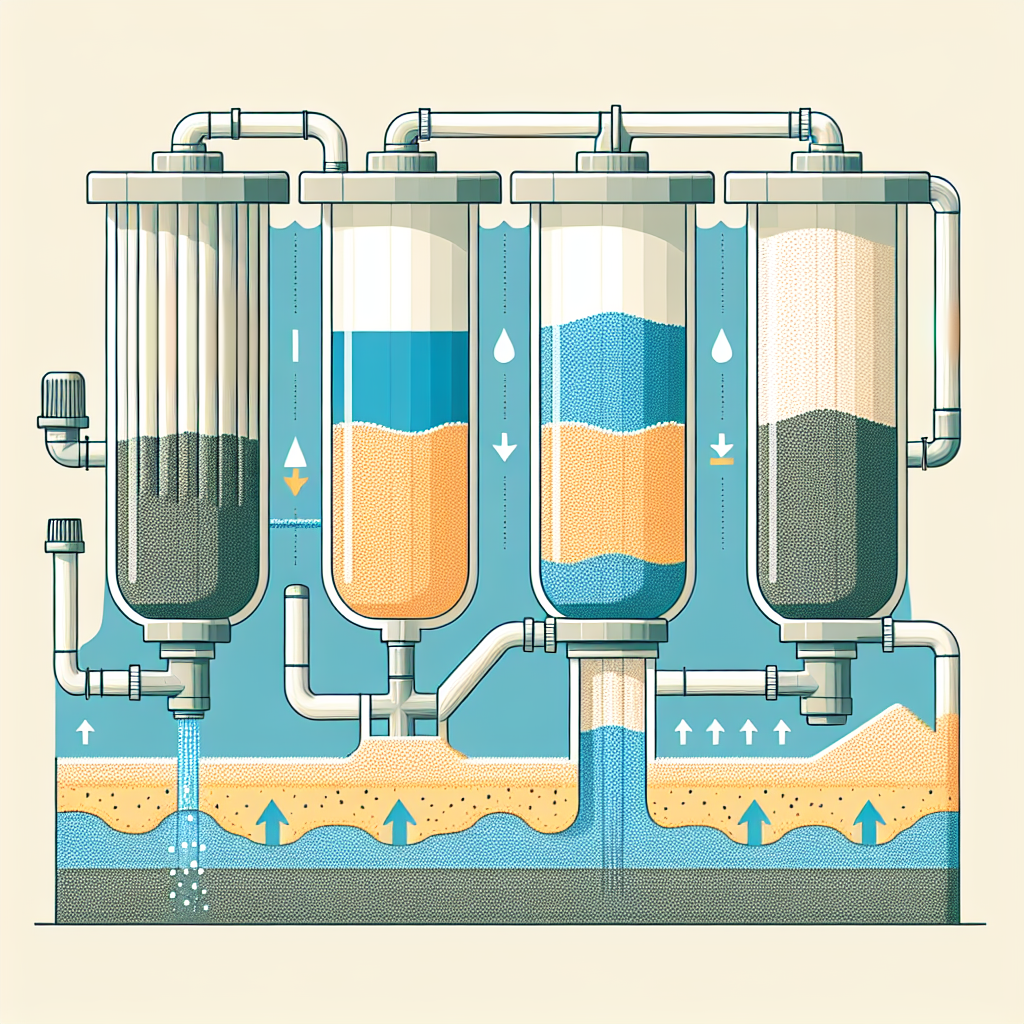
The beauty of sand filtration lies not just in its simplicity but also in its adaptability. Whether you’re dealing with municipal water treatment systems or designing industrial water filters, understanding the fundamentals of sand filter design will empower you to create effective solutions tailored to your needs.
The efficiency of sand filters is further enhanced when combined with biological filtration methods, making them suitable for both drinking water filtration and wastewater treatment applications.
In summary, understanding how sand filtration works is essential for anyone involved in planning or operating treatment plants. As we dive deeper into this guide, remember: clean water solutions start with solid foundations quite literally!
Types of Sand Filtration Systems
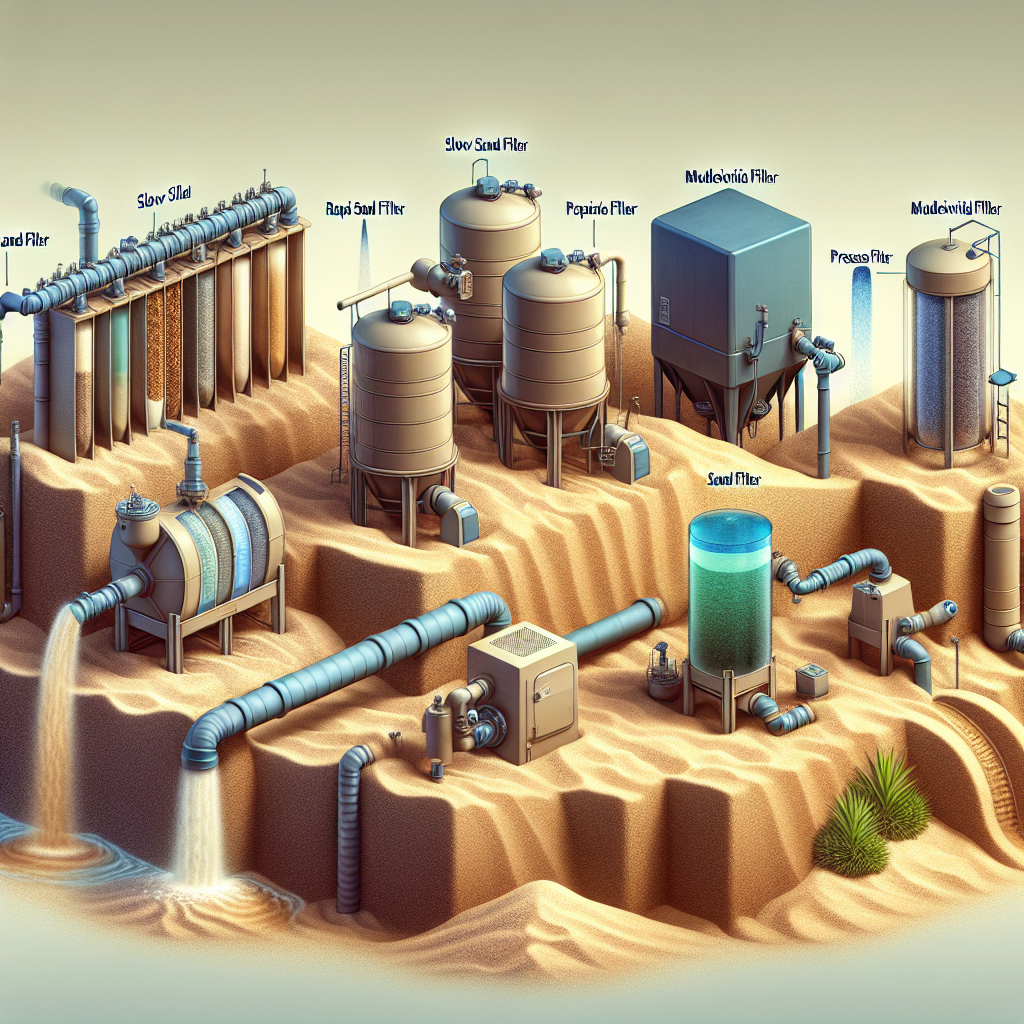
When it comes to sand filtration, not all systems are created equal. Each type has its own unique flair and functionality, making them suitable for different applications in the water treatment process. Let’s dive into the various types of sand filtration systems, shall we?
Slow Sand Filtration
Think of slow sand filtration as the tortoise in the race it may take its time, but it gets the job done with grace. This system works by allowing water to flow through a bed of sand at a slow pace, promoting natural biological processes that help in removing impurities from water. It’s particularly effective for treating drinking water and is often used in rural areas.
Rapid Sand Filtration
If slow sand filtration is the tortoise, then rapid sand filtration is definitely the hare! This method involves forcing water through a sand bed at high velocity. Thanks to its speed, it’s ideal for large-scale municipal water treatment systems where efficiency is key. However, it requires more frequent maintenance due to the buildup of sediment.
Pressure Sand Filters
Pressure sand filters take things up a notch by using pressure to push water through the sand bed. These systems are compact and can handle higher flow rates, making them perfect for industrial applications. Just remember: with great pressure comes great responsibility (and maintenance)!
Multimedia Filtration Systems
For those who can’t decide on just one type of media, multimedia filtration systems are here to save the day! Combining layers of different materials like anthracite coal and silica sand, these filters can tackle a variety of contaminants simultaneously. They’re often used in both municipal and industrial settings for enhanced filtration efficiency.
Bio-Sand Filters
A twist on traditional methods, bio-sand filters incorporate biological processes into their design. They use a layer of active biomass along with sand to improve treatment efficiency and are particularly effective in developing regions for household water purification. Think eco-friendly meets engineering magic!
Sand Filter Design Considerations
Designing a sand filtration system is like planning a party: you need to consider the guest list, the layout, and how to keep things running smoothly. In this case, your “guests” are the water and the pesky impurities you want to kick out!
Filtration System Layout and Sizing
The first step in your sand filter design is determining the layout and sizing of your filtration system. Think about how much water you need to treat and at what rate. This will help you decide on the size of your filter beds and the number of units required. A well-planned layout not only optimizes space but also enhances efficiency.
Gravel and Sand Layers Configuration
Next up is configuring those all-important gravel and sand layers. The typical setup involves a base layer of gravel topped with finer layers of sand. This arrangement allows for effective mechanical filtration, where larger particles are trapped in the gravel while smaller ones get caught in the sand. The right mix can significantly influence your system’s overall performance.
Engineered Filter Beds for Treatment Plants
Engineered filter beds can be a game-changer in achieving high-efficiency levels in treatment plants. By customizing the depth and composition of these beds, you can target specific contaminants while optimizing flow rates. It’s like having a tailored suit versus off-the-rack; one just fits better!
Planning Considerations for Irrigation Systems and Stormwater Management Projects
If you’re considering using sand filters for irrigation systems or stormwater management projects, think about the local soil conditions, expected water quality, and environmental regulations. Each project will have unique challenges, so adapt your design accordingly like adjusting a recipe based on available ingredients!

The Water Treatment Process Involving Sand Filters
When it comes to sand filtration, we’re not just talking about slapping some sand in a tank and calling it a day. No, no! The water treatment process is a carefully choreographed dance that involves multiple stages to ensure that our precious H2O comes out sparkling clean. Let’s break it down, shall we?
Stages of Water Treatment Using Sand Filters
- Pre-Treatment: Before the water even sees the sand, it’s often pre-treated to remove larger debris. Think of this as giving your water a spa day before the main event!
- Filtration: This is where the magic happens! Water flows through layers of sand (and sometimes gravel) where impurities are trapped. Depending on the design, this could be a slow or rapid sand filtration system, each with its unique benefits.
- Post-Filtration: After passing through the filter bed, the water is assessed for quality. This includes checking for turbidity and ensuring that sediment has been effectively removed.
Turbidity Reduction Techniques with Sand Filtration
Turbidity refers to how clear your water is think of it like trying to see through a mud puddle versus a pristine lake. Sand filters excel at reducing turbidity by physically trapping particles as small as 20 microns! This is crucial for achieving high-quality effluent that meets drinking water standards.
Sediment Removal Techniques in Wastewater Treatment Plants
In wastewater treatment plants, sediment removal techniques are vital for preventing clogs and maintaining efficiency. Sand filters come equipped with layers designed specifically for this task. The heavier particles settle at the bottom while lighter ones are captured in the upper layers of sand it’s like nature’s very own sorting hat!
Key Takeaway: Regular monitoring and maintenance of your sand filtration system are essential to ensure optimal performance and effluent quality. Neglecting this can lead to reduced efficiency and increased operational costs.
In conclusion, understanding these stages helps municipalities and engineers optimize their systems for better performance and sustainability. So next time you turn on your tap, remember the intricate journey that your water has taken through these amazing sand filtration systems!
Sand Filter Maintenance and Operational Efficiency
When it comes to sand filtration, maintenance is not just a chore it’s the secret sauce to operational efficiency. Think of your sand filter like a classic car; without regular tune-ups, it won’t run smoothly. So, let’s dive into the nitty-gritty of keeping those sand filters in tip-top shape!
Routine Maintenance Practices for Sand Filters
The heart of effective sand filter maintenance lies in routine practices that ensure optimal performance. Here are some essential tips:
- Regular Inspection: Check for any visible signs of wear and tear. Look out for cracks or unusual sediment build-up.
- Monitoring Flow Rates: Keep an eye on inflow and outflow rates to catch any discrepancies early.
- Cleaning Schedule: Establish a cleaning schedule based on your system’s usage and local water quality conditions.
- Media Replacement: Depending on the type of sand used, you may need to replace or replenish the media every few years.
The Backwashing Process Explained
If you’ve ever wondered how to keep your sand filter clean without breaking a sweat, meet the magic of backwashing! This process is akin to giving your filter a refreshing shower here’s how it works:
- Reverse Flow: Water is pumped backwards through the filter bed, dislodging trapped impurities.
- Flushing Out Debris: The dislodged contaminants are flushed out through the drain, leaving behind clean sand ready for action.
- Frequency Matters: The frequency of backwashing depends on several factors including water quality and flow rates typically every few days to weeks.
Quick Tip: Always follow manufacturer guidelines for backwashing times and methods. Overdoing it can lead to media loss!
A common misconception is that once installed, sand filters require little to no attention. In reality, diligent maintenance not only extends the life of your filtration system but also enhances effluent quality. Regularly maintained systems can achieve better turbidity reduction and higher overall efficiency in removing impurities from water.
The Benefits of Proactive Maintenance
You might be wondering why all this fuss over maintenance? Well, proactive upkeep leads to:
- Improved Effluent Quality: Cleaner output means safer drinking water and better compliance with regulations.
- Cost Savings: Preventative measures help avoid costly repairs or replacements down the line.
- Increased System Longevity: A well-maintained filter can last significantly longer than one left unattended.
If you’re involved in municipal or industrial water treatment systems, remember that effective sand filtration is not just about installation; it’s about creating a culture of maintenance that prioritizes operational efficiency. So roll up those sleeves and give your filters some love!
Differentiating Between Various Filtration Methods
- Sandy vs. activated carbon filters comparison
- Sustainable water management practices with sand filtration vs. other methods
Sand Versus Activated Carbon: Different Jobs, Not Competing Options
These two are routinely compared as alternatives when they are in fact sequential. Sand removes particles — suspended solids, floc, turbidity — by physical capture within the bed. Activated carbon removes dissolved organic contaminants by adsorption onto pore surfaces: taste and odour compounds, disinfection by-product precursors, synthetic organics. Sand does essentially nothing to dissolved contaminants, and carbon fed unfiltered water blinds rapidly because particles it was never meant to capture occupy its surface. In a conventional treatment train the correct arrangement puts granular filtration first and carbon adsorption second, and where both duties fall on one vessel the answer is usually a dual-media bed with anthracite over sand, or a carbon cap operating in both roles at a cost in bed life.
The economics differ correspondingly. Sand media has a service life measured in decades with periodic topping-up, and its recurring cost is backwash water and power. Carbon is a consumable with a life measured in months to a few years depending on organic loading, and its recurring cost is reactivation or replacement plus spent media disposal. Comparing them on capital cost alone therefore misleads in both directions.
Sand Filtration Against Membranes and Other Methods
Membrane filtration achieves an absolute barrier at a defined pore size and produces consistently low turbidity regardless of influent variation, which granular filtration cannot promise. It costs substantially more in energy, demands pretreatment of its own, and produces a reject stream. Granular filtration remains the default for large municipal duty because it is robust, cheap to run, and forgiving of operator error; membranes win where the finished water specification is tighter than granular media can reliably hold, where footprint is severely constrained, or where a pathogen log-removal credit is needed that filtration alone will not earn.
On sustainability, the honest comparison favours granular filtration on energy and consumables and disfavours it on water: backwash typically consumes 2 to 5 percent of production, and that stream carries concentrated solids requiring recovery or disposal. A plant recycling backwash water without settling and disinfection is returning a concentrated pathogen and solids load to the head of the works, which is a regulated matter in several jurisdictions and a genuine barrier-integrity question everywhere.
Effluent Quality and Performance Metrics
- Assessing effluent quality from sand filtration systems
- Factors influencing performance metrics
Assessing Effluent Quality From Sand Filtration Systems
Filtered water turbidity is the governing performance measure, and it is measured continuously on each individual filter rather than only on the combined effluent, because a single underperforming filter can be masked in a blended sample. Regulatory expectations for surface water treatment in the United States are demanding: combined filter effluent is conventionally required to remain below 0.3 NTU in the large majority of readings, with an absolute ceiling above that, and well-run plants routinely hold below 0.1 NTU. Particle counting supplements turbidity where a plant is pursuing additional pathogen removal credit, since it resolves the size fractions that matter for Cryptosporidium while turbidity does not.
Beyond turbidity, the measures worth trending are headloss development through the run, run length in hours or volume treated, filtered water particle counts if instrumented, and the magnitude and duration of the post-backwash turbidity spike. That last one is disproportionately important: the ripening period immediately after a wash is when the greatest share of any pathogen passage occurs, which is the whole justification for filter-to-waste provision.
Factors Influencing Performance
Performance is governed upstream at least as much as within the filter. Coagulation and flocculation quality determines whether particles arrive in a filterable form at all, and a filter fed poorly conditioned water cannot recover. Media effective size and uniformity coefficient determine whether removal occurs at the surface or through the depth of the bed. Filtration rate and its rate of change matter independently — sudden flow increases shear captured floc off the media and produce a turbidity breakthrough with no change in headloss at all. Water temperature affects both coagulation chemistry and backwash expansion. And the condition of the underdrain governs wash uniformity, which over time governs whether the media remains graded or degenerates into mudballs and preferential channels.
Applications of Sand Filtration Systems
- Municipal water treatment systems
- Industrial water filters
- Home water filters
- Aquifer recharge systems
Municipal Water Treatment
The largest application by volume, and the one that shapes conventional design practice. Rapid gravity filtration following coagulation, flocculation, and clarification is the standard configuration for surface water supplies, operating at roughly 5 to 15 metres per hour with dual or multi-media beds increasingly displacing single-media sand to gain run length in the same footprint. Filters are sized so that peak demand can be met with the largest unit out of service, and the hydraulic profile is checked at terminal headloss rather than clean-bed condition. This is the context in which the specification detail on this page is written.
Industrial and Process Water
Industrial duty is more varied and frequently more demanding. Pressure sand filters dominate where head is unavailable or footprint is tight, protecting downstream membranes, ion exchange, boilers, and cooling systems. The design driver is usually protection of a specific downstream asset rather than a potable water standard, which means the specification follows from the manufacturer’s feed requirement for that asset. Feed variability is often greater than in municipal service, so instrumentation and automatic backwash initiation matter more.
Point-of-Use and Household Systems
At household scale the same physics operates in a very different context. Biosand filters — intermittently loaded, biologically active, requiring no power — have been deployed widely in low-resource settings, and pool and pond sand filters are the familiar consumer form. The engineering constraints are the same; the governing variable is user behaviour, since these systems depend entirely on the operator maintaining the wash regime and the biological layer.
Aquifer Recharge and Reuse
Managed aquifer recharge and water reuse schemes use granular filtration as a pretreatment barrier ahead of membranes or advanced oxidation, and increasingly as part of a multi-barrier train where each stage earns a documented removal credit. Soil aquifer treatment applies the same principle at landscape scale, using the vadose zone as the filter medium. Recharge duty typically imposes tighter turbidity requirements than surface discharge, because clogging of the receiving formation is effectively irreversible.
Sand Filtration Systems in Context
Three related bodies of material sit alongside this one, and knowing which answers which question saves a great deal of reading.
The System as a Whole
Our companion article on sand water filtration systems approaches the same subject from the water-quality end rather than the plant-engineering end: what a sand filtration system contributes to finished water quality, where it sits among the barriers in a treatment train, and how its role is described to non-specialist audiences including operators new to the process and members of the public. Where this page is written for someone specifying, commissioning, or troubleshooting an installation, that one is the better starting point for someone establishing what the technology is for in the first place.
The Separation Mechanism
How removal actually occurs within the bed — straining, interception, sedimentation, and adsorption operating simultaneously, and how their relative contribution shifts with grain size and depth — is developed in our coverage of the sand filtration process. That mechanistic detail is what explains why two filters with the same nominal media specification can behave quite differently, and it underpins every sizing decision described below.
Filter Types and Media Alternatives
The individual filter classes introduced above each have their own literature. Our treatment of slow sand filtration covers the biologically-mediated, low-rate end of the family in depth, including schmutzdecke management and the scraping regime. Beyond sand itself, the broader survey of granular media filtration addresses anthracite, garnet, and engineered media, and the dual and multi-media configurations that now displace single-media sand in most new municipal construction.
Comparison of Sand Filtration System Types
The system classes described earlier differ substantially in loading rate, footprint, and operating demand. The table compares them on the criteria that decide a selection. Values are typical and should be confirmed against pilot data and the applicable state standard.
| System Type | Typical Loading Rate | Pretreatment Needed | Best-Fit Application | Principal Limitation |
|---|---|---|---|---|
| Slow sand | 0.1–0.3 m/h | None for suitable sources | Small communities; clear, cool, low-colour sources | Very large footprint; manual scraping; ripening period |
| Rapid gravity sand | 5–15 m/h | Coagulation and clarification | Conventional municipal surface water plants | Depends entirely on upstream coagulation quality |
| Dual and multi-media | 10–20 m/h | Coagulation and clarification | Uprating existing filter boxes without adding area | Backwash hydraulics must suit differing media densities |
| Pressure sand | 10–25 m/h | Varies by duty | Industrial service; sites without available head | Bed cannot be inspected without opening the vessel |
| Bio-sand (household) | Intermittent, batch | None | Point-of-use in low-resource settings | Entirely dependent on user maintenance |
| Continuous backwash (upflow) | 5–15 m/h | Varies; tolerates higher solids | Tertiary polishing; denitrification filters | Continuous reject stream; higher media attrition |
Specification and Commissioning Framework
Specifying a filtration system follows a stable sequence, and the steps most often skipped are the first and the last.
Step One: Fix the Design Basis on Real Source Data
Establish turbidity, colour, total organic carbon, algal counts, and temperature across the full seasonal range, not the annual average. A source with sharp post-rainfall turbidity excursions imposes a different design than one with a stable baseline at the same mean. Set design flows explicitly — minimum, average, peak hour, peak wet weather — and define the redundancy case as the largest filter out of service at peak demand.
Step Two: Specify Media by Number, Not by Name
Every layer should carry effective size, uniformity coefficient, specific gravity, acid solubility, and depth. “Filter sand” is not a specification and produces unpredictable performance. Where a dual-media bed is used, the density difference between anthracite and sand must be checked against the intended backwash rate, or the layers will intermix and the grading advantage disappears within a few wash cycles.
Step Three: Design the Wash Before the Bed
Uneven backwash distribution is the single most common root cause of long-term filter degradation, and it originates in the underdrain. Specify even-distribution performance as a requirement rather than assuming it, calculate backwash rate for the target 20 to 40 percent bed expansion at minimum water temperature rather than at average, and decide on air scour early because retrofitting it is expensive. Define where backwash water goes, including whether it is recycled and what settling and disinfection it receives first.
Step Four: Commission Against Real Water and Record the Baseline
Commission on the actual source, not clean water, and capture the reference set: clean-bed headloss at a stated flow and temperature, the headloss development curve through a full run, filtered water turbidity through the ripening period, and measured bed expansion during backwash. These four numbers are the standard against which every future performance complaint is judged, they take one run to capture, and they are effectively impossible to reconstruct afterwards.
Field Notes
Diagnosing Filter Problems
Most filter faults present as one of three signatures, and they call for different responses. Headloss rising steeply and early with good effluent quality indicates surface removal rather than depth removal — a media grading or coagulation issue. Long runs with slowly rising effluent turbidity indicate floc passing through the bed, which is a coagulation or rate-of-change problem, not a media problem. Short runs with poor effluent quality point at the wash: mudballs, media loss, or an underdrain no longer distributing evenly. Diagnosing from run length alone conflates all three.
Pro Tip: Trend the shape of the headloss curve, not just terminal headloss and run time. Two filters can reach the same terminal headloss in the same hours while behaving completely differently — one accumulating steadily through the depth of the bed, the other blinding at the surface in the first hour and then coasting. The curve shape distinguishes them and points straight at the cause; the summary statistics do not.
Common Specification Mistakes
Five recur. Specifying media by name rather than by effective size and uniformity coefficient. Omitting filter-to-waste and then attributing post-backwash turbidity spikes to instrument error. Setting backwash rate at average water temperature, so the bed under-expands every winter and mudballs form. Sizing on average source turbidity rather than the seasonal maximum. And leaving backwash water handling undefined, so that recycled washwater returns a concentrated solids and pathogen load to the head of the works without settling.
Common Mistake: Treating a filter problem as a filter problem. Granular filtration is almost entirely dependent on the coagulation and flocculation that precedes it, and a large share of complaints about filter performance are actually complaints about coagulant dose, mixing energy, or floc conditioning. Check the upstream chemistry and the settled water quality before touching the media, the rate, or the wash sequence.
Operations and Maintenance
Routine attention concentrates on wash quality and media condition. Measure bed expansion during backwash rather than assuming it — a simple expansion gauge answers a question that headloss data cannot. Core the media annually to check depth, grading, and mudball content, and record it, because media loss is gradual and invisible until it is substantial. Inspect the underdrain whenever a filter is drained for any reason. On dual-media beds, check for layer intermixing, which indicates the wash rate is above what the media densities support.
Design Details and Standards
Key Design Parameters
- Filtration rate: 0.1–0.3 m/h slow sand; 5–15 m/h rapid gravity; 10–20 m/h dual and multi-media.
- Effective size (d10): approximately 0.15–0.35 mm slow sand; 0.45–0.70 mm rapid sand; 0.9–1.4 mm anthracite in dual media.
- Uniformity coefficient: conventionally below 1.5 for rapid filter sand; tighter grading gives more predictable backwash behaviour.
- Bed depth: commonly 0.6–0.9 m total in rapid filters; deeper beds support higher rates at the same effluent quality.
- Backwash rate: set for 20–40 percent bed expansion at minimum design water temperature, not average.
- Terminal headloss: commonly 1.8–2.4 m; terminate the run on headloss or effluent turbidity, whichever occurs first.
- Filtered water turbidity: individual filter effluent monitored continuously; well-run plants hold below 0.1 NTU.
- Filter-to-waste: provision to discard the initial post-backwash volume until turbidity stabilises.
Applicable Standards and References
Filtration performance for public water systems in the United States is governed under the Safe Drinking Water Act by the Surface Water Treatment Rule and its successors, including the Interim Enhanced and Long Term 2 Enhanced Surface Water Treatment Rules, which set combined and individual filter effluent turbidity limits, continuous monitoring requirements, and the framework under which additional pathogen removal credit is granted. Filter backwash recycling is separately regulated. Design practice follows the Recommended Standards for Water Works, commonly known as the Ten States Standards, where state adoption applies, together with AWWA standards for granular filter material and for filter underdrain and washwater systems. Media, coatings, and wetted components must satisfy NSF/ANSI 61 and treatment chemicals NSF/ANSI 60. Household and point-of-use devices making contaminant reduction claims should be certified under the applicable NSF/ANSI standard for the specific claim. Where filtration serves wastewater effluent polishing or reuse, obligations arise under the Clean Water Act through the facility NPDES permit and any applicable state reuse criteria rather than under drinking water rules.
Specification Checklist
- Source characterised across the full seasonal range: turbidity, colour, TOC, algae, temperature.
- Design flows tabulated with the redundancy case defined as the largest filter out of service at peak.
- Upstream coagulation and clarification scope confirmed as the basis for the filtration rate selected.
- Media specified per layer by effective size, uniformity coefficient, specific gravity, acid solubility, and depth.
- Dual-media density differential checked against the intended backwash rate.
- Underdrain type specified with even-distribution performance stated as a requirement.
- Backwash rate calculated for design expansion at minimum water temperature.
- Air scour provision and sequence defined where included.
- Filter-to-waste included with the turbidity trigger for return to service stated.
- Backwash water handling defined: settling, recycle rate, and solids destination.
- Continuous individual filter effluent turbidity monitoring with recording.
- Hydraulic profile verified at terminal headloss with one filter out of service.
Frequently Asked Questions
How often should a sand filter be backwashed?
On condition, not on a schedule. Terminate the run on terminal headloss, elapsed run time, or effluent turbidity breakthrough, whichever occurs first, with those trigger values established during commissioning and reviewed against actual performance. Fixed-interval washing either wastes water and wear life or allows breakthrough. In slow sand filters the equivalent decision is scraping, which should also follow headloss rather than the calendar — and far less often, since the biological layer is the treatment mechanism.
What causes mudballs, and can they be removed?
Mudballs form when floc and media agglomerate under inadequate or uneven backwashing, progressively reducing effective bed volume and creating preferential flow paths. The usual causes are insufficient bed expansion — often because the wash rate was set at summer temperature — uneven distribution from a compromised underdrain, or the absence of air scour on a duty that needs it. Once established they generally require media removal and replacement; prevention through correct wash design is the only economical approach.
What turbidity should filtered water achieve?
Regulatory expectations for surface water treatment require combined filter effluent below 0.3 NTU in the large majority of readings with an absolute ceiling above that, measured continuously and on individual filters rather than only on the blend. Well-operated plants routinely hold below 0.1 NTU. The number matters beyond compliance because turbidity is a surrogate for particle passage, and particles are what disinfection then has to work through.
How long does filter media last?
Sand and anthracite media in appropriate grades commonly last decades, with periodic topping-up to replace the fines lost during backwashing. What fails earlier is everything around the media — underdrain components, valves and actuators, surface wash arms, and instrumentation. Media replacement usually becomes necessary because of mudball contamination, gravel upset, or intermixing rather than because the grains themselves are exhausted.
Can a sand filter be uprated without expanding the footprint?
Frequently yes, and it is usually the cheapest capacity available. Conversion from single-media sand to dual media with anthracite over sand allows a higher filtration rate at the same effluent quality by shifting removal deeper into the bed. The constraints are backwash hydraulics, which must suit the differing media densities, and the hydraulic profile, which must still work at terminal headloss. Confirm both before committing, and confirm the clarifier upstream can support the higher throughput.
What happens to the backwash water?
It carries the solids the filter removed and needs a defined route. Common practice settles it and recycles the supernatant to the head of the works, but recycle must be designed rather than assumed — returning a concentrated pathogen and solids load ahead of the treatment train can undermine the barrier it supports, and filter backwash recycling is separately regulated. Settled solids join the plant’s residuals stream and need their own handling and disposal provision.
Key Takeaways
- The filter is only as good as the coagulation feeding it — a large share of filter performance complaints are upstream chemistry problems, so check settled water before touching the media.
- Specify media by numbers, not by name — effective size, uniformity coefficient, specific gravity, and depth per layer determine whether removal happens at the surface or through the bed.
- Design the wash before the bed — uneven backwash distribution is the root cause of most long-term degradation, and it originates in the underdrain.
- Set backwash rate at minimum water temperature — a rate calculated for summer under-expands the bed every winter, which is how mudballs start.
- Filter-to-waste is not optional — the post-backwash ripening period is when pathogen passage is most likely, and discarding that first volume is the standard protection.
- Trend the shape of the headloss curve — surface blinding and depth accumulation reach the same terminal headloss and call for opposite corrections.
- Backwash water needs a designed route — recycling without settling and disinfection returns a concentrated load to the head of the works and is separately regulated.
Conclusion
Sand filtration endures in modern treatment plants for an unglamorous reason: nothing else delivers comparable particle removal at comparable cost with comparable tolerance for operator error. The technology is old, well characterised, and forgiving in ways that newer processes are not, and for the great majority of municipal surface water duty it remains the default rather than the fallback.
What separates installations that perform from those that merely function is rarely the choice of technology. It is the quality of the source characterisation behind the design basis, the precision of the media specification, the attention paid to backwash distribution, and whether anyone recorded the baseline at commissioning. Each of those costs little at the right moment and is expensive or impossible to correct later.
For engineers and operators the practical sequence is consistent: characterise the source across its seasonal range, let the upstream treatment train determine the filtration rate, specify every media layer numerically, design the wash before the bed, and commission on real water with the reference numbers written down. Get those right and the filter will do its job quietly for decades — which is, after all, what a filter is for.