
Secondary Treatment Of Wastewater
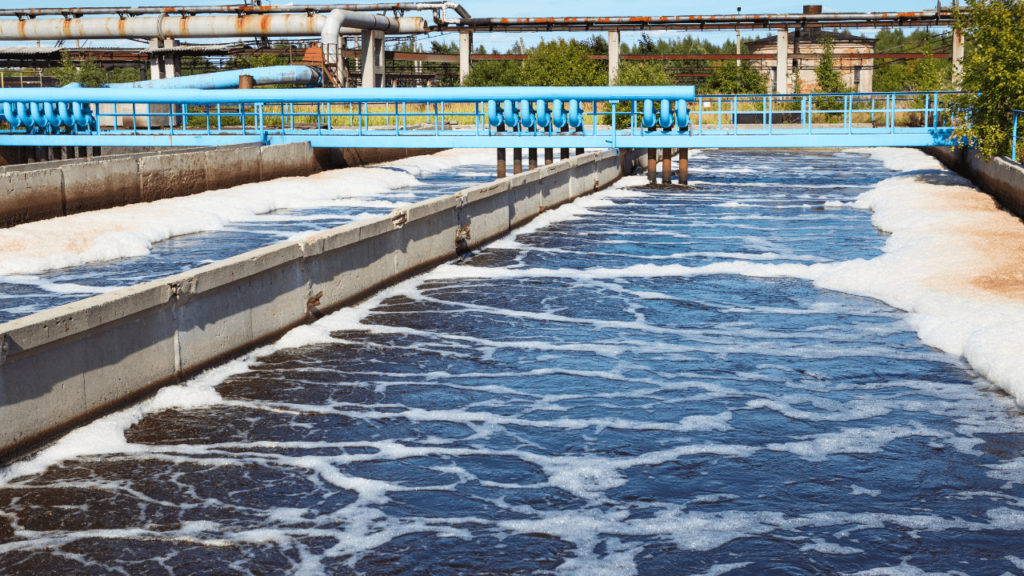
The Comprehensive Guide to Secondary Treatment of Wastewater: Enhancing Environmental Sustainability
Introduction
The global water crisis is one of the most pressing challenges of our time. With estimates indicating that nearly 2.2 billion people lack access to safe drinking water (WHO, 2021), the effective treatment of wastewater is more critical than ever. Secondary treatment of wastewater represents a pivotal process in the efforts to reclaim and reuse water, protect natural bodies from pollution, and promote public health. As the biological core of what secondary treatment of wastewater involves, this stage is essential for removing dissolved organic matter and pathogens, paving the way for subsequent tertiary treatment and safe environmental discharge. In this article, we will explore the intricacies of secondary wastewater treatment, including its methodologies, challenges, and emerging technologies.
Understanding Secondary Treatment
What is Secondary Treatment?
Secondary treatment is a biological process that targets the removal of dissolved organic matter that remains after primary treatment, which typically involves physical processes like sedimentation. This stage primarily utilizes microorganisms to break down organic pollutants, resulting in treated effluent suitable for discharge or further processing. The efficiency of secondary treatment varies based on design, operational conditions, and microbial health.
The Importance of Secondary Treatment
Under the federal secondary treatment regulation at 40 CFR Part 133, 85% removal of BOD and TSS is the regulatory minimum rather than a ceiling, alongside 30-day average limits of 30 mg/L for each and a 7-day average of 45 mg/L. Well-run plants routinely exceed those figures, and many operate to tighter permit limits. That figure also defines the process boundary: the residual nutrient, pathogen, and trace organic fraction left behind is what determines whether tertiary polishing is required, and operators sizing a downstream train should understand what substances remain in wastewater after effective secondary treatment before specifying it. This high removal rate is crucial for:
- Environmental Protection: Reducing nutrient loading into aquatic ecosystems, which can lead to eutrophication and subsequent hypoxia.
- Public Health: Mitigating the risks associated with waterborne diseases by effectively handling pathogens.
- Water Reuse: Enhancing the quality of effluent for potential reuse in irrigation, industrial processes, or even potable applications after further treatment.
- Regulatory Compliance: Meeting stringent discharge standards set by governmental agencies.
Key Processes in Secondary Treatment
1. Activated Sludge Process
The activated sludge process is one of the most common secondary treatment techniques employed in wastewater facilities. This process involves the aeration of mixed liquor containing microorganisms and wastewater.
Mechanism
- Aeration: The wastewater is aerated in a reactor where it interacts with microorganisms, which metabolize the organic matter, converting it into microbial biomass.
- Settlement: After aeration, the mixture is transferred to a clarifier, where the biomass settles as sludge, separating from the treated water.
Benefits
- The activated sludge process is efficient in reducing BOD and TSS levels and can be fine-tuned for varying influent qualities.
2. Trickling Filters
Trickling filters offer an alternative methodology for secondary treatment, relying on the biological activity of microorganisms clinging to filter media.
Mechanism
- Filter Media: Wastewater is distributed over a media bed (such as rocks or synthetic materials), promoting biofilm growth.
- Aeration: Air is allowed to circulate through the media, supplying oxygen essential for microbial metabolism.
Benefits
- Trickling filters are generally more robust to variations in flow and composition and require less energy than activated sludge systems.
3. Membrane Bioreactors (MBR)
Membrane bioreactors combine biological treatment with membrane filtration to provide a high-quality effluent.
Mechanism
- In MBR systems, wastewater undergoes biological treatment in an activated sludge process, followed by filtration through membranes that separate solids from liquids.
Benefits
- MBR systems can achieve superior effluent quality, making them suitable for water reuse applications. Membrane separation removes essentially all suspended solids and achieves high log removal of bacteria and protozoa, well beyond what a gravity clarifier delivers. Virus removal is more variable and depends on membrane integrity, which is why disinfection normally follows an MBR rather than being replaced by it.
Challenges in Secondary Treatment
1. Process Control and Monitoring
Monitoring gaps cost performance, though the specific global figures sometimes quoted for this are not traceable to a primary source and are best treated with caution. What is well established is the mechanism: without reliable data on dissolved oxygen, solids inventory, and sludge age, an operator is adjusting a biological process blind. Challenges include:
- Nutrient Imbalance: Overloading of nitrogen and phosphorus can inhibit microbial activity.
- Toxic Pollution: Industrial discharges can introduce inhibitory substances, hampering biological processes.
2. Sludge Management
Excess sludge production is a critical concern in secondary treatment. For instance, a conventional activated sludge plant produces roughly 0.4 to 0.6 kg of waste solids per kg of BOD removed, with the figure falling as sludge age increases because more of the biomass is consumed through endogenous respiration. Handling and disposing of sludge presents logistical and regulatory challenges that need addressing.
3. Energy Consumption
Secondary treatment processes can be energy-intensive. Drinking water and wastewater systems together are commonly cited at roughly 2 percent of U.S. electricity use, with the treatment plant often the largest single energy consumer a municipality operates and aeration typically half of that plant load. Solutions such as aeration optimization, energy recovery systems, and using renewable energy sources are essential for reducing carbon emissions.
Future Trends and Innovations
1. Advanced Biological Processes
Emerging techniques such as sequential batch reactors (SBR) and integrated fixed-film activated sludge (IFAS) are being adopted to improve efficiency and reduce costs. Note that SBR stands for sequencing batch reactor rather than sequential: one tank cycles through fill, react, settle, and decant in sequence, which removes the need for a separate clarifier. IFAS adds fixed media into the aeration basin so attached and suspended growth work in parallel, raising treatable load without enlarging the tank. Selection between them turns on influent variability, footprint constraints, and effluent targets.
2. Automation and AI
Integration of Artificial Intelligence (AI) for real-time monitoring and process optimization is transforming secondary treatment. Dynamic modeling allows for predictive maintenance and operational adjustments, reducing costs and improving treatment outcomes.
3. Resource Recovery
State-of-the-art secondary treatment facilities are beginning to recover valuable resources from wastewater. This includes nutrients like nitrogen and phosphorus, which can be repurposed as fertilizers. Efforts in energy recovery via anaerobic digestion of excess sludge are also gaining traction.
Related Topics
Secondary treatment is defined as much by its limits as by its removal rates. Operators planning reuse or stringent discharge programs should also review what materials cannot be removed from wastewater through conventional biological means at all, since that fraction marks the point where membrane separation, adsorption, or advanced oxidation becomes necessary rather than optional. Reading that alongside the process descriptions above gives a clearer basis for deciding how much treatment capacity actually belongs in the secondary stage.
Conclusion
The secondary treatment of wastewater is a vital component of the sewage treatment process, essential not only for meeting environmental regulations and public health standards but also for paving the way towards sustainable water reuse. By understanding the various methodologies, addressing the associated challenges, and adopting innovative technologies, wastewater treatment professionals can enhance their facilities’ efficiency and sustainability. As water scarcity continues to escalate globally, investing in advanced secondary treatment options will be crucial for creating resilient water systems that safeguard both human health and environmental integrity.
Frequently Asked Questions
Q1: What is the role of microorganisms in secondary treatment?
A1: Microorganisms are essential in the biochemical processes that break down organic matter, thus helping to purify wastewater.
Q2: What are the differences between activated sludge and trickling filters?
A2: Activated sludge relies on aeration tanks and separators for treatment, while trickling filters use biofilms growing on fixed media, making each suitable for different operational contexts.
Q3: How can facilities optimize energy consumption in secondary treatment?
A3: Facilities can adopt strategies such as efficient aeration systems, energy recovery technologies, and renewable energy integration.
By understanding and implementing these insights, wastewater treatment professionals can ensure that their operations not only meet present demands but are also equipped to face the challenges of tomorrow.